

Published April 30, 2026 12:00PM
Takeaway: The Yeti LTe is our top electric mountain bike of 2026, selected after rigorous testing at Pinkbike’s annual Field Test in Bentonville, Arkansas. It stood out for its suspension performance, stability, and speed in rough terrain, while the best eMTBs overall delivered a balance of climbing efficiency, descending control, and integrated motor power.
Electric mountain bikes are more popular than ever, and this year’s newest models include something for every type of rider. Whether you’re looking for a ride that feels like a traditional mountain bike or a hard-charging chop crusher, we singled out the best electric mountain bikes of 2026.
For this year’s eMTB Field Test, Outside partnered with the experts at Pinkbike to conduct a rigorous, head-to-head comparison of seven of the top long-travel models on the market. Through a range of challenges and test sessions, we evaluated how each bike stacked up in real-world riding. Because a bike’s motor and battery system play a central role in how an eMTB performs, we made sure to include models featuring all three of the industry’s leading platforms: Bosch, Specialized, and Avinox.
Despite plenty of time considering the finer details and technical specs, we ultimately focused on what mattered most: how these bikes performed on trail. After two weeks of back-to-back testing on the trails of Bentonville and Bella Vista, Arkansas, these were our top picks.
Best eMTBs: At a Glance
The Reviews: The Best eMTBs of 2026
Editors’ Choice
Yeti LTe
Tested Build: T3 XO AXS
Travel: 160 mm rear, 170 mm fork
Motor: Bosch CX or CX-Race
Battery: 800Wh
Pros and Cons
+ Phenomenal suspension performance
+ Adjustable suspension and wheel size
– Traction-rich feel takes away from some agility
The Yeti LTe is defined by its suspension performance. Standing out from the rest of the bikes on test—and just about any other long-travel bike our testers have ridden recently—the LTe offers a level of calm and bump erasure that’s hard to overstate. Traction and predictability come easily, and the full 29-inch stock build carries speed well through rough, natural trails. The geometry isn’t unusually long, slack, or aggressive, but it feels balanced and intuitive, handling a wide range of use cases well.
Suspension and rear-wheel adjustments let riders configure the LTe a few different ways—you can add a smaller rear wheel and alter the suspension’s leverage curve via a flip-chip at the lower shock mount—but those looking to maximize speed will likely be best served by the stock setup.

Despite the Bosch motor’s lower output on paper (100 Nm / 750 W compared to Avinox’s 120 Nm / 1000 W), we found the Yeti could easily keep pace with bikes running Avinox motors, thanks to the practical, usable power of the CX motor and the smooth, even-keeled feel of Yeti’s Sixfinity suspension.
With an almost uncanny ability to take the edge off repeated hits while generating grip along the way, the suspension will best suit riders looking to carry speed through the roughest, most challenging sections of trail, Its grip comes with a slight downside, mainly when trying to pump for speed, pop off small lips, or add some zest to mellower trails. You could tune the bike to perform better in those situations, but that’s not really the point of a long-travel eMTB.
Best Value
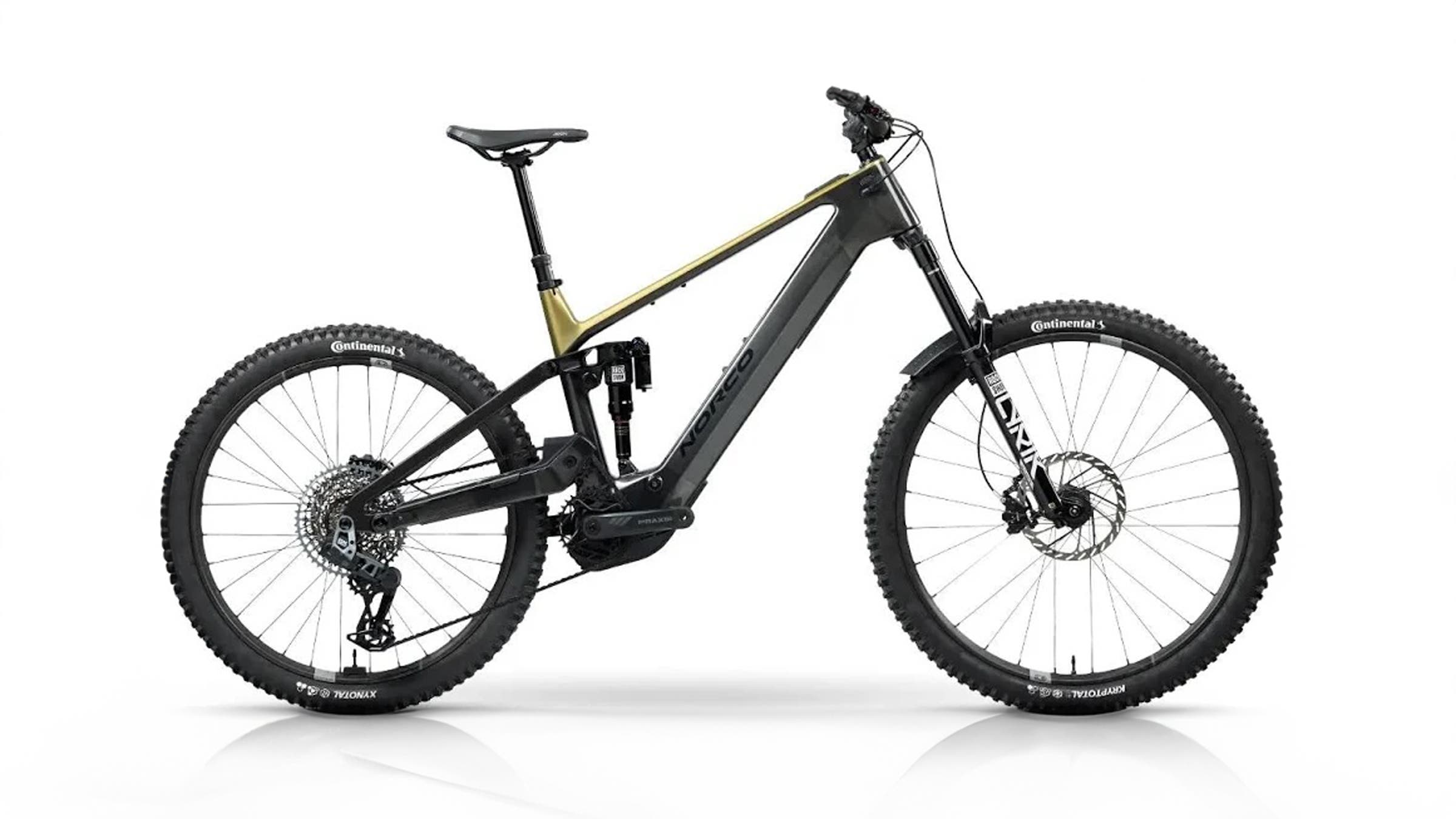
Norco Sight VLT
Tested Build: C1
Travel: 150 mm rear, 160 mm fork
Motor: Bosch CX
Battery: 800Wh
Pros and Cons
+ Versatile
+ Great parts spec for price
– Slightly less capable on roughest trails
Norco quietly delivered one of the best-value high-end eMTBs on the market with the Sight VLT, decking the bike out with top notch parts and a stellar motor, all for a fair bit less than the competition. The Sight isn’t defined by that price tag though, with a ride characteristic that speaks for itself. Our testers all agreed on this being one of the best in the test for the trails in Bentonville and Bella Vista, with a spritely feel that isn’t always achieved in a full-power package.
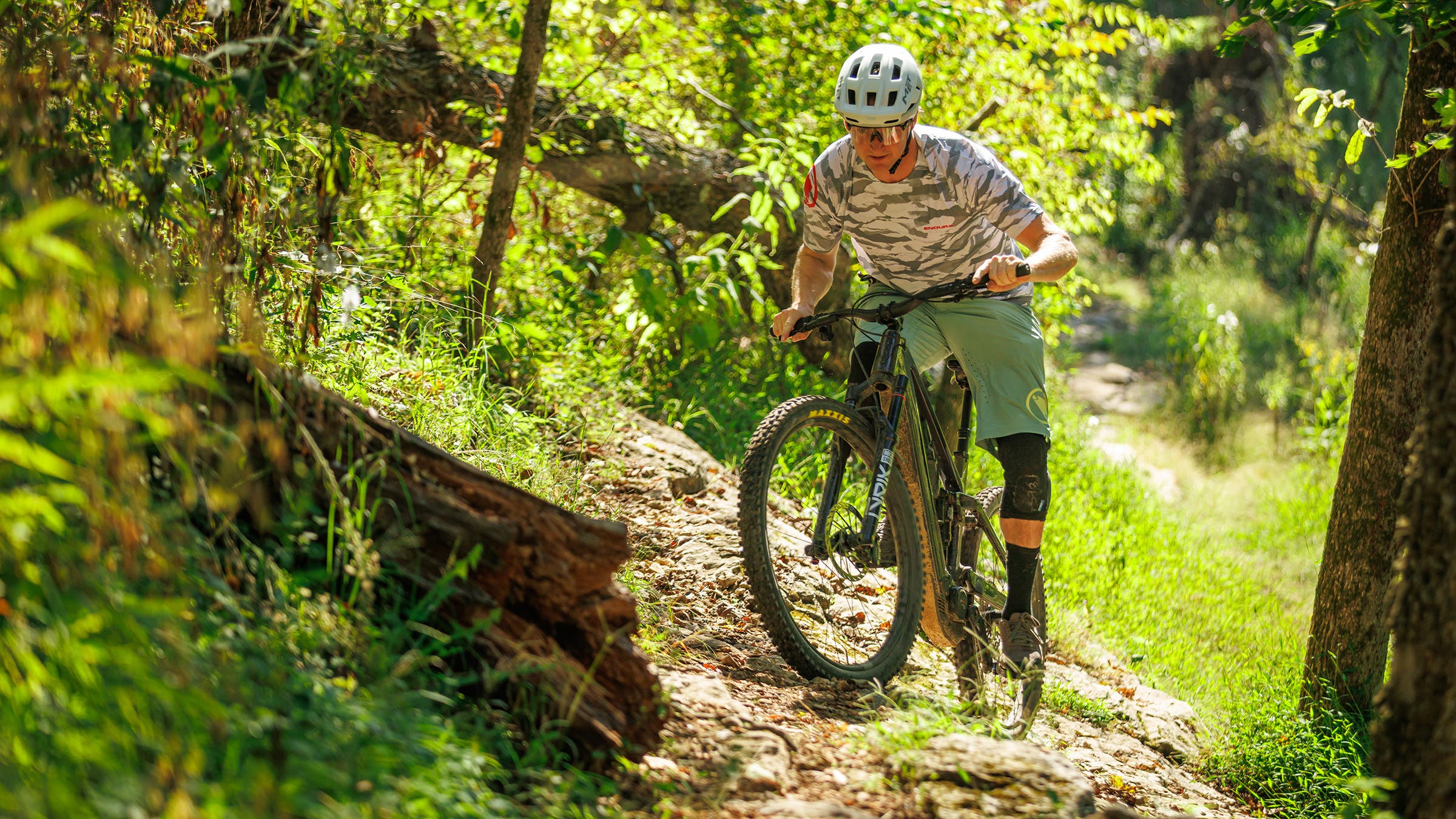
The parts selection on the Sight is capable and well rounded, aimed at the varied riding—with equal weight on climbing and descending—that most people do most of the time. Conveniently, the bike feels aligned with that mission, keeping mellower trails fun while still hanging when things get rough. Though it wasn’t our top pick for the gnarliest descents around, that isn’t necessarily the platform’s purview, so it didn’t disappoint. Other bikes simply took the edge off more, while the Sight kept things fun on trails where you’re not pushing yourself to the limit.
Despite its high-pivot suspension layout, the Sight doesn’t feel like a bike that has to plow through a trail to be enjoyable. Versatile and capable, it balances weight, capability, and a well-rounded nature in a relatively simple package. The sum of those parts yields a bike that will serve a broad swath of riders well, regardless of terrain or skill level.
Best All-Rounder
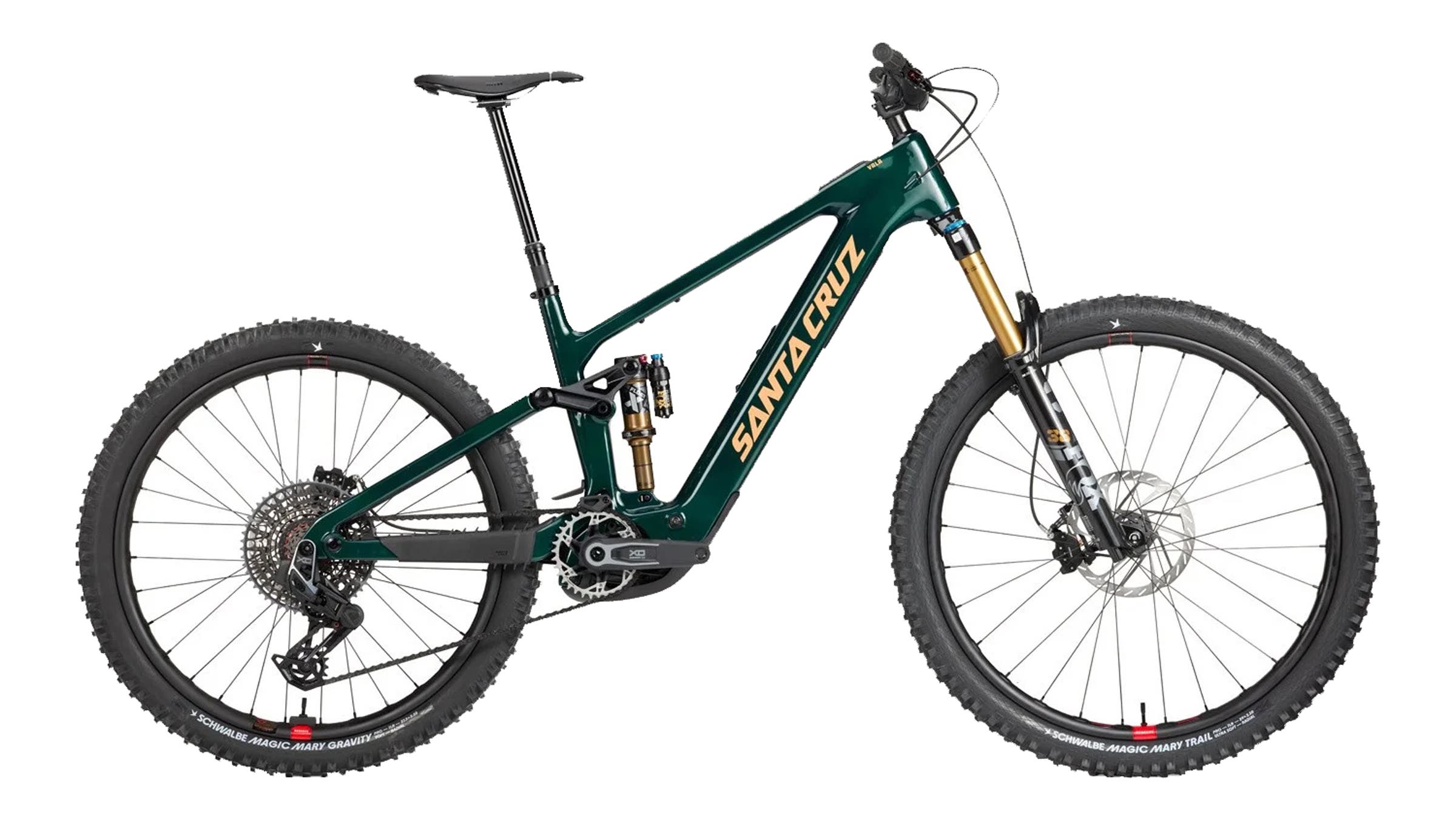
Santa Cruz Vala
Tested Build: X0 AXS RSV
Travel: 150 mm frame travel; 160 mm fork
Motor: Bosch CX
Battery: 600 Wh
Pros and Cons
+ Easy handling, adaptable performance
+ Impressively reliable frame and electronics
+ Excellent build kit
– Battery capacity will disappoint some (but a range extender is available)
– Requires attention on steep climbs
The Vala is the first Horst link bike that Santa Cruz has ever made, and it might represent a more significant change in the brand’s approach to bike design. Santa Cruz claims that the choice to implement the 4-bar design revolves around packaging constraints brought on by the Bosch CX motor. That may be the case, but the new layout also makes it easier to achieve the suspension curves they’ve been honing in on with VPP bikes over the past few years.
The Vala’s resemblance to the new Bronson, its non-motorized sibling, extends beyond the geometry chart, with on-trail feel that bridges the bike-electric-bike gulf impressively well. The extra weight from the motor and battery is apparent, but not always to a detriment—that extra mass can help calm things and keep the bike on line through rougher patches of trail, where a bike might otherwise deflect. Cornering feels intuitive, and the bike tips into steeper turns without any fuss. At times, those situations are where heavier e-bikes can make things harder, as the bike weight can make the bike reluctant to cut into turns as easily as a non-electric bike might; luckily that’s not the case here.
Bosch’s new CX motor is impressively powerful, and pedals intuitively, closely mapping your power output to match expected drive force. The front end of this bike can feel a little “lifty” when power is high and the climb is steep, but it’s nothing better body position can’t fix.
Santa Cruz did a great job with their first foray into the 4-bar world, providing an active yet predictable ride feel that offers consistent support through the travel. Their recommended suspension setup worked very well, and felt balanced on flat and steep trails alike. When it comes to suspension performance, the Vala hits a nice spot, riding high without feeling like it’s pitching your weight forward. It can handle just about anything you throw at it, but errs on the fun side of things, with proportions and weight meant more to mimic regular bikes than to maximize the monster truck e-bike characteristics.
Best Climber
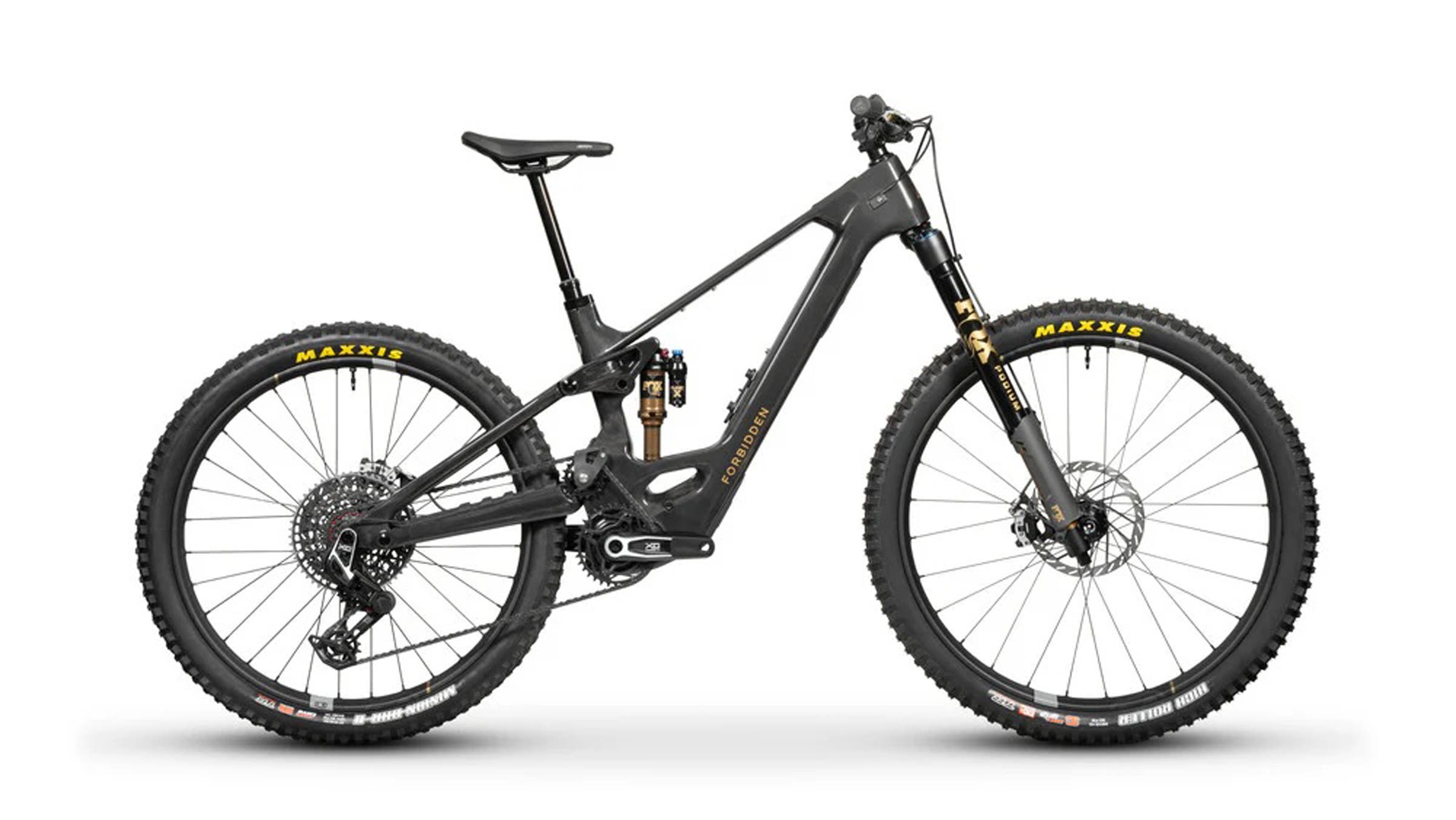
Forbidden Druid CorE
Tested Build: Core 1
Travel: 150mm rear, 160mm fork
Motor: Avinox M1
Battery: 800Wh
Pros and Cons
+ Excellent climbing abilities, even for an eMTB
+ Stable descender, tons of cornering grip
– High pivot feel and geometry might not be for everyone
Forbidden has become known for its offbeat approach to bike design, and that different rhythm has paid off in how well its bikes perform on trail. As its first eMTB offering, the Druid CorE feels impressively dialed, balancing climbing and descending performance remarkably well. It’s hard to ignore the atypical geometry, which provides a very upright and calm feel, but once you adapt to the body position, you can take full advantage of the stability the bike provides.
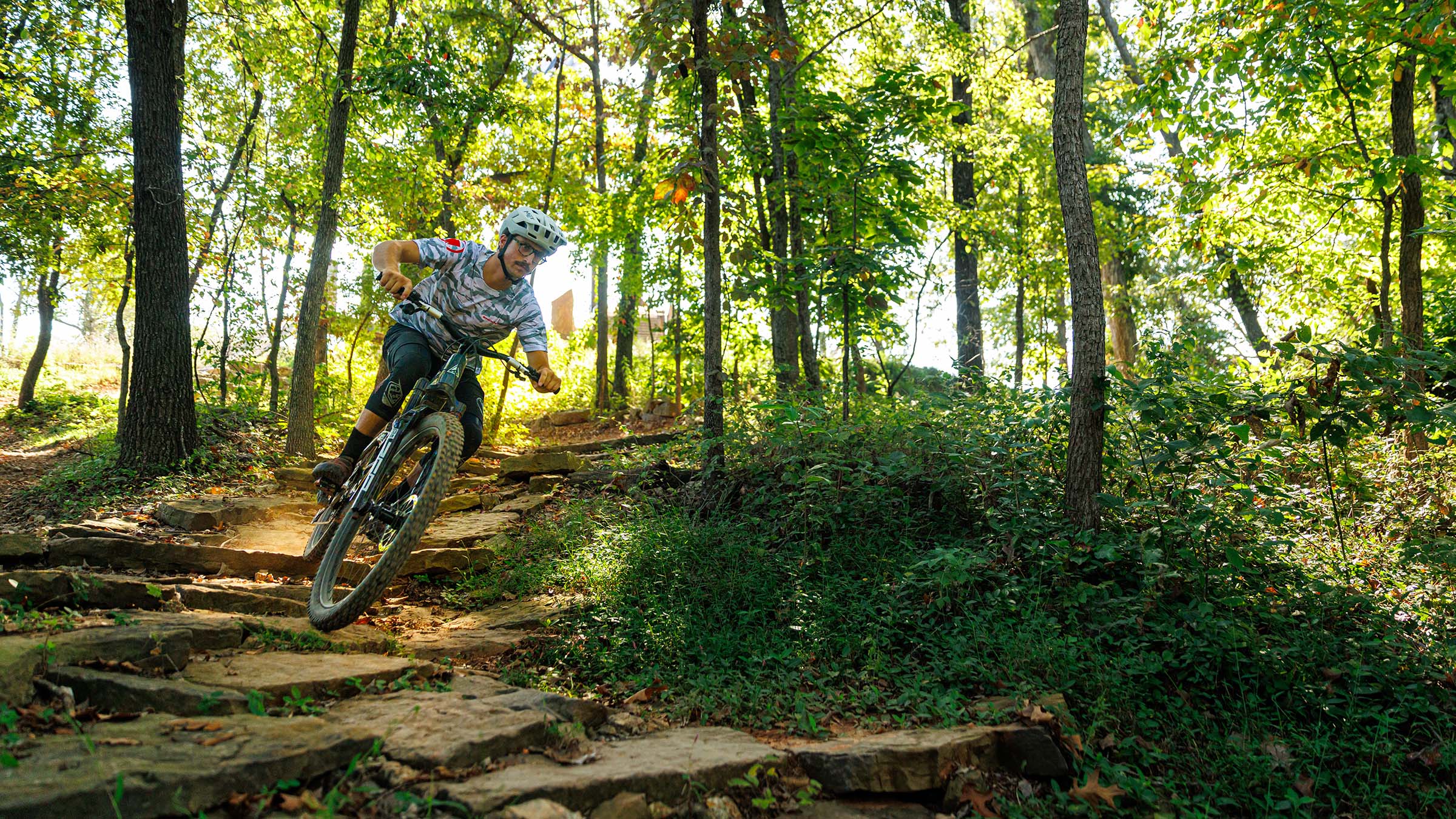
In flatter corners, the long rear end keeps the front wheel planted, assuring traction as long as you commit. Through chunky sections, the high-pivot suspension keeps the rear wheel out of the way, with the rearward axle path preserving momentum where other bikes can get hung up. That sensation won’t be a universal favorite, but riders who don’t mind the changing wheelbase feel will be more than happy here.
Ultimately, we gave the Druid CorE an uphill accolade, as the combination of bump-erasing suspension and the ludicrously powerful Avinox motor makes for a wild pairing. If your goal is to fly up tough climbs with ease, this is a hard bike to beat.
Best Lightweight eMTB
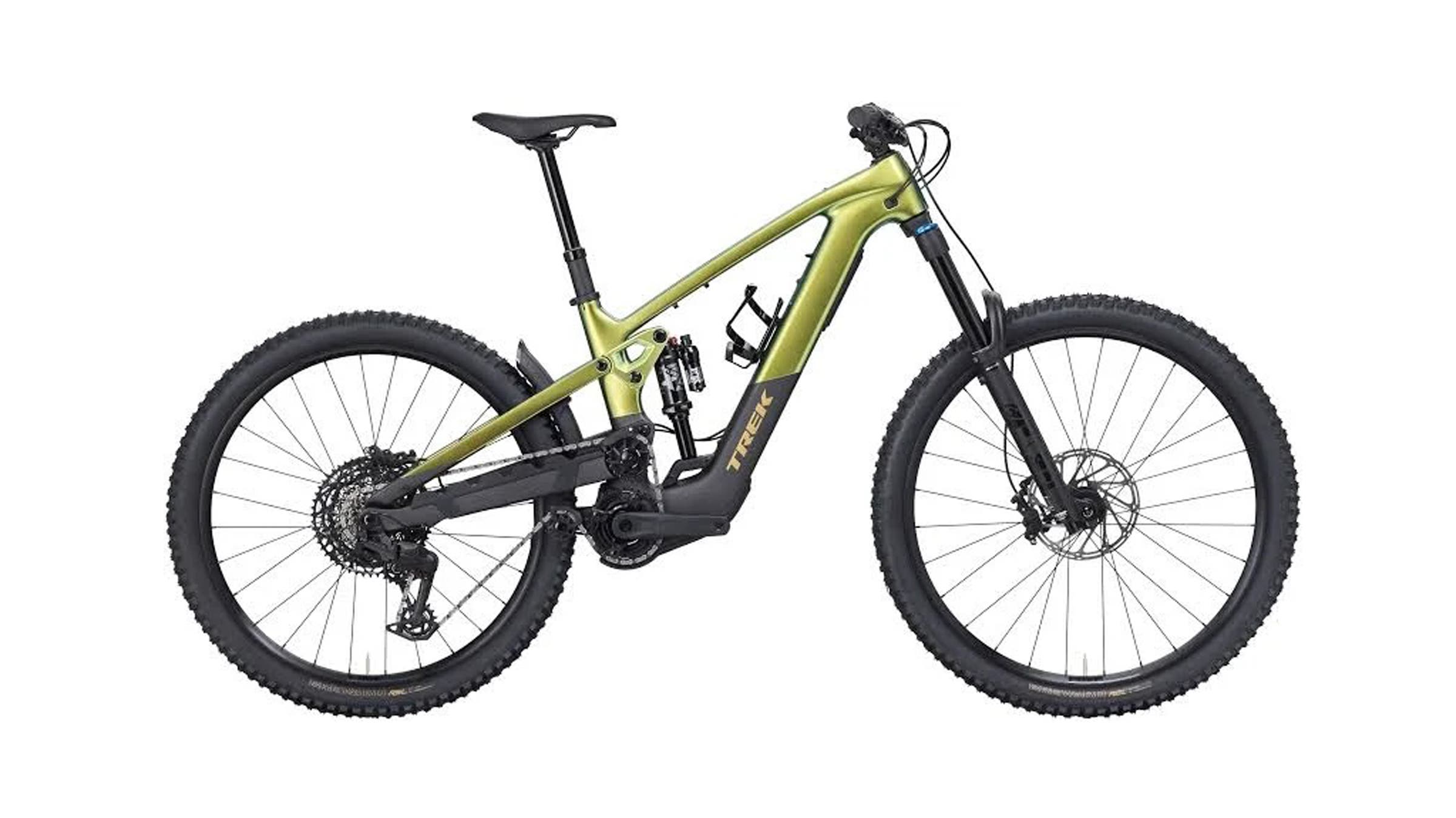
Trek Slash+
Tested Build: 9.9 X0 AXS T-Type
Travel: 172.2 mm rear; 177 mm fork
Motor: TQ HPR50
Battery: 580 Wh, 160 Wh extender
Pros and Cons
+ Top-notch descending performance
+ Best in class battery range
+ Could be your only bike
– Limited size range
– Build kits should be better for the price
Trek chose the Slash as the platform for their lightweight eMTB, and boy did they stick to the prompt. The Slash+ is an electrified Slash, and nothing else—but that’s what makes it so great. It has a decently powerful motor, truly impressive battery range, and suspension feel that competes with any long-travel mountain bike, electrified or otherwise.
With a TQ motor and battery system, the Slash+ gains some pounds over the analog equivalent, but still comes in at a very impressive 46-pound total build weight, even with some appropriately capable parts bolted to it, such as the RockShox Zeb fork, Vivid air shock, and SRAM Maven brakes. The spec is very solid, although the price of the complete bike is on the higher side compared to other options in this category.
By electric mountain bike standards, the Slash falls into the lightweight eMTB category, where overall weight takes precedence over having as much power as possible at the wheel. That said, the TQ motor can put out an impressive amount of wattage—it does a great job of making big grinds seem a whole lot mellower. As an added bonus, it’s damn near silent. It’s also quite efficient when it comes to battery usage—it’s possible to put in some serious vert without running out of juice.
The Slash+ is one of the best descending bikes we’ve ridden in recent memory, thanks to excellent rear suspension feel, balanced geometry, and that little extra stability that comes from the motor and battery weight. In comparison to the non-motorized Slash, that last detail is the clincher, as the extra weight near the bottom bracket keeps the bike just a bit more planted over chattery trail noise.
Frequently Asked Questions
What’s the best motor system?
This depends a lot on your specific use case, and who you find yourself riding with. For general eMTB use, the Bosch CX motor has continued to impress us as the gold standard for reliability and usable power. Despite the Bosch motor’s lower output on paper, we found that bikes with that system could easily keep pace with bikes running Avinox motors, on all but the most challenging climbs. Battery life tends to be a bit better in kind, as the motor draw is lower.
For folks riding in a group with non-electric mountain bikes, a mid-power eMTB might be the better choice. TQ’s motors have lower power and torque outputs, but can still provide serious assistance for huge days in the saddle. Our top pick, the Slash+, can easily best most full-power bikes when it comes to vertical feet climbed thanks to its large battery and lower motor draw.
Ultimately, the best bet is to test ride a few options, play with some of the settings in the partner apps that exist for each motor, and see which suits you best.
How much does a good electric mountain bike cost?
Unfortunately, quite a lot. As the technology has progressed in leaps and bounds over the past few years, so has the pricing structure. Like with any bike, you can find excellent deals here and there, but generally the top-of-the-line models are well north of $10,000. That said, some brands have made a name for themselves offering strong-performing bikes with far lower pricepoints. The Aventon Current, Marin Rift Zone E, Norco Sight VLT A, and Santa Cruz Vala AL are all excellent options for far less than the premier models.
What is the average range of an electric mountain bike?
Range is tied to battery capacity, which is measured in watt hours (Wh). Battery capacity varies depending on the type of electric bike, ranging from around 320Wh all the way up to 1000Wh. The greater the capacity, the longer the range—but those bigger batteries do come with a weight penalty. These days, batteries in the 700-750Wh range seem to sit in the sweet spot for full power eMTBs, giving riders the ability to get out on long, multi-hour rides without incurring as much of a weight penalty as the 900Wh options.
What are the different types of electric mountain bikes?
- Full-power eMTBs have the most powerful motors, largest batteries, and longest range. They’re heavy (around 50 lbs) and ride differently than analog mountain bikes, but they’re great for riding up long fireroad to get to rowdy descents.
- Mid-power eMTBs balance power and weight. A smaller battery and less powerful motor mean these bikes weigh closer to 40 pounds, making riding more akin to traditional mountain biking. Typical power output ranges from 35 Nm to 60 Nm depending on the motor, which means this style of bike doesn’t surge up the hill the same way the full-power options can. The standard battery capacity of a mid-power eMTB is typically somewhere around 350Wh, which limits the maximum range compared to the bigger options with 750Wh or more capacity.
How to Choose an E-Mountain Bike
Electric bikes have evolved at a break-neck speed in the past five years or so, transforming from huge, bulky beasts into much more refined and svelte electric machines. Though there is still ample room for progress, many of the problems with the first couple of generations of ebikes have been smoothed out. However, buying an e-mountain bike has become even more of a project thanks to all of the new tech that has come out to solve said problems.
For a full rundown on how to buy an e-mountain bike in our current market, check out Pinkbike’s guide. Editor in Chief Mike Kazimer provides tips by asking questions like: What are you friends riding? How far do you typically go? What type of riding are you planning on doing? How much money do you want to spend? Of course, you can opt to go for a regular mountain bike that isn’t motored, but if you’re set on going electric, make sure you’re paying close attention to these factors.
How We Test Electric Mountain Bikes
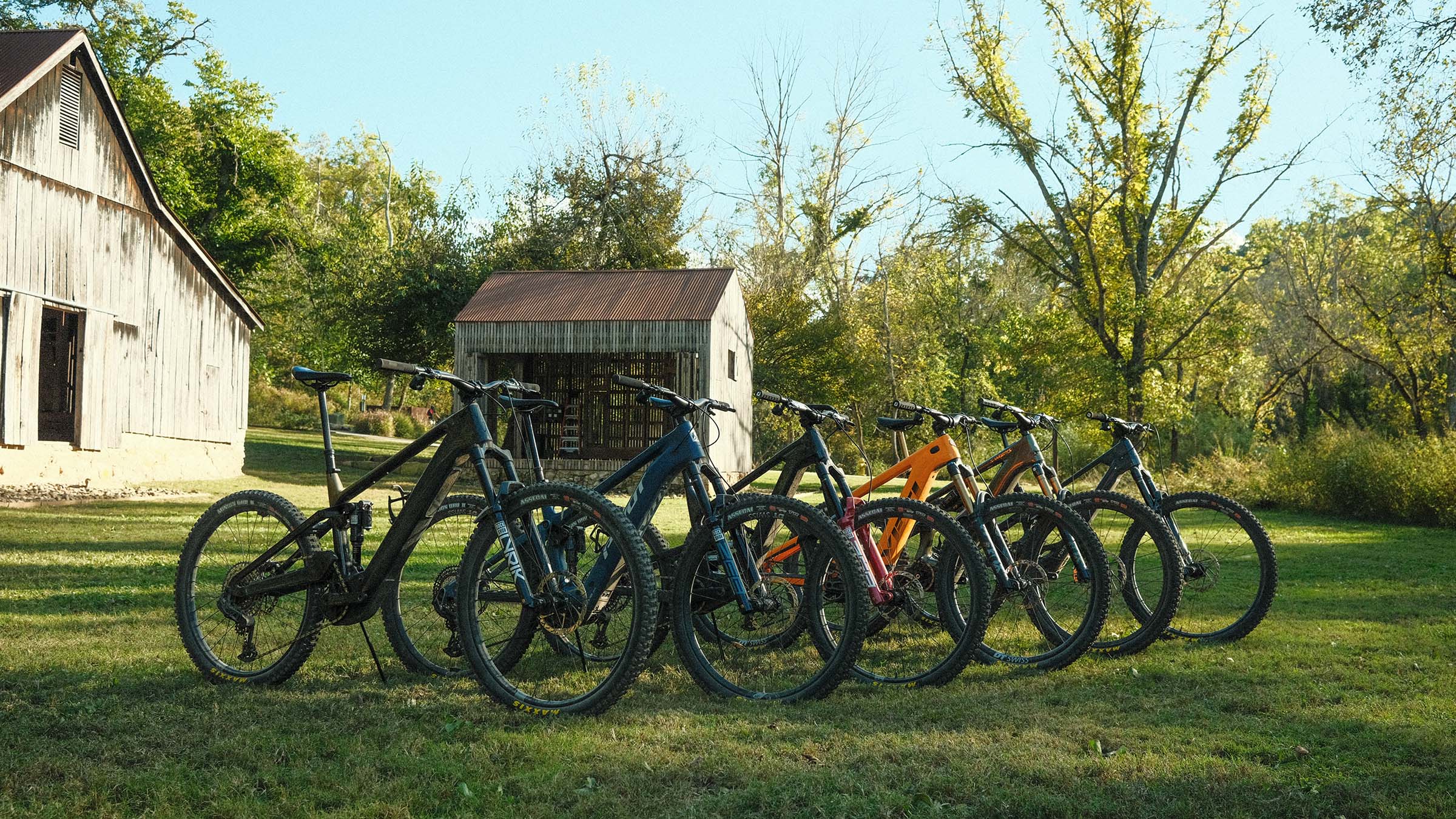
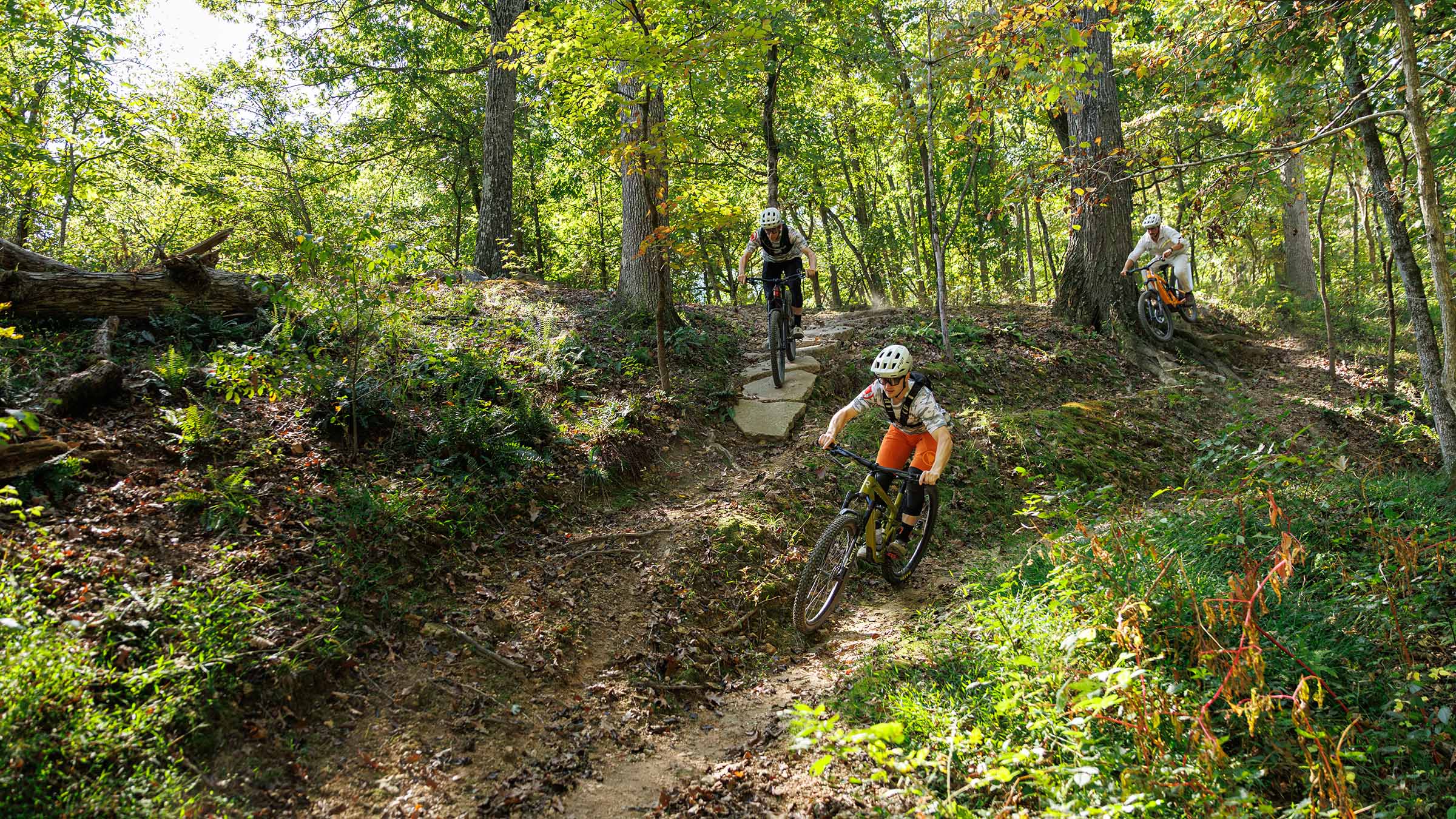
The top eMTB picks in this guide emerged from Pinkbike’s annual Field Test in Bentonville and Bella Vista, Arkansas, where Pinkbike’s experts pitted the newest against each other in a head-to-head test to identify the standout models of 2026. The diversity of trails in Bentonville and Bella Vista made it easy to assess each bike by its respective strengths, while back-to-back testing on a handful of benchmark trails helped cement those opinions. The electric mountain bikes in this guide handled everything from flowy jump lines to heinous rocky tech with ease. Based on this real-world testing, we’re confident these picks will serve riders well across the full spectrum of trails.
Meet Our Lead Testers
Mike Kazimer: Managing tech editor for Pinkbike, alien skeptic.
Dario DiGiulio: Tech editor for Pinkbike, based in Bellingham, Washington.
Matt Beer: Tech editor for Pinkbike, former World Cup Downhill racer.
