


Published May 1, 2026 03:56AM
When I lived on Colorado’s Front Range, I could think of no better way to spend a summer weekend than to rally a group of friends for a camping trip in the mountains. In a state with sprawling public lands, we typically found dispersed sites off dirt roads, but I’ve also camped in bustling KOA-style campgrounds in California and in grassy fields during bike races and festivals in the Northeast. Regardless of the setting, these trips followed a blueprint: we spent all day outdoors, stayed up late talking under the stars, and went home knowing, and liking, one another more. Camping together was a relationship accelerator; after just a few of these open-air weekends, a young friendship felt sturdier and more durable than its age.
In 2024, a national report pushed back against the prevailing narrative of the American friendship crisis. It’s not that we don’t have enough friends, the American Friendship Project said—it’s that we aren’t as close as we’d like to be to those friends. As busy adults, time is our biggest impediment, report coauthor Jeffrey Hall, professor of communication studies at the University of Kansas, told me. “Where do you find the time to build that intimacy?” Hall’s other research suggests that it could take 40 to 60 hours to turn an acquaintance into a casual friend, and 200 hours to turn a casual friend into a best one. That’s about 100 two-hour dinner dates to make a bestie.
Trips can be a way to rack up those hours quickly, and researchers say that taking a budding friendship into a new setting—a context shift, as they call it—can become a “turning point” in a relationship that changes the pace and direction of its trajectory. Even just the act of inviting a friend to do something special in a new place (and having them accept that invitation) can make people feel closer, says psychologist Jaimie Krems, director of the UCLA Center for Friendship Research. In the instance of a camping trip, “Simply making the plan to say, ‘I’m going to go off into the woods with these people, and that is how I’m choosing to spend my time instead of anything else,’ that’s a real signal of commitment to the relationship,” says Krems.
Camping together could be an even more effective bonding catalyst than other types of travel. It’s relatively inexpensive and, for those who own the gear and live within driving distance of a campground, can be easier to pull off more frequently with friends. Research has also long suggested that spending time with others outdoors can enhance group cohesion, or the sense of an “us” against the elements. Wilderness environments with fewer resources create opportunities to help and rely on one another, which can boost trust and goodwill. Sharing food, helping a friend set up their tent, or looking after one another’s kids at the campsite are all the kinds of favors, or “little bids,” says Krems, “that ratchet up a friendship.”
Camping may also be particularly good at facilitating the kind of seclusion that builds intimacy. In his research, Hall cites a 1965 study in which pairs of strangers were confined to a room together for ten days; by the end, the men were communicating in ways that approximated best friendship. By contrast, pairs of strangers who worked together for similar amounts of time but didn’t share living and sleeping quarters reported only casual levels of friendship. More recently, a 2022 analysis of friendship and travel found that friends felt closer after trips where they shared tight quarters like a bedroom or tent. With nowhere to hide, study authors observed, travel companions experienced a wide range of emotions together, from laughter to tension to exhaustion.
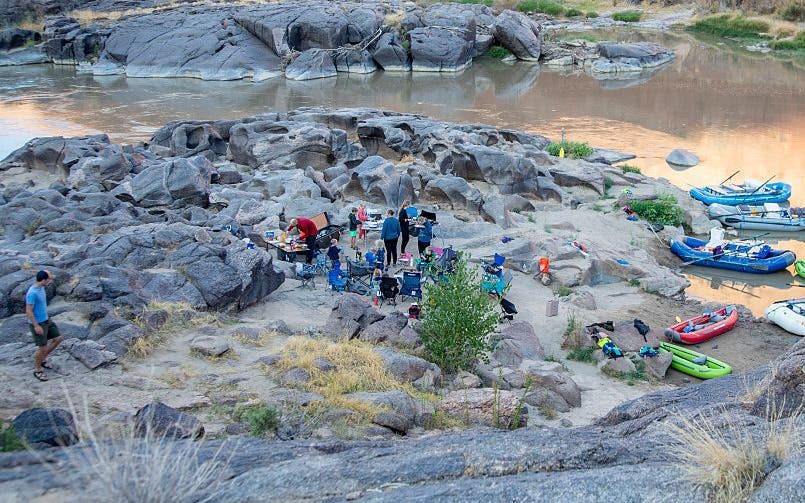
The outdoors, of course, aren’t a physically confined space—they’re the opposite. But they can be thought of as a psychologically confined one. “Sharing a space with someone, you get to see the incidental ways they eat, sleep, and see the world,” Hall wrote to me in a follow-up email. “It is quite a distinct view of your friend that you won’t get over a planned coffee or a phone call.” On a camping trip, friends can see one another first thing in the morning before teeth are brushed and coffee brewed, or in various states of discomfort ranging from cold to sleep deprivation. “This idea that you can be yourself and be accepted, that’s almost a prerequisite for being close to someone,” says Krems.
Camping together also serves as a retreat from the built world and its distractions, particularly screens. This encourages participants to focus primarily on engaging with one another; a friend of mine who takes his family camping calls it “putting them in nature jail” for this reason. A 2015 study of campers at an Australian caravan park noted that in this outdoor setting, people abandoned what the researchers called “clock time” and reverted to what they called “cyclical time,” or what campers may intuitively grasp as the state of having no idea what time it is at all. Unlike other types of trips where travelers might stay tethered to clock time as they visit museums or make dinner reservations, at the park, campers were freed from the pressures to be productive and thus engaged in what study authors called a “communal agenda of idleness.” This kind of environment creates time and space for the full range of conversations and unstructured hanging out that’s so conducive to friendship-building, Hall says.
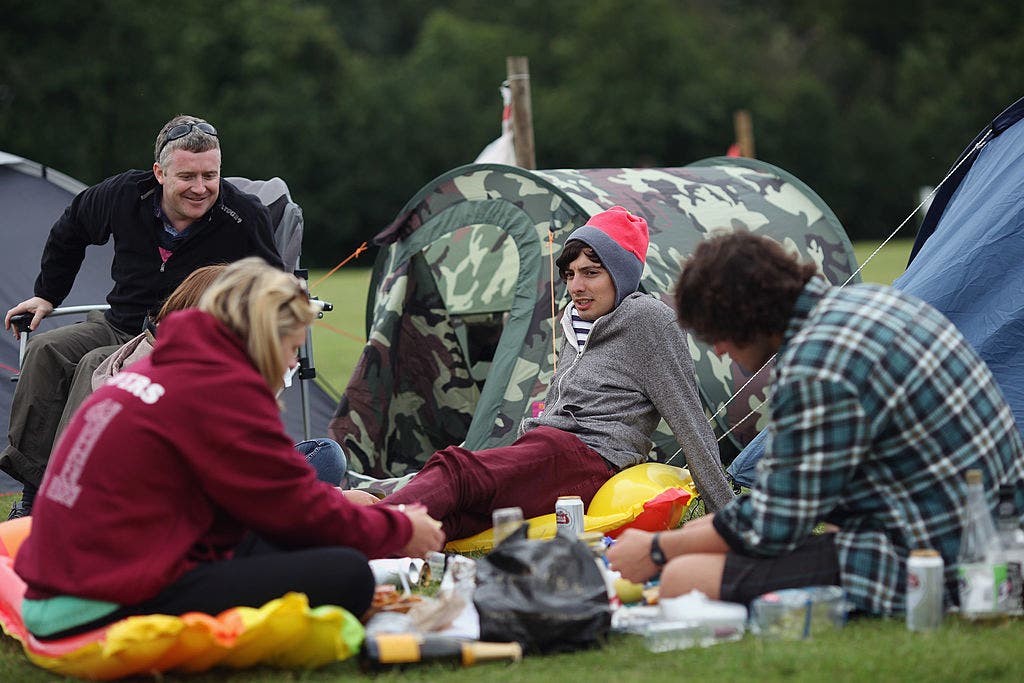
A lot can happen when you’re doing nothing outdoors. Experiences like camping trips become part of a shared history, or what Krems refers to as a “shared reality,” that make us feel closer to our friends. Hall fondly recalled a camping trip in Baja during which a friend began singing “a ridiculous song” to himself while cooking for the group. “That song became an anthem for the trip,” he said. On another trip years ago, my friend and I celebrated what we called “GMT New Years” on December 30. We still refer to holidays celebrated early as GMT holidays.
Of course, a relationship accelerator simply speeds a friendship in the direction it was always headed. Turning points can occasionally be negative. Once, an overnighter in the desert with a couple guys I’d just met proved the adage that travel either makes or breaks a friendship. (Nothing dramatic, but it was a long and quiet car ride home.) It’s a good idea to be familiar with people before you head into the woods with them, Hall agrees. “I’d guess that camping is more about strengthening or reestablishing bonds with existing friends rather than making a new friend.”
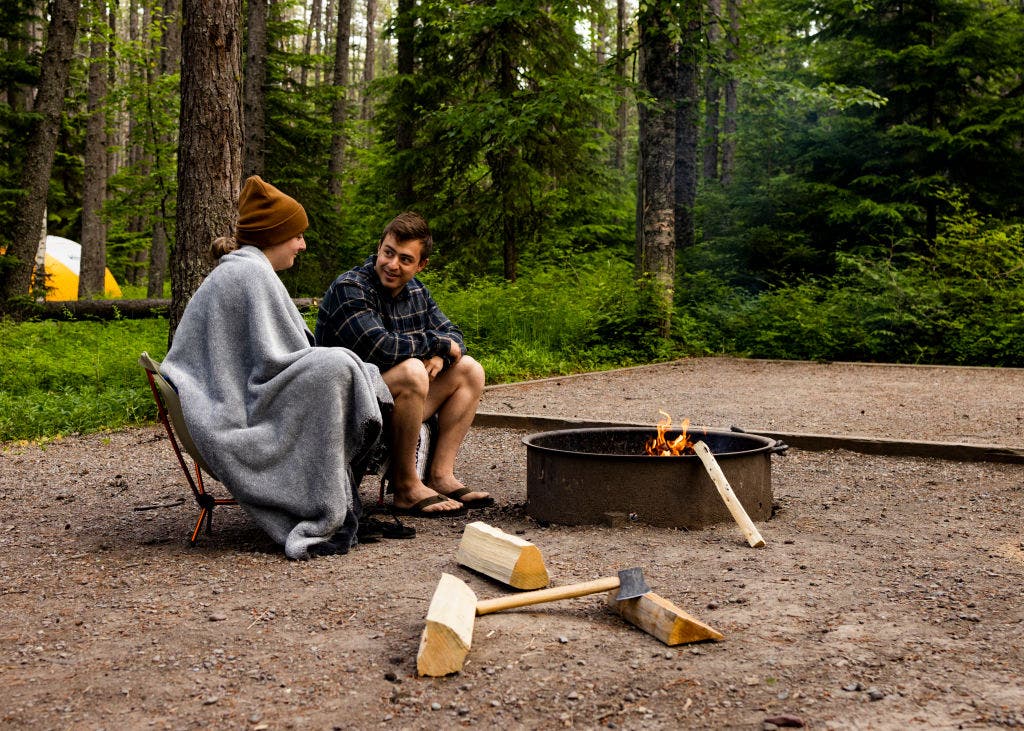
But when it works out, camping together can engender that sense of kinship that so many of us are yearning for. Krems says there’s a biological explanation. Sleeping next to another person cues a primal association with safety—“you won’t sleep unless you think this person won’t kill you,” she says—which is reinforced when you wake up not-murdered the next day. And it may simply feel good to gather with other Homo sapiens by the fire. “One theory for why humans became a group living animal in the first place is to avoid predation,” she says. “Being with other people is a real benefit to physical safety.” Would that feeling of safety make you feel closer to a person? “Absolutely.”
It’s satisfying to hear a researcher explain the mechanism behind a phenomenon you’ve long intuited. One camping trip, some friends and I found ourselves in Colorado’s high country during a fire ban. Even a summer night in the mountains is cold enough to require puffy jackets, but this was November, and the air was frigid. In lieu of flames, we turned on all of our electric lanterns and headlamps and piled them in the middle of the fire pit. Somehow this kept us comfortable enough to stay up late talking into the night. It makes no physical sense, but, we all agreed, we felt a genuine warmth emanating from our makeshift fire’s glow.
This article is from the Spring 2026 issue of Outside magazine. To receive the print magazine, become an Outside+ member here.
