

Published May 4, 2026 03:30AM
I’ll sky-watch on any clear night of the year, but in my book, there’s nothing like stargazing in the northern hemisphere’s summer—especially in 2026. The next few months are packed with interstellar action: not one but two eclipses, extended hours with the Milky Way core, and near-perfect conditions for the prolific Perseid meteor shower.
Warm summer nights are also my favorite time to learn and navigate between famous star patterns. I can even spot portions of many constellations, including Ursa Major and Boötes, while stargazing in my backyard in light-polluted Cleveland, Ohio.
If admiring the cosmos is on your warm-weather bucket list, keep this summer stargazing guide handy. And don’t forget to grab my favorite sky-watching essentials to make the most of your outings.
Planet Conjunctions
When: June
All of our neighboring planets will be visible at some point this summer, but the sighting I’m most excited about comes in early June. From around June 6 to 10, Jupiter and Venus will tango close together above the west horizon. Look above the western horizon; just after sunset, Mercury will join the pair, too.
The cluster of planets will become an alignment in mid to late June, with Venus, Jupiter, and Mercury evenly spaced across the western sky until around July. The crescent moon will join the show on June 17, appearing just beside Venus.
Perseid Meteor Shower Peak
When: August 12 to 13
The Perseid meteor shower is the crème de la crème of summer stargazing, especially when the lunar conditions line up. You need dark skies with little to no moonlight to enjoy the shower at its strongest, when up to around 90 meteors could soar through the sky per hour. That’s exactly what’s in store when the Perseids peak from August 12 to 13.
If you’re in an area with little light pollution, you could catch dozens upon dozens of shooting stars each hour, not to mention especially bright meteors known as fireballs. The best show begins after midnight on August 13 and lasts until the early morning.
Solar and Lunar Eclipses
When: August
This is the summer of eclipses, with not one but two celestial lineups in the forecast.
Total Solar Eclipse
First is the August 12 total solar eclipse, an eye-popping phenomenon that occurs when the moon slips between the Earth and sun, covering our solar system’s brightest star. This experience turns daytime into temporary dusk, just like the hyped eclipse U.S. stargazers enjoyed in 2024.
The full solar eclipse, known as totality, is only visible in Iceland, Greenland, Portugal, and northern Spain. Yet all is not lost if you’re hoping to catch a glimpse in North America. Portions of the northeastern U.S. and the majority of Canada will witness a partial view (eclipse safety glasses required).
In New York, for example, you could spot a nine-percent eclipse, where a small bite appears missing from the sun. The view improves in Maine, where stargazers can admire nearly a quarter of the sun missing. Check the website Time and Date for specifics on what you can see at home.
Partial Lunar Eclipse
March brought a dazzling lunar eclipse to the U.S., and we’ll enjoy a similar spectacle again in late August. From August 27 to 28, the Earth will glide between the sun and moon, with our planet’s shadow covering up to 96 percent of the latter. Earth’s shadow turns all but a tiny bite of the space rock dark red.
Unlike total solar eclipses, which are only visible along a small, roughly 100-mile-wide track, a lunar eclipse is simultaneously visible across half of the Earth. In August, this will include all 50 U.S. states and Canada.
Milky Way Core
When: All summer
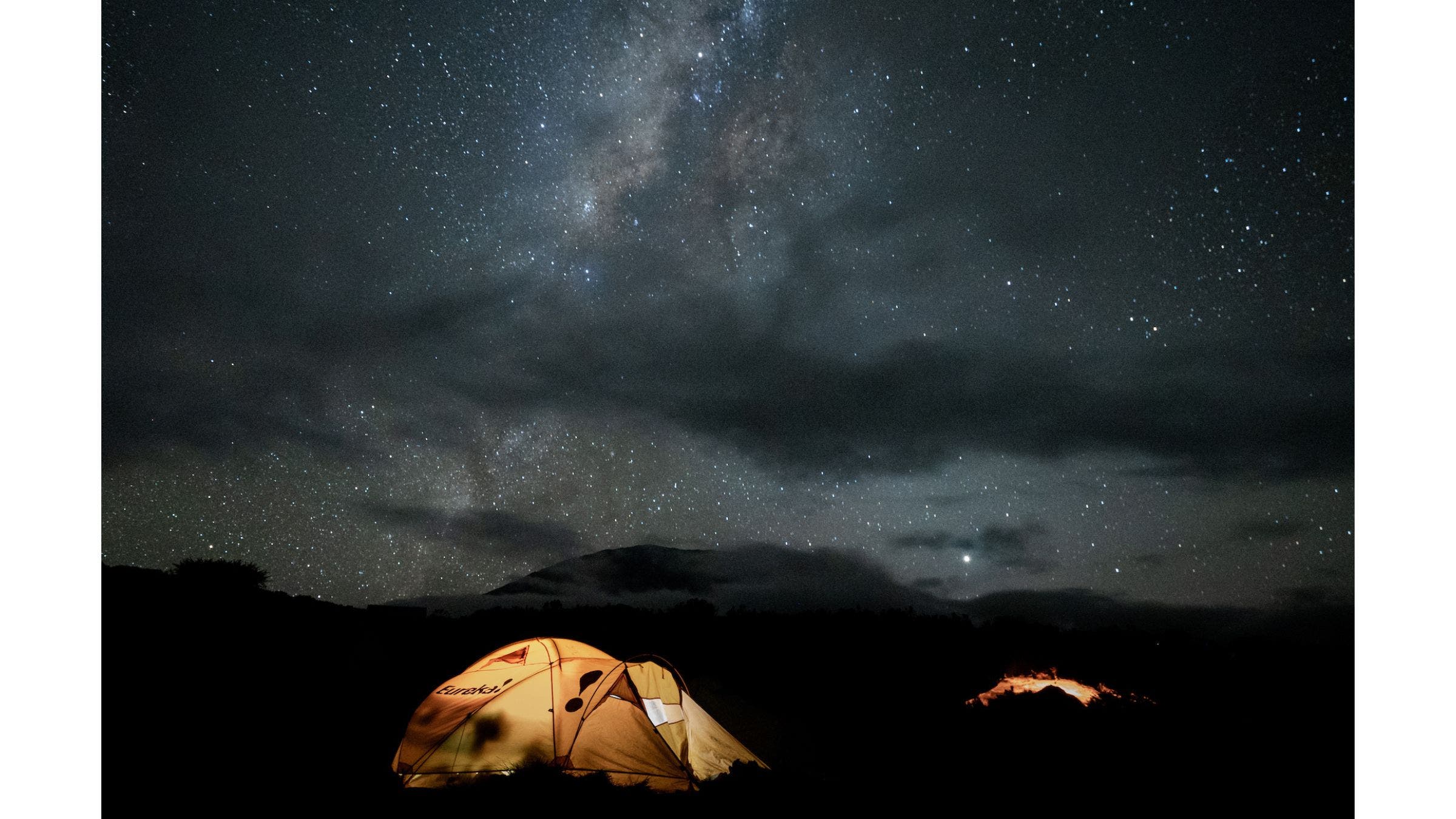
While portions of the Milky Way are visible year-round, our galaxy’s most dazzling section, the luminous core, is especially visible in the summer. It’s a glittery heap of stars, clouds, and gas that astrophotographers travel far from light pollution to enjoy.
In the northern hemisphere, the Milky Way core is visible from early spring through fall. Summer is the prime time, because the core is visible for most of the night. In spring, it’s only out in the early morning. Come fall, you’ll see the center for just a few hours after dark.
Unfortunately, light pollution hides the Milky Way from the majority of Americans. You’ll have to visit dark-sky areas far from cities and suburbs to see it. I use light pollution maps to search for inky Milky Way lookouts (the grey areas are best). You can also try DarkSky International’s map of stargazing hubs, including my favorites like the Oregon Outback.
International Space Station fFyovers
When: All summer
If the Artemis II mission left you craving more astronomical explorations, here’s another way to get your fill: look for the International Space Station. The ISS, which travels in low-earth orbit and has been continuously manned by crews for over two decades, is easily visible from Earth if you know when to look. The next few months are especially promising.
During much of the year, the ISS is only visible around dusk and dawn. But come summer, the ISS enjoys enough sunlight to stay visible all night, according to the BBC. Apps like NASA’s Spot the Station provide exact timing for when you can spy the spacecraft at home. I also use the website AstroViewer.net to map timing, including best viewing nights and duration of visibility.
Summer Constellations
When: All summer
During the summer, I spend many nights out in the field to photograph the Milky Way far from light pollution. But I also make time to navigate the heavens back at home. Backyard summer stargazing is a great way to start learning the night sky. Even in light-polluted cities and suburbs, like my hometown, you can spy constellations and informal star patterns, known as asterisms. They become increasingly familiar the more time you spend outside. Just turn off all exterior lights and give your eyes at least 20 minutes to adjust.
Here are a few key summer star patterns to look for, whether you’re deep in the backcountry or sky-watching close to home. Try a stargazing app like SkySafari to aid your studies if you’re new.
The Summer Triangle
After a long, cold winter, few sights are as exciting as the Summer Triangle, a pizza slice-shaped star pattern with three bright stars. You’ll see vivid Vega (from the Lyra, or harp, constellation), Altair (from Aquila the Eagle constellation), and Deneb (part of Cygnus the Swan).
T-shaped Cygnus is one of my favorite summer constellations because it points you in the direction of the Milky Way core—a handy tool for orienting yourself beneath dark skies.
Ursa Major
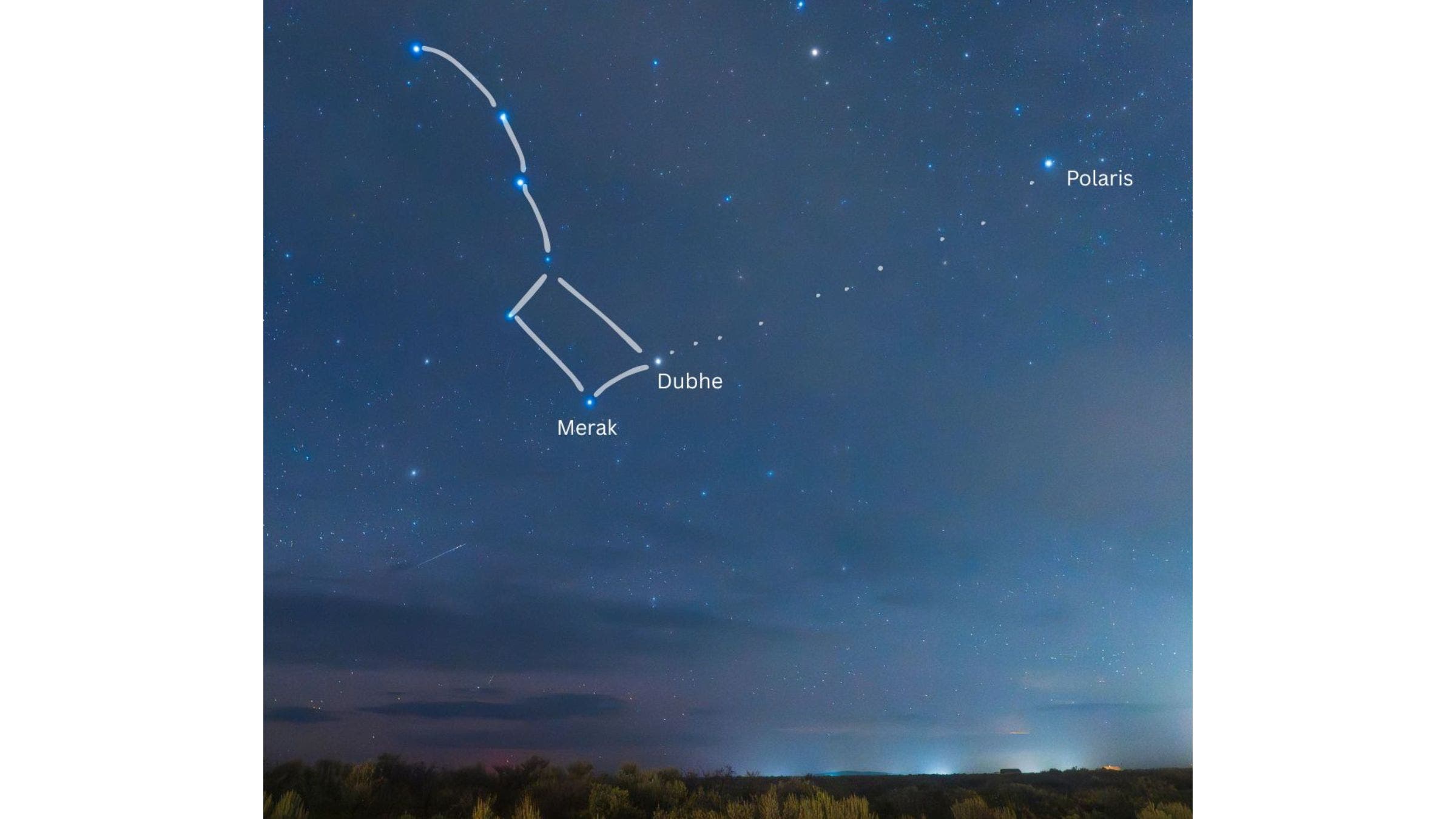
If there’s one star shape we all know, it’s the Big Dipper, an asterism that’s part of the Ursa Major (Greater Bear) constellation. The Big Dipper is high in the sky come summer. It’s also a helpful navigation tool.
Use the two stars on the outer side of the saucer, Merak (bottom), then Dubhe (top), to point you in the direction of the North Star, Polaris. It marks the handle of the Little Dipper, part of Ursa Minor.
The Big Dipper’s handle has another handy navigation trick: “arc to Arcturus.” If you follow an arc shape from the handle, high in the sky and away from the saucer, you’ll eventually reach the vivid red giant star Arcturus. It’s brightest pinprick in the kite-shaped constellation Boötes, known as the herdsman.
