

A third fatality on Mount Everest, tension over rope fixing, a historic ski descent on Lhotse, and other major stories from the world’s highest peak.
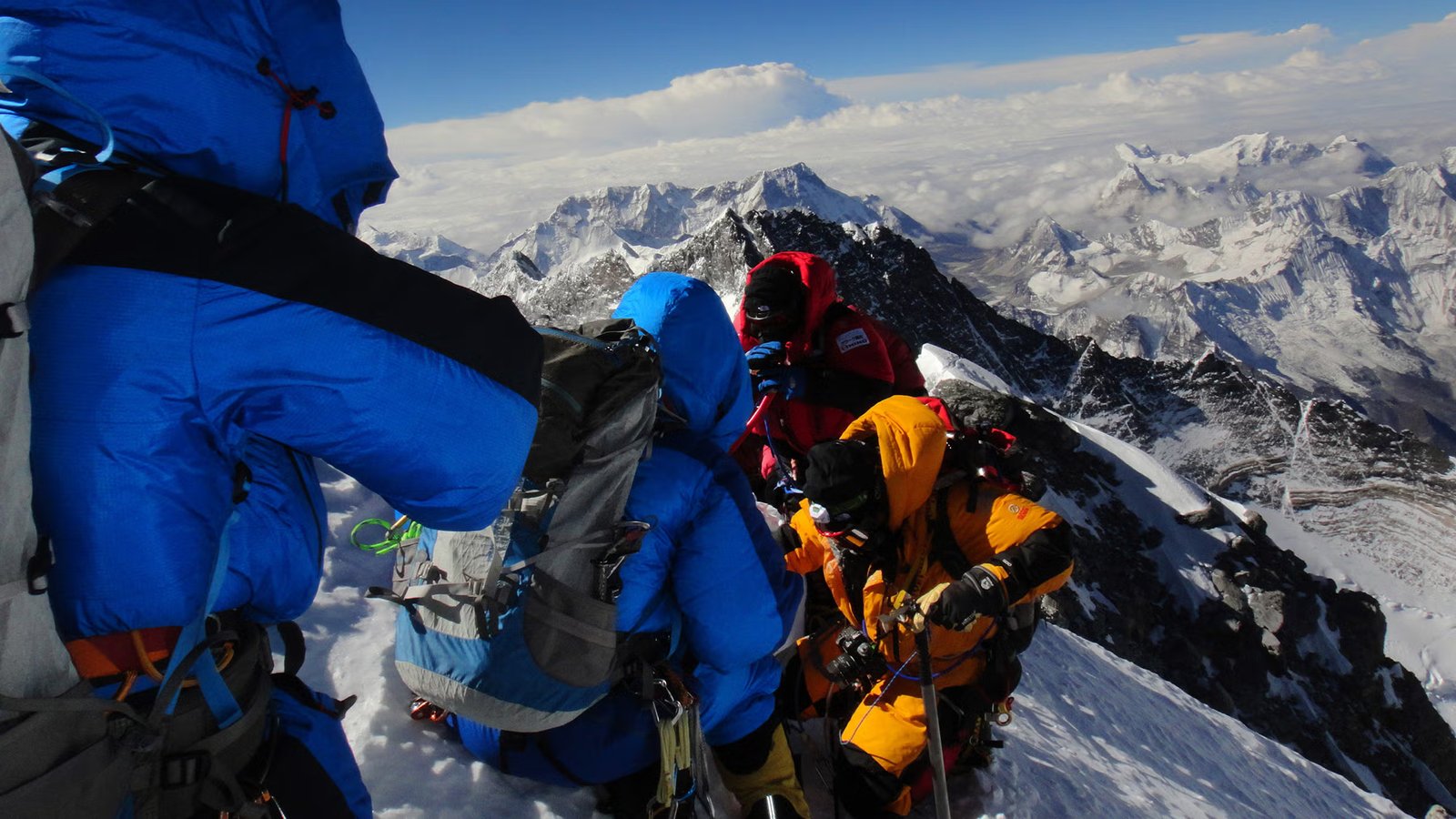
Climbers push for the top of Mount Everest (Photo: Tshering SHERPA/Getty Images)
Published May 12, 2026 02:25PM
After early delays, the climbing season on Mount Everest is in full swing. The speciality team of Sherpas that fixes the safety ropes to the summit is expected to reach the peak’s top on May 13, only a few days later than they did in 2025. As of May 12, the team had completed the lines up to The Balcony, a small resting spot on the peak’s southeast ridge at 27,700 feet.
Nepal has issued 492 permits for Everest this season—the most in history. As of the publishing of this story, hundreds of climbers are waiting at Camps II at 21,000 feet and III at 23,000 feet for their chance to be in the first wave to push for the top.
Guides told Outside they anticipate severe crowding on the route over the next few days, as more teams attempt to reach the top during the first weather window. Some expeditions, however, are waiting in Base Camp for a second weather window, which is likely to open around May 17.
Amid the push for the summit, there’s been plenty of other news on the peak.
This post will be updated throughout Mount Everest season to reflect breaking news.
May 12, 9 A.M. MST: An Audacious Ski Descent of Lhotse
With little fanfare, Polish ski mountaineer Bartek Ziemski left Camp IV on Lhotse at 1 A.M. on May 12, entirely alone, with no Sherpa support, fixed ropes, or supplemental oxygen. You can see a highlights video of his descent here.
Ziemski, who has been skiing the world’s peaks above 8,000 meters (26,000 feet), broke trail to the summit, arriving just after noon Nepal time. Then, he strapped on the skis he had carried on his backpack and began a descent to Base Camp. He navigated the steep Lhotse Face, picked through the Khumbu Icefall, and crossed crevasses on ladders typically used by climbers, arriving at Base Camp around 4:30 P.M.
“The conditions were okay,” he told Outside. “I was worried about conditions deteriorating so I pushed and did it quite early.”
According to the Himalayan Database, a website that chronicles accolades in Nepal’s Himalayas, Ziemski is the first person to ski Lhotse without supplemental oxygen. It’s his eighth descent of an 8,000-meter peak.
As for what comes next, he was characteristically understated: “I got the permit also for Everest. And I’m a poor guy, so I can’t say no and go home. So, yeah, I’m gonna try Everest now, too,” he said.
May 12, 6 A.M. MST: An Avalanche Hit Camp I at 21,000 Feet
Several days of heavy snowfall triggered multiple avalanches around Base Camp and Camp I on Sunday, May 10. In an Instagram post, 11-time Everest summiteer Pastemba Sherpa shared images of tents and supplies buried under deep snow after an unexpected avalanche struck the camp of expedition operator Summit Force.
“Our summit force team had got into a terrible avalanche on 10th May… our tents and necessities got all destroyed but by god’s will me and my entire climbing Sherpa brothers were safe.”
Avalanches are common sights at Base Camp and up in the Western Cwm, the top section of the Khumbu Glaicer. Falling snow roars down the steep flanks of the Western Cwm. In previous years, these avalanches have buried tents and even killed climbers. Fortunately, no injuries were reported in any of the avalanches on May 10.
May 12, 5 A.M. MST: Another Fatality on Mount Everest
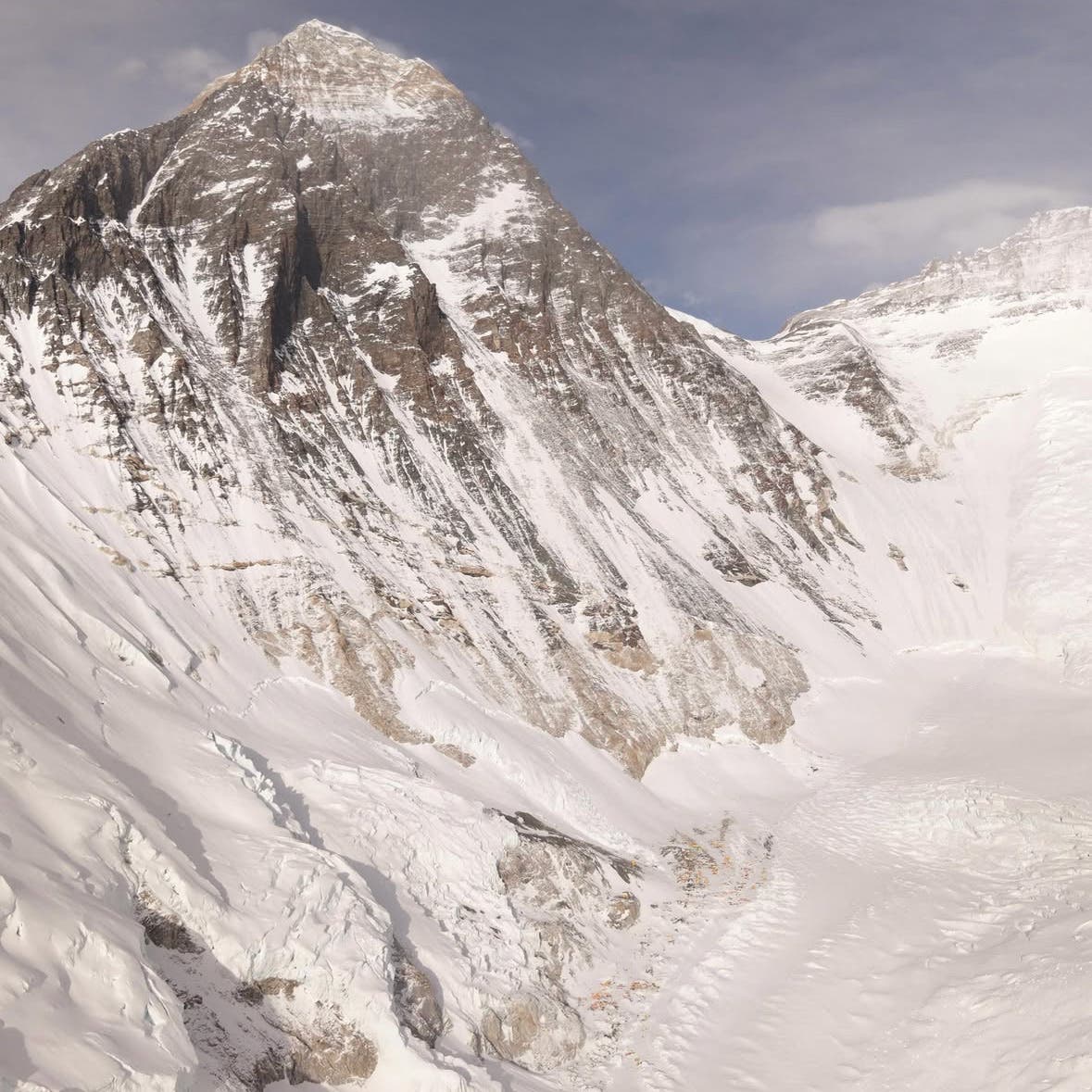
At 9 P.M. on May 11, a high-altitude worker named Phura Gyalzen Sherpa fell on the Lhotse Face just below Camp III at 23,600 feet. He died in the fall.
Phura Gyalzen, who was 20, and to rest in a crevasse below the Lhotse Face. He was working for Kaitu Expedition, a Kathmandu-based outfitter. Sources told Outside he had unclipped from the safety rope at the time of the fall.
Phura Gyalzen Sherpa was from Thamo, a village just west of Namche Bazaar in the Khumbu region. He was the grandson of legendary climber Ang Rita Sherpa, known as “the Snow Leopard” for his ten ascents of Everest without supplemental oxygen.
This story is developing. Our thoughts are with his family and community in this difficult time.
May 11, 11 P.M. MST: Rope Fixing Teams Approach the Summit, but Tensions Are High
Tension between acclaimed guide Mingma G and the official rope fixing teams operated by the Sagarmatha Pollution Control Committee (SPCC), the group that manages waste on Everest, and the Expedition Operations Association of Nepal (EOAN), the industry group for outfitters, has been a defining thread of the 2026 season.
When the SPCC’s Icefall Doctors and EOAN teams failed to find a safe route through the Khumbu Icefall, Mingma G sent an unofficial group to scout and fix an alternative passage to Camp I, directly contradicting the official verdict that no safe route existed.
While his route was not ultimately the one adopted, his persistence forced a resolution.
The same dynamic is now playing out higher on the mountain. After the official fixing team descended to Base Camp to rest, Mingma G, who is the manager of the expedition company Imagine Nepal, took to Instagram to announce his intention to take over summit rope fixing duties.
“It’s just 8:30 P.M. in Nepal, and a long line of climbers is seen on the Lhotse wall, ferrying loads to the South Col. There will be more climbers in a few hours,” he wrote on May 11. “Imagine this on summit day if we get only one or two weather windows because of late rope fixing to the summit. That’s why we wanted the lead to fix the line to the summit.”
Seven Summit Treks, the largest outfitter on Mount Everest with more than 100 clients, responded by sending additional guides and high-altitude workers up the mountain to help.
By the evening of May 12, a coalition of fixers from multiple expedition companies had combined forces and were pushing past the Balcony at 27,700 feet toward the summit.
