

Published May 5, 2026 04:22PM
A fatal accident on the Mount Wilson Trail near Los Angeles has prompted search and rescue crews to urge visitors to use more caution when heading into the area. But experts say the trail, which includes a section with a steep drop-off and a handrail-like rope, is safe
“The Mount Wilson Trail has the same natural risks and hazards that exist on any trail, to some degree, in our mountains,” Rob Klusman, senior operations leader of the Sierra Madre Search and Rescue (SMSR) told Outside. “You have steep, exposed, loose ground, lots of places where a slip and fall will have high consequences.”
An Hiker Death Prompts a Warning
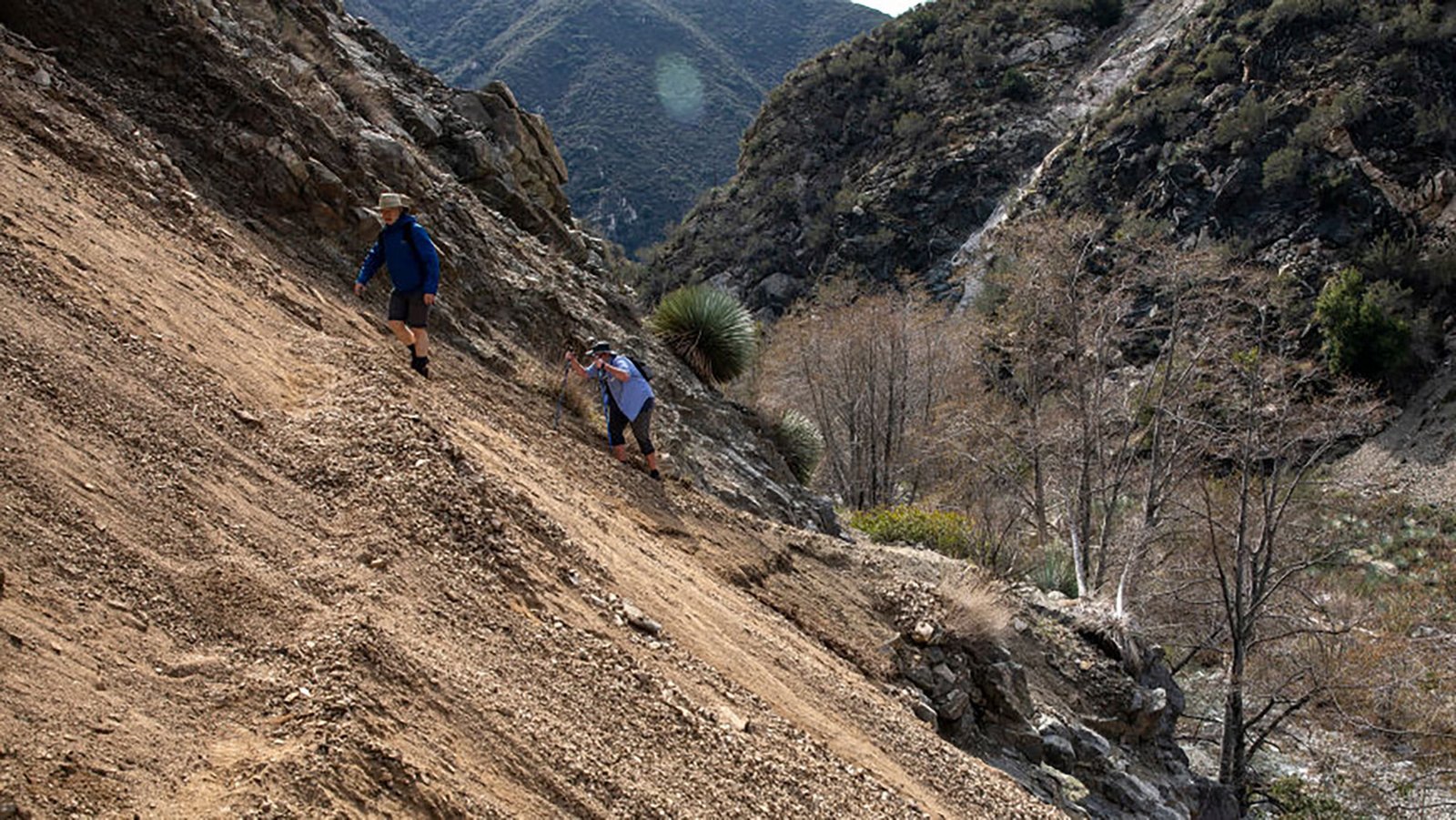
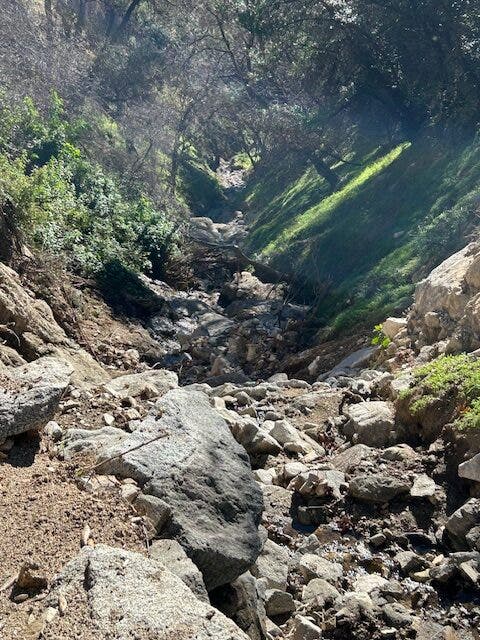
Just before 2:00 P.M. on May 2, a male hiker slipped off a steep, loose section of the trail, tumbling 30 feet into a ravine, according to a Facebook post from SMSR, the volunteer rescue group that responded to the incident. By the time rescuers reached the victim, he was dead. A report from the Los Angeles County Medical Examiner identified the fallen hiker as 66-year-old John McIntyre. The report said McIntyre died from blunt force trauma.
The accident produced a flurry of local and national news stories—outlets referenced the trail’s “fixed rope” section. SFGate described fixed ropes as a feature used by hikers when “navigating climbing routes.” KTLA, the local FOX TV station, noted that “climbers often rely on anchored lines to navigate steep terrain.”
The Mount Wilson trail ascends roughly 7.5 miles, with nearly 5,000 feet of elevation gain, to the summit of an eponymous peak (5,710ft) in the San Gabriel Mountains. The summit is also home to an observatory with two large telescopes.
The portion of the trail that McIntyre fell from is equipped with 20 feet of rope, strung along the uphill slope, for hikers to use for balance. But Klusman told Outside the fixed ropes on the Mount Wilson trail are better described as an optional “handrail.”
The route is no more dangerous than any other hiking routes in the area, he said.
Still, the trail does present a challenge to hikers. And Klusman said that other sections of the trail are just as treacherous as the one where McIntyfe fell.
“Probably 75 or 80 percent of that trail is exposed in some way,” Klusman, 60, who has worked with the search and rescue group for 30 years, said. “It’s loose, made up of fairly poor quality rock, and the mountainside is very steep.”
Klusman said the trail became even more tricky after the Eaton Fire, a wildfire that burned much of the surrounding hillside in January 2025. Local authorities closed the trail for nearly a year after the fires, reopening it in late February 2026.
How to stay safe in the San Gabriel Mountains
Most SMSR rescues, Klusman said, involve dehydration, heat exhaustion, or minor injuries like ankle sprains. In his 30-year career with SMSR, Klusman has only seen a handful of fatal falls. Still, he said that the region’s close proximity to Los Angeles attracts hikers with a wide range of abilities and knowledge of risk mitigation.
“Even though we’re in Los Angeles and we have a lot of resources, people don’t realize that these rescues take time,” Klusman said. “It’s not like calling the fire department, having them come down your block and stop in front of your house. It could take an hour or more to reach somebody up in the mountains.”
Hikers should prepare to survive on their own for an extended period of time while waiting for rescue, Klusman said, and in some cases, may need to be prepared to spend a night out on their own. He also emphasized the importance of bringing some form of communication device beyond a normal cell phone. Despite its proximity to Los Angeles, cell phone service is spotty in the Mount Wilson area.
“You can look down the hill and you can see the skyscrapers in downtown LA,” Klusman said, “but in a lot of those mountains, you will have no cell service at all. It could be perfect, in some select spots, but in others, it’s nonexistent.”
Ensuring your iPhone has satellite messaging capabilities, or carrying a Garmin inReach or other dedicated satellite communicator, is crucial. “Timely notification allows for a much more precise and rapid response,” Klusman explained.
Klusman also recommended bringing trekking poles on the Mount Wilson Trail, to provide better traction on the loose terrain, and knee support when hiking downhill. But he said that the more common occurrence is hikers forgetting even basic necessities, like the 10 Hiking Essentials.
“Because of our proximity to the massive population of Los Angeles, a lot of people don’t seem to appreciate the inaccessibility of these mountains,” Klusman said. “They don’t bring enough water, they don’t bring the right apparel.” He added that many hikers start hikes late in the day, and run into trouble while trying to descend in the dark.
“Everyone should bring a headlamp or flashlight,” he said. “Traversing this terrain in the dark dramatically increases your risk.”
Another piece of advice from Klusman is to let your friends and family know where you’re going and how long you plan to be gone. He also said that if a friend or loved one is out hiking and overdue, don’t be afraid to call as quickly as possible.
“Some people have this idea that a person has to be missing for 24 hours before the authorities will do anything,” Klusman said. “That’s not true. If we have somebody out on a hike and they were supposed to be back an hour or two ago, we’re not waiting another 22 hours. We’re gonna respond immediately.”
Klusman added that if you do call for help, whether for yourself or a missing loved one, keep authorities updated on the situation, especially if you no longer need assistance.
“If you call search and rescue, but then hike out, please notify us that you’re out and there’s no longer an emergency,” he said. “That way we’re not up there in the middle of the night, looking for somebody that’s actually home watching TV. That has happened more than once.”
