

Updated May 6, 2026 12:26PM
Some of the country’s most popular national parks are hiding a potentially deadly secret in their water. As part of a new study, researchers found Naegleria fowleri (N. fowleri), also known as the “brain-eating amoeba,” in hot springs and hydrothermally fed waters across Lake Mead Recreation Area, as well as Grand Teton and Yellowstone National Parks.
Though rare, the pathogen kills 98 percent of those infected within five to ten days.
As part of the study, researchers at the U.S. Geological Survey and Montana State University analyzed 40 recreational waterways across five western National Park Service (NPS) sites, including Yellowstone, Grand Teton, and Lake Mead Recreation Area. They detected the amoeba in 34 percent of samples.
“People can become infected when they go swimming or diving in contaminated warm fresh water,” wrote the NPS on its website. “Infection occurs when the organism enters the body through the nose and travels to the brain, causing Primary Amebic Meningoencephalitis (PAM), which is almost always fatal.”
As much of the United States faces drought conditions, experts warn that cases of the deadly pathogen could increase as temperatures rise. The amoeba thrives in warm pools up to 115 degrees Fahrenheit, and water across western national parks is getting warmer.
Brent Peyton, one of the study’s authors, told Outside that the findings aren’t surprising as the pathogen is found worldwide. What was unexpected, however, was its high concentration at some sites.
“Some of the sites we sampled had N. fowleri concentrations greater than other sites with a known fatality,” Peyton said.
The Pathogen is Migrating North as Temperatures Warm
Cases of amoeba infection have expanded northward since 1962 as temperatures have steadily increased nationwide. The pathogen lives in soil, warm freshwater lakes, rivers, ponds, and hot springs. More specifically, it thrives in waters between 71 and 86 degrees Fahrenheit, including many of the nation’s most cherished backcountry hot springs. As more than half of the country is currently experiencing drought, experts warn cases of infection could continue to rise.
“N. fowleri is very widespread and found in many recreational waters, not just national park hot springs,” Peyton said. “Infections are very rare, but we believe we are seeing the geographic range of cases spread over time, perhaps due to climate change.”
Between 1962 and 2024, the Centers for Disease Control and Prevention (CDC) reports that there were 167 infections in the U.S. Only four people with the infection have survived. Although the CDC says fewer than ten people become infected annually, other estimates suggest as many as 16 deaths occur in the U.S. on average every year, as a result of this fatal pathogen.
“These findings indicate that N. fowleri is present in thermally impacted areas across the western United States and underscore the use of enhanced monitoring, public awareness, and risk management strategies in thermally influenced recreational waters,” the researchers wrote in the study.
As part of the study, researchers at the U.S. Geological Survey and Montana State University analyzed 40 recreational waterways across five western National Park Service (NPS) sites, including Yellowstone, Grand Teton, and Olympic national parks, as well as Newberry National Volcanic Monument in Oregon and Leake Mead Recreation Area. They detected the amoeba in 34 percent of samples—but none in Newberry or Olympic.
Brain-Eating Amoeba Detected in Popular Hot Springs
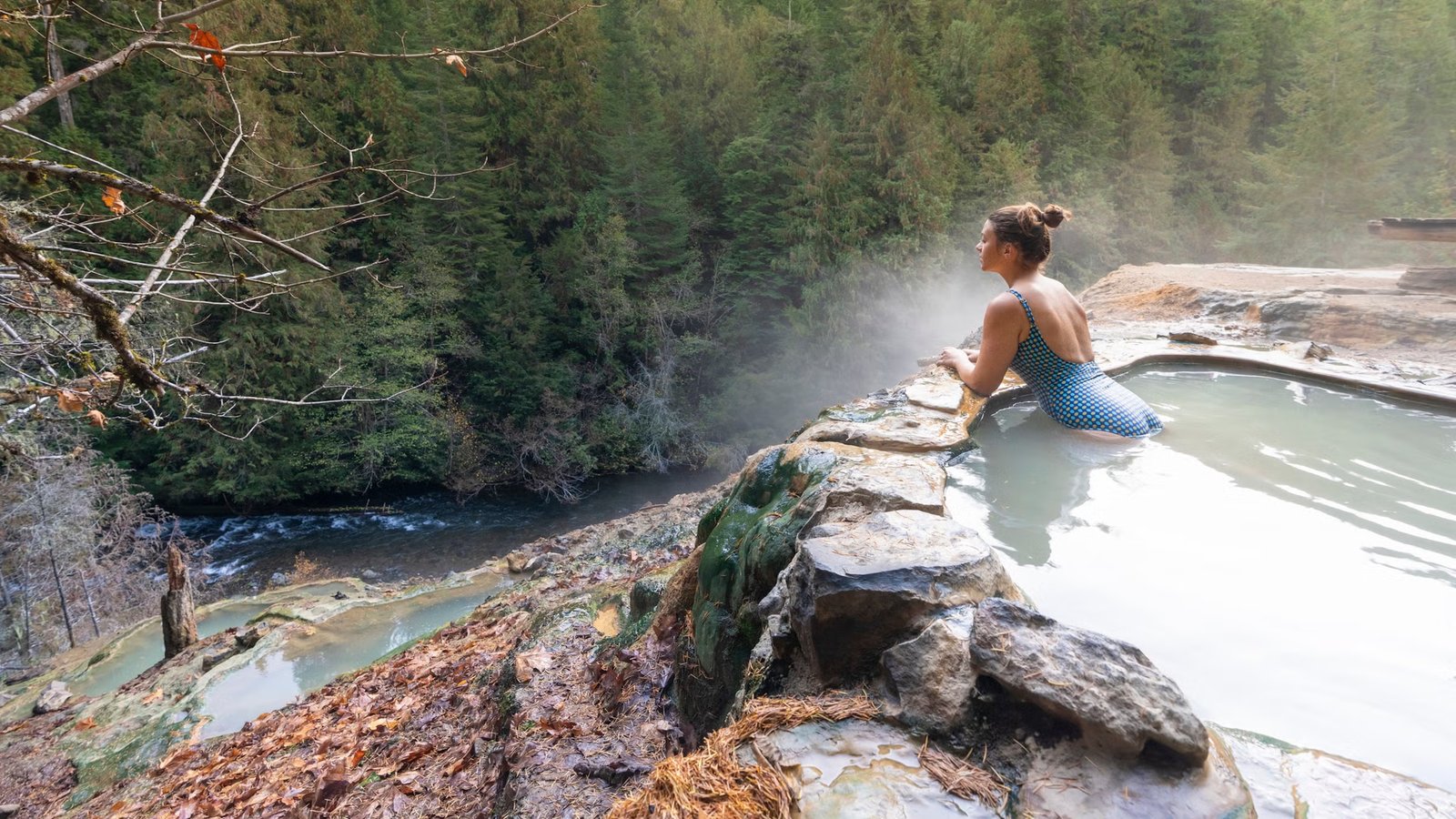
Polecate Hot Springs, accessed by a popular 2.5-mile trail in Grand Teton, contained the highest concentration of N. fowleri at levels that can exceed public health limits. Both upper and lower pools tested positive. Researchers also detected the amoeba in Grand Teton’s Huckleberry and Granite Hot Springs.
In Yellowstone National Park, researchers found the amoeba in the Boiling River, where hydrothermal water mixes with the river. Researchers also detected the amoeba at Lewis Lake, specifically at multiple springs on the southern shore, and the Firehole River’s Goose Lake and Firehole Canyon Swimming Area.
Four sites in Lake Mead Recreational Area tested positive for the pathogen, including Boy Scout, Nevada, Blue Point, and Roger’s Hot Springs.
The NPS warns that postage signage is typically not used at park sites to label areas where the pathogen is present. Rather, people should assume that it “can be present in warm freshwater bodies across the United States.”
How to Avoid Infection
In 2025, a 12-year-old died after contracting an infection in a South Carolina lake. At least three people died in the U.S. after playing on infected splash pads between 2020 and 2023, and a Seattle woman died in 2018 after becoming infected by way of her neti pot.
“There is no need to be alarmed, but it is good to be aware. N. fowleri is found worldwide and is present across the United States, particularly in southern states. It inhabits hot springs, lakes, rivers, and has even been detected in tap water,” Peyton said. “However, N. fowleri infection can easily be prevented by keeping water out of one’s nose.”
Early symptoms of PAM can include headache, fever, nausea, and vomiting. The infection progresses rapidly and can eventually include a stiff neck, confusion, lack of attention, loss of balance, and hallucinations. Because infections are so rare and hard to detect, the CDC says that diagnosis sometimes occurs after a person has died.
Although staying away from known contaminated areas is the best way to avoid infection, experts also advise soakers to wear nose clips, keep their heads above water, and avoid stirring sediment in pools.
