

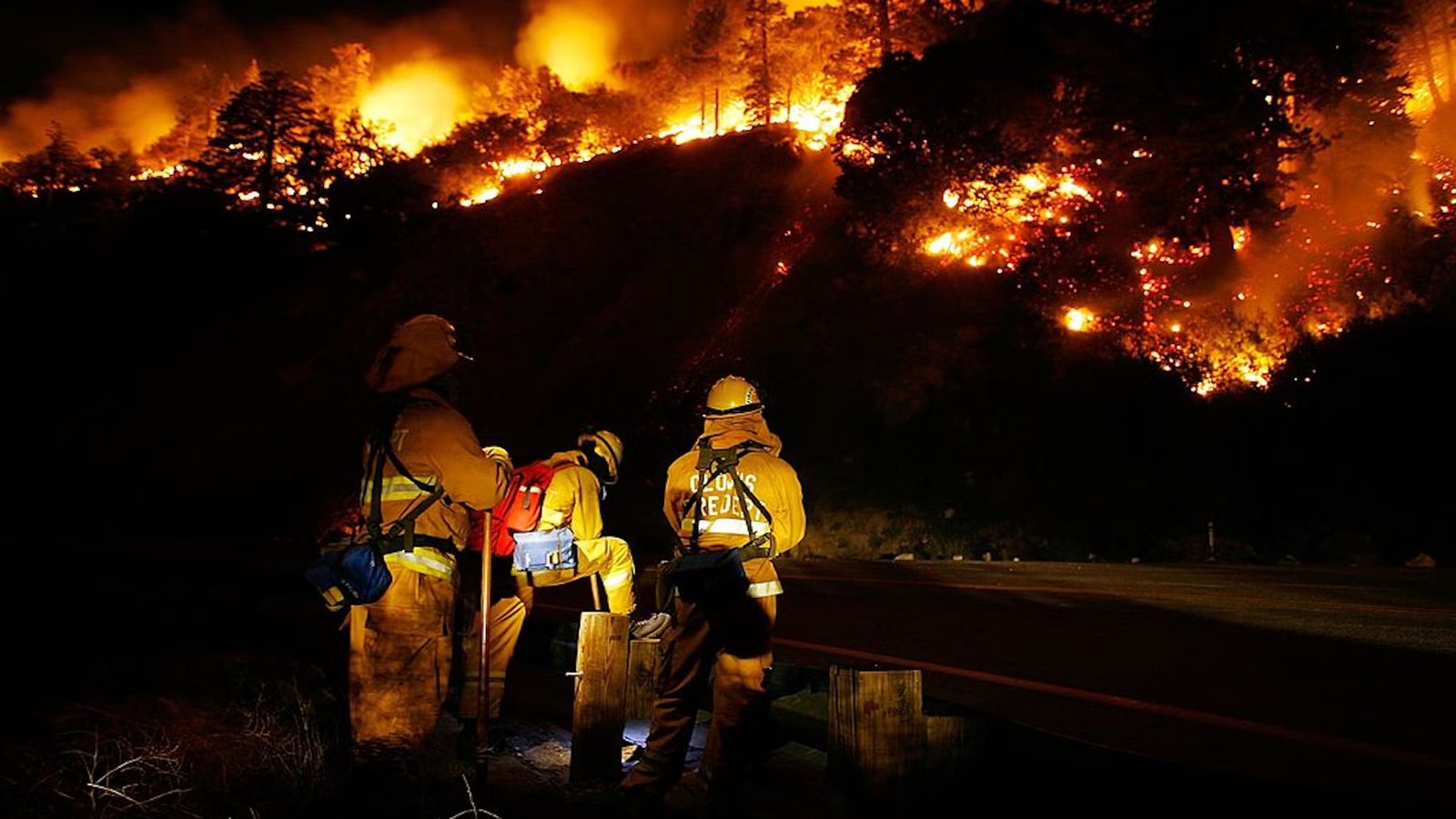
Extreme drought, overstretched crews, and a sweeping Forest Service restructuring are converging into what experts fear could be the most volatile fire year in U.S. history.
Firefighters keep watch as a California fire burns in 2007 (Photo: David McNew/Getty Images)
Published May 6, 2026 05:18PM
Wildfire season is fast approaching, and with low snowpack, dry conditions, and soaring temperatures across the U.S., experts are warning that 2026 may be one of the worst on record. Combine those extreme conditions with massive restructuring at the U.S. Forest Service (USFS), and the result is a powder keg for federal wildland firefighters.
“We have a wildfire crisis on our hands right now,” said Riva Duncan, an ex-fire chief who spent 32 years fighting wildfires for the USFS and Bureau of Land Management. Today, she’s the president of the advocacy organization Grassroots Wildland Firefighters.
“We used to call it a fire season, now it’s a fire year,” Duncan told Outside. “Our fires are larger, more destructive, last longer, and are more difficult to suppress.”
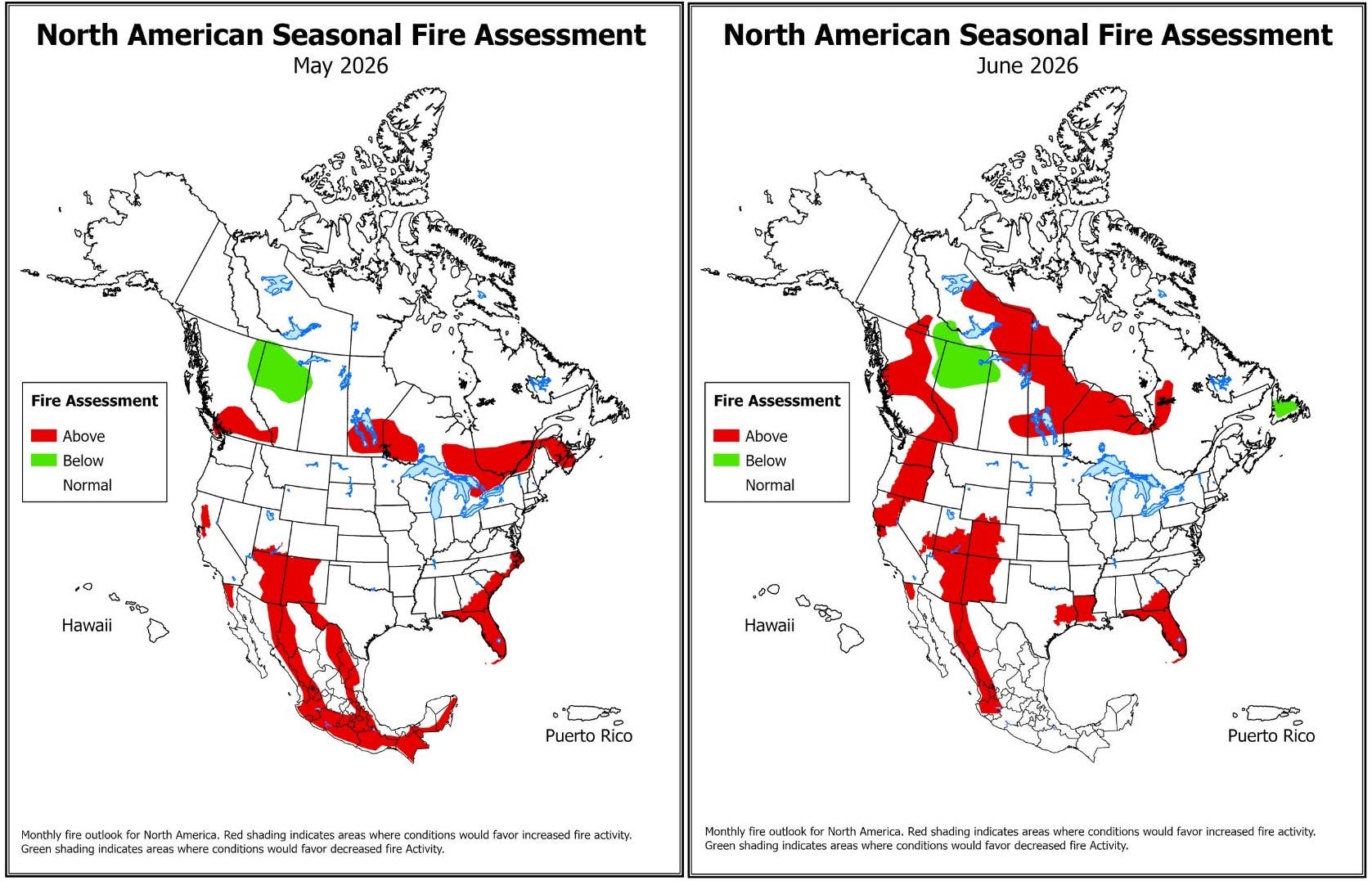
The National Interagency Fire Center (NIFC), which tracks wildfires across the country, issued its 2026 season outlook on May 1. To date, more than 1.8 million acres have burned across the U.S.—that’s 194 percent above the ten-year average for this time of year. The number of reported wildfires (24,066) is also record-breaking: 150 percent above the ten-year average between January and April. The outlook also indicates that hot, arid conditions are intensifying, with 62 percent of the country currently in drought.
Why Is the 2026 Wildfire Season Getting Worse?
A variety of factors are worsening wildfire danger, Duncan said. Among them are a hotter, drier climate, over-aggressive fire suppression tactics, and the construction of homes in fire-prone wilderness areas. Reduced support for firefighters on the ground is also having a serious impact.
“We’ve had a terrible retention and recruitment problem within the federal agencies,” Duncan said. “People are leaving for better pay and better work conditions. They’re leaving fire altogether, because it’s an unsustainable career.”
Firefighters used to have the occasional busy year, she noted, but now the busy year is every year.
“This giant burden seems to keep falling on the shoulders of people doing an already very risky and hazardous job,” Duncan said. “And it’s just getting worse.”
Experts Warn a Powder Keg of Conditions
The USFS is one of the primary agencies responsible for defending wildland from fires. Its personnel manage fires on all national forests and grasslands, some 193 million acres. But the Trump administration recently announced sweeping changes to the agency, including moving its headquarters from Washington, D.C., to Salt Lake City, Utah; shuttering its regional offices in favor of state offices; and axing a significant portion of its research division—57 research stations.
Supporters of the move say that the USFS restructuring puts decision makers closer to the lands they manage.
“This is about building a Forest Service that is nimble, efficient, effective, and closer to the forests and communities it serves,” said Forest Service chief Tom Schultz in a news release announcing the decision. “Effective stewardship and active management are achieved on the ground, where forests and communities are found—not just behind a desk in the capital.”
Some experts like Duncan disagree, saying that although these cuts and changes aren’t directly targeting firefighters on the ground, they erode the foundation that keeps those crews operating safely.
“Morale is terrible right now,” Duncan said. “We lost a lot of folks through DOGE cuts, and more through delayed resignations and early retirements. There’s a huge network of support behind the scenes to help the firefighters doing the actual work, and a lot of those folks have left. With the proposed reorganization, getting rid of offices and research stations, we’re losing even more of that support network.”
As the summer peak wildfire season approaches, Duncan isn’t optimistic.
“Firefighters I know are saying they’re already tired, and summer’s just starting,” she said. “It’s hard to predict a fire season, but the way things are lining up, it looks like it could be a really, really busy year.”
Don’t Be a Statistic When It Comes to Wildfire Preparedness
A wildfire emergency can happen at a moment’s notice. In an email to Outside, Wildfire Safety Systems, a company offering resources to help consumers stay safe during a wildfire, shared six tips to prepare in the event of a fire.
- Don’t Wait for the Knock: The most dangerous mistake is waiting for a mandatory order. It is recommended to evacuate immediately upon the issuance of a warning.
- The One-Way Rule: Wildfire traffic can turn two-lane escape routes into gridlocks instantly. If you see smoke, the time to move has already passed.
- Hardening the Home: Before leaving, homeowners should prioritize “Defensible Space” by clearing mulch and firewood from the perimeter and sealing all ember-entry points, such as pet doors.
- The 6 Ps of Packing: A checklist for high-stress moments: People/Pets, Papers, Prescriptions, Pictures, Personal Computers, and Plastic (Cards/Cash).
- The Last Resort Contingency: Even the best evacuation plans can fail. Understanding how to utilize emergency shelters can transform a fatal situation into a survivable one.
- The Survival Kit: If someone is sheltering in place during a wildfire, they need to understand that once the fire has burned out, the danger isn’t over. Roads are closed, power is out, and rescue post-fire may take days. An emergency preparedness kit with food, water, and first aid supplies is paramount.
What’s Burning Now?
The vast majority of the wildfires burning in the U.S. right now are in the southeast. The two largest fires of the year so far—the Pineland Road and Highway 82 fires—have both occurred in southern Georgia, burning a collective total of more than 50,000 acres. Both of these fires are more than 65 percent contained, but still actively burning. There are half a dozen other large fires in Florida, according to a May 6 report from the NIFC, which have collectively burned over 16,000 acres.
