

Published May 7, 2026 03:00AM
In my family, we reserved Sundays for fish. My grandmother would sauté sardines with onions and tomatoes. That fishy stench permeated from the kitchen into every room in the house. It had a personal vendetta against my nostrils. I started calling them “the stinky fish” around age seven, lobbying loudly for pancakes like a normal American child. My Caribbean grandmother was not moved.
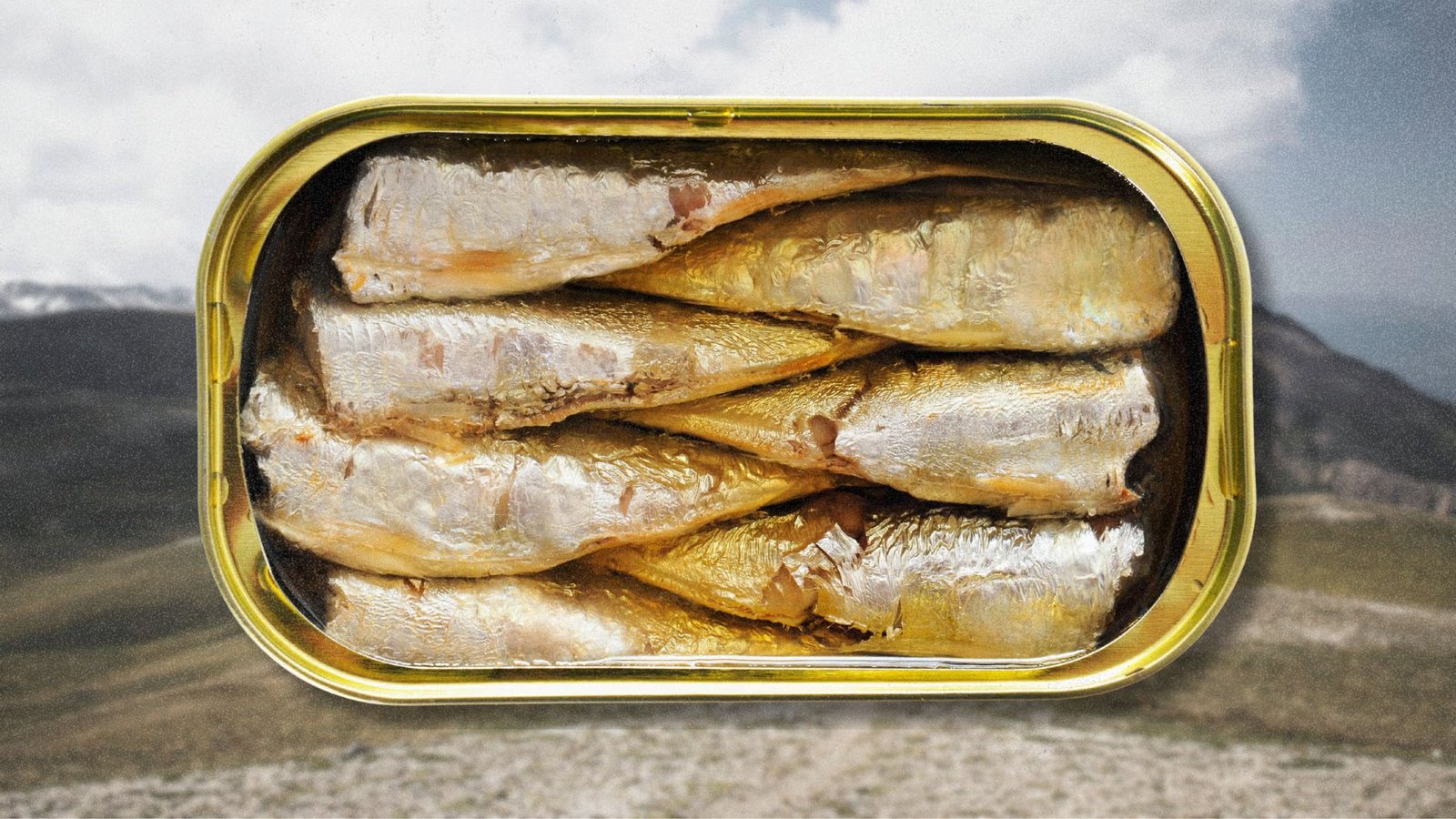
While I was busy avoiding them, sardines took over the internet (and military bases before my time). Not only are tinned fish considered a skincare and health hack by TikTokers, but those small tins also make for an excellent trail food. They’re cheap—if you ignore the luxury options—portable, and full of protein.
Here’s how sardines and their tinned fish friends evolved from that nasty-smelling thing I—and I presume many others—ran from to becoming the ultimate wellness and outdoor adventure superfood.
Canned Fish Once Kept Entire Armies Alive
In France during the Napoleonic Wars (1803–1815), militaries struggled to keep food fresh. Napoleon offered a cash prize to anyone who could figure out how to preserve food for troops in the field.
By 1809, French chef and candy maker Nicolas Appert figured out that you can preserve food by heating it and sealing it in airtight containers. Heating the food while in a can helps kill germs, and when it cools, the can seals, preventing other bacteria from getting in. Fish could be tightly packed in tins, remain fresh, and be shipped over long distances. And so canned food became a hit.
In 1943, the U.S. began rationing canned fish because demand skyrocketed as World War II troops needed a steady source of protein. Eighty percent of tinned sardines and mackerel, and 60 percent of canned salmon, went to soldiers. (Back in World War I, empty beef and fish cans were also used as improvised hand grenades.)
While once a source of survival, sardines today serve as a wellness and performance hack.
Why Are Sardines Trending Right Now?
Sardines have soared in popularity so much so that the tinned fish industry is expected to reach a global value of $64 billion by 2032, according to a report from Introspective Market Research, a company that tracks consumer behavior. There are a few reasons behind the fish’s current star power.
First, they’re portable and long-lasting. During the pandemic, people seeking quick snacks turned to canned food. Sardines can remain safely in your pantry for around three years and supposedly taste better the longer they sit untouched. Sardines packed in tomato sauce can even be safe to eat for up to three days after opening, according to a 2022 study.
Second, people won’t shut up about them. TikTokers have flooded the algorithms with extravagant “seacuterie” boards. Earlier this year, health influencer Ally Renee posted a video that racked up nearly three million views. She told her followers that sardines were “skincare in a can.” Many commenters seconded her point, stating they’ve been lifelong fans of the fish. Singer Kelly Rowland brought them further into the mainstream when she shared a lunch recipe on Instagram: sardines, soft-boiled eggs, greens, and lemon.
Next is the price point. In an interview with Vox, Renee said that she started eating them because they were the cheapest thing she could find in Los Angeles. I think that the tension between eating well and price is the biggest driver of our collective obsession with sardines. Food is expensive right now, and a generation that came of age during inflation is learning to spend and eat strategically. While some fancier cans, such as those from the popular brand Fishwife, can run you nearly $11 per tin (or $32 for a three-pack), you can find many that sit around $2–$3 per can. The brand Bumblebee offers sardines for a humble $1.49.
Lastly, sardines are really good for you. A 2023 review in the journal Frontiers in Nutrition argued that sardines are among the more nutrient-dense foods available. They provide omega-3s, which are good for the heart, boost energy, and may even lower people’s risk of neurodegenerative diseases such as Alzheimer’s. They’re protein-dense, too. The review notes that in 100 grams of sardines (one tin may be around 85 to 119 grams), you’ll get between 20 grams and 24 grams of protein.
Briana Bruinooge, a registered dietitian nutritionist, board-certified sports dietitian, and CEO of New England Nutrition and Exercise, a sports nutrition practice for outdoor athletes, is a big fan of the sardine trend. “Sardines contain nutrients that support muscular strength, power, speed, agility, endurance, and cognition. Vitamin D and calcium support bone health and muscle function,” she told Outside. It’s easy to see why sardines make for optimal outdoor fuel.
Why Are Sardines the Ultimate Outdoor Adventure Snack?
Sixty-one-year-old longevity expert and bestselling author of Your New Prime, a book about living well after 40, Craig Cooper has been taking canned sardines on the trail with him for over five decades. “Sardines are my number one superfood and have been since I was seven,” he told Outside. Whether it’s ultra-endurance swims in Greece, Spartan World Championship races, or surf trips in Fiji, Cooper says he can be found with a tin of fish in tow. “They give you real nutrition when you’re on the trail for hours, not just calories,” he says.
Sardines deliver a micronutrient profile most sports foods cannot touch, Bruinooge says, particularly on docosahexaenoic acid (DHA), the omega-3 fatty acid most critical for brain health and inflammation control. “Eating the whole sardine gives you calories, protein, fat, and a wide range of micronutrients,” Bruinooge says. The whole sardine is doing considerably more work than anything you will find in a fish-oil capsule.
Cooper agrees, and it shapes how he shops. His go-to is Fishwife’s Sardines with Hot Pepper, always bones-in for that calcium, magnesium, and phosphorus payload.
Should You Be Worried About Mercury?
Don’t be, says Bruinooge. Sardines are low in mercury (compared to canned albacore tuna, which contains roughly 27 times more mercury), and their sodium content is actually an asset for athletes losing electrolytes on long efforts. She recommends a ceiling of three to four servings per week, given their organic arsenic content, and flags their purine content. Purines are chemicals found in some foods and drinks, but too many lead to more uric acid build-up, which can exacerbate issues for people prone to gout or kidney stones. Cooper’s main word of caution concerns the fish’s low-carb profile, so he recommends not relying on them as your sole fuel source. “You still need higher-carb, calorie-dense foods to support endurance and sustained output,” he says.
Unlike most food trends, Cooper points out he’s excited that sardines are at the forefront of wellness and nutrition right now. “Sardines are grounded in real science, with decades of longitudinal research behind the nutrients and benefits they deliver,” he says.
Tips for Managing the Fishy Smell and Packing Them
Sardines, as I mentioned in my childhood rant against them, are famously pungent, and out on the trail that smell is a wildlife consideration as much as a social one. Cooper’s protocol: double zip-lock every empty tin before it goes back in your pack. The smell sealed inside is the alluring odor that won’t broadcast your location to every bear in a quarter-mile radius.
Also, one Fishwife tin weighs about 120 grams, so carrying two or three is a real pack-weight commitment. If you’re optimizing for pack weight, he suggests factoring that in before you hit the trailhead.
I bought a tin of sardines last week. I ate one straight from the metal package, the way Cooper says he does it. It was fishier than I expected and better than I wanted to admit.
My grandmother was not ahead of the trend. She was just feeding her family the way she always had, with something affordable and nutritious that stunk up the whole house on a Sunday morning. The fact that it took the internet for the rest of us to catch up is either funny or embarrassing, depending on how you look at it. Probably both.
Marisa McMillan is Outside’s health history columnist. She’s an avid runner and skier and is always game to try new foods, even the ones that look unappetizing. She previously wrote about the history of cottage cheese.
