

Published May 8, 2026 08:48AM
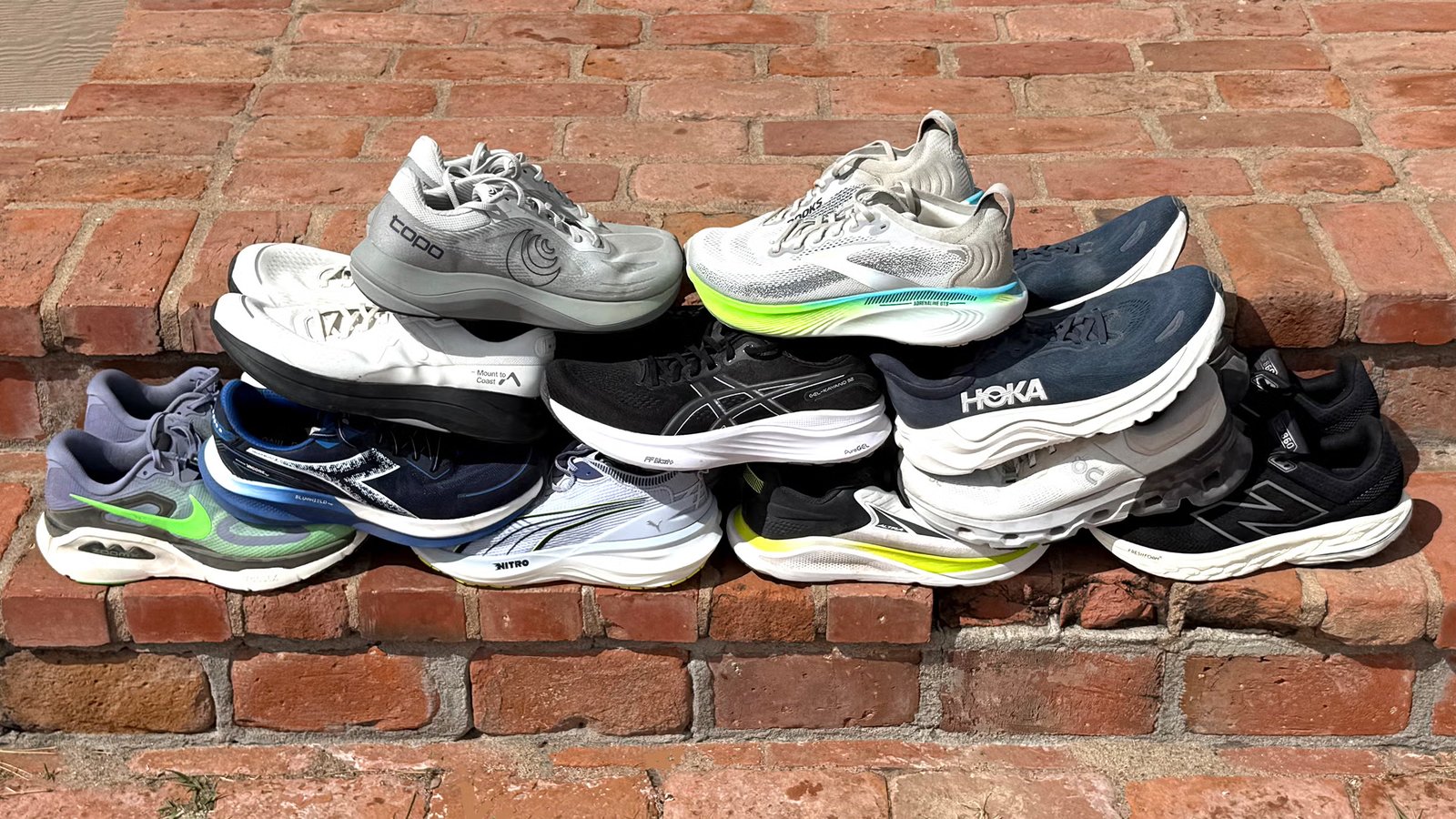
May 2026 Update: After testing every new stability shoe and comparing them to models already tested, we named eight new category winners, including a new best stability shoe all-around in the Brooks Adrenaline GTS 25, which stood out for its innovative, smooth support and balanced blend of cushioning and responsiveness. For a shoe that supports and also feels fast for up-tempo days, check out the Hoka Arahi 8.
About our lead tester: I’ve been a runner since the late ’70s and a running magazine editor, writer, and shoe reviewer since 2000. Once a 2:46 marathoner regularly doing 50+ mile weeks, injuries and age have reduced my volume and slowed my pace. Those injuries have also given me rather complicated stability requirements. My left foot is high-arched and neutral, while my right foot has been weakened by strains and needs a bit more support. Both knees have been somewhat compromised and appreciate a stable platform and supportive guidance when fatigued. Too much medial support, however, makes my right knee hurt, as it has to pronate inward to offload stress from a chronic condition. All of which makes me well-suited to test new, less-prescriptive stability strategies which promise to adapt to the level of support you might need.
Best Stability Shoes: At a Glance
Best Stability Shoe All-Around
Brooks Adrenaline GTS 25
Weight: 10.6 oz (men’s), 9.5 oz (women’s)
Stack Height: 37–27 mm
Drop: 10 mm
Stability Strategy: Integrated guide rails. Wide, straight base. Moderate stack height.
The first Brooks Adrenaline GTS came out in 1999, and it has been a go-to daily trainer for many runners over the first quarter of this century. The shoe has evolved with the changing understanding of stability—most significantly when Brooks dropped the dense, full-height medial post on this, its signature stability model, and replaced it with what they call GuideRails, now found on the stability version of all their shoes. These support structures are strips of raised foam on top of the midsole, stretching from the heel up to the middle of the arch on both sides—firmer on the medial (arch) side to reduce inward roll, and the same density as the midsole on the outer rim to keep the heel from sliding outward. The rails are less prescriptive than a full medial post that reaches all the way to the ground and under the foot. They stay out of the way, engaging the foot only when needed, and deliver lighter, more cushioned, and smoother support that works with the runner’s natural movement path.
This year, the Adrenaline’s stability support got even smoother: Rather than the GuideRail on the arch side being a separate piece of denser foam on top of the midsole, it is now a higher-density zone of the same piece of foam, so there’s no stiff glue and no harsh change in feel as the foot engages the GuideRail. “It weighs a little bit less, and there’s less cement closer to your foot,” says Nikhil Jain, director of footwear product line management at Brooks. “It’s more seamless, and our testing has actually found that the less cement, the smoother the transition, and the better the perception with the runner.”
I can confirm the integrated rail delivered smooth, subtle support that felt like it firmed up intuitively and was there when I wanted it without me noticing the transition. I loved how the rails gave me confidence that I wouldn’t roll too far, yet never felt like they were controlling my stride. Still, I appreciated the relative firmness over shoes that rely completely on geometry for support. Jain says that feeling is intentional and important: “The firmer underfoot sensation, because of the second durometer of the guide rails, is something that a lot of consumers appreciate, because they get a sense of security and confidence and reliability. If they’re in a really soft shoe and it feels really mushy, their feet have to work harder, and that equates to fatigue setting in faster and then pain.”
At the same time, however, I welcomed the slightly softer ride from this version’s small increase in Brooks’ nitrogen-infused EVA-blend midsole foam, particularly in the forefoot, where it went up three millimeters compared to one millimeter in the heel. While the foam is still tuned more to support than squish, the additional height made it just thick enough to elevate the ride from a firm feel to a Goldilocks balance between cushioning and connectivity, making my feet feel protected while able to sense and respond to the ground. The resulting change in heel-toe drop from 12 to 10 millimeters also seemed to give the shoe a more balanced ride, and the increased forefoot thickness is still moderate enough to allow for a flexible toe-off.
The upper is also plusher, with a softer, more flexible, and more breathable zonal mesh, and an internal heel collar that surrounds and supports like an airplane neck donut. Like the sole, the upper balances comfort and security well. That balance above and below the foot makes the Adrenaline GTS 25 easy on the feet during daily runs, reliably supportive for going long, and responsively peppy during up-tempo workouts and pick-ups—earning it best stability shoe all-around status in my book this year.
Runner-Up, Best Stability Shoe All-Around
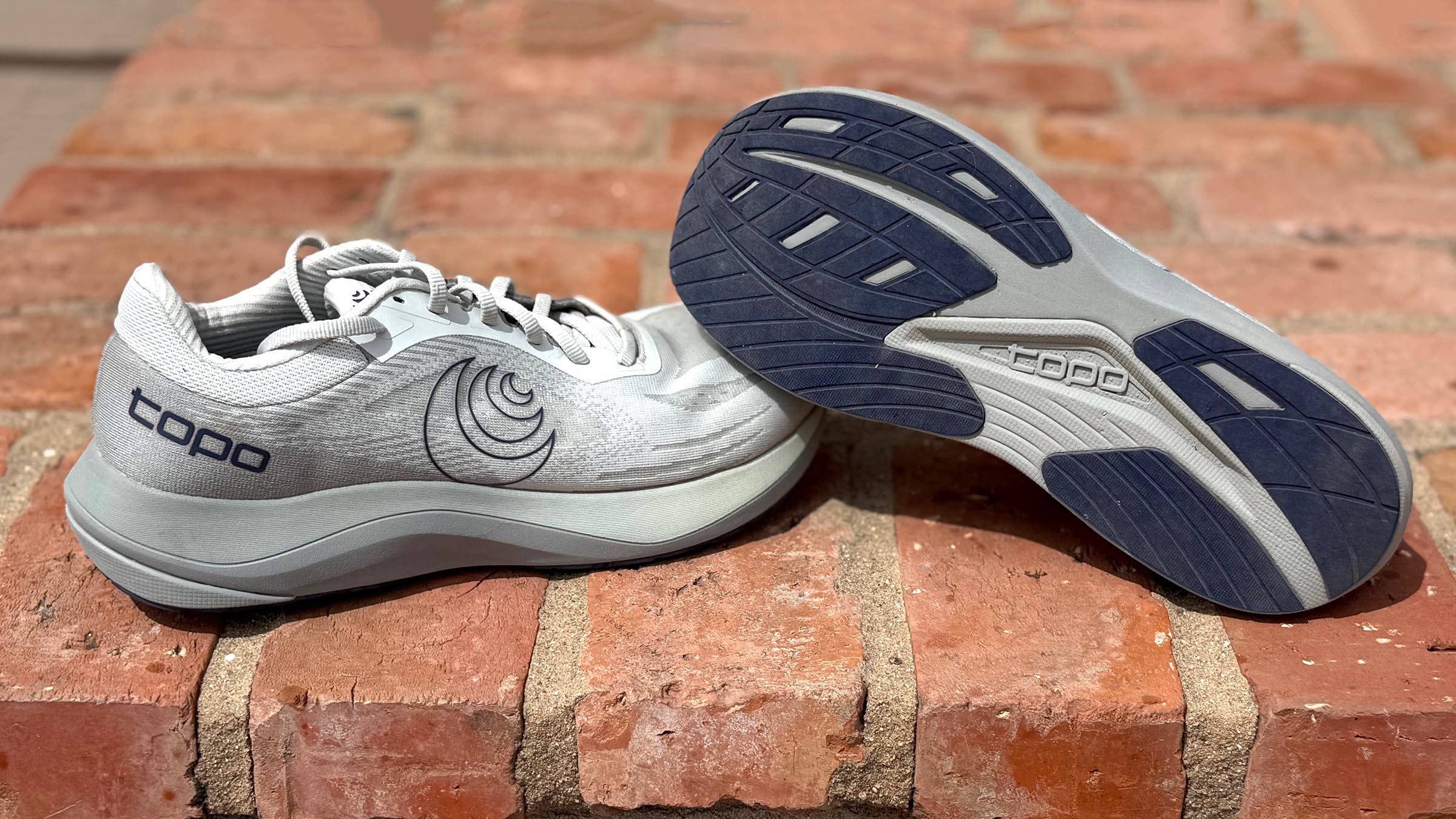
Topo UltraFly 6
Weight: 9.6 oz (men’s), 7.5 oz (women’s)
Stack Height: 32–27 mm
Drop: 5 mm
Stability Strategy: Firmer-foam frame on bottom of rearfoot. Moderate stack height with low drop. Wide, filled-in shape with flare under big toe.
The first thing you notice about the UltraFly is the exceptional fit that characterizes all Topos: a snug wrap from heel through midfoot, opening up to a generous width from the ball of the foot to the toe. Combined with a low heel-toe drop, a moderate stack height, and a flexible, responsive midsole, the UltraFly lets you balance, splay, and engage with the ground with natural stability and agility.
Previous versions of the UltraFly, Topo’s long-run stability model, enhanced this inherent stability with a relatively firm midsole foam, a medial post, and a large, rigid clip surrounding the base of the heel. This created exceptional support, but also a harsher, more controlling ride than many of today’s runners want. Version 6 marks a major makeover that delivers a gentler, softer ride while retaining the characteristics that make it uniquely effective.
“Our goal with UltraFly 6 was to create something that felt a little bit more comfortable, more lightweight, and more lively underfoot—more runnable,” says Russ Stevens, product director at Topo.
Topo designers removed the heel clip, increased the stack height by two millimeters, widened the base slightly, and used a softer formulation of their responsive Zipfoam in both the main midsole and the supportive post. That post is now flatter—so it has more cushioning between it and the foot—and extends around the back of the shoe in a “P”-shaped, heel- and arch-cradling frame beneath the softer midsole.
After testing, I believe that the redesigned UltraFly 6 competes with the best stability running shoes in the category for those who want a reliable, comfortable, and supportive daily trainer. The ride is smooth, flexible, cushioned, and lightly responsive, supporting my foot and subtly guiding my stride without drawing attention or controlling.
On the run, what stood out was how the shoe’s components complement each other to simultaneously feel soft and responsively grounded. The base is wide enough for a confident stance and powerful toe-off without any tippiness, and the moderate stack of foam eases landings without squishing, keeping ground contact quick. The new jacquard zonal weave upper is soft and flexible but not stretchy; it wrapped and held my midfoot securely and comfortably, letting me relax in the luxurious toe-box without fear of sliding.
While the UltraFly 6 accommodates a heavy heel strike, it encourages a more forward-balanced stride. Every time I wore it, I felt my cadence quicken and my toes and feet engage; my posture got taller, and I landed more beneath my hips and pushed back with my glutes. No matter how tired I was, I was always sad to end my runs in the UltraFly 6.
Smoothest Support
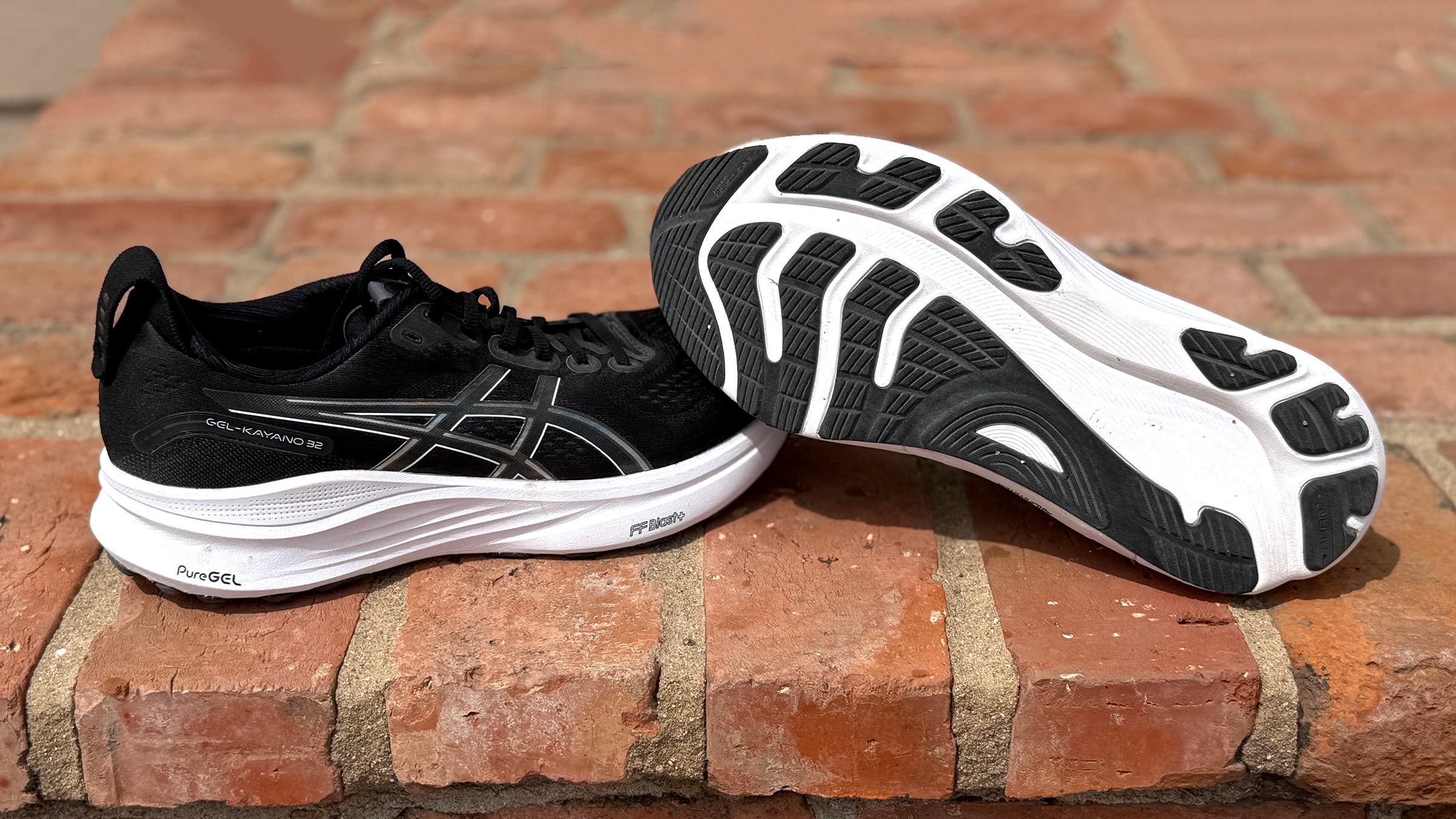
Asics GEL-Kayano 32
Weight: 10.6 oz (men), 9.0 oz (women)
Stack height: 40–32 mm (men’s), 39–31 mm (women’s)
Drop: 8 mm
Stability Strategy: Soft, high-rebound pod under arch. Wide, flared base. Sculpted midsole.
For three decades, the Kayano stability running shoe kept runners’ feet in line using a substantial medial post and a plastic midfoot support bridge. That changed with the 2024 30th anniversary version that ushered in a radical transformation. The Kayano 30’s modern new stability strategy, retained in the Kayano 32, replaced these firm, controlling devices with clever geometry and new, unobtrusive foot guidance.
The platform is wide from heel to toe, and flares even wider under the forefoot. The lateral side of the heel is sculpted out to let it compress more, smoothing and slowing the transition from heel contact to mid-stance. A corresponding bulge on the medial side reduces compression, plus the midsole wraps up along the side of the heel to cradle and subtly support.
Most unique, however, is a pod of soft, highly responsive foam under the arch where previous versions had a firm medial post. The thinking behind this new insert stems from research that shows it’s not the degree of pronation that predisposes a runner to injury but the amount of time spent at peak pronation. So instead of trying to block the foot’s rotation, the soft pod compresses, letting your foot follow its preferred path, then bounces back quicker, encouraging your foot to rapidly return to an effective position as you’re coming out of midstance.
On the run, I could feel the foam under the arch gently sinking as I rolled onto it, then firming up supportively as my stride moved onto the forefoot, feeling upright, centered, and ready for a stable push-off. Despite the 40-millimeter heel, I didn’t feel high off the ground or tippy due to the generous width and the well-balanced combination of cushion and responsiveness that coddles without being squishy. An additional two millimeters of foam under the forefoot in version 32 reduced the drop to a more balanced eight millimeters and added a bit more cushioning under the ball. It also makes the shoe slightly less flexible, which is compensated by a speedy-feeling rocker off the toe.
The 32 has a thinner, better-fitting tongue and retains the engineered mesh upper that complements the smooth ride and secures my foot comfortably with plush, but not excessive, padding. The ride is remarkably smooth with no hint of stiff control, yet both of my asymmetrical feet felt cared for and supported—especially on longer runs when I started to tire.
Best Plush Support
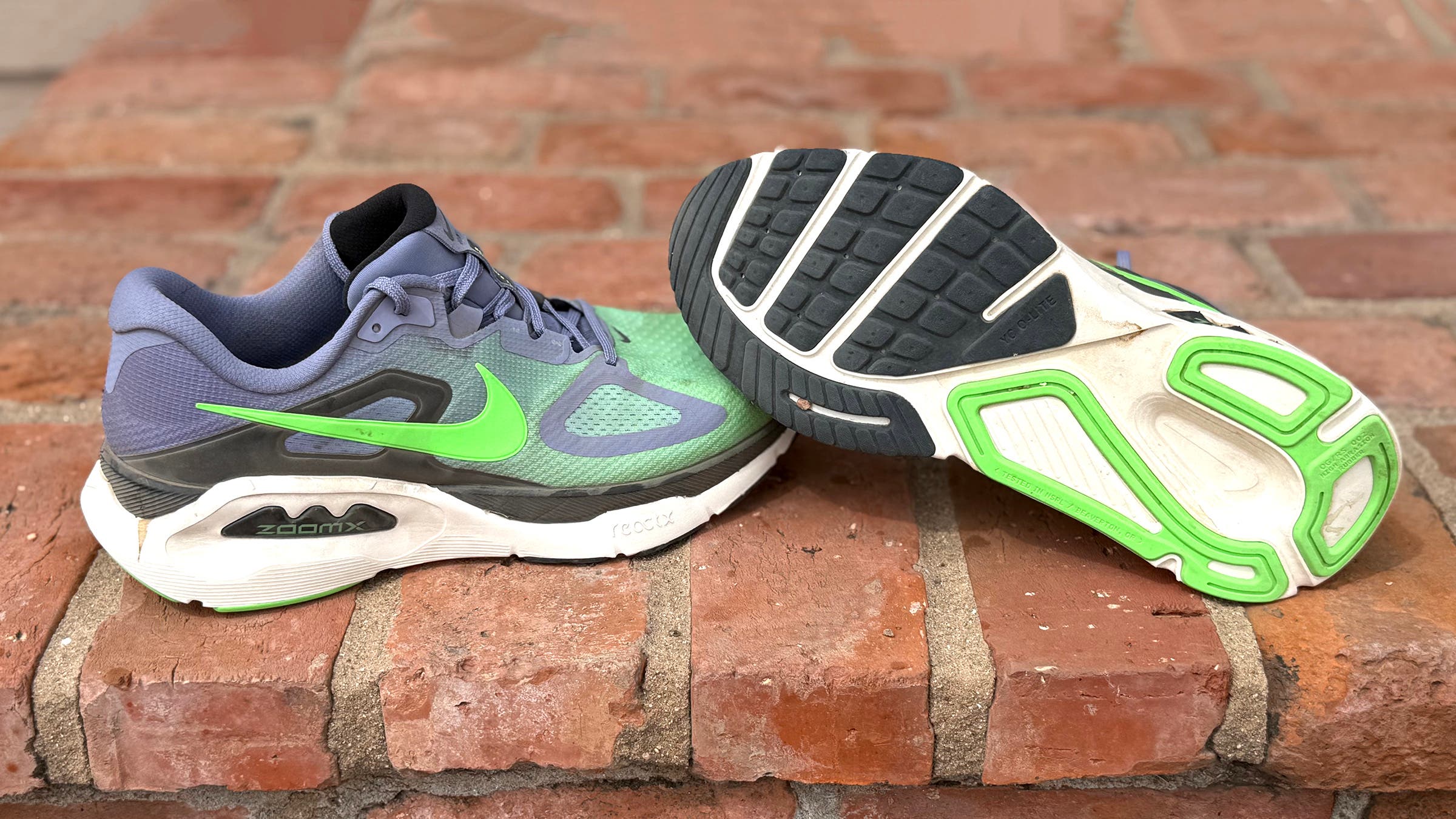
Nike Structure Plus
Weight: 10.8 oz (men’s), 8.7 oz (women’s)
Stack Height: 42–32 mm
Drop: 10 mm
Stability Strategy: Firmer-foam base layer. Asymmetrical sidewalls. Wide, straight shape.
With 42 millimeters of foam under the heel and a layer of soft, bouncy ZoomX underfoot, the Structure Plus defies the old conventional wisdom that stability running shoes have to be firm, stiff, and clunky. Ashley Campbell, Nike Footwear Product Line Expert, says that, compared to other stability models, the Structure Plus, “Feels more maximal, has more energy return, and just has a little bit more sensation underfoot to give the stability runner more choice than they traditionally get.”
Campbell asserts that the luxury ride, however, doesn’t come at the expense of stability. The top layer of squishy, bouncy ZoomX foam is supported by a platform of firmer, smooth-rolling ReactX foam, with high sidewall loops extending upward from the top of the midsole cradling the arch and outside of the heel. Thick overlays wrap the rearfoot upper, extending the side support farther up the foot. The base is wide and straight from heel to toe, and the laces tie into a wrap that extends down to the midsole, hugging the arch.
All of this made my foot feel comfortably secure, particularly the heel, and kept me from rolling off the side of the high stack. And, as promised, the ride feels more like a max-cushioned trainer than any stability running shoe I’ve worn, with the soft, trampoline-like, bouncy ride of the top-end superfoam predominant.
Personally, however, I found the shoe too squishy for my liking, particularly in the forefoot. With each stride, I felt I was falling off the high, supported heel into a deep marshmallow that sank in too far before firming up. I felt well-cushioned, but had difficulty getting off the ground quickly and reaching my usual cadence.
For runners like me, Campbell points to Nike’s Structure 26 Icon model, which has a full ReactX midsole, a four-millimeter shorter stack height, and is tuned firmer to provide a more traditional stability-shoe feel. I tried the Icon and liked the more connected ride, but didn’t appreciate the narrower forefoot width and tighter toe box—some traditional elements are best left behind.
For those, however, who prefer a max-cushion, hyper-bouncy ride and want a stability running shoe that delivers it while providing rear-foot support and guidance, the Structure Plus has no peers.
Best Plush Stability Running Shoe
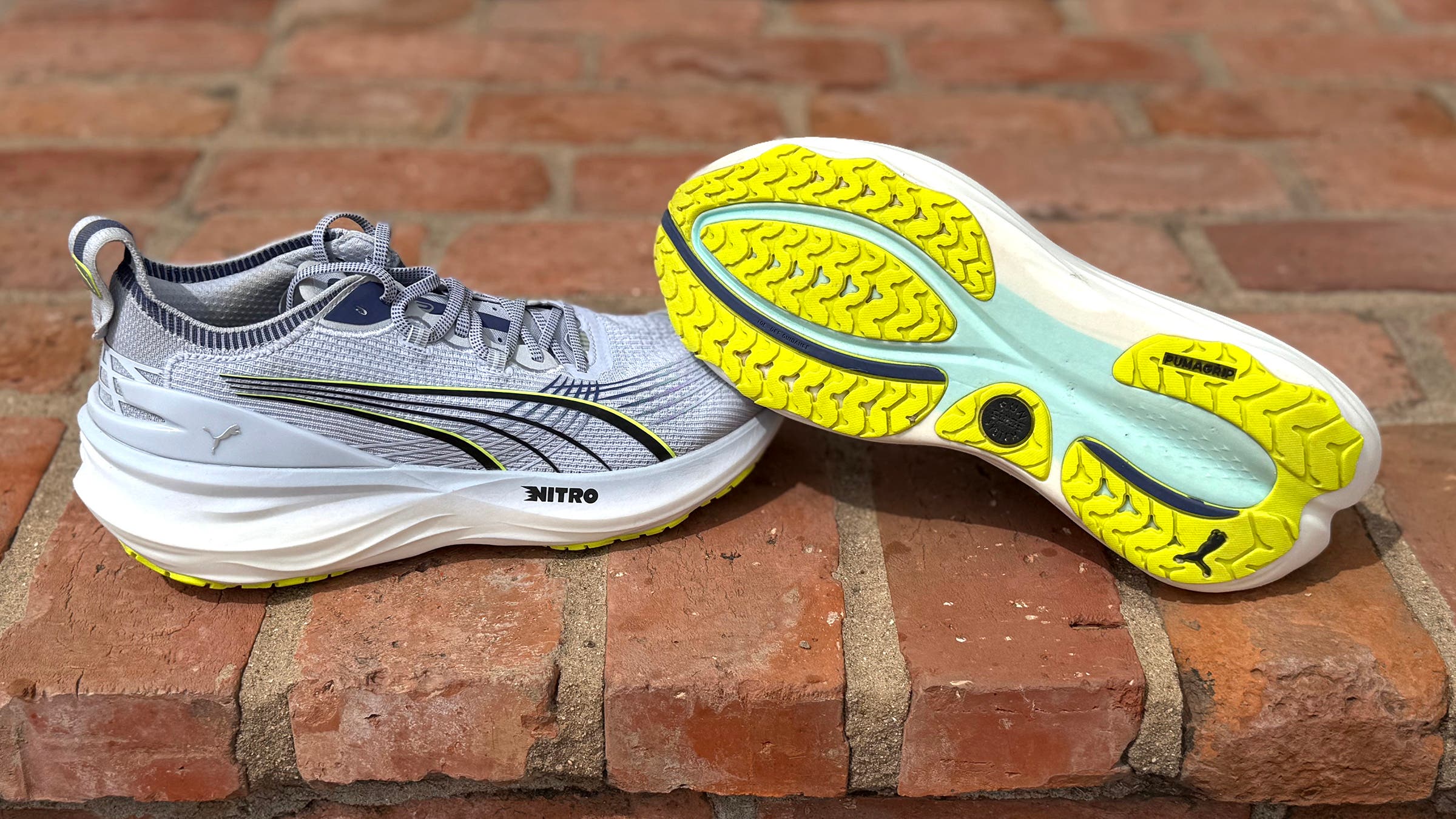
Puma ForeverRun Nitro 2
Weight: 10.7 oz (men’s); oz (women’s)
Stack Height: 38–28 mm
Drop: 10 mm
Stability Strategy: Firmer-foam frame. Wide, straight shape.
Puma’s nitrogen-infused TPE foam delivers one of the smoothest rides in the business for my stride, deftly decelerating landings and transitioning to a lively toe-off. The ForeverRUN Nitro 2 uses two densities of that foam—a softer core inside a firmer perimeter frame—to add stability to the ride without trying to control the foot. Conor Cashin, senior product line manager at Puma, says, “We looked at the speed that runners were pronating and we really tried to focus on slowing that speed down but still allowing runners to pronate to a certain extent because it’s the body’s natural way of cushioning itself.”
In this updated version, the two foams are co-molded rather than stacked and glued together, making the interaction between them smoother. “We were able to bring the soft nitro foam all the way to the ground and all the way through the foot,” Cashin says. “So it gives you more cushioning, more responsiveness—and then the firm nitro around the foot is where you get that stability control.”
The sole is also significantly wider—particularly in the midfoot under the arch—for enhanced stability, and two millimeters thicker, adding to the plushness underfoot. But the engineered, circular-knit upper is where this shoe truly coddles, hugging the heel with a well-padded collar, wrapping smoothly around the foot with a gentle stretch, and locking down the midfoot with light, printed, reinforcing overlays.
On the run, the ride impressed me first for its smooth cushioning (as expected), without anything trying to rearrange my stride. Yet, thanks to the wide stance and firmer rim, it didn’t feel at all tippy, despite the high stack underfoot. I noticed the frame primarily under my big toe where it felt less squishy when my weight rolled inward, providing a welcome stable base for me to roll forward on and push off from. While the plushness of the stability shoe makes it well-suited for easy days, the midsole’s bounce and roll are spry enough to handle tempo runs or pick-ups without holding you back.
Paid Advertisement by NOBULL
The NOBULL Outwork
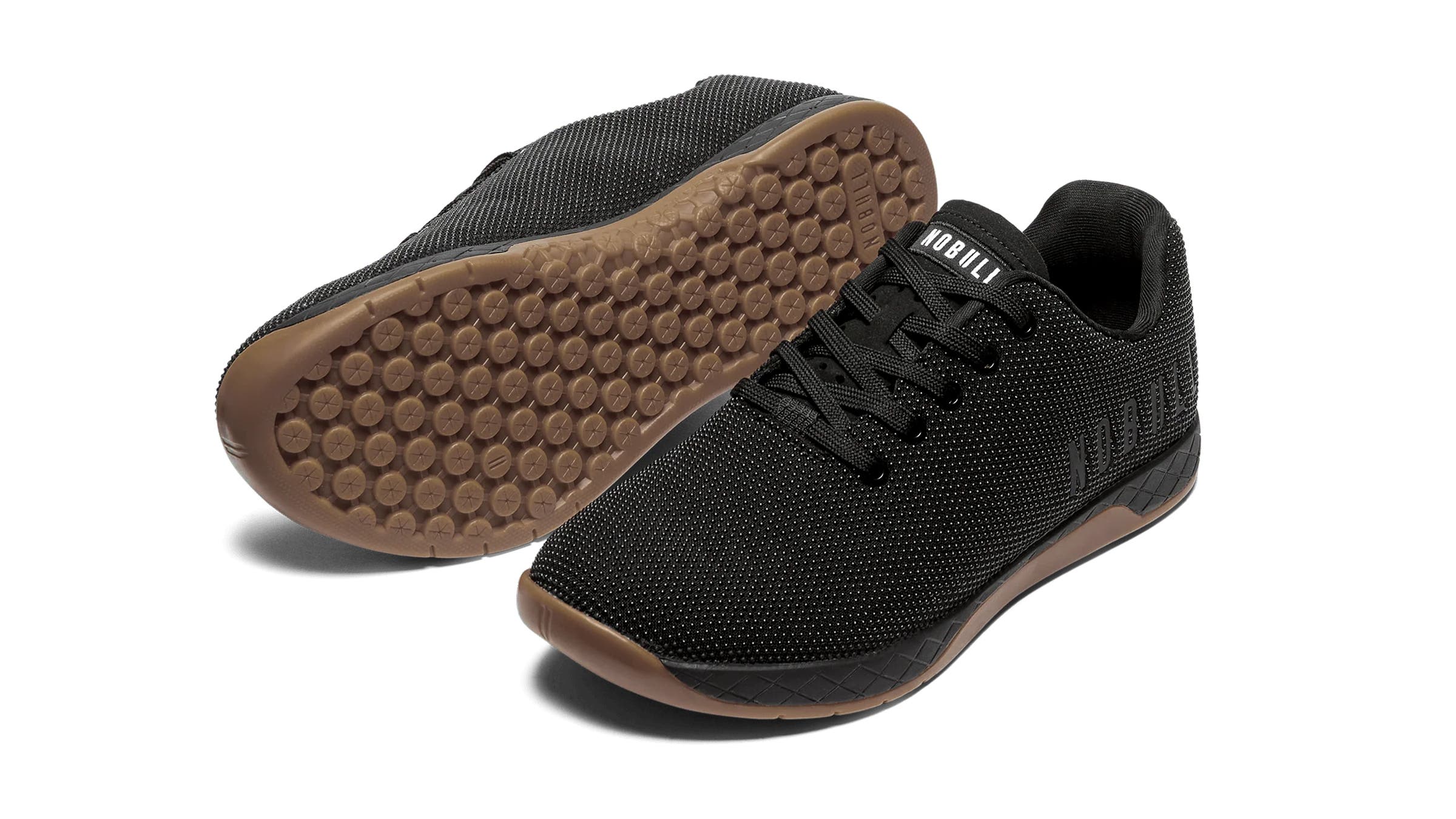
This training shoe is built for strength, stability, and long-term durability. The NOBULL Outwork’s flat, low-to-the-ground sole and wide toe box create a secure, grounded feel that supports powerful, controlled lifts. The tough, flexible one-piece upper breaks in over time without breaking down, while a grippy carbon rubber outsole ensures reliable traction. Recognized as a 2025 Fitness Award winner, it’s a proven, no-bullshit trainer designed to perform day after day.
Best Stability Shoe for Going Long
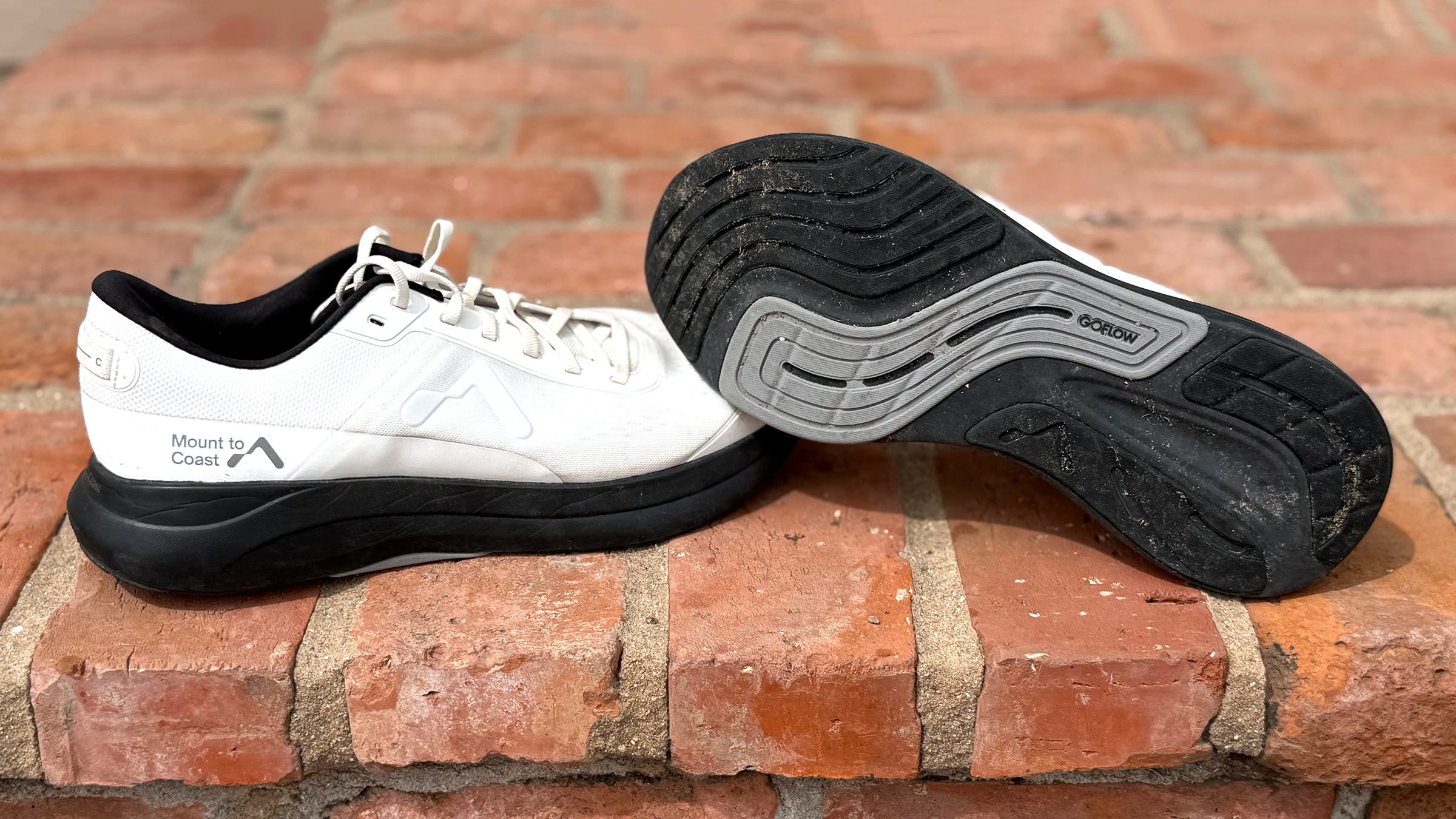
Mount to Coast P1
Weight: 9.9 oz (men’s size 9, women’s size 10.5)
Stack Height: 37–27 mm
Drop: 10 mm
Stability Strategy: Guiding geometry and midsole insert. Arch wrap. Centering insole.
Mount to Coast is a new brand specializing in building shoes for ultra-runners. But my experience in the shoes leads me to believe that you can enjoy and benefit from them without running all day.
The P1, Mount to Coast’s stability model, has the same nitrogen-infused, PEBA-based midsole found in their R1 racer, delivering a soft, bouncy, and flexible ride that feels more connected than the 37-millimeter heel might suggest. The responsive foam, tuned firmer than the PEBA found in super shoe racers, provides soft contouring underfoot, then firms up quickly to deliver a tactile ground feel. The resulting smooth ride feels almost minimalist in allowing natural foot motion and ground sensitivity—while still dampening harsh landings.
The shape also feels inspired by minimalist design, echoing the foot with a snug heel and secure wrap of the instep, opening up to a flared forefoot—particularly under the big toe—providing roomy space and a stable platform for a fully-splayed foot. That stability is enhanced by an s-shaped insert of flexible plastic that extends from the outside midfoot to under the big toe, providing added support under the natural path of forefoot rotation. Mount to Coast’s research indicates that reducing excess forefoot rotation is more important than correcting the heel rotation that most stability shoe design focuses on, and that their device not only improves foot alignment but helps activate the arch muscles.
Running in the P1, the shoe delivered a smooth, natural heel-toe transition, and I could feel a subtle extra firmness under the ball, which helped my foot achieve a stable stance and push-off. More noticeable, however, was the dual-zone insole that centered and cradled my heel, and the arch wrap built into the upper and tied into the lacing that made my foot feel like it was expertly wrapped with athletic tape—hugging, supporting, and moving with the changing shape of my foot through the stride.
The flexible P1 stayed out of the way when I picked up the pace, but it didn’t feel like it was reducing the effort like some rockered models do. At all-day paces, however, it helped me quickly fall into a comfortable, efficient rhythm that churned out miles so comfortably and easily that I inevitably extended my runs in the shoe as long as time allowed.
Best Stability Running Shoe for Bad Knees
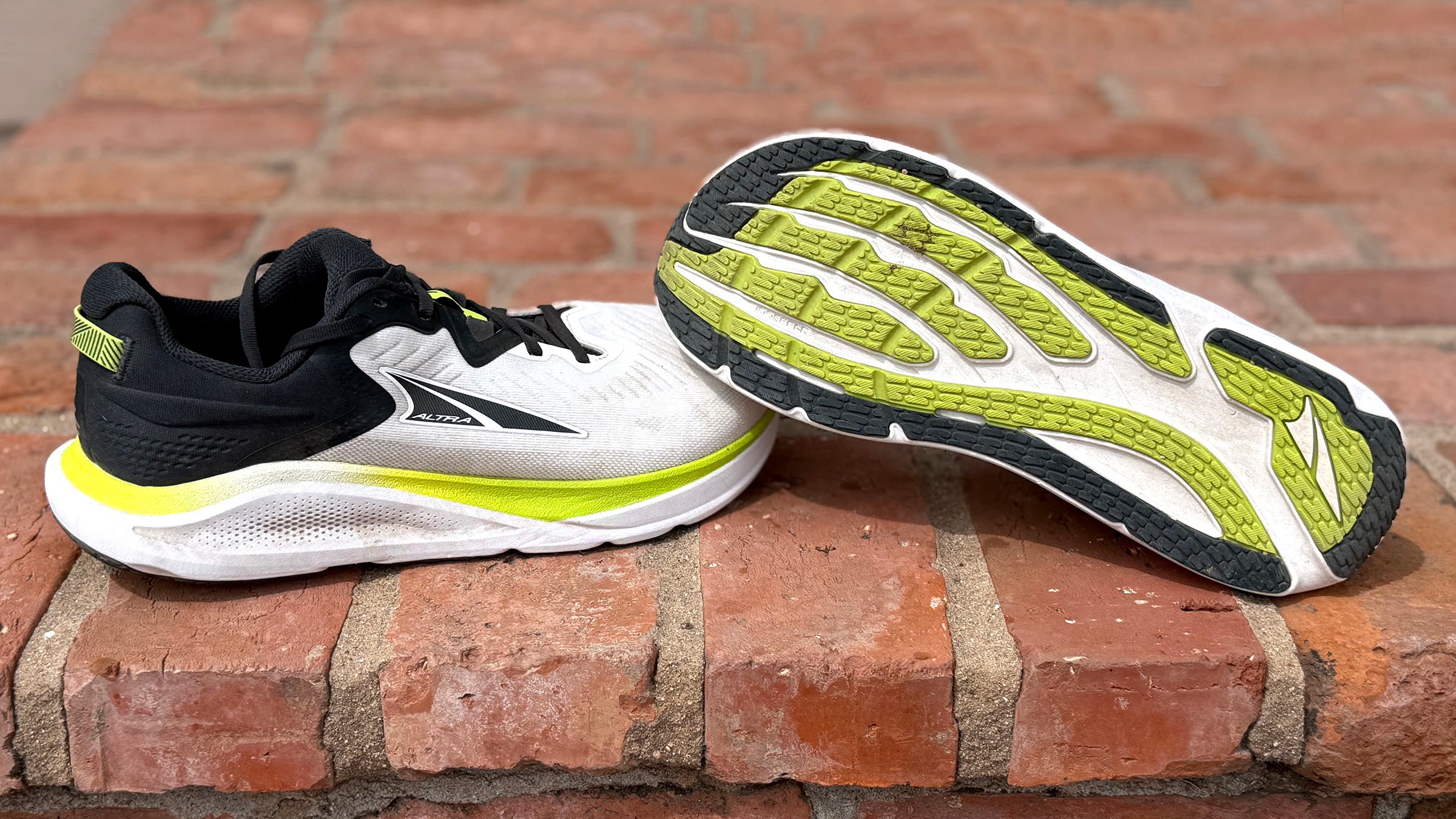
Altra Paradigm 8
Weight: 10.9 oz (men’s), 8.6 oz (women’s)
Stack Height: 30–30 mm (men’s)
Drop: zero mm
Stability Strategy: Guiderails. Zero-drop balance. Wide, straight shape.
Research consistently shows that lower-drop shoes reduce stress on the knees, and my experience with the zero-drop Altra Paradigm 8 concurs: my worn-out knees felt better in these shoes than in any other model I tested. The reduced stress from the balanced platform was complemented by the inherent stability of the wide forefoot that let my toes splay and engage. Adding to the stability are raised guide rails on both sides of the heel. This elevated rim, higher on the arch side, is the same density as the rest of the midsole, creating a cradling effect that gently resisted rotation without me feeling any controlling pressure.
What I could feel was the exceptional cushioning from the ample forefoot foam. Thirty millimeters of Altra’s proprietary Altra EGO Max foam gently compressed as I rolled over the arch and onto the ball of my foot, firming up responsively at just the right time to deliver a confident, tactile stance and lively push-off. The stability shoe accommodates a heavy heel strike, but encourages and rewards a softer, rolling landing and a more forward-balanced, quicker stride.
The lacing is brilliant, with traditional lace-grabbing poke-through eyelets near the toe and ankle, and looser gillie-like loops over the midfoot that tie into internal arch-wrapping straps. This allowed me to easily pull the upper tight over my low-volume instep without over-tightening the laces at the ball of my foot. Combined with the well-padded tongue and collar, it delivered the most secure foothold of any Altra I’ve worn.
The low drop that saves knees doesn’t eliminate stress, it just redistributes it to your feet, and I could feel my achilles and arches working more during early miles in these shoes. But as my stride adapted and I landed lighter and more balanced, I found my feet comfortably supported in a natural, efficient stride that made me want to keep running.
Best Stability Shoe for Uptempo Runs
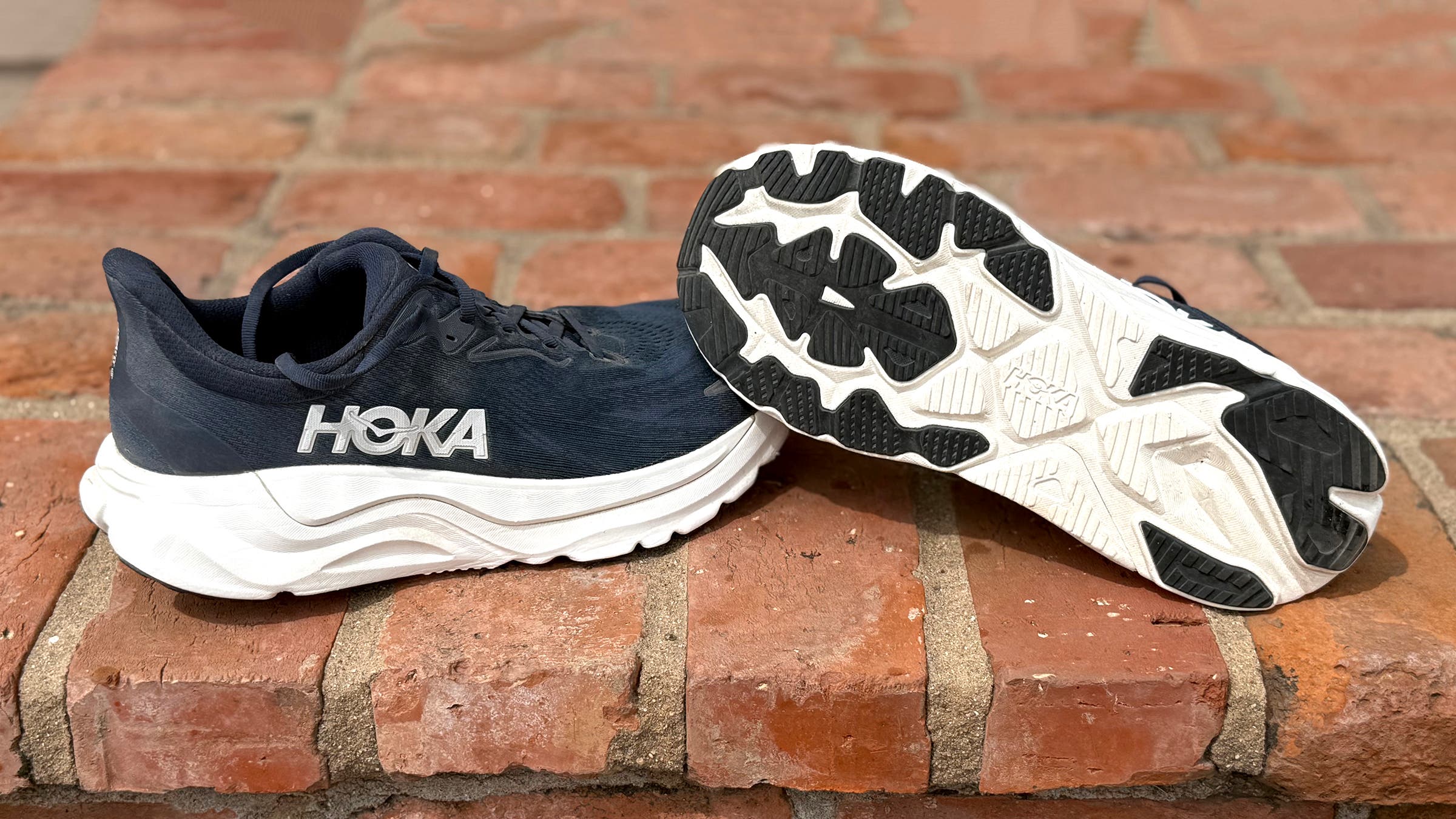
HOKA Arahi 8
Weight: 9.8 oz (men’s), 7.7 oz (women’s)
Stack Height: 39–31 mm (men’s); 37–29 mm (women’s)
Drop: 8 mm
Stability Strategy: H-Frame with support under arch. Sidewalls. Wide, straight shape.
The Arahi is the stability running shoe version of Hoka’s perennially popular lightweight Clifton, and the redesigned Arahi 8 delivers holistic support without adding weight or messing with the speedy ride. In fact, to me, it actually feels snappier than the Clifton, with a faster roll and less squishy push-off, while delivering the signature lightweight cushioning.
That ride is thanks to the new “H-frame” that replaces the previous Arahis’ “J-frame.” As the name suggests, it’s an H-shaped layer of firmer foam on the top of the midsole with arms reaching forward and back, cradling the heel and the ball of the foot, while the crosspiece provides midfoot rotational support. “While the J-frame was primarily focused on the medial side, the H-frame provides guidance on both sides of the midsole throughout the midfoot, which results in a more inherent adaptive stability,” says Sunny Margerum, senior product line manager at Hoka. “So this evolution, it really allows the Arahi to feel less corrective and more natural, supporting a wider range of runners, giving a smoother, more comfortable ride.”
My testing confirms that the shoe performs as advertised, with buttery-smooth cushioning and non-intrusive support from touchdown to toe-off. The Araji’s H-frame does reach down to the sole in an inverted triangle under the arch, but, being a softer foam than the J-frame, doesn’t feel intrusive or controlling. I mostly felt the light, soft, responsive main foam underfoot and barely noticed the frame, except for a sense of security that the wide platform could hold me up and not squish and collapse as I rolled through my stride.
The midsole gained three millimeters in the heel, increasing the drop from five to eight millimeters, but, given the compression of the softer foam, the drop felt roughly the same. The forefoot stayed a moderate thickness, enabling a confident stance, enhanced by the H-frame shoring up the edges all the way to the toe. The CMEVA foam isn’t as bouncy as some, but it provides an energetic platform that encourages a quick turnover and doesn’t throw you in unexpected directions.
I found myself reaching for these whenever I planned to up the tempo, as well as for easy days when I wanted to feel light—and was never disappointed or felt unsupported.
Runner-Up, Best for Uptempo Days
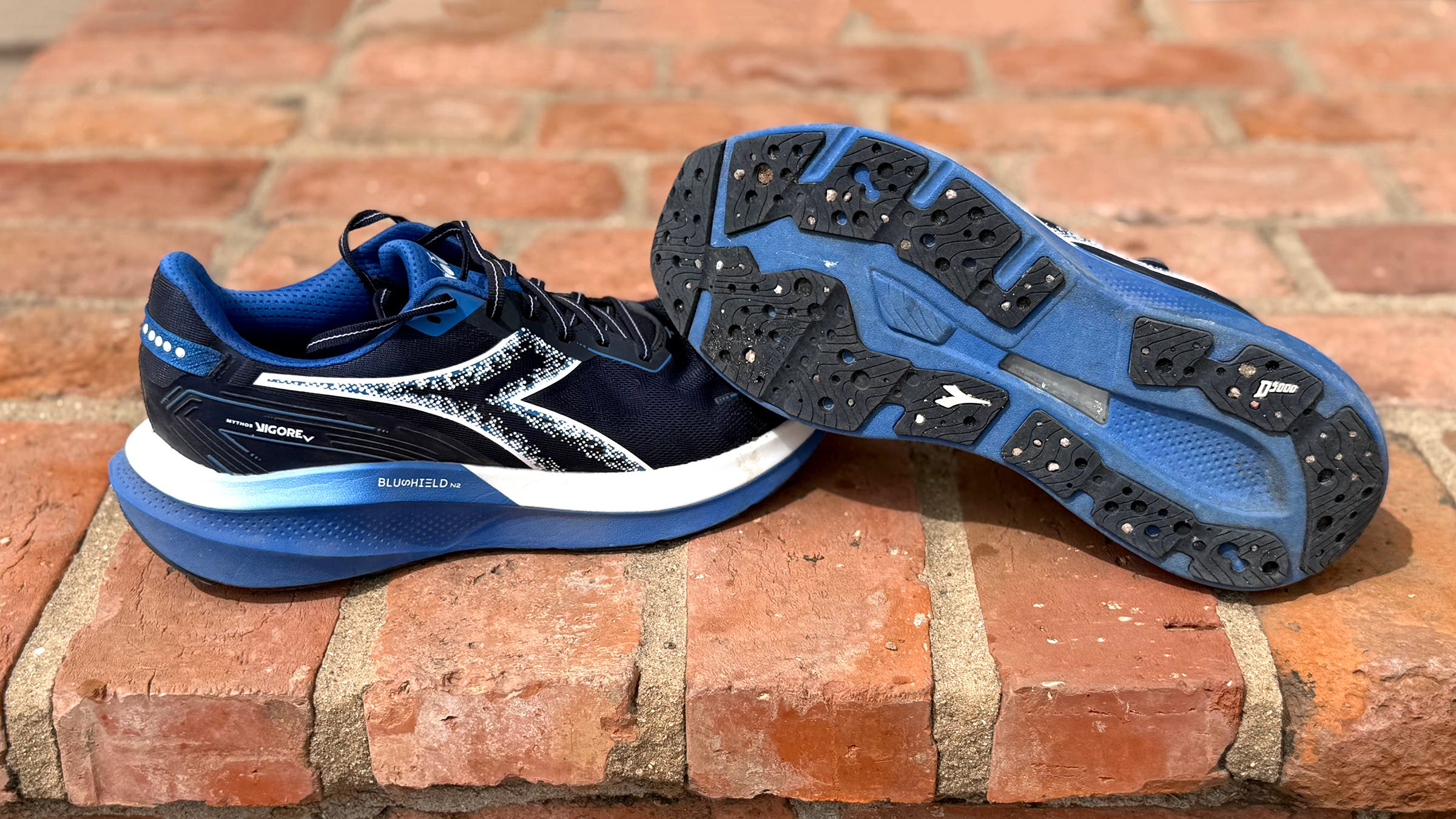
Diadora Mythos Blushield Vigore V
Weight: 10.7 oz (men’s), 8.6 oz (women’s)
Stack Height: 39–28 mm
Drop: 11 mm
Stability Strategy: Firmer bottom frame with higher sidewall on arch side
For those who prefer a connected, responsive ride, the Diadora Vigore V is a welcome change from the sea of squishy midsoles found today. This stability shoe model, from the venerable Italian footwear brand making inroads into the U.S. running market, delivers a fun, fast ride without compromising support.
Two different foams, stacked on top of each other, help create a balance of cushioning, responsiveness, and stability. Up top, directly underfoot is a sculpted layer of soft and bouncy supercritical EVA blend that molds around the foot on compression and gives back a lively rebound. On the bottom, a firmer EVA foam frame, with more material and a higher sidewall under the arch, provides stability and support.
On the run, I enjoyed the confidence-inspiring support from the tactile rearfoot foam combo that pushed back while compressing and cushioning. The strong, noticeable support extended under the arch, then fell away off the firmer, higher heel to the softer forefoot foam, creating a fast roll to a flexible and responsive push off.
The forefoot foam came alive when I picked up the pace, and the smooth compression and quick response of the midsole (think super ball rather than trampoline) made it easier to maintain a fast cadence. While it can serve as a daily trainer, the Vigore V shines mostly as an up-tempo shoe that feels simultaneously fast and stable.
Best Firm, Responsive Support
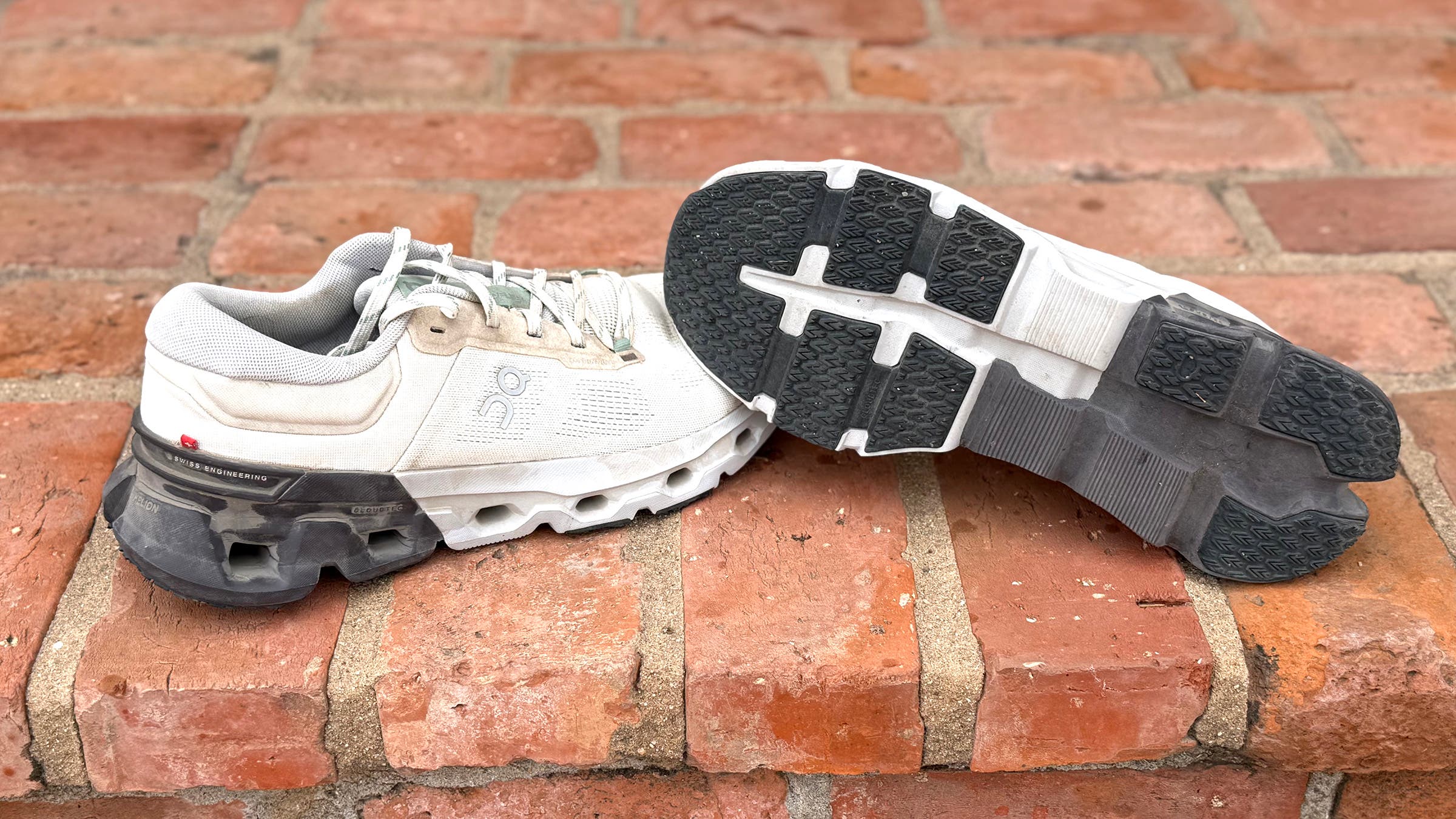
On Cloudflyer 5
Weight: 11.2 oz (men’s), 9.7 oz (women’s)
Stack Height: 31–22 mm
Drop: 9 mm
Stability Strategy: Firmer foam under heel and arch. Molded heel clip. Wide, straight shape.
For the heel striker who likes the feeling of a shoe solidly supporting their foot without squish or wobble, the On Cloudflyer 5 is hard to beat. Firmer-density foam in the rearfoot that extends under the arch delivers confident landings and stable transitions to the softer forefoot.
Despite the firm material, however, the ride isn’t hard and harsh thanks to On’s signature cloud cavities in the midsole. Strategically shaped large clouds in the firmer rearfoot foam compress individually to provide controlled cushioning. In the forefoot, softer foam and smaller clouds combine to deliver a lightly cushioned, tactile groundfeel and a smooth, flexible toe-off.
The shape is wide and straight, and a rigid clip circles the base of the heel. The engineered mesh upper has a reinforced overlay wrapping the arch and thick, supportive padding on the tongue and around the heel.
All of it combines to create a holistic support that On calls, “dynamic stability,” according to Nils Arne Altrogge, On’s senior director of innovation. “We are taking the view away from only what happens on the ankle and on the knee. We are looking at what the core is doing, as well as how you roll and what the natural foot motion is doing.”
On the run, the Cloudflyer 5 delivered a feeling of coddled support that didn’t get in the way, feel clunky, or try to alter my stride. The ride was smooth and well-balanced, with both protection from and connection to the ground that let me relax in confidence. I reached for this stability running shoe often as a daily trainer that, like a good friend, reliably has my back without drawing attention to itself and is fun to spend miles with.
Best Full-Foot Support
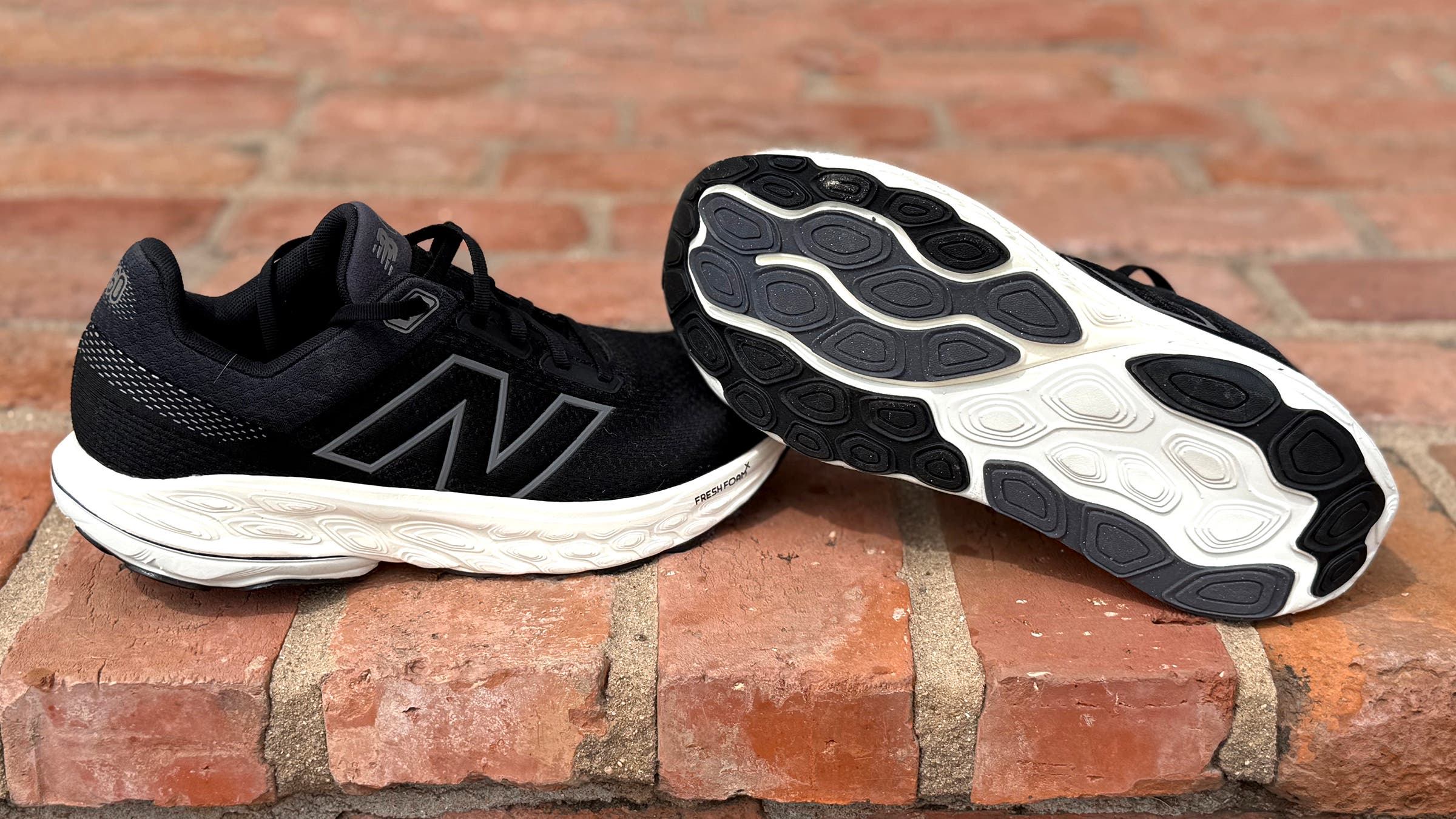
New Balance Fresh Foam X 860 v14
Weight: 10.7 oz (men’s), 8.6 oz (women’s)
Stack Height: 35.5–27.5 mm
Drop: 8 mm
Stability Strategy: Angled plate with dual-density midsole. Wide, straight base.
All of the embedded plates popular in today’s running shoes function mostly to stabilize the squish and rebound of thick stacks of soft and responsive foam. While most plates, such as those found in marathon-racing super shoes, focus on directing and enhancing forward roll and push-off, some also serve to moderate lateral roll, like those with midfoot wings.
The plate in New Balance’s completely remade 860, which replaces a traditional firm medial post, takes rotational guidance a step further. The semi-flexible EVA film, first seen in the Vongo, is sandwiched between two foam layers (soft over firm), and angled so it is higher on the medial, or arch side, and lower on the lateral side. This results in a bottom wedge of firm foam that is thicker under the arch side, and a top wedge that puts more soft foam on the outer, landing side. The plate also has hexagonal cutouts that reduce its rigidity on the lateral side but is solid on the medial side. Both the wedges and the cutouts help create a soft, smooth landing and slow the inward foot rotation without creating a clunky transition or compromising cushioning.
The 860 v14’s plate isn’t just about defining that angled wedge, however, says Paul Zielinski, senior global product manager at New Balance. Research in their lab revealed that midsole foams stretch under force when the foot is pronating far or at high velocity. The plate, Zielinski says, “allows for the foam to be a little more structured, and not stretch or shear as much. Working in combination with the two different midsole hardness foams, this system is helping stabilize the structure of the platform so the foot feels guided all the way from heel to toe.”
Additional midsole foam under the forefoot due to a lower heel-toe drop, a beveled heel, and an increased rocker profile provide a smooth rolling transition from midfoot to toe-off.
On my foot, the plate and dual-density foam provided the strongest full-foot rotational support of any stability running shoe I tested. While the midsole was soft underfoot, and delivered a light, cushioned and smooth ride, my feet pronated very little. The control didn’t irritate my neutral left foot, but, fairly quickly, I could feel the bones in my right knee-that-must-pronate start to rub as it wasn’t tracking inward at all, and the tendons around my right ankle hurt after runs from fighting against the firmer wedge of the midsole.
With its strong medial support, the 860 v14 is not quite as versatile for neutral runners as some other options in this guide, but it’s a solid choice for those who want to slow pronation velocity in a shoe that delivers a smooth, comfortable transition from landing to toe-off.
Stability Running Shoes Comparison Chart
The Death of the Medial Post: Why 2026 Stability Shoes Support You Differently
It is getting increasingly difficult to distinguish a stability shoe from a neutral shoe. Stability shoes used to be stiff, heavy, and controlling, easily identified by their firmer, darker-colored foam underneath the arch side of the foot called a medial post and designed to reduce over-pronation, the excessive inward rotation of the rearfoot. In 2026, for the first time, not a single stability running shoe we tested had a traditional post.
Today’s stability shoes are well-cushioned, smooth-riding, and supportive while letting the foot follow its preferred path, as shoe designers embrace the science showing that over-pronation is rarely problematic and that traditional motion-control methods do little to control excessive motion. New stability strategies recognize that every aspect of the shoe affects the ride and can be manipulated to provide subtle, effective guidance and support.
“Stability is a function of so many features, such as sole geometry, stack height, midsole hardness, outsole, upper materials, and how they are structured—not just medial posting,” says Kurt Stockbridge, product development vice president at Skechers. “Each of these levers can be pushed and pulled to make a great stability shoe without it having to look like what we typically picture.”
These new stability models look, and ride, much like their neutral siblings, with subtle guidance only when needed. And many of today’s neutral shoes, not designed for or marketed as stability models, are being built with features that reduce the instability of soft, thick foams and thus deliver rides that are stable enough for most runners.
“Everyone needs support because support is a fundamental benefit,” says Nikhil Jain, director of footwear product line management at Brooks. “Today, we believe that every shoe has support integrated into it. We see it as a spectrum of support.”
What Shoes We Included in This Stability Shoe Guide
Given this continuous spectrum of support, drawing the line between neutral shoes and stability shoes is somewhat arbitrary. For this guide, we chose to include only models with features designed specifically for those who need, or want, enhanced support as their feet rotate inward—either all the time or when they fatigue. It is not, however, an exhaustive or exclusive list of stable running shoes. Other models with wide bases of support and midsole geometries, foam densities, and/or plates that reduce wobble may be as stable as one of these models.
What Should I Look for in a Stability Running Shoe?
Width, Shape, and Height
The first, and most important feature to look for in a stability running shoe is the width and shape. “When I’m sending patients to the store, I’ll just tell them to look for a straighter lasted shoe,” says Paul Langer, sports podiatrist with Twin Cities Orthopedics and past president of the American Association of Podiatric Sports Medicine. Straight lasted means the arch is filled in so there is a straight line following the edge of the sole from heel to ball, with full support under the arch. “A really straight-lasted shoe, you can’t tell if it’s left or right,” says Langer. “Most shoes, there’s a little bit of a curve—the less of a curve the more stable the shoe would be.”
Langer considers this wide platform more important than the denser medial post, which long defined the stability category. “If I’m talking about stability, I’m probably talking more about the shape of the shoe than the posting issue,” he says.
The same is true for other stability features like guide rails, frames, plates, or heel counters. “I split hairs less about those features,” Langer says, referencing research that shows devices don’t control or correct overpronation. That said, he doesn’t entirely dismiss these features, which, he says, can mitigate some of the instability caused by squishing into soft foams. “Stability shoes don’t correct anything,” Langer emphasizes. “They just might be less unstable than a neutral shoe.”
Related to that squishy foam, Langer also says, “I try to help my patients understand that a cushioned shoe is inherently less stable than your bare foot.” Landing with two to three times your body weight on a thick layer of soft foam is, by nature, going to cause that foam to compress unevenly and exaggerate any imbalances. So, even though many shoes are being made with straighter, more filled-in lasts, the height and density of the foam need to be considered.
The Comfort Filter: What Feels Right
Finding the combination of cushioning, shape, and stability features that works for you involves running in multiple models and determining what feels best for your foot and stride, which includes assessing which shoe provides the most natural-feeling alignment. This “comfort filter,” is the best starting point we have, Langer says.
Emily Stefanski, sports podiatrist at Coastline Foot and Ankle in Connecticut and Rhode Island, and a D1 collegiate distance runner turned marathoner, concurs. “I tell patients that it’s what feels best on the foot,” she says. “I have my guidelines, what I think is going to work. But that’s not always the case: there are so many factors.”
Recent research conducted by On’s running design team further confirmed that you can trust your internal assessment about support as well as comfort. “How people feel in a shoe plays a much bigger role than you would think,” says Nils Arne Altrogge, senior director of innovation at On. When someone feels stable, it is likely that they are. “The human detects quite well what stability means,” Altrogge says.
Beyond the Shoe: Variety and Strength
Keep in mind that even when you find a shoe that complements your stride, it shouldn’t be your only shoe. A handful of studies show that runners have a lower risk of injury when cycling through different pairs of shoes. “More important than finding the perfect shoe is appreciating that your feet need to stay strong and adaptable through having variety in your footwear and allowing your feet to have different stresses and loads,” Langer says. So find a stability shoe that feels right for you as your daily trainer, but also have a minimalist shoe (even if just for walking or yard work), and sometimes run in a low, flexible trainer as well as a cushy, rockered one.
Stefanski also notes, “I always try to push a lot of strengthening.” Coaches, physical therapists, biomechanists, and podiatrists agree that over-pronation and other stability issues usually stem from strength and mobility issues, and can often be corrected by improving your mechanics throughout the chain from foot to hip. Stafanski says, “I believe that we can improve over time and that most people don’t need to be in stability forever—they can get out of the stability shoe. It’s how willing are people to do the exercises.”
How We Tested Stability Running Shoes
After running in dozens of new shoe models this year, I sorted out those with stability features and completed multiple runs in each at a variety of distances and paces. Most models were also run in by more than 20 wear-testers who help select and inform the reviews in our “best of” shoe round-ups.
