

Published May 8, 2026 12:28PM
Climbing in the Himalaya is like a carefully rehearsed play. Everest is merely the set, and the summit push, the final act. The real work is done behind the stage, by people who vanish into the background and never appear on the playbill.
This behind-the-scenes work typically falls to local Nepalese, many of whom bear the revered Sherpa surname. For the Sherpa, mountaineering is a lifestyle. Locals often begin guiding and portering as young as 18 or 19, following in their father’s or grandfather’s footsteps. The labor includes everything from carrying loads to cleaning toilets to hiking hot drinks up to clients doing their acclimatization rotations. And while there’s outdoor rec work to be had throughout the year, the real money gets made during the first three months of spring: Everest season.
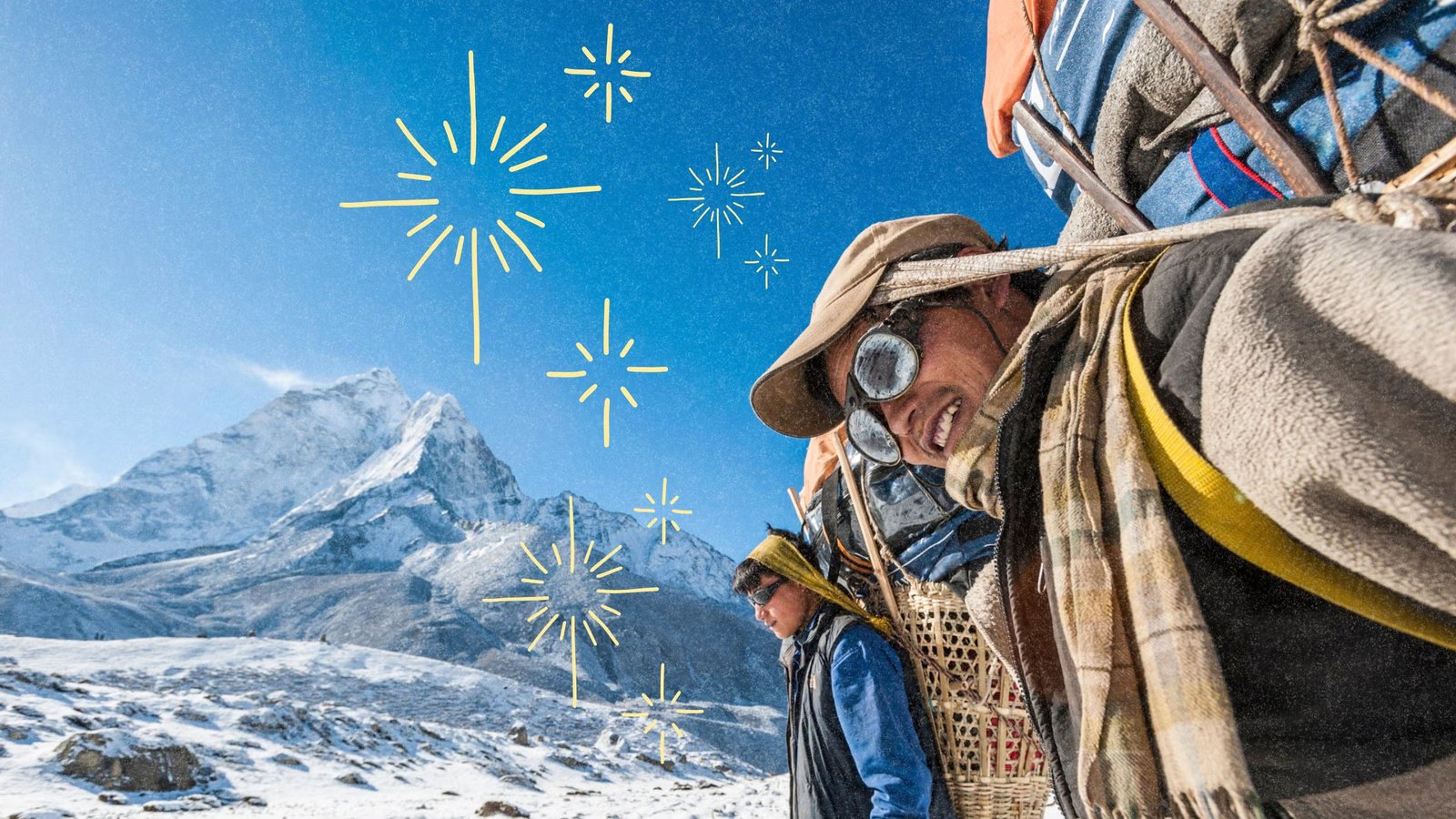
Every March, Mount Everest Base Camp slowly shakes itself awake. Tent doors zip open and close, nylon flutters, and the hive fills in slow motion as an army of Sherpa staffers begin their long trek up from the Khumbu’s valleys. Leaning into backboards and forehead straps, porters shoulder heavy loads, inching along narrow trails worn smooth by passing feet. By March, whole kitchens and living rooms begin to materialize. Heaps of food fill the dining tents, and staffers swarm to prepare for the arrival of their guests: the wealthy elite of the Western world.
The labor isn’t always glamorous, but it has its own prestige. After all, there’s honor in working on Chomolungma, a peak that’s considered a deity. It’s also well-paid. For context, an average salary in the Khumbu region is just over $500 per year. An Everest porter or Base Camp staffer can make quadruple that in a single season. It’s a life-changing amount of money for families. It can be life-ending, too.
According to the Himalayan Database, there have been 42 staff deaths over the last 10 years. As you might expect, the most frequent causes are climbing- and weather-related accidents higher up on the mountain. But death also visits Base Camp. A significant percentage of the last decade’s fatalities have been due to illness, avalanches, or rock or ice fall at 6,000 meters (19,685 feet) or lower. (Base Camp sits around 5,300 meters, or 17,388 feet, above sea level. The summit of Everest is just over 8,800 meters.)
Some of these illness-related deaths were chalked up to Acute Mountain Sickness. Others were listed as “Non-AMS,” but their severity was likely no coincidence. Extended time at high altitude can be extremely hard on the body—even for those who work well below the Death Zone, and even for the legendary Sherpa.
There are other dangers. Every few years, guides hear stories about angry clients kicking or hitting Sherpa staffers. The altercations often stem from miscommunications related to significant language barriers; not all locals have the opportunity to learn English before coming to work on the mountain. Those who do often piece together a foreign-language education on the job. The results aren’t always perfect. Clients’ short tempers—and overt racism—can make the gig much harder than it already is.
Many Sherpa staffers—and their families—are willing to accept the risks for the money and status that come with them. Others have had close friends and family die on the mountain and now forbid their loved ones from doing any kind of climbing work. Some find a middle ground: Work as a porter, or work in Base Camp. These jobs limit some of the hazards, but they’re still far from easy.
The Gig at a Glance
Job: Base Camp Manager
Age: 40s
Years in the Business: 20
Salary: $2,000 for a three-month season
How Much Do You Make Farming in the Off-Season?
When I’m not at Everest, I’m home on my farm. We grow potatoes and fresh vegetables. Doing that, we make between $500 and $600 per year in U.S. dollars. That’s very different from the money I make on Everest, which is around $2,000 for three months of work. I make tips, too. The biggest I’ve ever gotten was $700—a personal tip from an especially happy client.
It’s good money, but my wife has to take care of the farm alone while I am gone. I am always happy to be back home after three months away.
How Did You Start Working on Everest?
When I was 25 years old, I started working as a trekking guide. I was a porter at first, and I did 15 to 20 trips as a porter before I got promoted to doing other work. The packs are heavy—anywhere from 65 to 100 pounds for weeks at a time. Sometimes we have less, sometimes we have more. It’s hard work. But I learned a lot, and I was able to improve my English. I took classes when I was at university in Kathmandu City, but practicing with clients helps.
I work with a Western guide now. He hired me for his company because he saw me working very hard, and he needed someone to help him manage his company’s camp at Base Camp. That’s what I do now. I’ve been a camp manager since 2020.
Does Working on Everest Make a Rockstar Back Home?
It is prestigious to be on Everest. The money is good, and it is work I’m proud of.
What’s Your Favorite Part of Working in Base Camp?
My work is mostly looking after all the tents, cleaning the dining room, and washing the clothes. I sort the food, and I am the waiter. I like the work. I like to take care of my clients and make them happy. There’s also the same staff here every year, so I get to see people I know, and we have parties for the clients and listen to music and dance.
What’s the Worst Part of Working in Base Camp?
The cold and the conditions make it very tough. When there’s lots of snow, we have to do a lot of work to clear it, and during bad storms, we can’t do anything. Clients can get frustrated by the weather, too. But I like my job, and I have not had any particularly difficult clients.
Have You Climbed Everest? Do You Want to?
I have never been to the summit of Everest. My highest altitude is 6,500 meters. Maybe if I get a chance, I will try, but my work is in Base Camp. That is my priority.
You’re in Your Forties, and This Is Hard Work. How Long Will You Continue?
Maybe when my parents tell me to stop. They worry about my safety. I do, too. I’m afraid of getting sick or having an accident. Some people fall or get caught in rockfall or an avalanche, even if they are not very high on the mountain. I have not had any close friends die because of these things, but it happens every year.
Right now, the risk is worth it, because I need to make the money for my family—my parents and my brothers and sisters. Eventually, when I get old, I will quit the mountain. But I can’t stop yet.
Quotes have been edited for length and clarity, as well as to preserve the source’s anonymity.
