

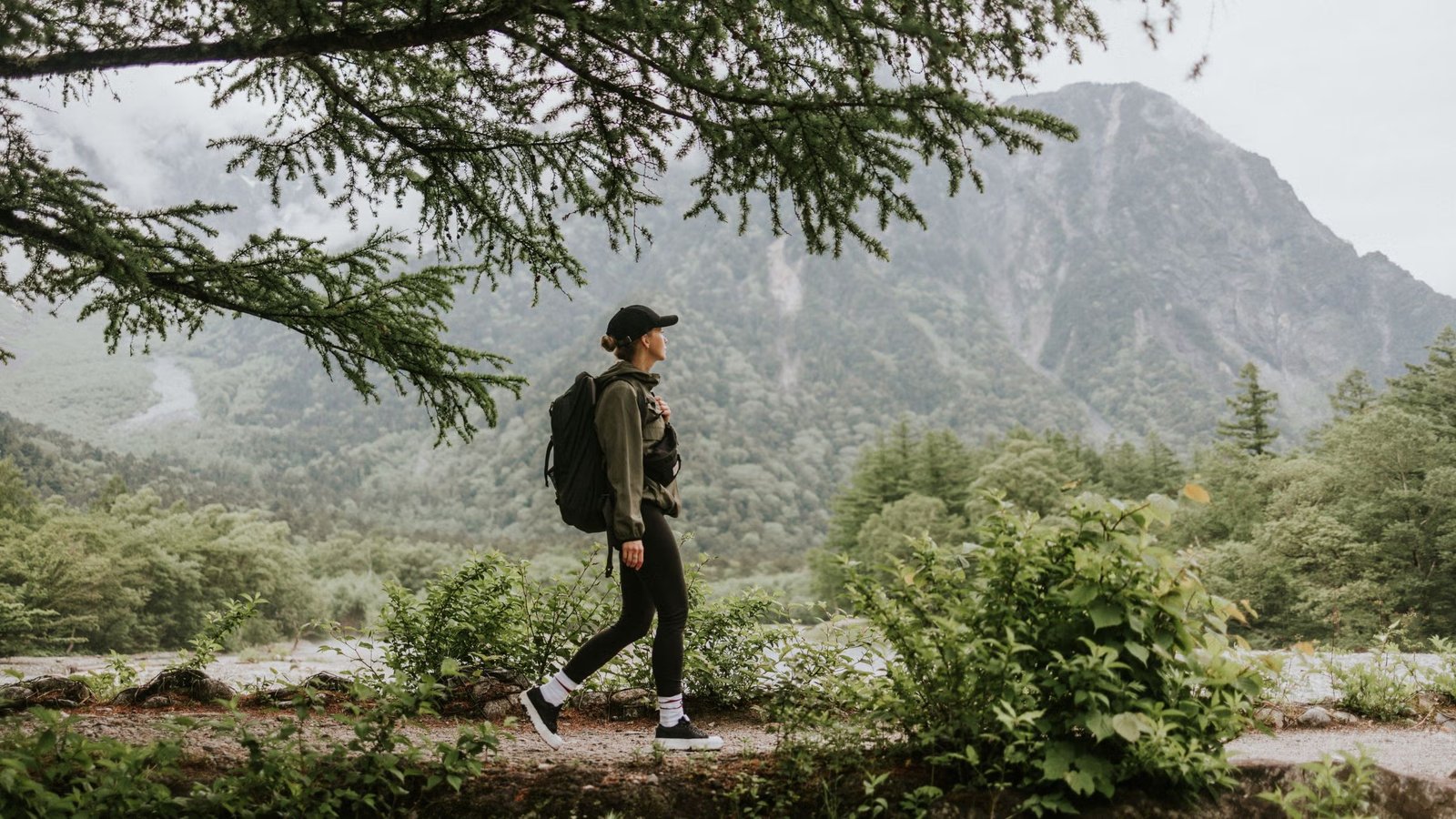
The best way to prep for hiking or walking downhill is by strengthening your knees with single-leg reps.
Photo series of a hike in the Kamikochi National Park, concept used to depict benefits of functional fitness exercises for outdoor athletes and adventurers
(Photo: Visualspace/Getty)
Published May 11, 2026 03:00AM
When you love the outdoors, adventuring in them doesn’t feel like a workout. But you’re actually putting a lot of stress on your body when hiking up and down mountains, jumping over puddles, hanging from tree branches, and traversing narrow logs. If you want to show up strong and competent as you tackle these activities, slotting in functional fitness moves is a really smart idea.
What Are Functional Fitness Exercises?
Functional fitness moves are exercises that prepare you for specific activities, helping you perform them more efficiently and with a lower risk of injury.
The term “functional training” is typically used for tasks of daily life. For example, a great exercise to practice picking up heavy items off the floor is the deadlift. But functional fitness can also apply to other scenarios—including your escapades outdoors.
I leaned on my expertise as a certified personal trainer and outdoor enthusiast to come up with seven functional fitness moves that’ll help you better handle the demands of outdoor adventuring.
Add the moves below to your existing strength training routine one to two times a week, and get ready to crush your next hiking trip.
1. Dumbbell Step-Up
Best for: Walking and Hiking Uphill
The step-up is a classic lower-body exercise that trains your ability to walk uphill, which is useful for hiking and backpacking. It works the quads, glutes, hamstrings, and core.
How to Do It:
- Stand tall with feet hip-distance apart, facing a bench, box, or step. Hold a medium dumbbell in each hand.
- Step your right foot onto the bench.
- Once your right foot is firmly planted, press through that foot as you bring your left foot onto the bench. Pause for a moment once you’re fully on top of the step, feet hip-distance apart, then reverse the motion by stepping down with the right foot and following with the left. This is one rep.
- Do eight to 12 reps with the right leg leading, then switch sides and repeat. Complete two to three sets.
Make sure your posture stays tall throughout, and don’t arch or round your back.
2. Forward Step-Down
Best for: Walking and Hiking Downhill
The forward step-down trains your ability to walk or hike downhill. Walking and hiking downhill can often cause knee pain, so exercises that strengthen your knees will be especially beneficial if hiking is your thing.
This move spotlights the quads and glutes, which play a big role in stabilizing the knees as you step down.
How to Do It:
- Stand on a short box, weight plate, or step. Keep your feet hip-distance apart.
- While keeping your right leg firmly planted, lift your left leg up and flex that foot. Hold your left leg out in front of your body, knee straight. This is the starting position.
- Slowly bend your right leg as you lower your left heel towards the ground. Tap your left heel to the ground, then press through your right glute as you straighten that leg and return to the starting position. This is one rep.
- Continue for eight to 12 reps, then switch sides and repeat.
- Complete two to three total sets.
As you do your reps, keep your hips level and don’t let the knee on your grounded leg collapse inward.
3. Mountain Climbers
Best for: Doing Short Bursts of Movement
The mountain climber trains you to perform short bursts of movement, which can come in handy in the wilderness when you need to sprint away from something like a wasp or bee. This move works the hip flexors, legs, core, and shoulders.
How to Do It:
- Start on all fours with wrists under shoulders and knees under hips.
- Lift your knees off the ground and extend your legs to come into a high plank.
- Engage your core so that your back is straight, and squeeze your glutes and quads. Your body should form one long, straight line from your head to your heels.
- Drive your right knee towards your chest, then place your right foot back on the ground.
- Repeat with the left leg.
- Continue this pattern, alternating sides, for 30 seconds.
- Complete two to three total sets.
Focus on keeping your core engaged and your back flat (not arched or rounded) as you move your legs. Once you’ve mastered good form, add speed to the movement, focusing on quick, powerful leg movements.
4. Speed Skaters
Best for: Jumping Over Obstacles
The speed skater trains your ability to jump laterally (side-to-side), which, in the outdoor world, can translate into hopping over obstacles on the trail, such as rocks, puddles, and tree roots. It works your glutes, quads, hamstrings, calves, and core.
How to Do It:
- Stand tall with feet hip-distance apart, core engaged. Lift your right foot off the ground and press off through your left foot to jump laterally to the right several feet (or as far as you can jump to the side). Land on your right foot and keep your left leg lifted, allowing it to swing diagonally behind your right leg.
- Pause for a moment here, then press through your right foot to jump laterally to the left several feet. Land on your left foot and keep your right leg lifted, allowing it to swing diagonally behind your left leg. This is one rep.
- Continue this pattern, jumping side to side, for eight to 12 reps.
- Do two to three sets.
Make sure to keep your core engaged the entire time and focus on good landing mechanics: don’t let your knee collapse inward.
Once you’ve mastered good form, up the intensity by adding more explosiveness to your jumps, adding greater height and/or distance to each jump. When you add this intensity, decrease your rep count to ensure you aren’t over-fatiguing your muscles, aiming for about four to six reps.
5. Tightrope Walk
Best for: Navigating Narrow Elevated Pathways
This move helps sharpen your balance in a low-risk environment, which can pay off when you need to cross a log or traverse a narrow, raised pathway.
How to Do It:
- Find a straight line on the ground (such as the control joint, which refers to the intentional cracks, in a sidewalk) or place a piece of tape or string on the floor. The tape or string should be eight to ten feet long, or longer.
- Walk across the line as if it were a tightrope, placing one foot directly in front of the other and raising your arms out to the sides for balance.
- Keep your gaze focused a few feet in front of you and engage your core for balance.
- Try to walk the full distance of the line without losing your balance.
- Repeat several times.
Once this feels easy, try walking the line at a faster pace.
6. Dumbbell Hammer Curl Squats
Best for: Putting on and Removing a Heavy Pack
This exercise combines two classic movements—the squat and the bicep hammer curl—to pretty closely mimic the motion of putting on and taking off a heavy backpack. It works your quads, glutes, hamstrings, core, and biceps.
How to Do It:
- Stand tall with feet hip-distance apart, toes pointed forward, and core engaged. Hold a light to medium dumbbell in each hand, palms facing each other, and rest your arms by your sides. This is the starting position.
- Keeping elbows close to your sides and palms facing each other, bend your elbows to curl the weights up to your shoulders, then lightly rest them on top of your shoulders.
- From here, push your hips back and bend your knees to lower into a squat, keeping the weights racked on your shoulders. Pause when your quads are parallel to the ground (or as close to parallel as is comfortable), then press through your feet to stand up.
- Once you’re standing, straighten your arms to lower the weights back down to your sides to return to the starting position. This is one rep.
- Do eight to 12 reps.
- Complete two to three sets.
7. Dead Hang
Best for: Better Grip Strength
Dead hangs really work your grip strength, which is helpful when you want to casually hang from a tree branch or open a jar of marshmallow fluff at the campfire.
How to Do It:
- Grip a fixed, sturdy bar with hands slightly wider than shoulder-distance apart, palms facing forward.
- Lift your feet off the ground so that it’s just your arms supporting your body weight.
- Engage your core, shoulders, and back.
- Hold for as long as you comfortably can.
- Rest for a minute (or as long as you need to feel recovered).
- Repeat for two to three rounds.
If you’re new to this, you may only be able to hang for just a few seconds—and that’s OK. With time and repetition, you’ll get the (literal) hang of it.
Want more Outside health stories? Sign up for the Bodywork newsletter.
