

Published May 14, 2026 05:14AM
Key Takeaway: Looking to dial in your outdoor cooking gear? This guide includes camp kitchen essentials that bring the comforts of home cooking into the outdoors—from stoves, tables, and cook stations to drinkware, cutlery, and storage. Top picks include the Jetboil Genesis Basecamp System Stove, Yeti Insulated Bowl Set, and MiiR New Standard Carafe. In May 2026, we added the newly tested Jetboil stove, a fully-equipped camp kitchen from Sylvan Sport, and an Ooni pizza oven for backcountry za.
Everything tastes better when you’re camping—that’s just a fact. Unless, of course, you char the pancakes over an overenthusiastic stove, or the milk curdles in a cut-rate cooler, or you impale yourself on a flimsy, dull knife. You get the picture—hazards abound. Invest in smart, practical outdoor cooking gear, and you’ll eat better, spend less time scrubbing, and keep all ten fingers intact.
Our fearless team of 15 testers put more than 70 pieces of camp kitchen accessories on the chopping block to bring you the best outdoor cooking gear we could find.
Best Camp Kitchen Essentials: At a Glance
Stoves, Tables, and Cook Stations
Coffee and Drinkware
Cutlery and Cookware
Storage, Organization, and Prep
Stoves, Tables, and Cook Stations
Jetboil Genesis Basecamp System Stove
Pros and Cons
+ Compact, collapsible design
+ Sweet simmer controls
+ Pot, pan, and carrying case included
– Expensive
If you’re a car camper who loves to cook and has limited trunk space, the Jetboil Genesis is impossible to beat. It’s one of the pricier two-burner campstoves on the market, but the brilliantly designed stove collapses into a compact bundle. It then nests into the included five-liter pot and 10-inch nonstick frying pan, and can be carried single-handed in the zippered case.
“It’s easy to haul to scenic cook spots or campgrounds that require a short walk,” raved one tester. Our crew loved the fast-boiling prowess of the two 10,000 BTU burners, and the delicate simmer controls for sauteeing, sizzling, and crushing complex recipes. The pot and pan earned kudos, too. “Enough volume to cook for bigger groups, and they’re easy to clean,” he reported.
Sylvan Sport Dine O Max
Pros and Cons
+ Lots of counterspace
+ Built-in sink
+ Plenty of nifty features and storage space
– Heavy and overkill for most
– Storage doesn’t prevent camp critters
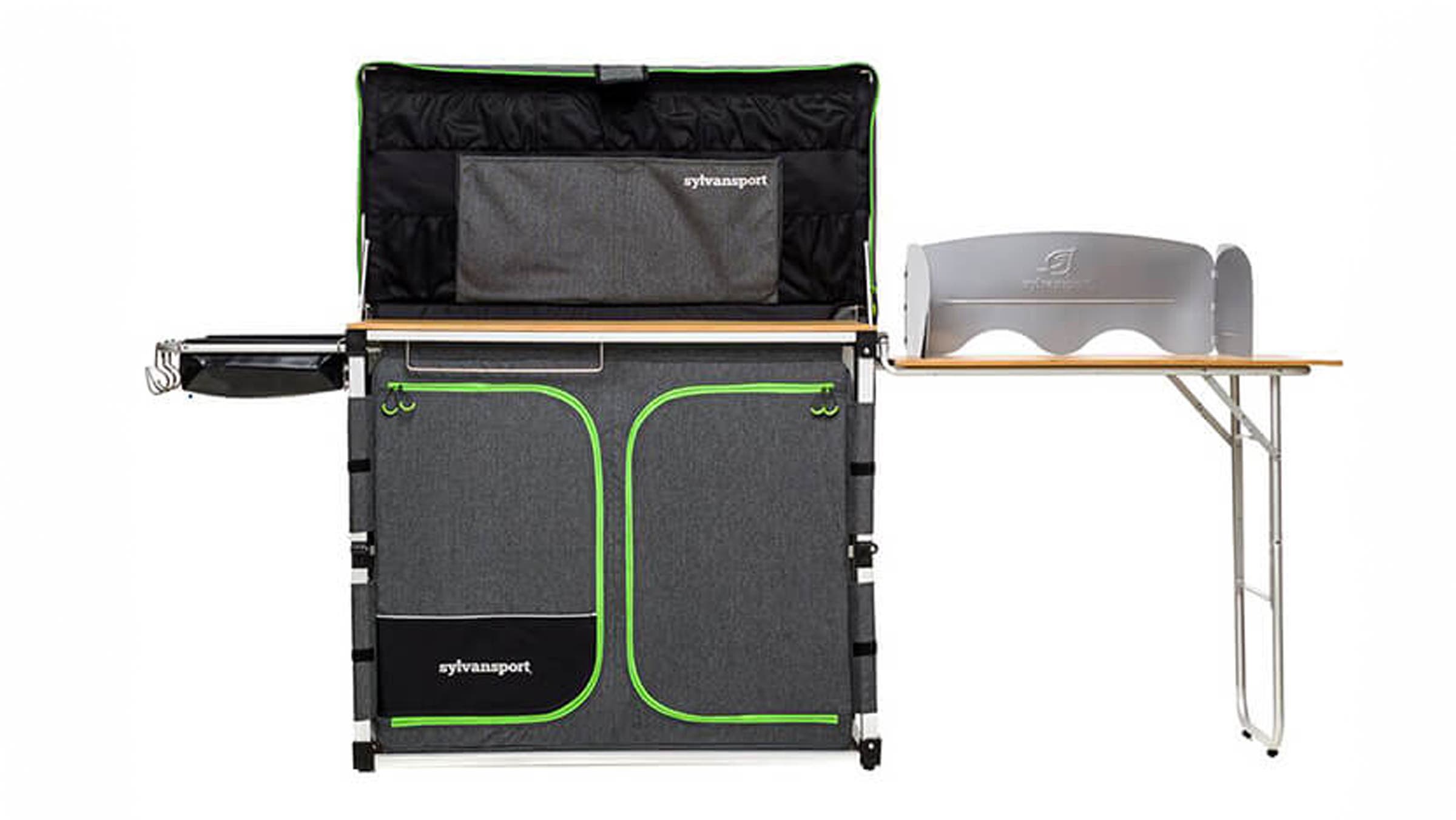
Let’s be real: The Spartan crowd will consider Sylvan Sport’s hilariously albeit aptly named Dine O Max overkill. But over-the-top camp chefs who love to feed friends and family will be overjoyed by this sturdy, aluminum-framed cook station. We’d say this mobile countertop includes everything but the kitchen sink, but it actually does include a collapsible washbasin-style sink that folds off the left side of the main bamboo counter.
A separate bamboo counter includes a three-sided wind screen for your camp stove, and an enclosed pantry below the counter contains four zippered cubbies. One of our testers’ main gripes was that the pantry doesn’t completely keep out critters, so campers need to stash food responsibly overnight.
Additional odds and ends increase practicality, like a trash bag holder, towel holder, and bottle opener. All of that adds up: At 7 x 40 x 19 inches when collapsed, it’s roughly the size of a small guitar case and weighs a hefty 44 pounds. Our shoulders ache at the memories of hauling this to campgrounds in Washington. However, the main reason we’ll heave the Dine O Max is because it gives car campers 8.8 square feet of counter space—on par with some studio apartments. “It’s a lot to manage for an overnight, but for multi-day trips or a weeklong adventure, it’s a game-changer,” reported a PNW-based gourmand.
Ooni Koda 2 Pizza Oven
Pros and Cons
+ Fast, hot, efficient, and fun
+ Reasonably packable
– Still somewhat bulky to transport
– Requires a handful of accessories
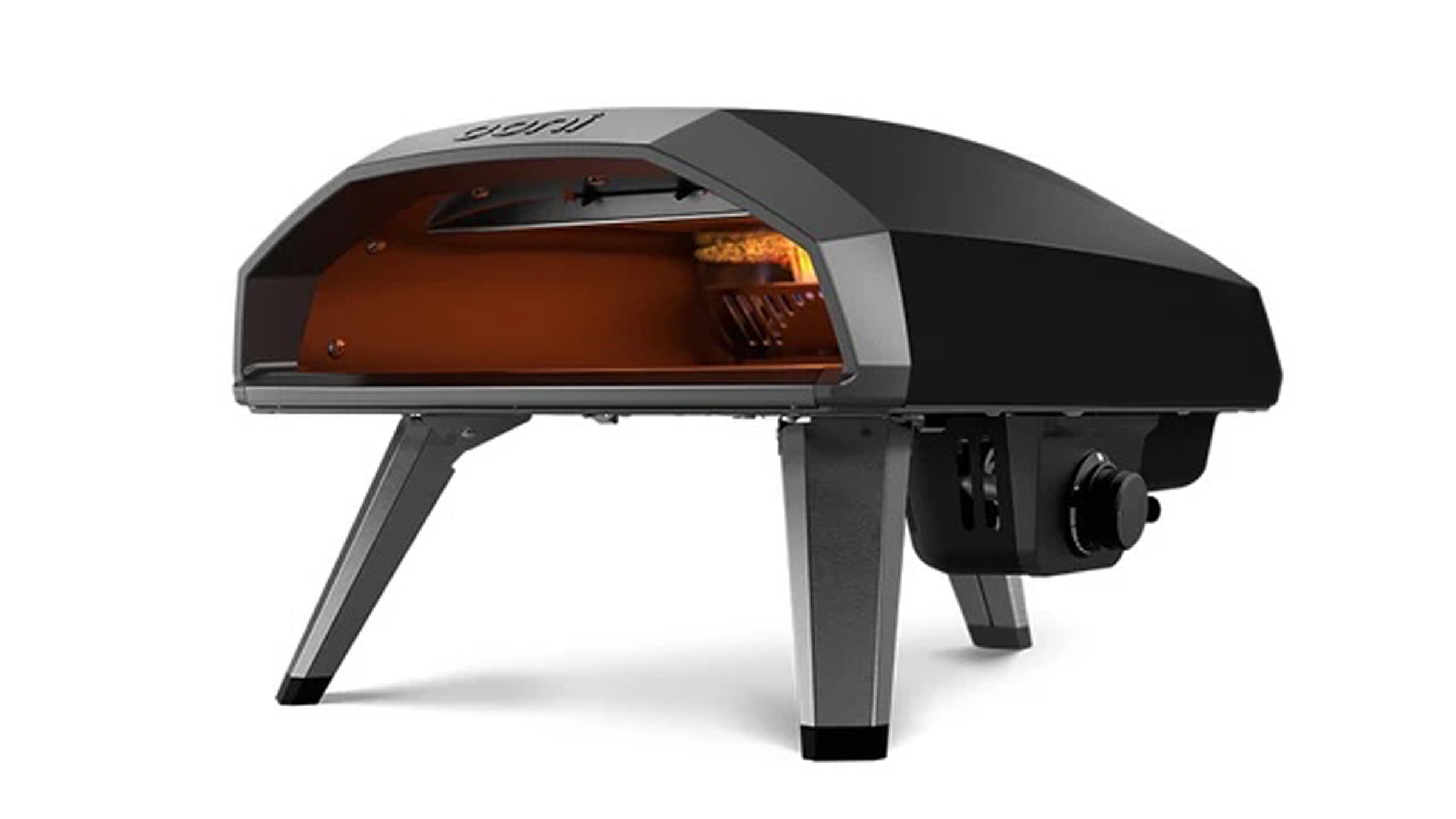
While the updated Ooni Koda 2 still isn’t the most portable pizza oven on the market, it’s on the lighter side at 35 pounds. It looks like a flat UFO, with three collapsible legs that fold up for transport. “Easier than expected to toss in the back of my Subaru, although not a completely painless endeavor once you’ve christened the pizza stone,” commented one camper.
Powered by propane through an attached hose, the heating element blasts a tapered flame that curls along the roof of the oven, quickly reaching maximum temperatures of 950 degrees Fahrenheit and distributing heat more evenly than its predecessor. “After one haphazard and unintentional calzone, we got the hang of it and fired out 10-plus pizzas in under an hour, feeding 15 or 20 people.” The flame control and low of 375 F offers chefs wiggle room to whip up more than just pizza using cast iron cookware.
Our gripes were minor. The Koda 2 doesn’t come with the requisite accessories—pretty standard for pizza ovens—so it’s worth checking out bundles that include peels and carrying cases. Additionally, the ignition is battery-operated, and if you forget to check the battery that’s housed in one of the tripod legs before you head to camp, you’ll be forced to ignite the stove manually, which is easier said than done.
UCO Flatpack Smokeless Firepit & Grill
Pros and Cons
+ Rugged construction
+ Packs flat, easy to store
+ Firepit doubles as a grill
– Sharp metal can cut your fingers
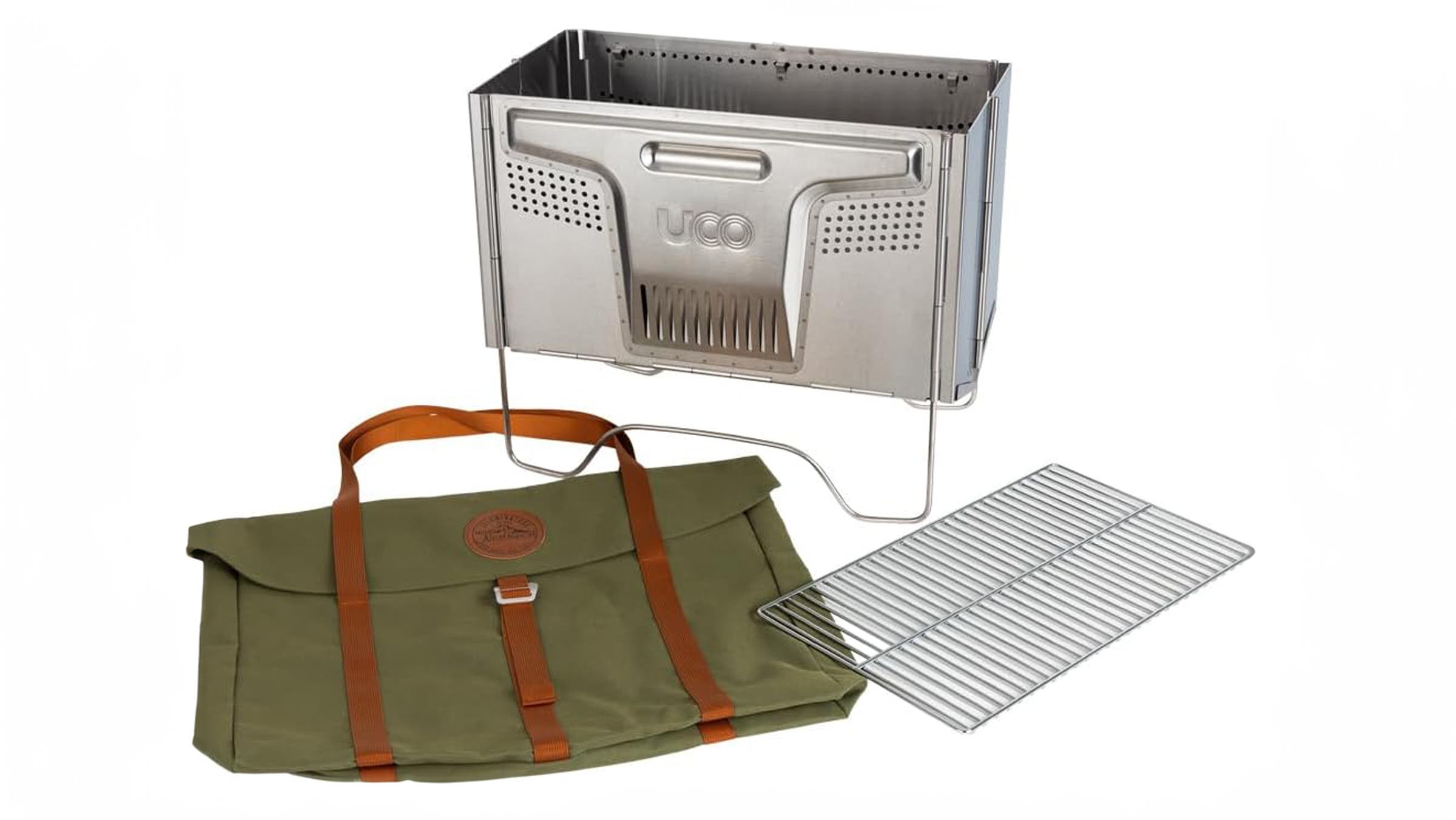
This is a packable, multi-purpose fire pit primed for any car camper or vanlifer who enjoys a contained campfire, has limited trunk space, and prefers an open-flame char. “It’s perfect for sunset beach hangs with friends,” reported a vanlifer and gourmet chef who took the UCO Flatpack Smokeless Firepit & Grill on a circuitous California-to-Colorado road trip. He loved that the flat-packing design was easy to set up, take down, store, and clean.
Durability impressed: One tester chucked the firepit off a 40-foot cliff, and it survived no worse for wear. He happily noted that the pit fit several full-sized logs, and nerded out over the double-wall construction and smoke-siphoning air channels.
“The design allows the sediment to flow down and not accumulate, and there’s good airflow, which is ideal for the burn,” he reported.
Camp Chef Mesa Aluminum Table
Weight: 22 lbs
Pros and Cons
+ Straightforward setup
+ Generous surface area
+ Adjustable height
– Not the most packable
– Tallest setting is a little unsteady
– Legs are tricky to adjust
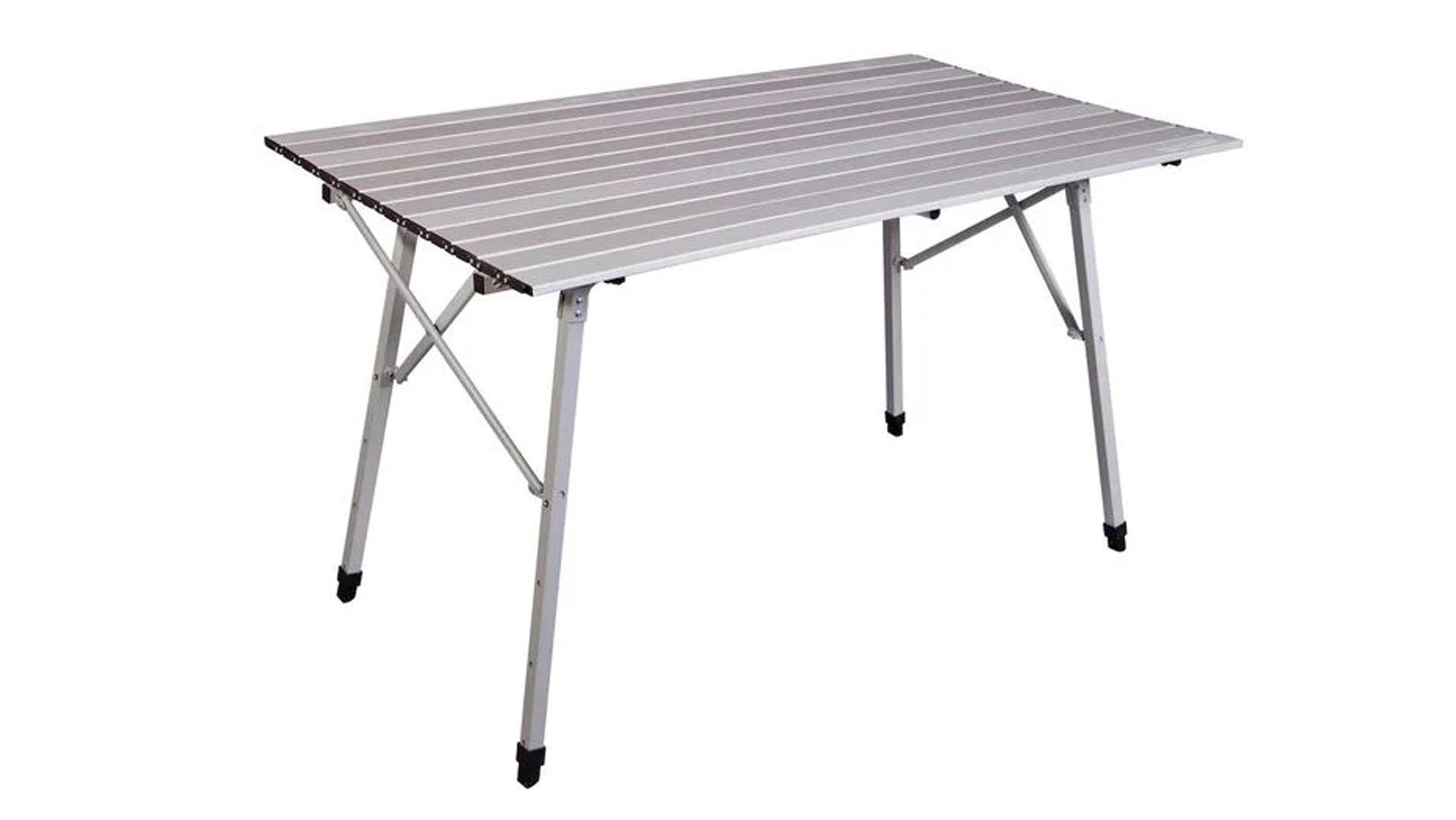
We’ve tested a number of camp tables over the years and the Camp Chef Mesa is our current favorite thanks to its portability and practicality. A durable, collapsible, easy-to-clean roll-top aluminum table with four height settings, the Mesa is ideal for campers who love cooking and sharing elaborate meals outdoors.
The Mesa features a two-piece design, with folding legs that pop up in seconds and a roll-top piece that quickly unfurls and snaps on top. One tester ignored instructions (setting up camp furniture shouldn’t feel like an Ikea nightmare) and had no problems erecting the table solo. Packing it require some forethought, though, as the four-foot side won’t fit longways in some trunks.
The matte-finished aluminum slats are easy to clean and create a spacious 27.5-inch by 47.25-inch eating or cooking surface. Our favorite element is the four height settings of the legs. The lower option (27 inches) is best suited for loungy camp chairs and is by far the sturdiest. Our 155-pound category manager laid across the Mesa without issue despite Camp Chef’s 100-pound weight limit recommendation.
At the highest setting (39 inches), the Mesa is a little more wobbly but still stable enough to whip up involved camp recipes. The two highest settings (39 and 35 inches) work best for cooking and give chefs the option to choose what works best given campsite topography. (For reference, the standard countertop height in the US is 36 inches). If you hate bending over to cook or cooking while seated, the Mesa is the move. We also loved that the table seats four comfortably and six more cozily.
If we have to nitpick, adjusting leg height can be tricky once the table is already set up. For quicker adjustments, tweak the height during setup.
Coffee and Drinkware
MiiR New Standard Carafe
Weight: 1.8 lb
Dimensions: 6″ x 6″ x 10.5″
Pros and Cons
+ Sleek design
+ Two-piece construction makes for easy cleaning
+ Big enough to serve four
– Included lid isn’t leakproof
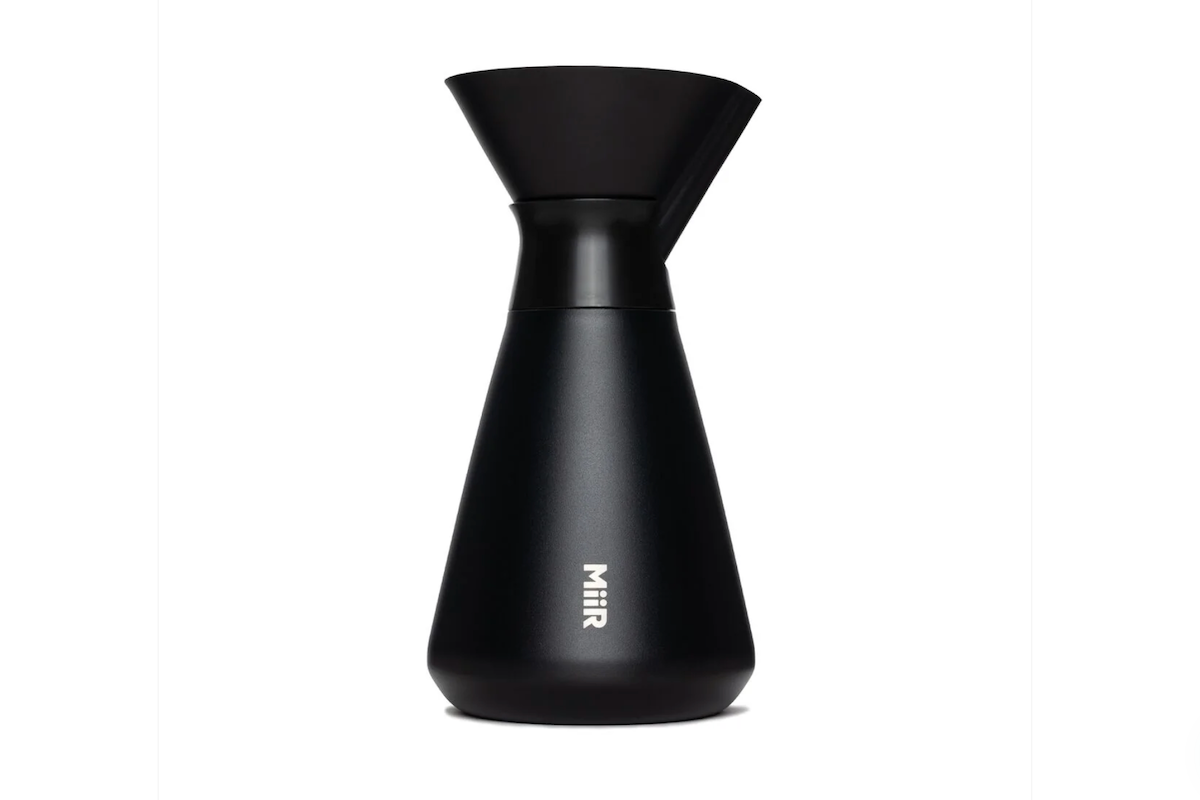
Ever wished you could bring your Chemex camping without constantly fearing for the glass gizmo’s well-being? Miir’s got the answer with its indestructible and ingeniously designed New Standard Carafe.
The coffee contraption is crafted from double-wall, vacuum-insulated stainless steel, which is both ultra-durable and ensures your brew stays piping hot for hours. On chilly fall mornings in the Sierra, we were able to enjoy what hobbits affectionately call second breakfast, finishing off still-warm java up to two hours after brewing. The New Standard Carafe is easy to use and compatible with most carafe coffee filters. Our coffee-savvy testers found it did the job well—and that the resulting pour-overs were crisp and smooth.
Testers in the Sierra loved that the carafe held a generous 33 ounces of brewed coffee. That was enough to caffeinate our group of four runners and climbers during a trip near Tahoe’s Donner Summit: Each person got an eight-ounce pour to greet a sunrise over Frog Lake.
Our favorite feature, though, is the brilliant two-piece design. The top half of the carafe unscrews from the bottom, facilitating easy cleaning at home or on the road. One major con: the Carafe’s included lid isn’t leakproof. If you want your brew to be portable, you’ll have to shell out for MiiR’s additional Leakproof Lid ($10). But we found the add-on worth it: simply screw the lid to the bottom section of the carafe to eliminate chances of spillage while driving to the trailhead or hiking up short spurs to watch the sun rise.
VSSL Java G25 Coffee Grinder
Weight: 15.2 ounces
Pros and Cons
+ Durable
+ Well designed
+ Kitchen-ready aesthetic
+ Precise, adjustable grind
– Small capacity
– Heavy
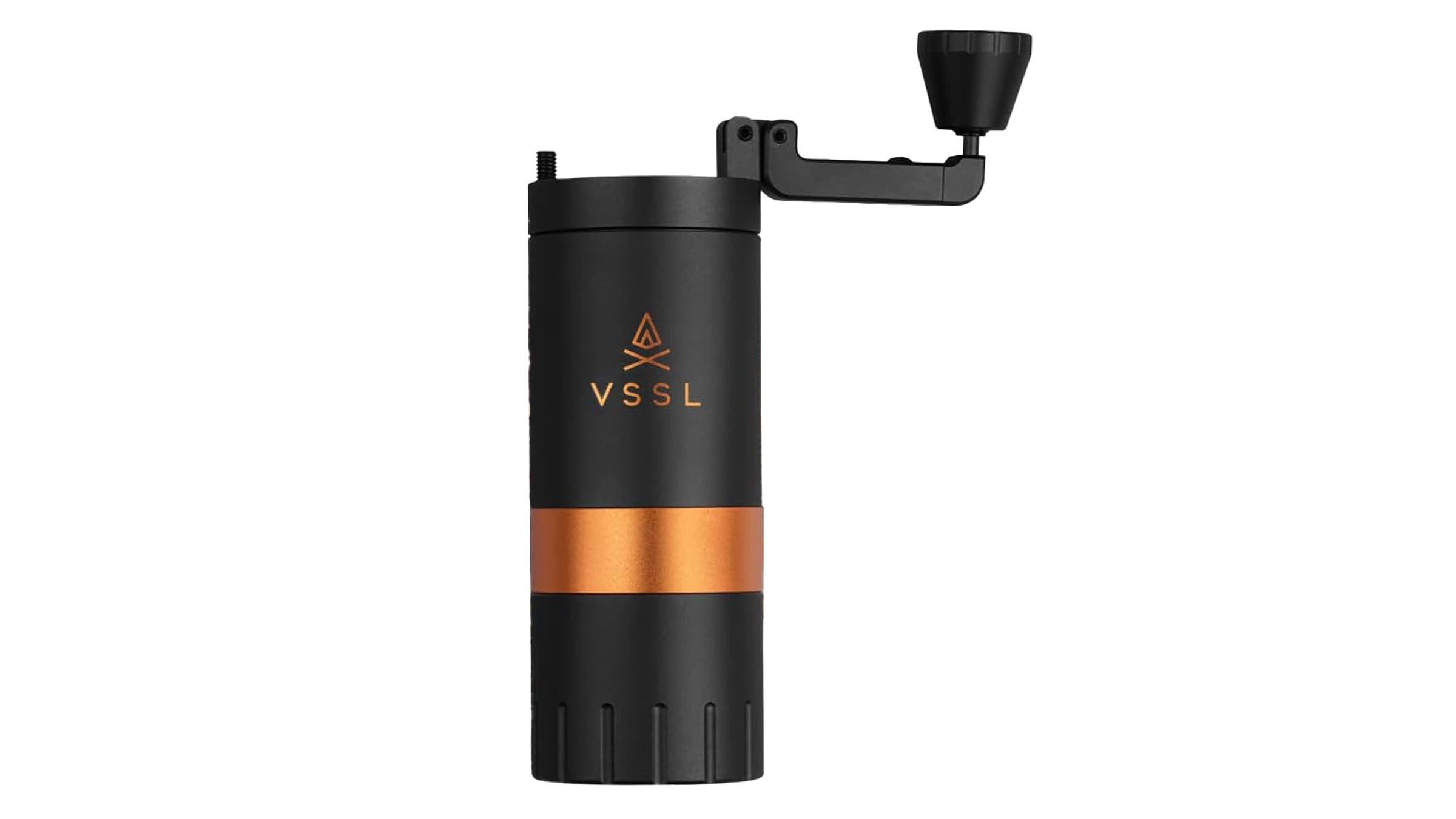
VSSL’s sleek and adaptable Java G25 Coffee Grinder is another piece of gear that’s equally at home on a granite countertop and a granite outcrop. Crafted from aircraft-grade, adventure-ready aluminum with stainless steel grinding componentry, the G25 is as rugged as it gets. “Super well-built,” reported a Seattle coffee lover and longtime gear tester.
VSSL trimmed the G25’s diameter down last year by two millimeters so it can be stashed inside the company’s Nest Pour Over Kit ($75) and the AeroPress GoTravel Coffee Press ($50), and increased the catch capacity to 30 grams. Still, testers reported that the heft (15.2 ounces) means the G25 isn’t coming on backpacking trips. Instead, it’s best suited for car campers and coffee enthusiasts who want to achieve a barista-quality grind both at home and on the road.
Whether you’re using a French press or a Moka Pot, the G25 has you covered with 50 grind settings. A combo of high-carbon stainless steel conical burrs, dual ball bearings, and an expandable handle that increases leverage deliver a precise and even grind every time. “The grind quality is incredible and super adjustable,” commented our Seattle tester, who primarily uses the G25 for pour-overs.
Our category manager relied on the G25 daily during a month-long van trip in the Pacific Northwest, pairing it with an AeroPress. He loved everything from the multitude of grind settings and easy-to-open push tab to the hand feel, heft, and mechanical smoothness of the componentry. His biggest compliment? He’s used it nearly every day at home since the trip.
Just one ding: This is really a single-serving grinder. If you need more capacity, peep the double-cup G45 ($220).
Aeropress XL Coffee Press
Weight: 1 lb
Pros and Cons
+ Easy to use and clean
+ Double the capacity of the original Aeropress
– Filter cap doesn’t fit many mugs
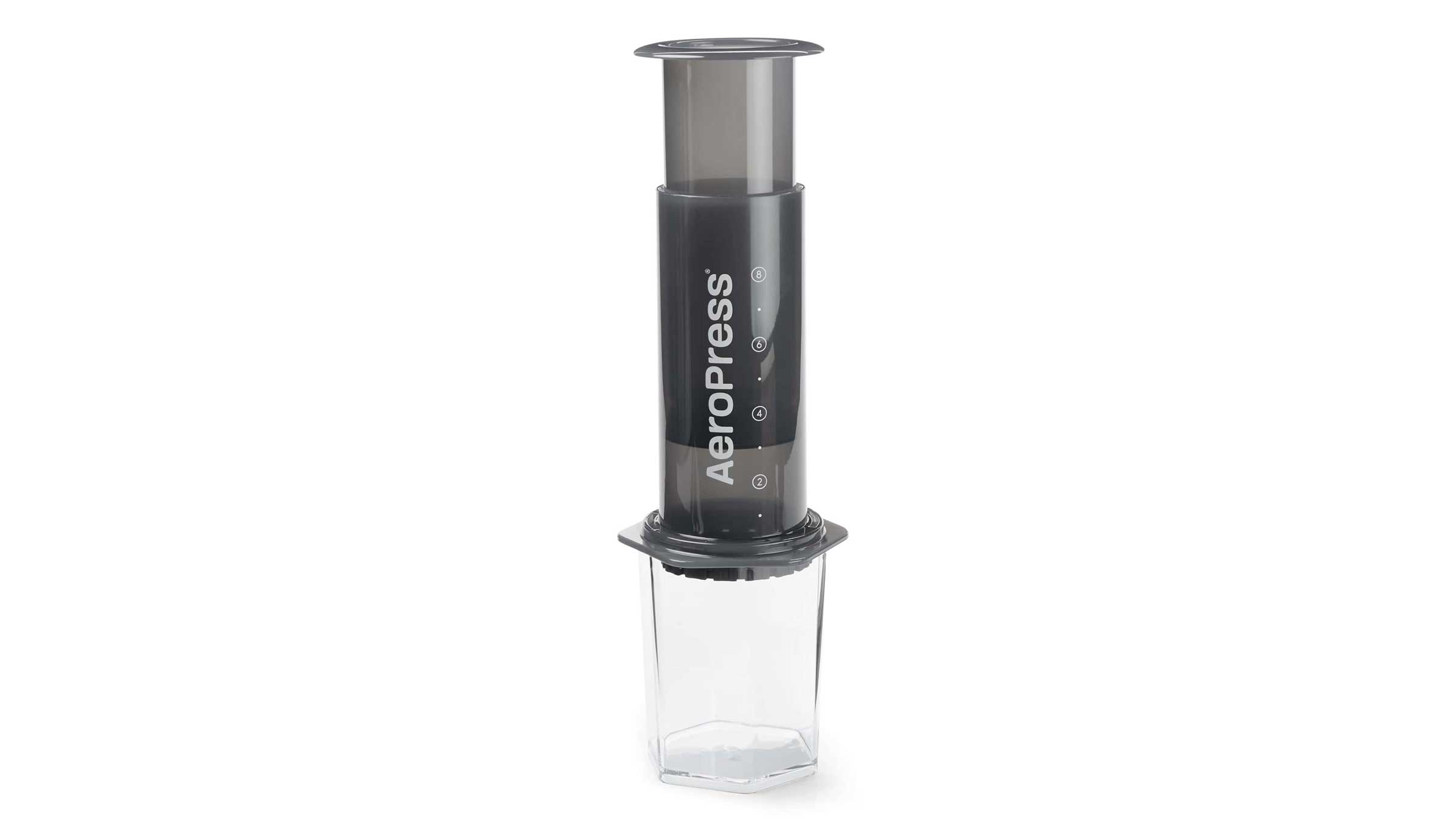
The Aeropress XL incorporates the same plunging tech as the backcountry barista-approved original version, but with double the capacity—a volume boost that allows car-camping couples to streamline their mornings by fixing one batch of brew instead of two. “My partner and I efficiently enjoyed excellent-quality coffee together every morning while camping thanks to the XL,” reported a June Lake-based hut keeper, ultra-runner, and coffee addict (with a “Death Before Decaf” tattoo to prove it). For anyone intimidated by the looks of this gizmo, he describes the XL as “easy to use, and easier to clean.”
Testers reported that the XL filter cap does impede the press from being used directly with many mugs, making it important not to lose the included plastic carafe. If you’re rolling solo, try the more compact, single-serving Aeropress Clear ($50).
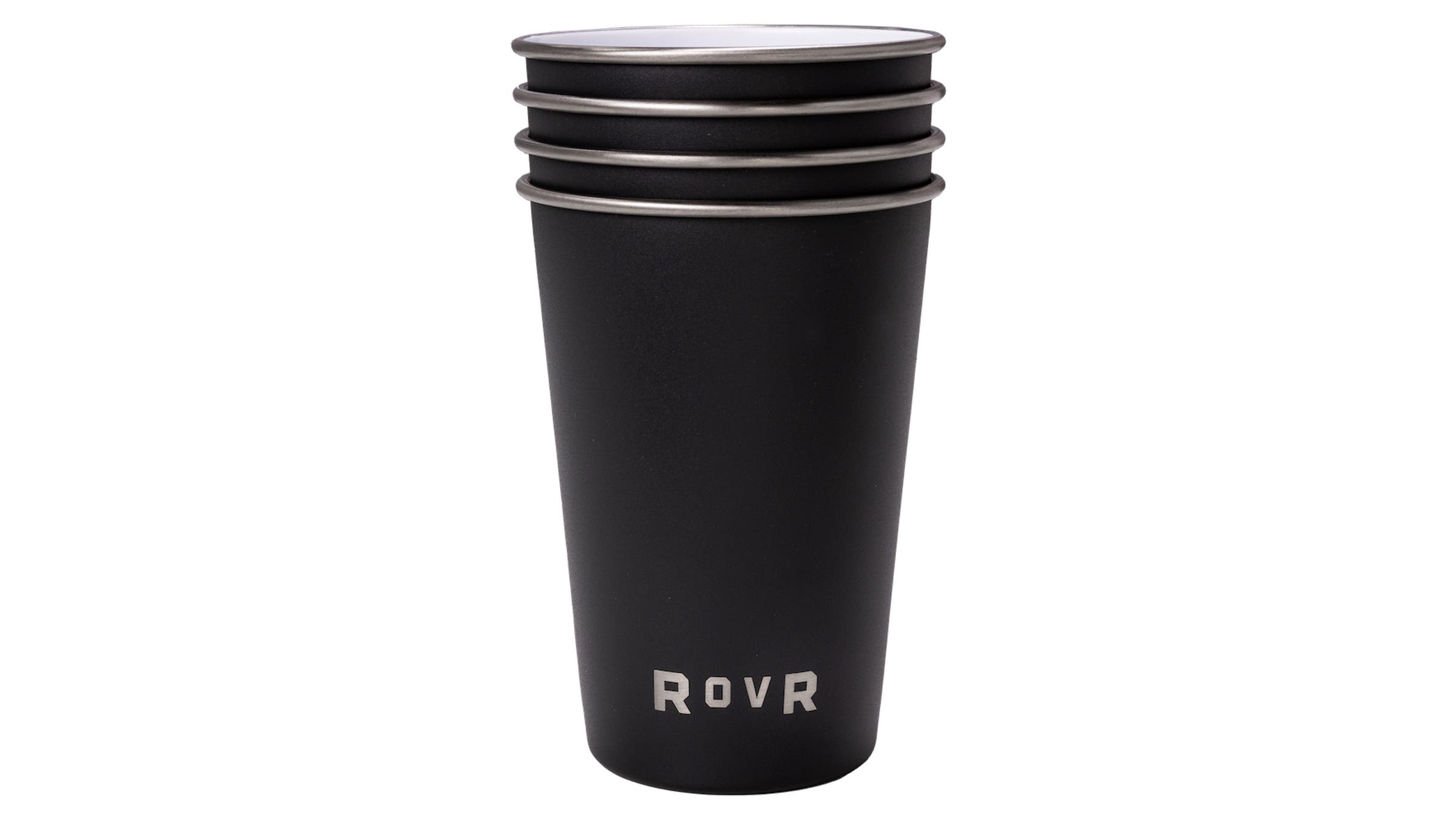
RovR ChillR 16oz Tumbler 4-Pack
Pros and Cons
+ No metallic taste
+ Durable exterior
+ Stackable set of four
– No insulation
RovR is most famous for its RollR rolling coolers ($399) that look as if their tires were sourced from a monster truck rally. But the brand’s drink ware ought to be on your radar, too. The ChillR 16oz Tumbler—a single-walled, ceramic-coated, dishwasher-safe pint glass that comes in a stackable set of four—is a great addition to any camp box.
Whether you’re pouring coffee for the crew after a night of camping, hydrating after mountain biking, or doling out microbrews from a growler around the campfire, the ChillR’s ceramic interior provides a clean, crisp taste. There’s none of the metallic finish that so often plagues steel vessels. The coating proved easy to clean, too, whether we were hand washing the cups at camp with diluted, biodegradable soap or tossing them in the dishwasher at home.
Apart from the taste (or lack thereof), what we love most about the RovR ChillR is that it does what most camping cups cannot: it fits into your daily life at home. The ChillR’s durable enough for camp use, yet the muted, powder-coated exterior looks sharp in any van, RV, or home kitchen. Stackability is another bonus for campers with limited trunk or cupboard space. Be warned, though—this isn’t a double-walled camp mug and doesn’t insulate like one.
Cutlery and Cookware
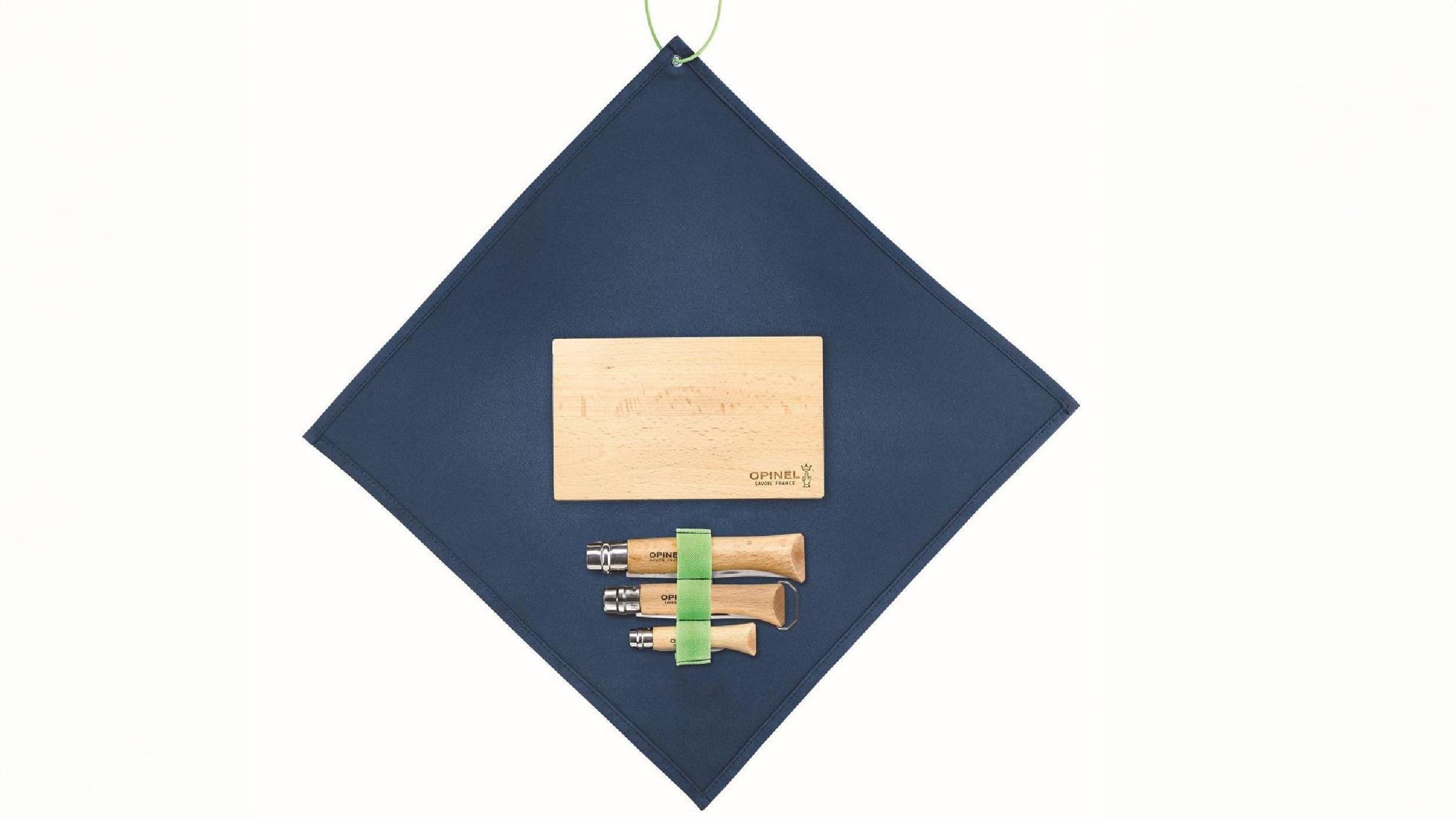
Opinel Nomad Cooking Kit
Weight: 1.25 lbs
Pros and Cons
+ Classic, reliable, good-looking tools
+ Travel-friendly bundle
– Too small for serious prep
– Expensive
Simple, nifty, and reliable, Opinel’s folding blades are classic for a reason. The Nomad Cooking Kit features a trio of the French knife maker’s wood-handled tools—a folding peeler, a standard penknife with a folding corkscrew inset in the handle, and a serrated blade—as well as a mini wooden cutting board and a microfiber cloth for cleaning and carrying.
Our tester—an outdoorsy, Tahoe-based chef who took the Nomad kit on a road trip to Aspen’s famous Food & Wine fest appreciated the travel-friendly bundle. “The knives and peeler each have a little harness they slip into, so it can all be securely rolled up and thrown in a bag to travel without worry,” she said.
The corkscrew knife is a two-for-one that’s purpose-built for cheese and wine aficionados. She used the peeler most infrequently because she rarely needed it for snacks. She judged it best for outdoorsy cocktail crafters in need of an orange peel garnish, but relied on the serrated knife constantly on the trail, at camp, and in the kitchen. “It’s great for bread, tomatoes, or cutting a mushroom out of the ground while foraging,” she reported. After using the saw-toothed blade to forage for a handful of morels, she used her kit to slice them up for a foraged backcountry pizza. Her highest compliment of the kit? The blades themselves—stainless steel and set inside stout beechwood handles—received almost as many compliments as her cooking. “Michelin star,” she joked.
These days, our tester stashes the Nomad kit in her truck, whether she’s camping, road-tripping, or exploring her backyard. All told, she recommended the kit for the “traveling bartender, charcuterie enthusiast, forager, or picnic goer,” though she acknowledged the price tag is high for utilitarian cooks.
Paid Advertisement by Swiss Army Knife™️
Victorinox Ranger 79 M Grip – $88.00
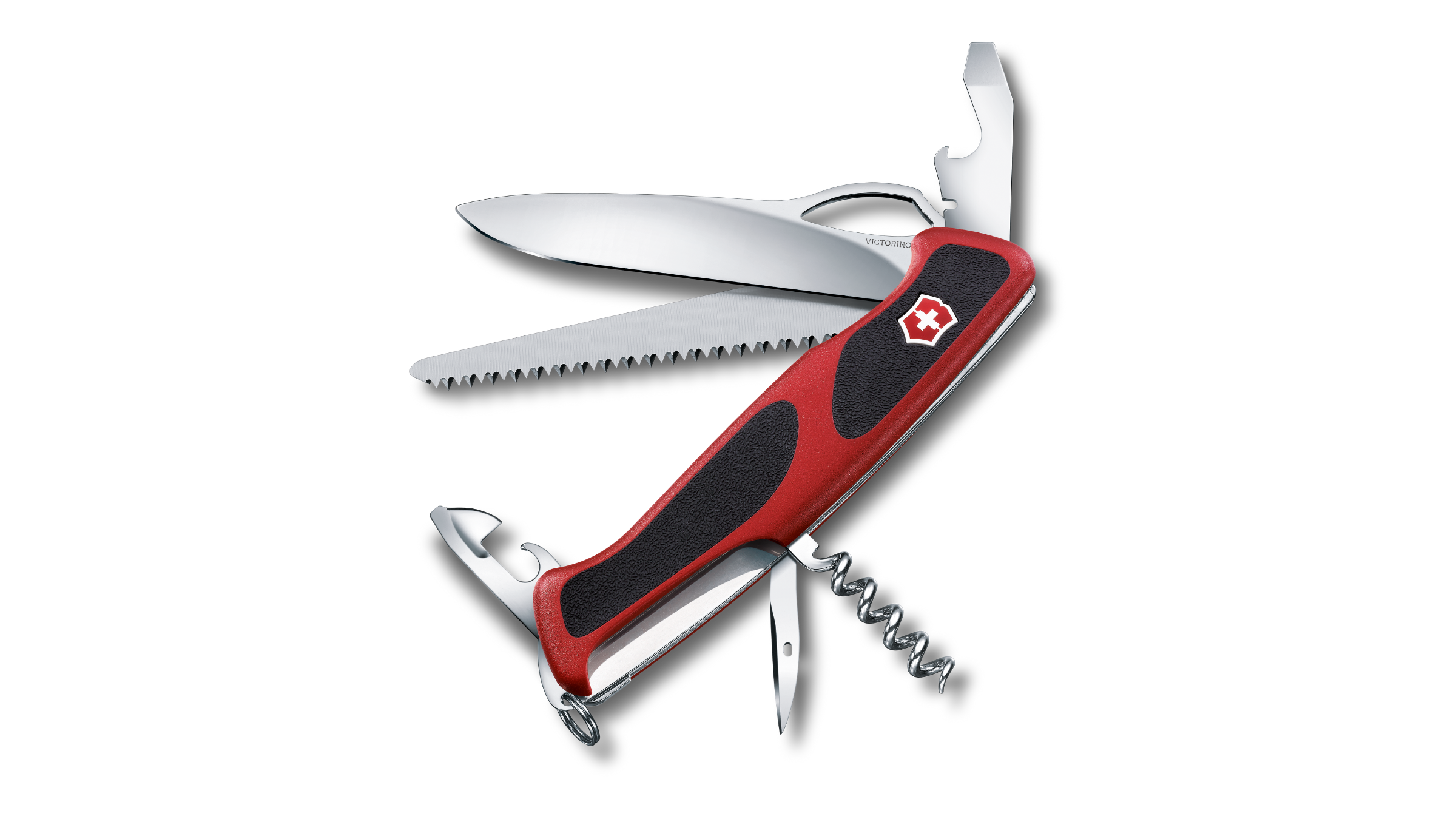
If you’re spending any amount of time in the outdoors, a multitool is a must-have in your pack, and the Victorinox Ranger is the 79 M Grip is definitely one you should be reaching for. It has 12 functions, including everything from a wood saw to locking blade to a wine cork. That means this small but mighty tool can tackle everything from your more rugged outdoor activities to your post-hike cocktail hour. It’s light, versatile, affordable, and embodies the spirit of reliability and endurance that the Swiss Army Knife™️ name is known for.
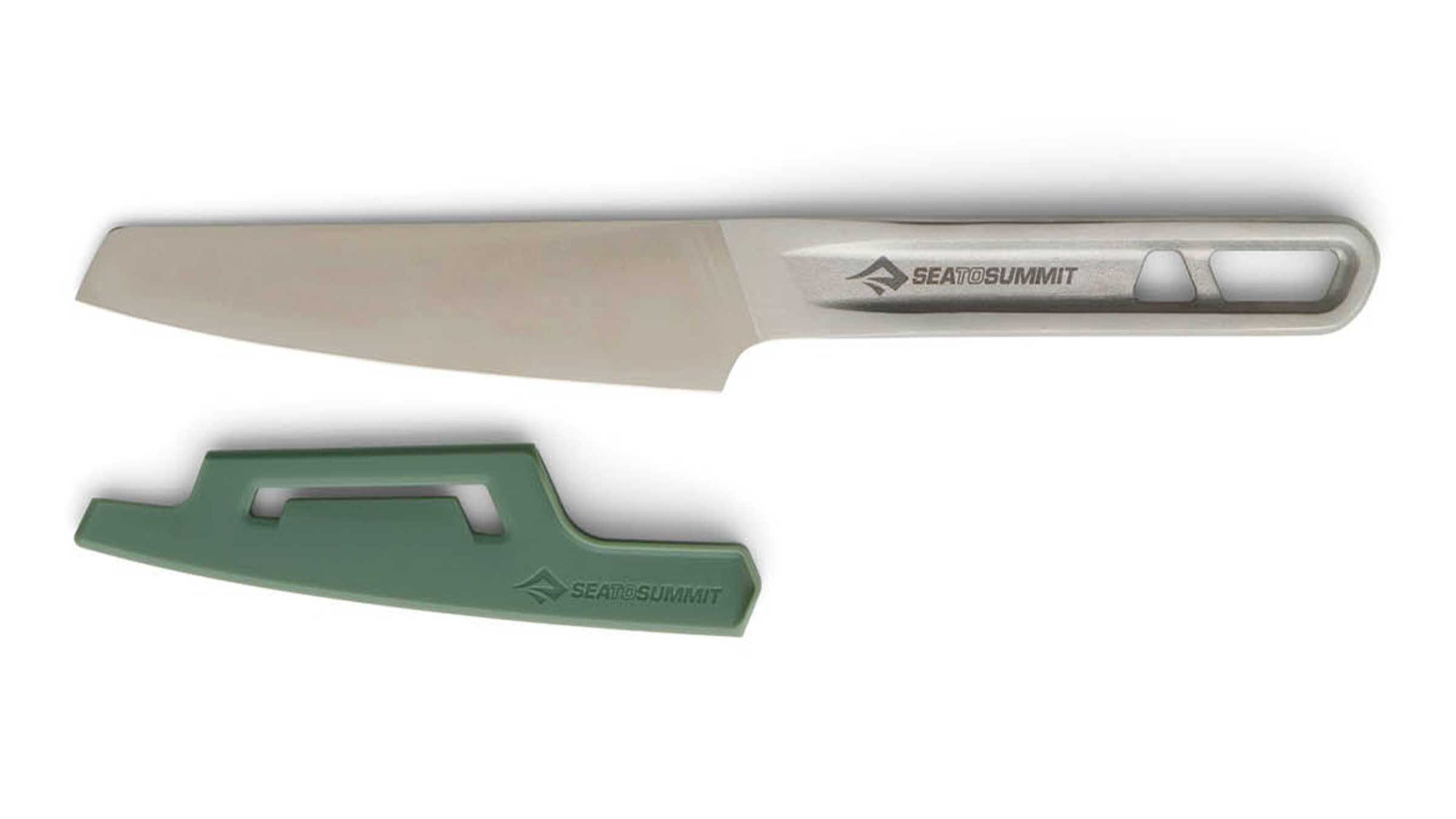
Sea to Summit Detour Stainless-Steel Kitchen Knife
Weight: 5.2 oz
Pros and Cons
+ Weighty, reliable handle
+ Apt size for working in tight quarters
+ Affordable
– Possibly too small if you’re cooking for a crowd
Sea to Summit’s new, comprehensive Detour line of mostly collapsible car-camping cookware has two main ingredients: stainless steel and hard nylon.
Testers offered mixed reviews of some of the company’s products: the collapsible pots are impressively compact, but the silicone siding wasn’t ideal for even heat transfer. But there were no mixed reviews on the Detour Kitchen Knife, a compact, dexterous, multi-purpose knife with a razor-sharp, five-inch stainless steel blade.
“I’m working in a small space with a tiny cutting board and this small, sharp knife was perfect,” commented a tester who used the Detour kit to whip up his favorites on a road trip, among them butter chicken, green curry, and tortilla soup. “I love the way this knife felt in my hand—it’s heavy and strong, and the shape of the handle felt secure in my palm.”
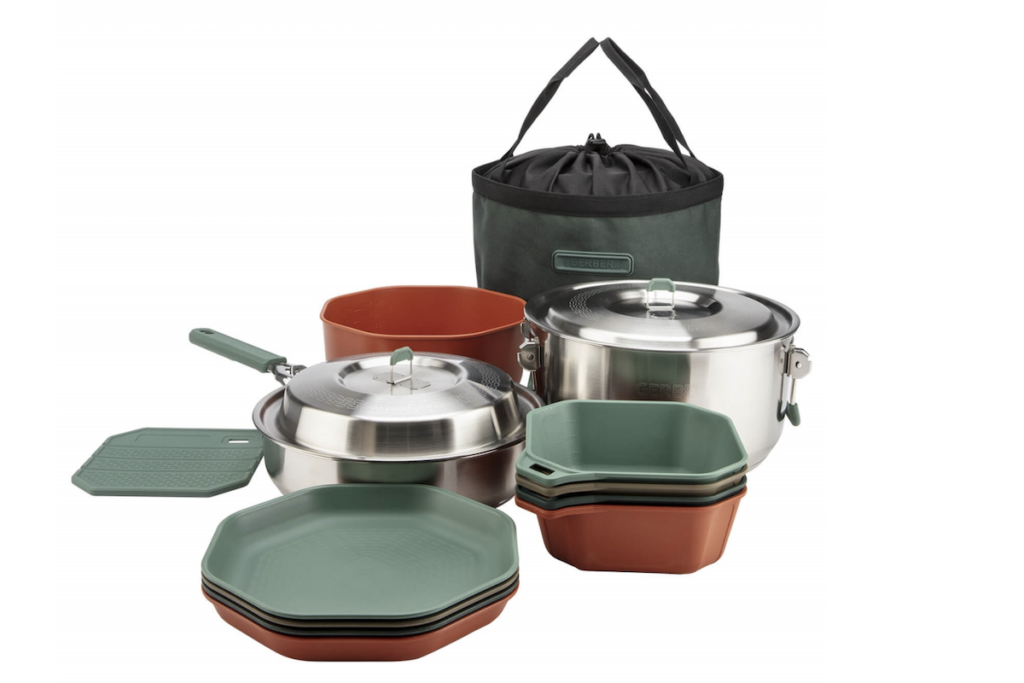
Gerber Compleat 16-Piece Cook Set
Weight: 10 lb
Dimensions: 10″ x 2.5″ (sauté pan), 10″ x 5″ (stock pot), 6.7” x 2.6” (bowls), 8.7” x 1” (plates), 8.8” x 7.1”(mixing bowl)
Pros and Cons
+ Space-saving nesting design
+ Enough plates and bowls to feed 8
+ Generously sized pot and pan
+ High-quality stainless steel
– Squeezing the kit back into its storage bag isn’t easy
Gerber’s Compleat 16-piece Cook Set is the Russian nesting doll of camp cookware. The stars of the show are the 2.6-quart sauté pan and 5.6-quart stock pot. Both are crafted from stainless steel with a substantial, three-ply base construction, which distributes heat better than most purpose-built camping pots and pans.
It’s easy enough to clean, too: even after we charred a chicken stir fry past the point of no return, distracted by the sunset on an Oregon surf trip, we were able to clean it with a pot scraper and a little biodegradable soap. Plus, the 2.5-inch rim of the sauté pan and five-inch-deep pot provide so much culinary real estate that cooking for four is no problem, and cooking for eight is possible with a little forethought.
When it comes time to dish up, the set also includes polypropylene dinnerware. You get four lipped plates that can handle chilis and stews, four bowls so deep they can double as helmets, and a large mixing bowl. The set also comes with a silicone-wrapped handle for the sauté pan that pops off for storage, a pair of perforated lids, and a nifty silicone heat pad.
If you’re doing the math, we’ve only touched on 15 pieces. The 16th is the cherry on top—a dual-handled carrying case. This cinch-closure storage bag is about the size of a small bear canister, and it fits the rest of this gear—so long as it’s neatly stacked. If you’re packing components willy-nilly, however, zipping the bag shut can be difficult—our testers’ biggest gripe. Do it right, though, and you’ll be rewarded with serious space savings.
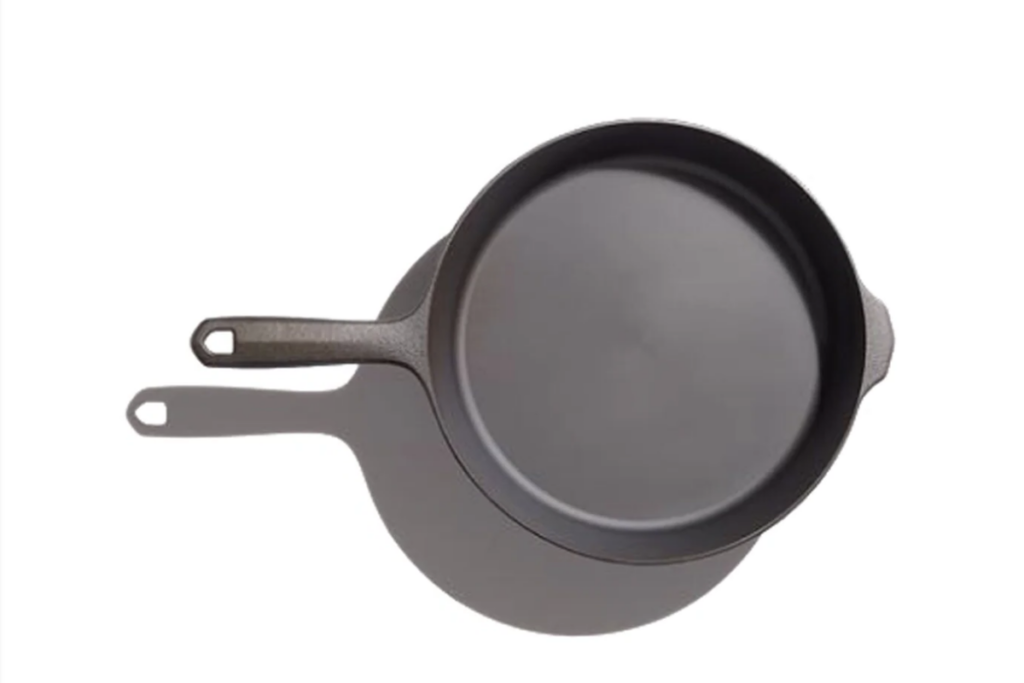
Field Company No. 8 Cast Iron Skillet
Weight: 4.5 lbs
Dimensions: 10.3″ x 16.3″ x 2″
Pros and Cons
+ Durable
+ Versatile
+ Cooking surface improves with time and seasoning
+ Lighter-weight than other cast irons
– Not non-stick, even when well-seasoned
– Requires more care than other pans
There’s something magical about cast iron. What other cookware ages like fine wine and looks as good on a French range as it does over a campfire grate? Case in point: Field Company’s utilitarian No. 8 Cast Iron Skillet. This machined-smooth, 10.25-inch-diameter skillet is as durable as it is versatile, and it’s become our go-to pan over the last few years. From whipping up vegetable stir-fries in the van, to cooking fresh-caught trout over the campfire, to searing ribeyes at home, the skillet just does it all.
Field Company crafts its skillets from recycled iron here in the USA, using traditional sand-casting techniques. (Essentially, molds are made from a master pattern using a wet, untreated sand mixture, then molten metal is poured into the mold. The resulting casting is cleaned, thinned, and smoothed by machine before it’s pre-seasoned and prepped for your stove.) Field Company aims for a relatively lightweight construction, centering heft at the base of the pan for searing prowess and then thinning it out toward the sloped rim.
The 4.5-pound pan is about a pound lighter than standard cast-iron skillets. Testers also appreciated the ergonomic handle, which is convex and curved to fit comfortably in the hand. Thanks to the light weight and good grip, it was easy enough to pull one-handed from campfire to boulder. Still, cast iron isn’t ideal for the faint of wrist—especially when the skillet is loaded with a juicy, coiled tenderloin or packed with venison medallions. The handle can also get hot, so a handle cover ($29, sold separately) isn’t a bad idea.
The durability and versatility of cast iron is a major draw. Most testers were grateful to have a pan that could handle a high-powered two-burner camp stove and campfire cooking alike. And thanks to coils on the bottom, it can handle an electric range at home, too.
The biggest downside to the No. 8 is the same downside that befalls all cast-iron skillets: maintenance can be finicky. You shouldn’t use soap on the pan, and you may have to oil it regularly if you want to keep its seasoning—i.e., cast iron’s natural, stick-resistant coating—intact. The No. 8 skillet does come pre-seasoned with three coats of grapeseed oil, which we found plenty non-stick for most camping foods. Still we’d recommend cooking on it for a few weeks before you jump into something trickier, like fried eggs.
Storage, Organization, and Prep
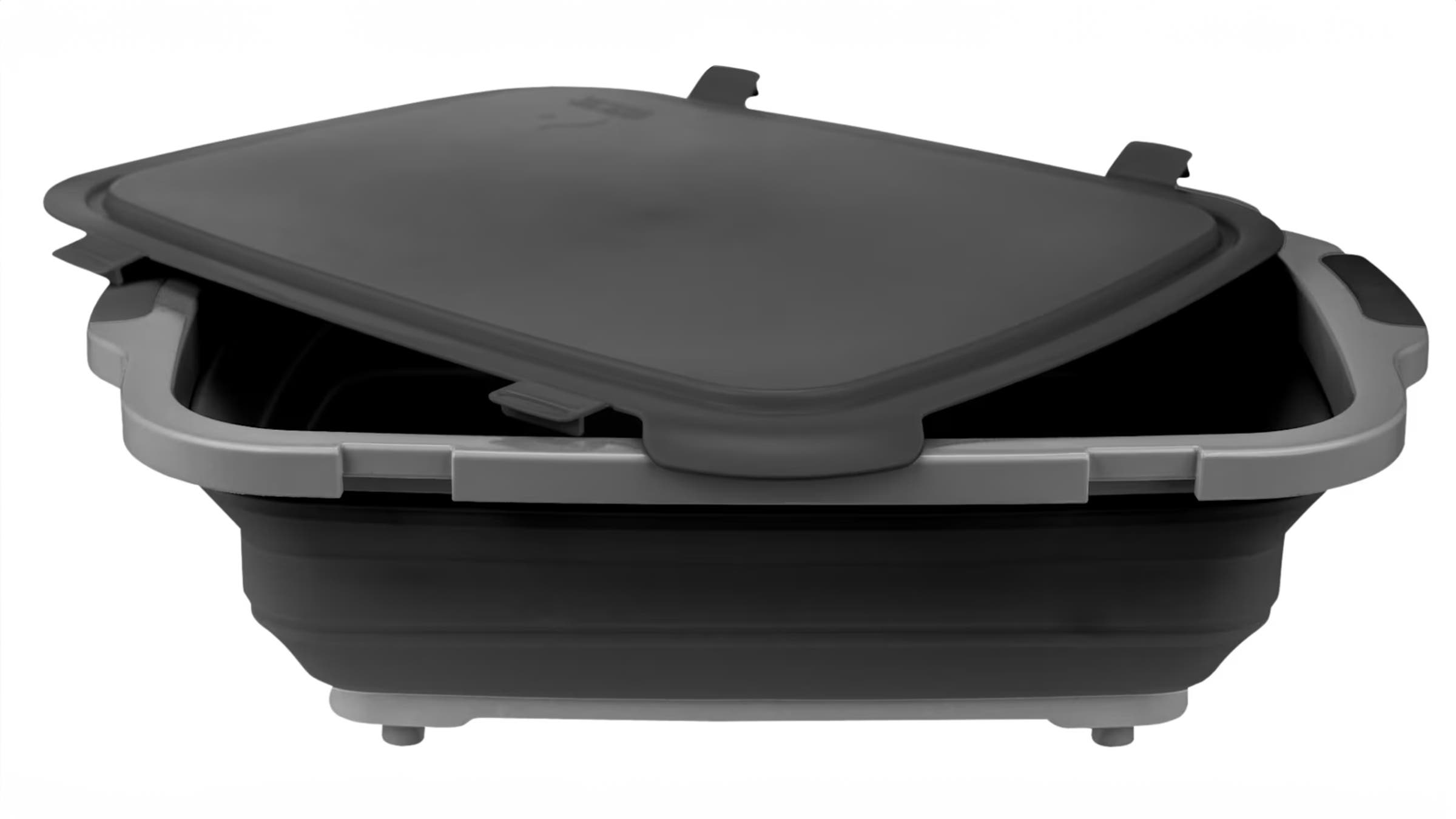
Drip EZ Prep Tub
Weight: 4 lbs (Original)
Pros and Cons
+ Affordable
+ Versatile
+ Easy to clean
– Collapses under weight
If you love to BBQ—or hate to do dishes—Drip EZ’s Prep Tubs are a versatile and affordable accessory worth adding to your camp cupboard. Essentially, these collapsible silicone bins feature a nylon cutting board base for preparation and a snapping plastic lid for transport.
After whipping up dishes in Tahoe and feeding family in Colorado, a private chef judged the marination station ideal for dishes like pork butts and braised lengua tacos. “It transports food securely, and is amazing for holding anything that’s juicy, like marinating meats,” she reported.
Our testers gave the Prep Tub kudos for grippy feet that kept the tub stable, no matter how slippery the task, and the cutting board base was a tester-favorite feature. Our Tahoe chef noted that while the tub is marketed toward barbecuers, it’s not limited to protein prep. After chopping veggies on the cutting board base, she lifted the tub walls, added greens, and headed down to relax by the river with a salad in tow and nary a dish to rinse.
The ribbed silicone walls of the bin are collapsible, giving you three heights to work with (Junior, Original, and XL) and enabling the tubs to pancake flat for storage. A downside of the design—our testers’ most egregious complaint—is that there’s not much structural integrity to the walls, and if you stack anything heavy on top of the tub, it will readily collapse.
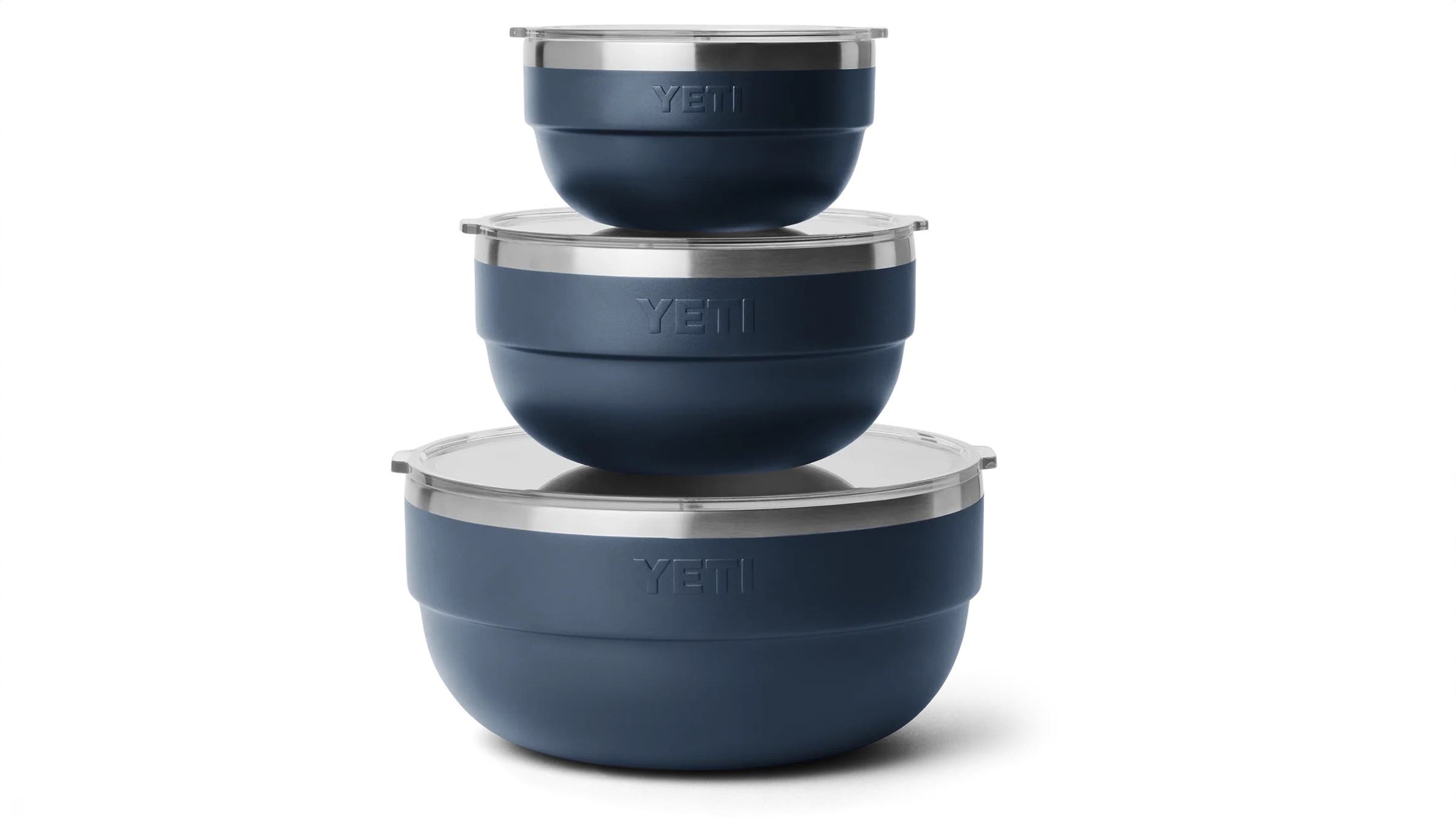
Yeti Three Course Bowl Set
Weight: 1.86 lbs (2 qt)
Pros and Cons
+ Durable
+ Insulated
+ Nesting design
– Lids don’t lock
– Steam vent can leak
– Expensive
Camping and existential questions go hand-in-hand. Are we alone in the cosmos? Are trees sentient? And what the hell should we do with the leftover mac ‘n’ cheese? While we’re still pondering those first two questions, Yeti’s tough, versatile, and insulated Rambler Bowls help answer the latter.
Like a Yeti mug or water bottle, these Rambler bowls are double-wall vacuum insulated and crafted from substantial stainless steel. Not only does this over-engineered construction help keep your camp chili warm or overnight oats cool, it’s also remarkably durable. “My Tupperware seems like it’s made from papier-mache in comparison,” commented a Tahoe tester after dropping a Rambler out of his van onto a concrete parking lot.
Granted, the wide-mouthed bowls won’t keep contents piping hot for hours on end like the brand’s water bottles. And testers had mixed feelings about the non-locking lids. Also, because of the minuscule steam vent there’s the potential for leakage if the bowl gets knocked over in your cooler. But overall, testers loved the lids: They’re easy to pop into place, protect grub from precipitation and pests, and have a tight gasket.
The three-bowl set comes with a one-quart bowl (perfect for a personal helping of cereal or soup), a two-quart bowl that we deployed at a DIY state park wedding to keep a mountain of sliced limes chilled, and a four-and-a-half-quart bowl that’s revolutionized our camp meal prep and picnic potluck game. Together, the bowls are a welcome addition to any camp cook’s kit, and the nesting design makes travel and storage easy. Our main gripe? The cost of one of these bowls is hard to stomach, let alone three.
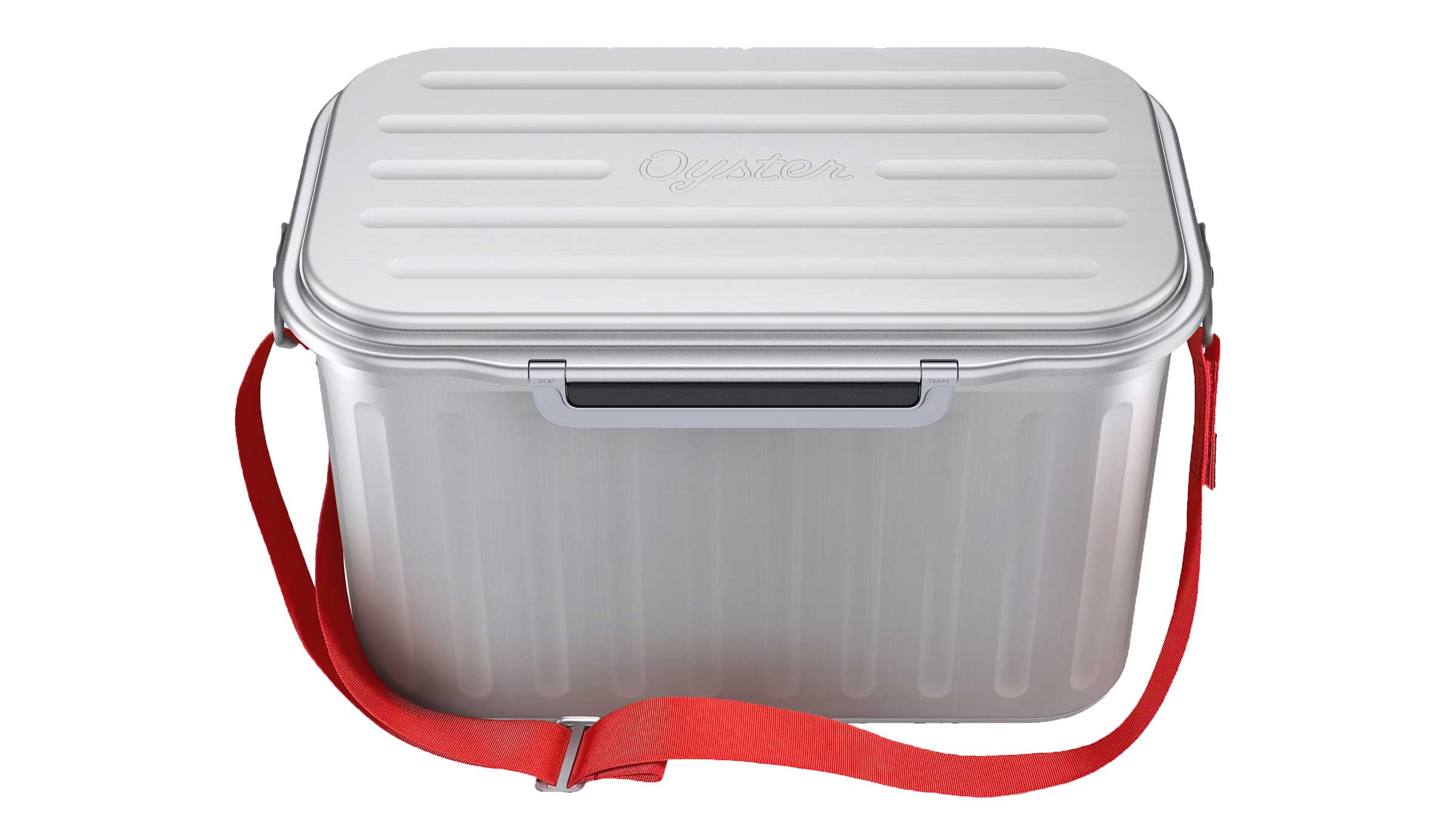
Oyster Tempo Cooler
Weight: 12 lbs 6 oz
Dimensions: W 20.1 x D 11.8 x H 12.6″
Volume: 23L
Capacity: 36 355ml Cans & 2 Ice Packs
Pros and Cons
+ Double-walled, vacuum-sealed design is thermally efficient
+ No ice required
+ Lid opens from both sides and is completely removable
– Hefty price tag
– One size only
– No drain for rinsing or melted ice
– Dents easily
The Oyster Tempo’s selling points are solid, and they better be—the sleek cooler is pricier than rotomolded options many campers already consider exorbitant. While status quo coolers call for a hefty ice-to-drink ratio, the aluminum Tempo skips ice completely. Instead, it pairs two flat, purpose-built ice packs with a thermally efficient double-walled design similar to that of your favorite water bottle.
The result gives campers more packable volume (a 23-liter Oyster with ice packs keeps 36 cans cold, while a 24-liter rotomolded cooler with ice only handles 18 cans), takes up less trunk space, and still keeps contents frostier longer than the competition.
When test director Drew Zieff arrived home after a three-day trip and emptied the Tempo, he noted that his leftover beers “still felt as though they’d been plucked from a glacial stream.” Another tester dug the sexy profile and compact build. “It takes up less space than our rotomolded cooler, which made trunk management easier,” he reported. When asked if he’d recommend the product to a friend, however, another tester joked, “Depends on their tax bracket.”
How We Test Camp Kitchen Equipment
- Number Of Testers: 15
- Pieces Of Gear Tested: 70+
- Miles Road Tripped: 15,000+
- Longest Stint On The Road: 3 months
- Forearms Singed: 2
- Cups Of Coffee Consumed: Enough to live, not enough to die. We’ll go with low quadruple digits.
- Van Bumpers Shaved: 1
Our testers run the gamut, from car campers who care more about efficiently shoveling down calories than fixing ornate meals, to gourmet chefs whipping up five-star cuisine in teeny van kitchens and over bonfires on the beach. This diverse team road-tripped, car camped, boondocked, and vanned all over the American West and Baja for months, cheffing up meals and taking notes all the while. Upon return to civilization, they filled out review forms for each camp kitchen item, ranking aspects like durability and practicality on quantitative scales. Then, they dove deeper into qualitative questions. For instance:
- What recipes did you whip up with this gear and where?
- Did this piece of gear make your life on the road easier or harder? Better or worse? How so?
- Would you use this product at home, too, or strictly at camp? Why or why not?
Last but not least, our lead tester and category manager, Drew Zieff, analyzed as much gear as possible himself, sifted through the review forms, then compiled these reviews.
Meet Our Testers
Drew Zieff
Drew Zieff is a Tahoe-based freelancer who writes for Backcountry Magazine, REI, Gear Junkie, and Forbes, among others. A regular Outside contributor, he heads Outside’s winter snowboard gear coverage and summer car camping accessories and kitchen reviews. His appreciation for cooking can be traced back to his formative years in high school, when he inexplicably began to experience red eyes, a dry mouth, and a sudden, overwhelming passion for the Cooking Channel. In 2018, he and his partner turned a plumbing van into their dream adventure mobile—a speedbump-filled odyssey. After a couple of years of vanlife, during which he took the lead on camp cookery, the couple put roots down in Tahoe. They still take as many van trips as possible and love to whip up elaborate meals in BLM pull-offs and Walmart parking lots.
Amanda Monthei
Amanda Monthei is a writer, public information officer on wildfires, and the host of the Life With Fire podcast. A former wildland firefighter herself, she applies her knowledge gleaned from the front lines to educate the public. She’s written about wildfires and natural disasters for Outside as well as NBC, The Atlantic, and The Washington Post. She’s also an avid angler, surfer, and skier, and pens stories on a range of outdoor subjects. Whether traveling for business or pleasure, she’s used to camping for extended stints in her 2000 Tundra, whipping up meals on backroads shoulders and backwoods campgrounds, and reviewing car camping accessories for Outside along the way. Monthei tested camp mugs, pots, and more while road tripping throughout the Pacific Northwest this past summer and fall.
Cody Buccholz
Cody Buccholz is a professional chef who enjoys surfing, snowboarding, and adventuring in his 2008 high-top Sprinter with his pup, Jefecito. When he’s not slinging gourmet grub, you can often find Buccholz posted up in a beach or trailhead parking lot, whipping up savory meals for new and old friends. He tested a small mountain of gear for this article while on a long, detour-filled road trip from California to Colorado, and brings a discerning, professional perspective to our camp kitchen gear testing.
Bria McCurdy
Bria McCurdy is a Tahoe-based culinary dynamo who operates Mountain Peak Private Chef. Before starting her own business, she dabbled in cheese-making, studied at the Culinary Institute of America, and excelled in some of Tahoe’s most prestigious kitchens. When Bria’s not whipping up mouth-watering cuisine for lucky clients (and luckier friends), she’s a dedicated outdoor enthusiast who loves to camp, hike, ski, and more. In fact, she’s no stranger to gear testing, either, having contributed to Backcountry Magazine’s annual ski test for several years before we tapped her to help us test everything from camp cutlery to cast iron.
