

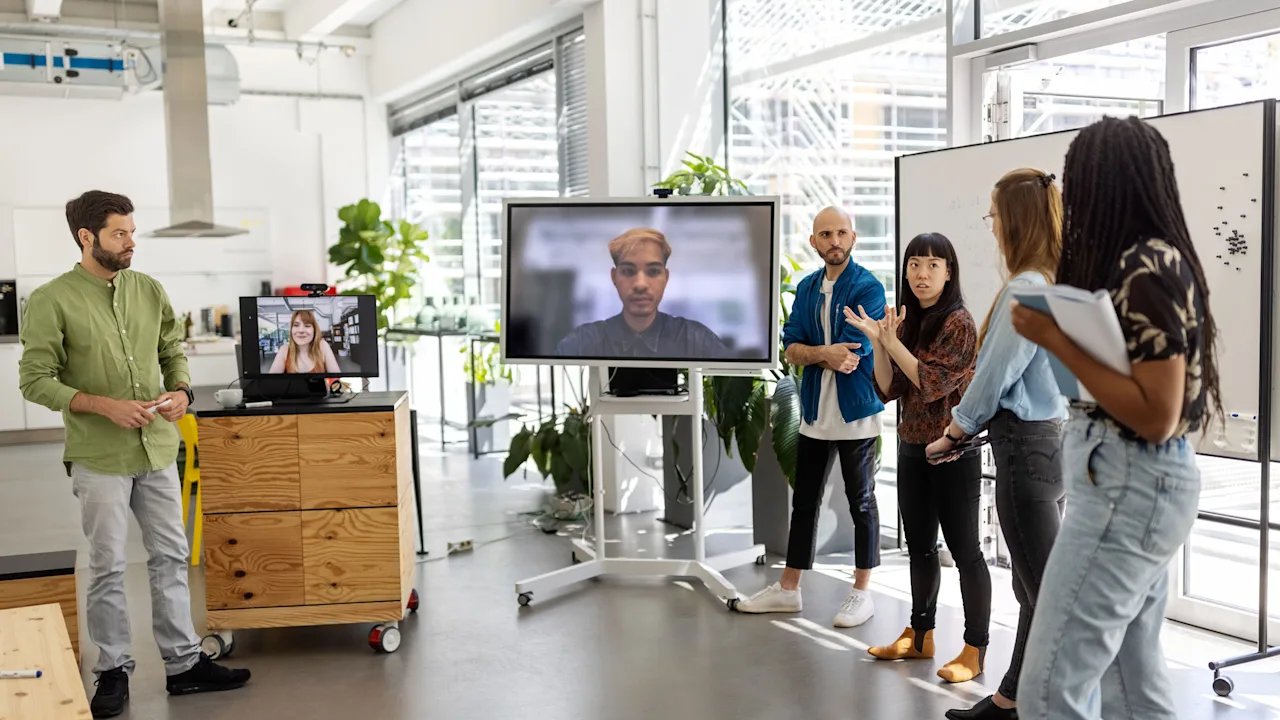
As companies battle it out with employees over RTO policies, Dropbox is choosing to stay out of the drama by prioritizing remote work.
“The pandemic tested our assumption that we have to be in person in order to be productive,” Dropbox chief people officer Melanie Rosenwasser told The Associated Press.
After adopting a remote work policy during the pandemic, Dropbox has remained steadfast to its “virtual-first” model—even as its peers pushed workers back to their desks. The San Francisco-based cloud storage and file share company allows its workforce of around 2,100 employees to work from anywhere in the world.
“It’s especially important to us to maintain this posture as so many other companies across many, many industries are mandating return to office,” Rosenwasser told the AP.
Most of the decision-making at Dropbox happens asynchronously or over writing. The company has “core collaboration hours,” which are four-hour blocks for meetings that overlap based on time zone. “We focus on something that we call the three D’s: discuss, debate, or decide,” Rosenwasser said. “If none of those things are on the table, then a meeting is not required.”
Outside of that, employees are able to coordinate their workdays according to their preferences. This “virtual-first” model helps the company retain global talent.
“We are explicitly not hybrid,” Rosenwasser said. “We think this is the worst of all worlds, where employees suffer through long commutes only to sit on Zoom because most of our colleagues are distributed. We really believed in this creation of an even playing field.”
According to analytics firm Gallup, 26% of U.S. companies operate completely remotely. Another 52% of companies have hybrid models, and 22% are fully on-site. The data shows that 6 in 10 employees with remote-capable jobs want a hybrid work arrangement, while one-third prefer fully remote work. While 76% enjoyed the improved work-life balance that comes with remote work, 55% said spending time with people and building relationships is an important benefit of working on-site.
To cultivate community, Dropbox gives new hires an onboarding buddy, and teams host various events through the month.
Some other challenges the company faces due to its remote work model include burnout and setting boundaries. “When you’re working from home, your personal and professional life blur. And that’s why we wanted to intentionally put into place nonlinear workdays, which are very much based on personal preferences,” Rosenwasser said.
In addition, remote workers often struggle with being sedentary. Dropbox launched a program called “Meet & Move,” which sounds exactly like what the title suggests: taking meetings while moving around, either by walking outside or at home.
According to Glassdoor, 69% of Dropbox employees would recommend working at the company to a friend. In a work climate where Dropbox’s “virtual-first” model is getting harder to come by, the company may have a recruiting advantage for employees who don’t want to spend their nine-to-five behind an office desk.
