

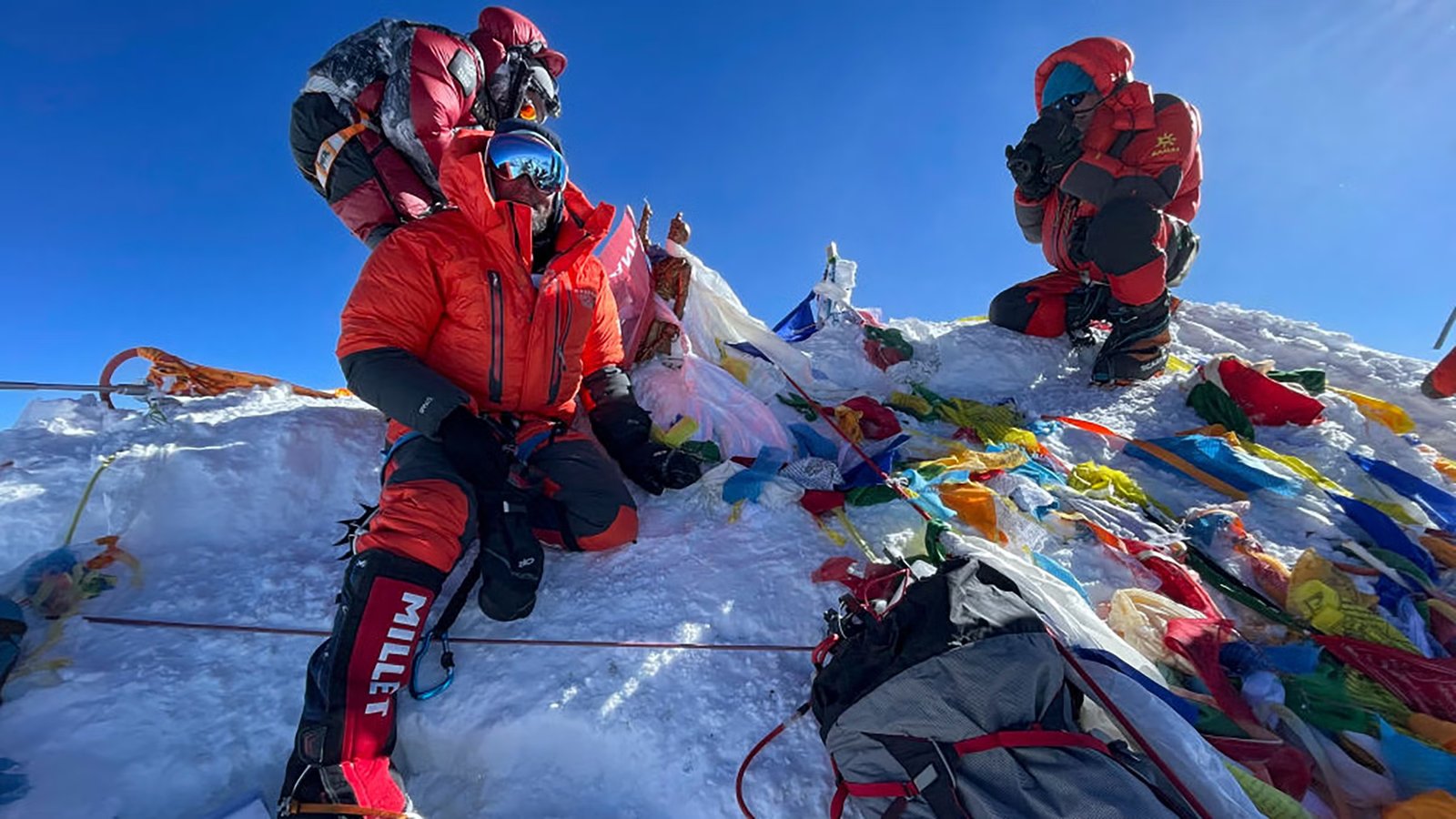
Published May 16, 2026 03:49AM
Climbing Mount Everest was once seen as perhaps the most arduous activity a human could endure. But in recent decades, the reputation of the mountain and those who climb it has changed. Today, the contemporary view of Everest is that of a tourist attraction for the ultra-rich, who gulp down bottled oxygen while being dragged to the summit by silent Sherpa guides.
I’ve spent the spring living at Mount Everest Base Camp, observing how climbers and expedition operators navigate the complexities and challenges of modern climbing on the peak. I’ve also spoken with dozens of veteran guides, expedition workers, climbers and even authors who have chronicled the greatest feats of modern mountaineering.
There is one thread woven through nearly all of my conversations here that is as simple as it is surprising: despite all of the conveniences of commercial expeditions, and advances in technology and guiding techniques, Mount Everest remains an extremely difficult climb.
I set out to learn more and to investigate deeper. Is it really that hard to get to the top of Everest? And where did this reputation of Everest being “too easy” come from? Here’s what the experts told me.
A Punishing Ascent, Even for Elite Climbers
Mark Synnott is a professional climber, International Federation of Mountain Guides Association (IFMGA)-accredited mountain guide, member of The North Face athlete team, and author of numerous books, including The Third Pole about his 2019 Everest expedition. Synnott has built one of the most impressive climbing resumes in modern alpinism. His achievements include the 40-day first ascent of the 4,700-foot Polar Sun Spire on Canada’s Baffin Island, and a 6,000-foot Grade VII route on Great Trango Tower in Pakistan—one of the longest and most difficult rock climbs in the world.
Despite decades spent on some of the planet’s steepest and most remote walls, Synnott says his 2019 ascent of Mount Everest remains among the hardest climbs of his life.
“People told me that when you’re on oxygen, Everest only feels like you’re at 20,000 feet,” he said. “I’ve been at 20,000 feet, and it didn’t feel anything like that. It felt at least ten times harder.”
Synnott joined a National Geographic expedition to Everest’s north side six years ago to search for the body of Sandy Irvine, a British mountaineer who disappeared on Everest along with George Mallory in 1924.
Synnott expected the climb to be difficult, but very manageable. He was quickly humbled by the mountain.
“I couldn’t breathe, even with oxygen,” Synnott recalled. “I had no appetite. I remember getting to the summit and taking a bite of a Snickers bar. It was completely nauseating to me, and I immediately barfed it down the front of my suit.”
At the extreme altitudes of Everest, even our most critical bodily functions begin to fail.
“When we descended, I found myself hoping that the going would get easier because I was already way, way, beyond my limits. Thankfully, it was,” Synnott added.
The Body’s Deterioration in The Death Zone
What surprised Synnott most about Mount Everest was not the technical climbing, but the sheer physical degradation his body suffered during the hours he spent above 26,000 feet.
“I walked away from Everest having a lot of respect for the amount of grit it takes to get to the top,” he said.
At extreme altitude, the human body enters into a slow and unstoppable deterioration where it cannibalizes itself simply to survive. Once you cross above 26,000 feet, in the so-called “Death Zone,” this breakdown accelerates. Without supplemental oxygen, humans can only survive in these conditions for a matter of hours or days. Here, the air contains a third as much oxygen as at sea level. Even with supplemental oxygen, a climber’s blood-oxygen level plummets to dangerous levels.
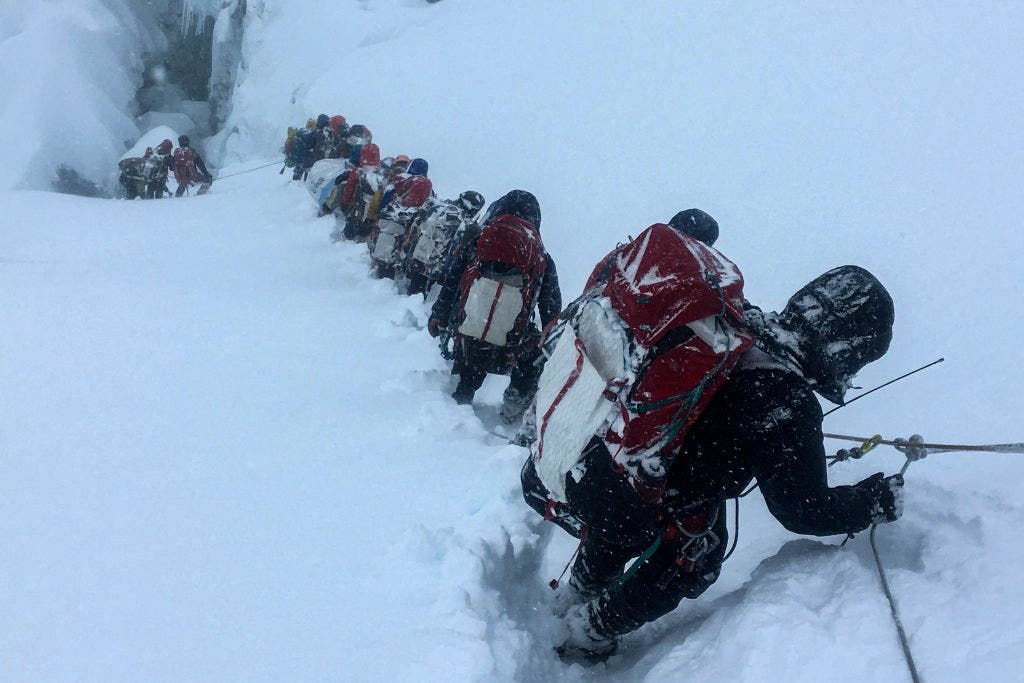
“Even with all the help people get, climbing Everest is still really hard,” Arnold Coster, a longtime guide from the Netherlands, told Outside. “We can reduce some of the weight people have to carry, but you cannot take away the deterioration of your body at altitude.”
Coster spoke to Outside from Everest Base Camp while leading his 23rd expedition to the mountain. While there are other 8,000-meter peaks like K2 or Makalu that are more technically challenging than Everest, its soaring height means climbers must spend more time above 26,000 feet than on other 8000ers. And the more time climbers spend at this altitude, Coster says, the more stress is placed on their bodies.
“All the time you spend above 20,000 feet, your body is going to eat itself in order to survive because normal organ functions, digestion, and even sleep don’t work anymore at that altitude,” Coster explained. “The longer you stay there, the worse it gets.”
Most climbers make several ascents above 20,000 feet during their acclimatization rounds. Then comes summit day.
“Above Camp III, it feels like the worst hangover you’ve ever had in your life—and then you have to strap on your backpack and go for a 24-hour nonstop workout in the cold,” Coster said. “With almost no water or food, because all you can bring is what fits in that bag of yours.”
A Million Things That Can Go Wrong
Matt Irving is an athlete and cinematographer who accompanied Synnott on his 2019 climb and, in subsequent years, reached the summit again from the Nepal side. During his climbs, he was surprised by how slow everything was, and how something as simple as staying healthy could make the difference between reaching the top or not coming back at all.
“For me, the physical element of the climb was manageable,” he said. “As long as you can put one foot in front of the other and keep moving, it feels like an achievable goal. The climb was hard for me, but not in a way I expected it to be.”
“The thing that surprised me that I know now is to do whatever you can to not get sick,” he continued. “Because as fit as you are, as much money you throw at the problem, if you get sick at the wrong time, you are probably not going to the top. If you get sick as you’re going up to the summit, you really are putting yourself in quite a bit of danger.”
Indeed, getting sick is one of the many things that can go wrong on Everest. Every year, Base Camp fills up with more than 2,000 people from all over the world. Here, climbers are exhausted and battling altitude illness. They’re eating different foods and meeting in crowded tents. Every year, colds and viruses spread through the camp like wildfire.
“Couple that with bad food, bad sleep, and all kinds of small sicknesses climbers get before they even sleep above 23,000 feet,” Coster added.
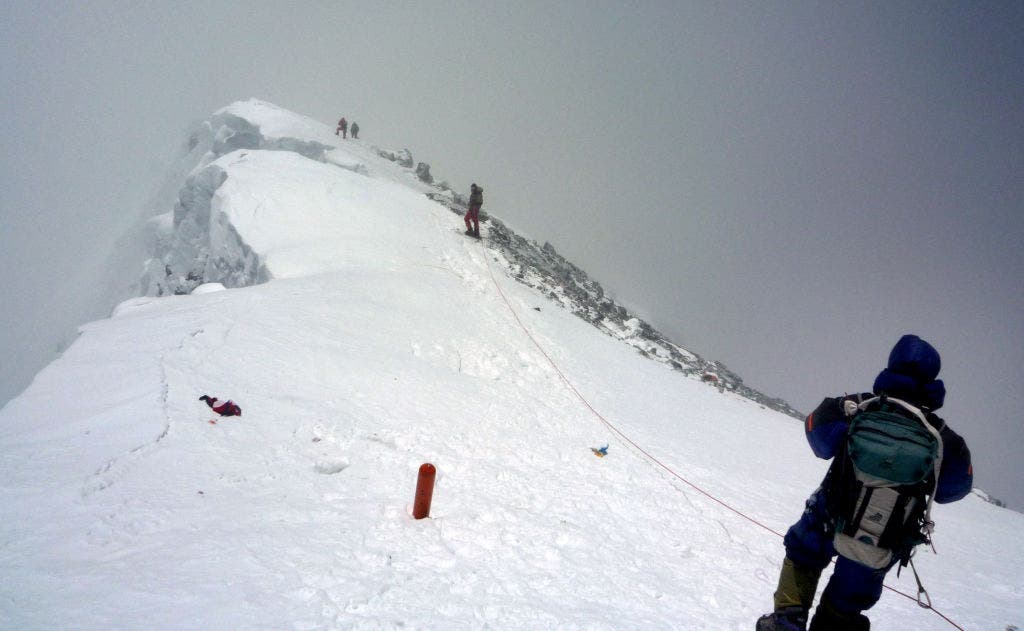
Then there are the logistical challenges posed by the large crowds all striving for the summit. While expedition operators handle the tricky logistics of stocking higher camps and moving oxygen bottles onto the peak, they must also navigate the weather and find the right day for their clients to make their summit push.
“As an expedition leader, the biggest worries are the weather forecast and the crowds. On mountains other than Everest, I don’t have to worry about other people,” Coster said. “The lines on Everest aren’t dangerous per se as they tend to move steadily and slowly upwards—but this poses a real test of patience and mental strength that most clients aren’t prepared for.”
Why Do People Think Everest Is Easy?
Synnott came of age as a climber in the nineties, inspired by legendary Everest pioneers like Reinhold Messner and Tom Hornbein. But the publication of Into Thin Air, in 1997, fundamentally changed how he and his generation viewed the mountain.
“That book changed the story for a whole generation of climbers because it painted a portrait of Everest that wasn’t pretty,” Synnott told Outside. “It put a dark cloud over the mountain that wasn’t there before. Myself and pretty much every other climber of my generation were like, ‘This mountain is tainted. Let’s go as far in the other direction from this as we can get.’”
Jon Krakauer’s bestselling account of the 1996 Everest disaster embedded an enduring narrative of chaos, commercialism, and needless death into the public imagination. In the decades since, viral social media images of crowded summit ridges and traffic jams have only reinforced the perception that Everest has become less of a true mountaineering challenge than a guided endurance event.
And that reputation has led to the misconception that anyone with strong legs and lungs can reach the top.
“Because it’s so commercialized, people think it’s easy,” Norwegian climber Kristin Harila told Outside. “But it’s absolutely not.
Harila, 40, holds the world record for the fastest ascent of all 14 peaks above 8,000 meters. She is on Mount Everest this spring to record her 29th ascent of an 8,000-meter peak.
“People believe that there is so much support available that they barely have to climb the mountain,” Harila added. “They say ‘but I have three Sherpas and ten bottles of oxygen.’ That doesn’t matter. There is still so much suffering, and it’s so far from Base Caup up to the summit. It’s very, very hard. Everest can be just as hard or even harder than K2, and it’s higher.”
For Synnott, the modern narrative that Everest has somehow become “easy” says more about the public’s complicated relationship with the mountain than the reality of climbing it.
“I think the narrative that climbing Everest is easy comes out of the negativity that surrounds the mountain in popular media,” he said. “It’s just another way to put the mountain down.”
Synnott then added: “It definitely didn’t come from anyone who has actually climbed it.”
