

Published May 16, 2026 04:46AM
In the remote canyons of Utah’s Grand Staircase-Escalante National Monument, a battle over public land protections is quietly unfolding.
More than 150 researchers and scientific institutions have called on lawmakers to reject legislation that would strip Grand Staircase-Escalante of federal protections granted in 2025. Such a move, they warn, could set a dangerous precedent for rolling back protections on public lands nationwide.
“This isn’t about one monument—it’s a precedent. If Congress can undo Grand Staircase, legal experts warn any monument could be next,” Chris Hill, CEO of the nonprofit advocacy group Conservation Lands Foundation, told Outside.
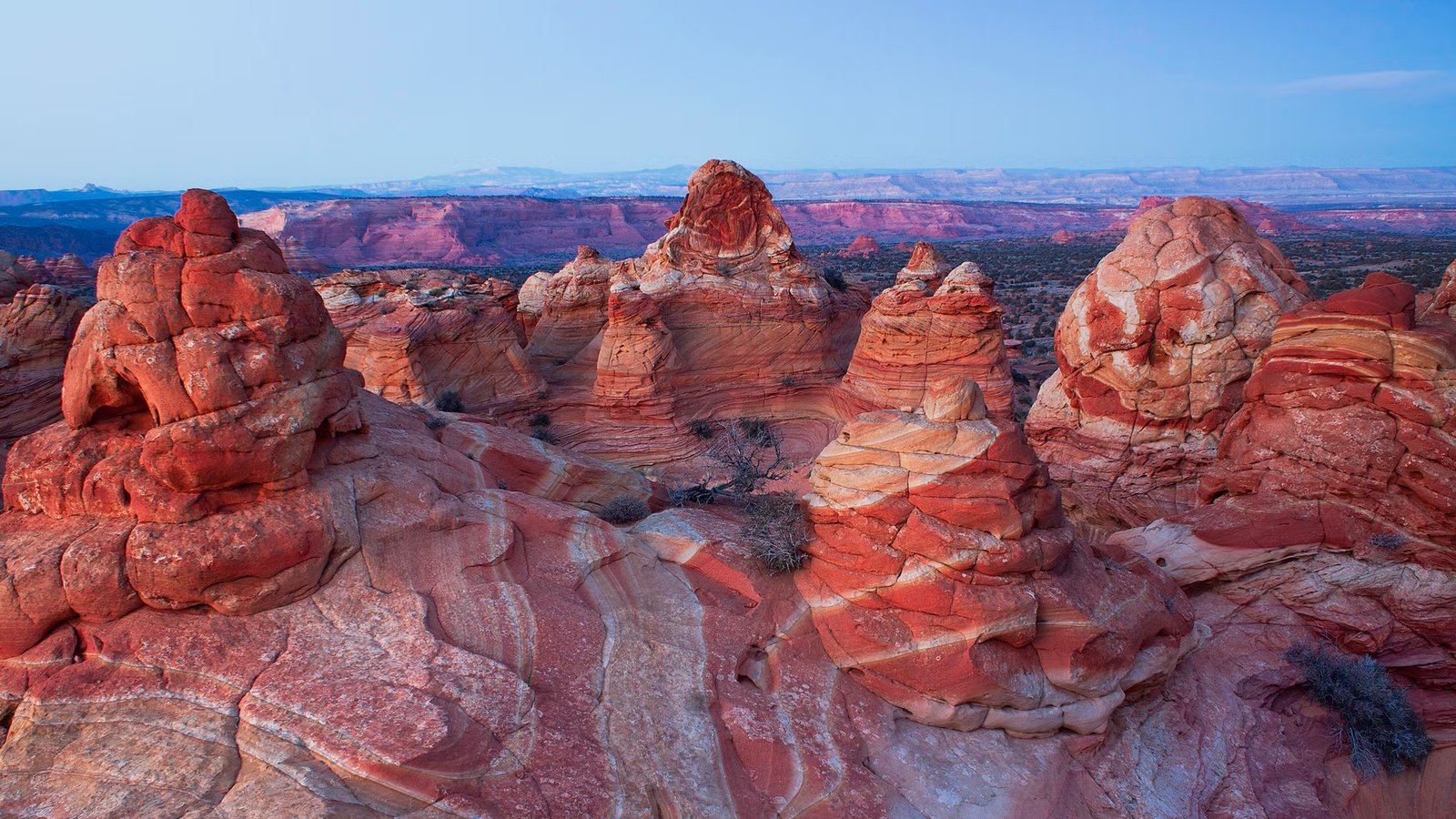
Established as a national monument in 1996, Grand Staircase-Escalante is renowned for its slot canyons, red rock monoliths, sandstone arches, and painted desert. It’s the largest national monument in the contiguous United States, encompassing nearly 4,000 square miles.
The coalition of scientists also says the Grand Staircase is one of the most important living laboratories in North America.
“Its relatively undisturbed landscape preserves an unparalleled record of Earth’s history, spanning hundreds of millions of years,” they wrote in their May letter. “It is the size of this landscape that allows researchers to gain insight into the migration patterns of wildlife, processes that engender and sustain biodiversity, and valuation of ecosystem services that support human and non-human life.”
But lawmakers are currently trying to limit some federal protections in the area. Congress is using a legislative fast-track loophole known as the Congressional Review Act (CRA) to overturn a management plan established for Grand Staircase-Escalante in 2025. The 2025 plan includes guidance and rules for protecting archaeological sites, wildlife habitat areas, and recreational planning. If Congress passes the CRA resolutions, the plan becomes nullified, and protections could be rolled back, according to the scientific coalition.
It’s the latest political attack on the Grand Staircase-Escalante National Monument in the past decade. In 2017, the Trump administration reduced the overall protected area inside the monument by 50 percent. The Biden administration restored the monument to its original size in 2021.
Supporters of the move, such as Utah Senators Celeste Maloy and Mike Lee, say the current Grand Staircase-Escalante management plan is too restrictive.
“This resolution uses Congress’s constitutional responsibility to check executive overreach and returns management to a plan that actually listens to the people on the ground,” Celeste said in a statement. “And to be clear: this land remains federal land. It remains protected. What changes is that the communities who live here get their voice back.”
But critics warn that the rollback is an example of congressional overreach and a dangerous first step toward opening national monuments to industrial uses, such as mining and logging. Such a precedent could jeopardize access, camping, and dark sky protections across public lands
“National monuments, national parks, and other beloved public lands all across the country, such as Carrizo Plain in California, are at risk,” Grant Stevens of the Southern Utah Wilderness Alliance told Outside. The CRA has so far been used to undo an additional six resource management plans, according to Stevens. These include areas in Wyoming, Alaska, and Montana.
The CRA may also give Congress authority to oversee how monuments are managed, overriding the input of local communities, tribes, and recreation users, Hill said.
“The result will be chaos because it wipes out the stable ‘rules of the road’ that all public land users and interests rely on—from recreation businesses, guides, hunters and anglers, and ranchers to local governments and even energy companies seeking certainty—replacing long-term management with uncertainty, conflict, and chaos for everyone,” he added.
The CRA was recently used to override the ban on mining at the headwaters of Minnesota’s Boundary Waters. Hill said these safeguards turn public safety and conservation measures into “political footballs across public lands.”
“This puts one of the most treasured landscapes in the country on the chopping block. The monument is world-renowned for its remarkable paleontological discoveries, stunning scenery, and outstanding intact and diverse natural ecosystems,” Hill told Outside. “This CRA escalation is not isolated—it’s part of the broader agenda to weaken public lands governance from the inside out and enable the sale of America’s public lands.”
Land defense groups warn that if the CRA resolution passes, it would create a blueprint to further strip protections from other popular outdoor destinations.
Crucially, Stevens said that an agency cannot issue a “substantially similar” rule in an area again unless Congress later authorizes it. This means that once protections are rolled back, they’re likely to stay in place. Critics like Stevens and Hill say that such measures can erase years of scientific and public review, instead allowing broad reversals with limited debate.
“If the CRA passes, it will cause chaos and uncertainty for a crown jewel of America’s public lands system,” Stevens said. “Everyday users will not have clear guidance or direction for how to recreate and could soon see a monument where out-of-control off-road vehicle use, landscape-level clearcutting of native pinyon-juniper forests, and other extractive activities are all possible.”
The Trump administration used similar legislative authority under the Antiquities Act to shrink other national monuments, such as Utah’s Bears Ears and Baaj Nwaavjo I’tah Kukveni in the Grand Canyon.
The Coalition to Protect America’s National Parks says that people who wish to weigh in on the CRA resolution should contact their House representative and senators as early as possible.
