

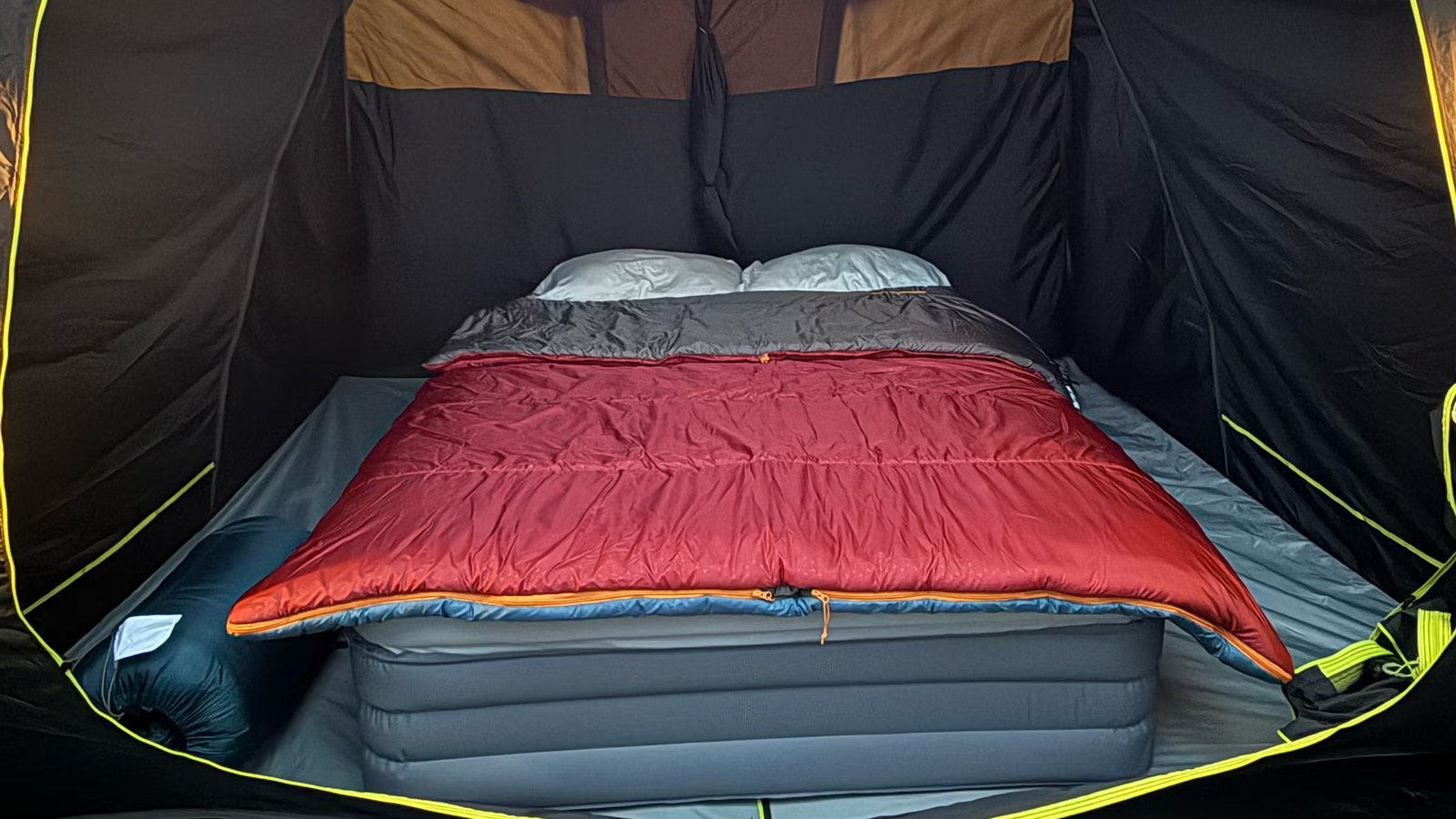
Published May 18, 2026 05:47AM
In a test of 25 sleeping pads and camping mattresses, the best for car camping is the Nemo Roamer. The updated version boosts insulation to an R-Value 7 and the exterior material is indestructible. Looking for one under $150? We recommend the Kelty Kush Airbed. In May 2026, we added one new pick to this list: the game-changing Luno AIR+FOAM PRO Vehicle Mattress, built for sleeping in your car. We also significantly updated our review of the Nemo Roamer and the Exped MegaMat.
It seems like every day brings a new study on sleep science, linking quality rest to everything from cognitive function to physical and mental health. But we don’t need a PhD in Zzzs to know that a good night’s rest can make or break a camping trip. We’ve been busy running our own sleep study over the last five years to bring you the best camping mattresses and sleeping pads on the market.
This study wouldn’t be possible without our fearless testers who selflessly sacrificed sleep to try everything from lightweight backpacking pads to plush four-inch air mattresses, cots, and other funky camp beds. That crew consists of mountain guides and their adventurous offspring, swell-chasing surfers, storm-chasing skiers, and diehard campers, all of whom have a hard time sleeping. They sawed as many logs as they could over a collective 100+ nights on mats from brands big and small. These are the best sleeping pads and mattresses for car camping that helped our crew sleep well, and we’re confident they’ll do the same for you.
Best Sleeping Pads: At a Glance
Editors’ Choice
NEMO Roamer
Thickness: 4 inches
Dimensions: Ranges from 76” x 25” to 78” x 52”
R-value: 7
Pros and Cons
+ Supple upper
+ Exceptional comfort
+ Several sizes
– Expensive
– Hard to pack into stuff sack
A longtime favorite, the Nemo Roamer got a major makeover for 2026. Don’t worry: It’s still four inches thick and cushy thanks to an inflatable, open-cell foam construction. “I struggle to get a good night’s sleep camping,” voiced one Colorado tester. “But this is the closest thing to my bed at home that I’ve ever camped on.”
Nemo dialed up the insulation, boosting its R-value to a winter-ready 7. When temperatures in the Rockies dipped into the 30s, testers marveled at the warmth. Nemo also replaced the fabric with a durable, PU stretch polyester. “The high-denier bottom gave me confidence that it wasn’t going to get punctured through a tent,” a tester said, though he noted he wouldn’t readily chuck it on bare rock like he would his Paco Pad. On warm spring nights that had him unzipping his sleeping bag, the fabric was comfy to the touch, too.
Setup is easier now, thanks to a self-inflating valve, although our crew noted it was important to top off the air mattress using the stuff sack pump for optimal firmness. A one-way dump valve makes deflation a cinch, but our testers’ least favorite aspect was wrestling it into the included duffel bag. “I was unable to get it back into the original stuff sack,” admitted a tester.
The Roamer is now available in four sizes (single, double, single wide, and double wide). We tested the double wide, and one couple (6’1” and 5’9”) had plenty of room to spread out.
Most Comfortable
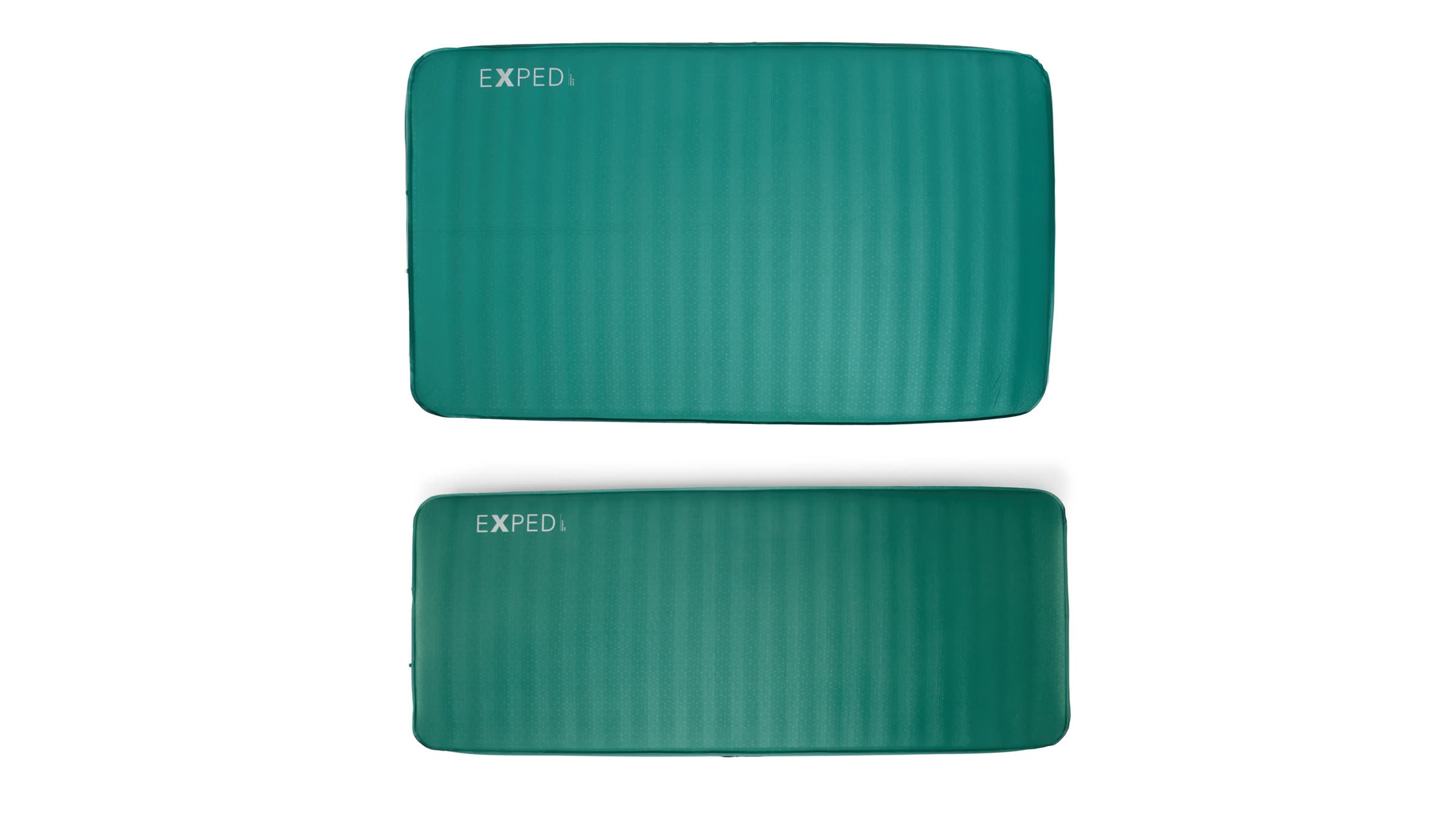
Exped MegaMat Duo and MegaMat
Thickness: 4 inches
Dimensions: Ranges from 72” x 25.6” to 80” x 60”
R-value: 8.1
Pros and Cons
+ Extremely durable and comfortable
+ Has handles
+ Lots of sizes
– Inefficient pump
– Long inflation time
Whether you’re looking for a single-person mattress, a standard two-person pad, or a queen bed for couples, you can’t go wrong with anything in the Exped MegaMat line. Frankly, it’s the benchmark for comfort in the camp mattress category.
Updated in 2025, Exped cored out 30 percent of the foam to make it less bulky and easier to roll up. The result is a mattress that still delivers the same R-value (8.1) as the previous model and some of the best cushioning on the market in a package that is more compact.
There’s still ample foam in the interior, making it extremely comfortable even when not stiffly inflated—something side-sleepers appreciated. A solo tester who’s an AMGA mountain guide accustomed to roughing it took the one-person mat on a trip to the Ozarks and came back with a glowing review. “Most comfy pad I have ever slept on,” he gushed. “At four inches thick, I did not feel any rocks, bumps, or hard ground underneath me, even when rolling onto my side.”
The recycled 50-denier polyester and TPU polyether-laminated upper showed three superficial scuffs after our kid testers put it through the wringer as a play mattress, but it held air and its 75-denier polyester bottom looked no worse for wear. Another small detail we really appreciated about the Duo: Handles made it the easiest two-person mattress to move around.
Worth noting: The MegaMat is an exceptionally plush pad once inflated, but it was the most challenging and time-intensive of the high-end pads to inflate. It self-inflates to some extent but requires extensive top-up with the included pump, which worked at half the speed and required double the effort compared to other hand and foot pumps we tested. It’s worth investing in one of Exped’s electric pumps.
Best Value Camping Mattress
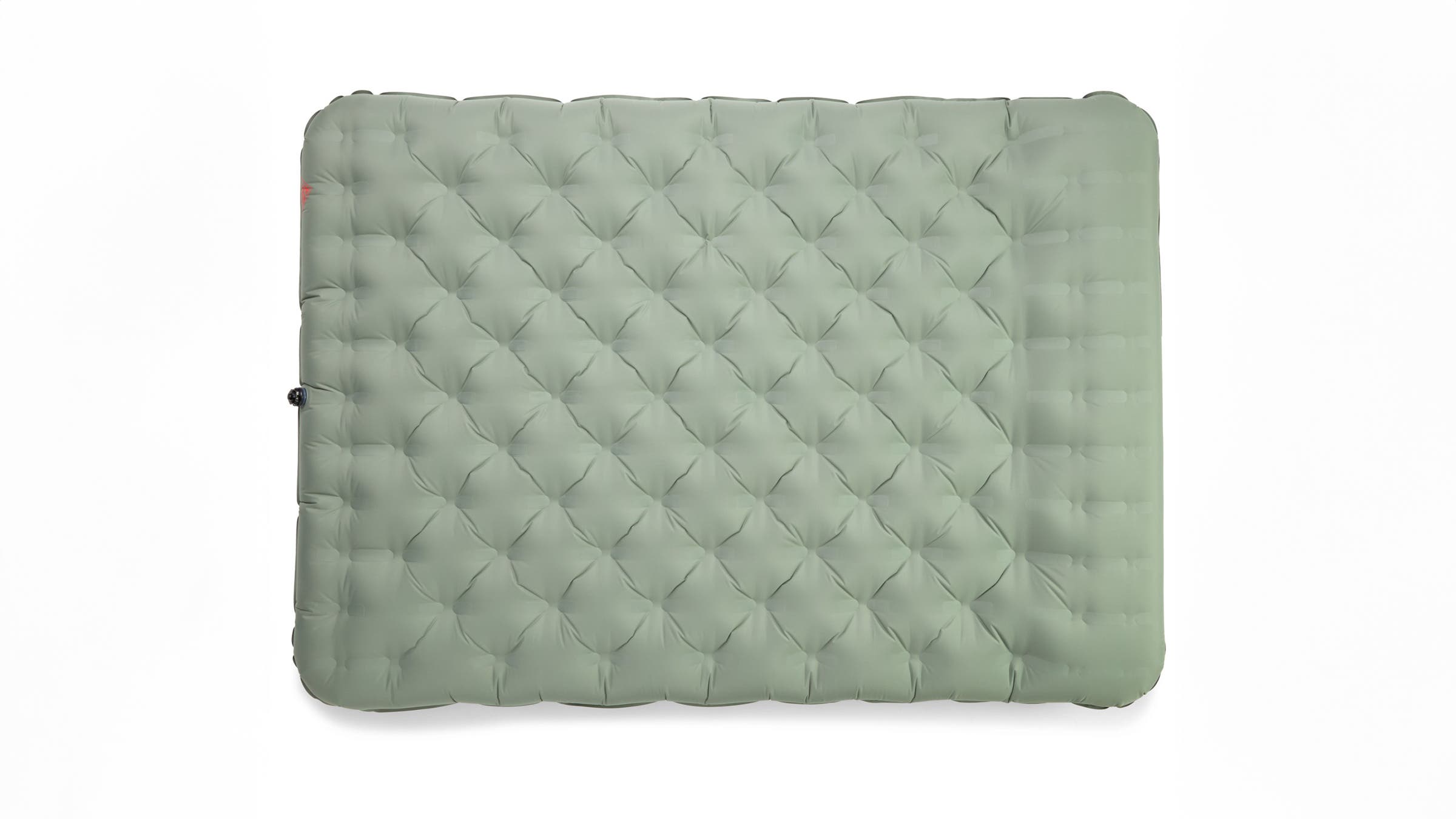
Kelty Kush Air Bed
Thickness: 6 inches
Dimensions: 79″ x 55.5″
R-value: N/A
Pros and Cons
+ Affordable
+ Rechargeable pump included
+ Packs down small
– Loud topper
– Not comfortable against bare skin
Unlike the other car camping mattress pads on this list, the Kelty Kush Air Bed does not offer fancy foam integrations, a luxuriously brushed topper, or self-inflation system. But it made this list because it costs a fraction of what other mats cost and still offers enough warmth, comfort, durability, and air retention to get one tester through a 35-degree night camping in late fall near Mt. Ashland, Oregon.
At a whopping six inches thick, it can handle near freezing temps even without the foam you find in other pads. The lack of internal foam also means the Kush Air Bed packs down smaller (to about the size of a laptop) than other mats at this thickness.
While not self-inflating, it easily blew up in about four minutes with its included USB rechargeable pump, which holds a charge really well. One tester was able to inflate the Air Bed and top off three other pads on a single charge. The Kush held air like a champ, remaining plenty sturdy with no need for top-offs during a weekend trip.
A few hangups: The zip-zip sound of a tester tossing and turning on the mat’s peached polyester upper drove his tent mate nuts. That top was also pretty rough against skin, an issue easily mitigated by staying in our sleeping bags or packing a top sheet.
Most Versatile Camping Mattress
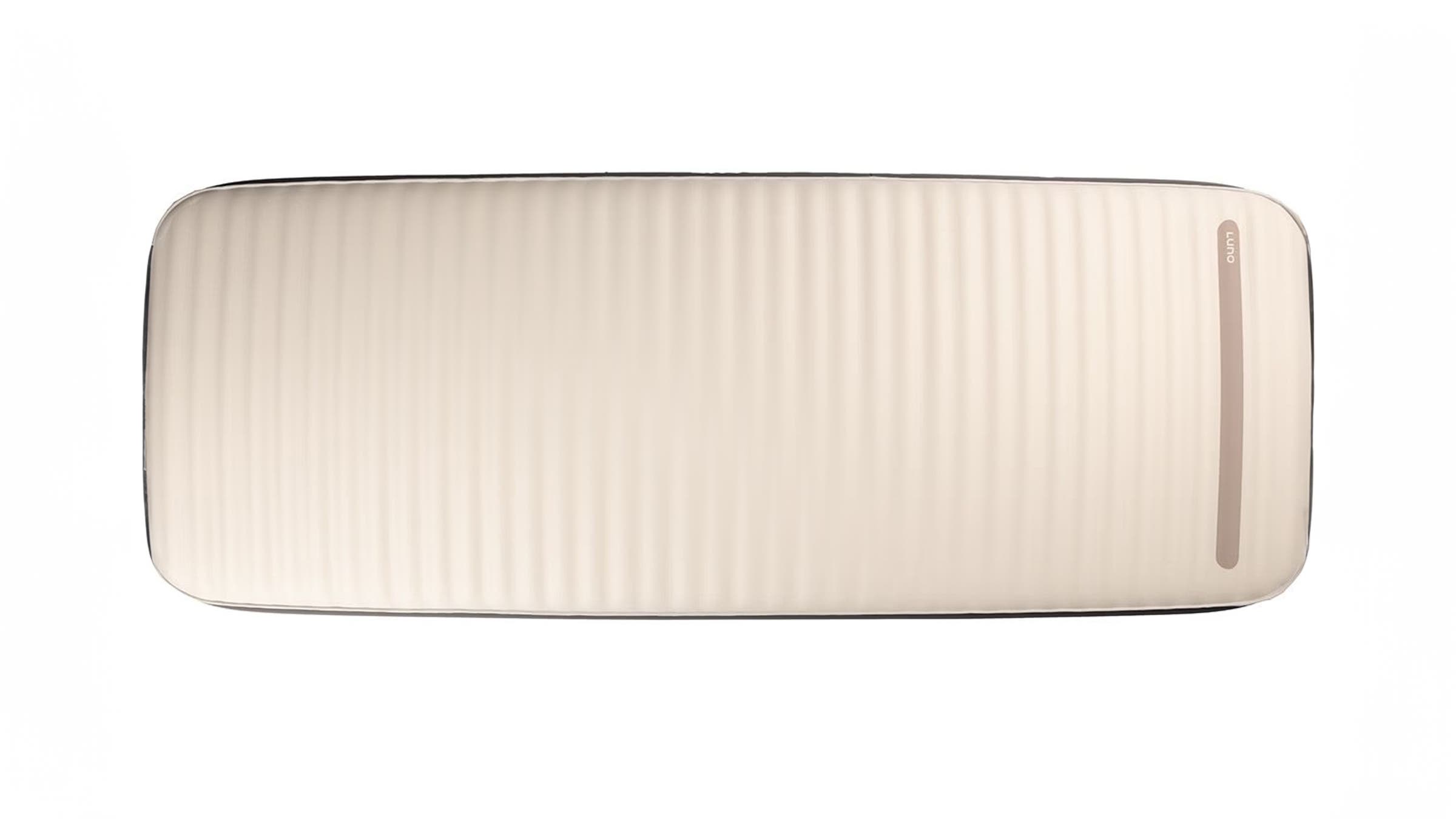
Luno AIR + FOAM PRO Camping Mattress
Thickness: 4 inches
Dimensions: 72” x 25” (regular)
R-value: 11.4
Pros and Cons
+ Versatile for car and tent camping
+ Incredibly durable base
– Topper not as supple as others in price range
Luno has been at the forefront of making ultra-plush sleeping mattresses specifically designed to fit in the back of vehicles for literal car campers. The 4-inch-thick Camping Mattress uses Luno’s AIR + FOAM technology, which sandwiches open cell foam between sturdier protective layers to create a memory foam mattress-like cushion and serious insulation (11.4 R-value). It also comes with a head support bridge that connects the mattress to a car seat headrest to bridge the rear footwell and maximize every inch of sleeping space.
But the Camping Mattress isn’t just for those who camp in their cars. At 72 inches by 25 inches (regular), the rectangular mattress fits as seamlessly in the back of a Honda Element as in a crowded four-person tent.
With a 150-TPU bottom, this mattress was one of the most rugged we tested. Testers used it on a volcanic rock-strewn campground along the Klamath River and it came back with nothing more than minor scratches. The 30-denier elastic polyester upper is just as hardy, and while comfortable enough to sleep on without a cover sheet, it’s not as supple against your cheek as other mattresses in the $250-plus price range.
The Luno Camping Mattress landed in the middle of the pack when it came to inflation time. While Luno claims it self-inflates in 60 seconds, we found that we had to top it off with its included inflation bag to make it sleep-ready, bringing the total inflation time closer to two minutes. But when it came to packing up, testers loved how tidily the Camping Mattress rolled up and cinched down in Luno’s cam-strap headrest accessory. Once rolled up, the Camping Mattress was about the size of a pillow.
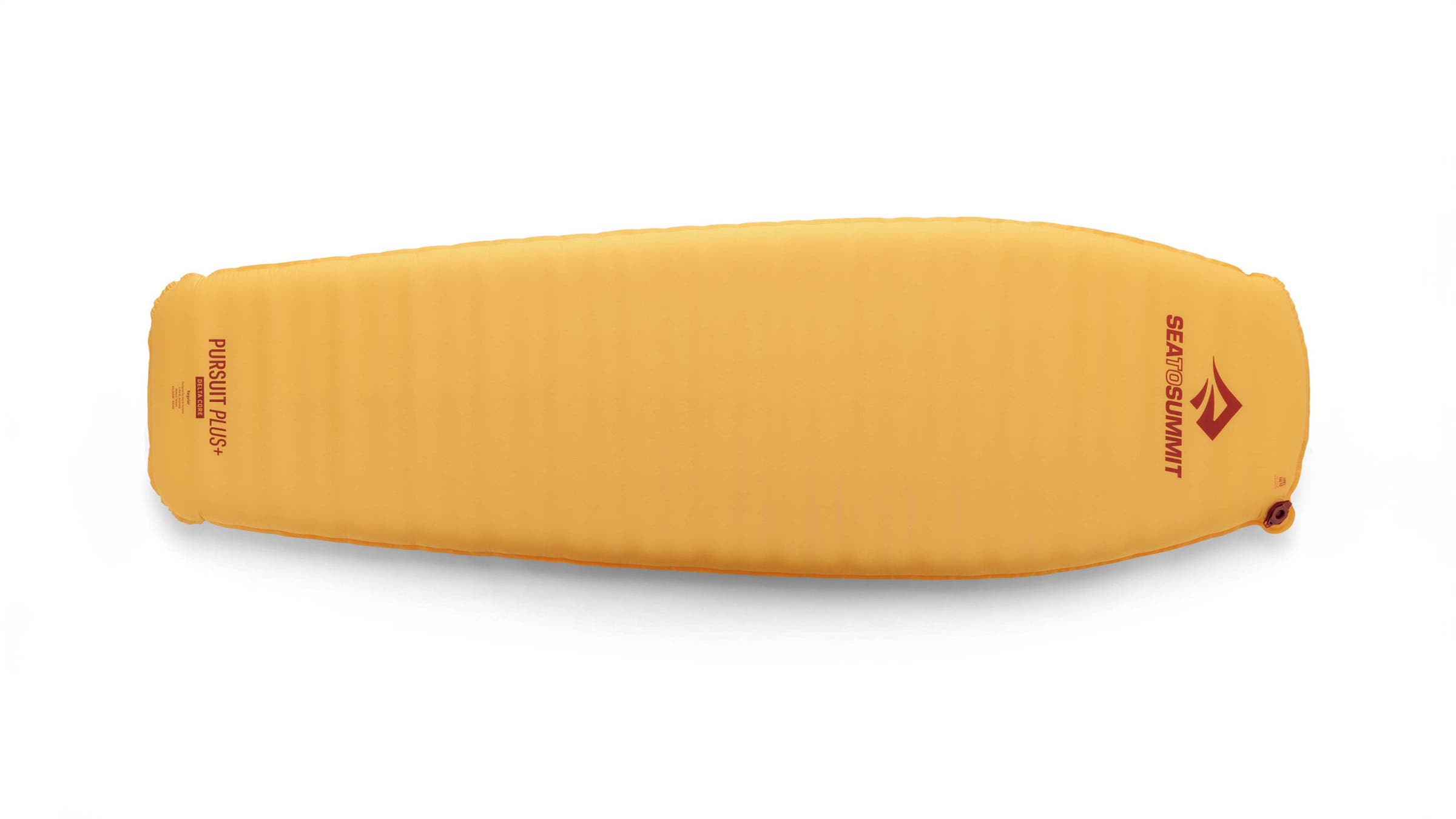
Best Sleeping Pad for Intro Backpacking
Sea to Summit Pursuit Plus
Thickness: 3 inches
Dimensions: 72” x 22” (regular)
R-value: 4.2
Pros and Cons
+ Solid one-pad-fits-all solution
+ Comfy
+ Takes up minimal space in your trunk
– Not as plush as some camping mattresses
If the thought of investing in multiple sleeping pads—at least one for backpacking and another for car camping—keeps you up at night, you’ll sleep easier with Sea To Summit’s Pursuit Plus. The supportive, three-inch-thick pad is geared toward car campers looking for a comfortable night’s sleep without breaking the bank or wasting trunk space. However, it’s also packable enough for shorter backpacking trips or backpackers who care more about Zzzs than Gs.
Comfort comes courtesy of inflatable, hollow-cored, foam-buttressed internal channels, which provide a more supportive and plush sleeping platform than your standard inflatable pad. This construction isn’t just incredibly comfortable—it’s toasty, too. The Sea To Summit pad has an R-value of 4.2, making it suitable for at least three seasons.
A tester who cowboy camped above snowline in the Sierra said the channels protected him from the warmth-leeching ground and made sharp rocks and tufted alpine grass all but disappear. The pad is self-inflating, but if you like a firm platform, a few extra breaths are necessary. It’s made from a 20-denier fabric—lightweight and not something we’d consider bomber—but he reported no rips or punctures.
The pad comes in a contoured shape to save weight, as well as a significantly wider rectangular option for max sleeping real estate. “I had plenty of room to roll from side to side without tipping off the pad,” reported a tester after a stint on the curved version. Both shapes are available in regular and long sizes, giving campers plenty of options.
Dedicated backpackers won’t touch this pad with a 10-foot trekking pole, as the regular packs down to the size of a paint can and weighs 1.77 pounds. But if you’re willing to carry a few extra ounces, the quality of sleep is hard to beat.
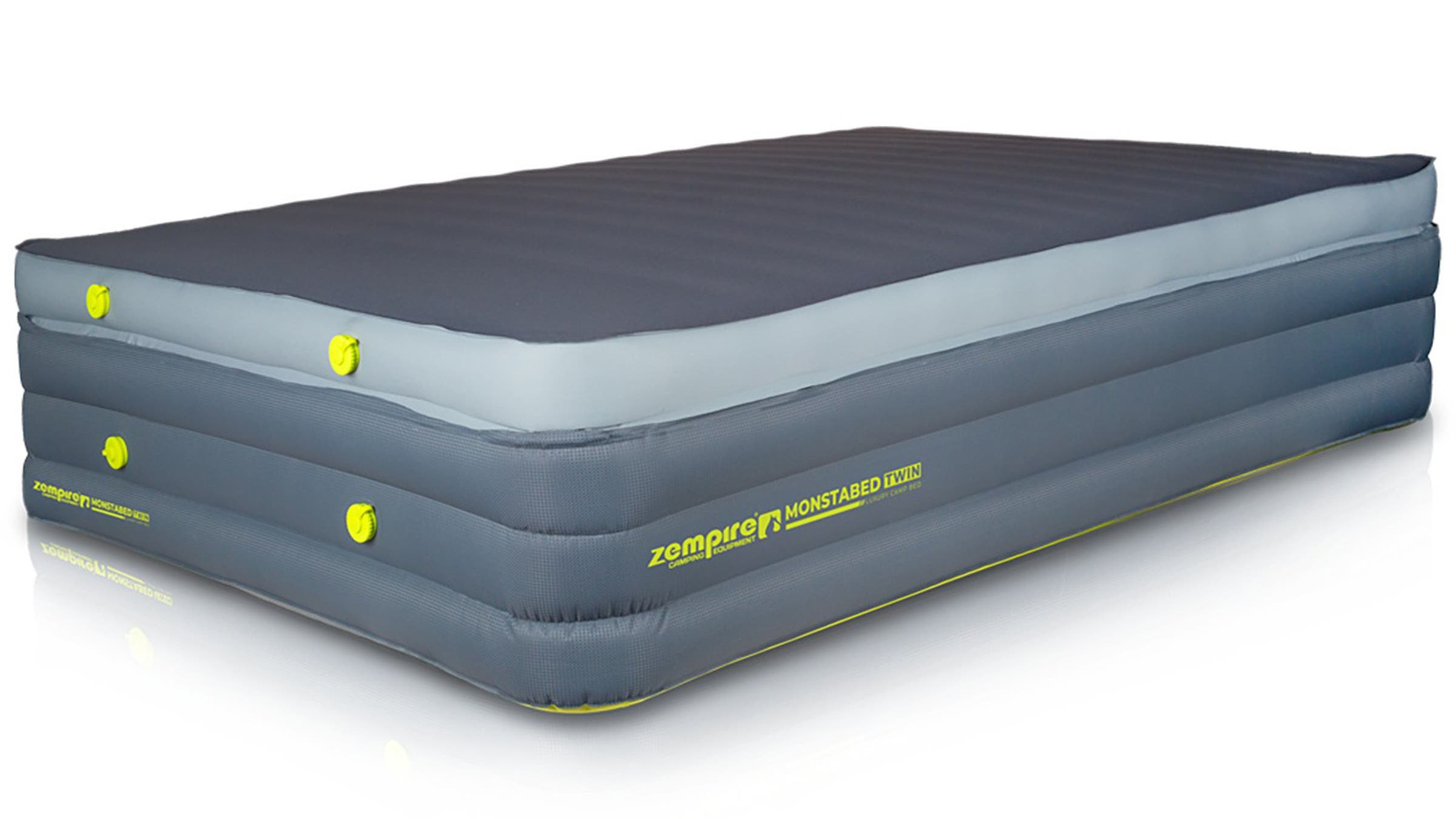
Best Camp Bed
Zempire Monstabed Twin
Thickness: 16.5 inches
Dimensions: 77” x 53”
R-value: 10.5
Pros and Cons
+ Warm and comfy topper
+ Height is easier for campers with bad backs or other injuries
– Heavy and large when packed
– Narrow for two campers
Calling the Zempire Monstabed a sleeping pad is like calling Half Dome a hill—it just doesn’t do it justice. When inflated, this ultra-comfy camp bed is 16.5 inches thick. While not as elevated as the average bed (18-25 inches), the loft is a luxury at camp. More than anything, it makes it easier for achy adventurers to get in and out of bed. Plus, the Monstabed can double as a bench on rainy or buggy tent-bound nights.
Inflating is a breeze with the Monstapump ($50) or a similar electric pump. The bed features a dual-chamber design, with an open-cell foam topper perched on an inflatable platform. The lower section allows for the Monstabed’s notable thickness, while keeping the packed size smaller than it would be if it was purely open-cell foam. As is, the packed size is monstrous—about the size of a large carry-on suitcase—and one of our team’s few dings.
The topper, though, is what made our testers fall head over heels. One said that it rivals their bed at home. “I have never slept this well in the woods,” they raved. The topper gives the Monstabed a whopping 10.5 R-value, and testers gave it top scores for warmth and coziness accordingly.
Oh, and don’t be confused by the twin size. This version of the Monstabed is designed to sleep two campers—at 53 inches wide, an inch less than a standard full-size bed—although our team wouldn’t have minded more width, especially on warm nights when the very thought of cuddling is torturous. Testers noted that it fits perfectly inside Zempire’s Pro TM V2 tent.
Lastly, our team voiced some minor concerns with the bed’s 150-denier ripstop polyester base fabric. We didn’t have any issues camping on pine needles and pine cones, but testers weren’t eager to scrape the material over rock.
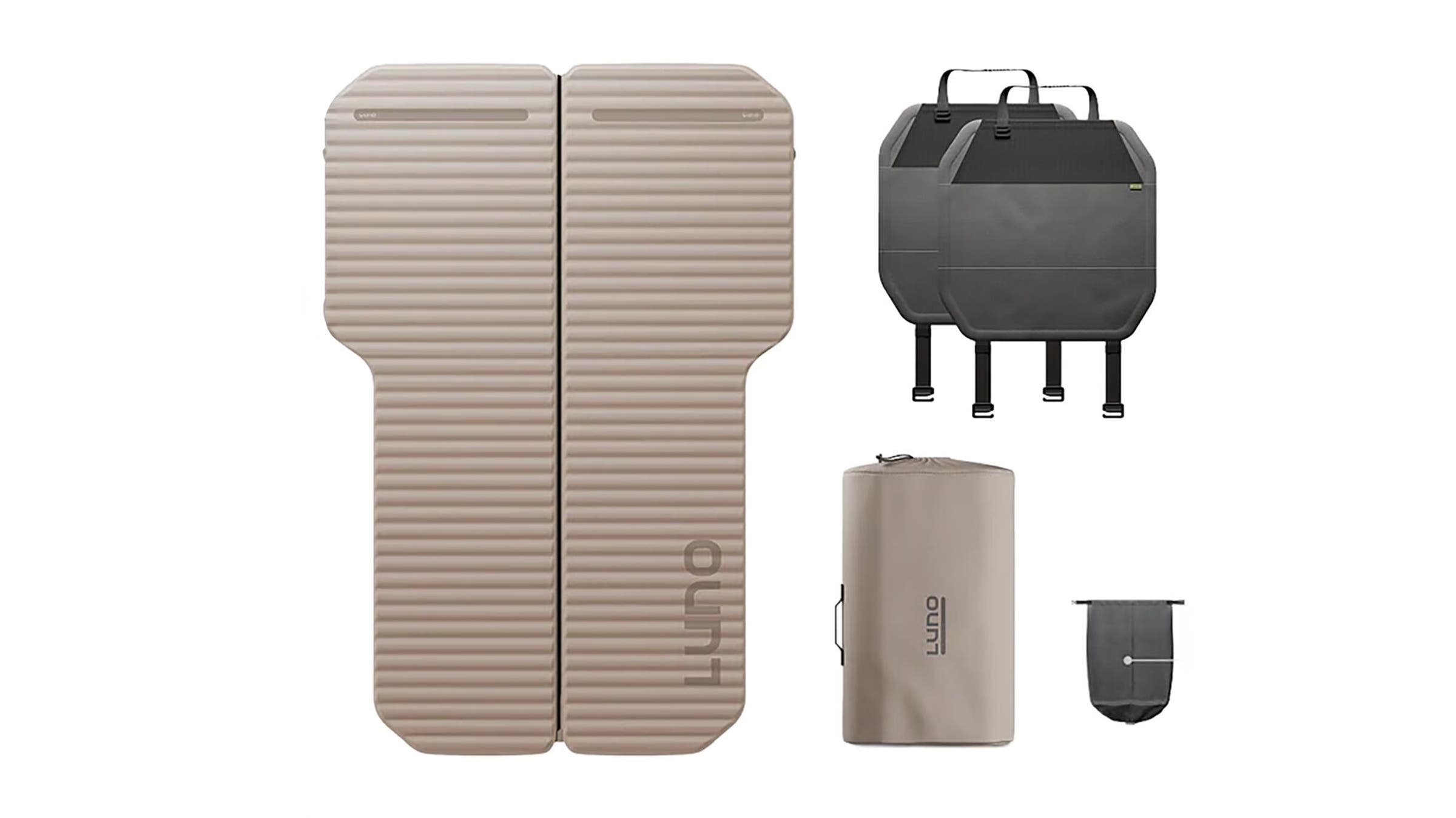
Best Mattress for Car Camping
Luno AIR+FOAM PRO Vehicle Mattress
Thickness: 4 inches
Dimensions: Depends on vehicle type
R-value: 11
Pros and Cons
+ Maximizes sleep space in a vehicle
+ Zips in half for solo travel
+ Comfortable
– Expensive
– Wouldn’t use in a tent
Luno’s Vehicle Mattress features the same supportive AIR+FOAM construction as its Camping Mattress, but it’s specifically shaped for sleeping in the back of a hatchback or SUV.
Testers gave the now-familiar build high scores in the comfort department. “Very comfortable, thick foam,” applauded one tester after a Cascades road trip. He also gave the Luno mattress two thumbs up for warmth—R-value is 11—and confirmed the mattress self-inflates relatively quickly before needing minimal top-up with a pump. Two separate halves come with their own inflation valve, which allows two sleepers to individually tweak firmness. There’s also a zipper down the gut, so you can leave half of the mattress at home on solo trips.
The two biggest selling points for our 6’2” tester, though, were Luno’s Head Support Bridge Attachments and the shape of the mattress itself. Suspension-like straps secure to the back of the front seats, keeping the mattress level in the trunk of his RAV4. And the contoured curves of the mattress nestled into the crevices. “Every inch of free space in the back of my car was occupied, which provided a pretty luxurious camping experience.”
Complaints were minimal, but testers said the price was hard to swallow for a less versatile pad. Car campers looking for a cheaper option should check out Luno’s AIR BASE Mattress, which doesn’t feature the comfortable, insulating foam but is less than half the price.
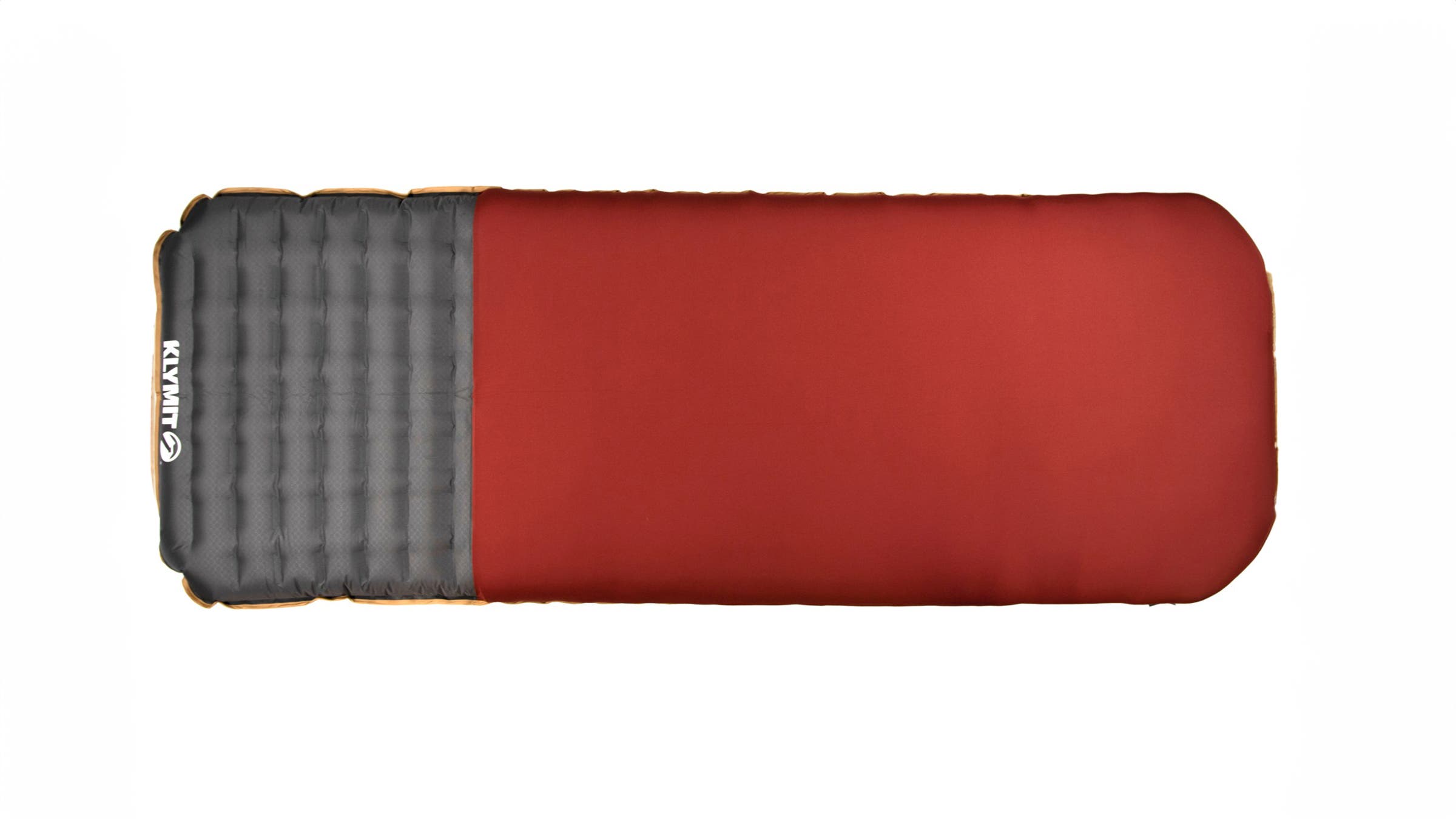
Lightest Foam Mattress
Klymit Insulated Klymaloft Peak Sleeping Pad
Thickness: 3.5 inches
Dimensions: 72” x 23” (regular)
R-value: 7
Pros and Cons
+ Incredible comfort-to-weight ratio
+ Cush upper
– Not as comfortable when not stiffly inflated
Testers loved the Klymaloft for its integrated soft stretch-knit polyester fabric cover—considered the most luxurious topper after the Nemo Roamer. No need to remember a separate topsheet. The supple, sheet-like cover only spans 80 percent of the mattress (where you need it most), minimizing additional weight and bulk while maximizing comfort.
The combination of the plush foam topper and the i-beam air chambers created an excellent sleeping platform for testers who prefer a stiffer mattress but was not as comfortable at lower PSIs compared to the other premium mattresses on this list. That foam and i-beam combo also gives the Klymaloft a respectable R-value of 7, offering enough insulation for nights that dipped into the low 40s.
At just 4.4 pounds, the Klymaloft is pounds lighter than the other full-size, foam-integrated mattresses on this list—something one tester greatly appreciated after setting up a campsite a quarter-mile from where he parked on the Scott River in California. While we rarely had to lug our test mattresses long distances, weight is worth considering if you want something more portable than the plushest car camping pads.
While not self-inflating, the Klymaloft’s straightforward, twist-pull valve made inflation painless with an electric pump. It was also one of the quickest and easiest pads to deflate and pack up, taking fewer than four minutes to fully deflate fully and roll up into its stuff sack. Packed down, it’s roughly the size of a 5-gallon jug—still too large to take backpacking, but significantly smaller than the other single mattresses on this list.
Most Sustainable
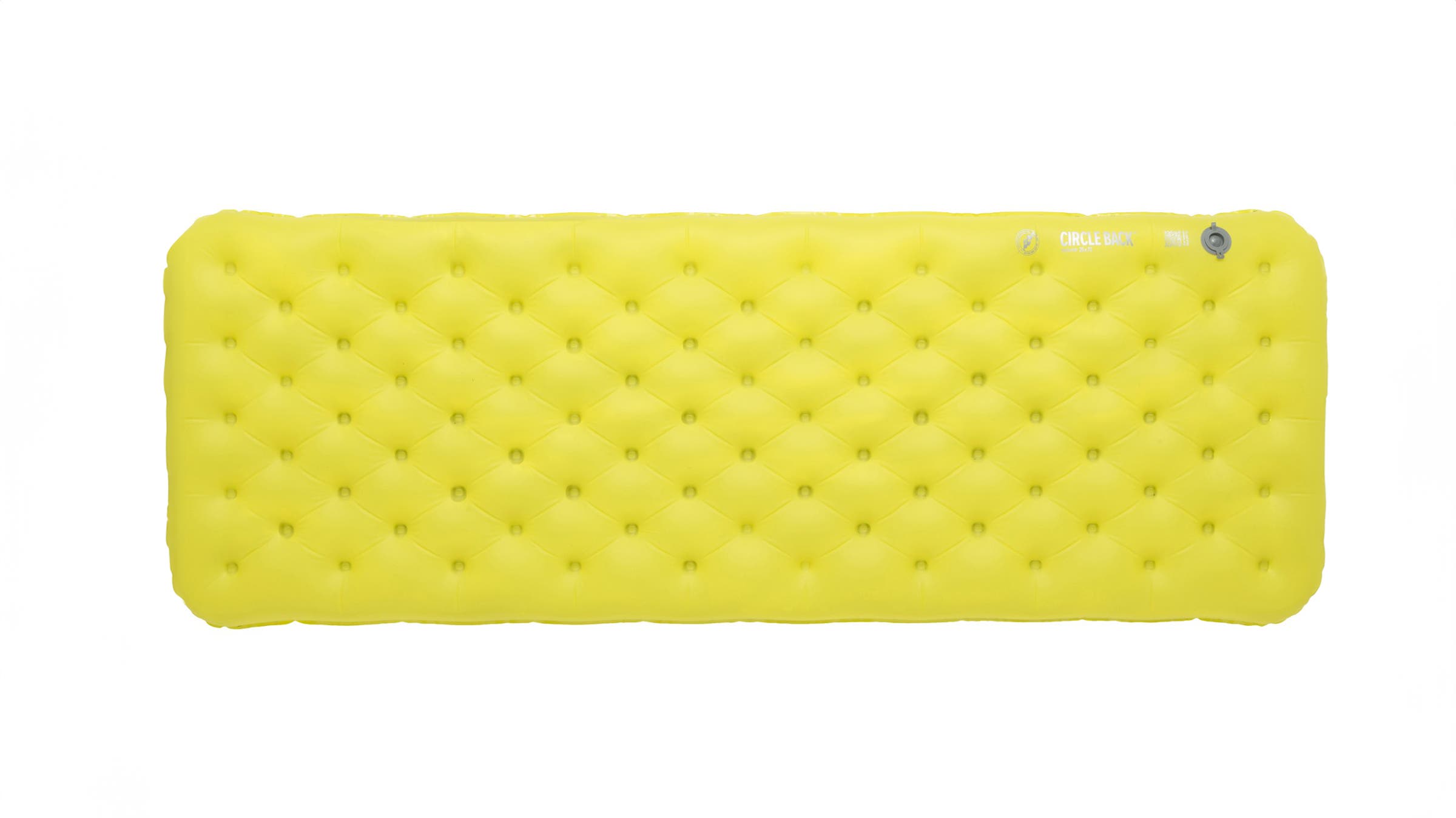
Big Agnes Circle Back Sleeping Pad
Thickness: 4.5 inches
Dimensions: 72″ x 25″ (regular)
R-value: 4.7
Pros and Cons
+ Circularly recyclable
+ Versatile
– Hard to fit back into the stuff sack
In the world of sustainable product design, the gold standard is circularity—items made so that they can be broken down and remade without a constant input of new materials and output of waste. We’ve never tested a car camping pad that achieves that standard—until the Circle Back, which uses a TPU air bladder that is 100-percent recyclable and an insulating cover made entirely of recycled and recyclable polyester. When it’s time to retire the pad, Big Agnes will take it back and reuse every last scrap.
Sustainability aside, the Circle Back’s modular insulation system is worth close consideration from anyone looking for a classic, do-it-all inflatable sleeping pad. With the removable cover, the Circle Back has an R-value of 4.7, making it plenty comfortable in three seasons. One tester stayed warm and snug on an October trip in the North Cascades with overnight temps around freezing. Without the cover, the Circle Back becomes a stripped down, lightweight summer pad.
Testers praised the extra polyester insulation, cushioning, and noise-muffling properties the polyester taffeta removable cover affords, but some testers found themselves sliding off the slick surface. “Even at a flat tent site, I woke up a couple mornings on the ground, with the pad next to me,” said a Seattle-based tester who used the 4.5-inch-thick pad on a three-night trip outside of Bozeman, Montana. Keeping the pad at a moderate to low firmness helped, but testers cautioned that it might not be ideal for restless sleepers.
The whole kit packs down to 6-by-13 inches (regular), making it a solid option for short backpacking trips where the priority is comfort over size or weight.
Other Sleeping Pads We Tested
- Quechua Arpenaz Comfort Self-Inflating Mattress – 4 Season ($75): The Arpenaz offers great value, and we found it extremely comfortable when coupled with a cot, but it didn’t provide enough insulation on colder nights for campers who sleep on the ground.
- Snowpeak Inflatable Mattress 2.5 ($270): While this pad has the potential to double as a car camping mattress and a base-camp style backpacking pad, it lacks some of the comfort details car campers look for in a mattress.
- Big Agnes Campmeister ($250): The Campmeister truly amazed testers with its incredibly light weight coupled with its respectable R-value of 7, but it didn’t impress testers as much in the comfort department.
- Nemo Flyer Cloud ($160): This three-inch-thick pad utilizes a combination of inflatable air chambers and minimal yet strategically placed foam for a balance of comfort and packability that car campers and backpackers alike will appreciate. Our biggest gripe: A strap needs to be cinched for the pad to fit back into its stuff sack.
Camping Mattresses Comparison Chart
Note: MSRP prices reflect the base starting price for the smallest size or single version.
How to Choose Your Sleeping Pad
Foam-Filled vs. Air-Filled Sleeping Pads
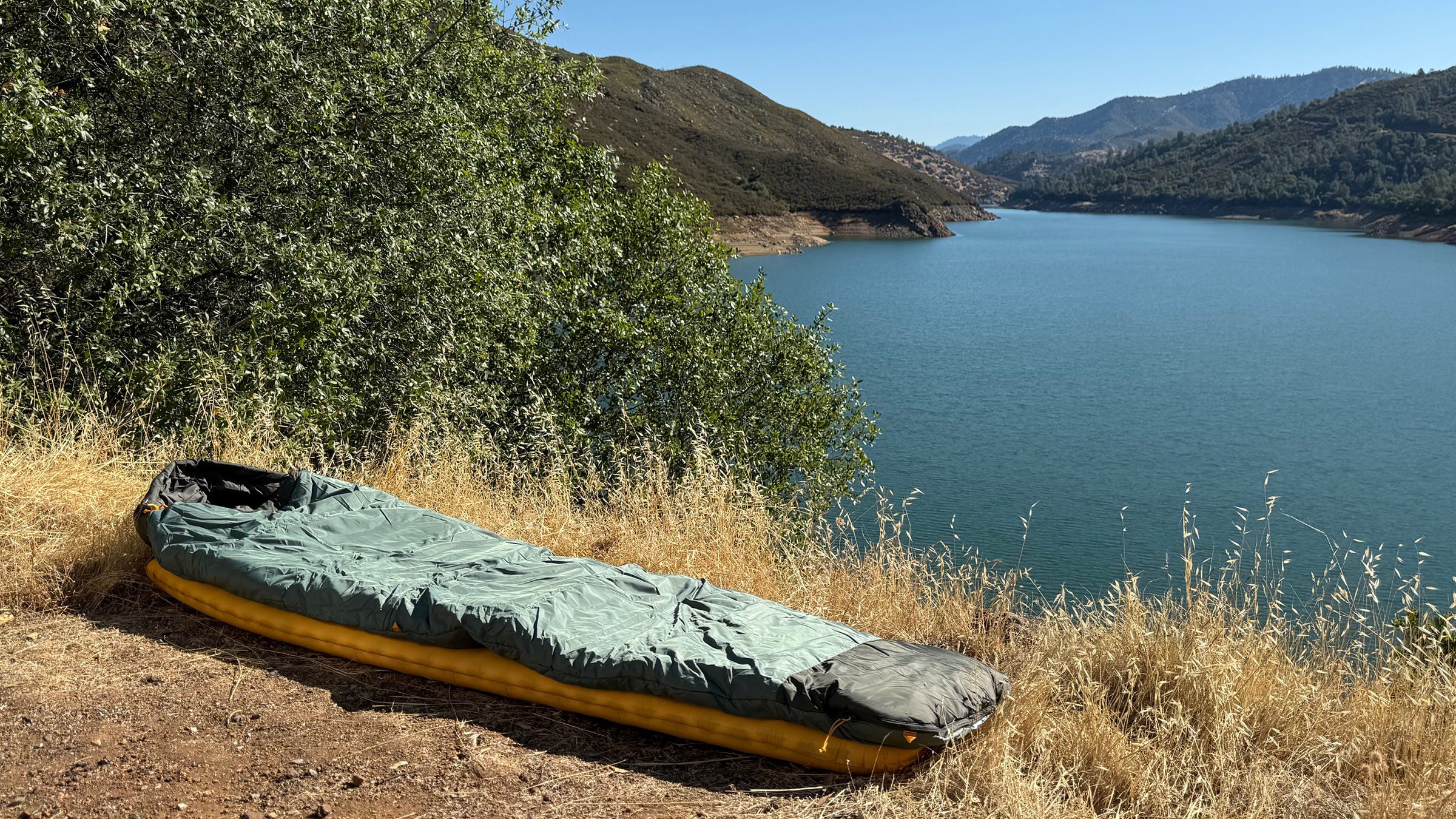
Self-inflating foam pads should inflate most of the way within roughly a half hour, depending on the model, and come with inflation sacks or pumps to finish the job. Our favorite pumps have a snug connection point with the pad and a large air chamber that’s easy to roll and push with minimal effort. Campers who don’t want to wait can invest in an electric pump, like Exped’s battery-operated Widget Pump. Almost all foam-insulated camping pads have high enough R-Values for winter camping (above 5), but it’s worth double-checking the rating if your adventures will include sub-freezing nights.
Sleeping Pad R-Value
This ubiquitous term will inevitably crop up when searching for the most appropriate pad for your outdoor activity. R-value is a universal measurement that rates a sleeping pad’s ability to resist heat transfer. R-values in sleeping pads typically range from 1-7, but some go well beyond R-7, especially in the case of car camping pads or expedition-level pads.
A pad with an R-value up to 2 works in temps with an expected nighttime low of 50 degrees Fahrenheit; an R-value between 2 and 3.9 works in temps with an expected nighttime low of 32 degrees; an R-value between 4 and 5.4 works in temps with an expected nighttime low as cold as 15 degrees; and a pad with an R-value of 5.5 or higher works in temps down to an expected nighttime low of zero degrees.
Pads with R-values above 7—such as luxury car camping mattresses, self-inflating foam pads, or heavy-duty expedition mats—offer extreme insulation for subzero temperatures, but also serve cold sleepers in more moderate temps (around freezing). Some premium car camping mattresses or self-inflating pads can reach R-values of 10 or higher, offering maximum comfort and warmth retention. These extremely high R-values are particularly useful when sleeping directly on cold ground or frozen surfaces, or inside unheated vehicles. While backpackers often aim for the lowest R-value that still keeps them safe, car campers may want to consider pads with R-values of 7 or higher since a pad’s weight and packability are not high priorities when accessing a campsite by car.
Does Packability Matter for a Sleeping Pad?
When you’re car camping, packability isn’t as big of a concern as when you’re backpacking and need to cram all of your gear into one bag. For that reason, the best sleeping pads tend to be thick, wide, and much heavier than their backpacking counterparts. Still, if you have a small car or limited storage, packed size might still be a major consideration. Some of the sleeping pads on this list pack down quite small (about the size of a large bag of potato chips), while others are beasts.
What Kind of Materials Do Sleeping Pads Use?
Aim for a higher-denier material on both the top and bottom of the pad, especially if you plan on dragging it outside for stargazing, or share your bed with a canine. While many backpacking pads use nylon uppers for weight savings and better durability, most car camping pads feature a polyester upper material to balance durability and next-to-skin comfort. Some of our favorite car camping mattresses on this list even feature brushed (or peached) polyester or stretch-knit uppers for enhanced comfort.
How We Test Sleeping Pads
- Number of Pads Tested: 25
- Number of Testers: 27
- Number of Days Camped: 100+
- Number of states tested in: 9
- Number of kids lightly injured while wrestling on mats: 4
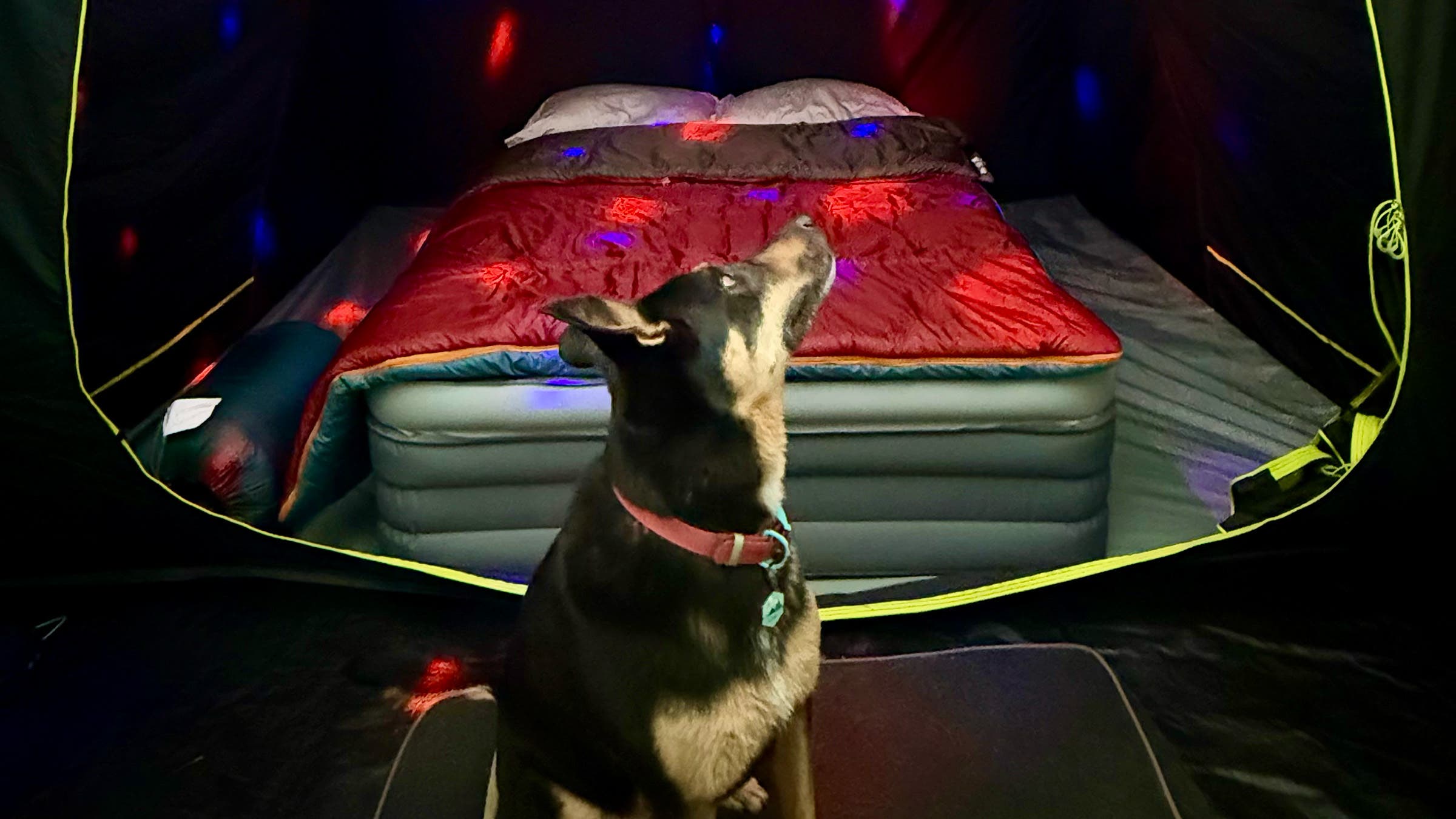
Initially, we set up three different camps with 12 mattresses, then invited 13 testers to use them as “guest beds” and provide feedback on comforts or grievances. During the camping trips, we encouraged a lightly feral group of children to wrestle and play on the mats to rapid-test their durability. To test air retention in a more controlled setting, we inflated all the mattresses and left them inflated for four days in an insulated garage where temps fluctuated from the high 50s to 60 degrees Fahrenheit. Then we hand-tested them. For one last layer of nuance, we spent at least one night at home on every mattress.
That first test laid the groundwork for this guide, but this is an ever-evolving process. Brands are constantly dropping new products. Since that initial test, we’ve called in another 13 sleeping pads and camp beds, and sent them out with testers on road trips and car camping missions in the Cascades, the Sierra, the Wasatch, and the Ozarks. After months of testing, our crew filled out detailed review forms. They quantitatively scored aspects like durability and comfort, then dove deeper on qualitative questions. Among them: Did you have any durability concerns? If you tested a two-person mattress, was it roomy enough for two? Would you buy this?
Finally, we cross-referenced those newer reviews with our old favorites before updating this guide. Our goal? To fill any cracks in our coverage and showcase the very best car camping pads that are currently on the market.

Meet Our Lead Testers
Joe Jackson has been testing gear professionally for Outside for over a decade. By his best estimation, he has tested over 75 sleeping pads ranging from gram pinching ultra light backpacking pads to the luxurious mattress-replacing numbers you see on this list.
Drew Zieff is a Tahoe-based freelance writer and globe-trotting powderhound who directs Outside’s snowboard and splitboard coverage in the winters. Before he put roots down in Tahoe, he was a full-time vanlifer, and he currently manages Outside’s testing on rain jackets and car camping gear in the summers.
More Gear Reviews
The Best Sleeping Bags for Car Campers
The Best Camp Kitchen Gear for Car Camping
The Best Backpacks, Duffels, and Roller Bags for Adventure Travel
