

Published May 18, 2026 03:15AM
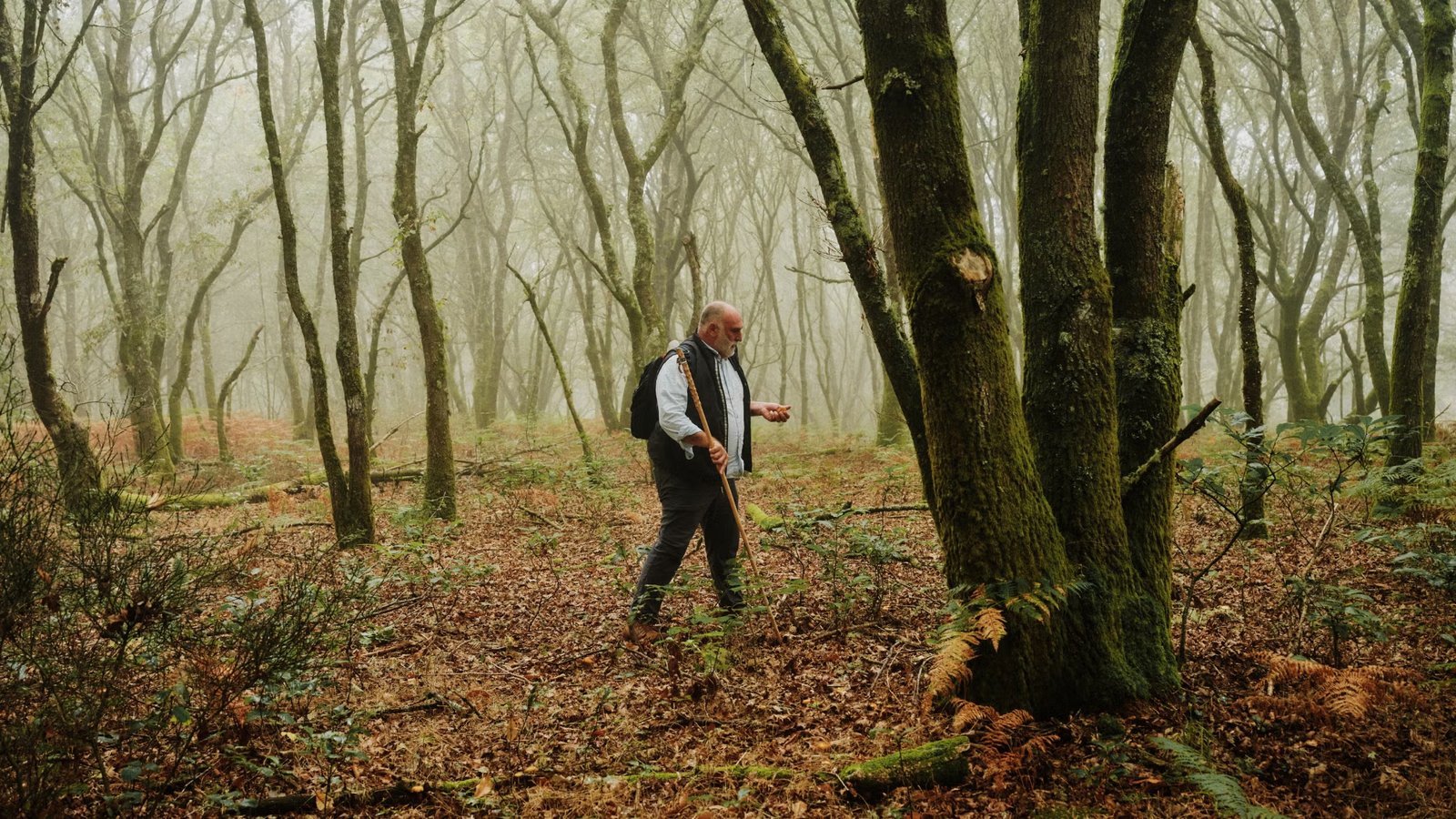
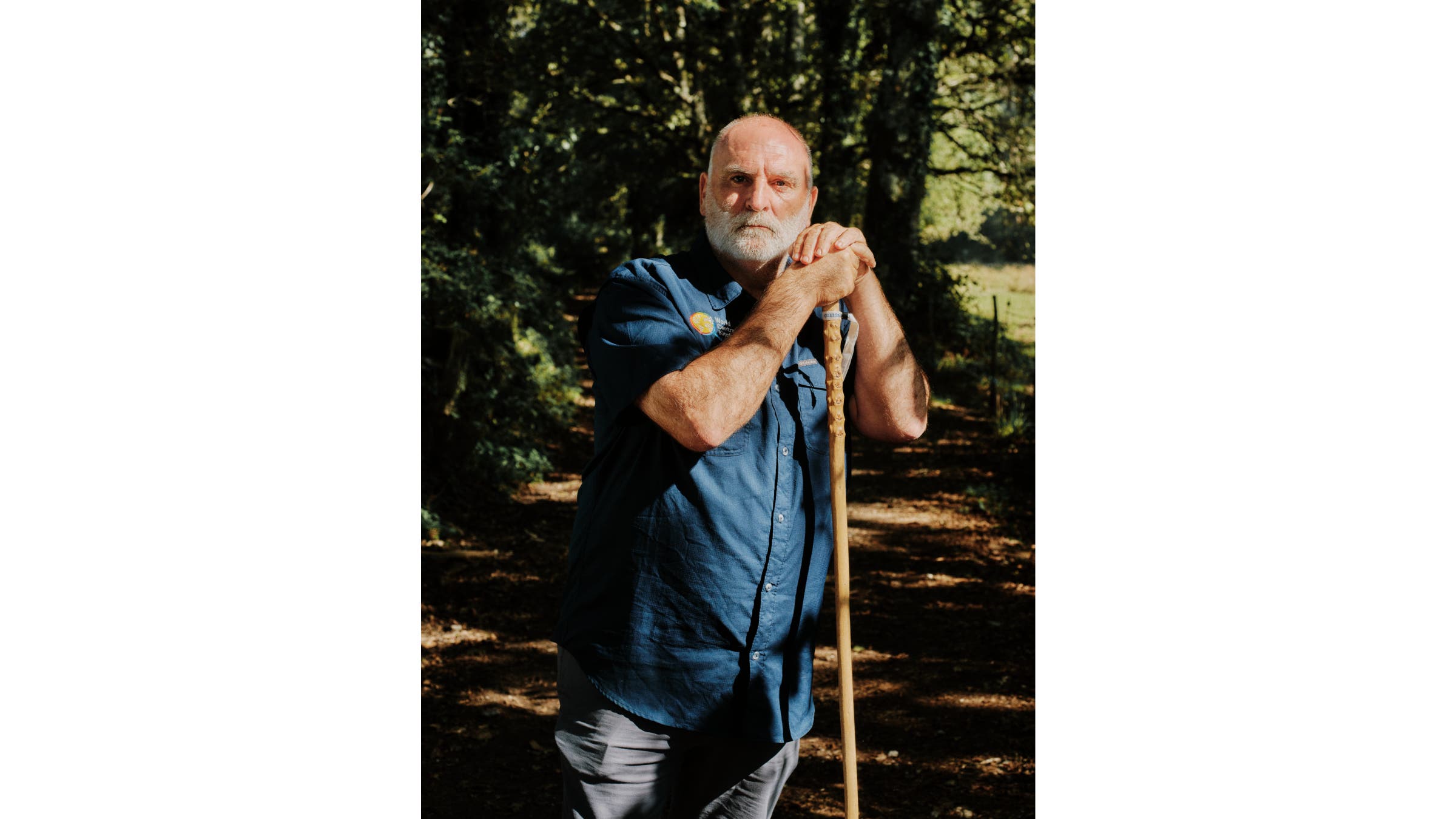
Somewhere around kilometer three, José Andrés stepped off the trail and crouched beside an old oak tree. He pressed his hand against the bark. I wasn’t sure why, and then he said: “North.”
You could always tell by the moss, he explained—thicker on the north-facing side, where the bark stays damp, the south side dried by the sun. Patricia had noticed the same thing on one of their previous walks and pointed it out to him. She does it on every walk, he said, with the same wonder, as if seeing it for the first time.
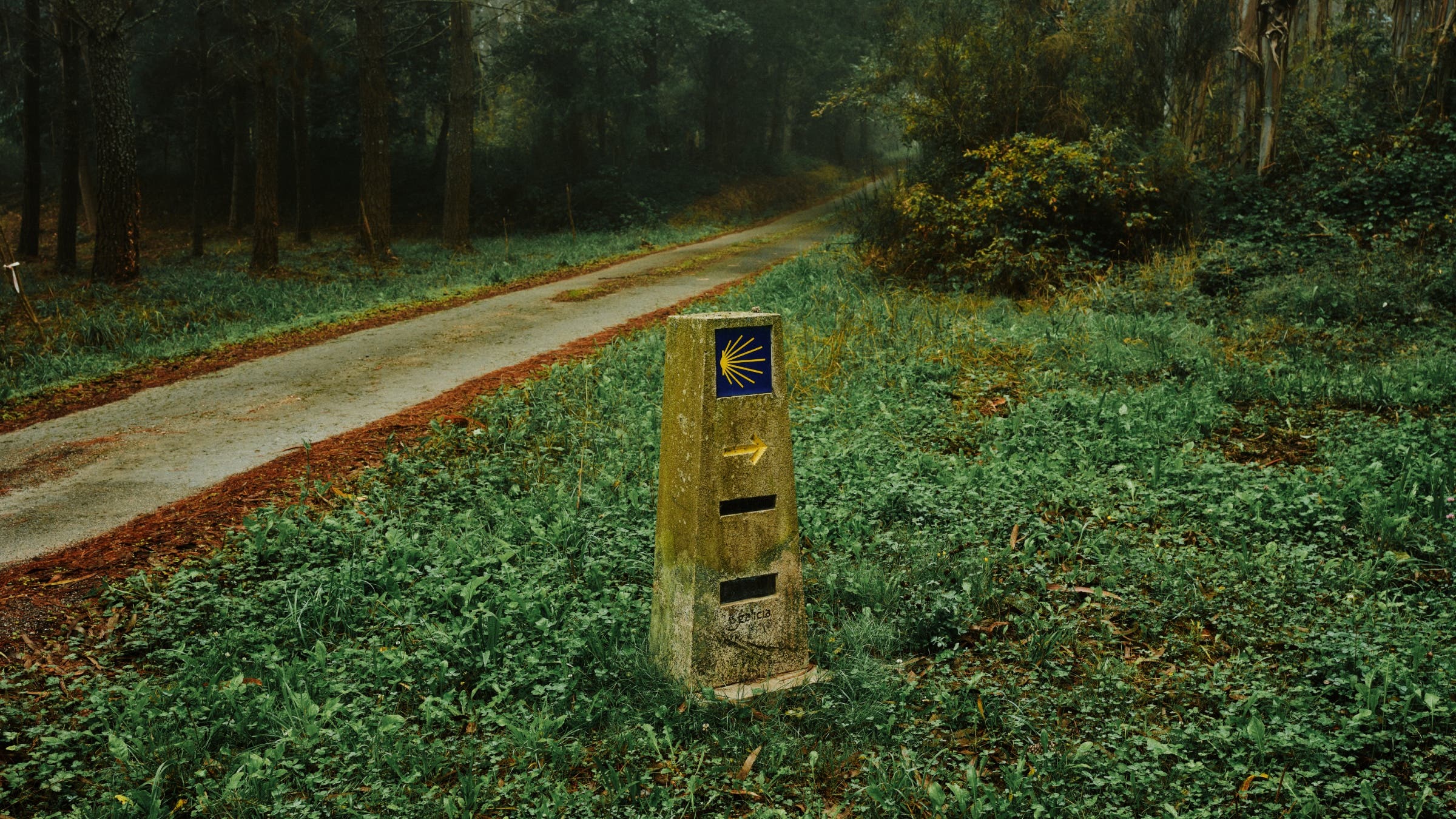
Patricia had not broken stride. She was already 30 meters ahead, following the yellow arrow painted on the next fence post. She did not look back. She has been walking with this man for a long time.
We were on the Camino de Santiago on a Thursday morning in September, not far from a small town called Baamonde in the verdant, rain-soaked region of Galicia. The Camino is an ancient pilgrimage route which contains more than 1,500 miles of pathways across Europe and was walked by more than half a million people in 2025 alone. José had invited me along four days earlier. He has walked the Camino several times before. This year’s walk, their fourth together, was special: it was to celebrate his and Patricia’s 30th wedding anniversary.
“You are along for the ride,” Patricia had told me. “The José train. You hop on and you don’t always know where it’s going.”
I’d briefly been on the José train before—Chicago, Beard Awards weekend, 2022. Tacos became mezcal shots, which became a FaceTime with the mezcal’s maker, so José could tell him I’d enjoyed it. The maker looked like he’d just been woken up. When José calls, you answer. The next stop was a party. No sitting. Just selfies and hugs and handshakes. We went to a restaurant next. He made sure to sit at the bar. Always the bar. For the conversation, and the ability to move. The stillness is measured in minutes.
The world does not slow down for José. And yet here he was, hand pressed against the bark of a Galician oak tree, trying to do exactly that.
I. Vilalba, the Night Before
The Parador de Vilalba is a set of stone buildings and a medieval stone tower in the middle of a small Galician town. Many of the walls here seem to be four feet thick. The floorboards creak. It feels right that José Andrés is sleeping here.
I arrived in the early evening after a long drive from Madrid and through the interior of Galicia, the green, Atlantic-kissed corner of Spain where the final stretch of the Camino de Santiago is laid out past wind turbines and ends at the Cathedral of Santiago de Compostela. Galicia has a way of looking like the Irish countryside. But with Albariño.
When I see José in the lobby he moves swiftly toward the kitchen through the swinging door. As he comes back, a few guests grab photos with him and wish him buen Camino, the customary greeting for those on the trail. He’s bullish in stature, white-bearded, white-haired, dressed all in gray—hooded midlayer, pants, sneakers. Sensible. Like a dad on vacation who’s ready for the hike.
Or in this case, a food crawl. He’d asked the chef for a caldo gallego—a hearty stew of white beans, turnips, and the lacón, the cured pork shoulder that gives the broth its depth, a dish that has fueled pilgrims and farmers through Galician winters for centuries. He suspected it was too early in the season. He wanted it anyway. Hang out enough with José and you start to believe you can eat your way through an entire culture if you know where to look and who to ask.
“Are you hungry? Let’s eat,” he says. We settle on a restaurant across the square, sitting on stools next to an old barrel, with a plate of raxo between us—pork loin cut into slivers, tossed in garlic and paprika, tipped onto fried potatoes. Then orejas, pig’s ears skewered on toothpicks. They are soft, then crunch. They arrive—of course—on a bed of potatoes. Always potatoes in Galicia, he tells me. José orders white wine. I have what he’s having.
“Tichi!” he shouts. “Tichi!”
Tichi is what he calls Patricia, and has for 30 years as of this Camino. She crosses the square to join us. They’ve been on the Camino for ten days already, she tells me, starting up the coast in Asturias and working their way west. She has planned most of the route.
“Everybody walks for a different reason,” he says. “To be away from problems. To find something. One thing is being a pilgrim. Another is being a walker.” He is doing both, he thinks, though he admits the line is not always clear.
What separates the Camino from any other long walk, he says, is that the road has history. “Every town, every place, something happened. Maybe somebody met there, maybe it was a war or a fight. And you feel that.”
Patricia is very strict about which kilometers count, José tells me. He spotted a beach off the trail one of the early days. Three kilometers round-trip to see it. Patricia does not count it.
“El Camino is El Camino,” he says, echoing her. “It is very straight. And she doesn’t count that shit!”
Patricia shrugs. She has heard this complaint before. She will hear it again.
“We walk and eat more than anybody,” he says. “My wife is always afraid. She says we should cancel the walk and just do a gastronomic history of Spain.”
“This is my point,” Patricia says to me. “We need to walk because of how much we eat!”
We try a few more places in town in search of the soup. He sees one man eating a hamburger and says, in Spanish: “Why are you eating a hamburger in Galicia?” No soup. Eventually he gives up and we head back. Patricia, sensibly, goes to bed. But José asks if I am hungry, which I have come to understand means he wants to hang.
We grab a table at the hotel restaurant. We’re some of the last people there. I ask him why the Camino. Why every year, this?
“We get away from people,” he says. “Nobody bothers you. Once you pass through the towns, you’re on your own. Especially here.” He gestures at the stone walls around us, at Galicia. “To be out here. Nothing is more honest, you know?”
He gets soup. A simple chicken noodle, all they had. Not the soup he wanted, but it is still a soup, homemade, and the broth was real. I would spend the next two days watching him do this—adapting, redirecting, finding the best of what was here, and when it wasn’t quite there, nudging it with a dash of salt or vinegar or oil toward what he wished it were. The caldo gallego would wait.
A waiter says goodbye on her way out and asks for a selfie and tells him he was one of the personalities on her Spanish citizenship test. José, a dual citizen of Spain and the United States, doesn’t quite know what to do with this, so he smiles. We order local whiskey as nightcaps.
Outside, the tower of the parador is lit amber against the dark.
“In the morning, we walk,” he says.
II. To Be a Walker
If you don’t know the man ahead of me with a walking stick, let’s catch you up. He has won multiple James Beard Awards, including Humanitarian of the Year. He is the founder of José Andrés Group, which operates more than 40 restaurants and bars across the country, from Minibar in Washington, D.C., to Jaleo in Las Vegas. His newest book, Spain My Way (Ecco, May 19), is a love letter to the food of his home country. He came from Spain to the U.S. in his twenties, but not before serving in the Spanish Navy—where he traveled the world and cooked for admirals—and a life-changing stint at El Bulli, the birthplace of molecular gastronomy.
But the restaurant empire is almost an asterisk now, albeit a sparkling one. In 2010, after the earthquake in Haiti, José Andrés did what he does: he showed up, he cooked, he fed. What began as one chef’s refusal to stand idly by became World Central Kitchen (WCK), the humanitarian organization that has since deployed to most major disasters of the past 16 years—hurricanes, wildfires, floods, wars—applying restaurant-scale logistics to the problem of feeding people.
He says the organization has served more than 150 million meals in Gaza alone. Seven of his workers were killed there in an Israeli airstrike in 2024—a loss he still carries. He has testified before Congress about aid in Ukraine. He has appeared in his own Marvel comic. He has been nominated for the Nobel Peace Prize.
He can go from a conversation about canning technology to a quiet fury about the cuts to Ukraine aid to a childhood memory of keeping a fire alive. The Spanish have a word for what he embodies: sobremesa. Literally, over the table—the time after a meal when the conversation deepens and the real things get said. José Andrés lives in permanent sobremesa.
The Camino, I would come to understand, is his version of it on foot: one long, moving feast of conversation, food, and presence, stretched across days. It is a steadiness—path, arrows, one foot and then the next—that his life will otherwise not permit.
And here in Galicia, away from the kitchens in Gaza, Ukraine, and his own, his wife is making him walk.
Before we walked, we ate. In the mornings, this time of year, there’s a heavy scent of petrichor—that distinct after-the-rain smell—even when it hasn’t rained. Or has it?
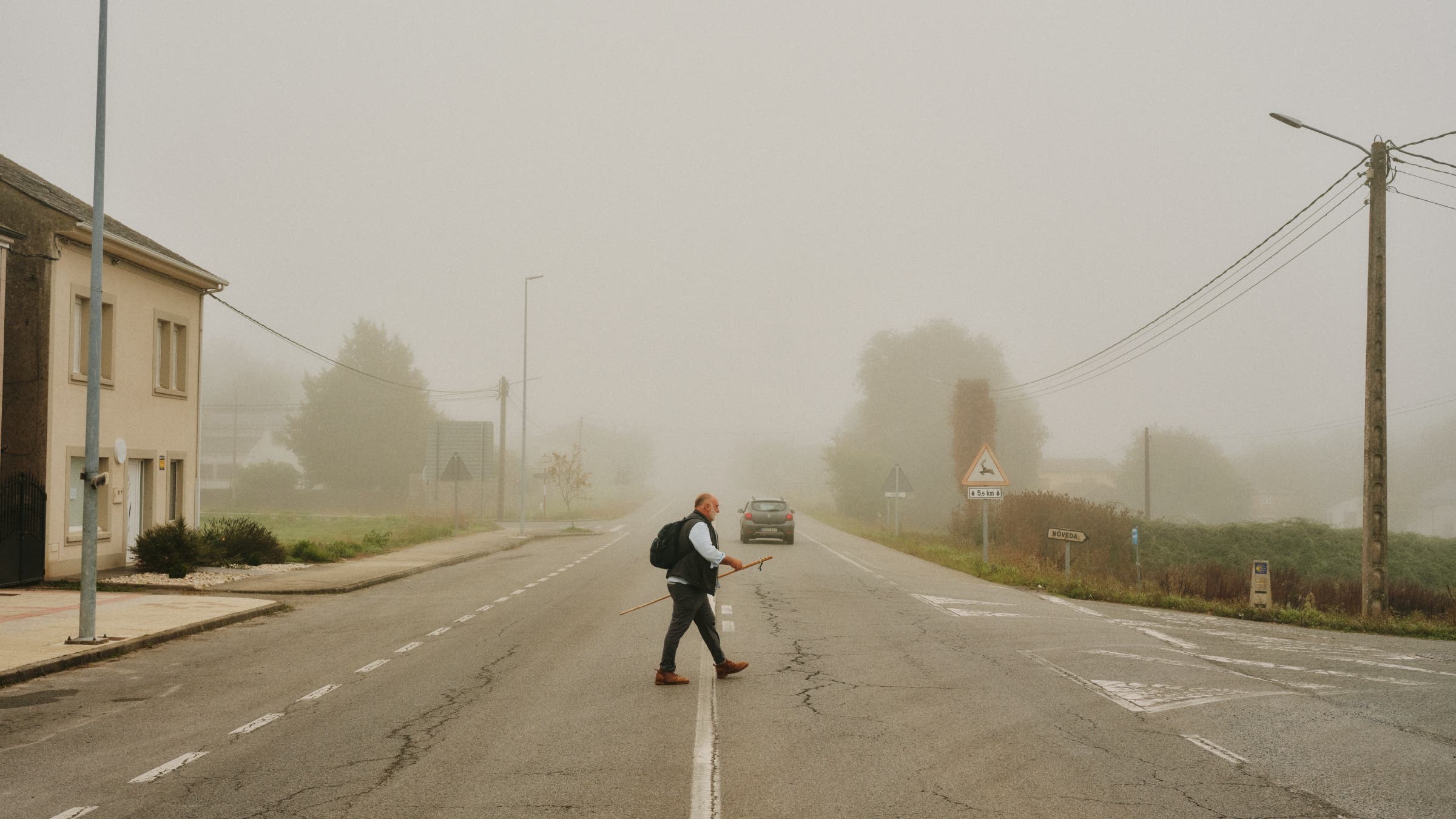
The Café Bar a Rotonda sits at the edge of Baamonde, where the yellow arrows finally come into focus—the hand-painted markers pilgrims have followed across northern Spain for more than a thousand years.
Patricia went inside to get her pilgrim’s passport stamped—two stamps a day, collected from churches and bars and hostels along the way. José watched her go and said something about Patricia being very serious about the stamps—and himself being very serious about the tortilla.
Patricia is the true walker of the duo. Most mornings back in Bethesda, Maryland, she’s on the Potomac, walking the trail toward Great Falls. It was there, years ago, that one of their three daughters first spotted a pawpaw—North America’s largest native fruit, custardy and tropical, a thing most Americans never taste. She saw it because her mother had taught her, on all those mornings, to look down.
The tortilla española at the Rotonda was properly made: thick, barely set, the eggs still soft at the center. The potatoes were glossed with the olive oil they were cooked in. In Galicia—which produces extraordinarily good eggs and extraordinarily good potatoes, two facts José is happy to point out—a well-made tortilla is something worth seeking out and planning a morning around.
We ate with strong coffee while pilgrims and locals—the two communities that have shared this trail for centuries— trickled in. The pilgrims walked in loose, the unhurried gait of people who had been on the road for weeks. José watched one of them, a man in boots and walking poles, order a coffee at the bar.
“You don’t need to ask,” he said. “You know who they are.”
Then, quieter: “They are somewhere else already.”
III. What the Trail Knows
The Camino del Norte—the Northern Way—is the coastal route of the Camino de Santiago, the path most traveled in the ninth and tenth centuries. Pilgrims arrived by sea from northern Europe and walked westward along the Bay of Biscay to Galicia. It has sneaky elevation changes and long, sometimes unshaded stretches. The hiking equivalent of death by a thousand paper cuts. But you quickly realize the beauty of the walk, religious or not. Leaving a world, through a world, toward a world. Follow the arrows.
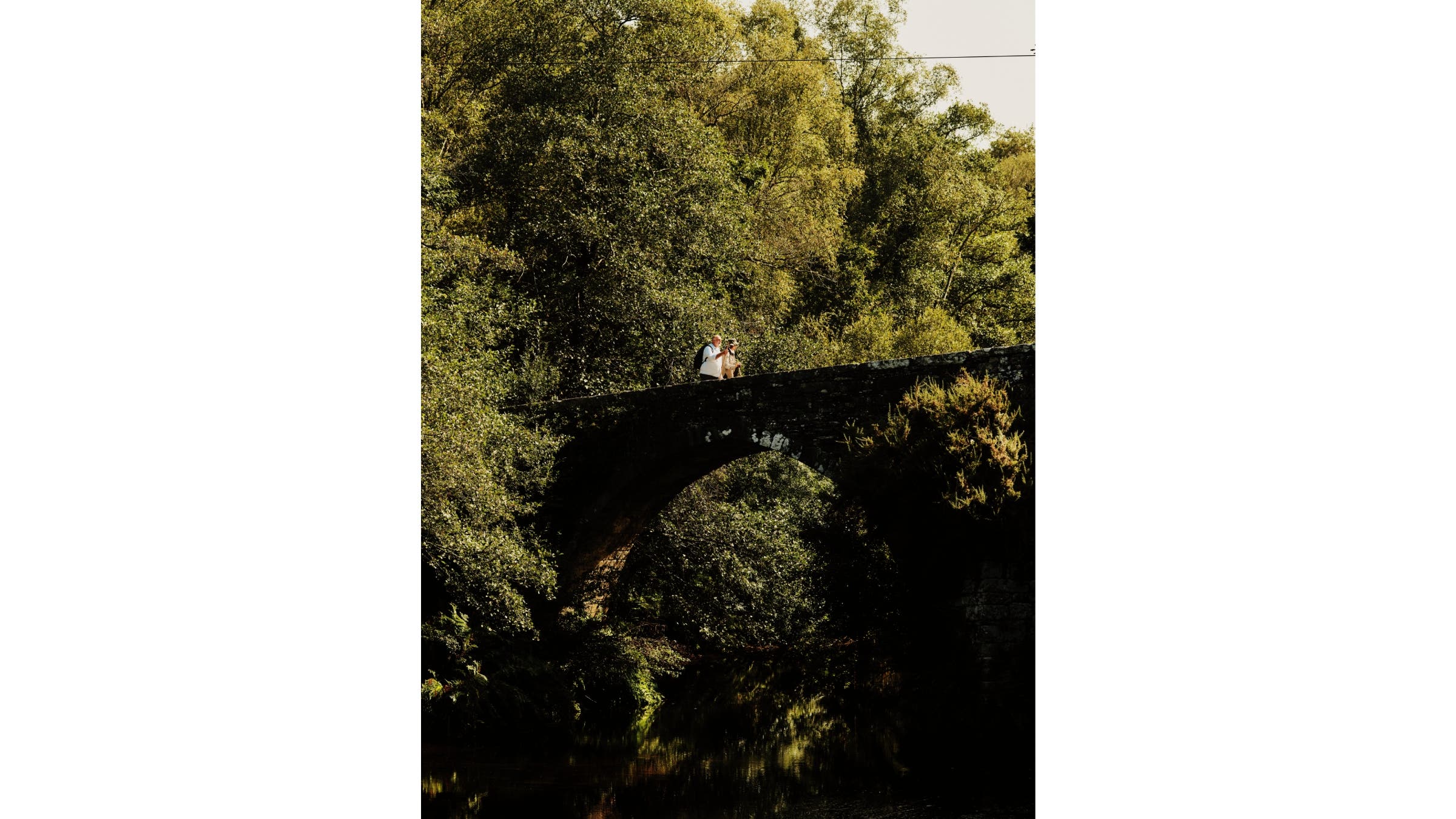
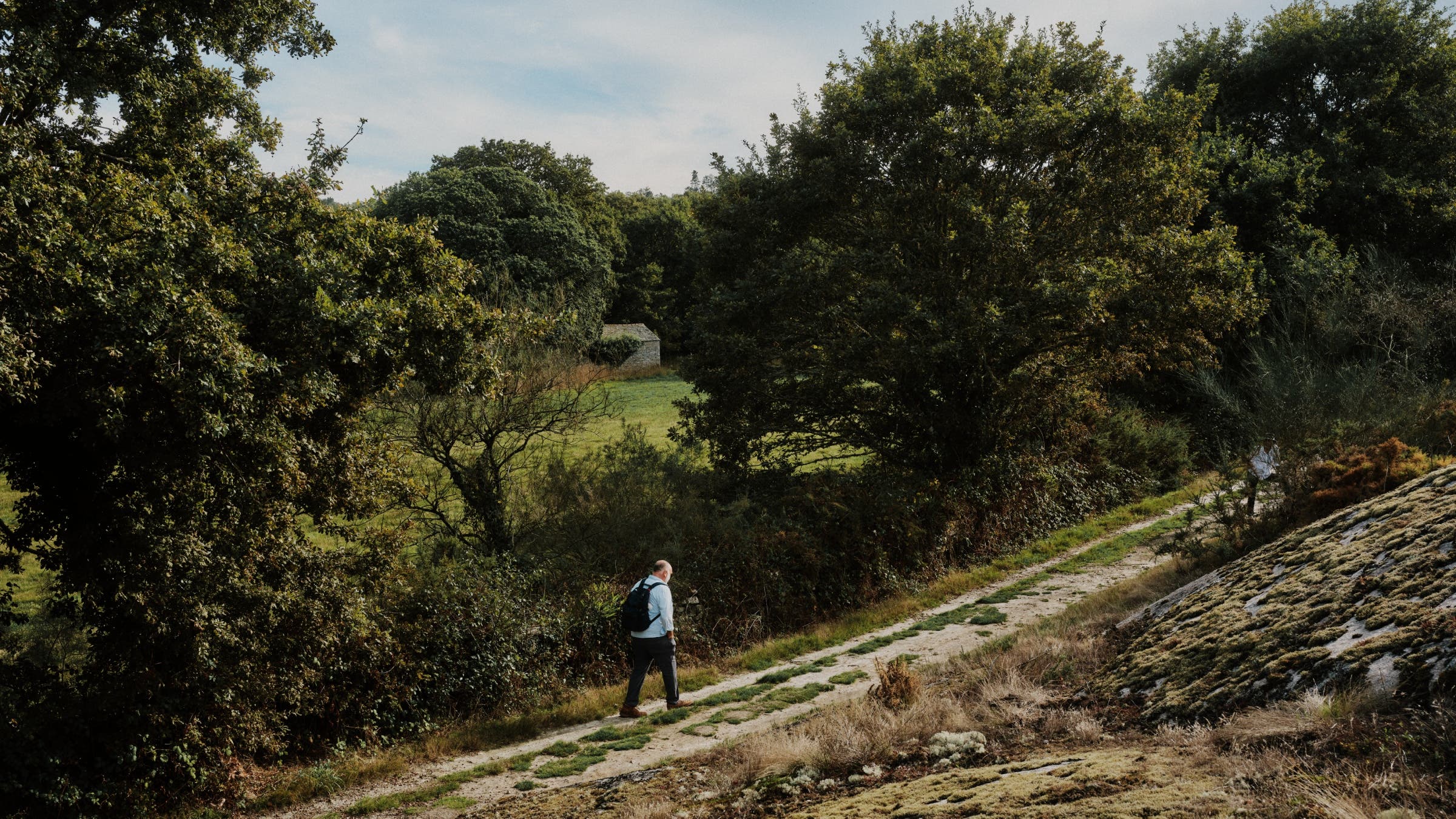
Out of Baamonde toward Guitiriz, the trail moves through a countryside where you will come across stone bridges, stone fences, stone churches. We stop at Capela de San Alberte, an ancient structure furred in moss. Nearby stand the cruceiros—weathered stone crosses with Jesus on one side, the Virgin Mary on the other. You only see them in Galicia. Patricia explains they were placed as waymarks, like the Camino’s arrows, but also to protect travelers. Spiritual and navigational guidance in one.
Not unlike Patricia herself.
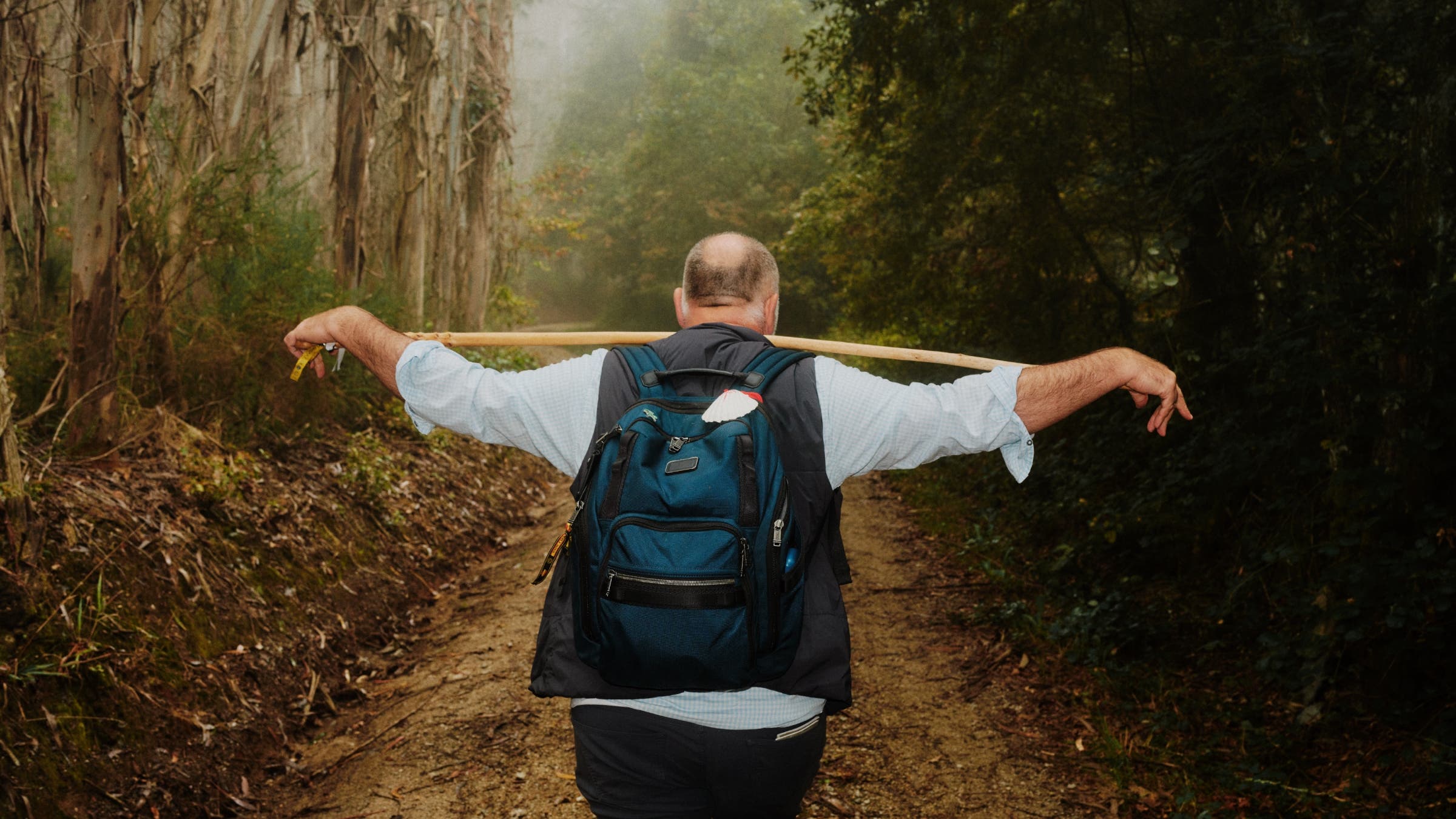
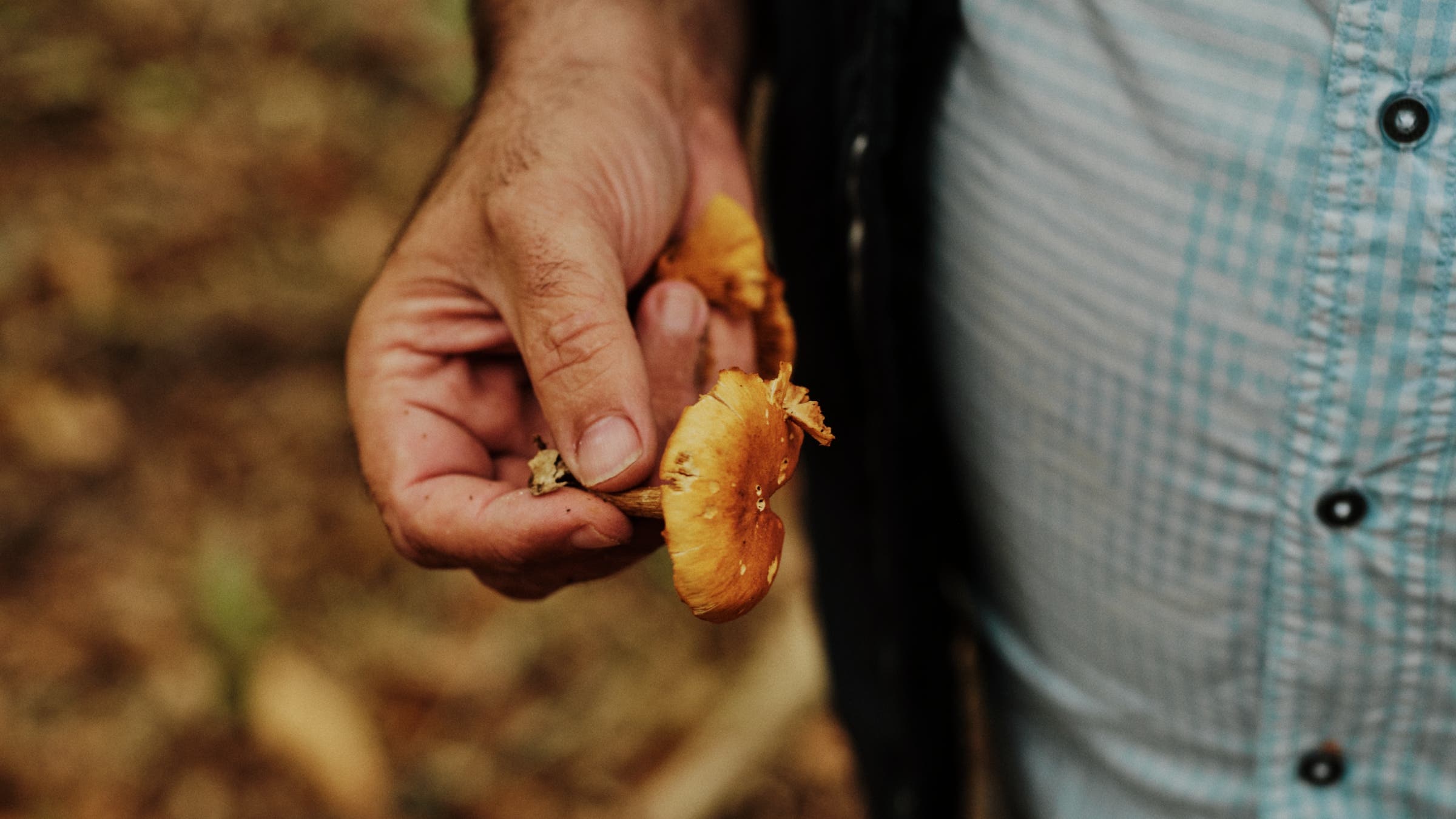
Nearby are blackberry brambles. José picks a handful of ripe blackberries, eats them, and passes some to Patricia. As we walk on, he puts his walking stick across his shoulders and talks about what is in season along the trail: chestnuts—the first ones are just coming ready, he says; madroños, the red, meaty berries whose tree appears on the coat of arms of Madrid, a bear reaching into its branches; grapes; and in a few weeks, after the autumn rains, mushrooms.
“I pick them, but I need to be very sure,” he said. “Some of them are poisonous. But usually I know. I’m good at it. But nothing like the locals.”
His grandfather was a hunter and a fisherman—a man who tied his own fishing flies and cast his own cartridges, who gathered bird feathers to make lures. When his mother moved, José kept his grandfather’s old lures.
His grandfather had taught him to catch trout bare-handed in fast-moving streams. Getting in behind the rock where the fish sheltered from the current, waiting. Then—pow—grabbing them by the gills.
“If you’re very quick,” he said, “you grab it and get them out.”
“The outdoors is the ultimate classroom,” he said. “Any child can come and become an expert on things. That’s why all these fishermen and shepherds have so much wisdom.”
Beneath the white hair and waterfall of ideas, you get the sense that on these walks, José is still the boy at the stream. Not yet the shepherd. Still hoping to become one.
IV. The 20-Minute Meal
A few days before I joined them, José and Patricia had walked a day with two pilgrims from New Zealand. The men were shepherds back home. They walked all day. They ate lunch together. At the end of the day, José drove them to their shelter—a donativo albergue, one of the donation-based shelters scattered along the route, off the main road.
When they arrived, a woman was in the kitchen. She was Mexican. She cooked for the pilgrims every day, she explained—room and board in exchange for meals. No salary. Just food and a place to sleep.
He looked at the kitchen. He looked at the progress of the meal. There wasn’t much. He looked at what he had in the car: a bag of fresh beans he’d bought that morning at a market, a few tins of conservas. There were pilgrims to feed. There was a kitchen. There were 20 minutes.
The woman didn’t know who he was. Some of the other pilgrims did. He offered his services and his food.
She looked at him. She looked at the clock. “I don’t think you’re gonna make it in 20 minutes,” she told him. He told her, “So I think I’m your best chance.”
He went to work. He opened the tins—conservas, the Spanish preserved fish that is its own culinary category, the good kind, in small flat cans with fish laid out the way a jeweler arranges stones. A first course. The pilgrims looked at each other. They told him they had never had a first course on the Camino. It was always just one plate.
The fresh beans went into a pressure cooker. On the stovetop they’d take half an hour. He didn’t have half an hour. Five minutes under pressure, then the long hissing wait for all the steam to release, the cooker doing its work while the clock kept running and the pilgrims watched, the woman who had doubted him watched. He opened it.
“The beans were amazing,” he said. “Plus, there was no other option.”
It was fabes season. For a few weeks each September, before the rest of the harvest went into sacks to dry for fabada—Asturias’s national dish, a slow-cooked bean stew with pork and chorizo—you could buy them fresh at the markets, still in their pods. Fresh fabes are a different animal. They cook in minutes instead of hours. They don’t taste like a bean. They taste green, almost sweet, the skins like a whisper.
José had grown up on these beans. He had been born in Asturias. He had bought this bag at a market that morning without a plan for what to do with them, and then an albergue had appeared, and a Mexican woman cooking with not enough time, and 20 minutes, and a pressure cooker.
The woman who had doubted him was delighted. José called her brave—someone doing quiet, essential work in a place no one would think to look for it. The shepherds had walked hundreds of kilometers. They had slept in bunk beds in rooms full of strangers, carried what they needed on their backs. And on a random night in Asturias, an unannounced man turned 20 minutes and a bag of beans into a meal they will tell people about for the rest of their lives.
V. Sustenance
We reached Guitiriz around midday, about ten kilometers of walking behind us. A Galician spa town, built around a century-old thermal hotel and three medicinal springs. It was less than José’s usual Camino pace, but the point today, he had decided, was not kilometers.
We wandered, looking for a bar or a café. We found Bar Comba not far from the river. It had a television tuned to the news, a foosball table under a faded poster of Nighthawks. Beige tables with red vinyl seats, a back room with checkered cloths where two lone walkers were already eating. And a bar—metal, utilitarian. With José, if there’s a bar, you sit at the bar.
José ordered for all of us. What arrived was simple. Chicken wings atop a heap of fresh-cut potatoes. (Always potatoes here.) A lentil soup. Then bacalao con coliflor, cod and cauliflower.
José is not into shared plates. Too fussy. Just eat. He handed out spoons and we dug in. A bottle of house white appeared—Turbio, cloudy and young and slightly sparkling, served icy-cold in squat stemless glasses.
José stared at the salt cod and cauliflower with reverence. “Super sophisticated,” he said. “Like, it’s a fucking sophisticated dish. Cauliflower, codfish, potatoes. Try to get this anywhere else.”
There was just enough play in the texture of each component—the cod debrined but still flaked, silky with moisture; the cauliflower holding its nuttiness; the potatoes supple. The magic weaving through it all was a paprika-red ajada, the garlicky olive oil that is one of the pillars of Galician cooking, pooled at the bottom of the dish like a second sauce.
“Whatever date you have, commit to less and enjoy it more,” José said between bites. “Don’t try to do 30 kilometers a day. Do 10, 15. That’s plenty.”
He noticed older men gathering at a table for a card game and asked them what they were playing. Tute, they said. His eyes went to Patricia. She was already shaking her head. He looked at the card players. He looked at Patricia. He stood up and told the men he would be back next year.
There is no version of José’s restaurant empire—not Minibar, not Jaleo, not anywhere—that could have produced this particular afternoon: damn good cheap wine and the luck of finding a spot with sustenance when you really needed it.
Show up. Keep moving forward. Be ready to receive the world.
Our plates were empty. The bottle was finished.
“You really have so many meals left in your life, you know?”
VI. The Phone in His Pocket
We walked out of Guitiriz into the afternoon. The trail climbed through a mix of pine and chestnut trees. You could hear chestnuts knocking through the canopy. Galicia’s percussion.
I remarked how they looked like sea urchins. José was surprised I’d never seen a raw chestnut—though I’d somehow eaten plenty of sea urchin. He picked one up, opened it with his pocketknife, and handed me the kernel to taste.
Then his phone buzzed.
He looked at it. He held the screen out to me. It was a photograph from his team in Gaza—a new community kitchen going up, pots stacked on the floor, stoves getting wired in. WCK measures these kitchens in pots. A small one starts with seven. “Every day I get photos,” he said. “Every day.”
José has 1.3 million followers on Instagram. When he posts a photo from a WCK kitchen, it moves money and attention—which is why the photos he gets every day are also a problem. Post them, and people accuse him of covering up the war. Don’t post, and no one knows anyone is being fed. “I’m not covering up anything,” he said. “I’m only saying that this is happening. And all the realities are real.”
Gaza. Ukraine. It was a lot to carry.
“That’s why I need to walk more than ever,” he said.
He put the phone back in his pocket. Just follow the arrows. At the end, there is a cathedral.
It is the only operation José Andrés runs that does not require him to improvise in the face of catastrophe.
“I try to live multiple lives on the same life,” he said. “Which is a curse and a blessing.”
The Camino is not where he escapes those lives. It’s where he tries, very hard, to feel all of them at once without being crushed by the weight.
“You want to be disconnected,” he said. “But you need to be connected, because in case something happens.” Days earlier he had taken a call in the middle of the trail—about how to keep funding the meals in Gaza. That conversation would turn into a crucial meeting weeks later.
“Walkers are more important than talkers,” he said. “That’s the biggest thing.”
VII. Going Back
By late afternoon we reached Taberna de Modia, a small tavern at the side of the trail. José talked to the owners at length about their eggs, their tortilla, their cider.
Before we left, the owner mentioned—almost as an aside—that their tortilla was made fresh every morning.
José turned to Patricia. She was already looking at him. He told the owner he would come back the next morning to try it.
The owner nodded with the polite skepticism of someone who has heard pilgrims make promises before. Pilgrims move on. That is what they do.
The next morning, we went back.
This required retracing a portion of the previous day’s route. The trail at that hour was quiet and cold. Just before the Taberna, the road turns into an old Roman road, worn smooth by millennia of feet, hooves, and cartwheels. José stopped and looked at the smoothed-out stones for a moment before moving on.
The tortilla at Taberna de Modia was good. Rustic. The kind that arrives at the table large enough for everyone and then some—the center creamy and wobbly, the outside browned just enough to hold the thing together. José cut into it and didn’t say anything for a moment. In Galicia, when the tortilla is right, the silence is the compliment.
This is why he is treated like a saint wherever he goes in Spain. Not because of the awards or the organization or the congressional testimony. Because he remembers that someone got up and made it.
VIII. Poetry
By the end of the day, we had walked close to 16 kilometers. José was quiet in a way he hadn’t been all day. Then he took out his phone.
He played a song through the small speaker. José sang along to parts. You could tell that he had known this song for a long time. He showed me the lyrics.
Caminante, son tus huellas
el camino y nada más;
Caminante, no hay camino,
se hace camino al andar.
Al andar se hace el camino,
y al volver la vista atrás
se ve la senda que nunca
se ha de volver a pisar.
Caminante, no hay camino
sino estelas en la mar.
The song is “Cantares,” based on the poem “Caminante, No Hay Camino”—roughly, “Traveler, There Is No Road”—written by Antonio Machado in 1912. Joan Manuel Serrat set it to music in the late 1960s, popularizing the poem. It is about walking. It is about the nature of a path, José tells me.
He translated his favorite line.
“Wander,” he said. “There is no path. The path is made by walking.”
He let that sit for a moment.
“I walk,” he said. “And when you keep walking, you never get lost. Eventually you get to the place. It’s not about getting there. It’s about going.”
He and Patricia were planning to do the whole Camino the following year. From Saint-Jean-Pied-de-Port in France, over the Pyrenees, across the full width of Spain. Sixty days, minimum. No support car. No bags shuttled ahead. Just walking. The longest meal of his life.
I asked if he could put the phone away for that long.
“You put it down for a few hours,” he said. “You pick it back up. You put it down again. Eventually you have walked to Santiago.”
“That’s the whole thing.”
He smiled and shrugged. The smile of a man who knows it’s impossible. The shrug of a man who’s going to do it anyway.
After Haiti, after Ukraine, after Gaza, he knows that time is the one thing you cannot pressure-cook. You either take the 60 days or you don’t.
“If I don’t do it now,” he said, “I don’t know if I’ll do it ever again.”
Patricia was already a few steps ahead. She didn’t look back. She has been walking with this man for a long time.
He followed.
This article is from the Summer 2026 issue of Outside magazine. To receive the print magazine, become an Outside+ member here.
