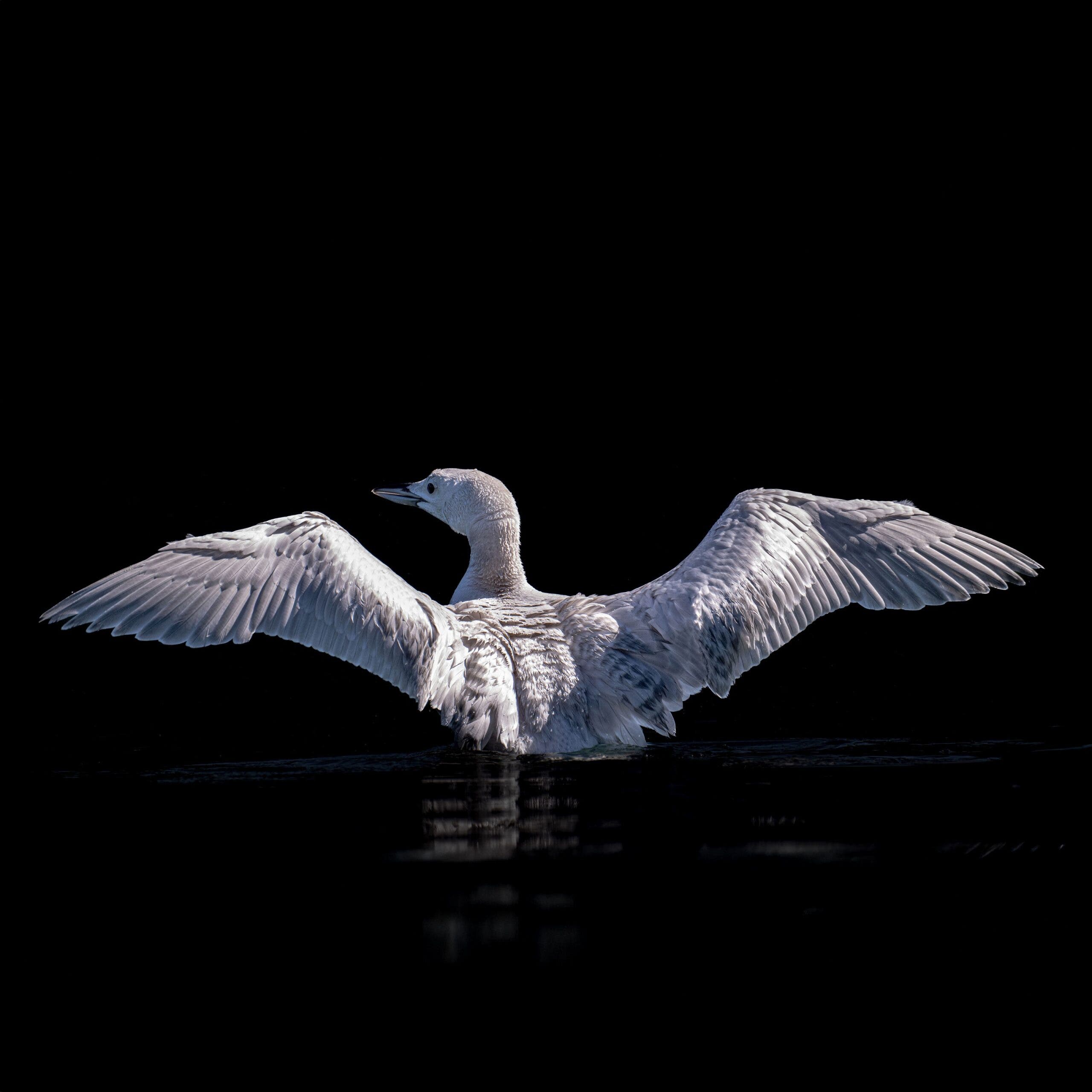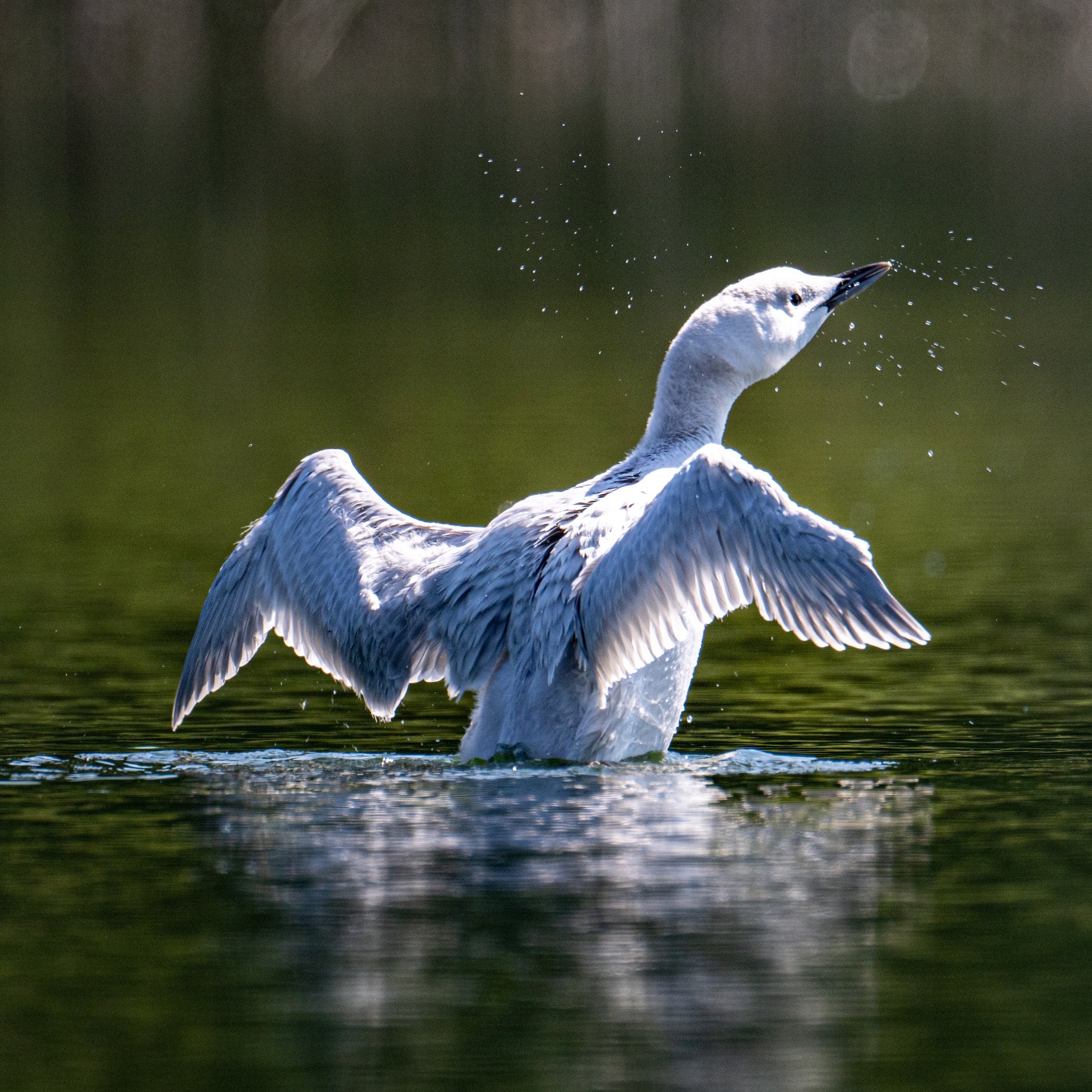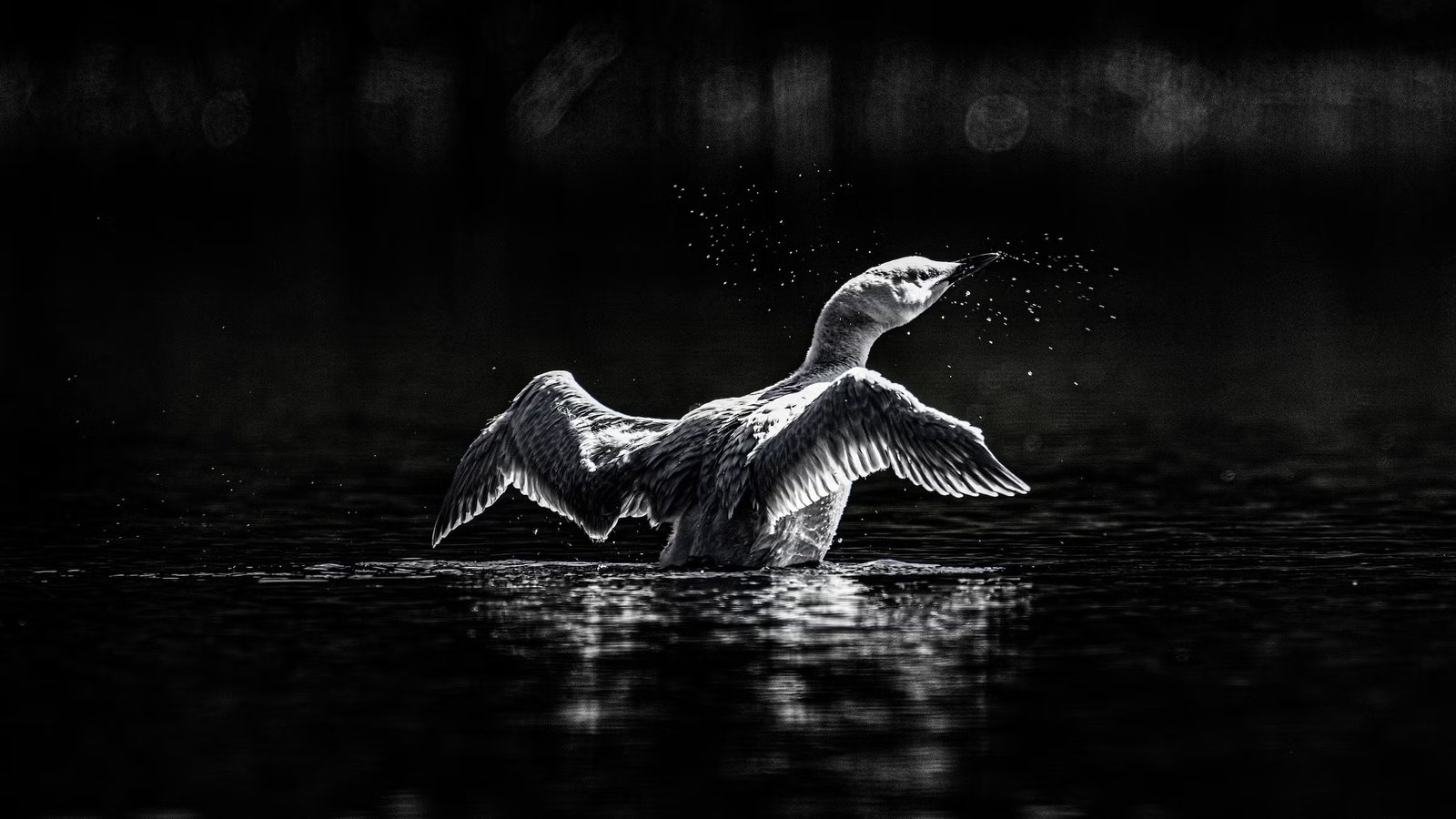
A seasoned wildlife photographer recounts the eerie morning he encountered a leucistic loon chick—and the childhood memories that led him into the fog.
Roughly one of every 30,000 loons are estimated to be leucistic (Photo: Tony Gangemi)
Published May 17, 2026 06:04AM
In 2025, Montana photographer Tony Gangemi photographed a once-in-a-lifetime leucistic loon. Gangemi told Outside what it’s like to come across such a rare scene, and how this experience brought him back to his childhood.
At 6 A.M. on a misty morning in May 2025, I arrived at a small lake in Northwest Montana. I could feel the cool, crisp air as I unloaded my kayak and sat quietly on the dock. The fog was so thick I couldn’t see more than five feet in front of me. As an avid bird-watcher and photographer, I was here in search of hatched loons, or loonlets.
I didn’t realize at the time that I would find a once-in-a-lifetime bird.
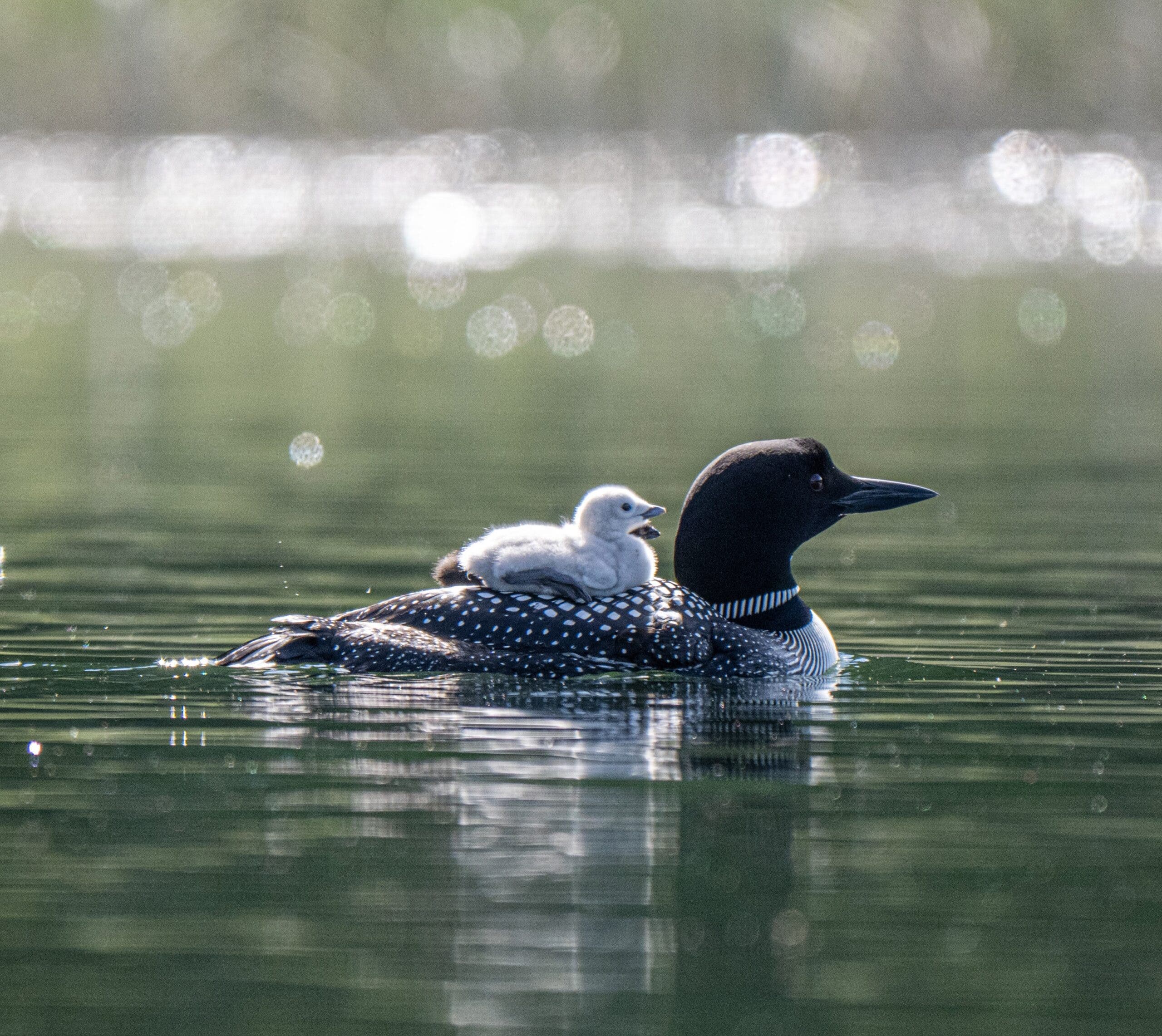
Loons are large, diving waterbirds known for their haunting calls. They seasonally migrate through the Northern Rockies in the spring and fall. Through the stillness, I heard its wail, which both sent chills down my spine and filled me with excitement. As the fog slowly lifted and the sun began to break through, I scanned the lake with my binoculars. That’s when I spotted a family of loons—two adults, a brown chick, and, shockingly, a white loonlet.
The white loonlet had a rare genetic condition called leucism, which causes partial or total loss of pigmentation. Unlike albinism, which is a complete lack of melanin, leucism affects only external pigment cells. For loons, leucism is estimated to occur in one of every 30,000.
Loons are characterized by their black and white adult plumage. I knew immediately this was something special. More than that, I knew this was a rare opportunity—one that could have a real impact on me and my photography.
Montana’s Migratory Rythym
Just as the hundreds of bird species migrate across North America every year, I also shlep my camera gear across Montana to capture their movements.
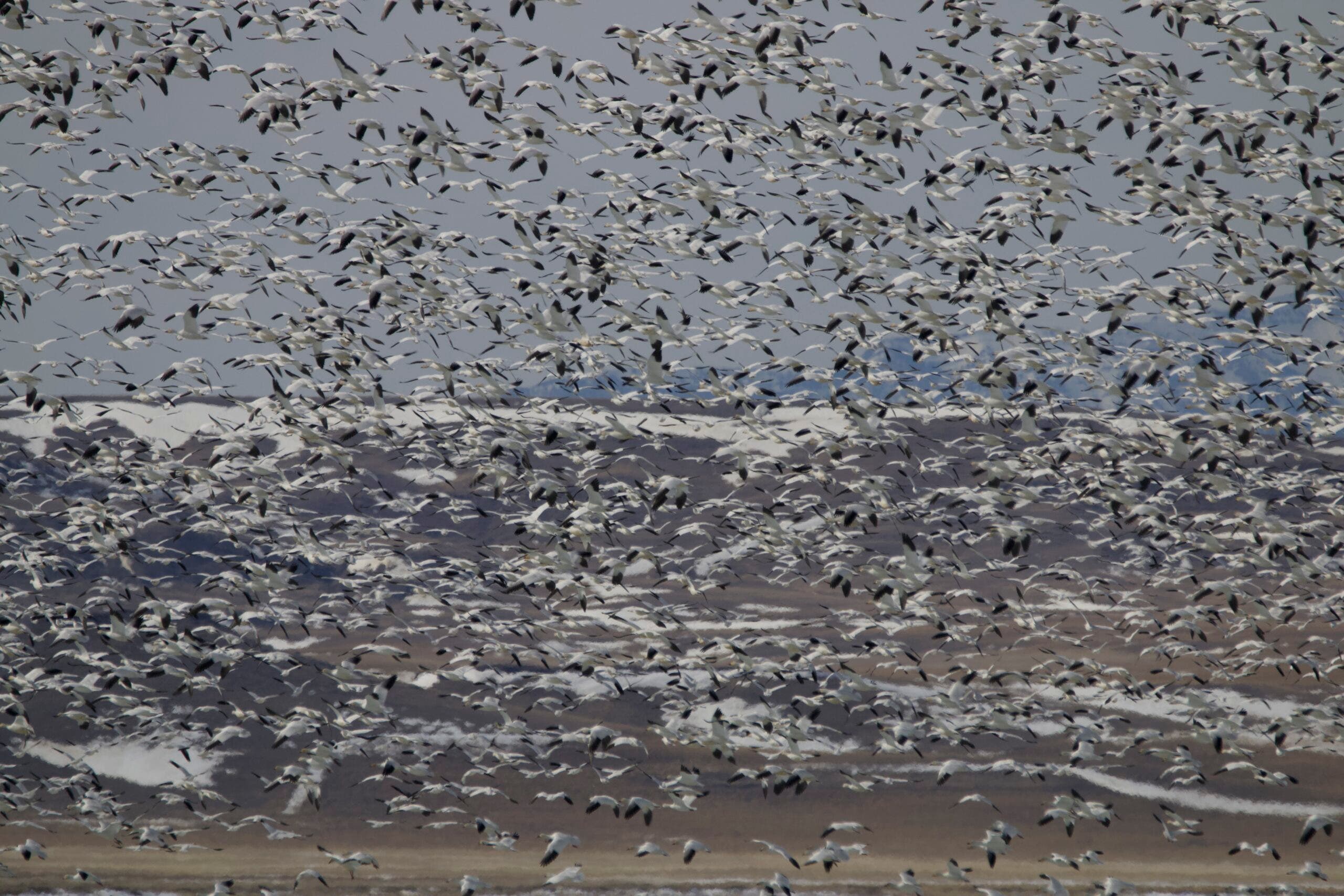
One of the largest bird migrations in North America occurs every year in Central Montana, only a few hours from my Whitefish home. Hundreds of thousands of birds stop at Freezeout Lake each year to rest and refuel before flying further north. Others and I watch for swans, geese, and other waterfowl on their journey to the Arctic tundra.
But loons hold a special place in my heart because of their majestic call. Standing along the shoreline of a still alpine lake as the sun sets behind the Rockies, that soft, echoing wail creates a space of otherworldliness—as if there’s something greater than ourselves.
Each spring, I travel hundreds of miles between lakes looking for loons. As part of my photographic process, I first spot the birds using binoculars. Once I’ve found a nesting pair, who usually stay put for about a month, I return with my kayak and capture moments with my 800 millimeter lens.
Loons typically hatch between one and three loonlets a season, but they often fall victim to predators like eagles or osprey. That’s why, within a few days of hatching, chicks will hop onto their parents’ backs to hitch a ride. These moments are precious, and it is not uncommon for me to capture a thousand photos in a single afternoon of birdwatching.
All this patience paid off. I photographed the leucistic chicklet when it was roughly one week old. For more than three months, I followed its journey in the Montana backcountry until its family set off on their northern migration. Watching these two babies grow up side by side and reach full independence from their parents was truly amazing.
The Haunting Cry of the Loon and the Summers I Remember
The call of the loon brings me back to my childhood. As a child growing up in the sixties, I would hear my dad play an Audubon record with bird calls on our record player. He would bring the record player outside in the yard with a long extension cord, and as the calls played, the birds in the yard would answer. As a kid, this felt magical, and it’s where my love of nature, and especially birds, began.
Now, as a seasoned photographer, I spend my days waiting for birds with the same anticipation—only now with a camera in hand.
Tony Gangemi is a photographer based in Whitefish, Montana. His portfolio can be viewed here.