

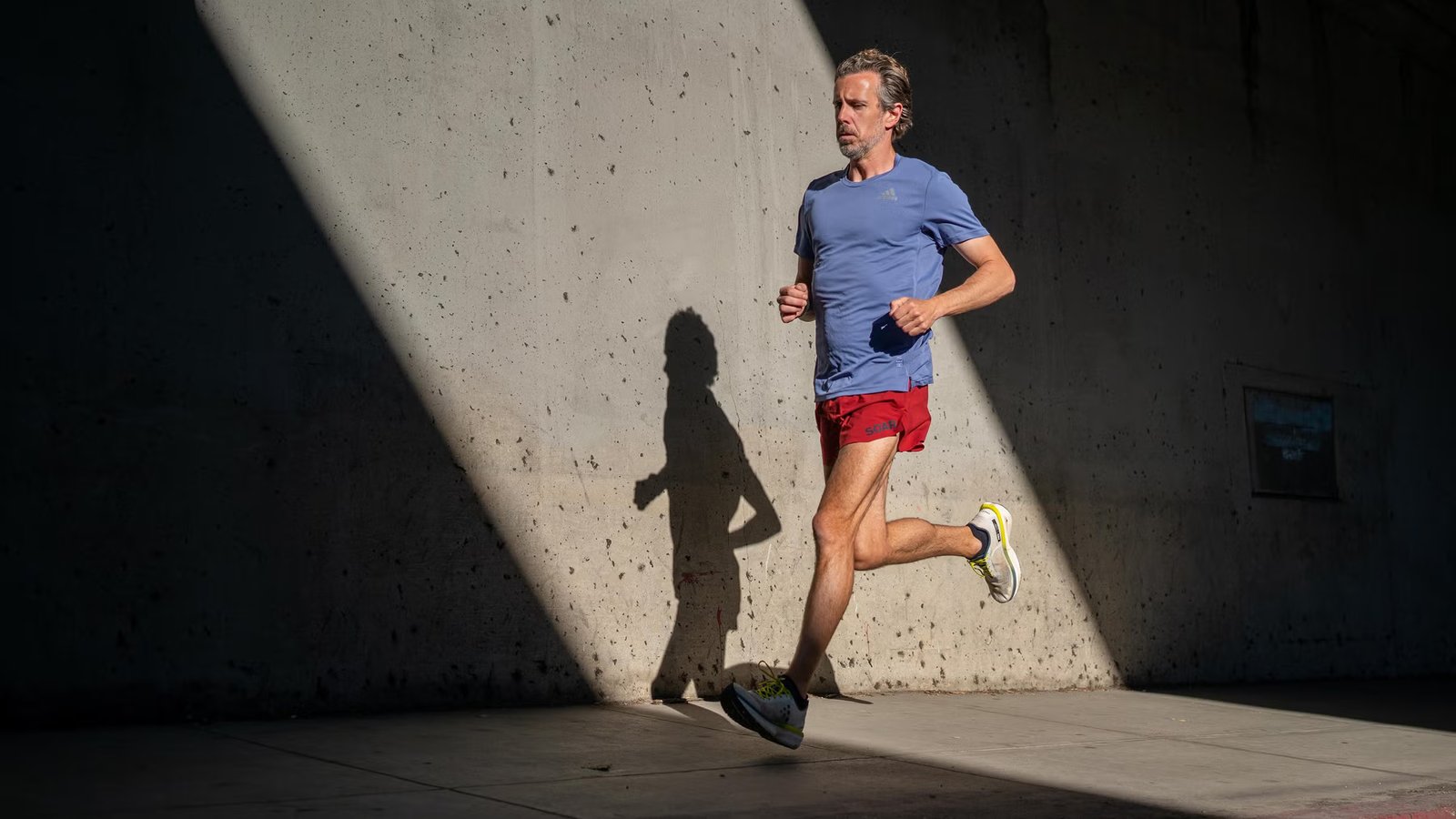
Published May 18, 2026 08:35AM
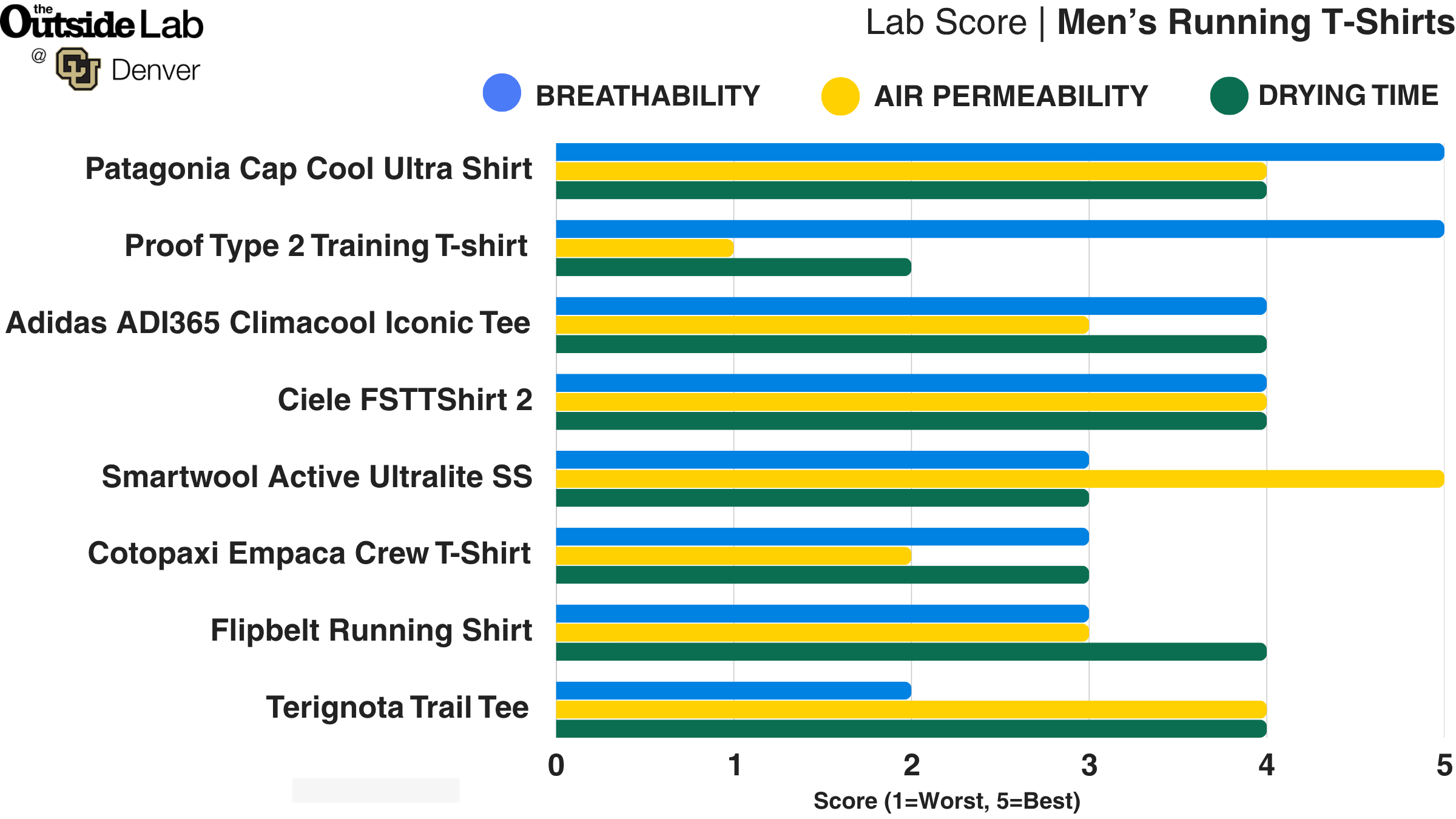
May 2026 Update: After months of testing, we selected seven new running shirts and tank tops and updated availability and pricing information on four still-outstanding options. The Patagonia Cap Cool Ultra won best running top overall, while Adidas, Proof, Cotopaxi, and Flipbelt all earned a spot. Our testers also recommended two Ciele shirts—one as runner-up for best singlet and one as the best splurge tee. We again called on the Outside Lab for objective lab measurements on air permeability and dry time, and added a new metric: breathability. Be sure to check out the “How We Test” section below for more details on our methodologies and how to interpret the lab data.
As the days get longer and warmer, it’s time to stow away those long-sleeve shirts and update your gear for summer. In the heat and humidity of the sunniest season, having the right running top can keep you cooler and drier while making you feel fast and fashionable. Today’s running shirts are softer, lighter, and better at managing moisture than shirts from just a few years ago. We tested dozens of new short-sleeve t-shirts and tank tops to find the best men’s running shirts for summer.
Best Running Shirts: At a Glance
Singlets
T-Shirts
Best Running Singlets
Best Running Tank Top Overall
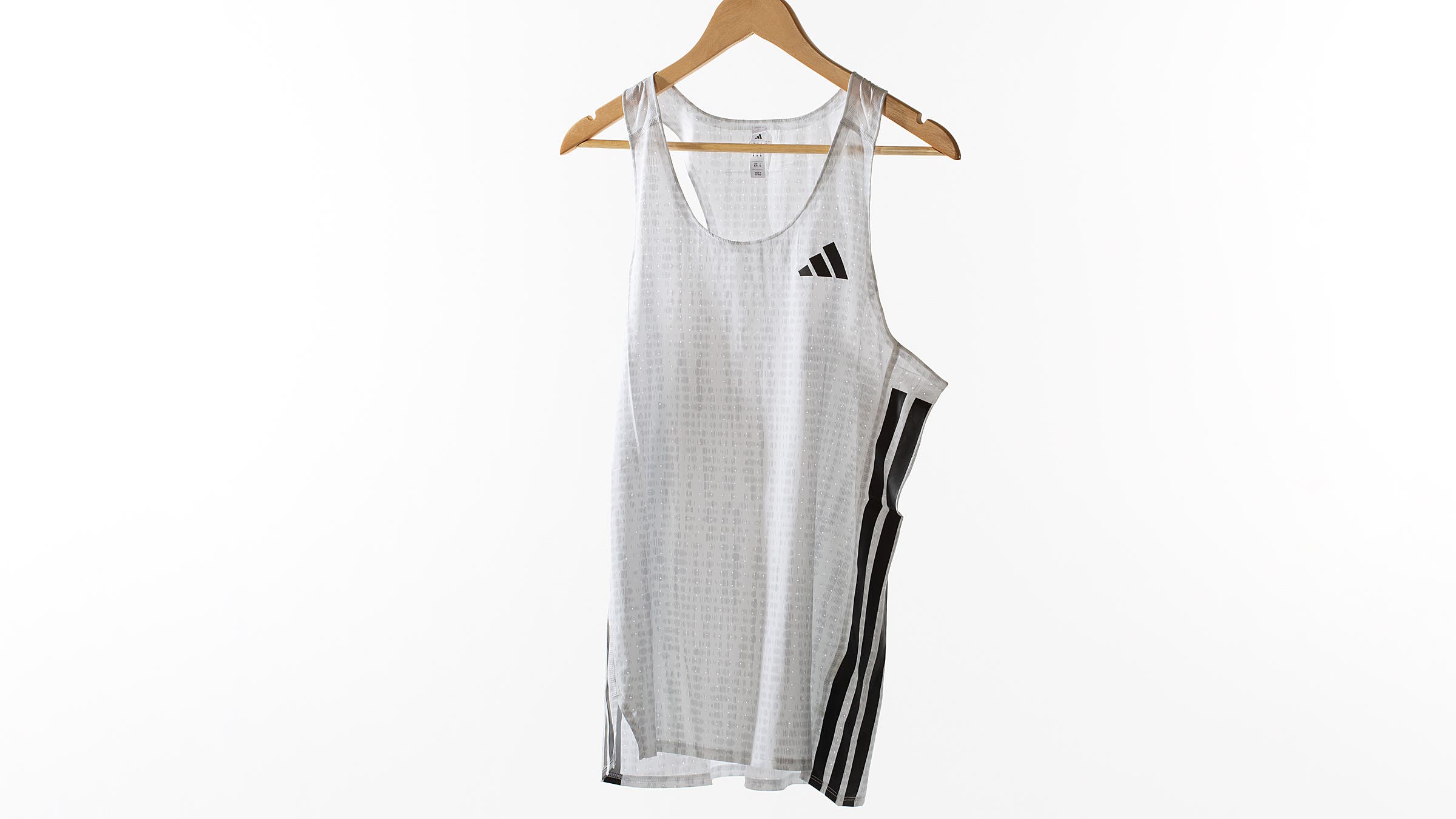
Adidas Adizero Running Singlet
Sizing: XS-2XL
Lab Breathability: 3 (1=worst; 5=best)
Lab Air Permeability: 1
Lab Dry Time: 5
Pros and Cons
+ Silky smooth feeling
+ Superb mobility
– Saturates with moisture easily
There’s something about a light, airy running singlet that makes you feel fast. No other singlet captured this sensation better than the Adidas Adizero Running Singlet. Made from a thin, lightweight blend of 86 percent recycled polyester and 14 percent elastane, the fabric feels phenomenal—smooth and silky, easily moving over the skin. Testers praised its soft touch and barely-there sensation, with one noting it as “the lightest and most comfortable singlet I’ve ever worn.”
The fit is slightly slim, but thanks to the stretchy fabric and side slits in the hem, the running tank top offers exceptional mobility. I prefer a slightly looser cut, and my typical men’s medium fit that bill perfectly.
The entire singlet has tiny holes in the face that enhance its breathability. Testers enjoyed its airy feel but noted that the fabric tends to stick to the skin when fully soaked through, a common issue among most super-thin shirts tested. However, it dried exceptionally quickly. Overall, this stylish, comfortable running singlet stood out as one of the best we tested, one we reached for often.
Runner-up, Best Running Tank Top Overall
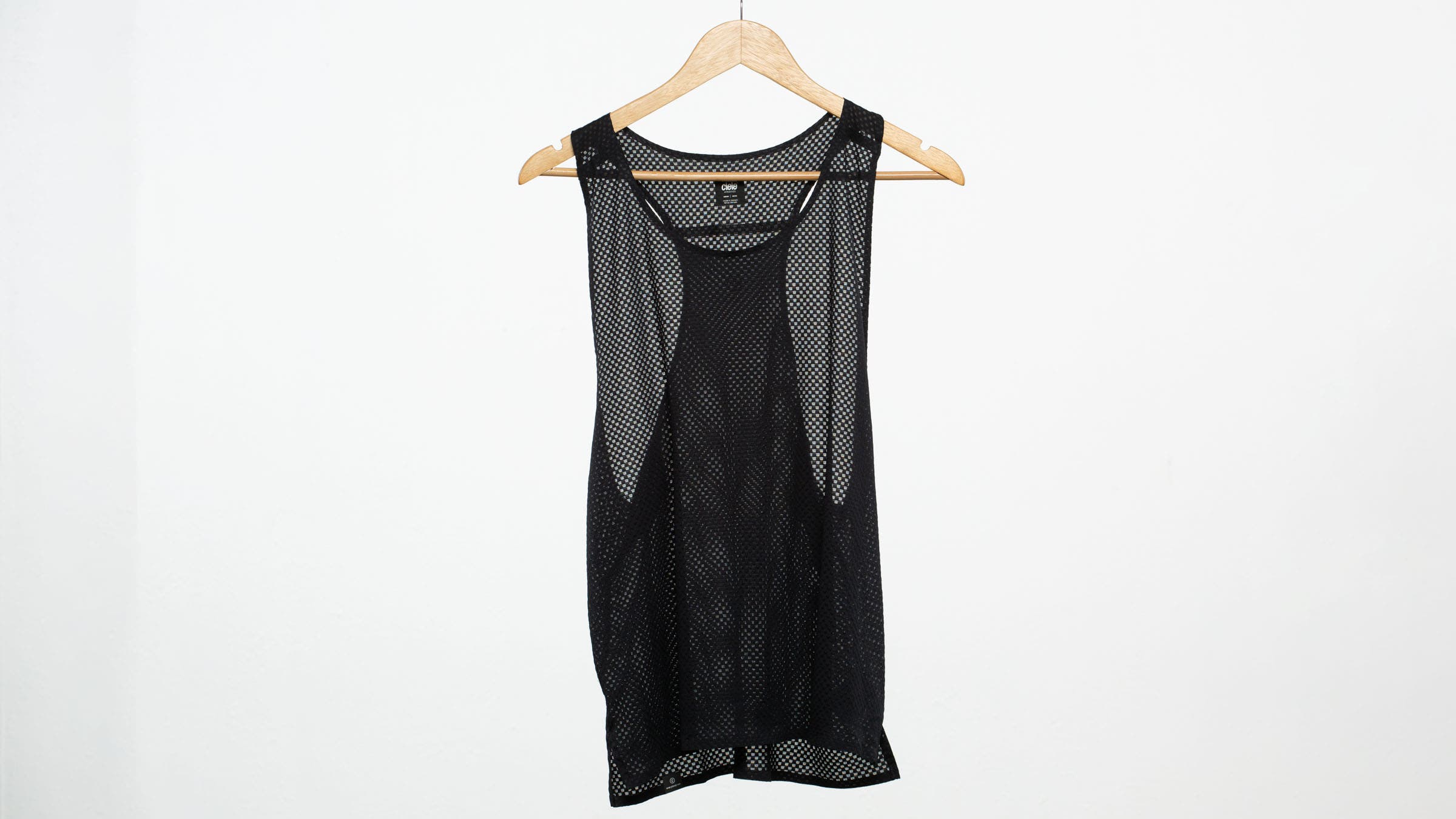
Ciele ICNSinglet
Sizing: XS-XL
Lab Breathability: 4 (1=worst; 5=best)
Lab Air Permeability: 5
Lab Dry Time: 4
Pros and Cons
+ Extremely lightweight
+ Airy, barely-there feel
– Expensive for a singlet
– Torso fit is baggy
For a company that built its reputation on hats, Ciele produces some of the best running apparel. At $115, the Ciele ICNSinglet asks a lot from your wallet, but you’d be hard-pressed to find another as free-flowing, comfortable, and adept at heat management. “The shirt felt amazing. Definitely a great choice for warmer climates,” said one Southern California tester.
The fabric is Ciele’s carbon-embedded fabric, made with 86 percent recycled polyester, 10 percent elastane, 3 percent polyester, and 1 percent carbon. The brand says carbon is naturally antimicrobial and absorbs odors better than polyester alone. Running in beaming sunshine, the singlet breathed exceptionally well. The fabric features a slightly see-through grid pattern that never felt heavy with sweat. “The ICNSinglet stayed loose, dried quickly, and made for a great run every time I wore it,” said a tester.
Finer touches, such as a welded seam to prevent chaffing, reflective details for better night visibility, and an overall weight of just under two ounces, set this running singlet apart from the less expensive options. For those really hot and humid days, this is by far the best running tank top.
Best Running Singlet for Race Day
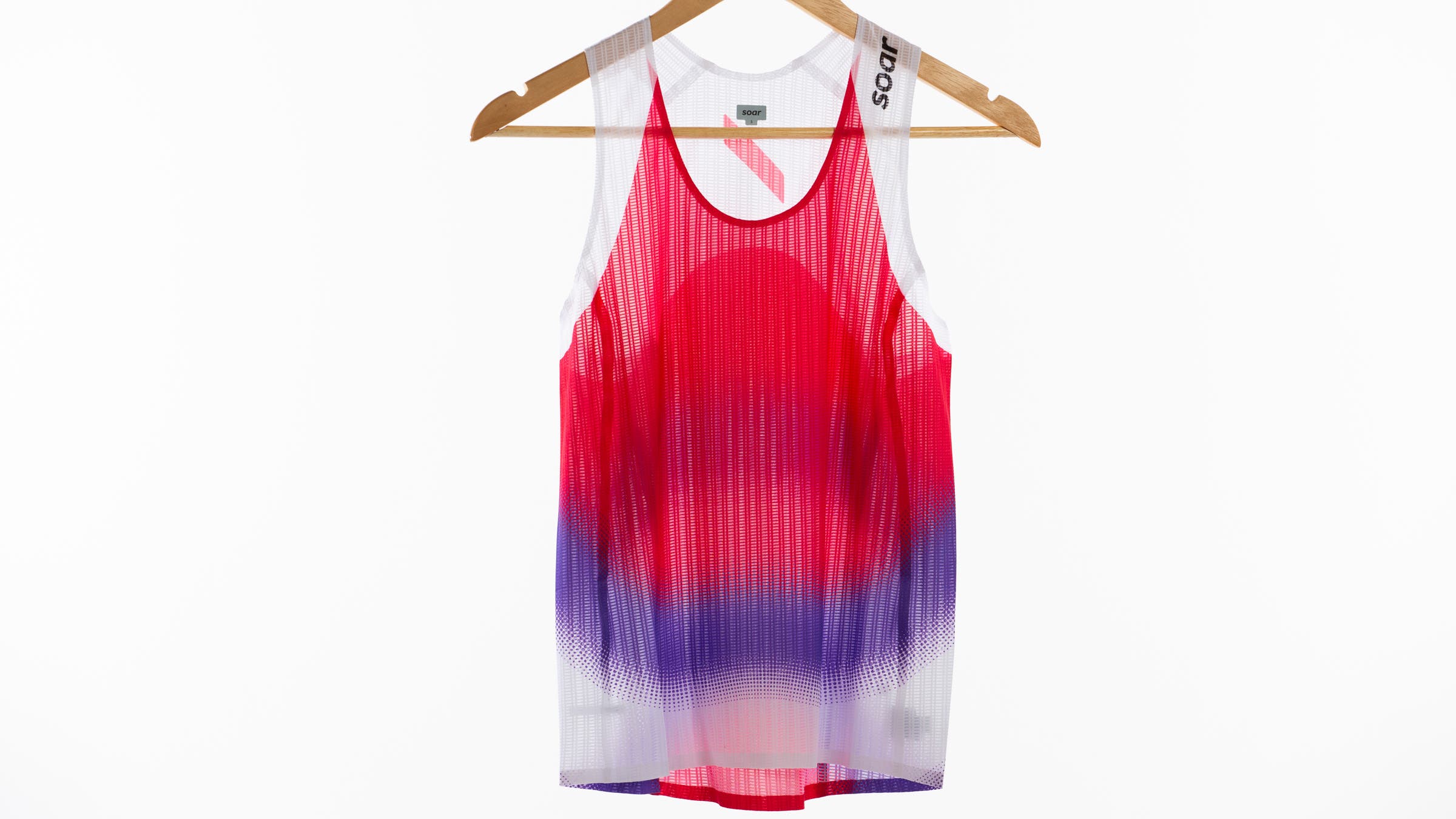
SOAR Race Vest
Sizing: XS-XXL
Lab Breathability: 4 (1=worst; 5=best)
Lab Air Permeability: 4
Lab Dry Time: 5
Pros and Cons
+ Extremely breathable, perfect for hot, humid conditions.
+ Featherweight design
– Runs small
Displaying the precision and craftsmanship of a top runway fashion designer, SOAR’s Race Vest is a masterclass in high-performance running apparel. If you’re looking to turn heads on race day and stand out from the crowd, this is sure to draw attention. I’ve gotten more compliments wearing this tank than any other singlet.
The singlet is constructed of an Italian-made open-mesh fabric that’s tissue-thin and extremely breathable. Even on the hottest, most humid days, body heat escaped effortlessly, while the airy design allowed any breeze to pass through for cooling relief. The only drawback we found was that the fabric doesn’t absorb moisture as well as thicker materials. However, its sheer lightness prevented this from becoming an issue.
Premium touches like laser-cut hems and bonded seams reduce the chances of chafing. The slim cut sits close to the skin and runs small, so if you prefer a more relaxed fit, we recommend sizing up. With many singlets, the shoulders and neck opening can shift while running, creating a distracting feel—but not with the SOAR Race Vest 2.0. The shoulders lay flat and stay securely in place, ensuring a distraction-free run.
Best Running Shirts
Best Running Shirt Overall
Patagonia Capilene Cool Ultra
Sizing: XS-XXL
Lab Breathability: 5 (1=worst; 5=best)
Lab Air Permeability: 4
Lab Dry Time: 4
Pros and Cons
+ Lightweight, silky fabric
+ Nice enough to wear casually
+ Odor control
– Hem sits fairly high on the waist
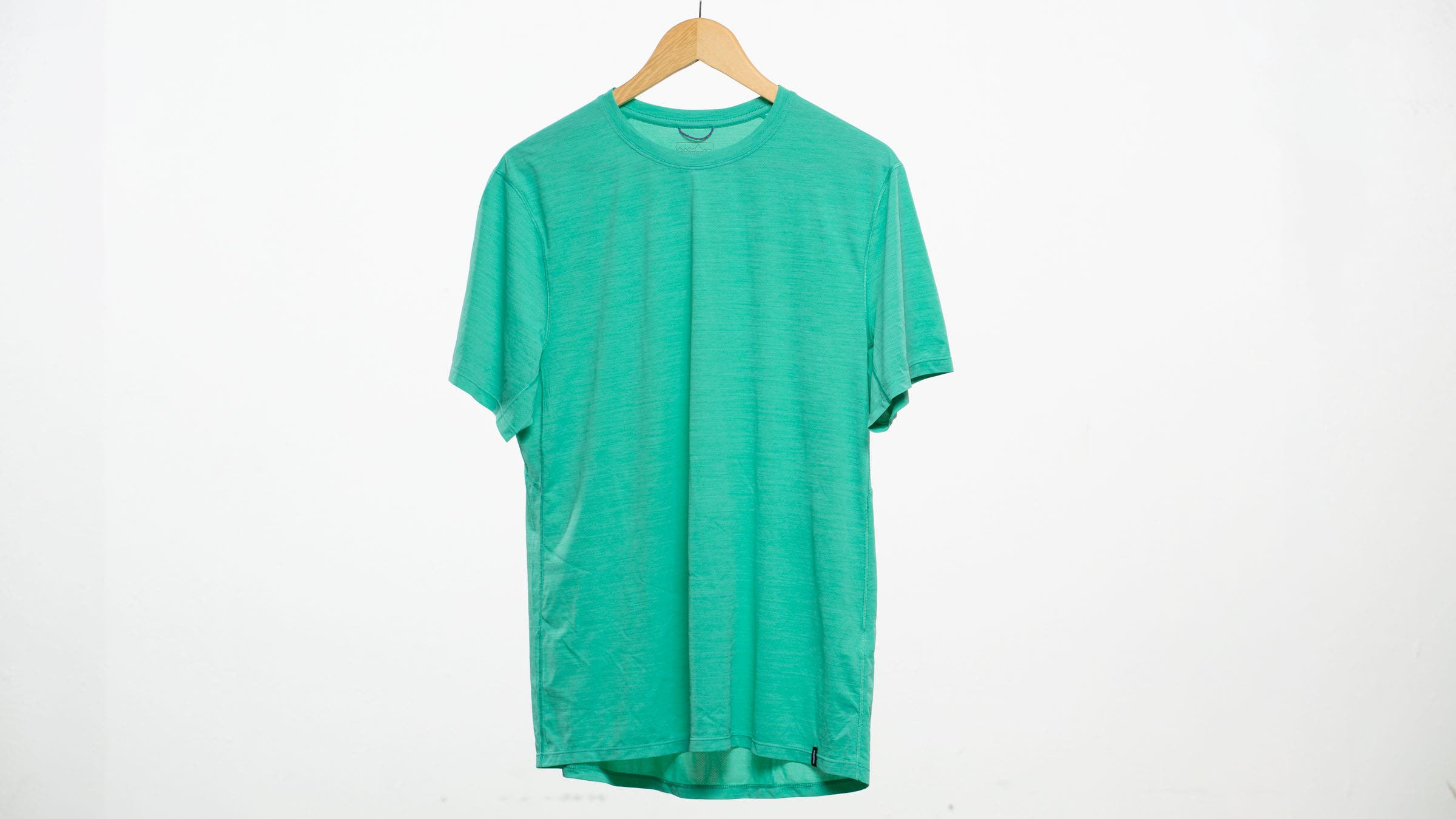
The Patagonia Cap Cool Ultra checks all the boxes for a running shirt: comfortable, lightweight, fantastic at moisture wicking, and strikingly good looking. Of all the shirts I tested this season, this is the one I reached for the most, for everything from running to gym workouts to casual wear. It’s made with an ultralightweight, 100 percent recycled textured-knit fabric that one tester said is “so lightweight it disappears on the run.” The thin fabric breathes well (scoring the highest of the group in our lab test), feels protective, and dries quickly. It’s got a soft, silky touch without being fuzzy, and doesn’t cling even when soaked.
The relaxed fit “drapes smoothly and doesn’t look techie,” noted a tester who found it to be a perfect casual shirt as well as an active one. Low-profile flat seams, gusseted arms, and a slight stretch in the material allowed for excellent mobility while running, and prevented any chaffing.
One tester, who is an avid traveller, called the Patagonia Cap Cool Ultra “my go-to all-purpose active shirt.” With four aesthetically pleasing colorways, you can wear this strikingly good-looking shirt every day.
Runner-up, Best Running Shirt Overall
Adidas ADI365 Climacool Iconic Tee
Sizing: XXS-4XL
Lab Breathability: 4 (1=worst; 5=best)
Lab Air Permeability: 3
Lab Dry Time: 4
Pros and Cons
+ Outstanding performance-to-price ratio
+ Excellent moisture management
+ Comes in seven colors
– Some found it too baggy
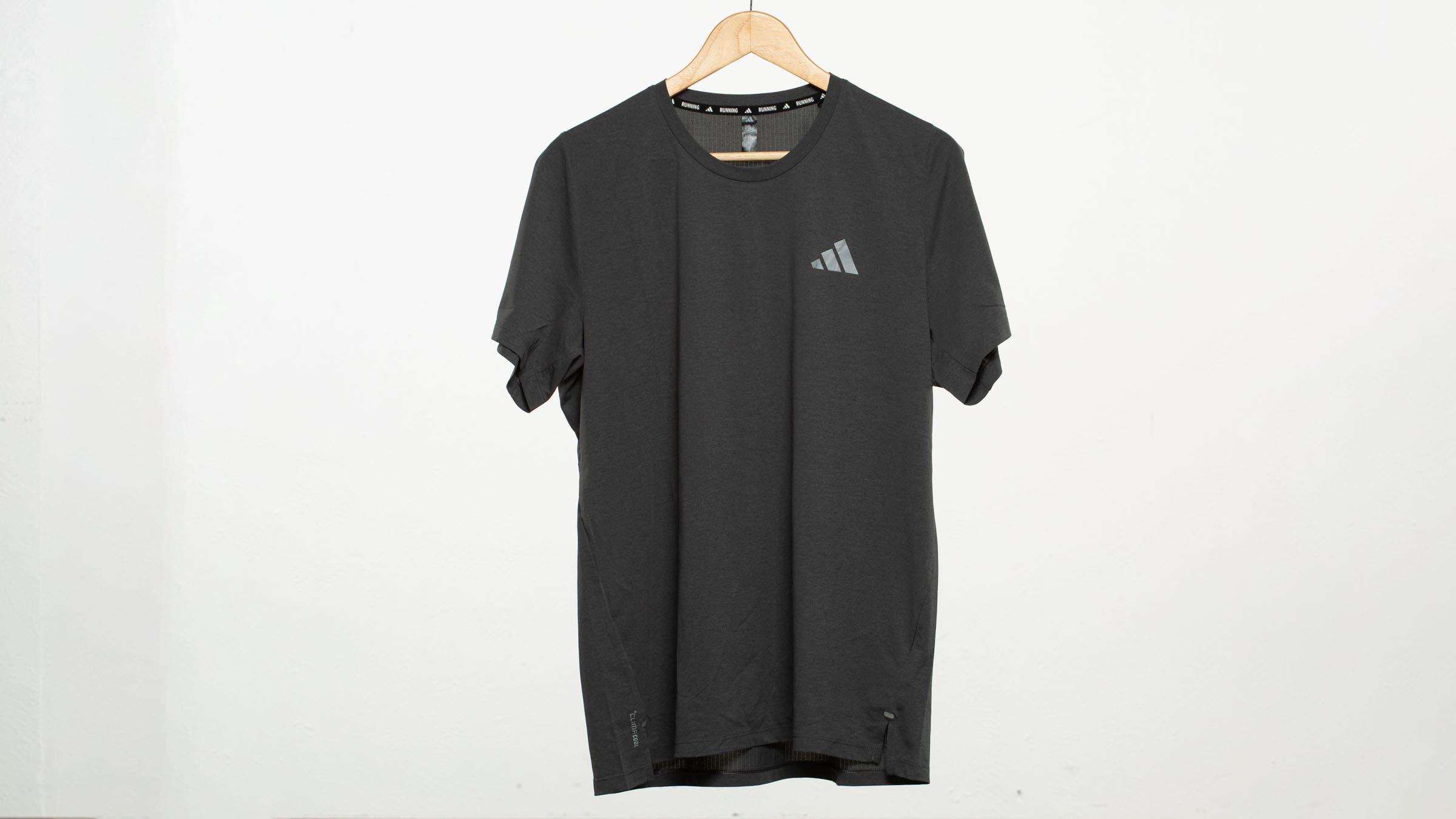
One thing that becomes crystal clear when you test as many running shirts as we do is the stark difference between budget and premium-priced shirts in fit, comfort, wicking, and drying performance. Priced at $36, Adidas’ ADI365 Climacool Iconic tee is the exception, performing like a shirt twice as expensive. The soft, single jersey fabric is made from recycled polyester, and, despite its medium weight, was one of the airier materials we tested.
Testers had mixed feelings about the large, baggy fit. Most praised it for giving the shirt a flowy feel and aiding air movement, while one found that once it got drenched, it felt heavy.
I regularly found myself reaching for this tee from among the many $70+ shirts nestled in my dresser. It lacks fancy treatments, a tailored cut, and bonded seams, but it just feels good. Another tester said, “It became a shirt I’d constantly grab when I was going out on warmer days or later in the day when the sun was already high.”
Best Value Running Shirt
Terignota Trail Tee
Sizing: XS-XXL
Lab Breathability: 2 (1=worst; 5=best)
Lab Air Permeability: 4
Lab Dry Time: 4
Pros and Cons
+ Extremely lightweight
+ Outstanding price-to-performance
– Limited color options
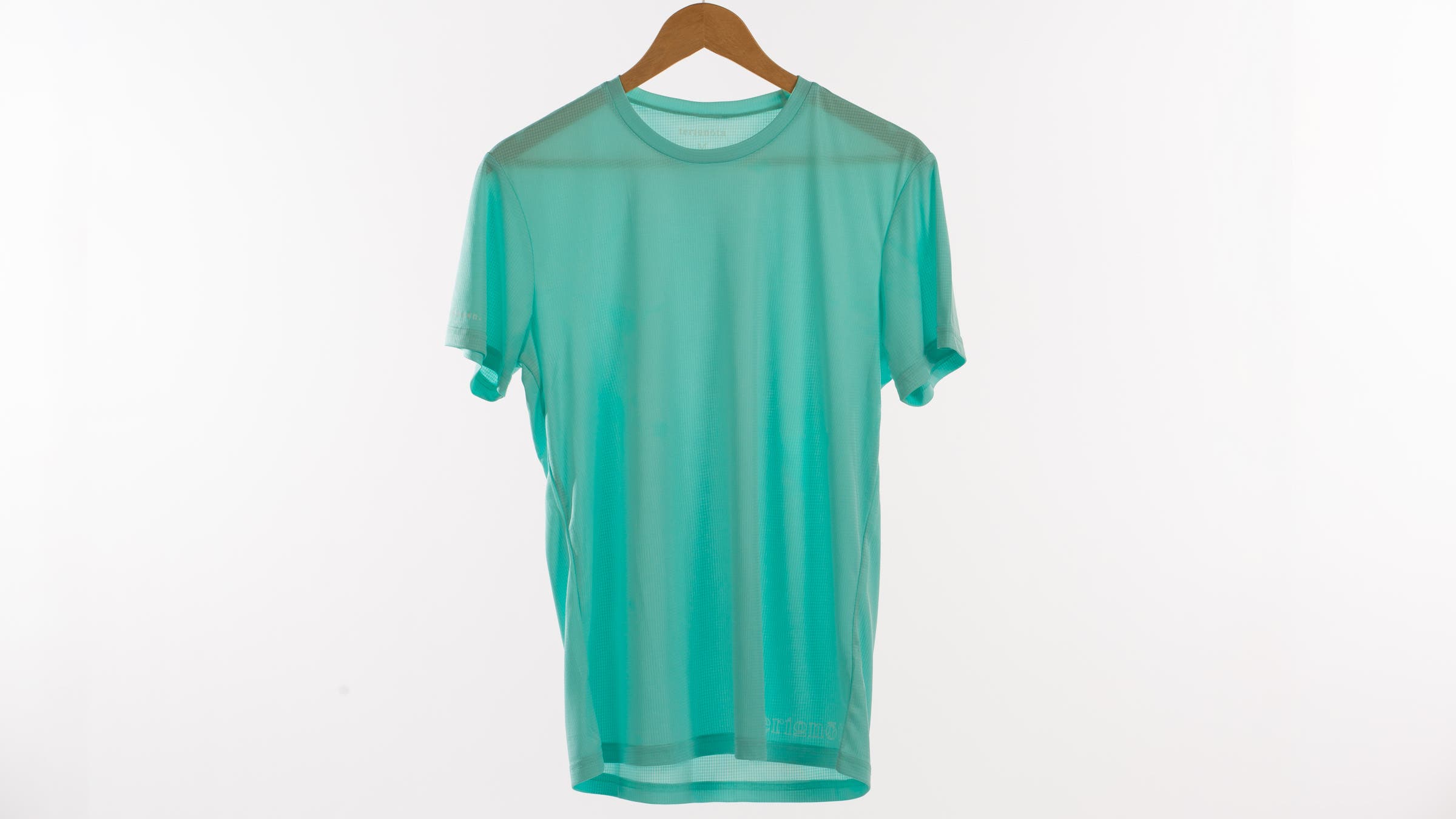
At nearly a third of the cost of other shirts, you will not find a higher quality running shirt at a better price. Crafted from 100 percent polyester with a woven grid pattern, it’s lightweight, breathable, and comfortable. The woven design and thin fabric reminded me a lot of Patagonia’s Capilene, and it scored similarly in the lab on air permeability and dry time but was less breathable.
Despite being called out as a trail tee, it’s equally suitable for the roads. Throughout the warm, sunny SoCal summer, it kept me cool and comfortable, proving to be a versatile go-to for any run. After hot and sweaty workouts, I was impressed with how quickly the shirt dried in direct sunlight.
The fit is labeled as relaxed, but I found it slightly on the slim side compared to other shirts—not enough to size up, but I wouldn’t call it a true relaxed fit.
Best Splurge Running Shirt
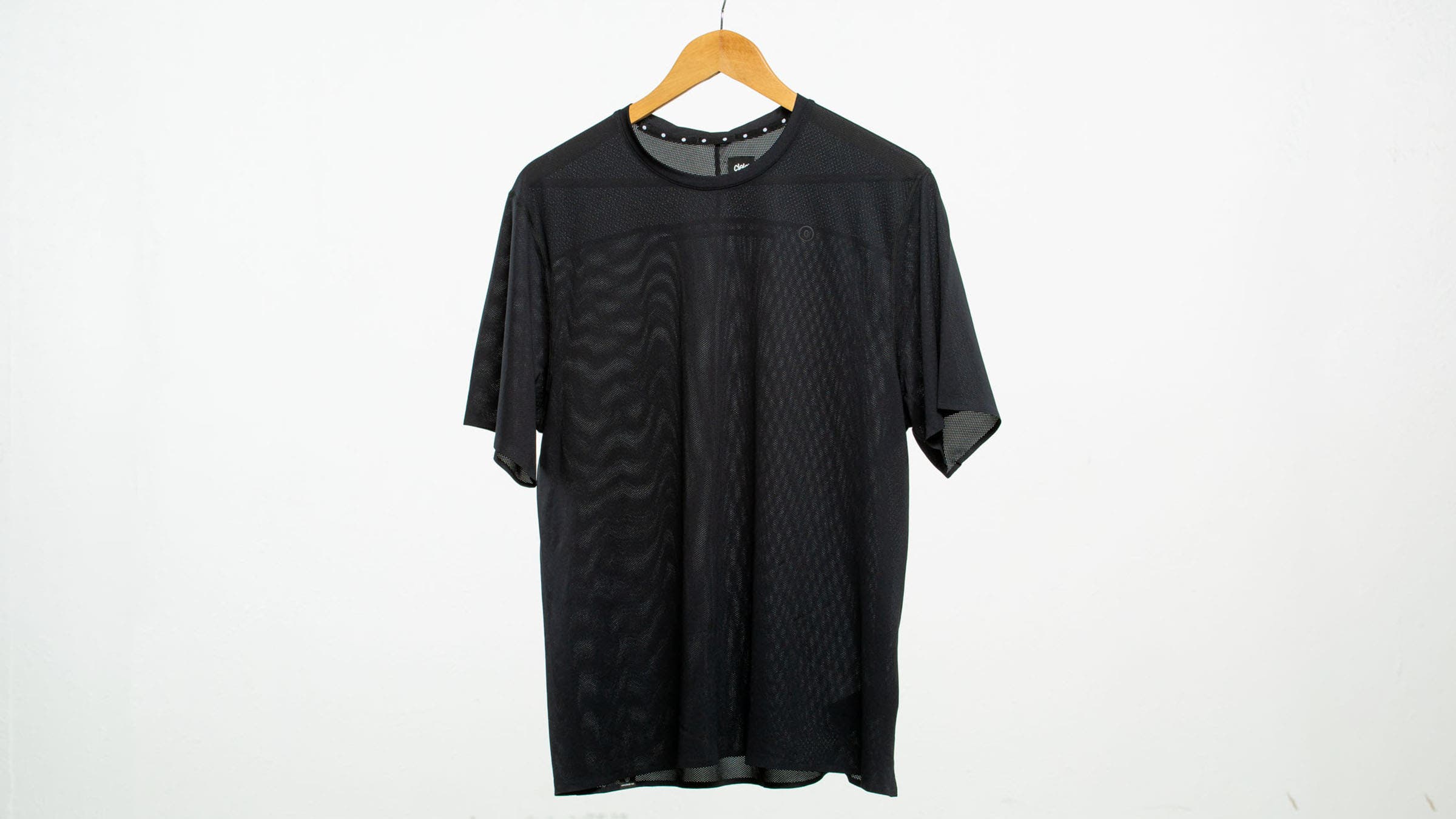
Ciele FSTTShirt 2
Sizing: XS-XL
Lab Breathability: 4 (1=worst; 5=best)
Lab Air Permeability: 4
Lab Dry Time: 4
Pros and Cons
+ Highly breathable and airy
+ Practically weightless
– Wide fit around the torso
Ciele spared no expense with the FSTTShirt 2. At 3.5 ounces, it’s one of the lightest and airiest running shirts we tested. It’s also one of the most expensive. The ultra-thin recycled polyester fabric is soft, silky, and feels weightless and invisible on the run. Open slits under the arms and down the sides have snaps to adjust the ventilation. One tester called it “one of the best running shirts I’ve worn in recent years,” adding, “I could race, long run, and do almost anything I wanted in this shirt.”
The relaxed fit features a wider torso than other shirts tested, but drapes nicely off the shoulders. “The shirt fits great. Felt loose enough not to stick to me, and the material was great the whole run,” one tester said. Premium touches like flatlock stitching, anti-odor treatment, and reflective details give the shirt a luxury feel.
Best Wool Running Shirt
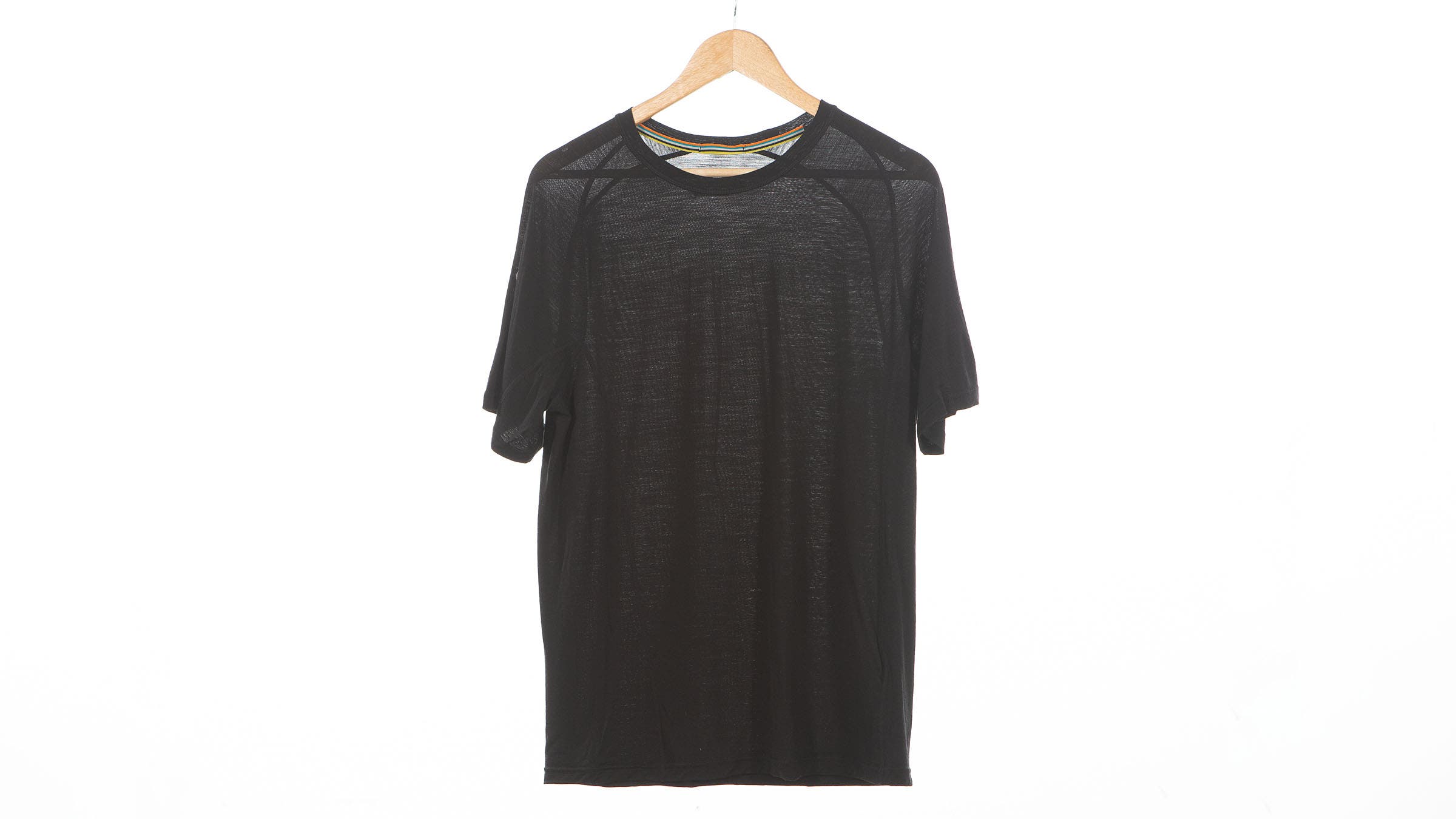
Smartwool Active Ultralite Short Sleeve
Sizing: S-XXL
Lab Breathability: 3 (1=worst; 5=best)
Lab Air Permeability: 5
Lab Dry Time: 3
Pros and Cons
+ Fabric is thin and highly breathable
+ Wicks and dries moisture exceptionally well
+ Soft, natural feel against the skin
– Delicate care is required
When it comes to wool apparel, Smartwool remains a trusted leader. The Active Ultralite Short Sleeve stands out as their highest-performing tee for high-output activities like running.
The running shirt is made with 53% Merino Wool and 47% Tencel Lyocell fiber, a blend that absorbs moisture faster and has higher thermal conductivity than merino alone. It also adds durability and is more eco-friendly. During testing, we can attest that the Active Ultralite Short Sleeve felt breezy and cool, and when sweat did start to drip for our pours, it absorbed it well.
The fabric’s extremely light weight contributes to this being one of the more comfortable wool shirts we’ve tested in hot and humid conditions—and it scored the highest of the test group in air permeability. It does, however, require some extra care in laundering: one tester intentionally threw it in with other clothes all summer and noted some thinning spots after multiple washes.
The cut is athletic, designed to follow the natural lines of the body without being tight or clingy. “The fit was both the most comfortable and stylish of all the shirts I tested,” said one tester. Another said he fell between sizes and chose to size up for a more relaxed fit, which he appreciated.
The shirt displayed all of wool’s famed anti-odor properties. We had no problem getting multiple wears out of the Active Ultralite without the usual post-workout stench, which made this a go-to tee for travel as well as daily runs.
Most Comfortable Running Shirt
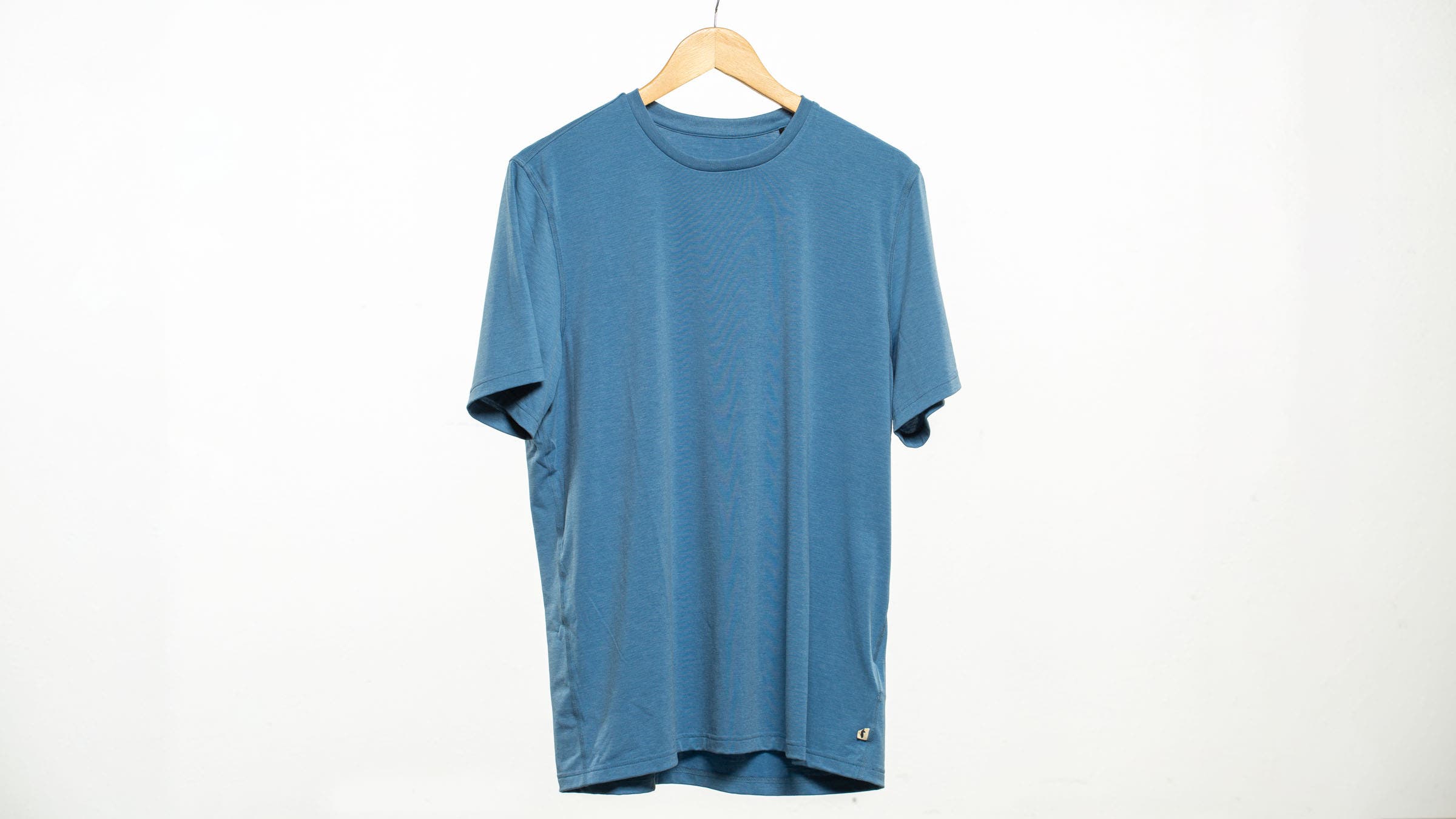
Cotopaxi Empaca Crew T-Shirt
Sizing: S-XXL
Lab Breathability: 3 (1=worst; 5=best)
Lab Air Permeability: 2
Lab Dry Time: 3
Pros and Cons
+ Extremely soft to the touch
+ Versatile as an everyday tee
– Retains moisture more than pure polyester tees
The Cotopaxi Empaca Crew T-Shirt feels like that soft cotton tee you reach for hanging out. Tester after tester called out the running shirt for being “super soft” and “extremely comfortable.” Recycled polyester and spandex are woven with Tencel fibers, which give the shirt a soft, natural-fiber feel, but with added moisture-wicking ability. Plus, it’s biodegradable and uses far less water than cotton.
The shirt fits on the larger, more relaxed side, with a long hem. In terms of running performance, it’s much heavier and holds sweat more than other options, but its strength lies in blurring the line between a soft active shirt and an around-town tee. “This is the only one I throw on just to work on the laptop or lounge around the house,” noted one tester. Others said the Cotopaxi tee worked well for light runs that merged into coffee runs or watching kids’ sports.
Best Running Shirt for Racing
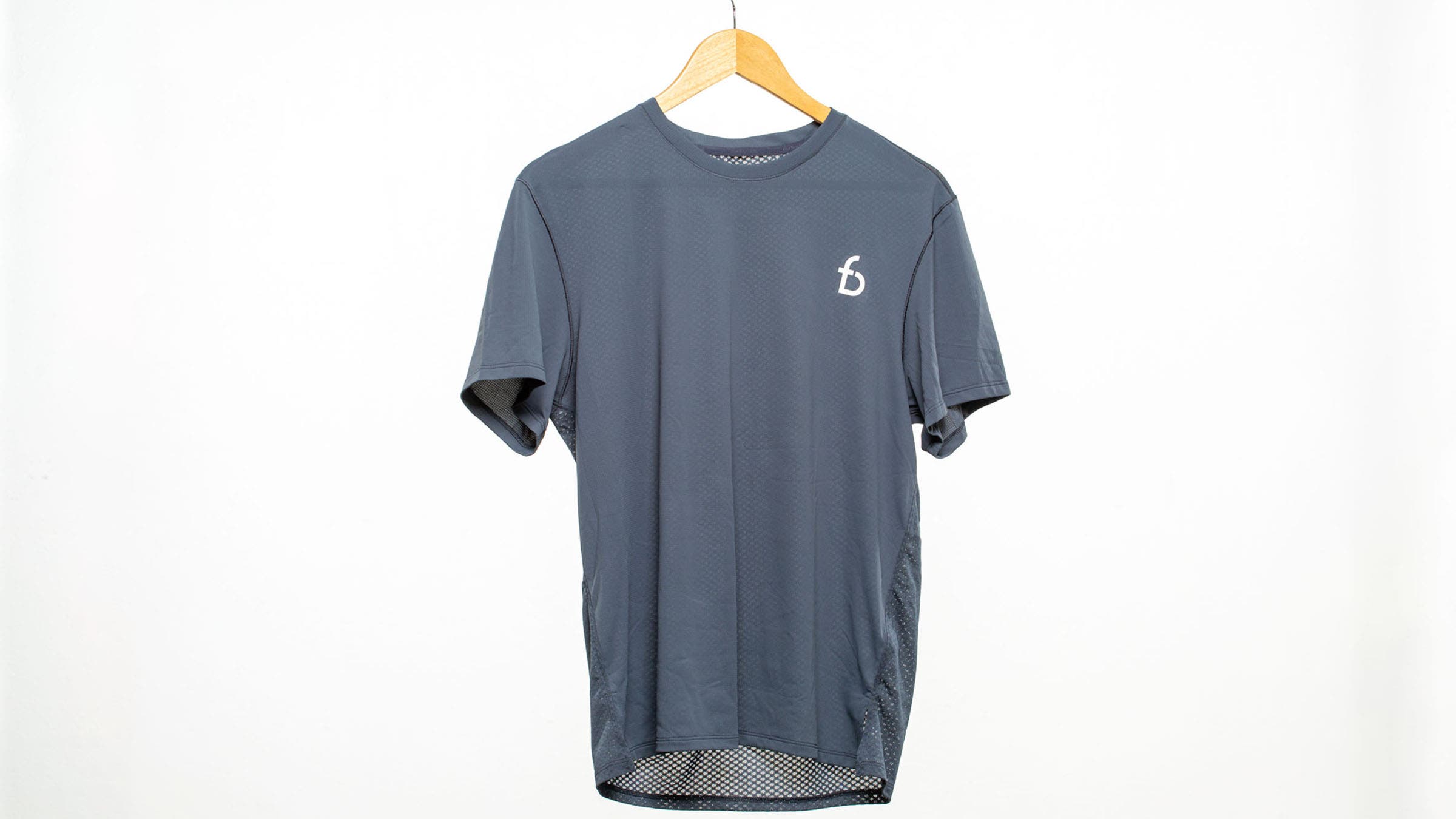
Flipbelt Running Shirt
Sizing: XS-XL
Lab Breathability: 3 (1=worst; 5=best)
Lab Air Permeability: 3
Lab Dry Time: 4
Pros and Cons
+ Highly breathable
+ Vented perforations under the arms
+ Fitted style stays close to body
– Looks and fits like a technical running shirt
The Flipbelt running shirt has everything you need and nothing you don’t. Made with 100 percent polyester, one tester described it as “thin, light, slightly stretchy, and highly breathable (particularly the perforated underarm panels).” Its grid pattern lifts the fabric off the skin to increase airflow and reduce stickiness when soaked, and does so remarkably well.
Testers disagreed on the fit. I personally like a more relaxed, free-flowing fit, and the Flipbelt felt too close to the skin and restrictive in my normal size medium. However, one tester said the fit set the tee apart from the rest. “The long triangular gussets down the sides, from underarm to waist, and insets on top of the shoulders give it a 3-dimensional shape that stays close to my body without being tight, and allows unfettered mobility.” The fitted shape was most appreciated when going fast, as it reduced any flapping and air resistance.
What to Look For in Running Shirts
Dressing for running is straightforward—you want pieces that breathe, wick moisture, move naturally, don’t stink, and don’t get in the way. Shirt choices come down to how much skin coverage you prefer, fit, and material.
Here are some quick tips on buying the best running shirts without going broke:
- Look for high-quality synthetic fibers. Yes, our top picks include a few items with natural fibers. But for the most part, specially designed varieties of polyester, polyamide, nylon, and the like can handle running’s sweat rates better than wool and cotton.
- Seek sun protection. Even if you run at dawn or dusk, or on trails, sun damage can be insidious. Many shorts and tops come with a UPF coating. Well-ventilated hats reduce squinting while shedding heat. Running tan lines aren’t something to be proud of.
- Check for chafing. If you’ve ever been rubbed raw by a rigid seam or sagging liner, you won’t want to repeat the experience. Abrasion accelerates when you’re drenched in sweat. Look for flat seams, unobtrusive logos, and other elements of construction that will minimize chafing.
- Go with the flow. Our picks in this review strike the right balance between being loose enough to allow cooling air flow but not so billowy that they impede normal running form.
- Banish bacteria. Many high-quality running running shirts incorporate an anti-bacterial treatment that greatly reduces nasty odors setting up shop. These pieces not only can be worn many more times before needing to be washed, but also lessen your chance of developing a funky skin situation.
- Invest in quality. It can be tempting to think, “Whatever I run in is going to get soaked anyway, so I’ll just buy the cheapest gear out there.” Such reasoning quickly falls apart when, well, the item itself starts to fall apart because of constant exposure to sweat and frequent laundering. Fewer high-quality pieces that hold their form and don’t hold odors are better than more cheaply made gear that will start disintegrating in one summer.
How We Test Running Shirts
- Number of testers: 4
- Number of products tested: 18 shirts
- Number of brands tested: 12
- Number of miles run in testing: 500 miles
Given that we were testing during the winter, our testing was mostly done in Southern California. All testers are dedicated runners with average weekly mileage ranging from low 20s to mid-70s over both roads and trails. Some have been running for 30 or more years and can compare today’s running apparel to previous attempts to keep runners cool in the summer. We focused on a subjective combination of moisture management, comfort, versatility, value, and looks to answer a simple question: Of all the apparel you logged summer miles in, which would you be most likely to recommend to fellow runners?
How We Tested Running Shirts in the Outside Lab
Breathability (New test in 2026)
Breathability deals specifically with the movement of moisture vapor through a material. Moisture is thicker and harder to move than air, which we measure with our air permeability test. To test breathability in the Outside Lab @ CU Denver, we use a modified version of the standard ASTM “Upright Cup Method,” which works by sealing a section of fabric from the shirt over a bowl of water with a maintained temperature of 100-degree F. This temperature simulates human body temperature when working up a sweat, and is maintained with the use of a hot plate. Since the Outside Lab is located in Denver, the air is generally dry and holds a relatively low humidity level (approximately 35 percent) to help draw out moisture during testing. Breathability, or moisture vapor transmission, is recorded by measuring the combined weight of the sample and water dish over time. The more weight lost during the test, the better the breathability. Running shirts are given a score of 1 to 5, least to most breathable.
For shirts using different materials in specific zones, such as vented back or side panels, each section was tested. The weight of each shirt by itself was also taken at the start and end of the test. This shows how much moisture became trapped in the material during testing, which can affect breathability. The weight gain, if any, is used when scoring each shirt—more moisture trapped in the fabric results in a slight downgrade in score.
It’s important to note that our test in the Outside Lab only accounts for the fabric itself, not taking into consideration the fit, which, combined with air permeability, can affect how a shirt feels on a run. Lab data is important, but it’s best to combine it with the results from field testing for a more complete view of the product.
Air Permeability
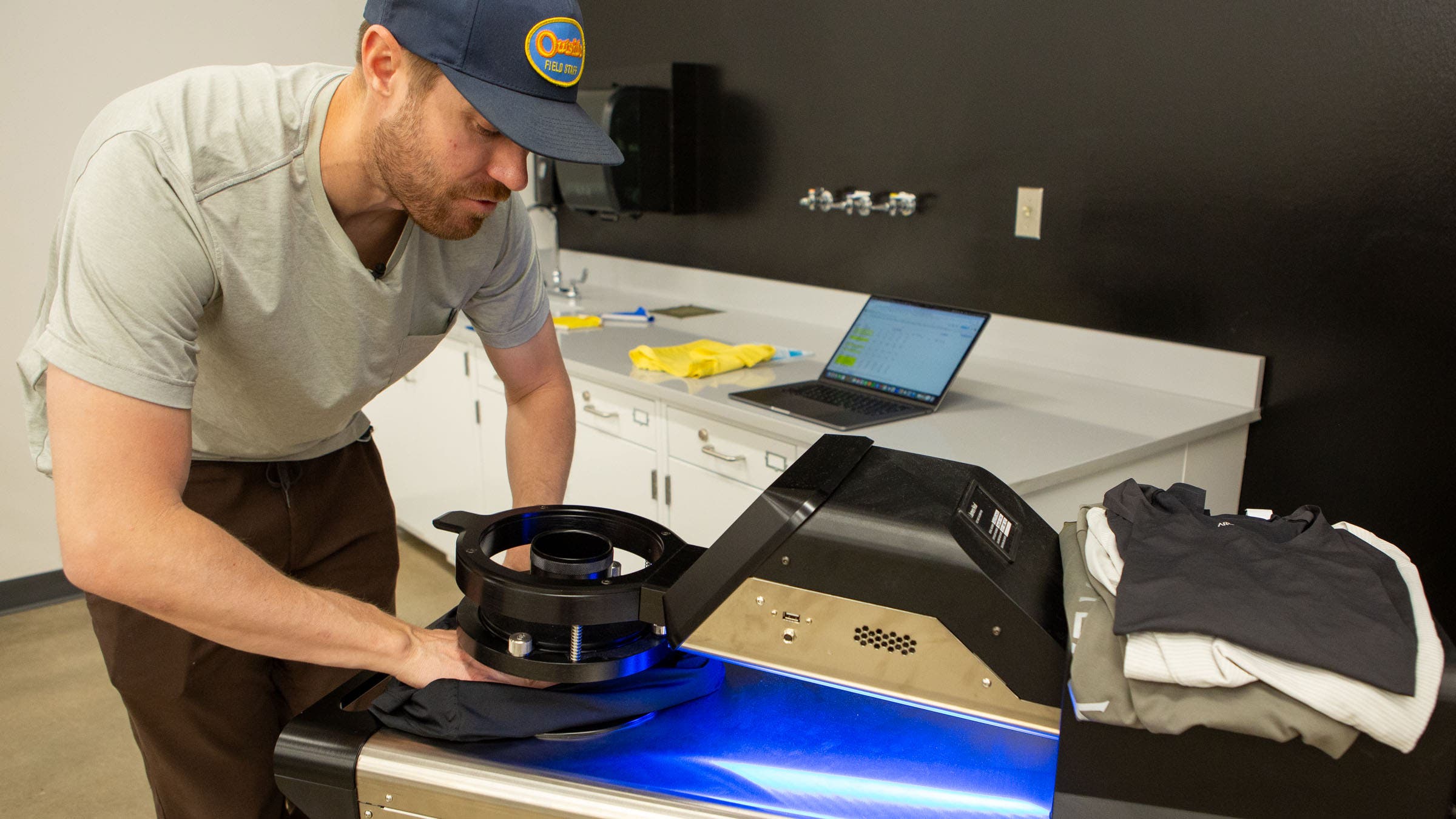
Air permeability is a measure of how much air (in volume) is able to move through a fabric. It is not the same as breathability, which measures how moisture vapor (sweat) moves through a fabric. The more air permeable, the more the cooling breeze makes it through your shirt and reaches your skin directly. To test this in the Outside Lab @ CU Denver, we use a James Heal AirPro, a machine that uses a vacuum pump to pull air through fabric clamped between plates with a specific-diameter opening to measure the flow rate at a pre-set pressure. The greater the volume of air getting through, the more air permeable the fabric is. This lab test only evaluates the material itself, and can’t account for how the cut and design of a garment aids its airiness.
Dry Time
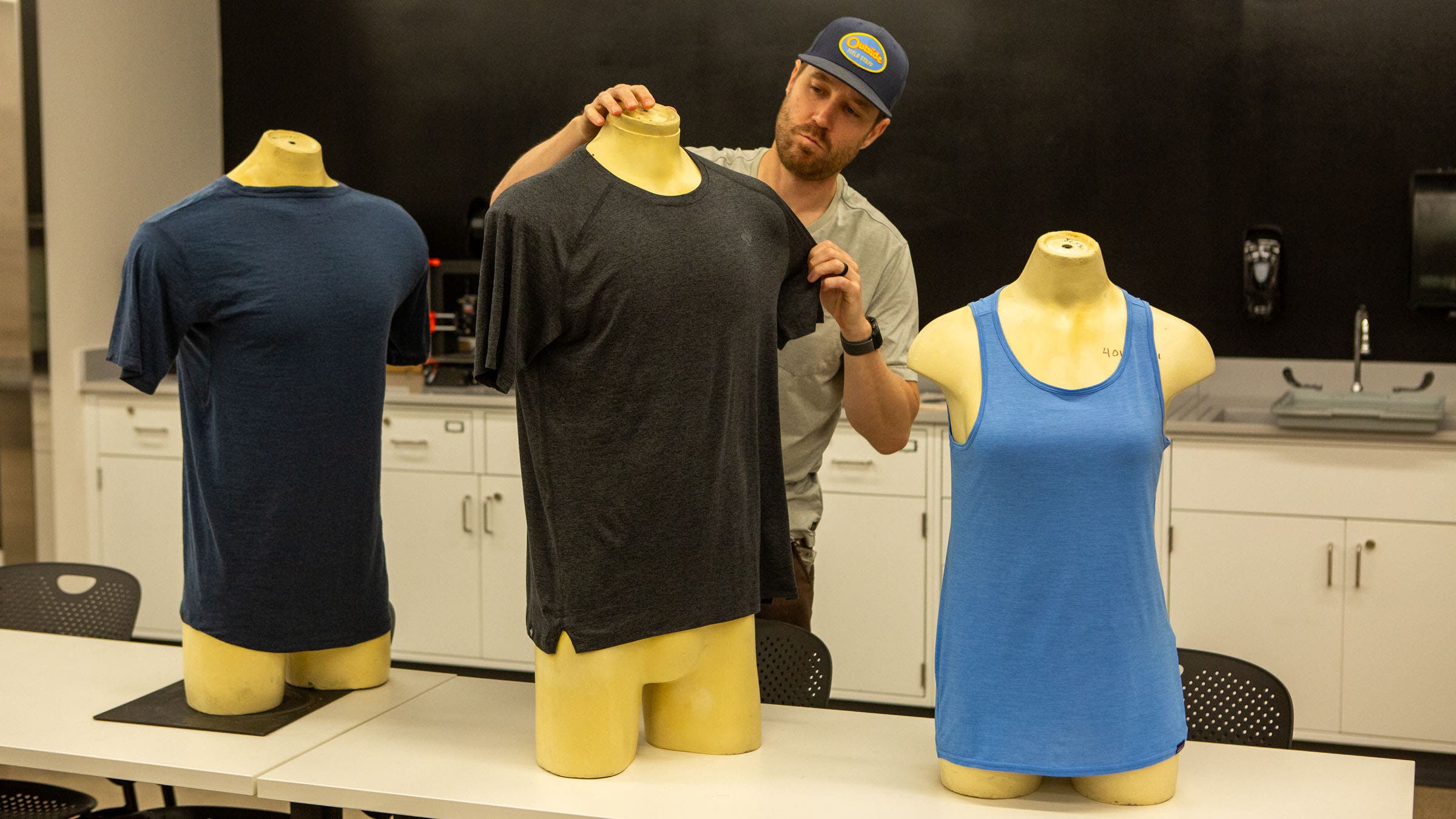
The lab tested drying time by soaking each shirt and then recording how long each needed to dry. Each shirt was weighed while dry, then soaked in tap water until all of the material had absorbed water. After soaking, they were hand wrung until all excess water stopped releasing from the fabric, leaving a fully saturated, but not soaked, shirt. The saturated shirts were weighed again to get the “wet” starting point and then put on a mannequin to dry. Weight was recorded every hour to start and then every 15 minutes as they approached dryness, stopping when the sample was within 4 percent of the original dry value. Allowing for 4 percent of weight gain (a few grams) takes into account any dirt particles that could be introduced from the tap water or environment, and small hemmed areas of the shirt that may hold a little moisture, even though the overwhelming majority of the shirt is dry.
Meet Our Lead Testers
Cory Smith
Cory Smith, a former Division One runner at Villanova University, and founder and running coach of Run Your Personal Best. He has been running since the mid-1990s. With over a decade of experience testing and reviewing running apparel and shoes for publications like Outside and Runner’s World, he continues to compete as a masters athlete, boasting a personal best of 4:31 in the mile. He consistently logs 30 to 40 miles per week over roads, trails, and on the track.
A 13.25km trail race Cory Smith ran while testing the Adidas Adizero Running Singlet. (Gaia GPS is owned by Outside Inc.)
