


The new AI-powered Hypershell X Ultra promises to cut your hiking effort by 20 percent. I took the $2,000 motorized chassis to the Grand Canyon to test whether it’s a game-changer or a gimmick.
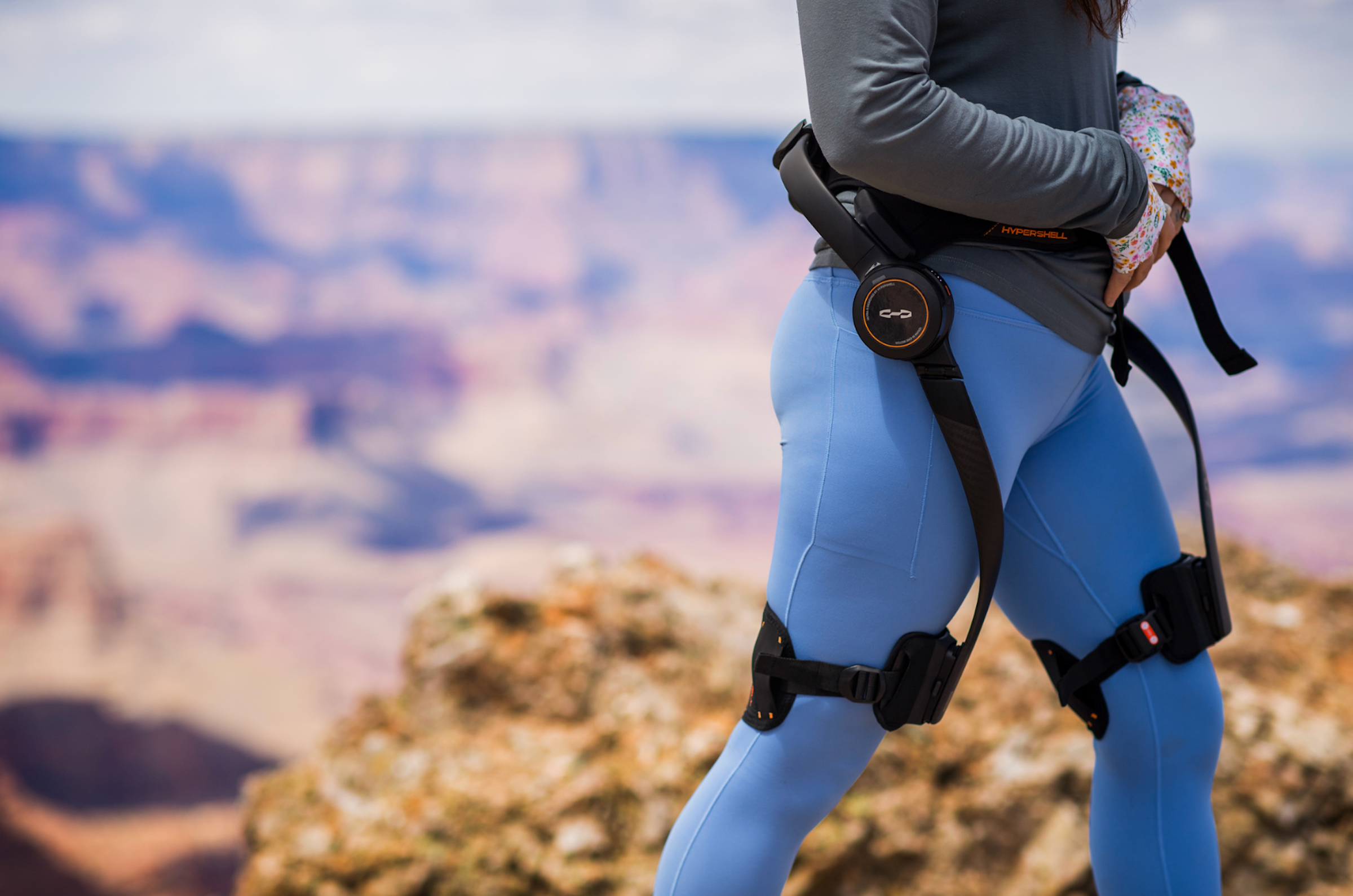
Outside associate editor Madison Dapcevich went to the Grand Canyon to test out the Hypershell Ultra X, the latest iteration of exoskeletons (Photo: Tulasi Maharani)
Published May 20, 2026 06:30AM
Forget walking a mile in someone’s shoes. We’re beta testing with an exoskeleton now.
Ahead of the launch of the new Hypershell X Ultra, which goes on sale May 20, I joined a group of journalists on a trip to the South Rim of the Grand Canyon to test the latest exoskeleton for hikers.
It’s the newest iteration of Hypershell’s technology, and it comes with a $2,000 price tag. These wearable robotic devices are designed to enhance human movement, reduce fatigue, and prevent injury in daily activities. There’s also a resistance mode that adds pushback for those looking to increase their workout. The harness fits around the wearer’s waist and legs, while AI-powered technology detects their movements and provides mechanical assistance with each step.
As an able-bodied 36-year-old outdoor enthusiast, I didn’t think an exoskeleton would align with my hiking goals. I want to feel the burn, lose my breath, and push through extreme fatigue—call me a type two addict. I love the physical toll of a steep climb, and I don’t want a battery pack doing the work for me. Initially, I was skeptical.
The Hypershell, which is intended for recreational use, can bridge gaps for aging hikers and those recovering from injury who want to stay on the trail. But I can also see significant potential for certain users seeking greater accessibility.
Adaptive Hiking and Search and Rescue Missions
One example of a group using the exoskeleton is the volunteer Seattle Mountain Rescue team, which is one of two search-and-rescue teams in the country actively testing wearable exoskeletons, including the Hypershell. The devices may help them reach deeper into the backcountry faster, accessing places where technologies like e-bikes or ATVs can’t go.
My stepmom, Nataliya Solace, also tested the Hypershell. In 2017, doctors diagnosed her with a form of neuropathy that prevented her brain from communicating with her lower limbs. She couldn’t walk. After years of rehab and treatment, she is once again mobile but tires easily. We took the exoskeleton for a short walk outside of Phoenix, Arizona, and she told me she saw potential in using a Hypershell to reconnect brain and body patterns.
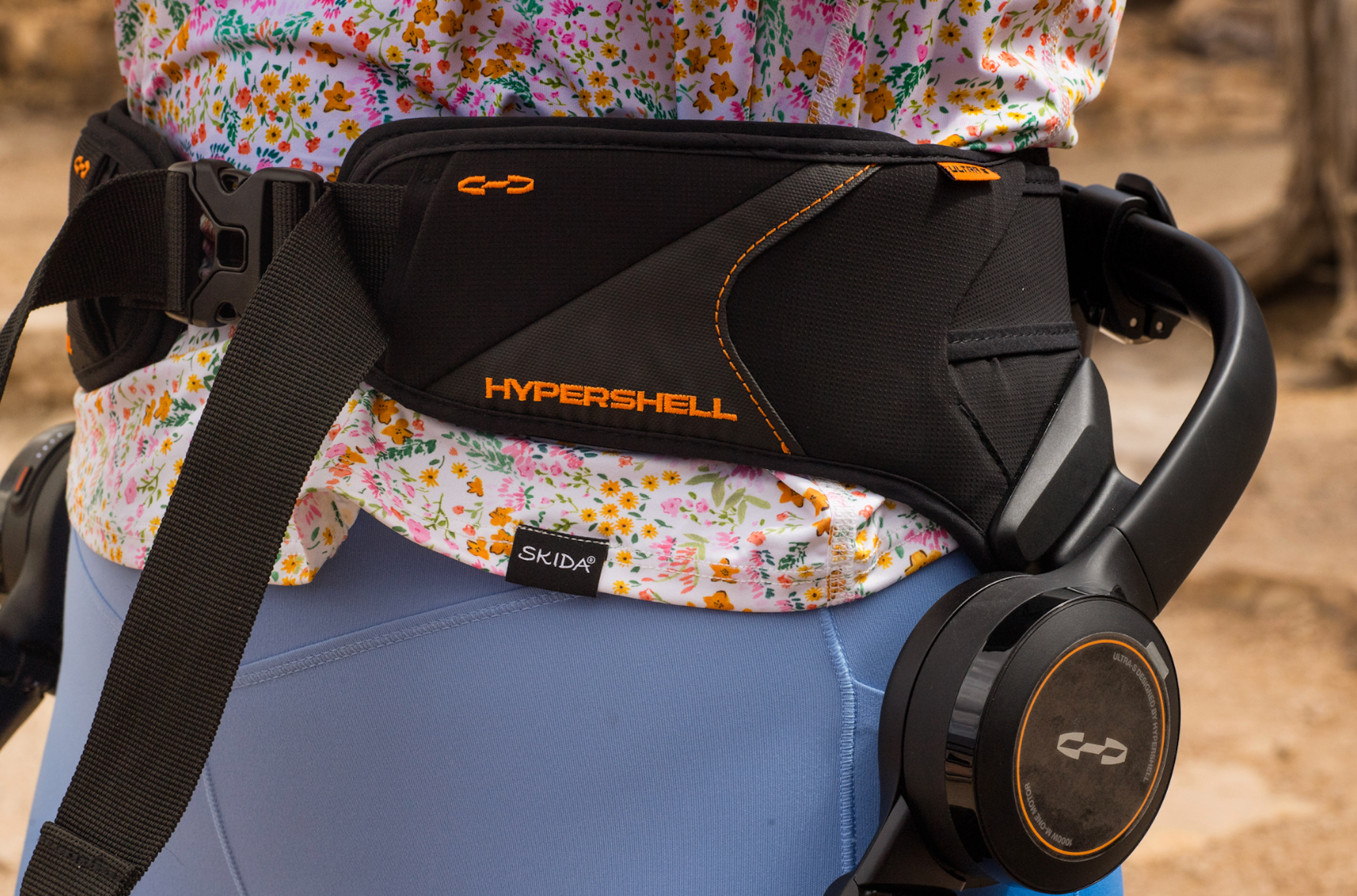
Unlike medical or industrial exoskeletons, consumer models are lightweight, accessible, and optimized for general use, such as walking and hiking. The X Ultra weighs just over four pounds, clocks in at 1,000 watts, and includes an AI-based app that tracks and adapts to a person’s unique gait.
Walking with a Robot
As for me? With torques on both hips and a thigh-band brace, the X Ultra offers several modes to facilitate movement. Hyper mode is the strongest, and yes, I put it on full blast as I ran up a trail along the South Rim. There’s also a passive mode and green mode, the latter of which offers lighter support.
There are some practical limitations with the exoskeleton. Because the device anchors firmly around the hips, the harness system can conflict with heavy, load-bearing multi-day backpacking packs that rely on hip belts. For this reason, I think the Hypershell is best suited for day hikes or specialized mountain ascents that don’t require much gear.
Personally, I preferred resistance mode because I’m a glutton for trail burn and a sucker for weightlifting. As we hiked along the Trail of Time, a short, flat 2.8-mile trail along the rim, I shifted my resistance to 100 percent. This added weight to my thighs, requiring me to use more muscle force just to walk. And yeah, I was sore afterward.
The Specs
The new Hypershell X Series is the first TÜV Rheinland-verified, end-to-end-integrated consumer exoskeleton. It achieves 97.5 percent human-machine synchronization efficiency across varied terrains, responding within 0.31 seconds.
The X Ultra also uses Hyperintuition, an end-to-end AI-driven motion-control algorithm that adapts to a user’s movements in real time. The creators of this new model mark a shift from traditional rule-based motion modeling to end-to-end motion control, unifying perception, recognition, prediction, and planning into one continuous system.
