

Topline
May ends with a rare calendar event — a second full moon in a single month, commonly known as a Blue Moon. Leading up to it, the moon passes bright stars and constellations while Venus and Jupiter continue to draw closer together in twilight ahead of their landmark close conjunction on June 9. Here’s everything you need to know about stargazing this week, May 25-31.
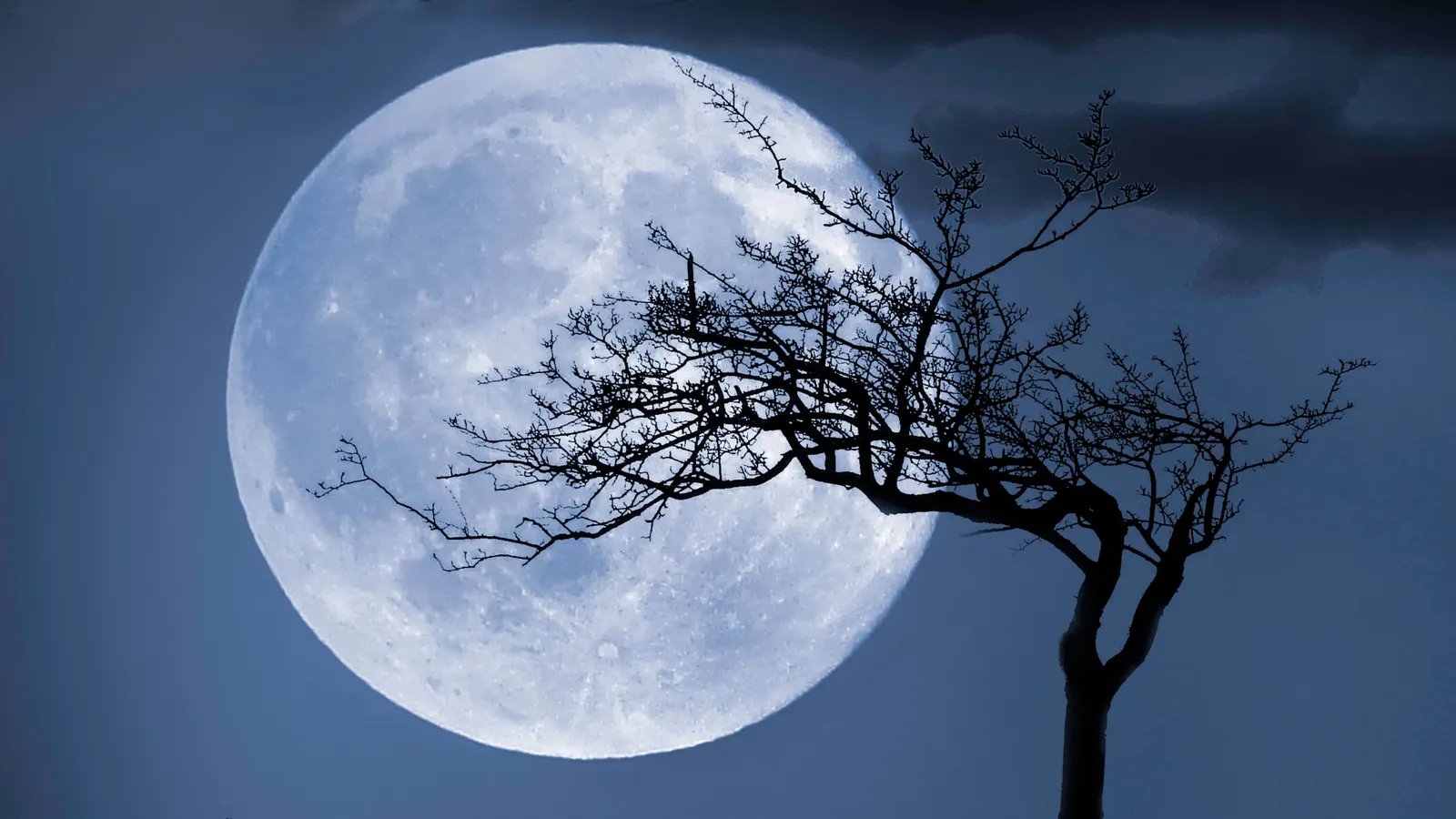
On May 30, the second full moon of the month will rise at dusk, with the so-called Blue Moon occurring officially on May 31.
getty
Timeline
On Monday, the 84%-lit waxing gibbous moon moves eastward into Virgo, heading toward bright star Spica. By Tuesday night, it’s 90%-lit and left Spica behind.
A 98%-lit, nearly full moon will blaze in the eastern sky during twilight, with Antares, the brightest star in the summer constellation Scorpius, easily visible below it about two hours after sunset.
Although the full moon officially occurs early tomorrow, tonight is when to watch the full Blue Moon rise. Find an unobstructed southeastern horizon at the time of moonrise where you are and be patient — it will appear large and orange on the horizon. You’ll soon see Antares just below it.
The moon reaches full phase early today, becoming the second full moon of May. This makes it a Blue Moon — a calendrical quirk rather than a change in color.
A Month With Two Full Moons
Full moons typically occur once every 29.5 days, but occasionally the timing allows two to fall within a single calendar month. That’s the case in May 2026, with a full Moon on May 1 and another on May 31. Despite the name, a blue moon looks no different from any other full moon. The real interest lies in its rarity and timing. For observers, the best moment to watch is not the exact time of fullness, but moonrise on May 30, when the moon appears largest and most colorful as it climbs through the thickest layers of Earth’s atmosphere.
Venus And Jupiter Draw Closer
While the Moon dominates the sky, don’t miss the ongoing approach of Venus and Jupiter in the west after sunset. Venus shines brilliantly low on the horizon, with Jupiter above it. Each evening, the gap between them shrinks slightly. This slow convergence is easy to track with the naked eye over several nights and will culminate in a striking close pairing on June 9. It’s a reminder that the planets are constantly moving against the background stars.
Constellation Of The Week: Leo
Now sinking slowly in the west after sunset, Leo remains one of the easiest constellations to recognize. Its distinctive “sickle” shape outlines the head of the lion, with Regulus marking its brightest point. Trailing behind is a triangle of stars forming the lion’s hindquarters. Leo’s bold, simple pattern makes it an ideal constellation for beginners, and this week offers one of your last good chances to see it prominently before it disappears into the evening twilight in the weeks ahead.
What’s Next In The Night Sky
On June 1-3, the full moon will rise later each evening, clearing darker skies after sunset. On June 5, Venus reaches its highest point in the evening sky for the year. From June 9-11, Venus and Jupiter will form a striking conjunction low in the west after sunset, appearing unusually close together. Around June 14-16, a New Supermoon — the biggest of the year — will herald a short, but valuable dark-sky window, followed by Mercury reaching greatest elongation on June 16, making it briefly visible after sunset.
The times and dates given apply to mid-northern latitudes. For the most accurate location-specific information, consult online planetariums like Stellarium.
