

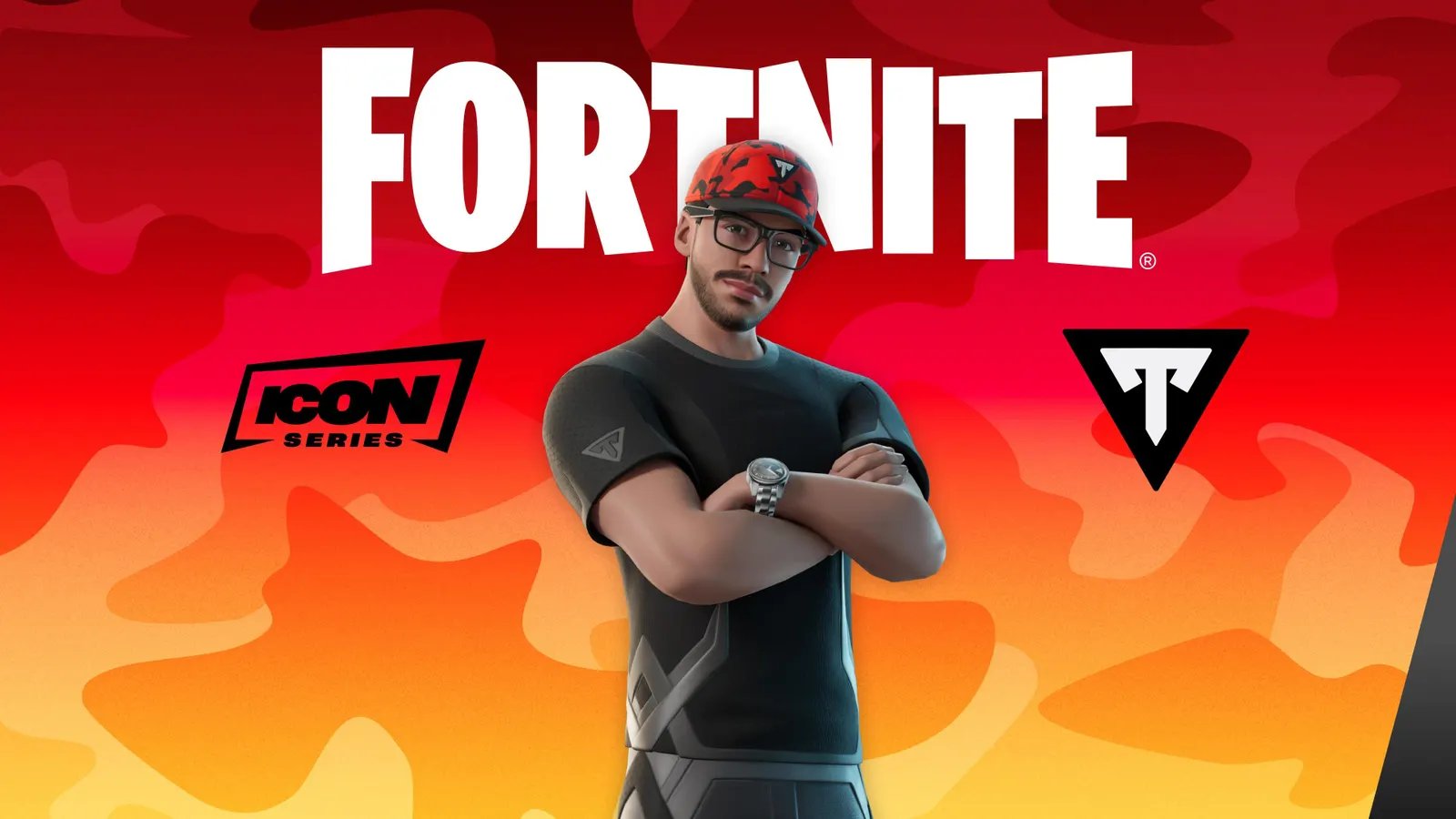
Typical Gamer’s new Fortnite Icon Series outfit arrives at a moment when creators are increasingly transitioning from internet personalities into founders building businesses directly inside digital ecosystems.
Andre Rebelo spent years turning Fortnite content into one of gaming’s largest creator brands. Now he is building games, running a 25-person studio and operating inside Epic Games’ ecosystem more like a platform-native entrepreneur than a traditional influencer.
That progression, from creator to brand to studio operator, is becoming increasingly common across digital media, particularly as platforms like Fortnite continue opening more infrastructure to independent creators.
From Fortnite Player To Fortnite Icon
The launch itself represents a rare moment in gaming culture, where a creator who spent years building content around a platform officially becomes part of the platform’s identity.
Rebelo’s new Fortnite Icon Series outfit launches today after what he described as “a long time in the making,” with the design intentionally built to feel more expansive than a traditional creator cosmetic.
The outfit includes multiple variations inspired by different parts of his content and community identity, including cowboy-themed styles, balaclava variants, heist-inspired outfits and alternate colorways.
For Rebelo, who has streamed Fortnite for years and built much of his audience around the game, the launch carries additional significance because it represents a transition from creator to participant in Fortnite’s long-term intellectual property ecosystem.
“I literally stream every day for four hours,” he said. “So I wanted something that I would want to use time and time again and something that honors kind of me and what it means to my community.”
“What Can I Build?”
Fortnite’s creator tooling through UEFN, or Unreal Editor for Fortnite, significantly broadens what creators can build inside the game. “When UEFN dropped,” Rebelo told me, “I got into the tools myself.”
Because Rebelo already had “a programming history and a game development history,” he approached Fortnite differently than many creators who primarily focus on content distribution and audience growth. “I knew I wanted to make games in Fortnite,” he explained. “But I knew that if I would want to do that and hire people, I wanted to understand the tools first.”
That experimentation eventually led him to create Fortnite experiences including Fortnut and Only Up Time Travel, games that have generated billions of minutes of playtime inside Fortnite and convinced him there was an opportunity to build something larger inside Epic’s ecosystem.
Those projects later evolved into JOGO, the Fortnite-focused studio he now runs with roughly 25 employees. More significantly, however, the process fundamentally changed how he viewed his own role within the creator economy.
“When you think of being a content creator to like a business owner,” he said, “it was kind of like went from what can I create to what can I build?”
That distinction captures an important evolution happening across creator businesses. For years, most creators focused primarily on audience growth and monetization through sponsorships or advertising. however, creators are beginning to build operational companies, products and recurring businesses directly within the ecosystems where their audiences already spend time.
The Rise Of Platform-Native Studios
YouTube creators once evolved into merchandise brands and media personalities, but many are now becoming founders of operationally sophisticated businesses, including production companies, gaming studios and software startups.
Fortnite creators are building game studios. Streamers are hiring development teams, launching agencies, products and scalable businesses around the communities they originally built through content.
Rebelo describes JOGO not as a side project, but as “a real deal business.” “We have departments, we have heads, we have all hands,” he said.
What makes this evolution especially interesting is that creators possess a level of audience proximity that traditional entertainment and gaming companies often struggle to replicate because creators operate inside communities in real time rather than at a distance from them.
Rebelo, for example, still streams Fortnite “every day for four hours,” giving him continuous insight into player behavior, trends and community dynamics.
“It gives me the expertise to kind of understand the player base,” he explained, “not just like a developer that doesn’t understand the player.”
Fortnite’s Creator Economy
Epic Games also appears increasingly aware that Fortnite’s long-term growth may rely heavily on creator-built experiences and external development ecosystems rather than solely on internally produced content.
“Oh, I think that it’s going to keep leaning heavily on creator made experiences,” Rebelo said.
A recent report from Boston Consulting Group estimated that creator payouts across Fortnite and other major user-generated gaming ecosystems are expected to exceed $1.5 billion in 2025, underscoring how platforms are increasingly evolving into creator-led economies rather than traditional game distribution channels.
Part of that optimism stems from how rapidly Fortnite’s tooling ecosystem has evolved over the past several years, dramatically reducing the barriers required to build multiplayer experiences at scale.
“The games that you can create today are extraordinarily better than the games that you can create years ago,” he explained. “And it just keeps on moving at the speed of light.”
“I looked at a chart recently of the amount of games published on Steam,” he said. “It’s just doubling.”
Fortnite’s infrastructure, he argues, removes many of the foundational technical barriers that historically made multiplayer development prohibitively difficult for smaller creators and teams.
“We’ve had people that are seniors and veterans in the gaming space,” he said, “and they’re like, ‘You don’t understand the difficulty it is to try to program multiplayer on your own.’”
“This is a godsend from Fortnite to have this infrastructure in place already, and you just have to build the game.”
The Infrastructure Era Of The Creator Economy
The creator economy’s early years largely revolved around distribution and audience aggregation, followed by monetization through advertising, sponsorships and direct commerce.
The next phase may increasingly revolve around creators building infrastructure-native businesses inside the platforms themselves, including games, virtual products, studios and scalable operational teams.
Rebelo believes AI will further accelerate that transition by allowing smaller teams to operate more efficiently and execute at greater scale.
At the same time, he does not believe AI will replace creators themselves.
“I don’t believe that AI is going to replace the soul of human creativity,” he explained. “I think that we can use AI to empower those people to make their visions come to life.”
“There Is So Many Opportunities”
Despite concerns about oversaturation across social media and gaming, Rebelo remains optimistic about the opportunities available to emerging creators entering the ecosystem today.
“There is so many opportunities these days,” he said repeatedly throughout our conversation.
Part of that optimism stems from how dramatically barriers to entry have collapsed across both content creation and game development over the last decade.
“Before to make games, it felt like at least you would need a whole lot of time and a whole lot of people and a whole lot of money,” he explained.
Today, however, creators can increasingly build experiences independently or with relatively small teams thanks to improving tooling, distribution infrastructure and platform support.
The larger lesson from Rebelo’s trajectory is that the next generation of creators may not simply become larger influencers or media personalities.
Increasingly, they may become platform-native entrepreneurs building scalable companies directly inside the ecosystems where their audiences already live.
This article is based on an interview with Andre Rebelo aka Typical Gamer on my podcast The Business of Creators.
