

Published June 15, 2026 10:30AM
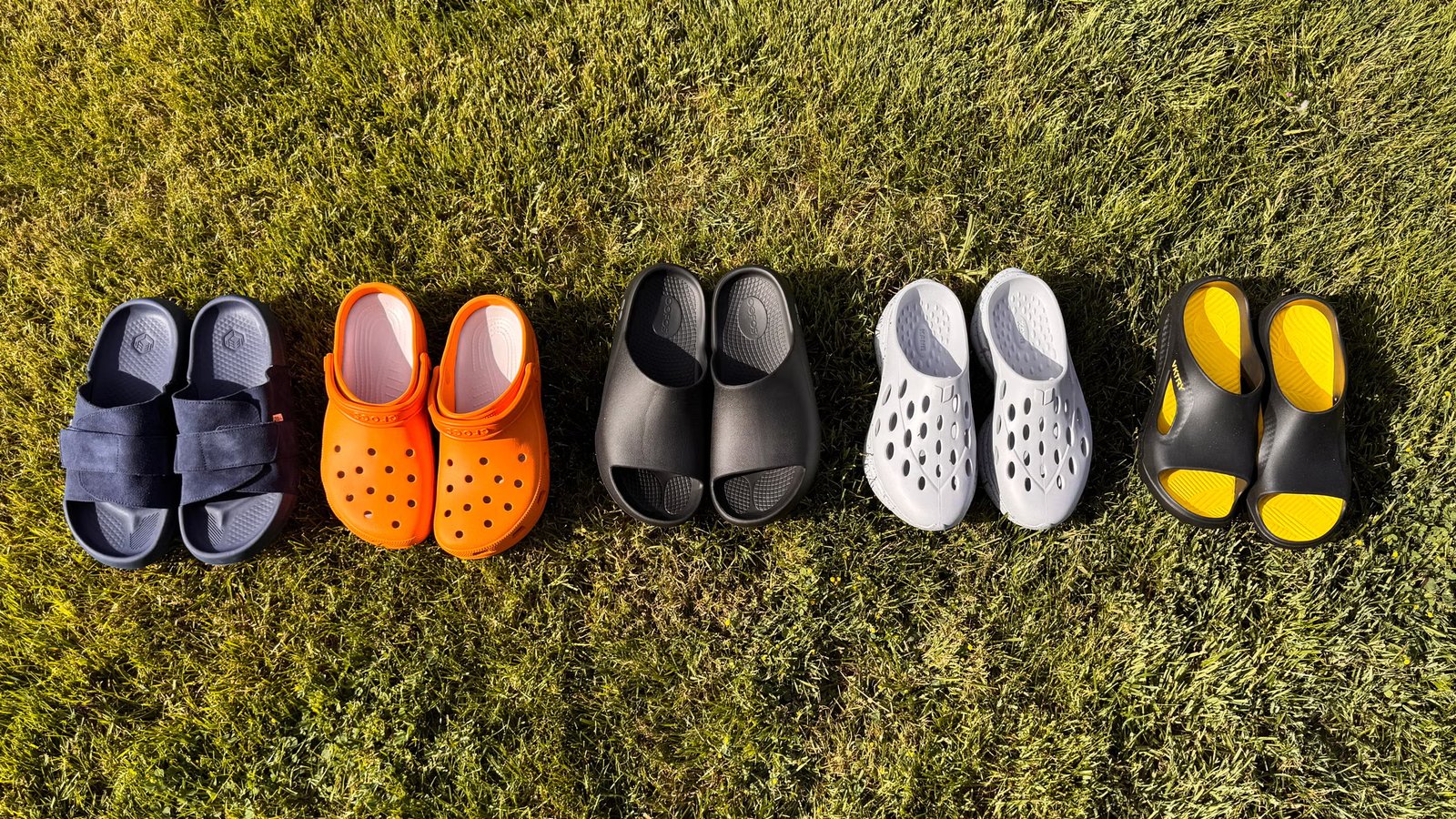
Overview: Recovery sandals and slides reduce impact, stimulate circulation, and support muscle recovery between training sessions. Ultra-soft options like OOFOS and Roll Recovery deliver maximum plushness for post-run feet, while structured picks like the Kane Revive and VKTRY offer more versatility for daily wear. Most feature rocker geometry and arch support to keep you moving on hard recovery days.
Recovery footwear has officially crossed over from niche running-shop oddity to a full-blown gear category. What started as a handful of marshmallow-y slides aimed at ultrarunners has evolved into a wildly diverse lineup of recovery sandals, clogs, and hybrid slip-ons that promise everything from impact reduction and arch support to improved blood flow and muscle recovery.
As I try to stay in shape in middle age, I get the appeal now more than ever. Recovery has become less of a luxury and more of a requirement. The good news is that recovery shoes and slides have gotten significantly better than they were in my 30s—spanning everything from absurdly soft foam pillows designed purely for post-run shuffling to rugged hybrid clogs with Vibram outsoles capable of handling hikes, camp chores, and grocery store runs. Some focus on plushness. Others prioritize structure and propulsion.There are pairs that stimulate the bottoms of your feet with massage nodes and aggressive arch geometry, and options that simply isolate your joints from impact better than your daily shoes.
The best recovery slides and sandals genuinely made my legs and feet feel better after hard efforts. More importantly, they encouraged me to keep moving during recovery instead of collapsing motionless onto the couch with a lacrosse ball and a bad attitude.
Updated June 2026: We added five new recovery shoes to this list, including the Kane Revive OB (most versatile), Crocs Classic EXP Clog (most rugged), and OOFOS OOahh Plus Slide (best impact absorption). We also updated pricing and details throughout.
Best Recovery Sandals: At a Glance
Most Rugged
Crocs Classic EXP Clog
Pros and Cons
+ Durable Vibram sole
+ Great traction
+ Stable structure
– Less pillowy than others
The Classic EXP Clog feels like Crocs finally admitted that a huge percentage of us were already abusing standard Crocs far beyond their intended purpose and decided to engineer a version that could actually keep up.
The biggest upgrade is the Vibram outsole, which delivered more traction and stability than any Crocs I’ve tested—especially on loose gravel, wet grass, and dusty trailheads. Unlike traditional Crocs, whose soft foam bottoms get chewed up surprisingly quickly, the EXP’s rugged outsole felt built for real abuse. Crocs also upgraded the midsole with BounceLite foam, which delivered noticeably more rebound and structure than the ultra-soft Mellow slides I tested. The ride was still cushy, but tracked more like an actual recovery shoe than a marshmallow slipper. The molded Croslite upper retained classic Crocs comfort and water resistance while staying light, and ventilation ports kept heat from building up around camp.
What surprised me most was the versatility. I wore them after runs, around camp, on short hikes, and doing yard work without feeling undergunned. The heel strap and supportive chassis made them far more secure than traditional recovery slides when moving quickly. The downside: they’re less pillowy than many pure recovery sandals in this roundup. If maximum softness for swollen feet is the goal, OOFOS and Roll Recovery still win. But if you want recovery footwear with real traction that can survive a multi-mile hike without getting shredded, these are the slips for you.
Best Impact Absorption
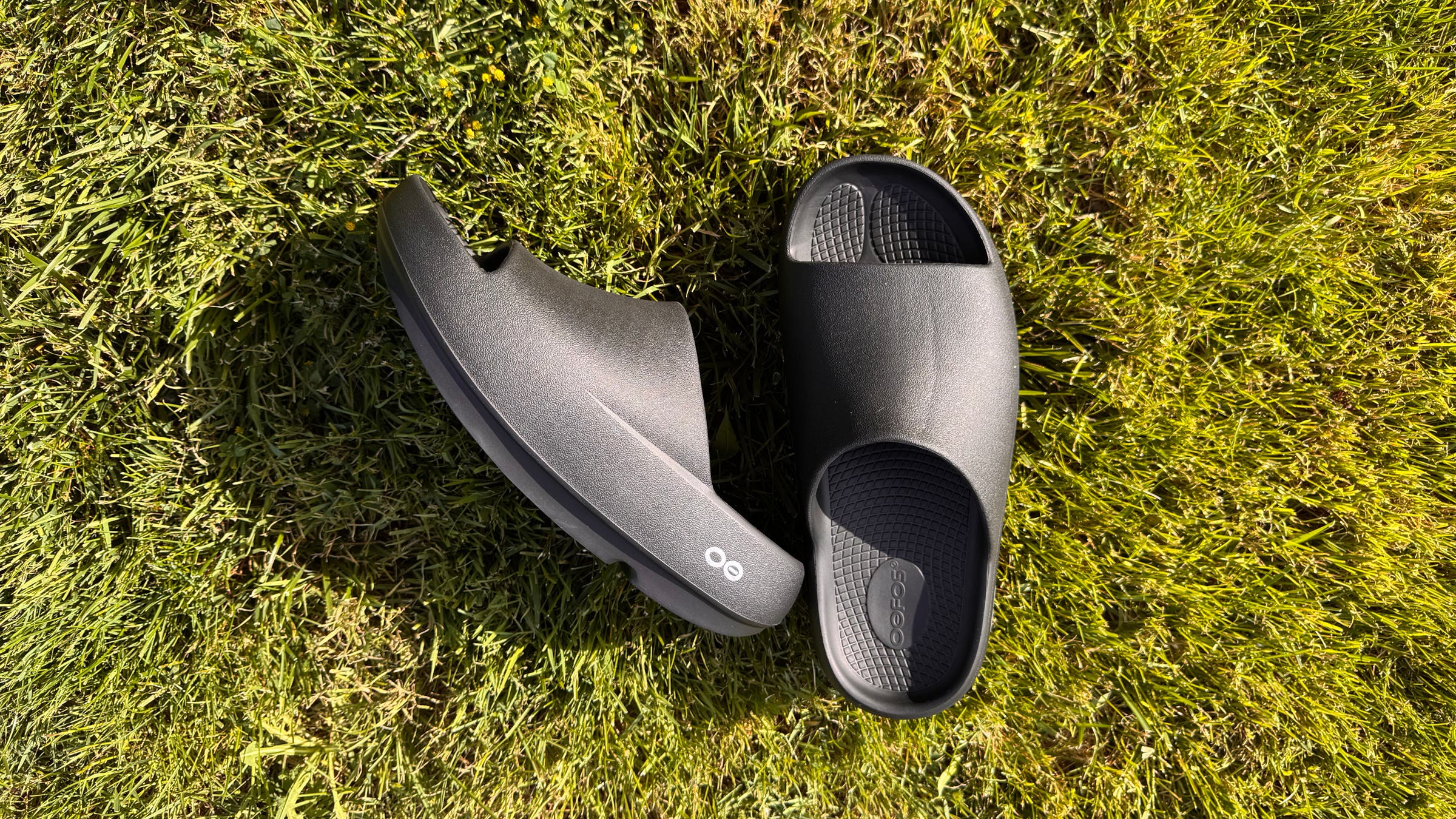
OOFOS OOahh Plus Slide
Pros and Cons
+ High shock absorption
+ Great arch and heel support
– Unstable during lateral movement
The OOFOS OOahh Plus Slide uses the company’s proprietary OOfoam technology, which the brand says absorbs 37 percent more impact than traditional EVA foams. We didn’t send this slide to the Outside Lab to confirm that claim, but in the real world these noticeably softened the harshness of walking around the day after speed workouts.
The Plus model retains the wide, deeply cradled footbed that made earlier OOahh models so good for swollen feet, but the updated upper has a more polished fit and cleaner silhouette. The foam sits in an interesting middle ground between the squishy softness of the Roll Recovery slides and the firmer support of the Kane Revive OB. That balance made them one of my favorites for all-day wear, reducing fatigue without feeling unstable or mushy.
I especially appreciated the pronounced arch geometry and heel cup after long runs when my plantar fascia were yelling at me. The rocker profile helped move my stride along without demanding much work from my calves. Like many highly cushioned recovery sandals, the broad platform could feel a bit floppy during quick lateral movements. But for post-run recovery walks and shuffling around the house after big training days, the OOahh Plus felt incredibly therapeutic.
Most Versatile
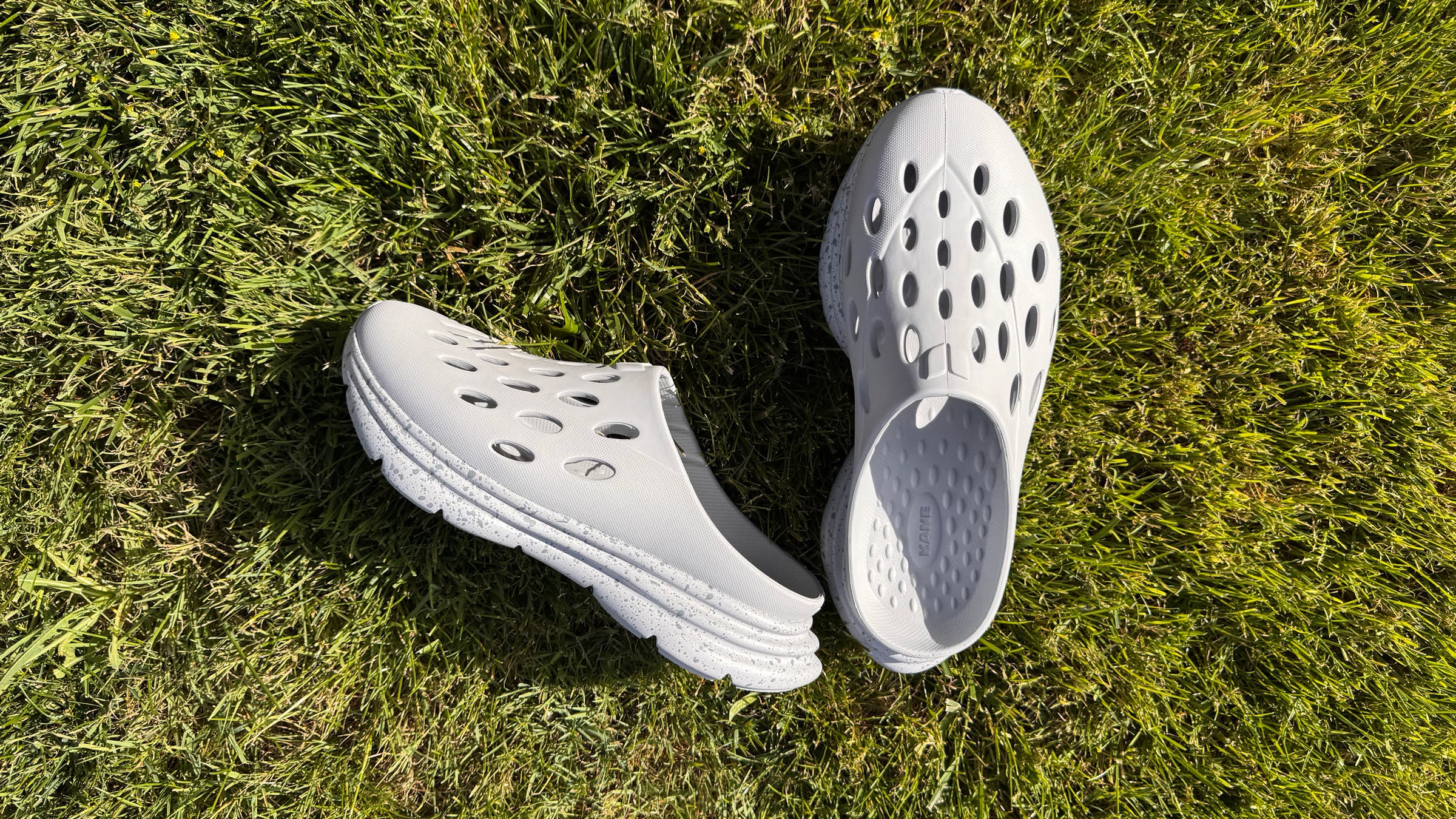
Kane Revive OB
Pros and Cons
+ Highly supportive
+ Flexible outsole
+ Very breathable
– Lacks a deep, squishy feel
It feels wrong to call anything “minimalist” in this category given how huge most modern recovery shoes have become, but the Kane Revive continues to stand out by blending maximum cushioning with surprisingly natural movement. The shoe is built from Kane’s sugarcane-based RestoreFoam, a dual-density EVA compound that feels noticeably more supportive and structured than the ultra-soft squish of many recovery slides.
What really separates the Revive from the pack is its geometry. Deep oversized channels carved into the outsole let the shoe flex laterally with my foot instead of forcing me into the stiff, over-rockered gait that some recovery footwear creates. There’s still a subtle rocker profile, but it felt more like gentle forward encouragement than aggressive correction. After long runs, that translated into smoother neighborhood walks and less lower-leg fatigue.
The upper is one of the smartest designs in the category. Hundreds of perforations combined with interior airflow channels dumped heat exceptionally well during hot afternoons, while the fully enclosed shape gave the shoe enough structure for actual daily life beyond pure recovery lounging. I wore these for grocery runs, yard work, playground sessions with my daughter, and post-run recovery walks without ever feeling like I was clomping around in orthopedic marshmallows.
The raised footbed nodes scattered throughout the interior lightly stimulated the bottoms of my feet, delivering a subtle massage effect during longer walks. If your definition of recovery is sinking into an absurd cloud of foam, OOFOS and Roll Recovery still feel more decadent. But for versatility beyond recovery sessions, the Revive OB is a killer option.
Softest Ride
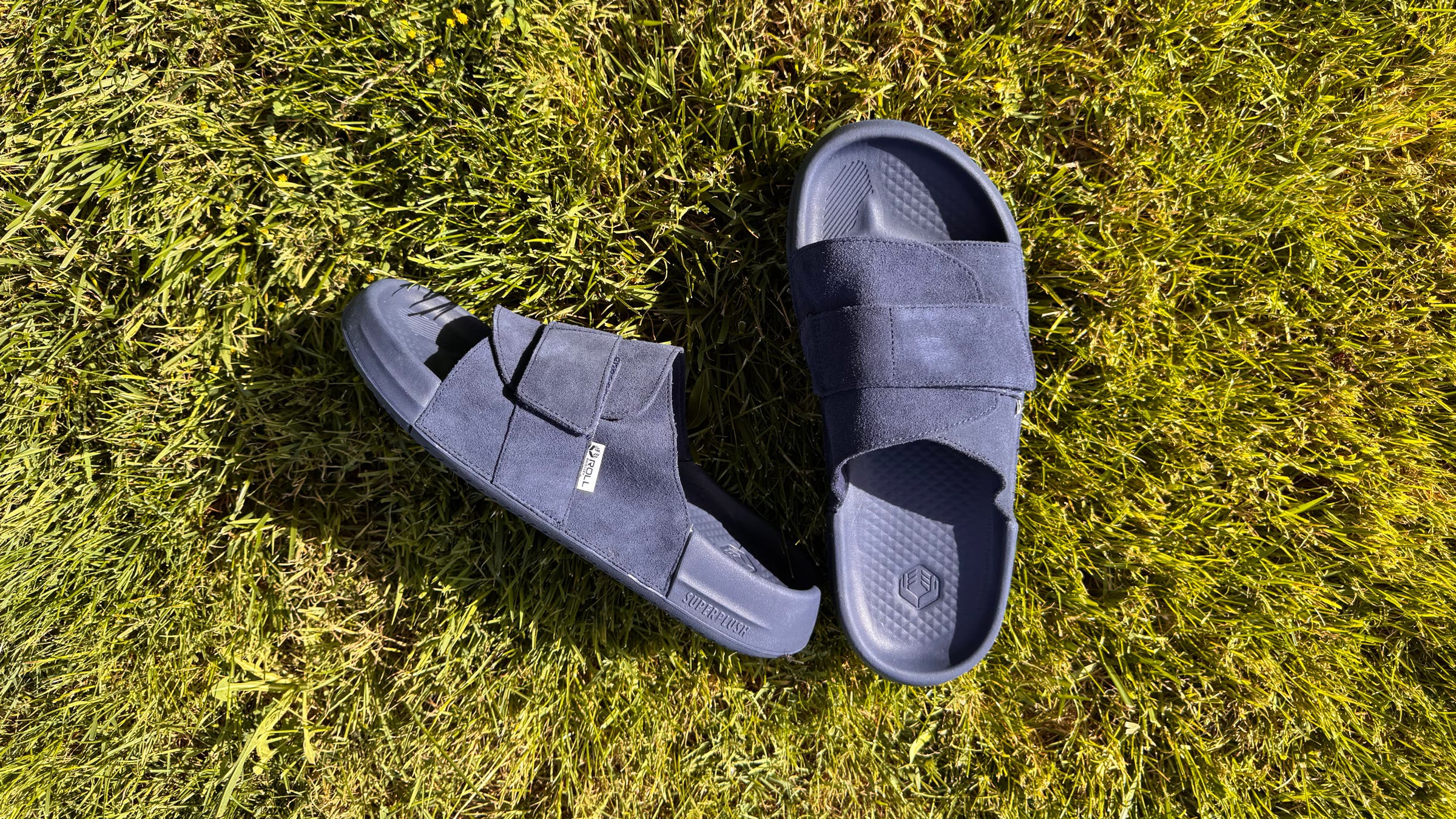
Roll Recovery Solace Recovery Slide
Pros and Cons
+ Ultra-plush, trampoline-like cushion
+ High sidewalls
– Unstable on uneven terrain
Roll Recovery somehow made the already absurdly plush SuperPlush slide even softer with the new Solace. The oversized midsole uses a high-volume EVA and algae foam blend that compresses dramatically under body weight before rebounding with an almost trampoline-like feel. The first few steps genuinely made me laugh out loud because my feet disappeared so deeply into the foam.
Unlike some hyper-soft slides that collapse under pressure, the Solace maintains a broad, stable base thanks to exaggerated sidewalls that cradle the foot—containment that mattered during recovery walks after downhill training days when my stabilizer muscles were fried and my ankles felt sloppy. The massive stack height muted impact exceptionally well, and walking around after long runs felt like moving across padded gym flooring. The oversized strap uses an extremely soft lining that avoided the plastic hot spots common in many EVA slides, and a mild rocker kept my stride moving forward when my calves and Achilles were tight.
The tradeoff is responsiveness. These are not slides for moving quickly or confidently navigating uneven terrain. But if what you want from a recovery slip is to reduce impact and relax your entire kinetic chain, the Solace will offer sweet relief to your barking dogs.
Most Structured Recovery Slides
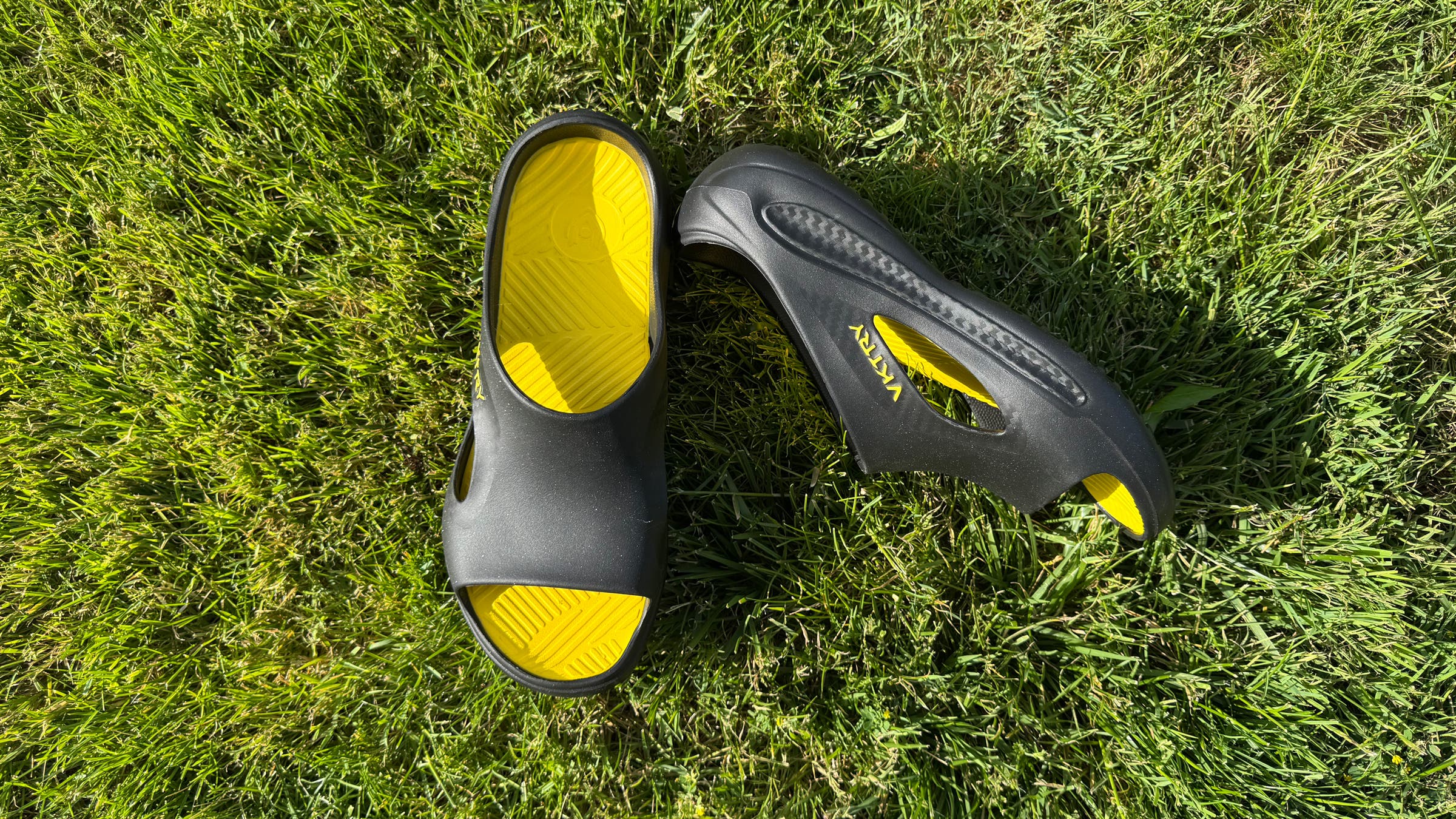
VKTRY Recovery Slides
Pros and Cons
+ Propulsive rocker
+ Secure heel cup
+ Great energy return
– Upper runs very hot in the sun
The VKTRY Recovery Slides felt noticeably different from almost every other shoe in this test because it approaches recovery through structure and propulsion rather than softness. The shoe uses a dual-density foam setup paired with a highly rockered geometry that encouraged my foot to roll aggressively forward with each step—instead of sinking deeply into foam, I felt lightly guided through my stride.
The footbed features a pronounced arch shape and deep heel cup that locked my foot into place more securely than most recovery slides, which I appreciated during neighborhood walks after speed sessions.
The large swath of black plastic on top ran blazing hot during an 85-degree walk, but wasn’t an issue below 75. The foam was firmer than OOFOS or Roll Recovery’s offerings, but that translated into better energy return and a more supportive platform during longer walks and hours on my feet.
For Active Recovery
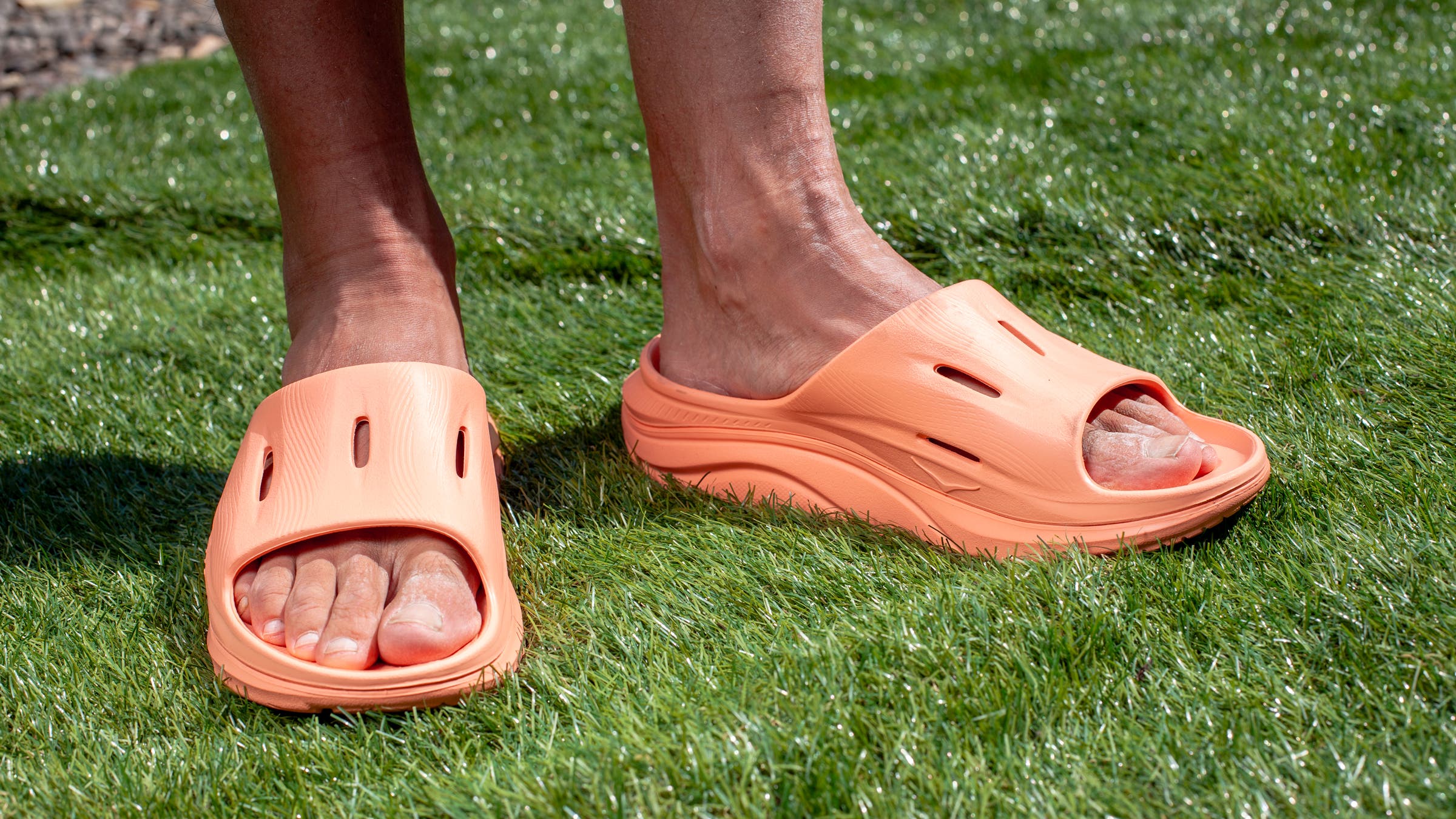
Hoka Ora Recovery Slide 3
Pros and Cons
+ Maximalist cushioning
+ Aggressive rocker aids stride
– Rocker profile alters natural gait
The Ora Recovery Slide 3s were cushy as hell—just as you might expect from the brand that made us fall in love with maximalist shoes. The dual-density foam layup is made from a soothingly soft, sugarcane-based EVA midsole and a sturdier, more supportive EVA outsole. The shoe felt truly therapeutic during my sorest steps around the neighborhood. But it was actually the way these slides helped inform my steps that made me fall in love with them.
The Oras take advantage of their huge 33mm/27mm stack height to carve a serious rockered curve in the front. That helps roll your foot forward with every step. This mechanical aid felt like a hand from an old friend when my legs were achy and tired after a long run. I was able to walk it out further, giving the lactic acid more time to flush out of my system. Wearing these did make my legs feel better over the course of the day. It is worth noting that this rocker profile isn’t for everyone. I bought a pair of these for my dad, and he couldn’t stand the way they messed with his gait—and went back to his beat-to-hell Rainbow Sandals instead.
Best Stimulation
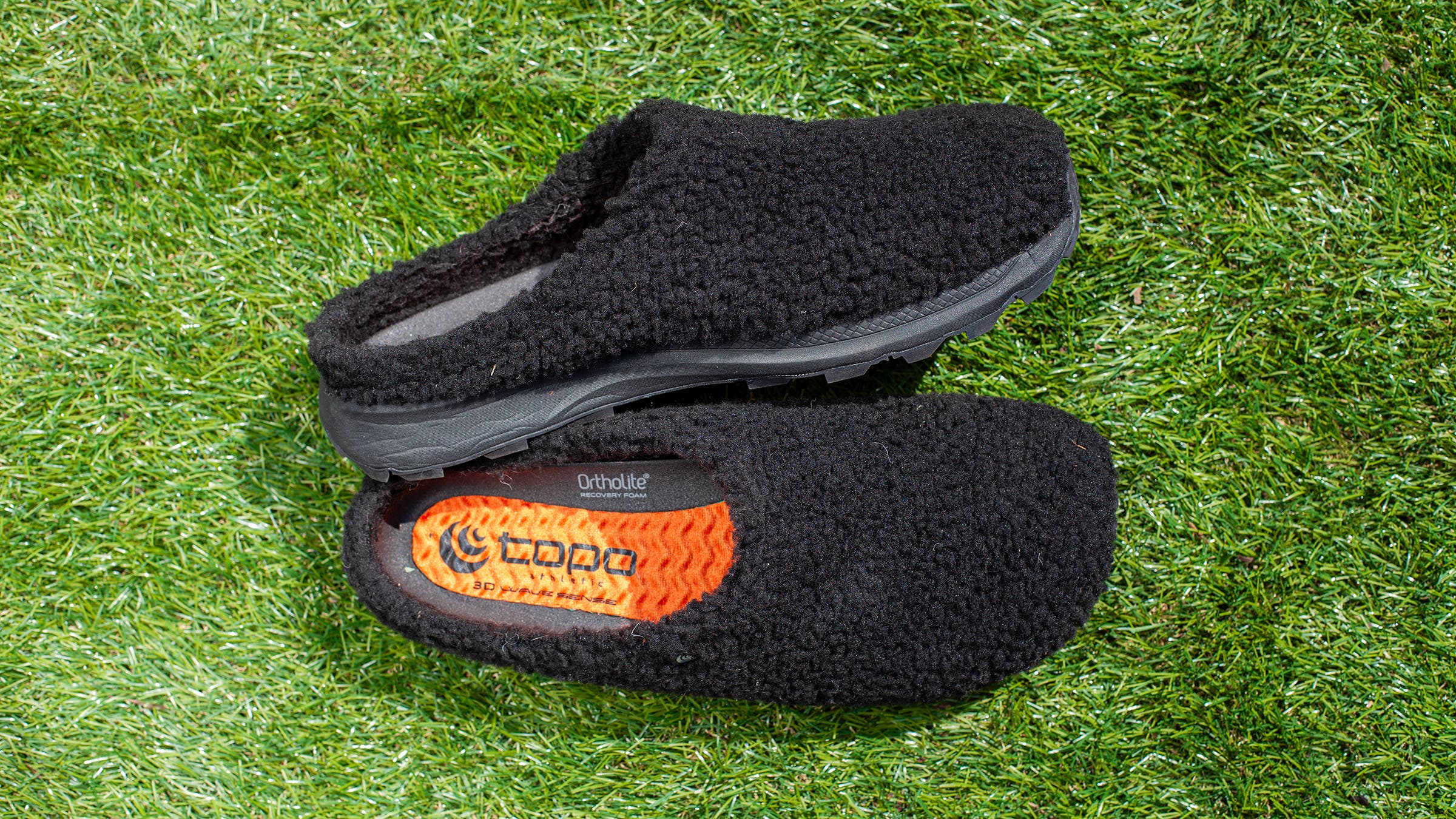
Topo Athletic Revive
Pros and Cons
+ Stimulating footbed that helps reduce leg swelling
+ Wide toe box
– Pricier
– Warm
The pronounced, wavy ridges covering the footbeds of Topo Athletic’s Revives are designed to stimulate blood flow—which is why I turned to them when my feet were at their most swollen. The washboard-like texture provides a light massage with every step, which felt especially good on day three of my training plan when my soles were throbbing. Walking around in these babies seemed to positively affect the swelling. The Athletic Revives feature a wide toe box, which also allowed my angry toes to splay out and relax. One downside: These lean more towards slippers than sandals with their rugged Vibram outsole and fuzzy upper, so I’m less likely to turn to them as a camp shoe. But in a hut setting? Now we’re talking; I’m already salivating about how they will feel after a long ski tour this winter.
Best Value
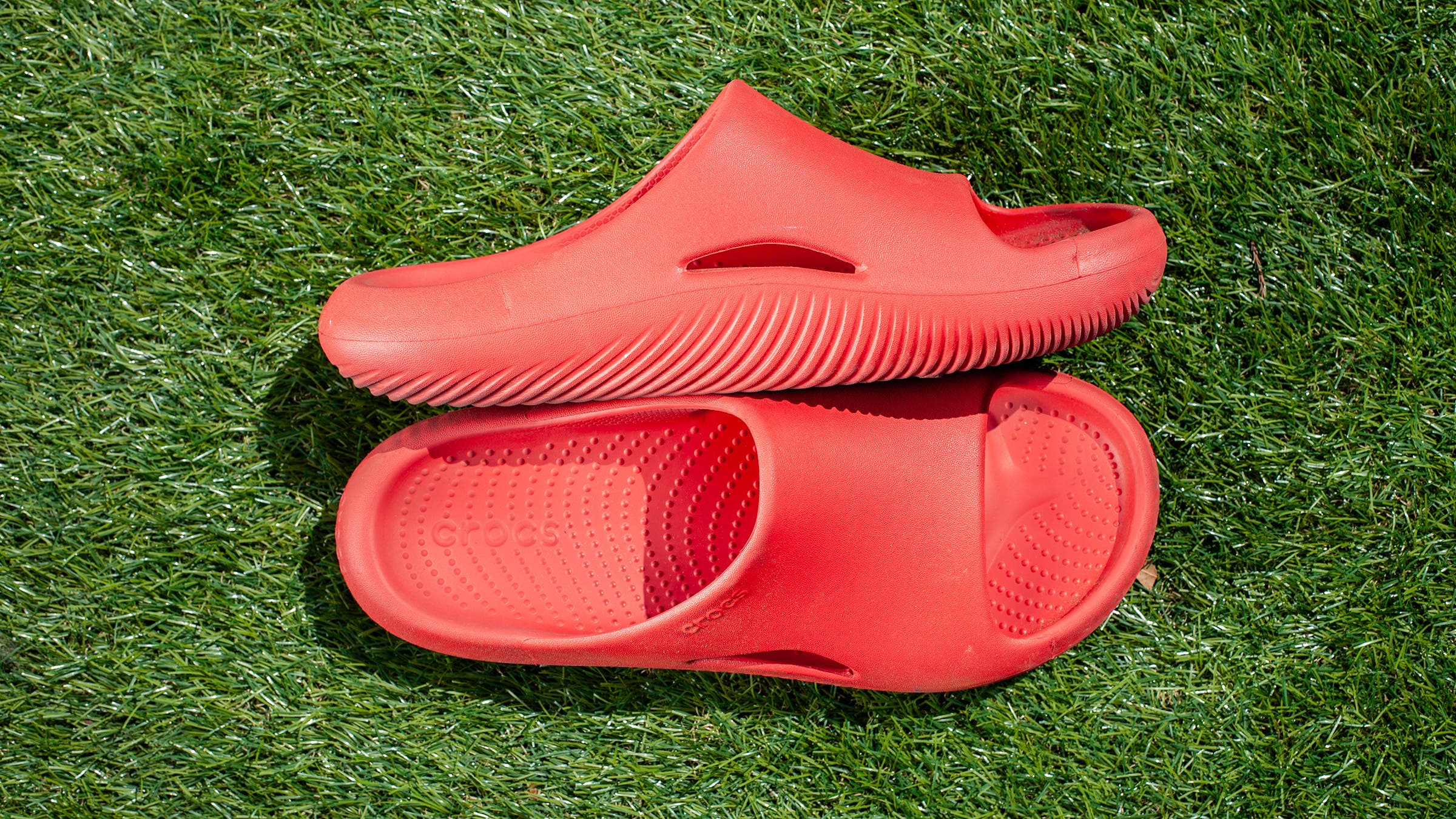
Crocs Mellow Recovery Slides
Pros and Cons
+ Affordable
+ Maximum marshmallow softness
– Upper traps sweat
The steps I have taken in these Crocs have been the softest, most marshmallow-y, and best cushioned of my life. The difference was so noticeable that I made audible pleasure sounds during my first test drive—delivering “oohs” and “aaahs” not yet out of my house. My feet visibly sunk into the footbeds like a fancy memory foam mattress when I first put them on, and they delivered Cadillac-smooth rebound with every single step. These slip-ons were the most luxurious of the bunch in terms of cushioning—and I could feel myself sinking into the cush with each step. That helped my whole leg relax, which translated into a tangible feeling of relief all the way up to my back. They were my favorites when my legs were their most sore, both after long runs and after manual labor. As for downsides: The Mellows had the least breathable upper in the test, with only two small vents at the base and an ample amount of plastic over the top of my foot. As a result, my feet swamped out pretty badly on hot days.
Comparison Chart: Best Recovery Slides & Sandals
Frequently Asked Questions
What are recovery sandals?
Recovery sandals are footwear designed to be easy to slip on and off, exceptionally comfortable for walking, and engineered to stimulate blood flow to tired feet. Most recovery sandals and slides share a few core attributes:
- A raised footbed surface that stimulates circulation at the bottom of your feet
- Substantial cushioning underfoot
- A stable, wide platform for walking
- A roomy, generously sized footbed
Are recovery sandals worth it?
Short answer: yes. If you have the budget and don’t mind occasionally getting called out for wearing one of these pretty ostentatious styles in public, they’re a great investment. If you’re going to wear sandals anyway, why not wear a pair that benefits your athletic recovery with every dang step?
How We Tested Recovery Sandals
For the 2026 test, I revisited many of the recovery sandals and slip-ons from our 2025 guide while bringing in newer models that reflect how quickly this category is evolving. Before testing, I dug into company claims, materials, midsole foams, rocker geometries, and recovery technology. Once the shoes arrived, I ran them through a series of repeatable real-world tests centered on how recovery footwear actually gets used: after hard training sessions, during long days on my feet, and throughout everyday life.
The backbone of the test was my standard 4.5-mile neighborhood loop, which I completed repeatedly over several weeks. After each run, I wore one pair of recovery shoes for the rest of the day and took detailed notes on cushioning, stability, arch support, ventilation, stride mechanics, and overall comfort. I also mountain biked and trained legs to exhaustion before treating my dogs to walks in these slips.
I put each pair through the kinds of recovery moments where these shoes either shine or completely fall apart: short hikes on sore legs, shuffling around the house after hard workouts, yard work, long stretches at my standing desk, and multiple short neighborhood walks each day. Some models also came along on camping trips and playground sessions with my daughter to see how well they transitioned beyond pure recovery use.
Because swollen feet and tired stabilizer muscles can completely change how footwear feels, I paid close attention to footbed width, sidewall support, rocker shape, breathability, and stability under fatigue. I also noted how easy each model was to slip on and off, how hot they ran in warm weather, and whether the cushioning held up or collapsed into mush during longer wear.
