

Published June 22, 2026 02:20PM
When someone was bitten by a tick at her cousin’s wedding in Arkansas, public health researcher Ellie Fausset knew there was a problem. Not just the tick, which Fausset readily identified as an American dog tick, a species known to carry diseases such as tularemia (aka rabbit fever) and Rocky Mountain spotted fever, but also the response the tiny parasite elicited.
One guest went searching for a lighter to sear the tick off, an ill-advised and dangerous folk remedy. Another worried the tick-bearer wouldn’t be able to eat the steak being served at the reception. (An allergy to red meat known as alpha-gal syndrome can develop after a tick bite, but it’s caused by a different species, the Lone Star tick, and wouldn’t happen so quickly.) Though Fausset successfully removed the pest with a bridesmaid’s false eyelash applicator, she found the flood of bad information concerning.
It wasn’t the first time she’d been exposed to the fear and false remedies that misinformation about vectors, as disease-carrying species like mosquitoes and ticks are known, fosters. But this time, she was inspired to do something about it.
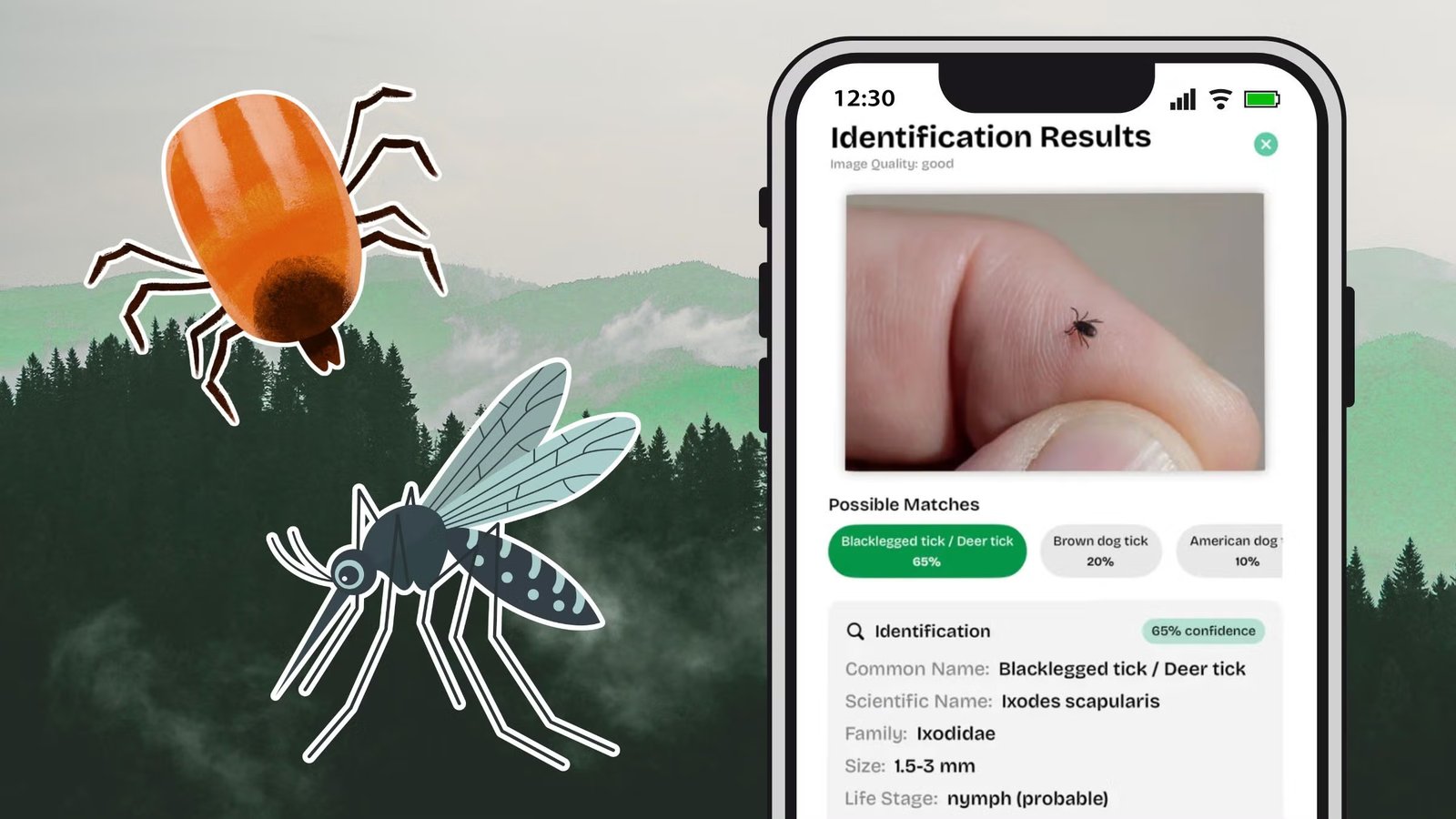
Last year, Fausset launched Vector Guard, an app that weaves together public health data and sightings of disease-carrying pests to provide risk assessments based on your location. Built to be a “one-stop shop for all things vector,” the app also provides up-to-date information about how to safely prevent and treat bites. And with vector-borne diseases and misinformation about them on the rise across the United States, it’s coming not a moment too soon.
Why Are Tick and Mosquito Diseases on the Rise?
Between 2004 and 2018, the number of reported vector-borne illnesses in the United States more than doubled to around 760,000 cases annually. In April 2026, the Centers for Disease Control and Prevention announced that weekly rates of emergency room visits for tick bites were the highest for that time of year in nearly a decade.
Much of this increase is linked to climate change. As winters become warmer and summers grow longer, rising temperatures increase tick and mosquito breeding rates, leading to population surges.
“But ecology matters at least as much,” Jake Scott, a professor of infectious diseases at Stanford University School of Medicine, told Outside. Particularly in the Northeast, which has the highest rates of tick-borne diseases, decades of reforestation combined with suburbanization have put people directly adjacent to high-risk areas, he says. “We’ve redesigned the landscape in ways that are perfect for ticks,” he says, “and then we moved in next door.”
As ticks, mosquitoes, and the diseases they carry reach more people and places, there has been a concurrent rise in a separate but related threat: misinformation.
Misconceptions About Bug-Borne Infections
During graduate school, while studying Lone Star ticks, Fausset would often chat with passersby during field research and noticed a troubling trend.
“A lot of people I interacted with were worried about ticks, but had a lot of misconceptions about their actual risk,” she told Outside. While trying to point people toward more truthful sources of information, Fausset realized those dense, jargon-laden sources themselves might have been part of the problem. As a result, Fausset has found people turn to less reputable but less intimidating videos and posts on social media.
Current research backs up just how much social media may be to blame. A 2025 study found that of the top 100 TikTok videos about alpha-gal syndrome, only 15 were created by physicians. An analysis of tick-related posts across numerous Facebook groups found a bevy of misinformation, from claims that all tick species can transmit Lyme to posts promoting ineffective alternative insect repellents. Other studies have found similar misinformation on mosquitoes.
In recent years, Scott says misinformation has driven a surge in the self-diagnosis of Lyme disease along with unproven tests and treatments. “Patients with real, debilitating symptoms whose actual diagnoses, sometimes cancer, sometimes treatable autoimmune disease, get missed while everyone chases Lyme,” he said, regarding what he sees in his clinic.
While those who contract a disease or are led medically astray are the hardest hit victims of misinformation, others suffer more subtly. Some people post on social media about being so scared of acquiring an illness that they forgo the outdoors altogether. “I love hiking every summer, but apparently it’s horrible this season, with many ticks even spreading alpha-gal, Lyme, and other diseases,” reads a recent Reddit post. “I might stop hiking for the foreseeable future.”
Though experts agree that some caution is justified, they say it shouldn’t stop people from getting outside. For one thing, most illnesses remain relatively rare. (There’s a one to three percent chance someone may get Lyme after being bitten by a deer tick.) “Online makes every tick bite sound like a coin flip with chronic illness,” Scott said. “The actual biology is more forgiving.” Moreover, they emphasize that there are straightforward ways to recreate responsibly.
How to Use the Vector Guard App and Safely Enjoy the Outdoors
One of the best ways to stay safe outdoors is to be aware of the risks wherever you’ll be. That’s where Vector Guard comes in. When you download and open the app (which is free), you’re met with a heatmap for your location that uses user- and scientist-generated sightings from the Global Biodiversity Information Facility to reveal what vectors have been spotted near you. It can identify over 50 kinds of insect species, including bed bugs.
While the app does not offer professional medical advice, clicking on a listed species displays your relative risk based on disease prevalence in your area. And if you find a tick or mosquito, you can take a photo in the app to get an instant identification or compare it to verified images.
Even in high-risk areas, simple preventive measures listed in the app can help keep you safe, like wearing long sleeves and pants, using a bug repellent, and checking your body for ticks after being outside.
If you find yourself doomscrolling on vector-borne disease TikTok, Scott says the best thing to do could be to unplug, take some precautions, and go outside. “Don’t let the algorithm decide how scared you should be of a hike.”
Want more Outside health stories? Sign up for the Bodywork newsletter.
