

Key Takeaways
- The Toledo Museum of Art in Ohio launched COVE in 2017.
- COVE aims to lower workplace incidents and funnels revenue to the museum.
- The business’s workshop model and modules contribute to ongoing growth.
What can a Fortune 500 company learn from an art museum? Quite a lot, it turns out.
The Toledo Museum of Art in Ohio (TMA) has spent the past decade building its business, the Center of Visual Expertise (COVE), which educates employees on visual literacy, allowing them to spot and avoid hazards on the job.
In 2024, employers reported roughly 2.5 million nonfatal workplace injuries and illnesses in private industry and more than 5,000 fatal work-related injuries across all sectors, according to the most recent available data from the U.S. Bureau of Labor Statistics.
COVE’s benefits are significant and twofold: Not only does the business help reduce workplace incidents, but it has also generated millions of dollars for TMA over the past several years, during a time when museums are facing financial pressures and decreased attendance.
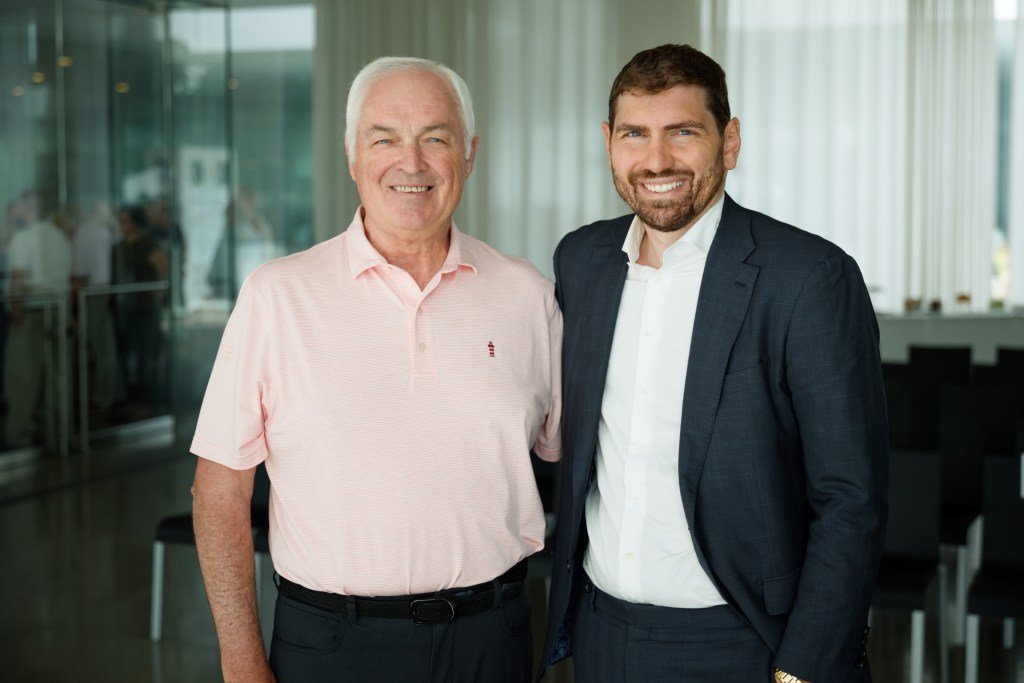
“ We were attracted not just to the revenue potential, but to the idea that art historical expertise could be productized in a way that keeps people safer and saves lives,” TMA director Adam M. Levine says. “As art historians, we are helping people go home in the same position they come to work, [and that’s] sort of magic.”
Building on visual literacy and a track record of safety
The idea for COVE began to take shape in 2015, thanks in part to the foundation laid by Levine’s predecessor Brian Kennedy, who prioritized visual literacy at TMA.
Mike Thaman, then the CEO of Fortune 500 company Owens Corning and a museum board member, commented on how visual literacy might help companies think differently about workplace safety.
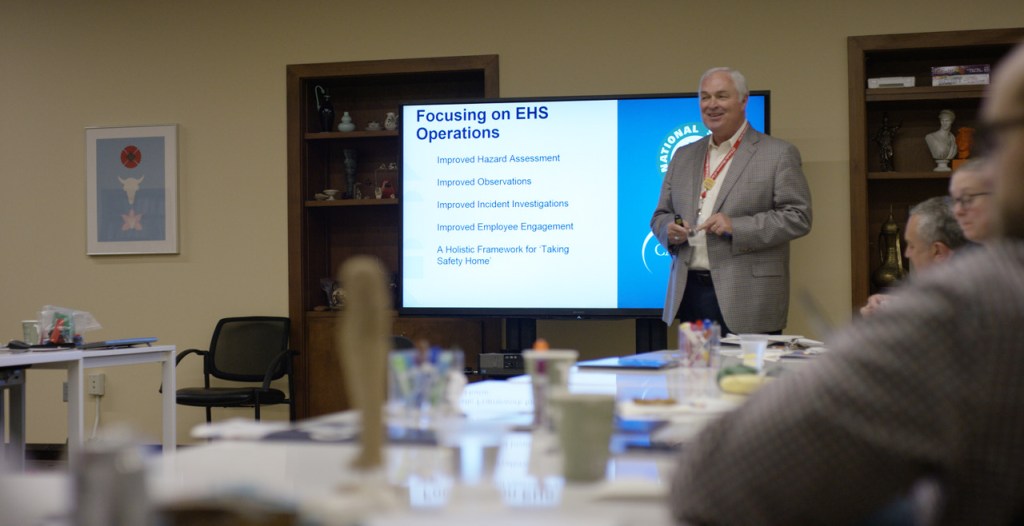
The idea stuck with Doug Pontsler, then the vice president of operations, sustainability and environmental health and safety (EHS) at Owens Corning.
Owens Corning has a strong track record of safety. The company won the Green Cross for Safety from the National Safety Council (NSC). Additionally, Pontsler served as president of the NSC’s Campbell Institute, which shares best practices to help organizations of all sizes improve workplace safety and operational performance.
“ In the EHS space, the challenge is, how do you continue to get better?” Pontsler, now chairman and managing director at COVE, says. “Because if you’re not making progress in all aspects of environmental health and safety, you’re going backwards. You can’t just tread water.”
Nonprofit doesn’t mean for loss: COVE brings returns
Applying TMA’s visual literacy expertise to on-the-job hazards was a natural next step. The TMA team developed a business plan, received board approval and launched COVE in 2017.
The museum board signed off on a certain amount it was willing to invest in COVE, and in the first year, like most startups, the business operated at a small loss, Levine notes. However, every year since, COVE has returned money to the museum.
“ We are a nonprofit, but nonprofit doesn’t mean for loss,” Levine says. “If you are a nonprofit that has fixed assets, then you must run a structural surplus, or else you are deferring maintenance. Sure, you could say that that’s what a capital campaign is for, but it would be nice to grow the organization rather than bail the organization out.”
To date, COVE counts numerous public and privately held companies, including Owens Corning, PENTA Building Group, American Axle & Manufacturing and DTE Energy, among its clients.
The workshop model, foundations of hazard identification
The logic of COVE resonated, but an initial challenge lay in how to convert the intellectual property within an art context to one that would be useful for a frontline worker, Pontsler says.
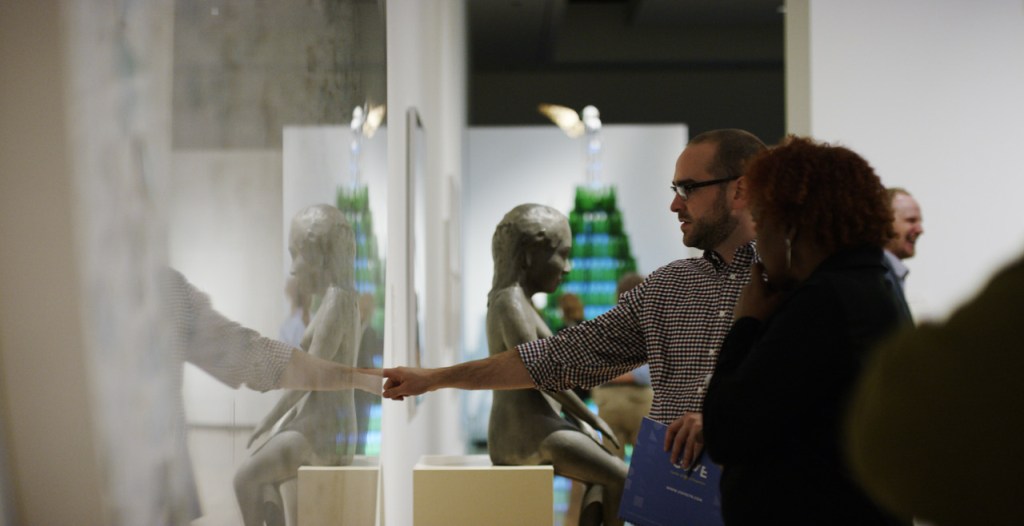
COVE adopted a workshop model, primarily taking place in museums and led by people with EHS experiences from major companies across industries.
The business also offers licensing and train-the-trainer modules, empowering organizations to scale safety awareness across teams and locations, and relies on speaking engagements to extend its reach.

Today, COVE hosts 10-12 workshops a year open to employees from different companies, alongside dedicated workshops for specific clients.
COVE’s core workshop, Seeing Safety: Foundations of Hazard Identification, introduces participants to what visual literacy is and why it matters to people as individuals, then explores the connection between that and the work within EHS.
“ We do become habituated to our environment,” Pontsler says. “We’re around something so much that we just no longer see it. So we want to make the work environment fresh and new all the time.”
The workshops, which combine a lecture and interactive components, apply art historians’ structured approaches to recognizing hazards in the workplace.
For example, just as artists use the five elements of art (line, shape, color, value and texture) to create a composition, COVE harnesses those elements to decompose a composition in the work environment. A search for lines could turn up a stray cord. Another for shapes might reveal a precariously perched box.
“ When you’re used to seeing stairs, you look, and you see stairs,” Levine adds. “When you’re used to looking for texture, you see that the tread’s worn. So in some ways it’s as simple as giving someone an alternate framework to scan their environment.”
Additionally, every COVE workshop features a back-to-back drawing exercise. In pairs, one person selects an object in the art gallery to describe to the other, who then sketches it sight unseen.
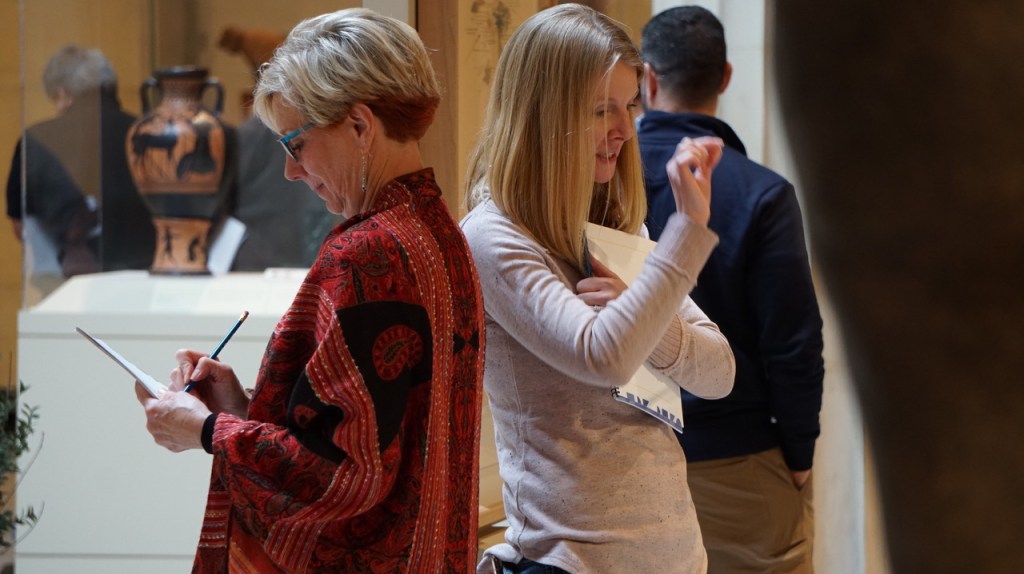
“ They’re intimidated initially because it involves drawing,” Pontsler says, “but it’s really not a drawing exercise. It’s a communication exercise. And once people realize that, they get a big kick out of it.”
The pricing structure for workshops and modules varies, often dependent on the size of the client organization.
With these methodologies, the leading indicator of success is an increase in the number of hazards reported and a decrease in incidents reported, Levine says. He notes that one early client doubled the number of hazards its employees reported.
Art and business: Reflect on the past for a better future
Now, COVE’s work has expanded across North America, Europe and Australia, with plans to continue growth.
As a business in the thought leadership space, one of the biggest challenges remains fostering enough engagement to educate people on COVE’s mission, Pontsler says.
“ It’s not a product someone can order from Amazon that shows up at their desk, and they can do something with,” Pontsler explains. “We’re building human capacity to be better critical thinkers, problem-solvers and communicators.”
To that end, COVE must constantly examine its messaging to determine what’s resonating and what isn’t, Pontsler says.
Having spent nearly 40 years at two Fortune 500 companies, Pontsler appreciates COVE’s willingness to move on from what doesn’t work and progress quickly.
“ There’s a lot in the arts about reflecting on the past and what it’s taught us, and taking it and drawing interpretation from that in terms of what it might mean for our future,” Pontsler says. “And that’s what we’re trying to do in business. We’re just trying to learn and get better. Or at least understand where we are and why.”
Key Takeaways
- The Toledo Museum of Art in Ohio launched COVE in 2017.
- COVE aims to lower workplace incidents and funnels revenue to the museum.
- The business’s workshop model and modules contribute to ongoing growth.
What can a Fortune 500 company learn from an art museum? Quite a lot, it turns out.
The Toledo Museum of Art in Ohio (TMA) has spent the past decade building its business, the Center of Visual Expertise (COVE), which educates employees on visual literacy, allowing them to spot and avoid hazards on the job.
In 2024, employers reported roughly 2.5 million nonfatal workplace injuries and illnesses in private industry and more than 5,000 fatal work-related injuries across all sectors, according to the most recent available data from the U.S. Bureau of Labor Statistics.
