

Rumors on social media claim a heat-exhausted hiker faces a massive bill after being airlifted off the Mist Trail. The National Park Service set the record straight.
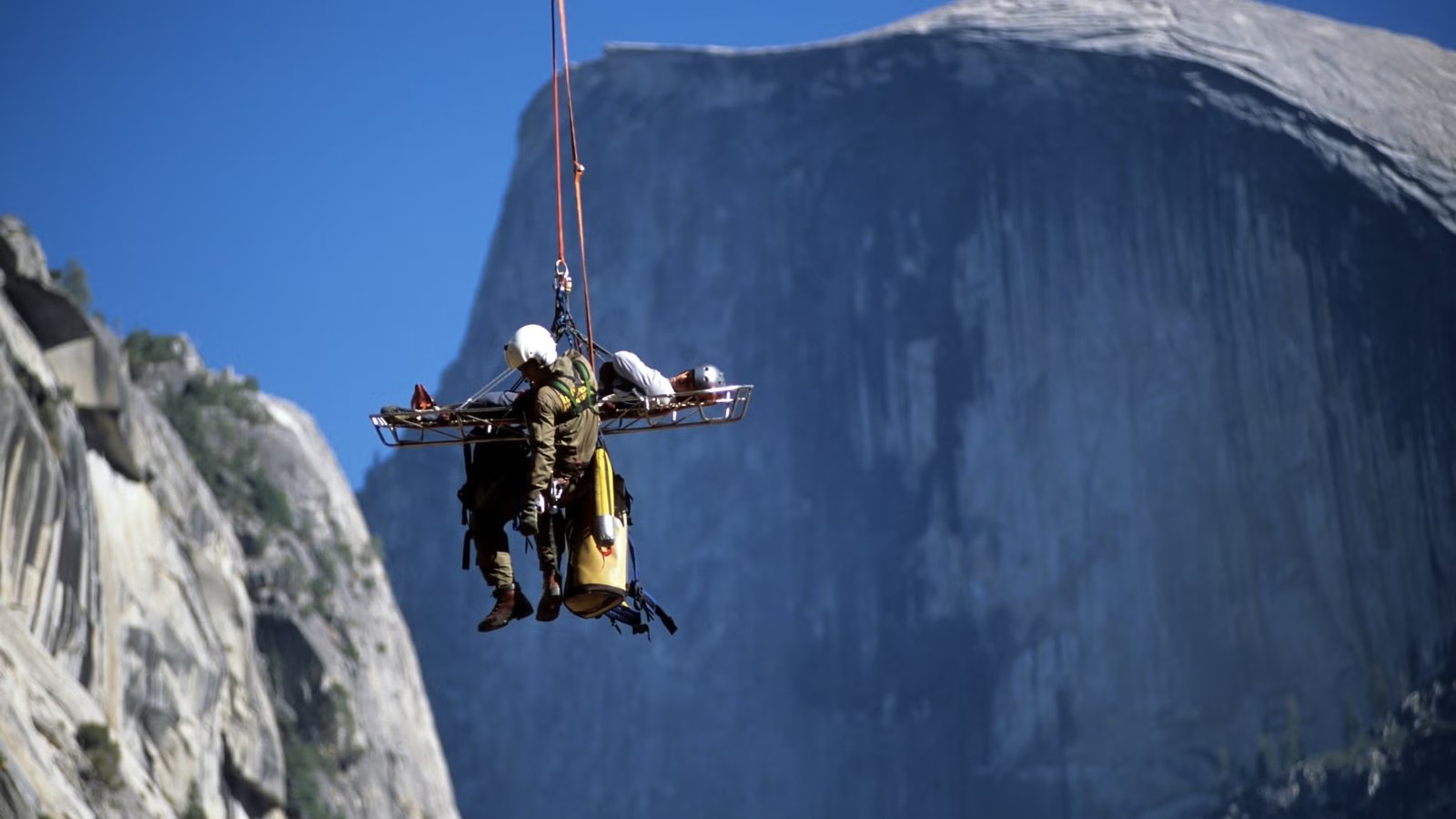
Yosemite’s search-and-rescue team responds to approximately 200 to 250 calls every year for incidents ranging from heat illness and missing hikers to climbing accidents (Photo: MichaelSvoboda/Getty Images)
Published July 21, 2026 11:14AM
By now you may have seen a viral video on social media about a woman in Yosemite National Park who was supposedly billed $70,000 for a helicopter rescue in 2024. The story, which involves a hiker referred to as Grace, was widely circulated on Instagram this week.
Well, Outside has learned that much of the story—specifically the sizable search and rescue bill—is fake. Chelsea McCurdy, the operator of a group called Hobbit Hikers, which had organized the hike filmed in the video, told Outside the nobody in her group had to pay a dime for the rescue.
“There was no bill charged to Grace or anyone in our group. The video claiming there was a $70,000 bill was made by a fake news account using a screen recording of my original video,” McCurdy said. “There was no ambulance, hospital, or private insurance charges as Grace was safely lowered into a field in Yosemite National Park.”
Helicopter rescue in national parks and most backcountry areas is generally free, and the National Park Service (NPS) said that the federal government funds rescues inside of national parks.
“The National Park Service does not charge visitors for search and rescue operations,” an NPS spokesperson told Outside.
What Happened on the Hike?
McCurdy told Outside that Grace was walking on Mist Trail, a seven-mile hike that leads up steep granite staircases alongside Vernal and Nevada Falls. Grace had a thyroid-related medical issue and was beginning to black out on the trail.
That’s when the group called Yosemite Search and Rescue (YOSAR), who McCurdy said treated Grace with fluids and IVs on the trail. Rescuers extracted Grace by a helicopter hoist, a technical maneuver when a pilot can’t land and instead uses a cable and harness to extract a person, when it was apparent she wouldn’t make the two-mile hike back down.
McCurdy told Outside that the entire group continued to hike and camp together for the rest of the week, including Grace.
“We are all still friends and any claims stating anything to the contrary are absolutely false,” she added. “All of the claims made are entirely false—fake news accounts steal content in order to accumulate views based on falsehoods.”
National Park Rescues Are Free
National parks do not charge people for rescues, regardless of the circumstances. Most backcountry areas in America follow the same policy.
“Regardless of whether you’re going to help a hiker who has no headlamp and just needs a little bit of help getting back to the trailhead after dark, or doing a multi-day complicated search in the backcountry, folks are never charged for rescue,” Lauren DeLaunay Miller, a former YOSAR volunteer, told Outside. “We would routinely reassure people that they won’t be charged for rescue services.”
Does Yosemite Charge for Rescues?
Yosemite’s search-and-rescue team responds to approximately 200 to 250 calls every year for incidents ranging from heat illness and missing hikers to climbing accidents. The Mist Trail often draws large crowds and challenges hikers with partial-to-full exposure and steep stone stairs.
Yosemite officials do not take the decision to use a helicopter lightly, DeLaunay Miller said. Responders weigh a variety of factors like a patient’s medical condition, the terrain, the risks of a ground evacuation, and the availability of rescue resources and personnel—not on assumptions about someone’s appearance or fitness. Rescuers likely chose an air evacuation because they believed walking or carrying her out was unsafe, DeLaunay Mill said.
Helicopter rescue operations in the U.S. are an expensive endeavor for search and rescue groups. Depending on the aircraft, flight time, medical assistance rendered, and destination, trail rescues can easily cost tens of thousands of dollars.
But a national park rescue helicopter and a private medical air ambulance differ in policies and funding allocations, and the NPS states that the agency pays for search and rescues from its operating funds. The park pays for rescues costing less than $500, while a federally funded national search and rescue account covers rescues costing more than $500 under a 2020 policy
