

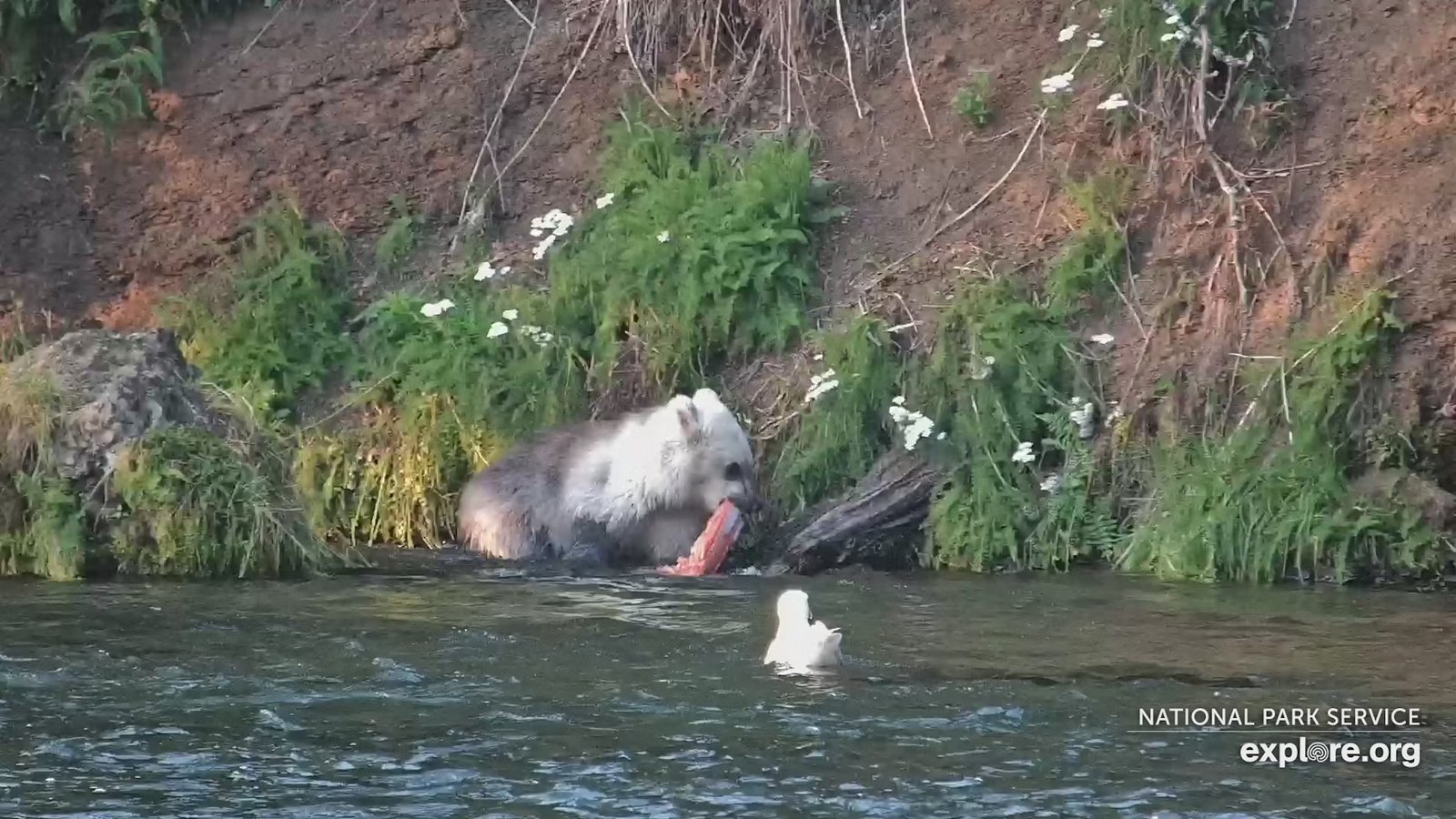
A silver-furred spring cub has captivated Katmai Bear Cam viewers. Experts explain the genetics behind the viral baby brown bear—and why 2026 is seeing a record baby boom on the Brooks River.
The unusual coloring prompted some viewers to ask whether the cub was a “pizzly,” or polar bear-grizzly hybrid (Photo: Explore.org)
Published August 12, 2026 04:39PM
An adorable new star just debuted on the Katmai Bear Camera, the cameras that film brown bears inside Katmai National Park. And now, avid followers of the livestream from Brooks River—the bears’ favorite hunting ground—cannot stop chatting about the bear camera’s latest celebrity. Why? Because the bear in question has unusually colored fur that is indicative of a “Pizzly” bear, a cross-breed between and polar and grizzly.
A first-year cub with silvery fur first sauntered in front of the camera on July 22, 2026, in Katmai National Park and Preserve, Gordon Clagget, a spokesperson for the National Park Service Alaska office, told Outside.
But Clagget and other experts aren’t convinced that the bear is, indeed, the product of a grizzly-polar bear relationship.
“The coloring is likely due to the bear’s genetics,” Clagget said. “There are many bears on the Brooks River, both male and female, with very blonde fur. This fur can get darker as the bear ages; we won’t know for sure until the bear is fully grown.”
Mike Fitz, a naturalist with the livestream service Explore.org, told Outside that Katmai is located too far south of the current polar bear range in Alaska for a polar bear and a grizzly to have mated. Fitz agrees with Clagget that the bear’s odd coloring is likely due to genetics.
“To my eyes, the cub does not show signs of leucism or albinism either,” Fitz said. “I think the cub’s fur falls within the natural variation of fur color for brown bears in Katmai, just on the very blond end of that spectrum. Every few years at Brooks River, a young cub will arrive with similarly colored light blond fur.”
Fitz estimates the cub, whose sex is not yet known, was born in spring and is now approximately six months old. Viewers reported the cub and its mother on the bear cams and tentatively identified the sow as Bear 677, an adult female who has frequented Brooks River since 2025.
For more than a decade, viewers from around the world have tuned in to the bear livestreams from cameras placed inside Katmai National Park and Preserve in Alaska. Encompassing more than 4 million acres near Kodiak, Alaska, Katmai is the home of Fat Bear Week, an online tournament held in the fall where fans can vote in a March Madness-style bracket to crown the park’s fattest grizzly. Bear 677 and her silver cub are part of a population of legendary bears, like Grazer, Chunk, and Otis, the undisputed king of Fat Bear Week. Cubs, too, join in on the fat-bear craze. According to Explore.org, first-year cubs grow from one pound at birth in January to 70 or more pounds by October.
It’s possible, Fitz speculates, that the cub’s coloring could provide it with some sort of adaptive benefit, such as better camouflage in low-light conditions.
“Either way, this doesn’t necessarily mean that this cub faces greater risks or challenges to reach an age when they can be weaned. Food availability, mother’s guidance, and mother’s protection are likely to be far more important factors than fur color,” he said.
The 1.5-mile-long Brooks River usually attracts one of the largest gatherings of brown bears anywhere, and Fitz said researchers have documented “more cubs than ever before” this summer. As of August 10, Fitz says his group recorded over 18 families and 34 cubs, 28 of which were born this spring.
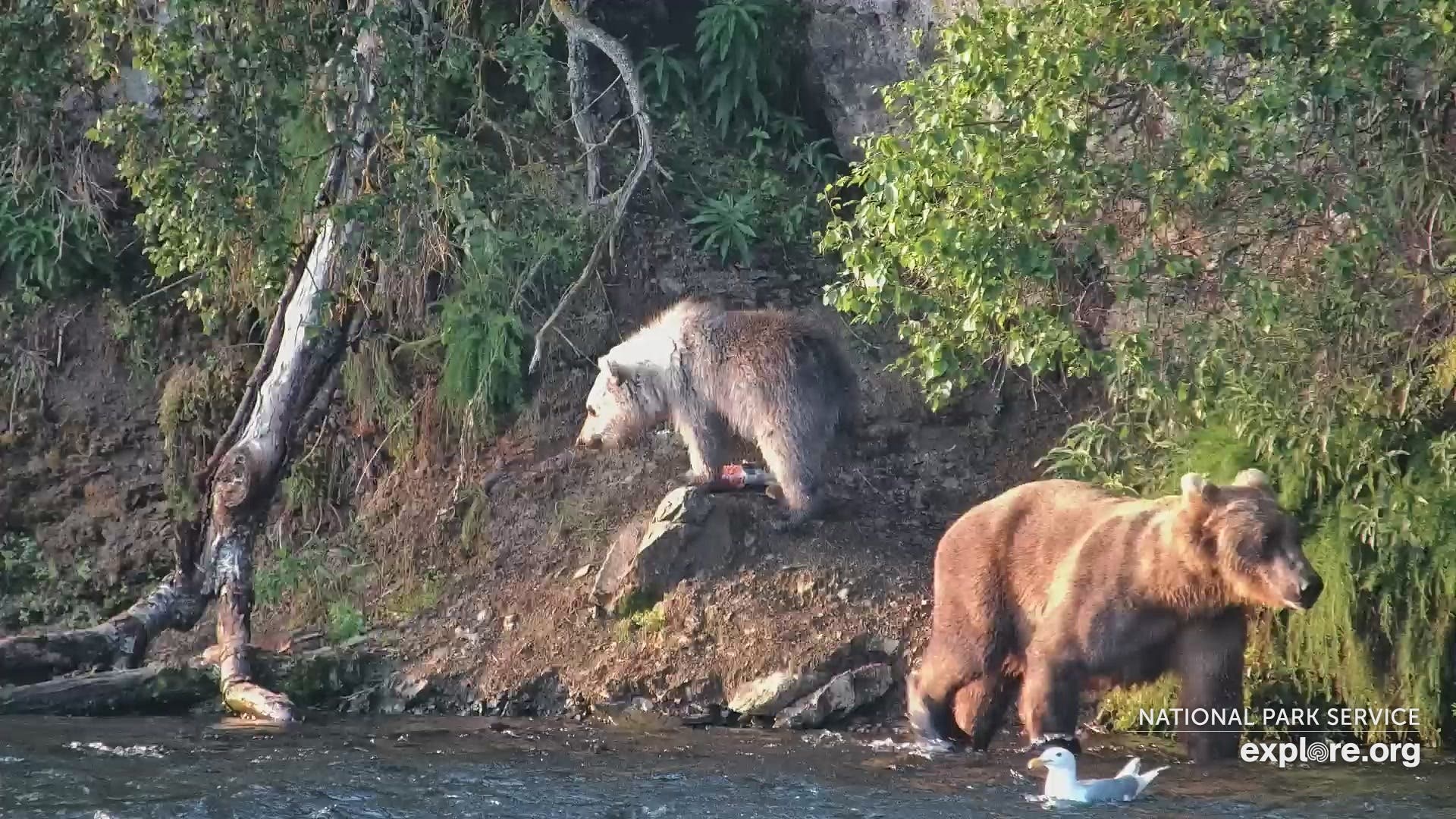
“A gigantic salmon run arrived in 2025 at Brooks River along with many single female bears fishing the river,” Fitz said. “The sheer abundance of food allowed those females to enter the den with ample fat to sustain the birth of their litters in mid-winter.”
Brooks River has also been the site of tragedy this summer. On July 28, the livecams captured a cub belonging to Bear 909 being killed and eaten by an unrelated sow, Bear 806. It’s thought to be the first recorded example of infanticide near the Brooks River. Another female bear killed a second cub on August 2.
This year, Fat Bear Week is taking place between September 22 and 29. We love the event so much that we even created a quiz to help you discover whether you’re more like Flotato or Baby. And 2026 could mark an especially chunky year as well.
“Bear cubs are cute and fun to watch. More importantly, though, they are a sign of abundance,” Fitz said. “Katmai is a place home to some of the last great salmon runs left on Earth where the wealth of the landscape is measured through the gifts that salmon bring–including the energy that bear mothers need to give birth to cubs.”
