

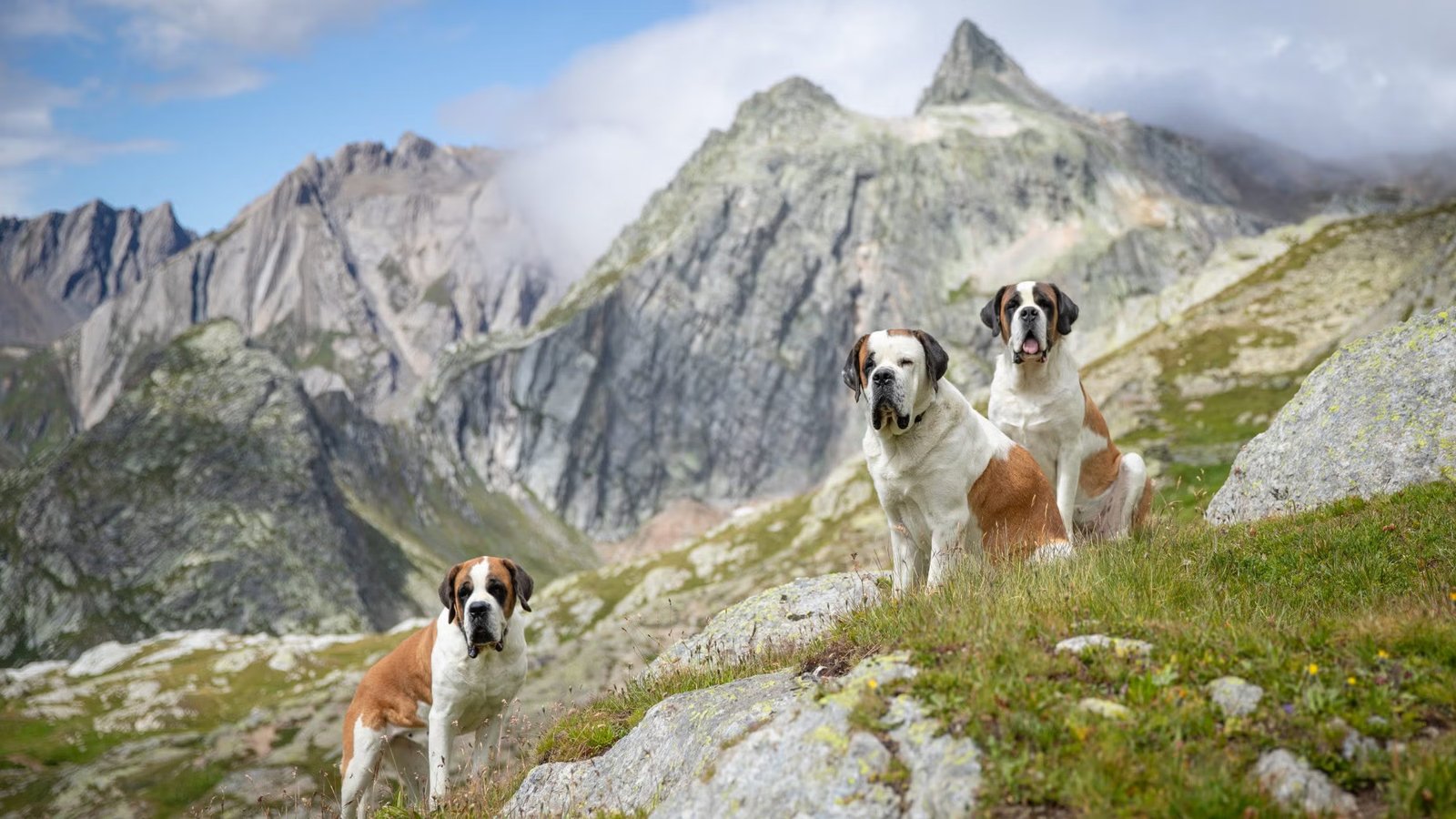
Saint Bernards have a long legacy as rescue dogs in the Swiss Alps. Now you can take a hike with the dogs that still patrol the mountains.
(Photo: Courtesy of Barry Foundation)
Published August 18, 2026 09:56AM
High in the Swiss Alps above Bourg-Saint-Pierre not far from the Italian border, are hiking routes that wend through alpine passes, high-altitude meadows, and lakes that perfectly reflect the wide blue expanse of sky. But here, there are more than show-stopping vistas: The hills are brimming with living history, too—of the furry, four-legged variety.
Near the aptly-named Great Saint Bernard Pass, sweet-faced Saint Bernards accompany hikers just like their ancestors used to. In the late 1700s through early 1900s, the dogs were famous for acting as both guides and rescuers during snowstorms or avalanches.These days, their job is less physical and more social and educational. They no longer lead lost explorers down the mountain pass or roam freely over hills and trails, but they do provide a glimpse into the history and culture of the region—and offer a unique experience for hikers.
Roaming with Pedigree
Each summer, visitors can book guided hikes with the animals led by dog keepers from the Barry Foundation, a nonprofit organization that exists to carry on the more than 350 years of Saint Bernard breeding tradition in the region. The hikes offer the opportunity to spend some quality time with Saint Bernards while learning about their personalities, care, and role in local history.
“Walking with them on the ancient pass where their ancestors were raised by monks felt a privilege. It’s one of the most peaceful places I’ve been in Switzerland,” says Kendall Hunter, an Outside contributor and author who visited the area last September. “We had them on a lead for part of the hike then set them free, and seeing them run in the beautiful Swiss landscape felt timeless.”
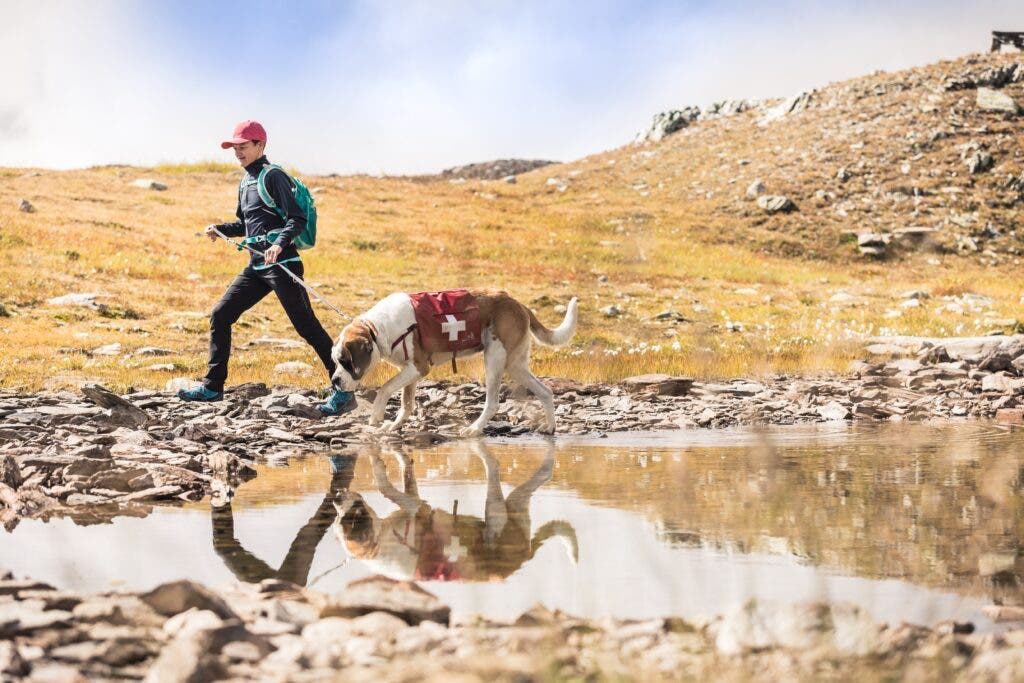
You’ll have to book months in advance to enjoy the experience. Because the well-being of the dogs comes first, the canine-accompanied guided hikes are limited, says Andrea Zollinger, head of corporate communication at the Barry Foundation. Interactions between dogs and visitors are restricted and professional keepers attend to their every need, including grooming, exercise, and protecting them from overwhelming crowds of tourists.
Immerse Yourself in Canine History
If you didn’t snag a spot on a guided hike or prefer a longer excursion, you can still explore the area by foot, including along historic paths that have been trod for centuries, like the Alpine Passes Trail from Bourg-Saint-Pierre to the Great Saint Bernard Pass, which climbs over 3,400 feet in 7.4 miles. When you reach the pass, you can tour kennels that house Saint Bernards all summer, explore the museum at the Great Saint Bernard Hospice (where you can book an overnight stay), then return the way you came or catch a bus back down. Now overseen by the Barry Foundation, the hospice dates back to the 11th century, when it provided shelter to travelers crossing the Alps. Starting in the mid-17th century, the location became home to dogs whose job was to guard and protect it. Before long, the Saint Bernards’ responsibilities extended to accompanying travelers over the pass and locating and rescuing people lost in snowstorms.
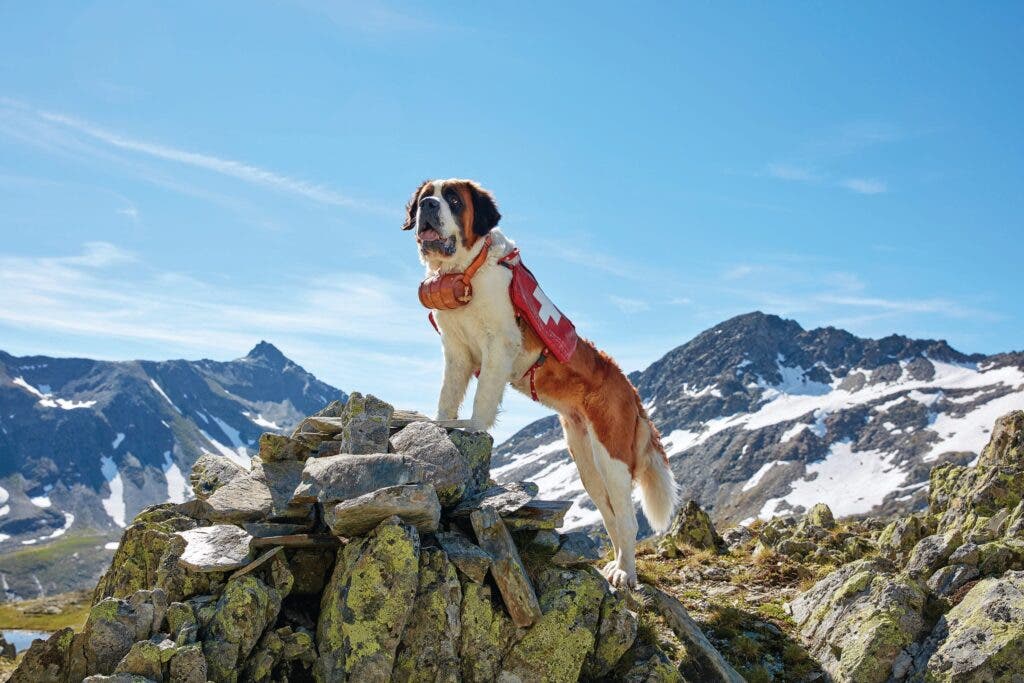
“Today, Saint Bernards are no longer used for mountain rescue, as helicopters and specialized rescue teams have taken over that role” Zollinger says. “However, their calm temperament, gentleness, and strong bond with people have enabled them to take on a new and equally meaningful mission.”
Their days as search rescuers may be over, but the dogs do more than hike with travelers. Instead, they are trained as emotional support and therapy animals for nursing homes, occupational and physiotherapy programs, and more as they continue their calling to offer comfort and joy both on and off the mountain.
