

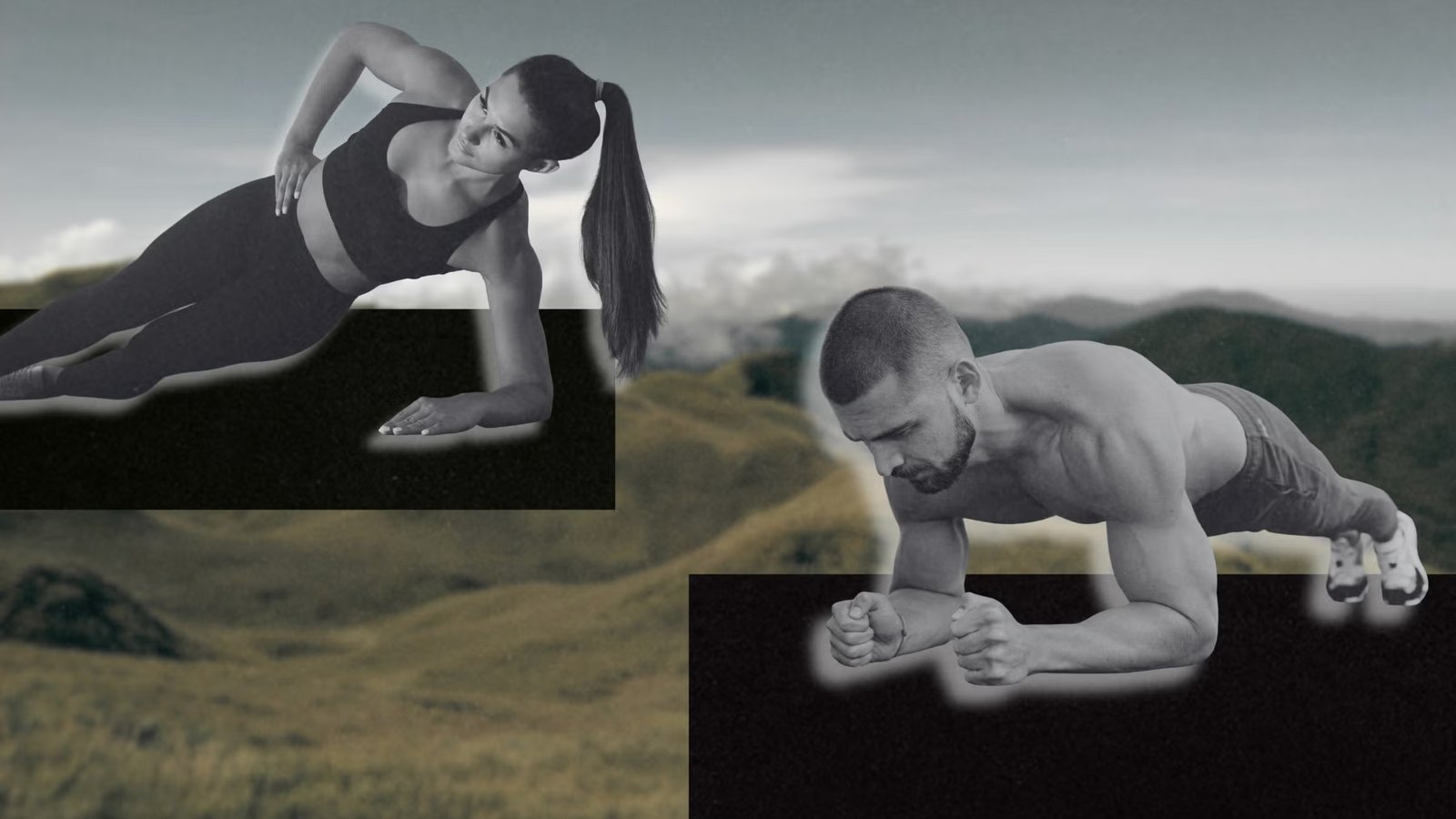
Build up your abs for better balance and all-day comfort on the trail when you’re carrying a heavy pack and need more stability.
(Photo: Ayana Underwood/Canva)
Published August 21, 2026 01:00PM
No offense to your legs, but it’s your abs and lower back that matter most when it comes to managing pack weight—and not just those superficial six-pack muscles, either.
Ditch the workaday crunches for these whole-system exercises from expert Robyn Fog, owner of Hypermobility Exercise Solutions in Golden, Colorado, to target the deeper back and abdominal muscles that protect and stabilize your spine. Do them three times a week, starting at least four weeks before your next big hike.
1. Uneven Farmer’s Carry
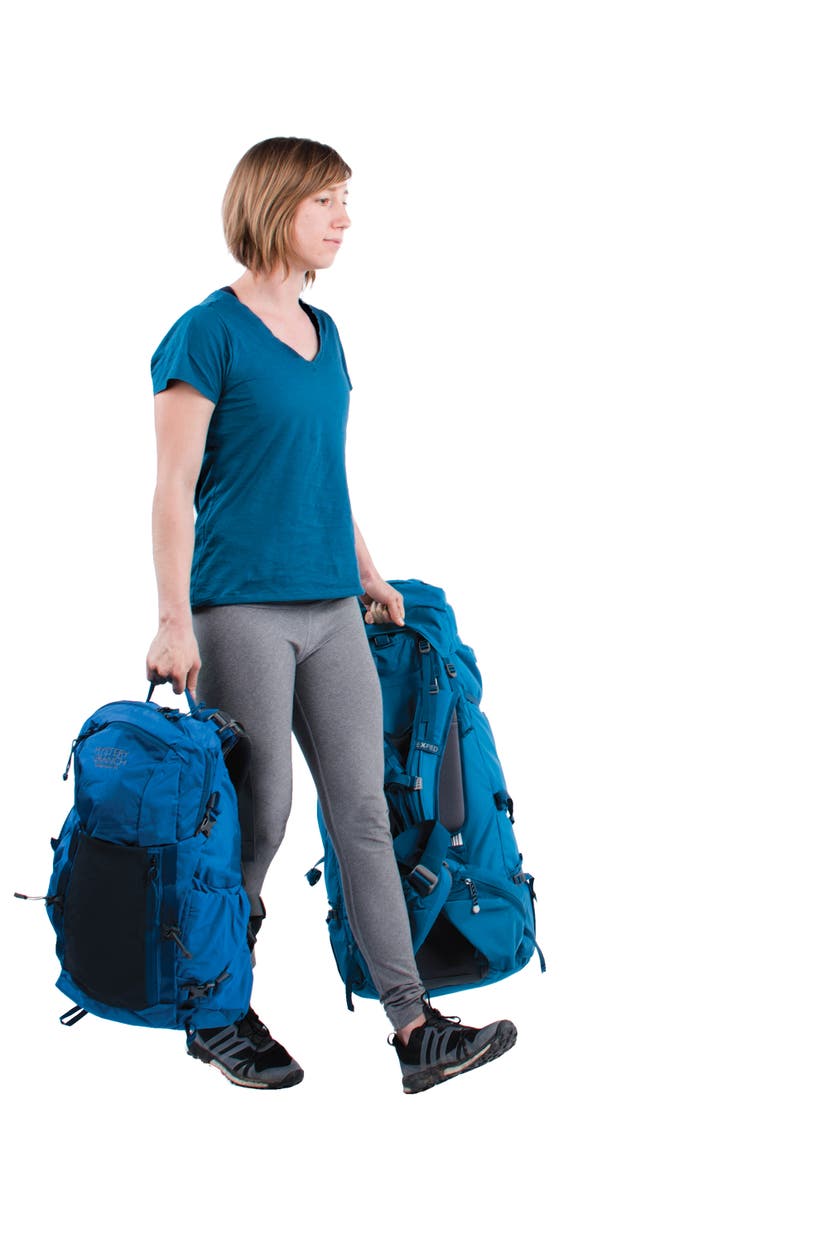
What the move is: walk with uneven weight to challenge your balance
Why it works: boosts stability under a heavy load
- Sets: 5
- Reps: 1 (each side)
- Rest between sets: 30 seconds
How to Do It:
Find a weighted object, like a kettlebell or pack, for each hand. They should total 40 percent of your body weight, with one side 10 pounds heavier than the other.
- To start, squat to pick up the weight (keep your back straight, and push up through your heels).
- With chin tucked and shoulders back, engage your core to remain upright.
- Walk slowly for 30 yards, taking 12-inch strides.
- Walk back with the heavier weight on the opposite side.
Make it harder: add 5 pounds every other week to work up to a 20-pound difference (max 50 percent of body weight).
2. Hanging Leg Raises
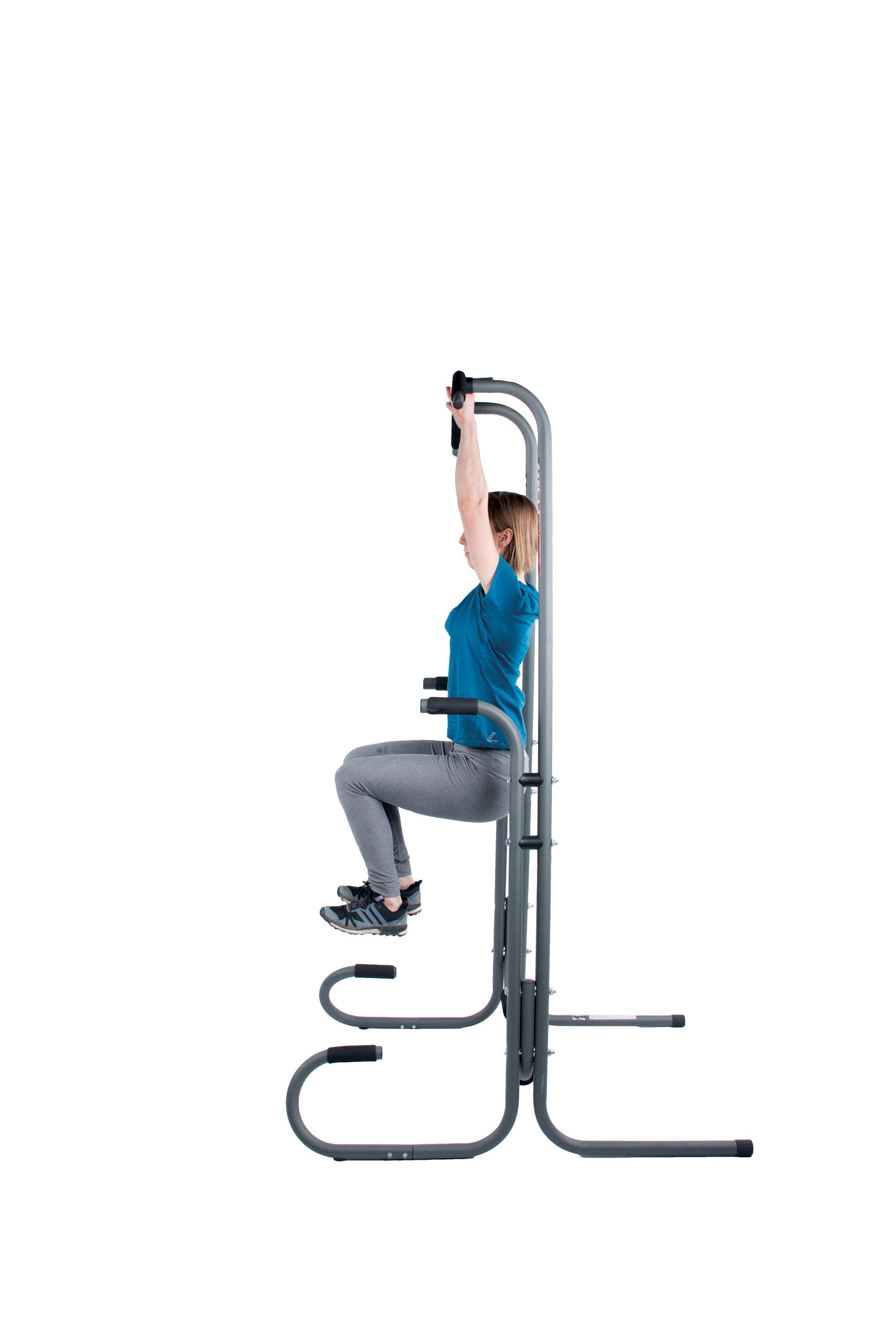
What the move is: simultaneously strengthens a whole muscle system
What it works: promotes synergy between glutes, hamstrings, and deep core
- Sets: 3
- Reps: 5
- Rest between sets: 30 seconds
How to Do It:
- Hang from a bar with feet flexed, arms straight, and shoulders engaged (draw shoulder blades down away from your ears and pull them together slightly).
- With a braced core, lift your knees to your chest for a count of two, pause, and lower for two counts, keeping abs and glutes engaged.
- Repeat.
Make it harder: Raise straight legs until they’re parallel to the ground. Still too easy? Touch your toes to the bar above your head.
3. Bosu Bicycle Crunch
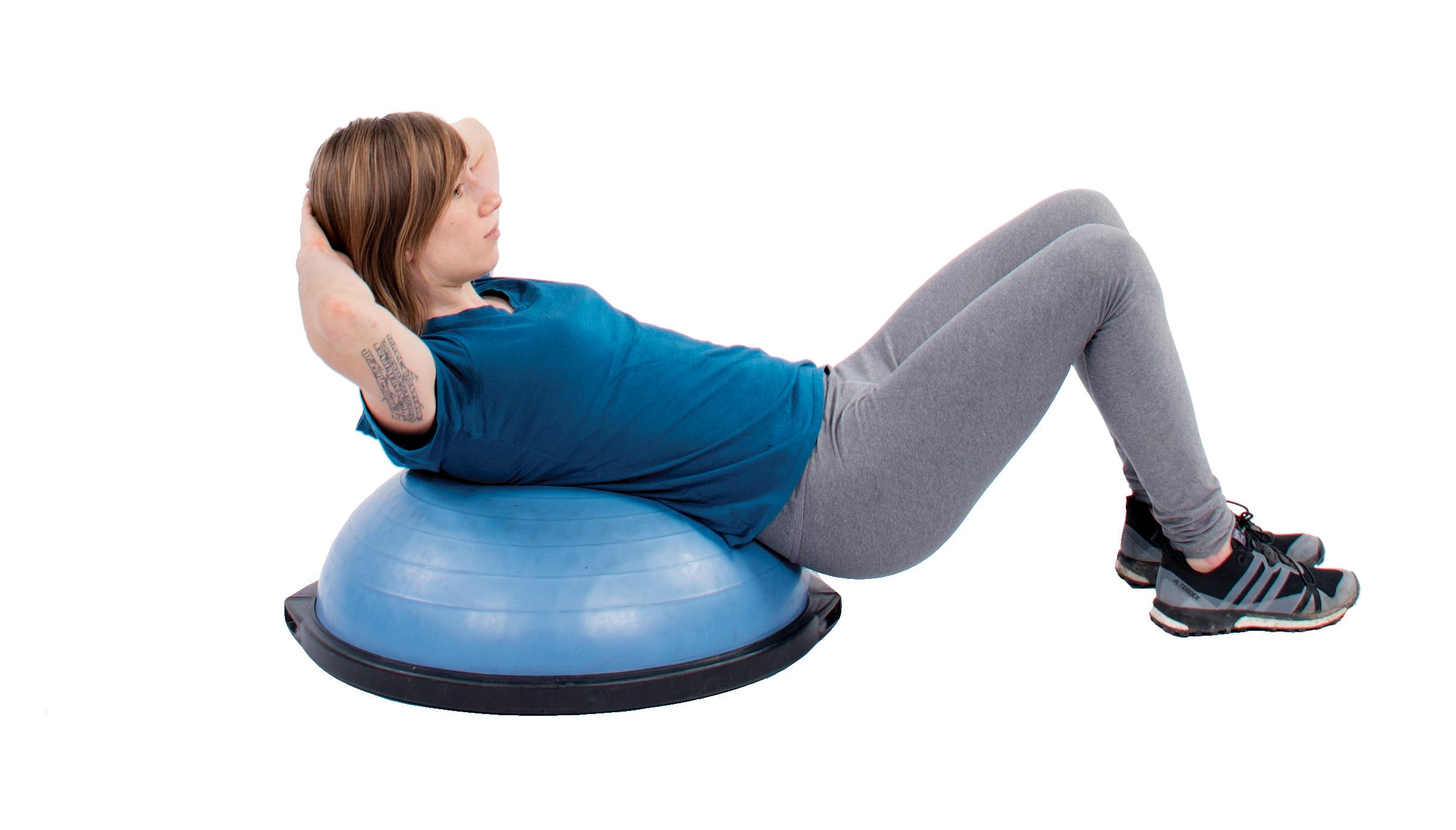
What the move is: incorporates an unstable surface into your workout
Why it works: trains your core to make quick adjustments in uneven terrain
- Sets: 3
- Reps: 8 (each side)
- Rest between sets: 20 seconds
How to Do It:
- Lie with your back on the Bosu and get into a sit-up position.
- Bring your elbow to your opposite knee for a count of two.
- Release and lie back for a count of two.
- Repeat on the opposite side.
Make it harder: Keep your arms and legs extended so your body is stretched out parallel to the floor (heels can touch the floor; arms can’t). Instead of tapping elbow to opposite knee, reach straight upward and touch hand to opposite foot.
4. Modified Side Planks
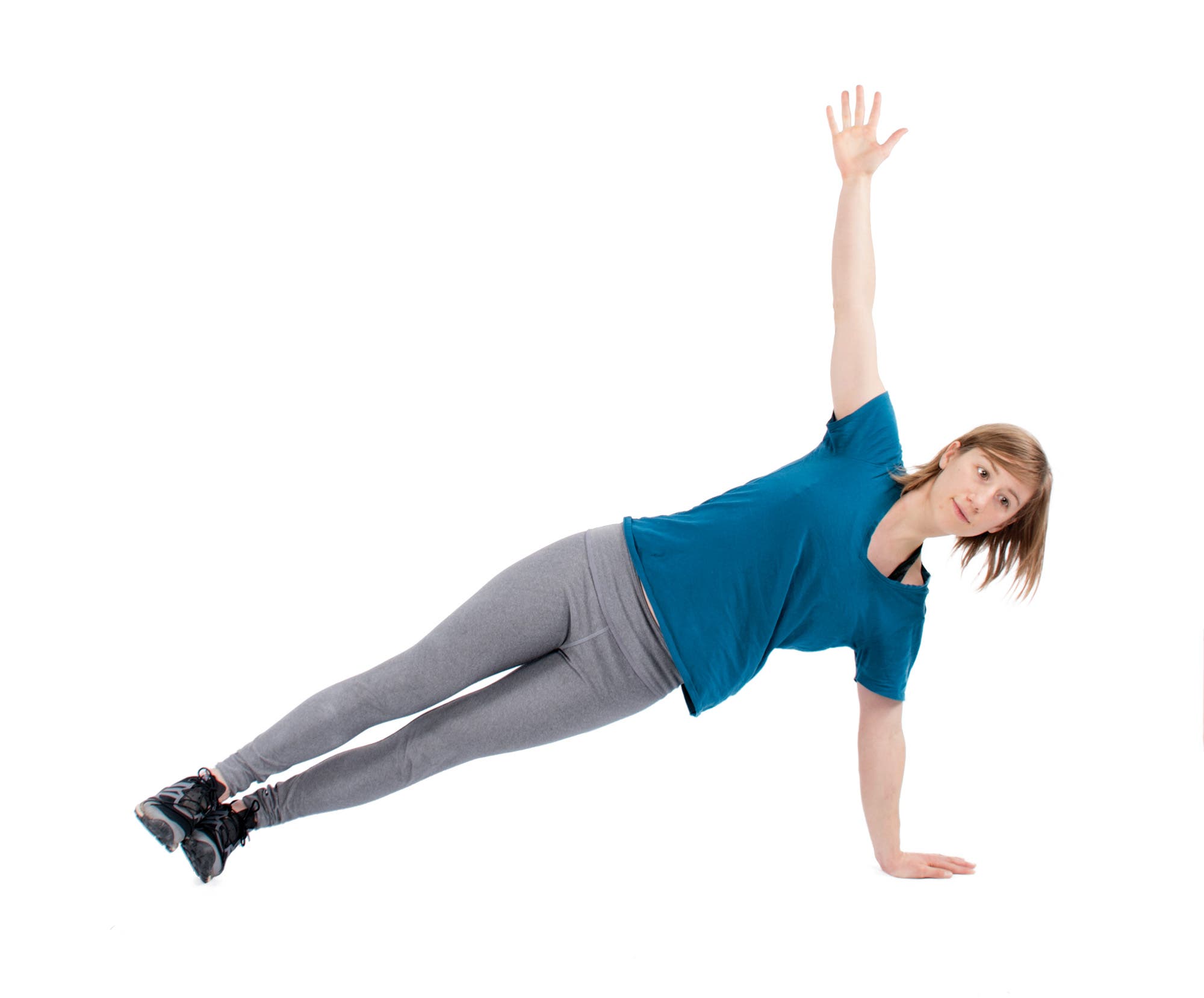
What the move is: reaching over and under for a full trunk rotation
Why it works: strengthens load-bearing muscles in your sides and lower back
- Sets: 3
- Reps: 10 (each side)
- Rest between sets: 20 seconds
How to Do It:
- Start in side plank position, keeping head, shoulders, hips, and knees aligned.
- Tighten your core, and extend your upper arm straight out from your shoulder socket toward the ceiling.
- Twist as if moving into a one-armed plank position and curl your arm under your opposite hip.
- Uncurl, keeping core tight as you reach your arm back up toward the ceiling. Repeat 10 times, then switch sides.
Make it harder: hold a weight with your upper hand
Don’t Sag Your Core
The most common mistake Fog sees in ab workouts is an improperly engaged core. Do that, and you expose yourself to an injury like a thrown disc or a tweaked back muscle, she says.
To get a feel for the right form, put one hand on your chest and one on your abdomen. Suck in the biggest breath you can. Your stomach should push out while your ribs stay put. Exhale fully—you’ll feel a deep contraction in your lower abs. Hold on to that contraction, squeeze your glutes, and tip your pelvis toward your belly button, breathing into your chest. Stay there for a few seconds to remember the feeling. Got it?
When an exercise tells you to engage your core, replicate that lower-ab tightening to maximize benefit and minimize risk.
Bonus Video: The Core Stability Hold
Improve your core strength with this simple, no-equipment exercise from personal trainer and mountain guide Jason Antin.
Want more Outside health stories? Sign up for the Bodywork newsletter. And for tips on how to train, fuel, and recover better, sign up for the Sweat Science 101 newsletter.
