

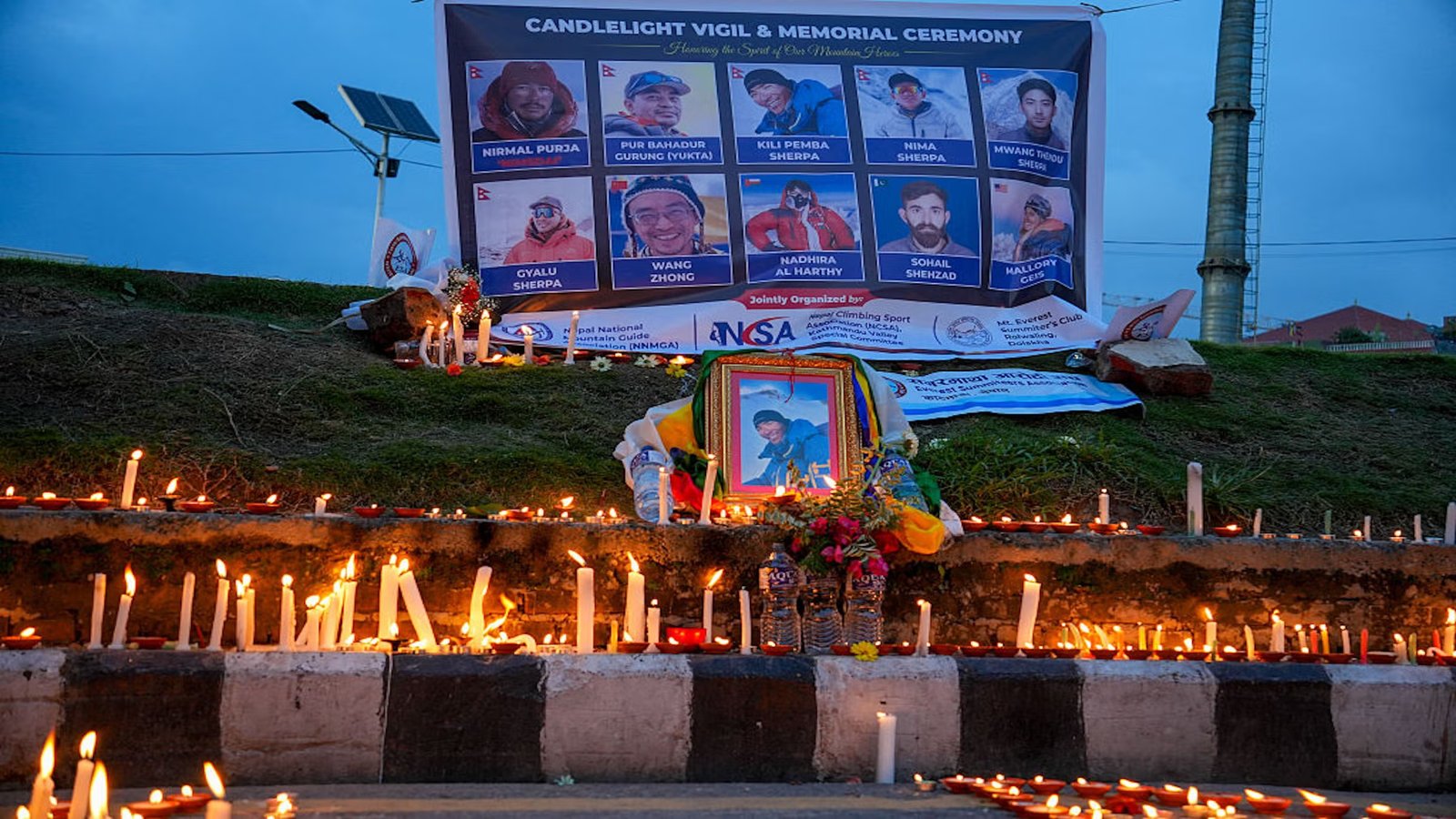
High-altitude porters located the remaining missing climber three weeks after the July 30 catastrophic slide, which claimed ten lives on the world’s 12th-highest mountain.
Mourners light candles during a candlelight vigil to commemorate climbers who died in a recent avalanche on Broad Peak on August 4 in Kathmandu, Nepal (Photo: Pu Ladan/China News Service/VCG via Getty Images)
Published August 24, 2026 12:53PM
Authorities have now located all ten missing climbers killed in the July 30 Broad Peak Avalanche in Pakistan.
On August 21, volunteer search and rescue crews found the body of American mountaineer Sarah Mallory Geis, 39, three weeks after the tragic avalanche on the 26,414-foot mountain. The slide killed her and nine other climbers, including Nepali-British climber Nirmal “Nims” Purja.
Alpine Club of Pakistan President Major General Irfan Arshad Khan told the Pakistani newspaper Dawn that volunteer porters are now moving her body to a nearby base camp with plans to eventually airlift it by helicopter to Skardu, the closest major city.
According to The Associated Press, Geis was the last avalanche victim to be located. Pakistani authorities initially reported they recovered Geis on July 31, shortly after the avalanche. Outside later learned that rescuers had recovered only her detached leg—the rest of her body remained missing for weeks.
The body of one other missing climber, Nawang Thendu Sherpa, remains on the mountain. Officials found him on July 31, but left his body in place due to extreme terrain hazards and safety risks, according to the Everest Chronicle.
The Broad Peak avalanche struck four different climbing teams around 9 A.M. local time above Broad Peak’s Camp II, at an elevation of 21,160 feet. It marked the deadliest high-altitude mountaineering accident since 2015, when an earthquake-triggered avalanche swept through Mount Everest Base Camp and killed 22 people.
Broad Peak sits in Pakistan’s Karakoram range and is the 12th-highest mountain in the world. The mountain is “among the more frequently climbed 8,000-meter peaks, but it is still significantly less popular than Everest and Manaslu,” Lukas Furtenbach, founder of Furtenbach Adventures, told Outside. Furtenbach leads expeditions to many of the world’s highest peaks, and says that between 50 and 100 climbers will attempt Broad Peak every year, putting it in the “upper middle, in terms of annual climber numbers.” Expeditions usually take between six and eight weeks, though he says much of that time is for acclimatization and waiting for suitable weather windows.
Geis was a resident of San Antonio, Texas, and had recently closed a Pilates studio to focus on mountaineering, CNN reported. Broad Peak was her first attempt at summiting one of the world’s 14 8,000-meter peaks. After the avalanche, her father, George Geis, told San Antonio station KENS 5 that the family’s “main objective now is to get her back.”
