

Published August 26, 2026 07:11AM
This story contains mentions of disordered eating and suicide. If you or someone you know is having thoughts of suicide or self-harm, call the National Suicide Prevention Lifeline toll-free from anywhere in the U.S. at 1-800-273-8255.
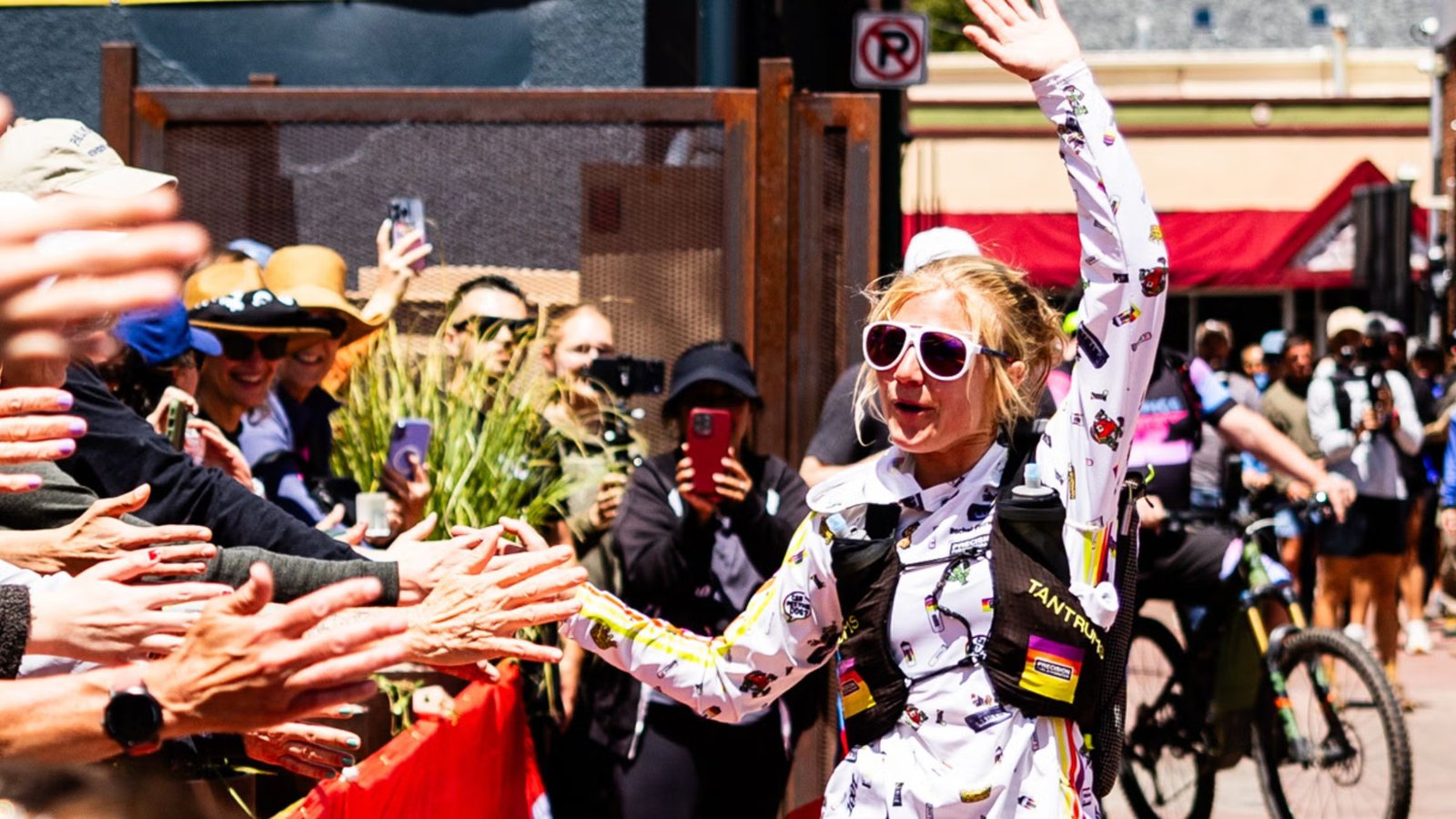
Rachel Entrekin sat in a chair under a white Precision Fuel and Hydration-branded tent that was speckled with graphics of running gels, electrolytes and water bottles. A giant tapestry of a ball room that looked onto a desert with mesas and cacti at sunset adorned the back wall of the tent. Just outside, an inflatable red and green baby pool filled with pink flamingos and watermelon pool toys served as a cooling station for exhausted runners.
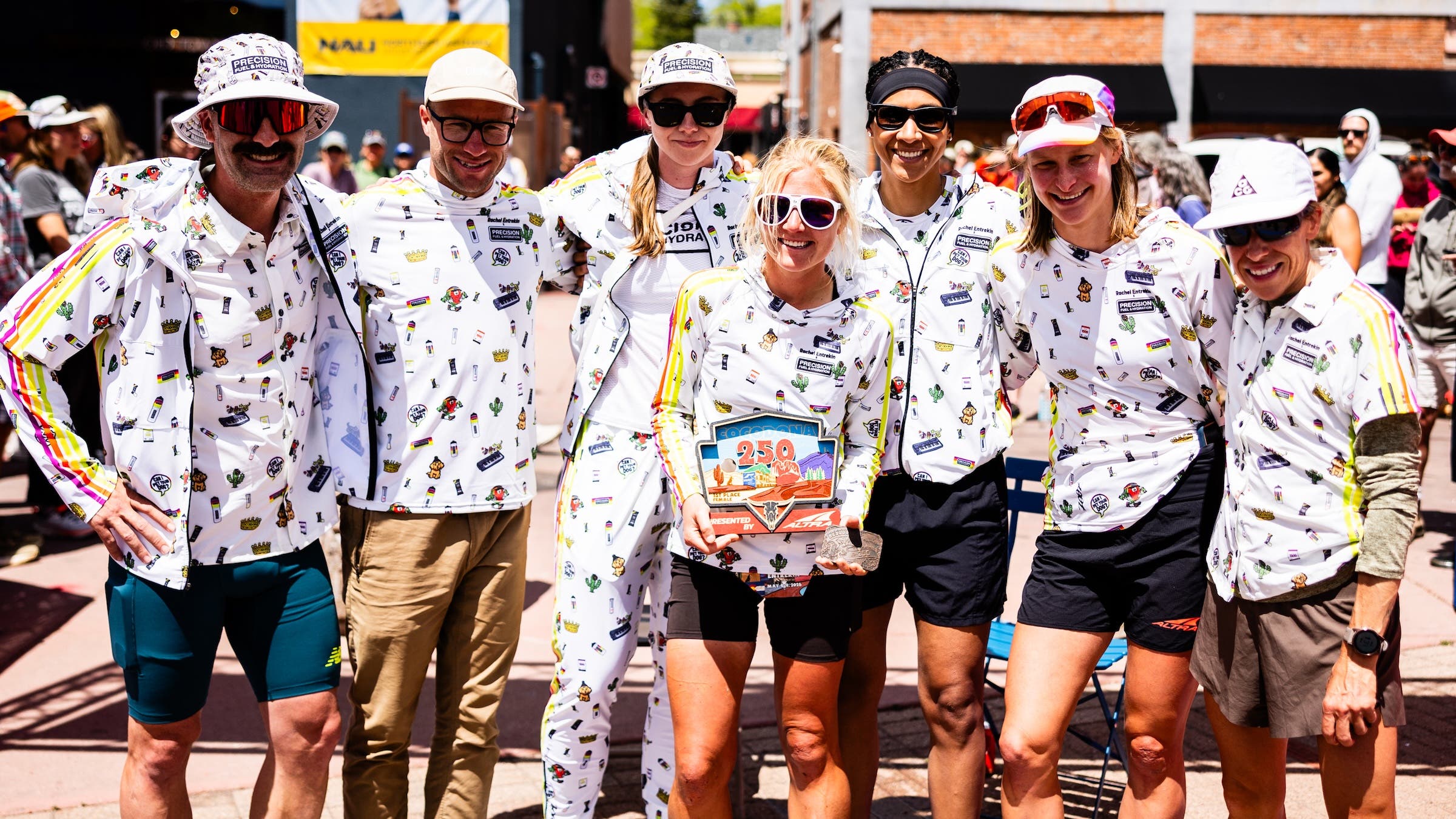
Sunscreen was streaked across Rachel’s face as she hurriedly slurped noodles from a paper bowl. Her blonde hair was pulled back into a bun and big white sunglasses covered her eyes. Half a dozen team members worked on and around her. One rubbed her calves and thighs, another put ice in a white bandana and tied it around her neck, and a third got her hydration pack ready for the next section of the course. They all wore matching white button-up party shirts that Rachel helped design, adorned with cacti, crowns, keyboards, and talk bubbles that read “Can I pet your dog?”
A swarm of people hovered around the tent in a half circle with cameras and iPhones, clamoring to get a glimpse of the phenom.
Seemingly unfazed, Rachel looked into the crowd, “Oh hey, there’s my parents!”
The whole scene could have been mistaken for a bizarre pop-up carnival, but this was mile 159.6 of the Cocodona 250, at the Sedona Posse Grounds Aid Station. It was noon in early May, the second day of the 253-mile footrace from Black Canyon City to Flagstaff, Arizona. Rachel had run almost 160 miles and been on her feet for nearly 31 hours. She was leading the race overall. The next-quickest runner was a man, Kilian Korth, who won three 200-milers last year, setting the record for the Triple Crowns of 200s. He was about 30 minutes behind. Other than a slight grimace when a sore spot was rubbed on her leg, Rachel looked completely composed and not at all daunted by the 94 miles that still lay ahead.
That’s why I was surprised when Addie Bracy, a professional ultrarunner who had paced Rachel for the last 35 miles, told me she was at a low. Everything hurt and Rachel was beating herself up for slowing down.
Of course, slowing down is relative. The 35-year-old had held a head-spinning 10:46-per-mile pace across rocky mountain terrain, with tens of thousands of feet of elevation gain for the first 100 miles of the race. She was now running at a little over 13 minutes per mile.
Addie told Rachel that it was OK to feel bad but that it wasn’t going to help. They needed to keep moving and make a plan for the next aid station. It was advice that had become a motto for Rachel: “bad times don’t last.” She needed to eat, drink, take an Advil and would surely feel better in 20 minutes.
After a five-minute rest and refuel, she took off to a roar of applause with another pace runner and disappeared down a singletrack trail into the red rock canyons. If Rachel could hold on, she was on track to shatter the overall course record and become the first woman to ever win the race outright.
It’s Like Christmas
I’d come to Cocodona to conduct research for a book I was writing on the evolution of female ultrarunners and was following another competitor, Megan Eckert. She’s best known for running 603 miles in six days and completing 383 miles at Big’s Backyard Ultra, a race of attrition where participants run around a 4.167-mile loop on the hour, every hour, until there is one person left standing. I expected that Cocodona would have a competitive women’s field with Megan, ultra-running legend Courtney Dauwalter, 200-mile connoisseur Mika Thewes, and Heather Jackson, an Ironman champion and long-distance gravel bike racer turned ultra-runner. But I knew little about Rachel.
I saw her for the first time the day before the race at runner check-in. It was sweltering. I’d squeezed under a tent overhang to find shade for myself and my two young sons who I brought on the reporting trip with me. Rachel, who had been mingling in the crowd, bounded onto the stage. She dropped onto the couch, kicked her tanned legs up on the coffee table, waved a red foam #1 finger, and with her hair in a waist-length side braid, beamed a megawatt smile.
“This race is my Christmas,” she grinned. “I’m having the best day!”
If it’s her Christmas, she’s certainly been the hardworking elf. There are athletes who spend more than a decade in the sport before anyone knows their name, an interviewer on the stage remarked. Rachel is one of them.
In 2013, at 21, she started running ultramarathons. By 2017, she had placed first overall at the Plain 100K in Washington State. Over the next five years, she took more than 20 first-place finishes on terrain that varied from technical 100-mile mountain races to 48-hour runs on flat dirt loops to fast 50Ks and setting Fastest-Known-Times (FKTs). From July 2022 to March 2026, she was undefeated in every race she ran. That streak came to an end when Courtney Dauwalter and Yngvild Kaspersen of Norway finished just minutes ahead of her at the Chianti 120K in Italy.
Despite her success, Rachel got little traction from sponsors and scrambled to scrape together the gear and financial support she needed for her races. When she placed first for women at Cocodona in 2024 and set a women’s course record, she didn’t have a watch, wore gas station sunglasses, and sported a duct-taped hydration pack. With no nutrition plan, she spent much of the race throwing up. “Basically, all my shit was broken,” she joked in a phone interview.
That did not stop the five-foot-three powerhouse from relentlessly pursuing the races she thought were “cool,” even when it meant defending her victories to would-be sponsors. For years, potential sponsors pushed Rachel to run more high-profile races like Western States 100 and Ultra-Trail du Mont-Blanc (UTMB). They did not think the lesser-known local races and 200-mile-plus ultras like Cocodona that she chose to run were competitive enough or would garner the media attention they desired. But Rachel stuck to the races she loved, telling sponsors that even if it did not land her a professional contract, “a good run is a good run.”
“Don’t let other people tell you what you should be interested in,” Rachel told me in an interview the day after she finished Cocodona this year. “Worst-case scenario, you get to spend your life doing things that you enjoy. Best-case scenario, other people start to enjoy those things too.”
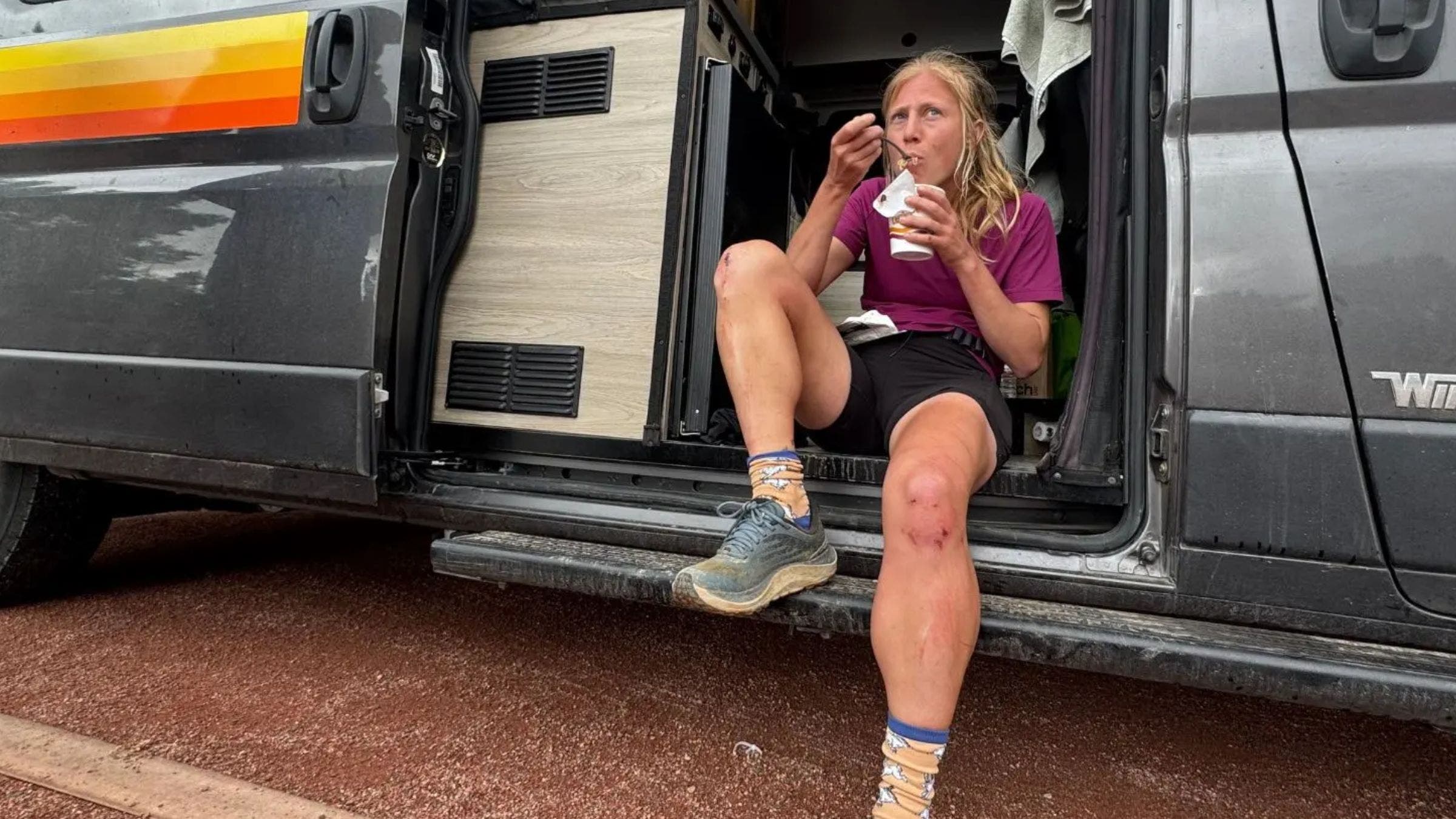
The next year, at the 2025 Cocodona, she finally got the break she had been working toward. With the help of Precision Fuel and Hydration, a UK-based sports nutrition company, Rachel was given her own nutrition coach, Emily Arrell. For the first time, Rachel had the expertise she needed to dial in her calorie intake. She dropped her course record from 73:31:25 to 63:50:55, placing first for women and fourth overall.
The company signed her on as an athlete and more sponsorship followed. With that came an arsenal of gear, including her first running watch, and media attention. She quit her job as a physical therapist, where she often worked 50-hour weeks and had to squeeze her runs in at 4 A.M., and started running full-time. Her weekly mileage soared from about 70 miles to back-to-back weeks of 120 miles or more.
Coming into the 2026 race, Rachel, who was nicknamed “The Queen of Cocodona” after her prior wins, said she had been able to offload her usual logistics and planning because she had a “literal drill sergeant” as her crew chief, a lineup of professional ultrarunners to pace her, and Emily, her nutritionist, telling her what to eat and drink along the way.
The opportunity was not lost on her.
“My life is a dream, dude,” exclaimed Rachel from the stage. “I get to be outside and get paid for it.”
An Early Lead
At mile 75.7, the buzz around Whiskey Row, a lively historic block in downtown Prescott, was electric. It was early evening and Rachel had taken the lead at mile 61. People murmured that with 177 miles to go it was still far too early to know who the winner would be—and yet the excitement was palpable. Spectators who were out for a drink, crew members, and media gathered several people deep in front of the 19th-century saloons and bars with glowing neon signs. Rachel zoomed past with remarkable efficiency.
Overwhelmed by the size of the crowd, Maggie Guterl, who placed first for women in the inaugural Cocodona in 2021, and I moved to the grassy, tree-lined plaza next to the courthouse to wait for Courtney Dauwalter. She and Heather Jackson were in second and third place, about an hour behind Rachel.
Five years ago, Courtney had paced Maggie out of this aid station to a much smaller crowd that, at the time, Maggie sheepishly remarked, felt like being a celebrity at UTMB, the Super Bowl of running races. Now, she said, she wouldn’t even mention her winning time—85:30:38. Rachel had already eclipsed it by nearly a day, and given how fast she was moving, it was likely to fall further. For the last four years, Maggie, 45, has been sidelined by injury, but in 2019 she was the first woman to win Big’s Backyard Ultra outright. She ran 250 miles. At the time, that number seemed impossible. Now, Megan Eckert, who was about three hours behind Rachel at Whiskey Row, planned to run more than 400 miles at Big’s Backyard in October.
It’s hard to quantify how much the sport of ultrarunning, particularly women’s ultrarunning, has transformed over the last decade, John Medinger—a former 29-year Western States 100 board trustee—told me. The level of competition has risen so dramatically in the last few years that the fourth- or fifth-ranked female UltraRunning Magazine Ultrarunner of the Year in 2025 would have been first any other year.
One of the aspects of the competition that has changed, though still controversial, is the extremely long distance of the races. While some people in the running community still argue that multi-day races like Cocodona are more thru-hiking events than actual runs, Rachel’s speed was making that theory feel archaic. She ran the first 100 miles of Cocodona under 18 hours and the next 100 in 23—both commendable times in a 100-mile event. She found her feet in ultrarunning as the 200-mile phenomenon was born.
When race director Candice Burt put on the inaugural Tahoe 200 in 2014, it was the first time a single-loop race of that distance had been held in the United States. I was one of the 90 runners who toed the line that year. In many ways, we felt like guinea pigs. Following the race’s success, Candice, who had a cougar tattooed on her leg after she spotted one’s glowing eyes watching her on a solo night run, quickly created more 200-mile races, including the Moab 240. In 2018, I was once again at the Tahoe 200, this time writing about Courtney Dauwalter for the New York Times as she annihilated the course. Jamil Coury, the CEO of Aravaipa Running, one of the most influential companies in American trail running, was also running the race. Three years later, Coury would become the visionary behind the Cocodona 250. In 2026, Cocodona was broadcast on a 24/7 livestream to millions of viewers around the world.
When Courtney blasted onto the scene, Rachel had just moved from Alabama to Seattle, Washington, and discovered the kind of big mountain trail running Courtney was dominating. She remembers when Courtney won the Moab 240 outright in 2017, went viral online, appeared on Joe Rogan’s podcast, and became a household name. That’s when she saw what she wanted to be: a professional trail runner.
Opposite Action
Rachel was born in Birmingham, Alabama. When she was a toddler and in early elementary school, her family moved from Alabama to Texas to South Carolina for her dad’s corporate job. Wherever they were, her mom, Karen, would enroll Rachel and her older brother in the sports programs kids in those areas were participating in—whether it was swimming, gymnastics, or soccer. The summer she turned eight, the family moved to Huntsville, Alabama. There she attended a small, private, Christian school. She thrived socially, played the flute and oboe in the band, taught herself Beatles and Coldplay songs on the piano by ear, and made the cross-country and soccer teams her freshman year. But Rachel, whose best friend went to the much larger public school, felt the private academy was too small and lacked opportunity. In tenth grade, despite her mom’s reservations, she transferred.
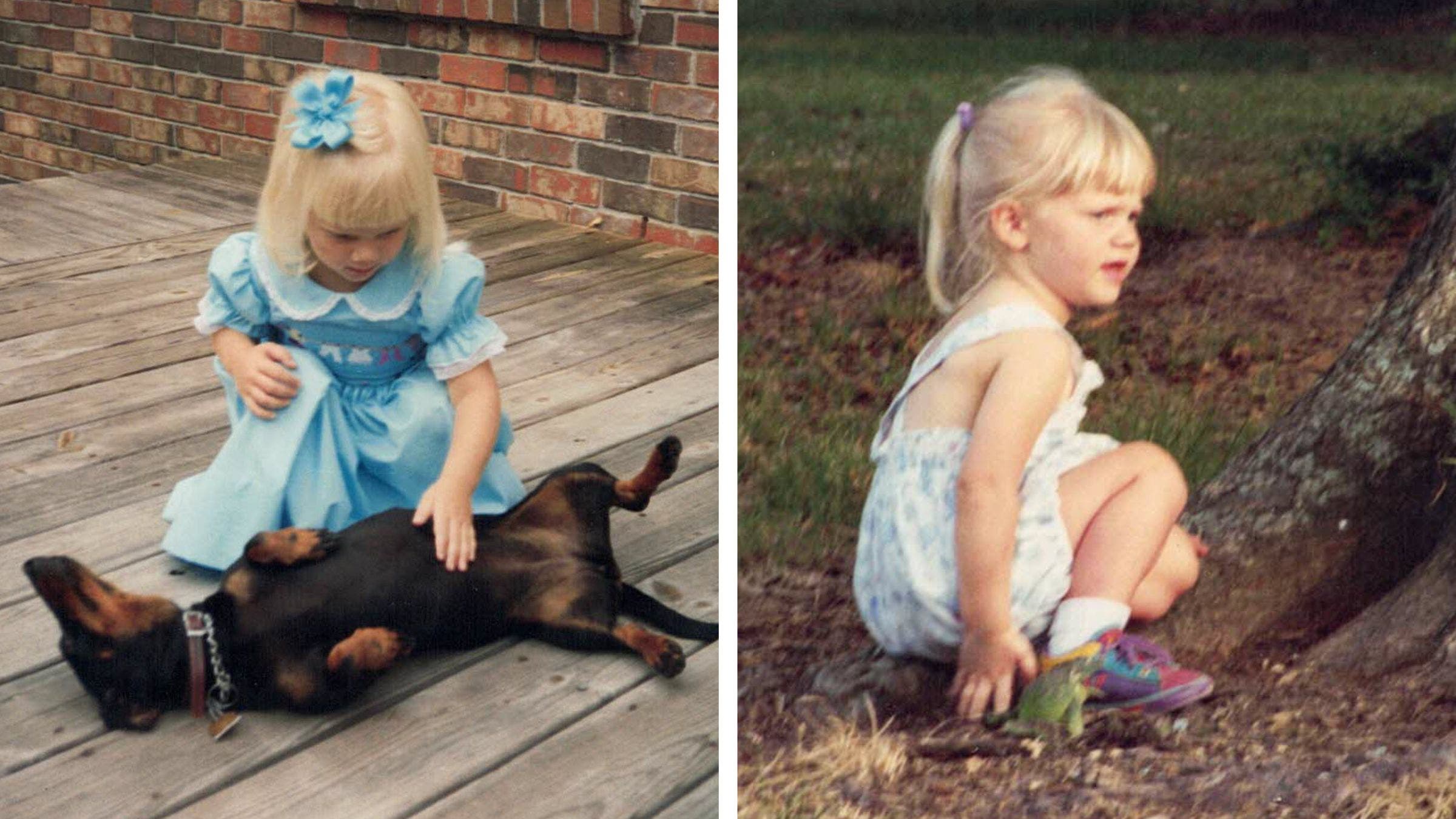
Though the foreign language and advanced placement opportunities suited her, she did not make the soccer or cross-country teams her sophomore year and struggled to fit in.
“I could do a lot of stuff, but I wasn’t the best at anything,” said Rachel, who referred to herself as fat in high school. “I felt the only thing I could do was be the funny one, and I was really good at not eating, so that’s what I did.”
By her junior year, Karen, who shares her daughter’s blonde hair, intense blue eyes, and candor—and speaks with a distinct Southern accent unlike her daughter—sensed Rachel’s self-esteem was low. She said most of Rachel’s girlfriends were tall, blonde and super thin, and Rachel, who had a shorter, stouter build, did not have their body type. Then her senior year, she noticed Rachel was losing weight, going to the gym at odd hours, and often skipping meals. Karen took Rachel, then 17, to their primary care doctor, who initially thought she was fine. But two weeks later, when Rachel came back for her blood work follow-up, she had lost eight pounds. It was clear there was a problem.
They tried outpatient therapy for anorexia, but it was not enough. In May of 2009, Rachel was down to 82 pounds. Karen, who is a nurse, wondered if her daughter would survive. She remembered sitting on the floor of Rachel’s room and watching her sleep in the middle of the day.
“All I could see was her face, and it was pitiful,” she told me. “She was skin and bones, and she looked so old.”
Rachel’s health had deteriorated so rapidly that she was experiencing fainting episodes. Her parents took the car keys, and Rachel’s plans to attend the University of Alabama at Birmingham, where she had a full scholarship, were postponed.
What Karen did not know until I mentioned it in my Zoom call with her in July was a story Rachel told me in an interview after this year’s Cocodona. At 17, she attempted to take her life by overdosing on over-the-counter pain pills. Fortunately, the pills had expired and were not potent. A few days after graduation, which Rachel still managed to do with honors, the family dropped her off at an inpatient facility in North Carolina. She stayed for several months and, within days of returning home, told her mom she needed to go back.
“I didn’t eat, fought with my parents, and used ineffective coping skills,” said Rachel. “I was immediately right back in the same cycle.”
The second time she went to the treatment center, Rachel took it more seriously. She wanted to go to college and run.
“Even when I was sick, and my head was all messed up, running would make me feel competent,” she told me. “As soon as I got out of rehab, I was like, all right, I still like running and I have got to get to a place where I can do this safely.”
That would take years.
One of the tools Rachel learned is a behavioral technique called opposite action. If you don’t want to do a thing, that is exactly the thing you should do. Now when she feels the urge to restrict, she knows she needs to eat something. On difficult runs, Rachel often opposite-actions herself into being stoked.
“It’s like you gaslight yourself into having a good time and eventually you do,” said Rachel, who is a vegetarian, between mouthfuls of pizza.
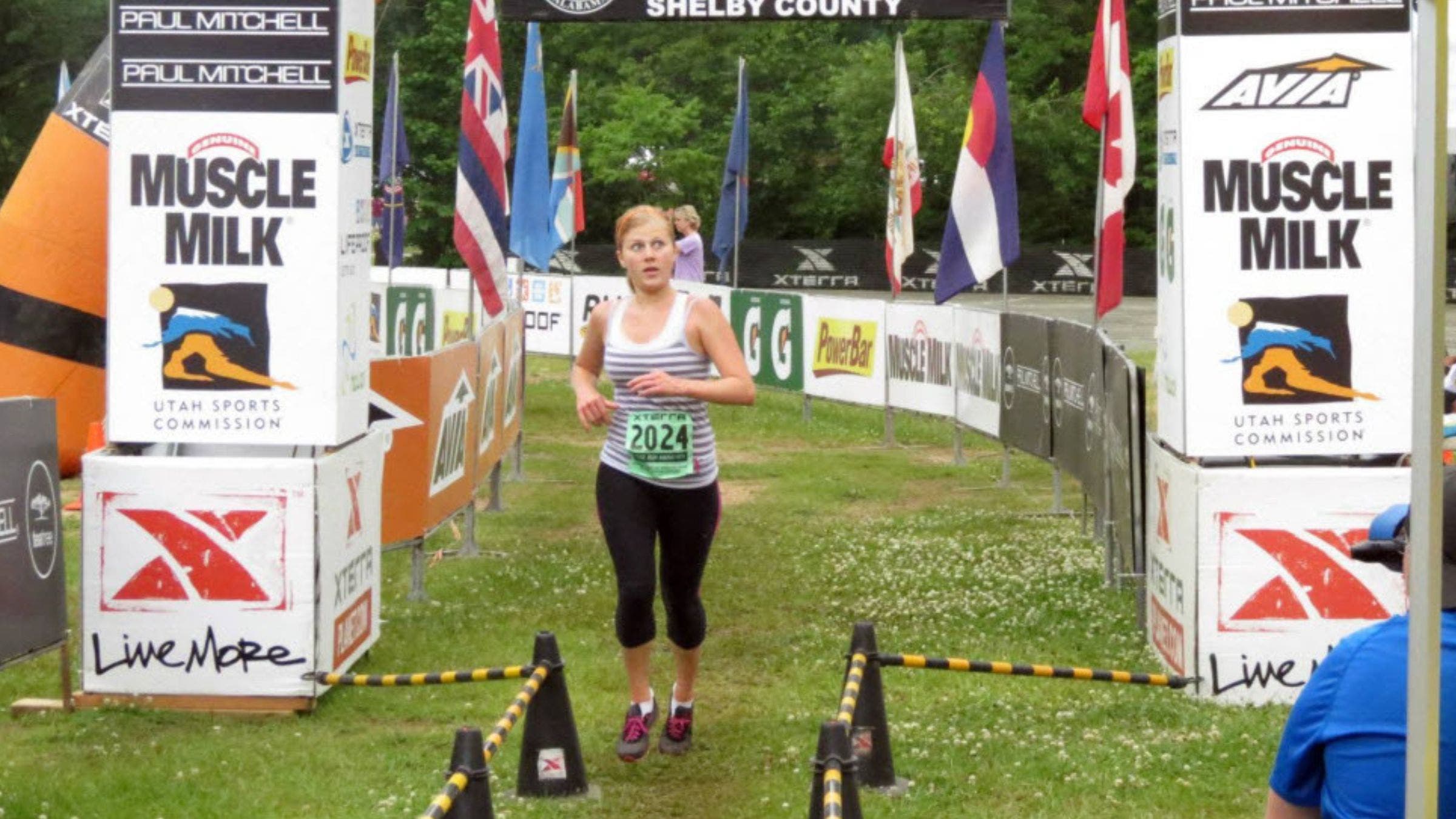
When Karen learned Rachel was running races in college, she was not supportive. She worried that Rachel had traded one addiction for another and was not mentally stable enough to put herself through that kind of rigor. She also grieved the years she had lost with her daughter. On the rare occasion Rachel was home, she wanted to spend time with her and resented the hours she spent training.
“I did at one point use exercise in a very extreme way for a very bad reason, and I know that I gave my parents PTSD,” Rachel told me. “They were really resistant to me running and thought I was still doing it for unhealthy reasons.”
But over the last few years, they have evolved. Now, when she goes home and tells her mom she is going for a three-hour run, instead of feeling like she is being guilt-tripped for it, she’s told to have a great time.
Karen, who went back to school in her mid-50s to become a therapist, thinks Rachel has evolved, too. She no longer will only eat at “safe restaurants” and does not get defensive when Karen asks her if she is taking care of her health. Karen believes that while the mental aspect of Rachel’s illness may never fully go away, she has done the work and is using the techniques she learned in therapy.
“That’s why Rachel’s capacity is so extraordinary,” said Karen, who also shares her daughter’s love for the piano. “I’ve always told people, if you can overcome an addiction or an eating disorder, you’re the toughest person on earth.” She watched Rachel cross the finish line for the first time in 2024 when she won Cocodona. This year, she and her husband were at nearly every aid station.
When you listen to Rachel’s reflective interviews, her wise quips during a race, or read her Substack—she writes like she talks—you will notice that she continuously reflects on her races, both her wins and DNFs, and learns from them. When she won Cocodona in 2024, she said she had “dead fish energy” at the finish line and was embarrassed by the way she behaved. She had a hard time getting up the last climb on Mount Elden, got into a negative headspace, and without the knowledge or coping skills to get herself out, stayed there.
The next year, her main goal at Cocodona was to have a better attitude at the finish. When she felt herself “hating her life and about to complain about the thing she chose to do,” she had a snack and chose to not let that spiral continue.
“I think a lot of the time, people want their lives to be easy, but life isn’t easy,” she said. “You have to practice doing hard things in order to prepare yourself for when hard things come up. That’s what running is for me. Running helps me practice who I want to be when things get tough.”
Just Wait
One of the aspects of Rachel’s run in Cocodona I wanted to understand most was what she told herself when she took the lead so early on in the race.
Rachel has a doctorate degree, is specialty certified in three disciplines, and kept working more hours as an oncology physical therapist because she was continually promoted. She has won all four of the 200-mile mountain races she’s entered, but despite her success, both professionally and with running, she has always felt that she needed more proof that she was qualified.
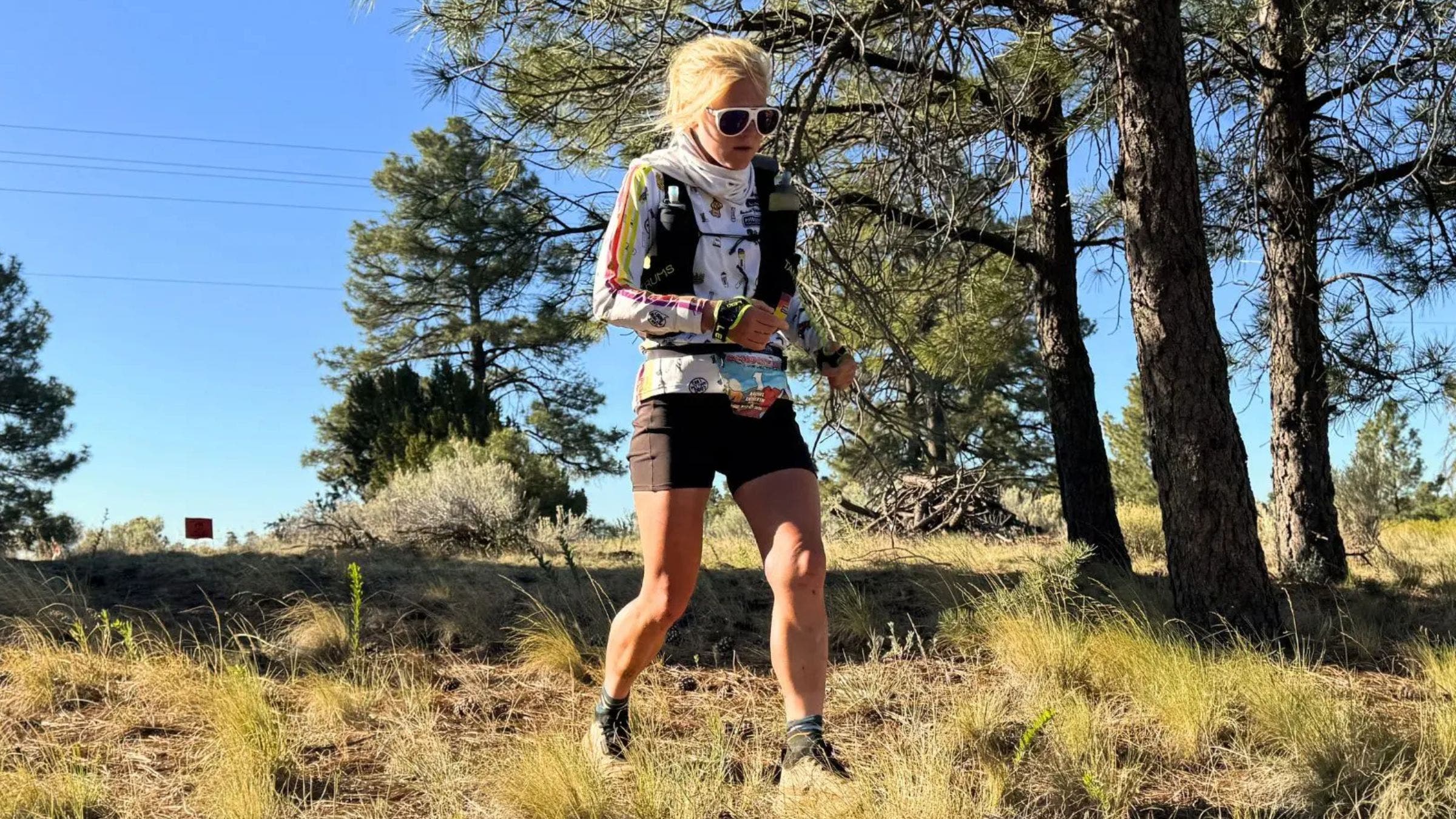
During Cocodona, when she took the lead early, she had a lot of doubts. That was when she told herself to zoom out. She was the most qualified person running the race and she needed to believe in herself and see what would happen.
“I have spent a lot of time thinking about why it can’t be me,” she said. “I would prefer to wonder: ‘Why can’t it be me?’”
The next time I saw Rachel after Sedona was the third morning of the race. I had just paced Megan Eckert 16 miles to the Walnut Canyon aid station at mile 227.9. Courtney was solidly in second place, Heather had left the aid station minutes before in third place, and Megan was in fourth about to grind another gear. All three women were on track to break the women’s course record.
And at that exact moment, a marathon ahead in Flagstaff, at mile 253, Rachel was crossing the finish line. I watched her on the livestream from a laptop on a table covered with bowls of chips, pickles, and M&M’s as I poured water in my CamelBak. Volunteers embraced and thanked each other for being a part of history. We were not standing with the enormous crowd that had gathered to see Rachel cross the line, but we could feel them.
Rachel was the first woman in the race’s history to finish first outright. She set a new overall course record and took almost eight hours off her previous time, finishing in 56:09:48. She also went globally viral, appeared on all the major networks, and further put what was once an obscure sport and an unthinkable distance into the zeitgeist.
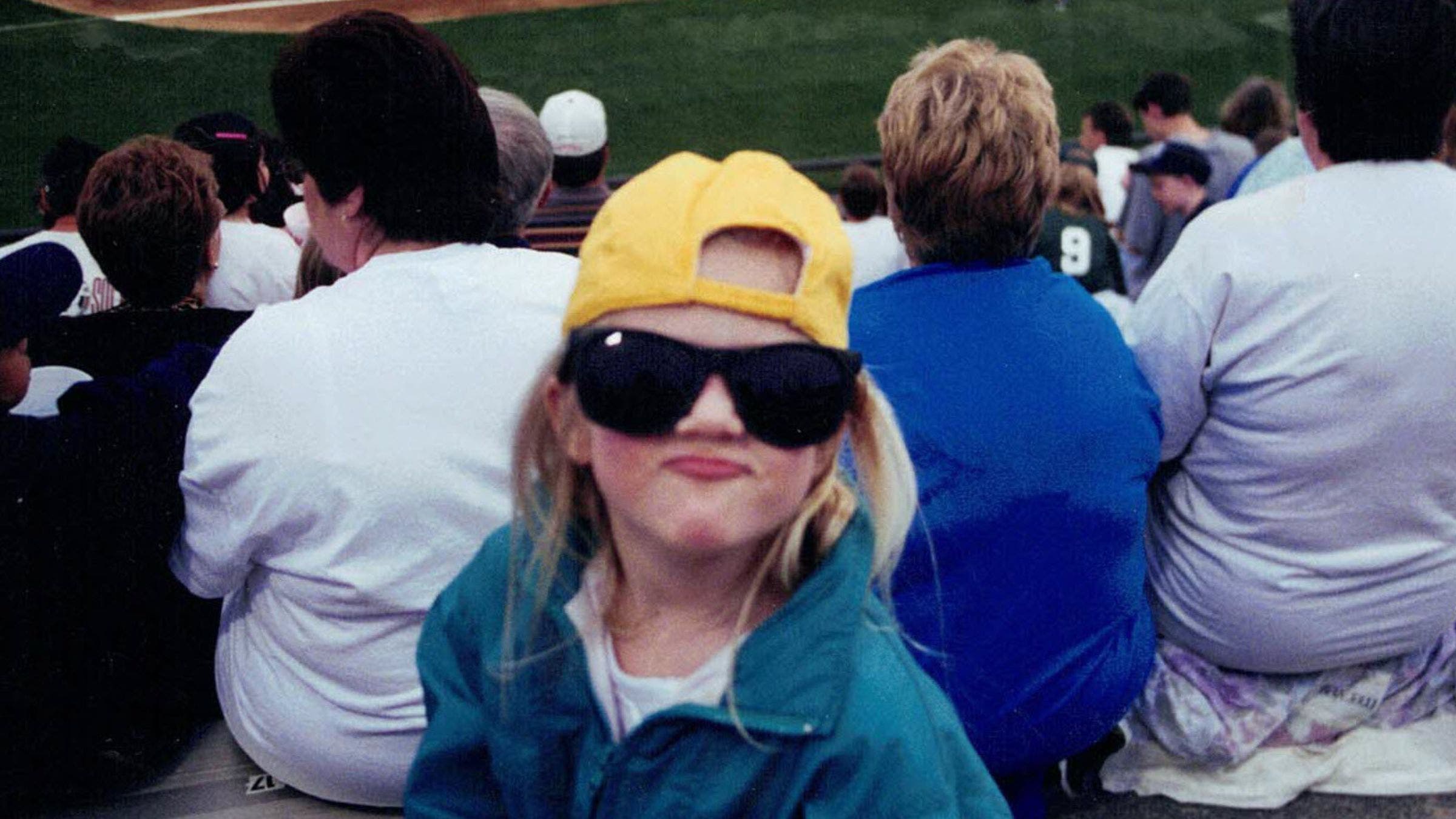
That evening at the finish line, I talked with Rachel for the first time. Her crew had applied sunscreen to her face throughout the race, but Rachel, who does not wear a hat, had what looked like a permanent suntan. Despite not sleeping for literal days and staying up that night to help Heather Jackson, who collapsed from exhaustion only four miles from the finish, she agreed to an interview the next morning.
During the interview, the camerawoman asked her what she would tell her six-year-old self.
“There were a couple of times when I tried to take my life,” she said, her voice breaking. “I wouldn’t have had any of this if that had gone according to plan. I’d tell her to just wait. Life is going to get really good.”
Ring That Bell
When I met up with Rachel in Olympic Valley, California, the day before the Western States 100-Mile Endurance Run, in late June, she and John Kelly were trying to have a conversation that kept getting interrupted by people wanting a photo with her. John has finished the infamous Barkley Marathon three times, is known for his FKTs, and was running Western States. He sent Rachel a message on Instagram congratulating her after Cocodona and, to his surprise, she responded. The two had struck up a friendship, and this was the first time they were meeting in person.
I found an empty high-end clothing boutique next to a restaurant in the valley and suggested that we do the interview there. John could sit on the couch and talk with Rachel afterward. We were five minutes in when a stocky black dog entered with his owner, and Rachel stopped the interview to pet the pup who obliged by rolling over for a belly rub.
One of the first things I noticed about Rachel was the new colorful tattoo that took up the back of her left calf. She told me that as soon as she finished Cocodona, she knew that she wanted to get a tattoo to symbolize the encounter she had had with a Hopi woman on Mount Elden. Rachel had been looking forward to that section of the course because pacers were not allowed. She wanted to see who she could be alone, when things got hard, during the final 26 miles. Halfway up the mountain, there was a Hopi woman standing next to the trail waiting for her. They briefly talked, and the woman gave her cornmeal.
“The gesture taught me that you never really do anything by yourself,” said Rachel, still emotional, remembering the interaction.
When she got to the top of the mountain, she tossed the rest of the cornmeal for the runners who would traverse the trail after her. The tattoo was the Kachin Mana, the female figure associated with corn, fertility, and sustenance in Hopi tradition. After sleeping a total of 19 minutes, in two and a half days, via three dirt naps on the side of the trail, I thought it was possible the entire interaction was a hallucination. But two weeks later at Hardrock, Rachel talked with the woman again.
After our interview, Rachel casually told John the procedure he needed to have done to his leg that had been ailing him for more than a year. Several weeks later, I saw on Facebook that after seeing multiple specialists, having multiple tests, exercises, and therapies, the one Rachel suggested worked.
“She’s a very talented runner, but she’s much more than that,” said John, during a phone interview in late July. “Rachel has the mindset to do these enormously complex challenges, where things are absolutely going to go wrong, and she has the resilience to keep going, and the intelligence to figure out the best way around obstacles as they pop up.”
He said that Rachel may have added years to his running career and had set the example for how he wants to show up when he has low moments during his Appalachian Trail FKT attempt, which he began this August.
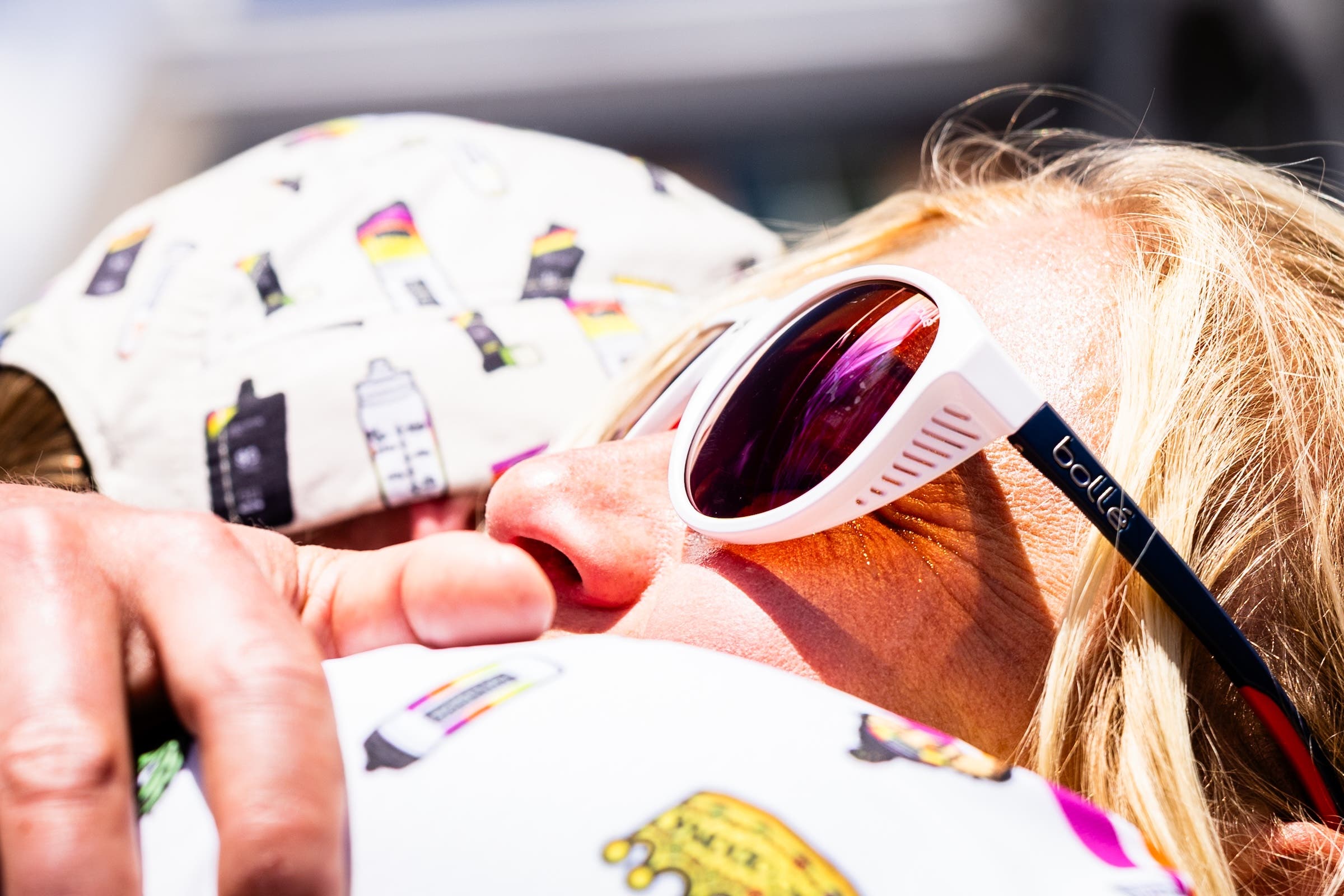
During our interview, I asked Rachel how she was recharging in the months since Cocodona, and she quickly replied, “I’m not.”
That was on full display at Western States, where she was pacing Addie, her friend and the professional runner who had run alongside her at Cocodona. Rachel and I met again at Michigan Bluff, at the mile 55.7 aid station. She was there with her new boyfriend, Will, who she affectionately hugged. I had brought a cowbell with plans to cheer but was too tired. Rachel took up the mantle and rang that bell for hours.
Between swings of the bell, she told me that Will was introverted and kept to himself, which was really nice for her because when she was done being out in the world, she could hang out with him and sit there without talking.
Ann Trason, who won Western States 14 times and set 20 world records, was also at Michigan Bluff, sitting with a posse of women who had finished the race almost a half century ago. Now 65, Ann has rheumatoid arthritis and, until this January, when she completed 100 miles with her walker on a looped course, had not been in the public eye in nearly a decade. Thrilled to meet one of her heroes, Rachel chatted with Ann, who wore one of her belt buckles over a unicorn onesie. When Ann entered the sport in the 1980s, monetary sponsorship was extremely rare. Women had only been allowed to compete in the Olympic marathon that decade. The first running gels, which would later become GU Energy Labs, were still being tested in Ann’s neighbor and fellow ultrarunner Laura Vaughan’s father’s kitchen. Topics like mental health that Rachel so vulnerably discussed were even more taboo, especially for women.
Ann, who has also struggled with disordered eating, told me that she hoped Rachel knew what had taken her decades to understand. “A race does not make a career, just like a day does not make a life.”
Twelve hours later at midnight, Will was still by Rachel’s side at Robie Point, mile 98.9, where there was an all-night street party to cheer runners in. The two of them had been up since 3 A.M. Rachel had run 18 miles with Addie and was going back out to pace another runner to the finish line.
I was in my car on my way to the Airbnb when I saw Rachel through my window. She looked so small and young and perhaps even tired, I had the thought, “How could one person possibly have this much energy? Wouldn’t she eventually crash?”
It was Tara Dower and Ann who answered that for me.
Realistic Positivity
Tara, who finished sixth at Western States, was unsuccessfully trying to untangle her braided hair when I saw her at the finish line the following morning. Jennifer Lichter had broken the course record in her 100-mile debut the night before, and Tara, who is best known for the FKT she set on the Appalachian Trail in 2024, was processing what she had learned.
She said that she struggled to mentally stay in the game when things got uncomfortable in a race. Rachel, who would pace her at Hardrock in two weeks, showed her what it meant to be “realistically positive.”
“Rachel has the ability to stay positive in a race and keep looking at her progress,” said Tara. She recalled seeing Rachel run ten miles up a mountain, two days before they ran the Mammoth 200 miler last year. “If you’re out there and you love running the way Rachel does, you’re going to find so much more joy than looking for a result.”
The first week of August, I talked with Rachel again. She was in France, preparing to run UTMB at the end of the month. Widely considered the Super Bowl of ultrarunning, the race follows a 106-mile loop through France, Italy, and Switzerland. With 32,940 feet of vertical gain, roughly the altitude at which commercial jets fly, the race may be better suited for mountain goats with oxygen masks than humans. Rachel, who does not have a coach and has said she is “not coachable,” was running consecutive eight-hour days and getting little sleep, as usual. It was already 9 P.M. She had an article due for UltraRunning Magazine that night and a photo shoot at 6:30 the next morning, but she was happy.
She had figured out the bus system, was using the French she had learned in high school and college, and was familiarizing herself with the terrain and building her confidence. She had already run the entire course and the steepest sections twice. The first time she had run it, she was intimidated by how steep it was and dreaded the first 45 miles. But now she realized that she had built the climbs up in her mind to be much harder than they were.
And it appeared she had learned that lesson Ann had offered. She didn’t always have to stick the landing on the first try.
“I went to rehab and I faked it, and I had to go back,” she said. “And I went to Cocodona, and I didn’t have a good attitude. And I had to go back. You can have a day that doesn’t give you the result that you want, and that’s OK.”
You can follow Rachel live at UTMB at 2026 UTMB Live Coverage – iRunFar or utmb.world.
