

Published September 3, 2026 09:18AM
“You can go faster,” the Rivian engineer said.
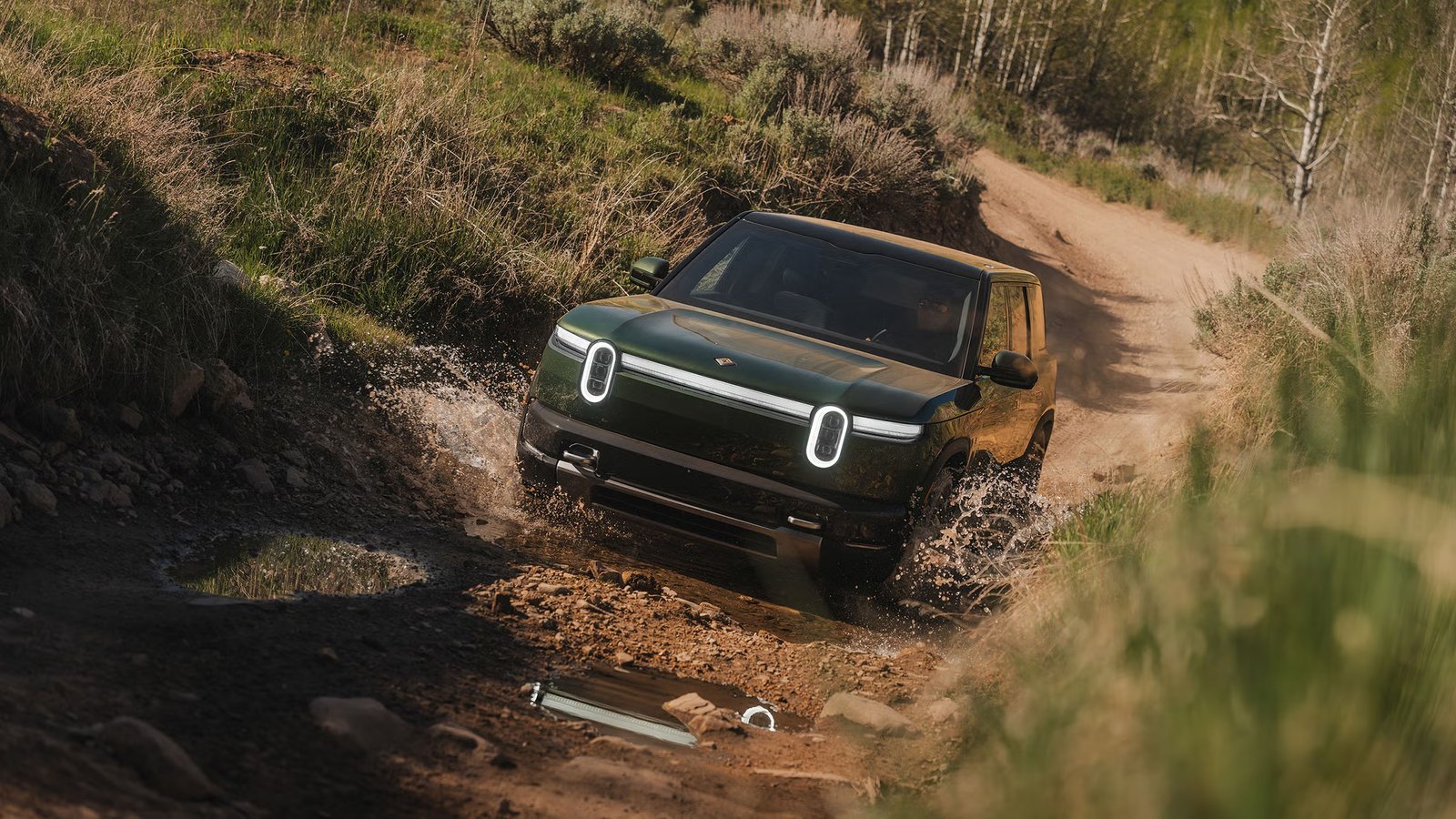
We had just dropped off the pavement into Wasatch Mountain State Park in Utah, and my instinct was the opposite. When it comes to off-roading, I was always taught the “slow is smooth, smooth is fast” mantra—out of respect for the trail, the tires, and, you know, anyone in the back seat. But there is a particular joy in being told, by someone who would know, that you can ignore that advice today.
So I ripped it. We hit 50-plus over dirt, the R2 flat and unbothered, the suspension swallowing ruts, a long banner of dust unspooling into the blue sky behind us. We’d come up from Park City—a little highway, then a stretch of good twisties the R2 took flatter than a car this shape has any business taking, the battery slung low like ballast—and now we were in Rally Mode, letting it run.
Here’s the thing about the R2, and Rivian will tell you this themselves: Almost nobody is going to do what I just did.
They have the data. The R1 was a genuinely capable off-roader that mostly went to Costco. So in the R2 you will find no grab handles—the ones you white-knuckle on a real trail. When the trail does let you know its presence, you can just hold the bolsters on the door instead. It works well enough.
You feel that restraint everywhere. Max Koff, the R2’s lead engineer, told me they design so you can’t read the org chart from the driver’s seat. In a lot of cars you can feel which department big-footed another, where the money went and where it ran out. (In many legacy manufacturers, the accounting department seems to win too much.) In the R2 there’s no losing team.
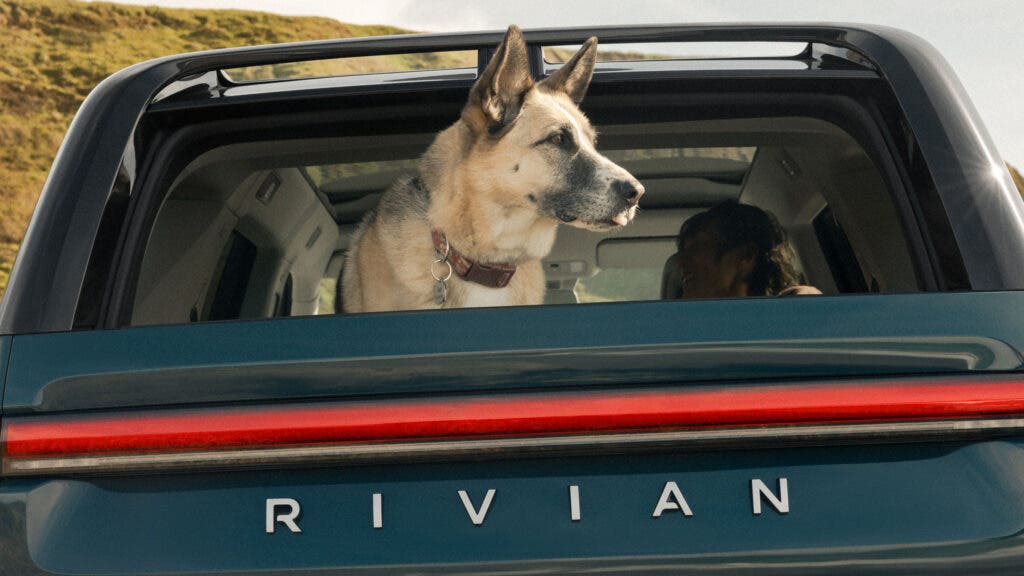
Look at the rear door: full drop-down glass, no little fixed pane, no dip in the window line. Almost no car does that, and making it happen takes a surprising amount of coordination between teams. Good design is mostly the things you don’t notice. The R2 doesn’t preen or want to be mistaken for a gadget—it’s simple and dignified, the rare piece of modern hardware built to look proper 20 years from now rather than clever for one.
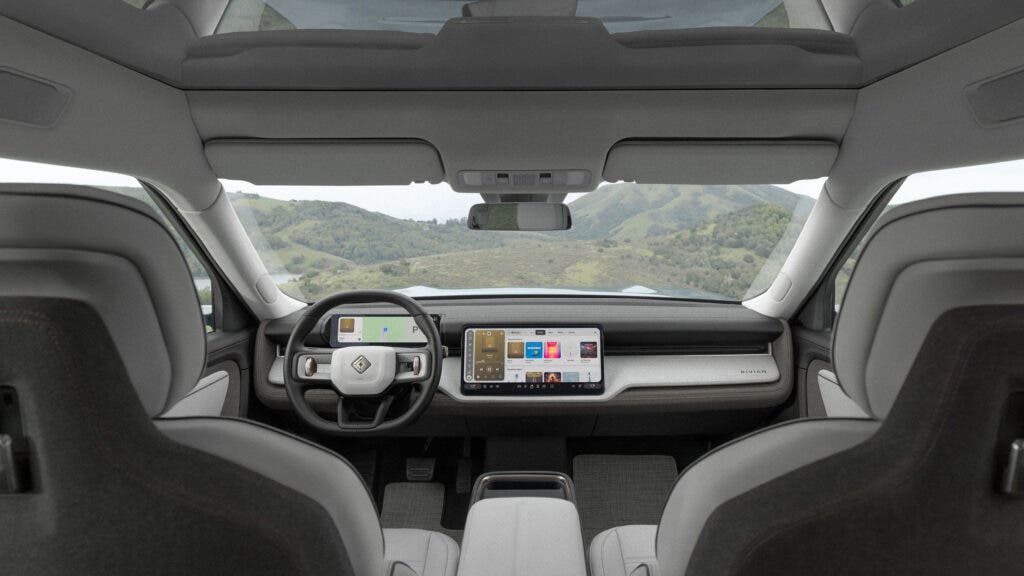
What you do notice is the R2’s brain. Rivian likes to say the most powerful computer you own lives in your driveway, and on the highway you believe it. Their hands-free system holds a lane with a calm earlier cars never had—none of that nervous ping-ponging between the lines. It feels less like assistance and more like a proper, law-abiding driver. Later this year, even these first cars are promised point-to-point navigation: punch in an address, lift your hands, and the R2 takes you there—eyes up, but mostly along for the ride.
All of which raises a question the R2 keeps almost asking: How much of the driving do you actually want to do? On a long, straight highway, the answer is easy—less. OK Computer indeed.
RELATED: The Best Mountain Towns for EVs in the U.S.
A voice assistant—Rivian Assistant—arrives this year to run the cabin: climate, navigation, the things you’d otherwise reach across a screen for. Useful. But I floated a wilder version to them: a digital spotter for the gnarly stuff. A voice on the technical lines—slow here, line up left, you’ve got it—half coach, half co-pilot. They were … polite about it. On the trail, I ended up talking myself out of my own pitch. The commute can have the computer. But the trail is one of the last places left where it’s just you and a guy hanging out the window telling you to choose the line directly over that boulder.
The larger statement Rivian is making with the R2 is about choice. The conventional wisdom says Americans have cooled on EVs. CEO RJ Scaringe doesn’t buy it. “I think we have an extreme lack of choice around highly compelling products,” he told us—the market isn’t tired of electric cars, it’s tired of mediocre ones. The R2 is the bet that the desire was always there, waiting for something worth wanting.
The first trim level out the door, the Performance with the Launch Package, runs $57,990 and buys a rocket of a box: 656 horsepower, 4,400 pounds of tow, lifetime hands-free driving baked in, and 0 to 60 mph in 3.6 seconds, which undercuts a base Porsche 911 Carrera. Now, every quick EV embarrasses a sports car off the line and then loses politely the moment a corner shows up. But there’s something deranged about a family hauler with a frunk and a tow hitch out-launching a 911. The Standard ($48,490, early 2027) drops to a single rear motor and 350 horses, but it’s the range champ—up to 345 miles, by Rivian’s reckoning. All of them clear 9.6 inches of ground and swallow 90-odd cubic feet of gear, with a cabin long enough for two adults to sleep. (Just add a car mattress.)
| STANDARD | PREMIUM | PERFORMANCE |
| $48,490 | $53,990 | $57,990 |
| 350 hp | 450 hp | 656 hp |
| 0–60 in 5.9 seconds | 0–60 in 4.6 seconds | 0–60 in 3.6 seconds |
| Range up to 345 miles | Range up to 330 miles | Range up to 330 miles |
| Available early 2027 | Available late 2026 | Available now |
Still, the spec sheet was never the point. Back in the canyon, we were splashing through a creek, climbing into a corridor of aspen and fir so green and improbable our guide nicknamed it Narnia. On the descents the regen did the work. No hill-descent-control theater. No hunting for a low gear. You lift, the motors hold, the cameras show you the rocks under your wheels. It makes pointing two tons downhill downright relaxing.
At one point I dropped all five windows at once—there’s a single physical button for it, the kind of small mechanical grace the whole car is built on—and let the canyon air in, dust and sage.
Buy it for the range. Buy it for the morning it drives you to work and you can daydream about your next adventure. Buy it because it’s one of the best cars on the road, EV or not. But then take it where the map goes pale. Past the last bar of signal, to the spot where the only voice left is the one telling you: go faster.
This article is from the Fall 2026 issue of Outside magazine. To receive the print magazine, become an Outside+ member here.
