

Published September 10, 2026 02:30PM
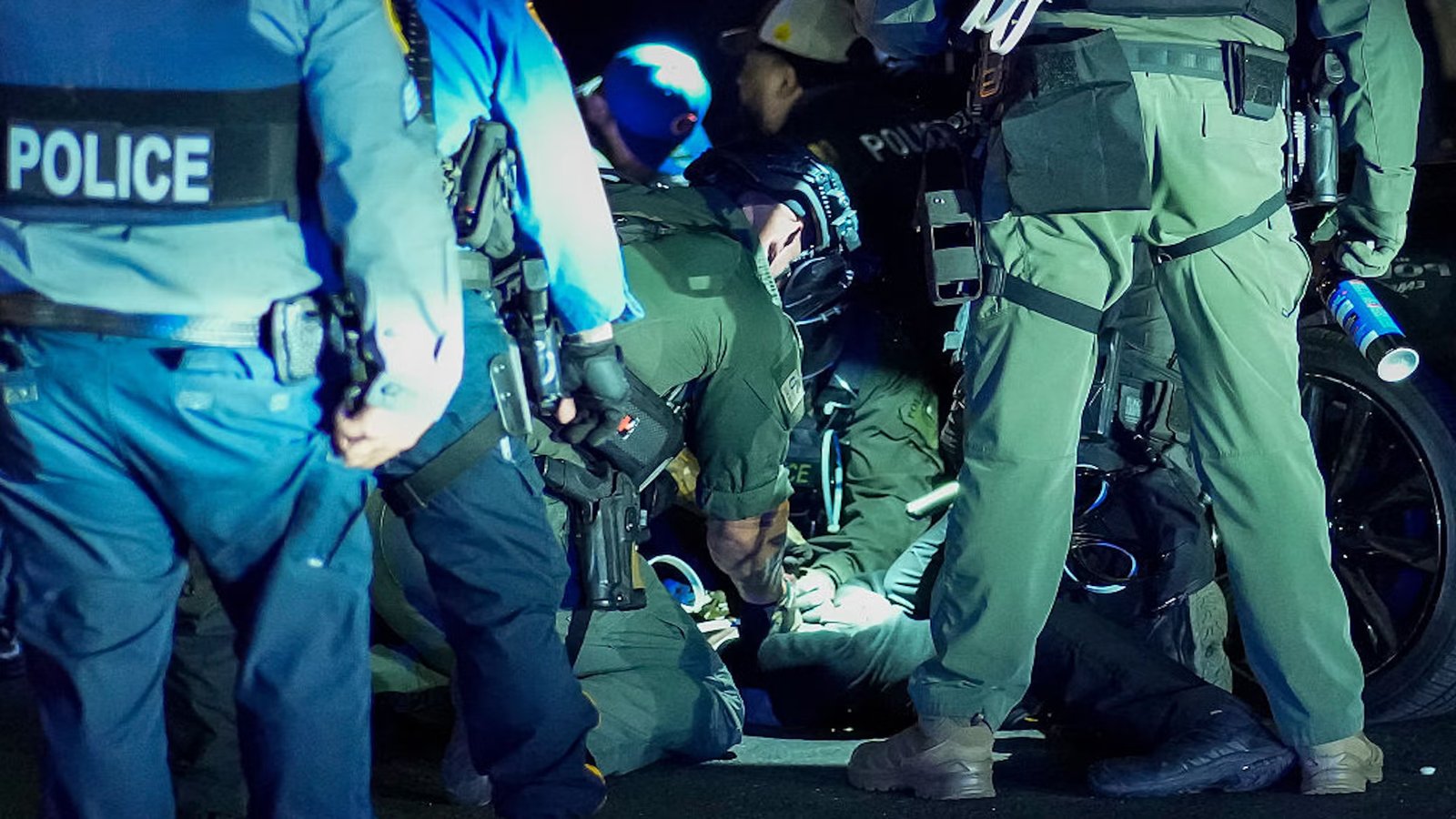
Agents with U.S. Immigration and Customs Enforcement (ICE) reportedly arrested five men who were camping on public lands in Washington State over Labor Day Weekend. A U.S. Department of Homeland Security (DHS) spokesperson confirmed the arrests in a statement to Outside.
According to a report from local news station King 5 Seattle, five families spent the holiday weekend camping near Granite Falls, a town near the Mount Baker–Snoqualmie National Forest, when they say several people approached them and identified themselves as U.S. Forest Service (USFS) rangers.
In an email to Outside, a DHS spokesperson said that the five men were arrested during a joint operation with the USFS. Two of the men had previously been issued a voluntary return to Mexico, and a third had been arrested on driving-related charges, according to DHS. The other two men had “illegally entered the country at an unknown time and place,” the spokesperson said.
“They will remain in ICE custody pending removal proceedings and will receive due process,” a DHS spokesperson told Outside.
The Families Say They Feel Targeted
A report written on the GoFundMe page described what happened during the encounter.
“They claimed there was an issue with garbage and told us they were giving us a ‘warning,’” organizers wrote. “Because they presented the situation as a routine campsite issue, we felt comfortable cooperating with them. They told us they needed identification from every adult in our group. We provided our IDs because we believed we were simply cooperating with park officials regarding the garbage warning.”
Around midnight, while the group was sleeping, immigration agents allegedly shook the families’ tents and arrested five men. One of the individuals who had presented himself as a ranger earlier returned to the campsite with ICE, the families said. Outside contacted the USFS and the U.S. Immigration and Customs Enforcement Office for comment, but did not receive a response in time for publication.
The families involved in the raid said they were targeted.
“We feel the garbage issue was not the real reason we were approached and that our families were targeted,” the GoFundMe page continued. “We felt intimidated and harassed throughout this experience.”
Do Public Lands Agencies Work with ICE?
In a statement sent to Outside, the USFS said its law enforcement division routinely works with state, Tribal, and local agencies. Occasionally, USFS law enforcement also helps agencies that enforce immigration law, the spokesperson said.
“Although Forest Service law enforcement officers and criminal investigators do not enforce immigration law, they collaborate with agencies that do,” a spokesperson said. “These partnerships may involve checkpoints, patrols, or targeted enforcement efforts in areas where public safety and federal land management responsibilities intersect.”
But critics say the Labor Day collaboration between the USFS and ICE crosses an ethical line.
Reuben S. Kerben, a managing attorney with New York City-based immigration firm Kerben Law Firm, said the coordination around the Washington arrest represents a break from tradition.
“In the past, that sort of cooperation was very unusual,” Kerben told Outside. “However, since the second Trump Administration, we’ve seen the unusual become usual, and interagency collaborations have become something that’s more commonplace.”
In a statement, Jackie Ostfeld, the director of the Sierra Club’s Outdoors for All campaign, said the USFS needs to clarify to the public the role it plays in ICE operations.
“Why is it using limited agency resources to help immigration agents target families on public land?” Ostfeld said.
The alleged raid comes less than six weeks after ICE and USFS law enforcement made 13 arrests at the Wilson Creek Recreation Area in North Carolina’s Pisgah National Forest, the Charlotte Observer reported. Outdoor advocates like the Sierra Club say that bringing immigration enforcement into public recreation areas could discourage people from visiting national forests and other outdoor spaces.
“Actions like this will cause families to think twice about taking their children camping if they believe those responsible for protecting the campground could potentially turn them over to immigration authorities,” Ostfeld added.
GreenLatinos, a national nonprofit that brings together Latino leaders to work on environmental issues, condemned the arrests.
“Instead of prioritizing natural resource stewardship and education needs over a busy weekend in the forest, Mount Baker-Snoqualmie National Forest rangers were acting as immigration enforcement hounds,” Olivia Juarez, director of the GreenLatinos Public Land Program, said in a statement. “Family separation in a national forest should stir a sense of injustice in each of us who enjoyed some respite on our public lands this Labor Day.”
What Are Your Rights on Federal Lands?
Outside asked Kerbin about the rights that the general public has when recreating on public lands.
On lands overseen by federal agencies such as the USFS, Bureau of Land Management (BLM), and National Park Service (NPS), citizens are subject to both federal laws and Constitutional protections. Federal officers do not need a warrant or probable cause to approach a campsite or speak with campers, but they do need a reason to search private property, Kerbin said.
“That means that federal officers, like a park ranger or people who work for the BLM, don’t need a warrant, probable cause, or even suspicion to approach an open campsite or initiate a conversation,” Kerbin said. “However, that doesn’t mean that they have a right to go ahead and conduct a warrantless search of somebody’s tent, somebody’s RV, or their inner space.”
To conduct a search, an agent would need a person’s consent or a reason to investigate further, such as an emergency or evidence of nefarious activity, Kerbin said. And campers are never required to answer questions posed by a ranger, he added. The right to remain silent is enshrined under the Fifth Amendment and granted to anyone on American soil.
“You don’t lose your right to remain silent just because you’re on federal land,” Kerbin said. “If an officer wants to ask you questions, you can still refuse to answer.”
In certain situations, park rangers may ask visitors about their country of origin. If a person responds with a country targeted by ICE, their answer opens the door for that ranger to verify immigration status and potentially share that information with an ICE agent, Kerbin said. When it comes to identification, Kerbin said that park rangers may need to confirm a camper’s identity with, say, a backpacking permit or fishing license.
Regardless of immigration, citizenship, or legal status, Constitutional rights like due process and criminal procedures apply to anyone in the United States.
“Due process protections under the Constitution apply to persons in the United States, whether you’re a citizen, a permanent resident, a visitor, someone who overstayed their visa, or someone who crossed the border,” Kerbin said. “If you’re involved in an illegal stop and search, even if you’re undocumented, your due process rights may have been violated, and you would have the right to seek appropriate action in court.”
