

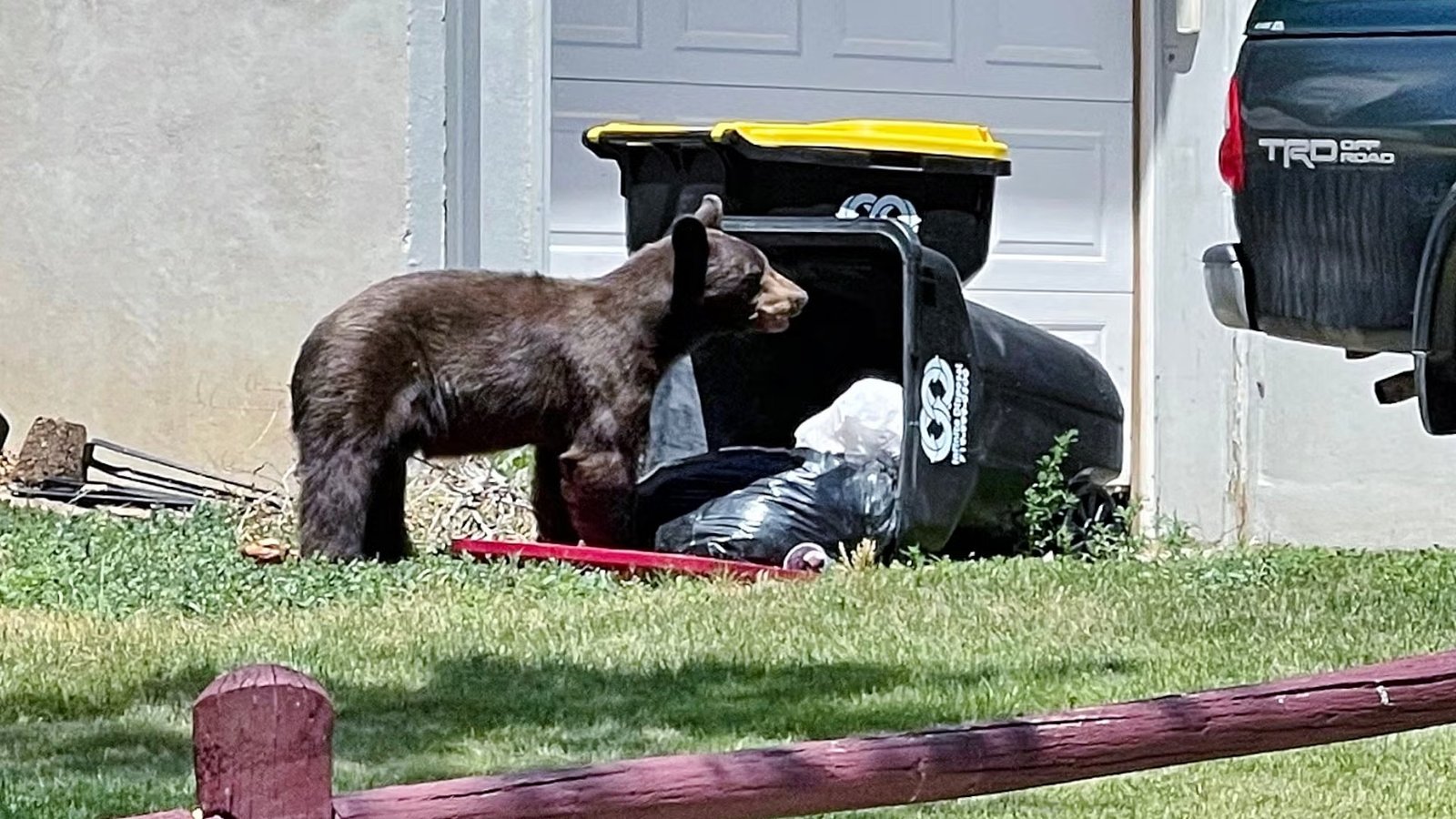
A necropsy revealed whole plastic garbage bags and non-flushable wipes inside the 300-pound animal. As drought and late freezes wipe out natural food sources, officials warn that frontcountry garbage management is becoming a matter of life and death.
Unsecured garbage cans are a liability for both bears and humans. (Photo: CPW)
Published September 12, 2026 08:32AM
Wildlife officials euthanized a black bear in Durango, Colorado, on September 9, after it was discovered moaning in pain in a residential yard. The bear had dug itself into a hole, and the homeowner who called Colorado Parks and Wildlife (CPW) said it was acting extremely lethargic and making strange noises.
Arriving on scene, CPW Officer John Livingston and his colleagues immediately noticed the bear’s distended, bloated belly. They managed to get it to stand up, but couldn’t get it to move or leave the area. They tranquilized the animal, and as soon as they touched the bear’s stomach, Livingston says they realized something was very wrong. They made the tough call to euthanize and performed a field necropsy.
“Immediately upon getting into the stomach, we just started pulling out cleaning wipes and full trash bags that still had the whole drawstring,” Livingston told Backpacker. “It was pretty rough stuff.”
This incident comes as human-bear conflicts are peaking across the state. So far this year, Livingston says CPW has logged over 8,000 bear reports—the most they’ve ever dealt with. The agency has euthanized over 294 bears so far this year. In all of 2025, the number was just 98.
“It’s definitely going to be a record year,” Livingston said.
Between this year’s drought and a late Spring freeze that devastated natural food supplies, he expects human-bear conflicts to continue rising this fall. That’s why CPW is advocating extra caution among mountain residents—not just for their own safety, but for the bears’.
A Record Year for Human-Bear Conflicts
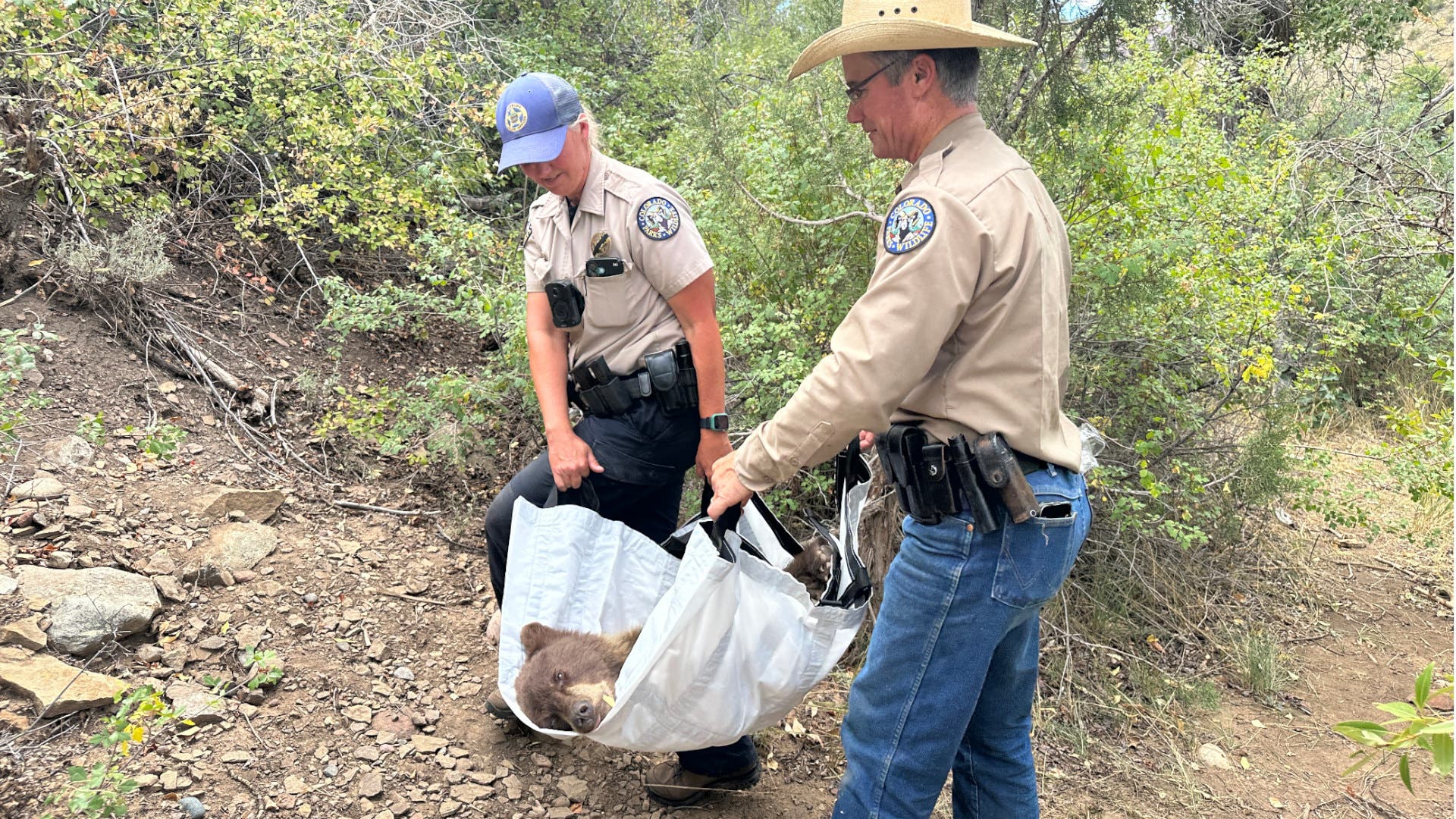
Livingston is the CPW public information officer for southwest Colorado and the lead for the agency’s Statewide Bear Working Group. He says that CPW teams have been responding to bear incidents since June, working 18- to 20-hour days, often without breaks. Bear relocation incidents are up 3.5 times the five-year average, and euthanization is up 2.7 times, according to CPW.
Livingston was preparing to head out on a bear call even as he spoke on the phone with Backpacker.
“It’s been a busy year,” he said. “Across the state, we’re seeing more bears getting into homes and crossing lines that maybe, in most years, they’d be too timid or not quite bold enough to cross.”
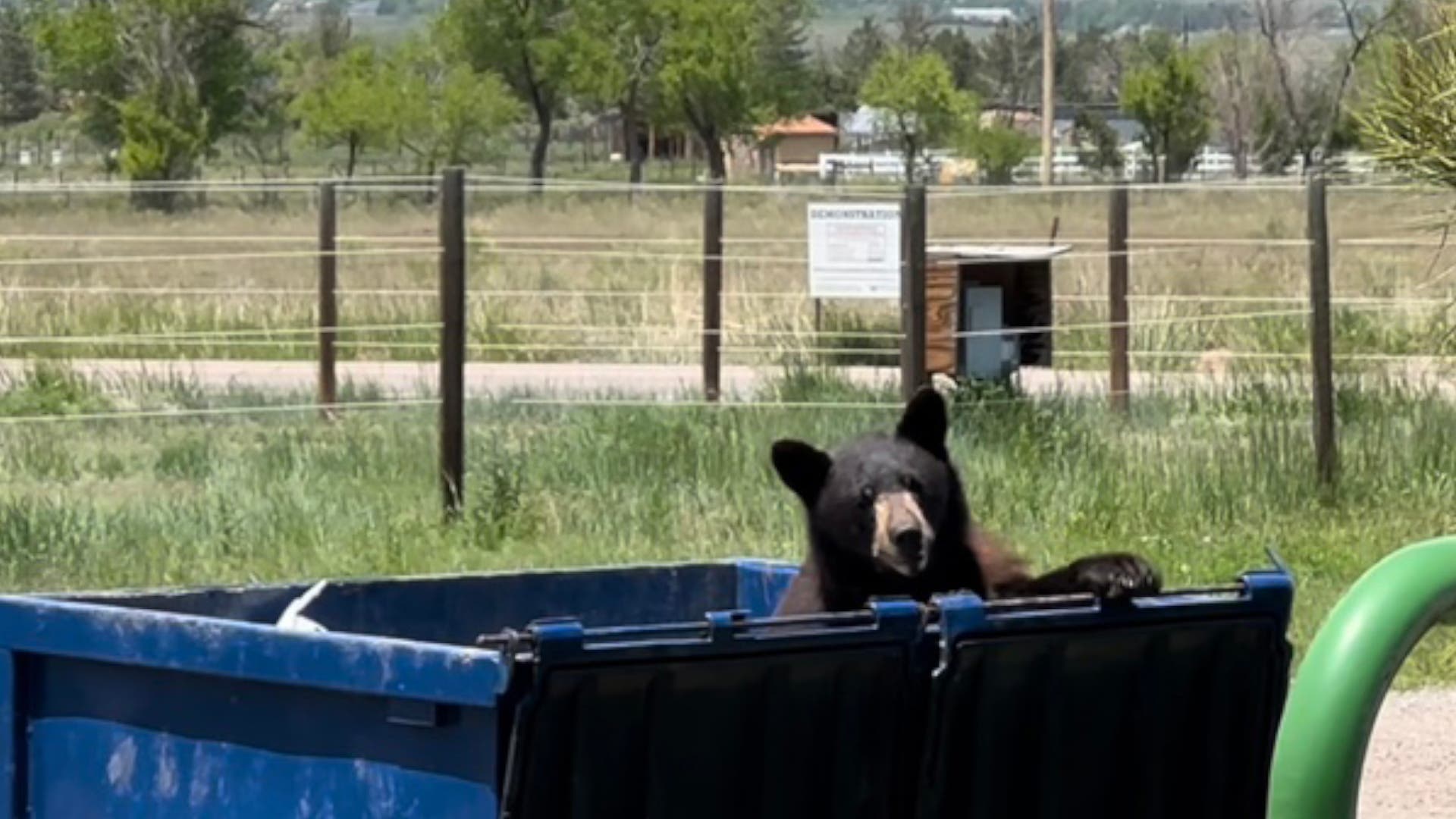
That’s largely due to two factors, he said: food scarcity and habituation. Livingston pointed to the record-low snowpack that caused drought across the state and an early spring freeze in May that decimated natural food supplies in the southwest. That drove bears down into the towns early in the season. Now, Livingston said, they’re habituated to that food source.
“As long as they are getting trash and human-provided food like bird seed, pet food, or whatever gets left outside, they don’t have the incentive to go back up and look for those natural foods,” he said.
That creates a dangerous situation for these ursines. It’s much easier to make a fatal mistake, like breaking into homes or cars, or eating garbage that they can’t digest, when neighborhoods represent their main source of food. It can even mess with their biology.
“Bears that get human-provided foods will continue to stay up looking to eat as much as they can for as long as they can,” Livingston explained. It isn’t cold weather that drives them into hibernation; it’s a lack of food. “In some places, there have been instances of a few bears never denning because they continued to access food year-round.”
The Year to Exercise Higher Caution
As winter draws nearer, CPW is asking residents across Colorado to exercise greater caution. Many towns and neighborhoods require bear-resistant trash containers, but Livingston pointed out that they do no good if they aren’t regularly cleaned, as bears will still be drawn to their scent. If they get broken, owners need to fix them and make sure they’re secured every night. Failing to do so could result in a $100 fine for the first offense and a $200 fine for subsequent offenses.
He also said that leaving windows or doors open, or your car unlocked at night, is asking for trouble.
“It may not be a person you have to worry about coming into your house or trying to get into your car at night,” he says. “It might be a bear.”
Finally, he says, don’t be afraid to haze black bears who wander near your home. Livingston suggests yelling at them, sounding your car alarm, banging pots and pans, or using an airhorn.
“If you’re going to take the time to take out your phone and record the bear, help send the right message and record it while you’re yelling,” Livingston said. “We shouldn’t want them being around our homes.”
If there is any year to exercise greater bear caution, he says, it’s this one. The bears need our help.
