

Published September 14, 2026 01:40PM
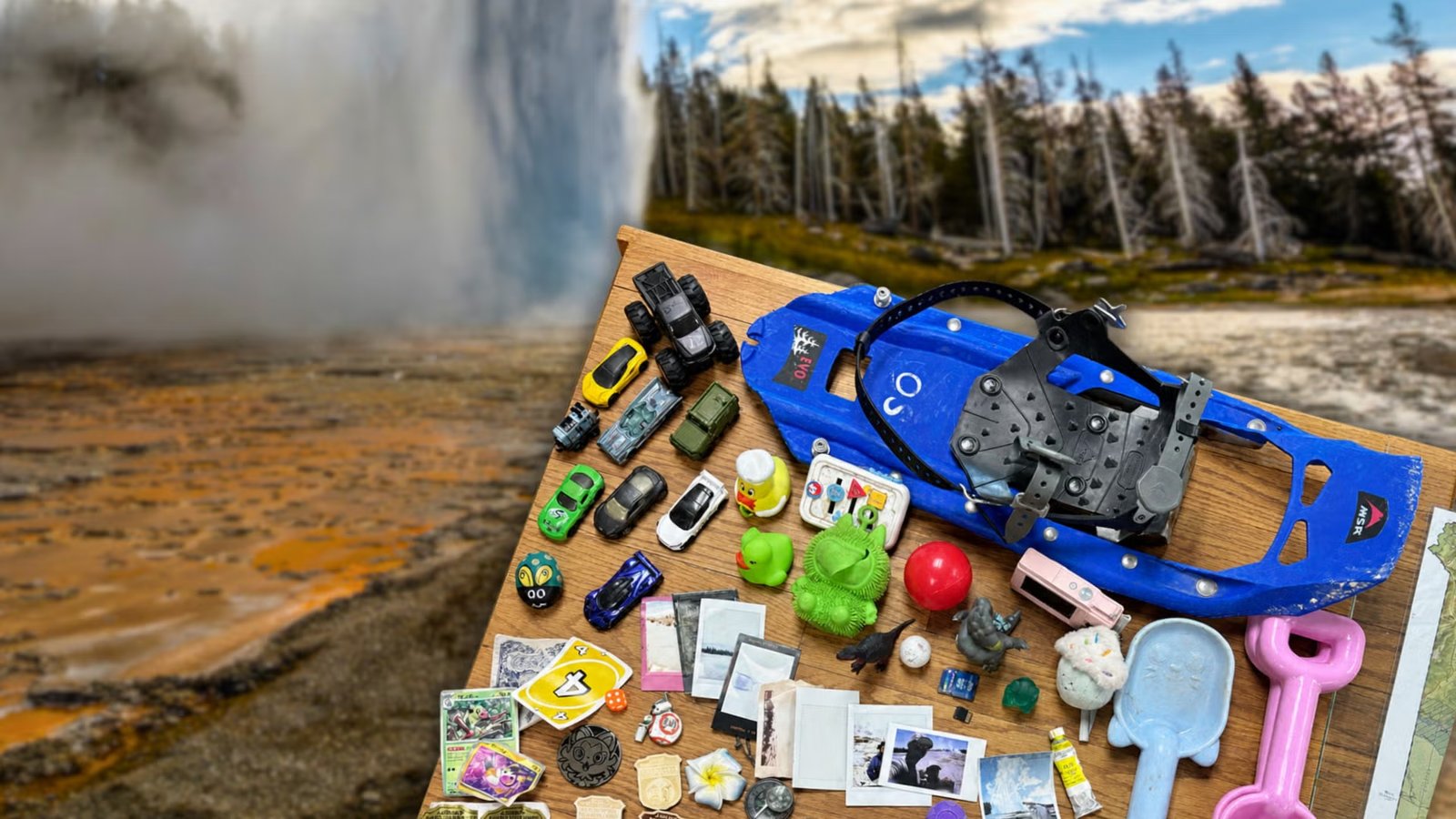
Visitors dropped more than 25,000 items into Yellowstone National Park geysers in 2026, setting a new record for the amount of stuff lost to the world’s most famous hydrothermal features.
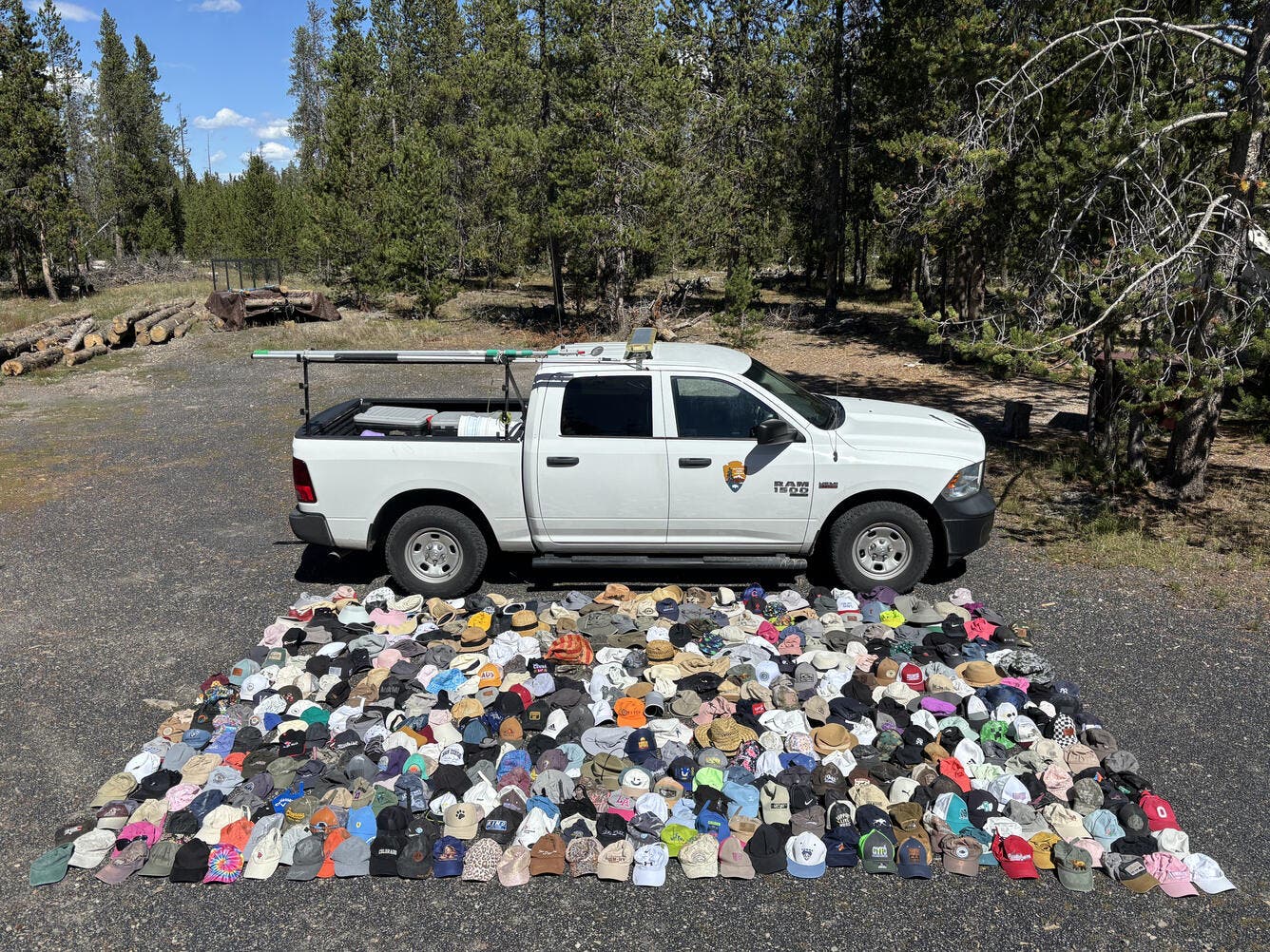
In all, scientists removed more than 20,100 pieces of trash, 5,600 rocks and sticks, and nearly 300 hats from the park’s hydrothermal areas in 2026, according to a September 14 report published by the U.S. Geological Survey (USGS).
This year marks a new record for debris removal in the park, and comes on the heels of a busy tourism season. More than 2.64 million people visited Yellowstone between January and July 2026, nearly tying the park’s most-visited year in 2021, according to National Park Service (NPS) data.
“The more foot traffic an area gets, the more trash will be there—but this is especially true in wide open geyser basins with narrow boardwalks,” Margery Price, the report’s author and a park physical science technician, told Outside. “Midway Geyser Basin in particular is our biggest hat collector.”
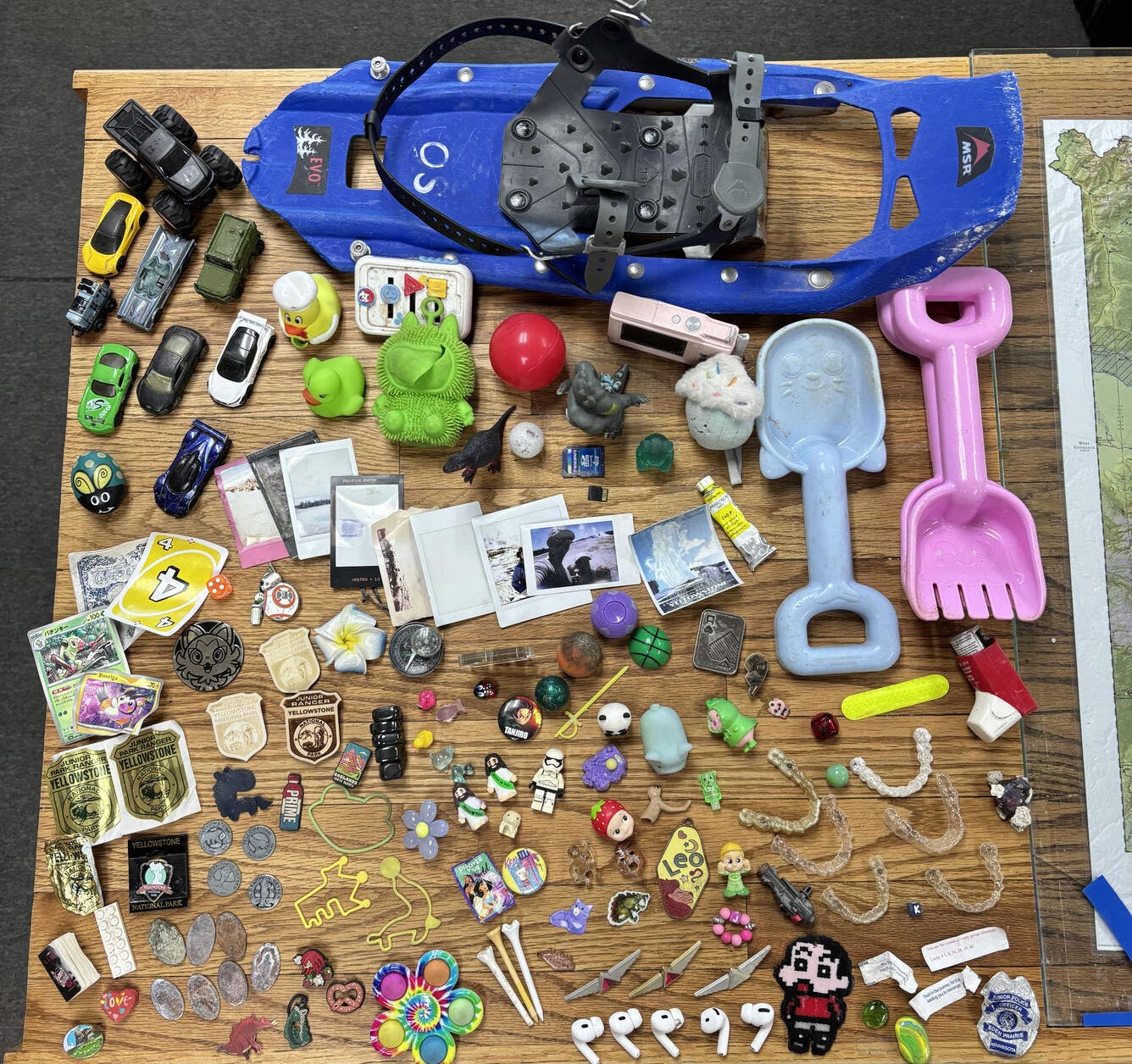
Among the tonnage of lost personal items were more than a few wacky finds: 15 fake fingernails, eight miniature race cars, two rubber ducks and a McDonald’s toy from 2010—and that’s just the beginning.
AirPods, Vampire Diaries, and Pacifiers, Oh My!
By mid-September 2025, Yellowstone’s geology team used poles, including one with a 16-foot extendable handle, strainers, hand rakes and shovels to remove more than 13,000 pieces of trash, 4,000 rocks and sticks, and 300 hats from hydrothermal areas.
The 2026 haul marks a 50 percent jump over last year’s loot.
Objects lost in 2026 include what you might expect to find near the world’s most-visited geysers: camera lens caps, hair ties, and too many sunglasses to count (OK, there were three dozen). More obscure objects also littered the hydrothermal features, like golf tees, Legos, dental retainers, and not one but three lapel pins given to passengers on Delta Airlines flights.
Crews also found Polaroid photos of the same hydrothermal features where they were recovered, a two-inch copy of The Vampire Diaries, and a single UNO card.
The 2026 cleanup covers nearly all of Yellowstone’s developed, front-country hydrothermal areas, Price told Outside. Crews work everywhere from smaller sites like Frying Pan Spring and Clearwater Spring to Black Sand Basin, Artist Paintpots, Mammoth Hot Springs, Midway Geyser Basin, and Old Faithful.
Trash Is No Laughing Matter in Geysers
Experts say human objects can irreversibly harm the natural ecosystem.
“Foreign material of any kind can damage or permanently alter a hydrothermal feature,” Price wrote in the 2026 report. Trash can clog a geyser’s water supply or block its runoff channels. Restricting hot-water flow can also lower a spring’s temperature, change its color, and hurt the heat-loving microorganisms that call these features home.
In extreme cases, debris can even alter a geyser’s eruption schedule. Early 20th-century visitors at Yellowstone’s Minute Geyser clogged its largest vent by tossing in rocks. Eruptions that once happened every 60 seconds and could reach up to 50 feet are now smaller and irregular. NPS says these rocks have since been cemented together by mineral deposits and can’t be removed without risking further damage.
Yellowstone has been trying to undo that kind of damage for decades. According to USGS, the first major thermal clean-up effort began in 1942 when a park geologist found features choked with rocks, logs, and materials visitors tossed in.
Don’t Be That Person
Todd Walton, director of sales and marketing for Yellowstone National Park Lodges and a former park guide, told Outside that visitors should be mindful of their belongings, taking special care with “anything that can get blown off by the wind, like hats and scarves.”
“I’ve seen gloves, cups, and sunglasses also, he said. “Hold onto your stuff.”
Price told Outside there’s no reliable way to estimate what percentage of lost objects crews recover because conditions vary dramatically from one spring or geyser to another.
“Some areas are shallow, and we can see most if not all of what’s in them,” she said. “Others, it’s just not possible for us to retrieve stuff that is too deep, at a challenging angle, or too far out from the edge. Most things sink eventually—especially once they get saturated with minerals.”
Yellowstone geologist Liam Rogers told Outside that dropped items can sink quickly—but sometimes come back up. In September 2018, Ear Spring erupted and expelled coins, cans, plastic cups, cigarette butts, and other debris, including coins later dated to the 1930s, according to NPS.
If visitors drop something in or near a geyser, Walton said to stay on the boardwalk and contact park staff.
“People don’t realize how dangerous it is in these areas despite the numerous warnings and signs saying so,” Walton said. Many thermal areas in Yellowstone are between 150 and 200 degrees Fahrenheit, and although the surrounding ground may look solid, it can quickly give way.
Multiple visitors have died in the park’s thermal features over the years. In August 2022, the body of a 70-year-old man was found in the 140-degree Abyss Geyser in the West Thumb Geyser Basin, and more than 20 people have died from burns caused by entering the park’s thermal features since the park began counting.
