

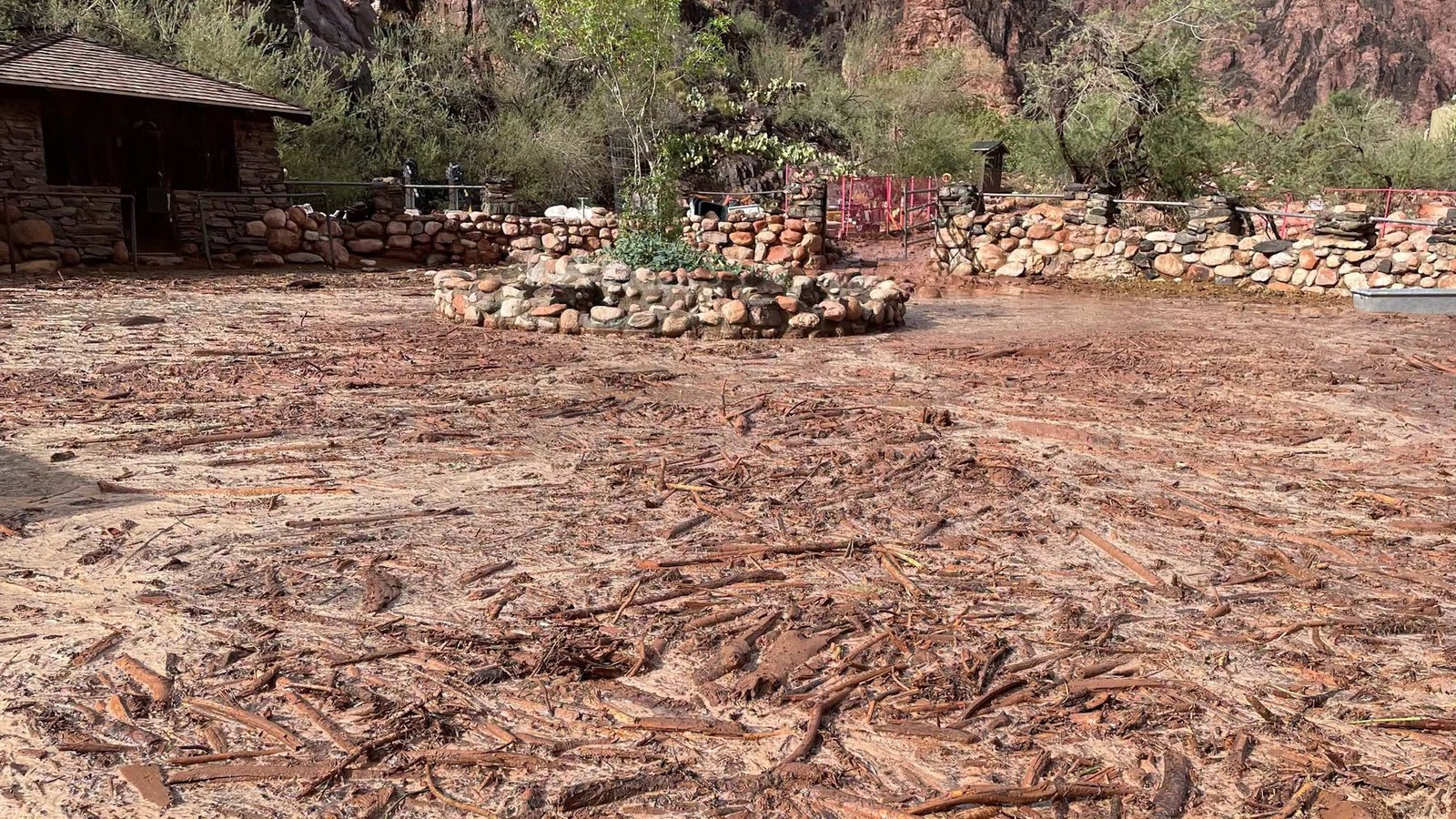
Less than a month after a deadly August deluge, new flooding swept through Bright Angel Canyon, worsening water-crisis closures across the South Rim.
Photographs posted by NPS on September 2 show the aftermath of the August 29 flash flood that destroyed bridges and closed numerous trails (Photo: Courtesy of Grand Canyon National Park)
Published September 21, 2026 10:41AM
Grand Canyon National Park just can’t get a break.
Less than a month after the deadly August 29 flash flood, a second storm system swept through Bright Angel Canyon on September 16, reportedly washing away temporary housing units for construction crews and worsening water-crisis closures across the South Rim.
National Park Service (NPS) said that all employees were safely evacuated before the storm hit, and no injuries were reported.
“With severe weather approaching and flash flood warnings in effect, the NPS had reduced the number of personnel working in the canyon,” NPS wrote in a statement. “Crews remaining in the area were able to reach safety before the flood moved through. The affected area remains closed to public access.”
Andy Stiles, general manager at the Grand Canyon South Rim, Xanterra Travel Collection, told Outside that Phantom Ranch, the campground and lodge at the base of the canyon, did not sustain damage during the most recent storm.
“Everyone working in the canyon reached safety before the water hit, and no one was hurt,” Stiles said. “This remains a fluid situation, and Wednesday’s flooding is a reminder of that.”
The September 16 flash flood comes on the heels of a devastating flood on August 29 that stranded dozens of hikers and killed three others: John Guisti, 46, and Brent Rosenkranz, 42, of Granbury, Texas, and Timothy Allen Smith, 53, of Jackson, Wyoming.
Crews discovered Smith’s body at Crystal Rapid, about ten miles downstream from Phantom Ranch, on September 14, his wife said in a Facebook post. He had been missing since the August 29 flood. Smith was hiking with Guisti and Rosenkranz when the floods occurred.
Devastation on the Ground
Tom Martin, a Grand Canyon expert and author, told Outside that he saw footage showing several mobile living units damaged in the most recent flash flood on September 16. Construction crews set them up in the Bright Angel area to fix the old water supply line, he said.
The Transcanyon Waterline is a fragile, 12.5-mile lifeline supplying South Rim hotels and 2,500 residents. The August 29 flood severely damaged 40 percent of it, officials said.
Then, on September 16, the secondary flash flood deposited additional rubble in the Colorado River and raised water levels by up to a foot, Martin said. Photos he shared on Facebook show large wood piles and debris littered throughout Grand Canyon.
Outside contacted the NPS for further information about the damage but did not receive a response in time for publication. We will update this article if we receive one.
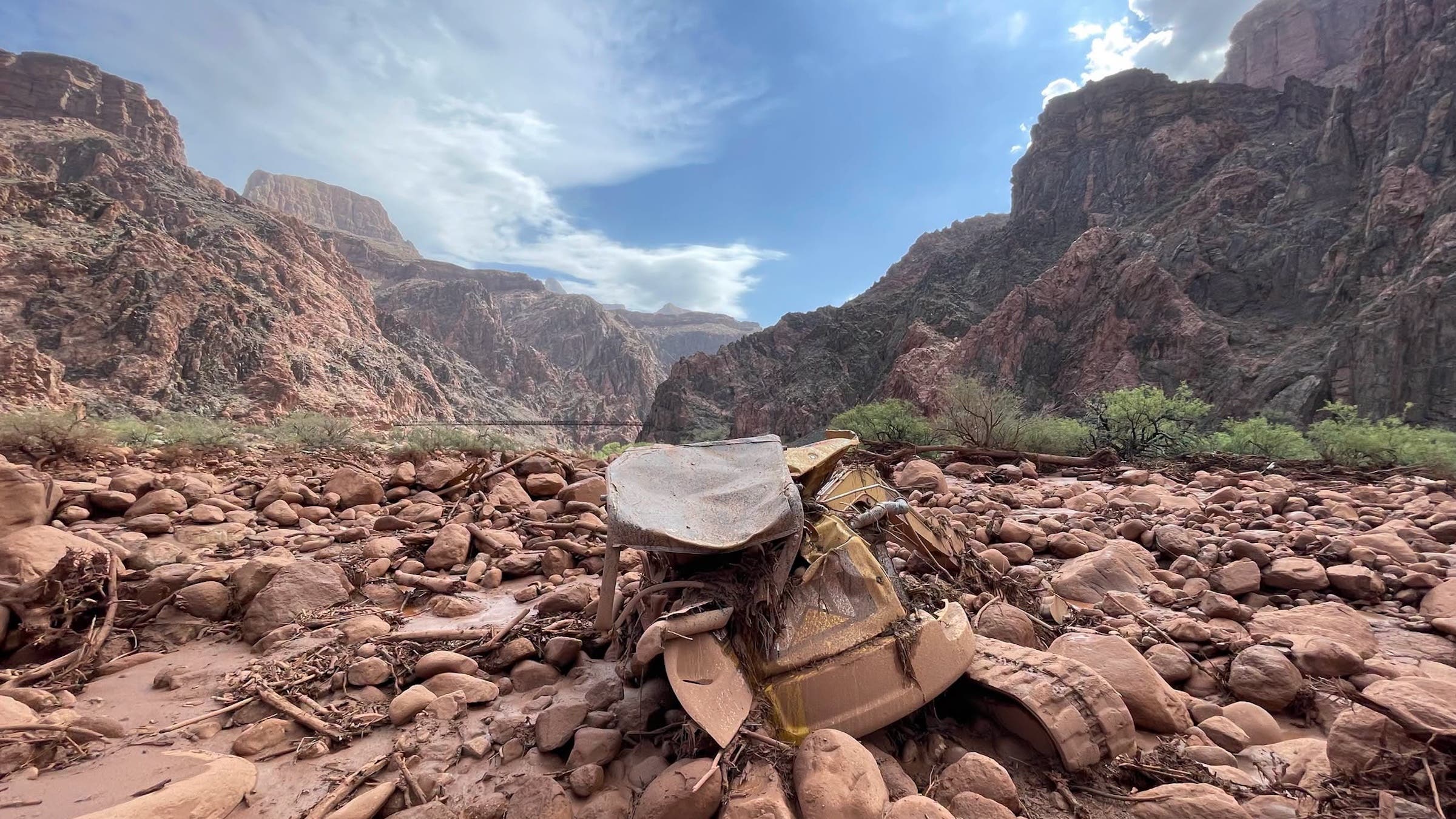
Existing Park Closures
As of this writing, the park remains open for day use, and Stiles said his team is continuing to welcome guests with day-use operations, retail, and dining.
“We’re focused on supporting our employees and the broader South Rim community through this difficult time,” Stiles said. “That includes measures to ease the financial impact of reduced hours and continued access to benefits and resources for anyone who needs them.”
Stage four water restrictions are in effect throughout the park, and officials are asking both visitors and residents to conserve water. No potable water is available along the inner canyon trails or at Havasupai Gardens. Hikers and backpackers should carry all necessary drinking water or bring filtration and treatment systems.
Several closures remain in place as of this writing, including Phantom Ranch, the North Kaibab Trail, several river bridges, and lodging on the South Rim in Grand Canyon Village.
“We’d encourage anyone planning a trip to check NPS’s latest alerts before they go,” Stiles said.
Grand Canyon National Park alerts and conditions page can be seen here.
