

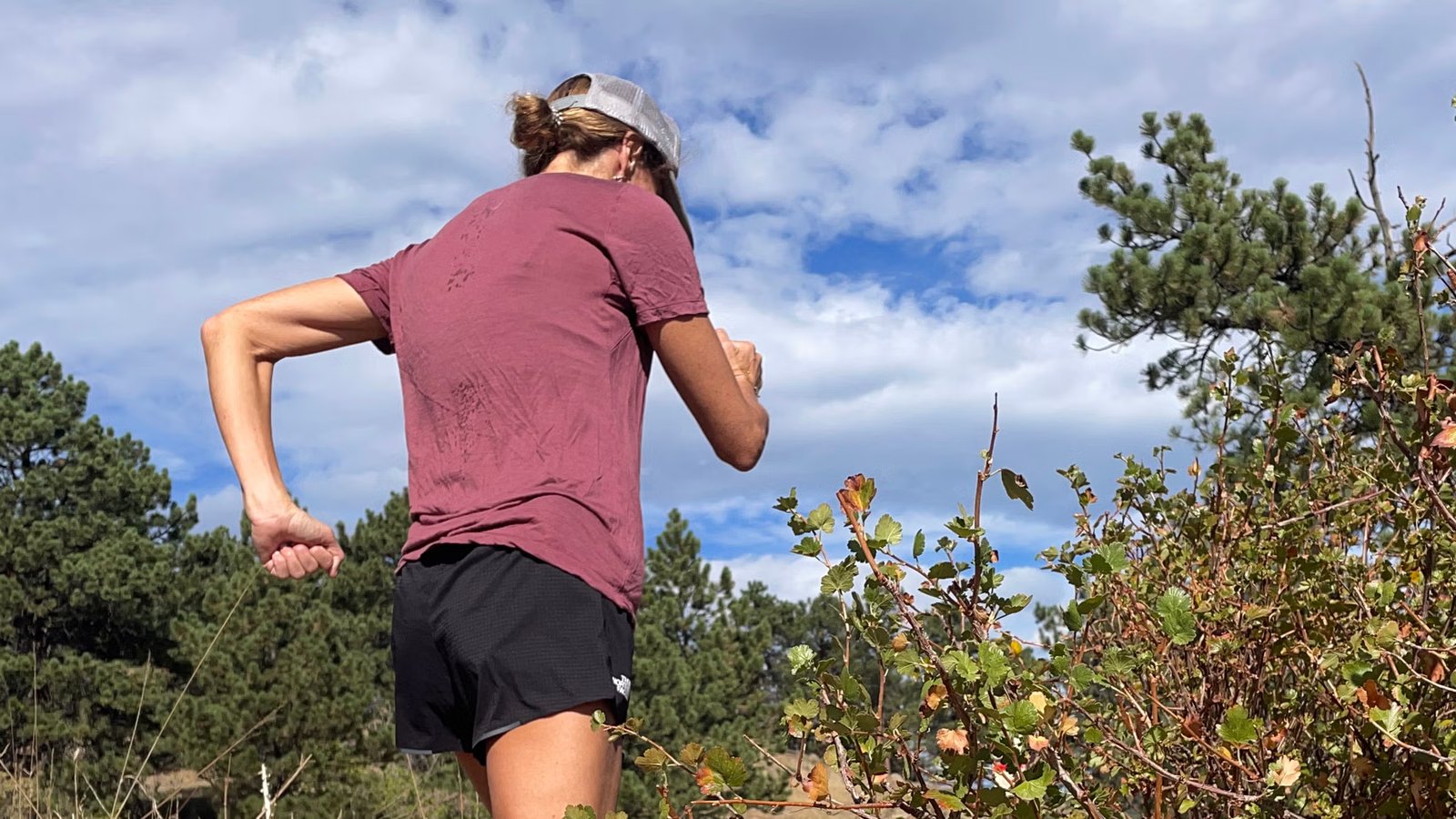
When the temperature drops, it’s the perfect time to lean into cozy, environmentally friendly Merino.
Warmth when it’s chilly, breathability when working hard and heating up—wool excels at regulating my temperature on autumn runs. (Photo: Lisa Jhung)
Published September 21, 2026 11:22AM
I’m not a natural fiber purist: I love thin, airy, sweat-wicking, quick-drying synthetic tanks and tees for hot summer running. But now that fall is approaching, I’ve switched to tops made of natural fibers. Here’s why.
Tees made of fibers like Merino wool feel soft and downright cozy against my skin. On cool fall mornings, especially when my friends drag me out way too early for a run, at least I get to pull on a shirt that’s as comfortable as pajamas or an old cotton T-shirt. It feels a lot better than pulling on a cold, waxy synthetic shirt at 6 a.m. The same soft hand keeps me comfy on fall evening runs when the sun sets early, the temperatures start dropping, and I’m racing the rapidly approaching dark.
These super-soft tees also have casual styling with minimal, if not absent, branding, and good-looking, subdued colors and textures. This allows me to put one on in the morning, wear it all day for work and errands, and not look like I’m wearing running clothes. When I get a free window to run, I just change into running bottoms, grab my shoes, and go.
Natural-fiber tees also, ahem, naturally regulate my body temperature. The crimped, coiled structure of a wool fiber traps air, which, in turn, traps my body’s heat in cool weather. And because of the space between each tiny fiber, wool or wool-blend materials stay super breathable without losing their insulating properties.
I’ve found that when I wear a wool shirt on runs in 70-degree temperatures or higher (which still happens in the fall where I live in Boulder, CO), there is often a moment when I feel too warm, but that sensation is short-lived. Within a minute or two, the shirt transitions from trapping my body’s heat to letting it escape. And when the shirt becomes wet with sweat, it’s not a cold, clammy moisture. It stays comfortably matched to my body temperature, cooling without chilling and feels like a welcome, warm rainstorm on a hot day in Hawaii.
Beyond their performance abilities, I love natural-fiber tees because they are better for the environment. I run trails to connect with nature. I need the trees, the rocks, and the creeks to add balance to whatever else I have going on in my life on any given day. Wearing running clothes that align with that perspective just feels better on an emotional level. Wool biodegrades; synthetics don’t. Washing synthetic garments can release microplastics, and being a die-hard lover of the ocean, I hate knowing that.
That said, a little bit of synthetic mixed in can be a good thing. Fibers like nylon, spandex, or Tencel add stretch, durability, and sweat-wicking to wool—all highly valued properties in a running shirt.
As for the odor-resistance of wool: Unless I’m clueless, in serious denial, or my friends aren’t as close as I think they are, managing body odor—even on a long run—isn’t a top priority for me. No one has ever complained. However, I’m not above wearing a shirt twice without washing it, and a wool shirt that doesn’t hang on to even the slightest stink is a great thing.
Here are three wool-blend tees that I love:
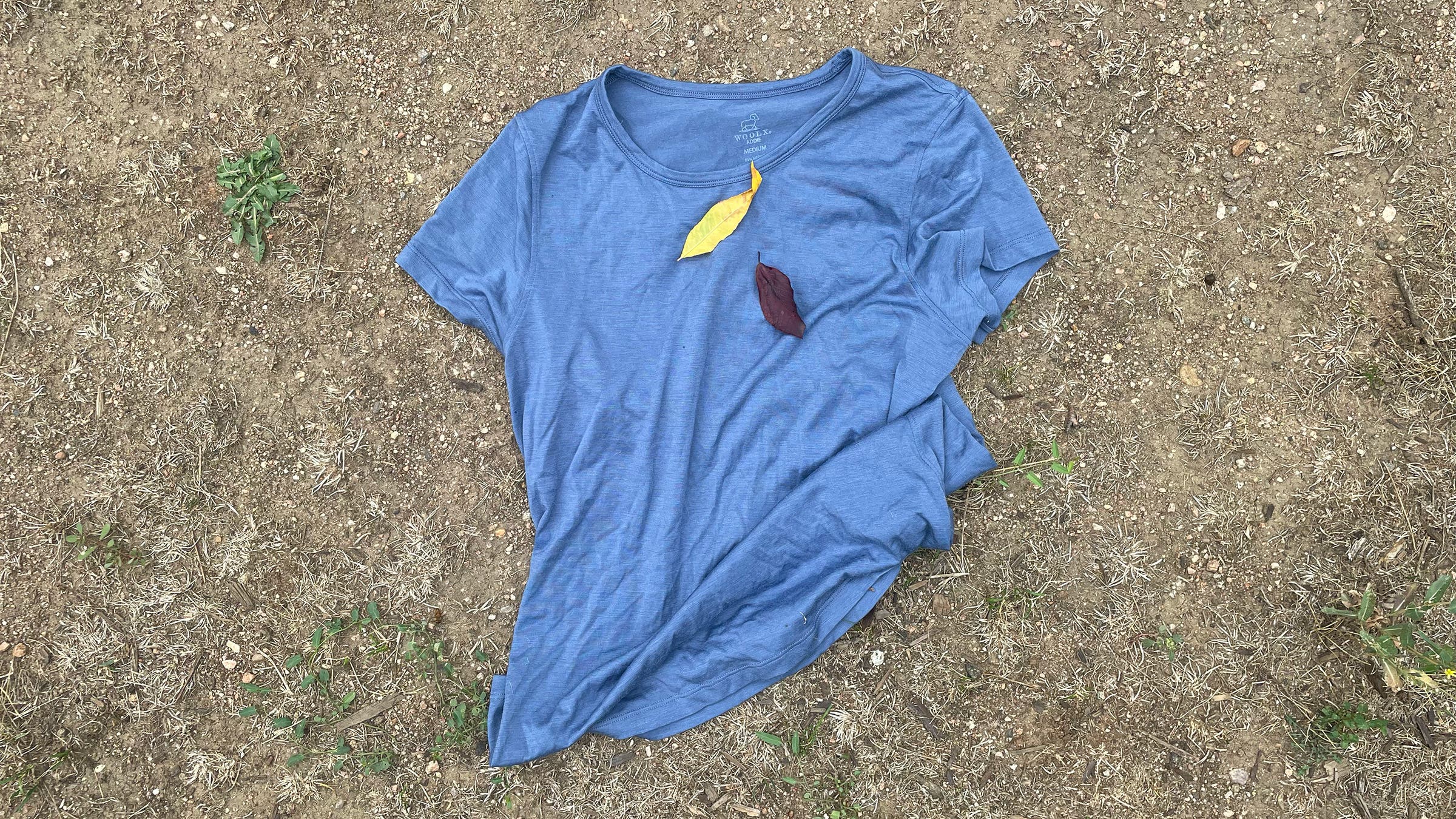
Woolx Addie Tee
The Woolx Addie Tee is made from 85% Australian Merino Wool, 12% Nylon, 3% Spandex, and is extremely stretchy horizontally (a little less so vertically). It does, however, recover quickly from stretching and keeps its shape. It’s a thin 150g/m² wool blend and super breathable. The finished neckline gives this shirt a particularly casual look, but it works great on the trail. I’ve taken this on everything from Rocky Mountain hut trips to European trains and trails.
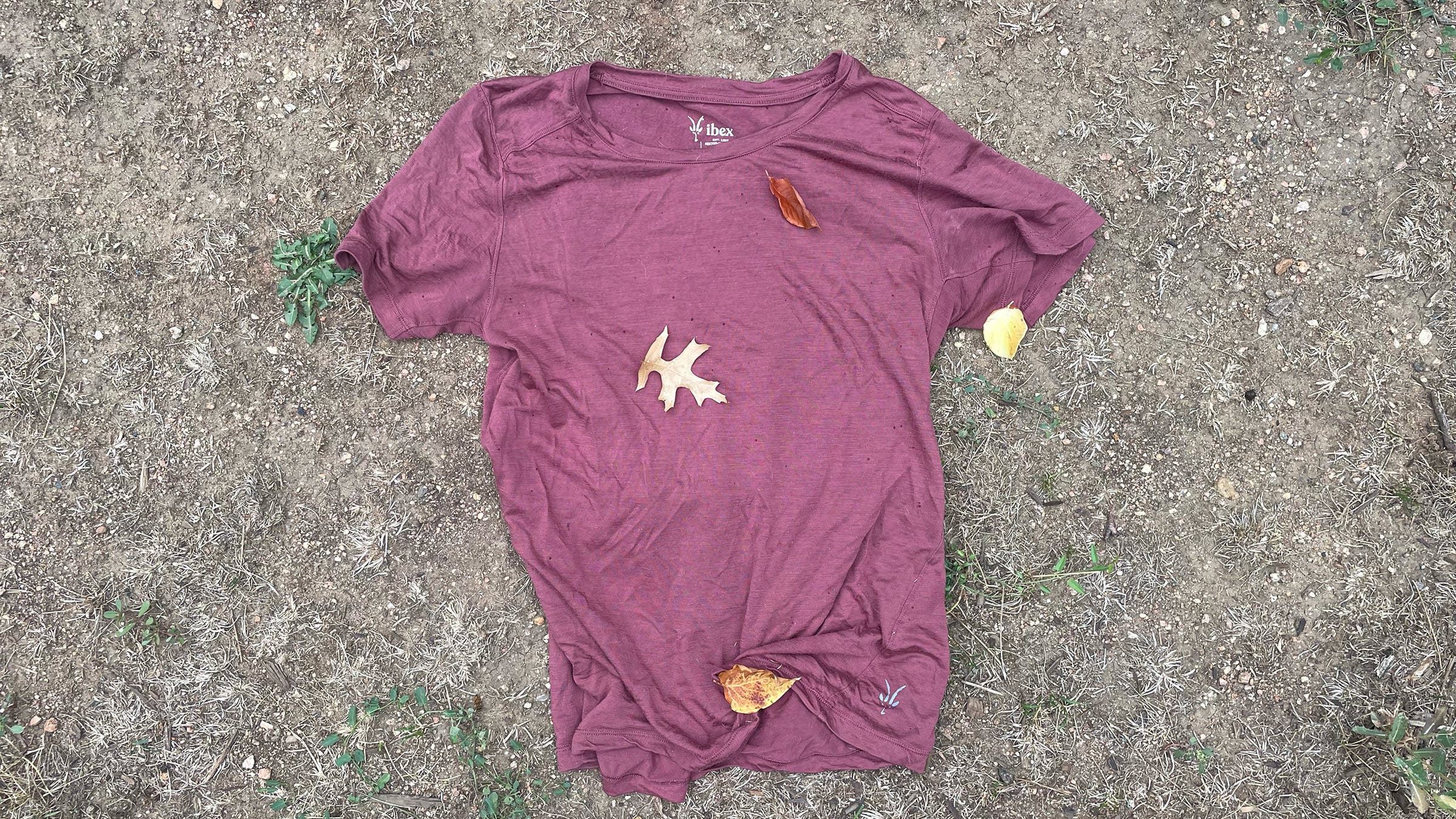
Ibex Paradox Short Sleeve Crewneck
This 45% Merino wool, 45% Tencel, 10% nylon blend Ibex Paradox Short Sleeve Crewneck is the softest of the three tees I’ve been wearing. I often wear this shirt all day just because it feels so comfy, but I also grab it for trail runs, and it handles the sweat with ease. This tee also uses 150g/m² fabric weight—it’s thin and breathable, but the fiber blend makes it cozy.
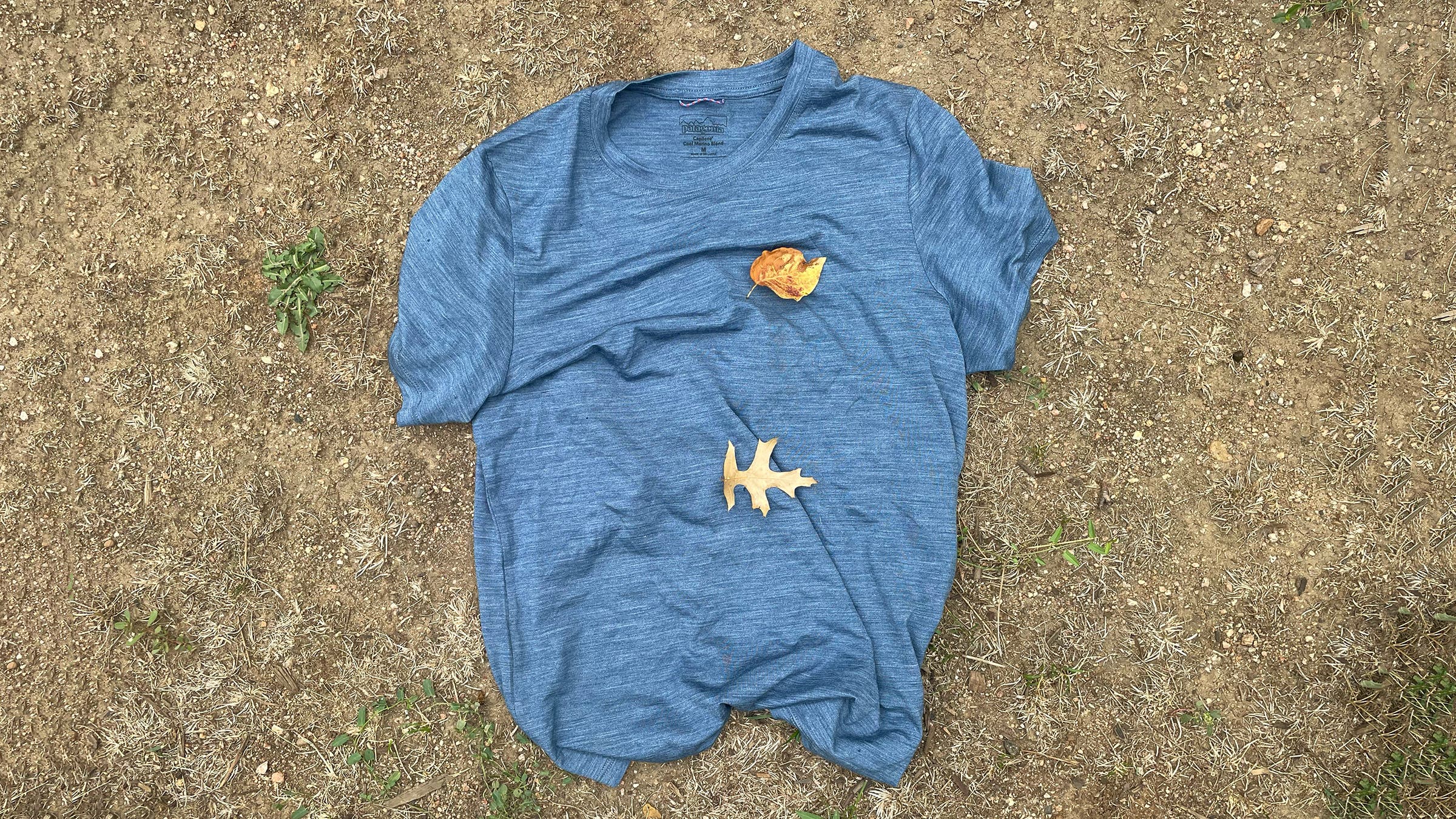
Patagonia Capilene Cool Merino Blend Shirt
The Patagonia Capilene Cool Merino Blend Shirt is made from 65% Responsible Wool Standard-certified wool. The other 35% is recycled polyester jersey. This tee is the thinnest of the bunch, at 115-120g/m², but still regulates my body temperature whether I’m feeling cold or hot. I like the active styling of the side notch and slightly dropped back hem, which adds mobility and modesty while giving the shirt an interesting look.
