

Published September 22, 2026 06:29AM
Long before modern science revealed the mechanisms behind leaf color change, Indigenous communities connected this seasonal transformation to stories of battle, bravery and bloodshed.
The Oneida Indian Nation and Meherrin people tell similar versions of a story in which three men pursue a great bear to the ends of the earth and into the sky. The hunters wound the bear, whose blood drips to Earth, painting the leaves shades of crimson. In the Oneida Indian Nation’s telling, the bear escapes and reappears in the night sky as the Big Dipper, and the chase starts over again.
These stories befit the spectacular mosaic of colors on display in autumn. When an entire mountainside seems to ignite in hues of red and gold, explanations of cells and chlorophyll and pigments can seem unequal to the spectacle.
But that display is changing. The autumn we know and love depends on a finely tuned interplay of sunlight, temperature and moisture. And as climate change alters those conditions, scientists are now trying to determine what the shifts could mean for the foliage that has inspired centuries of stories, art, wonder and travel.
Which Climate Shifts Impact Fall Colors the Most?
The effects of climate change on fall foliage depend on the tree species, the region and the conditions trees experience throughout the growing season. In the eastern United States, for example, warmer summers can keep healthy trees green longer. But when heat is accompanied by drought, stressed trees may shut down early, turn brown or shed their leaves before reaching peak color.
Heavy rain, strong winds, early freezes and changes—particularly reductions— in snowpack can also affect the timing, brilliance and duration of autumn color and leaf senescence—the aging process that concludes with leaf fall.
These shifts have not produced a single uniform national trend in fall foliage. Instead, they bring a lot more variability, which can make it increasingly difficult to predict color from historical averages alone.
A 2026 study published in the journal Agricultural and Forest Meteorology looked at leaf color and leaf fall data from more than 100 woody plant species across the continental U.S. Researchers found that warmer summer temperatures tended to push back the start of fall foliage in the East. Out West, though, rain played a bigger role than heat. When there was abundant rain from January through March, leaf color change and drop came later, but drought had the opposite effect, speeding things up and shortening the growing season.
Another 2026 study found that foliage dates across North America didn’t shift much between 2000 and 2020. Not because the climate was stable, but because two climate forces have been pulling foliage timing in opposite directions, effectively canceling each other out. Rising temperatures pushed color change later, while increasing vapor-pressure deficit, which is a measure of how hard the atmosphere draws moisture from plants, pushed it earlier.
Even the arrival of spring can influence what happens in the fall. Research by Northern Arizona University ecologist Andrew Richardson found that leaf emergence can shape when they change and fall in autumn. Other studies suggest that trees that begin growing early or fast may hit their seasonal limits and shut down sooner than expected.
Should Leaf Peepers Change Their Plans?

Climate change has not produced a new, universal leaf-peeping calendar. In some eastern forests, warming may delay leaf change. In water-limited western parks, drought may cause trees to turn earlier and produce a shorter, duller display. And in any given year, a single frost or stretch of extreme heat can override these broader trends.
The best strategy for now is to treat historical peak dates as flexible starting points, not hard and fast rules. Check current drought and foliage reports, and scout viewing spots at a few different elevations— especially in mountainous parks, where you can go higher or lower for flexibility.
The changes are less about peak foliage moving from one week to another and more about predictability itself. America’s national parks will still change color, but knowing exactly when and how brilliant the show will be is becoming a little harder to nail down.
Here’s what this looks like in some of the U.S.’s most iconic, foliage-rich national parks.
Rocky Mountain National Park

In Rocky Mountain National Park, quaking aspens, which turn the mountainsides shades of yellow and gold, dominate the fall display. Aspen leaves generally start changing in mid-September, with color continuing into October at lower elevations.
But water—or lack of it—can throw off that historically consistent schedule. According to the National Park Service, the park’s average annual temperature increased about 3.4 degrees Fahrenheit over the past century. Spring snowmelt also happens two to three weeks earlier now, meaning there is less available water when trees need it in the summer.
Trees in the West are especially sensitive to precipitation changes. Low snowpack followed by a hot, dry growing season can leave aspens stressed before fall even starts. Instead of showing off their usual brilliant golds, their leaves may be muted, turn brown and crispy at the edges, and drop early.
Experts with the Colorado State Forest Service emphasize that day length is still the main cue for aspens to change color. But tree health, moisture, frost, wind and early snow can determine how impressive—and how long—the display will be.
In severe drought years, like 2026, leaf-peepers should start monitoring conditions earlier and use elevation as a guide. Color typically starts in higher and more northerly areas before moving down and south.
Yellowstone and Grand Teton National Parks

Yellowstone’s fall foliage isn’t the sprawling multicolored hardwood show you get in the East, but it has its own brilliance. Aspens, cottonwoods and willows light up valleys, wetlands and stream corridors in yellow and gold.
The Greater Yellowstone Ecosystem has already experienced dramatic seasonal changes. In some areas, the growing season has lengthened by about 30 days. Near Yellowstone’s Northeast Entrance, there are now roughly 80 more above-freezing days each year than there were in the 1960s, and there are about 30 fewer days annually with snow on the ground.
As in Rocky Mountain National Park, reduced snowpack, earlier snowmelt and increasing summer drought can leave trees water-stressed before autumn. Aspen forests at some of the West’s lowest and driest sites have declined following drought. In Yellowstone, researchers have documented young aspens at elevations they have not historically occupied, which they say is consistent with climate-driven range shifts.
Over time, these things can change when and where visitors find fall foliage. Moist valleys, north-facing slopes, stream corridors and higher elevations may support more reliable displays than increasingly dry lowlands.
Next door at Grand Teton National Park, something similar is unfolding. Aspens and cottonwoods provide much of the fall color there. The park is projected to experience earlier growing-season starts, less snowfall and drier soils during part of spring, summer and fall.
Temperature and moisture determine fall color intensity and duration. A wet growing season followed by sunny fall days and cool nights generally produces the best display.
Visitors may increasingly find the most reliable fall color near waterways and in healthy, well-watered aspen stands rather than across the landscape all at once.
Cuyahoga Valley National Park
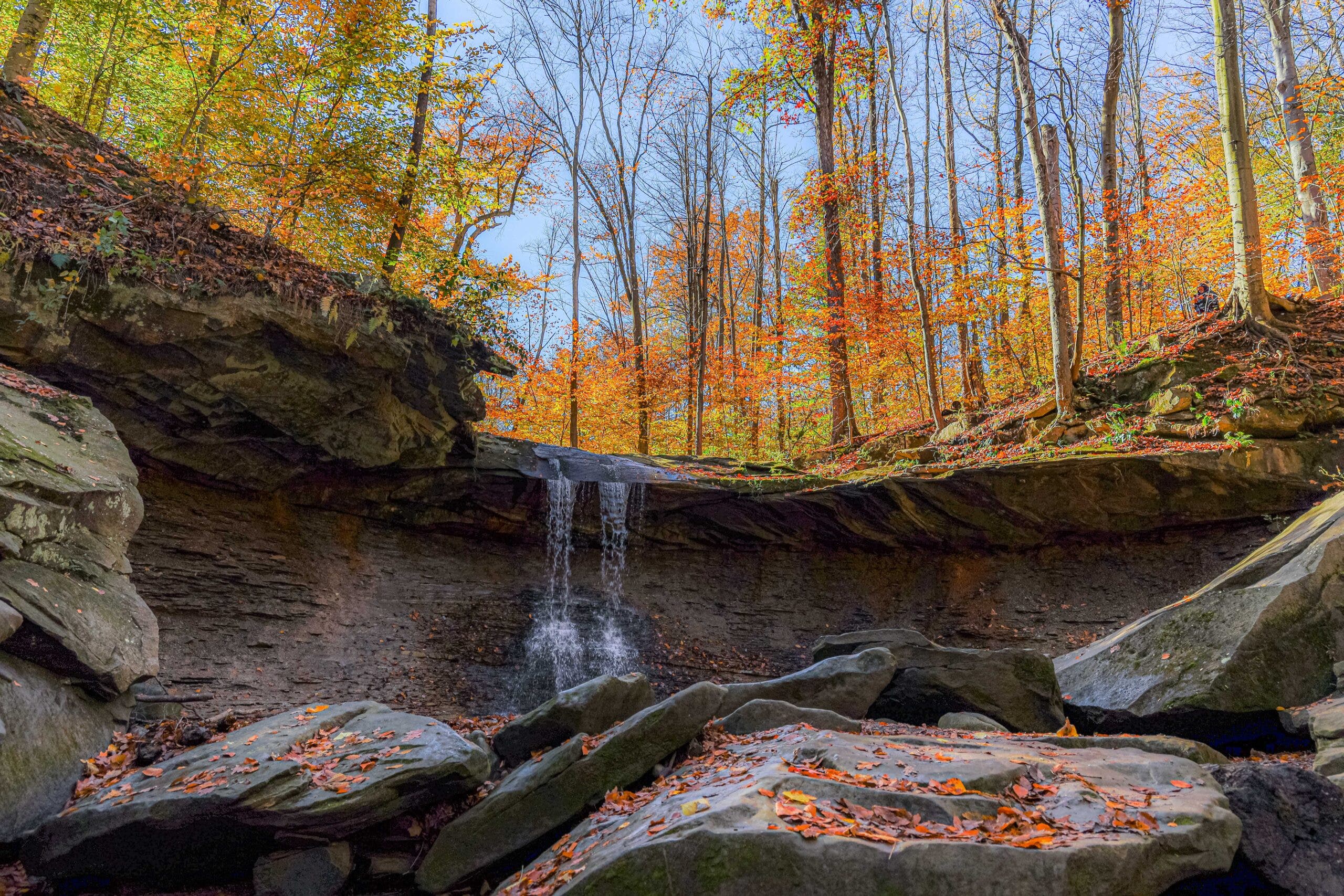
In Ohio’s Cuyahoga Valley National Park, peak color typically arrives around the third week of October. Sugar and red maples are among the first trees to produce brilliant reds, yellows and oranges, while other species extend the display throughout the month.
Cuyahoga Valley is getting warmer and wetter. Northeast Ohio got about seven more inches of annual precipitation in 2020 than it did in 1960—an 18% increase, according to the National Park Service. Heavy rainfall events have also become more frequent and intense.
That tracks with the 2026 phenology study published in Agricultural and Forest Meteorology. Data shows that warm summers may delay the beginning of color in eastern trees. Rainfall could help trees retain their leaves long enough to produce a vibrant display, but greater annual precipitation does not eliminate drought. A short but intense dry period can still stress trees, cause early browning and speed up leaf fall.
Climate change is likely to increase variation around Cuyahoga Valley’s traditional October foliage window. Visitors should check the summer heat, recent rainfall and drought conditions before locking in a trip window.
Great Smoky Mountains National Park

Thanks to its enormous elevation range, Great Smoky Mountains National Park has one of the country’s longest fall foliage seasons. Color can start at the highest elevations in mid-September, reach areas above 4,000 feet in early to mid-October, and move into lower valleys later in late October or in early November.
More than 100 native tree species contribute to the display, including red maples, golden birches and hickories, russet oaks, among others.
Climate projections for the Smokies include increasingly irregular rainfall, with intense storms interspersed with periods of drought. Warm, wet conditions could delay color in some tree species, while a warm drought could produce the opposite, triggering premature browning and leaf loss.
Fortunately, the park’s dramatic elevation range gives leaf-peepers some flexibility. When the highest forests have passed peak, the valleys below may only be beginning to turn. Visitors who are willing to move uphill or downhill can often find good color without relying on one peak date for the entire park.
The biggest changes may be unfolding in the park’s high-elevation spruce-fir forests. These iconic evergreens provide little of the park’s fall color, but they form the dark-green backdrop that makes the changing hardwoods pop. Because spruce and fir are adapted to cool, moist mountain conditions, continued warming could shrink the areas where they can survive.
Shenandoah National Park

Like the Smokies, the dramatic elevation range in Shenandoah National Park creates a gradual change in foliage rather than a single simultaneous park-wide peak. Color starts appearing at the park’s highest elevations in late September and continues in the lower forests into November.
But the climate factors behind that progression are shifting. Shenandoah is seeing warmer conditions, more precipitation and shifts in the seasonal timing of natural events. According to the National Park Service, the park is already experiencing an earlier start to spring.
The U.S. Geological Survey keeps a camera on Stony Man Mountain to record forest color and condition over time, while the park posts weekly fall reports and provides several live camera views. Those tools are becoming more valuable as historical peak dates become less reliable.
Acadia National Park
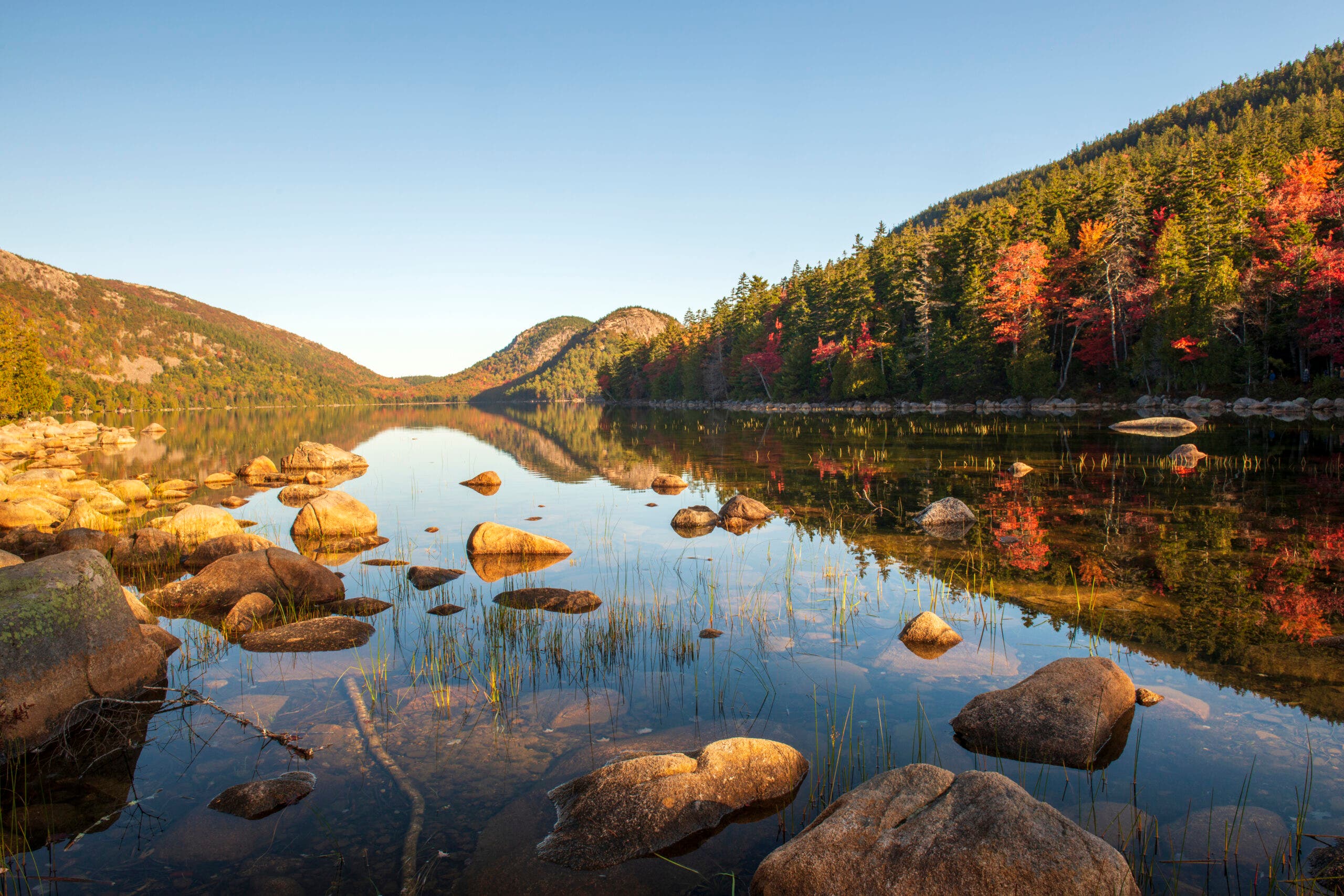
The timing of Acadia’s foliage change is already shifting. Researchers led by University of Richmond geographer Stephanie Spera reconstructed the timing of peak foliage in Acadia between 1950 and 2021 using historical records, photographs and satellite observations.
They found that peak foliage now occurs, on average, almost two weeks later than in 1950.
The study documented significant increases in minimum and maximum temperatures, precipitation, warm and hot days and nights, and heavy-rain days, all of which can affect foliage timing. Warmer and wetter Septembers, for example, were associated with later peaks.
If warming continues, their models suggest Acadia’s average peak could shift dramatically later, to approximately October 30 through November 2 by 2060, according to the study.
That doesn’t mean every autumn will march steadily later since weather varies considerably from year to year, and different species and locations respond to climate shifts differently.
