

Published September 22, 2026 09:00AM
How We Reported This
The author attended the Tanenbaum Institute for Science in Sport Conference in Toronto to hear directly from Margie Davenport and Michelle Mottola, key researchers shaping the upcoming 2027 International Olympic Committee guidelines. The resulting piece analyzes their latest clinical and survey data on pregnant athletes engaging in heavy weightlifting, high-intensity intervals, endurance sports, and rock climbing.
Back in 2019, I wrote about a new set of guidelines for exercise during pregnancy. These guidelines were revolutionary—up to a point. Advice from doctors at the time was often extremely conservative, like never letting your heart rate exceed 140 beats per minute. But solid evidence now suggested that consistent moderate exercise—at least 150 minutes spread over at least three days per week—was not just safe for most pregnant women but was actually beneficial for both mother and fetus, dramatically lowering the risk of conditions such as gestational diabetes, pre-eclampsia, and depression.
Sweat Science 101
Sign up for a ten-part email series from Alex Hutchinson on how to train, fuel, and recover. Each week, Alex covers a new topic, including strength training, supplements, and more!
Beyond that threshold, though, the deadlines dared not tread. Moderate exercise? Sure. Lifting heavy weights, or running marathons, or going rock climbing? That’s a trickier question, because no scientist wants to send a pregnant person out to do something that could potentially harm her or her baby. But ignoring it doesn’t make sense, because many female athletes do continue participating in their sports while pregnant, regardless of what the guidelines say. And those who stop or dramatically reduce their activity may suffer declines in both physical and mental health.
It’s important, then, to understand what the evidence says about the risks and benefits of more extreme forms of exercise. In 2018, the answer was “not much.” But in the years since then, there has been a steady flow of research on pregnant athletes doing hard things. In fact, the International Olympic Committee is planning to release a new and dramatically revised set of guidelines for pregnant athletes in 2027.
At the Tanenbaum Institute for Science in Sport Conference in Toronto last week, I had a chance to hear two key authors of both the old and new guidelines—Margie Davenport of the University of Alberta and Michelle Mottola of Western University—speak about their research. They couldn’t yet reveal what’s in the new guidelines, but they did share some of the key research that informs them. Here are some highlights from the extreme frontiers of exercise and pregnancy.
Lifting Heavy
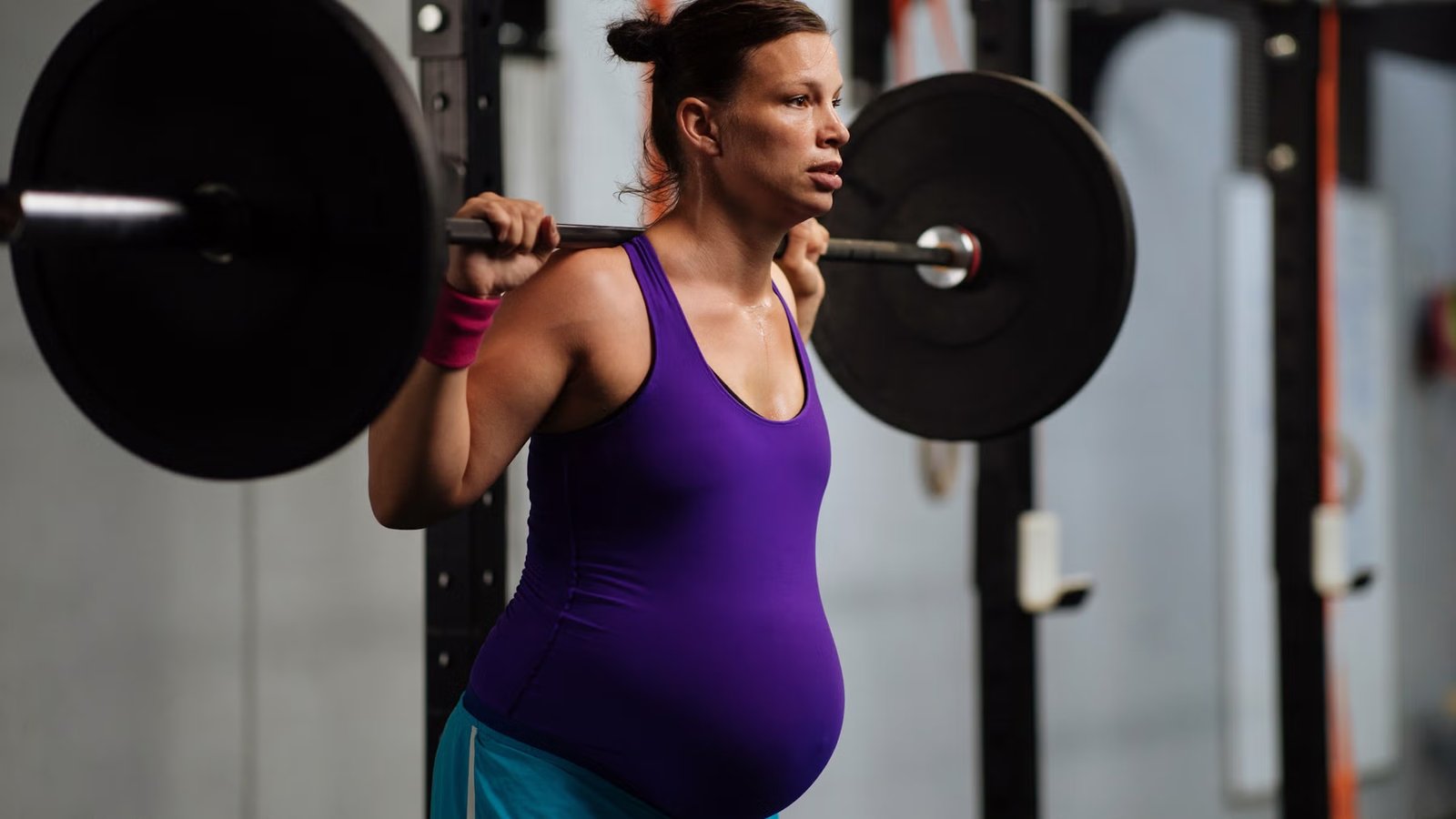
Any sort of heavy lifting is frowned upon during pregnancy, and particularly lifting while lying on your back, which could compress key blood vessels. But this advice, Davenport points out, is based on expert opinion and workplace studies, where heavy lifting is different from lifting in the gym where you control load and recovery.
To start, she and her colleagues surveyed 679 recreational weightlifters and CrossFit athletes who were pregnant and habitually lifted at least 80 percent of their one-rep max. Those who continued heavy lifting had a 51 percent reduction in complications compared to those who obeyed the guidelines and dialed back their training. They were also roughly half as likely as normal to report postpartum depression after delivery.
Of course, survey studies have limitations: maybe complications caused people to stop lifting rather than the other way around, for example. But those initial positive results paved the way for bringing 10 pregnant women into the lab and having them do squats, bench press, and deadlift for 10 reps at up to 90 percent of 10-rep max. They monitored maternal and fetal heart rate, umbilical blood pressure, glucose and lactate levels, and various other health markers, and compared the results to those of ten non-pregnant controls; there were no causes for concern.
High-Intensity Intervals
A heart-rate limit of 140 is outdated. Still, the 2019 guidelines remain cautious. “Vigorous” exercise, they suggest, should top out at around 169 beats per minute for women 29 and younger, and 162 beats per minute for those 30 and older.
In a 2023 study, Davenport and her colleagues put that ceiling to the test. They had 15 volunteers, at an average of 27 weeks pregnant, do either a 30-minute moderate bike ride or 10 x 1:00 intervals at above 90 percent of their predicted maximum heart rate. The women ended up reaching a peak of 96 percent on average during the intervals, with some getting as high as 105 percent of max. (This isn’t Spinal Tap: the standard estimate of max heart rate, 220 minus age, was clearly off for these women.)
Once again, the researchers took a bunch of measures of fetal and maternal physiological responses. There were no relevant differences between the moderate and intense exercise sessions.
Going Long
This was another survey study: 331 women who, on average, were 33.2 years old and had completed 2.1 pregnancies. All had engaged in exercise bouts lasting at least an hour during their pregnancies; 80 percent had continued long-duration exercise throughout their pregnancies, but in most cases had gradually decreased overall training as the pregnancy progressed.
Davenport and her colleagues divided the respondents into two subgroups: those who continued to do at least 300 minutes of exercise per week during their third trimester, and those who were below that threshold. Those in the high exercise group had a lower risk of complications during delivery, but a higher risk of diastasis recti—a separation of the stomach muscles—after delivery.
The overall conclusion was that long-duration exercise well above guideline recommendations “appears to be well tolerated” by people who are already used to that level of training.
Climbing
Here’s where things get interesting, because it’s hard to wave away the hypothetical dangers of a hard fall. But do these risks justify telling people not to climb?
Davenport has led a couple of studies exploring this issue. One involved interviewing 11 elite climbers who continued to train or compete during pregnancy about their perspectives on risk. Climbing, one of the climbers said, was actually safer than walking down the street: “I’m less likely to fall because I’ve got three points of contact on, compared to one when I’m walking… So I feel like I’m more likely to trip over something in the dark on the street than falling while climbing up a climbing wall.”
The second study surveyed nearly 700 climbers who had climbed through pregnancy, logging a cumulative total of 64,000 hours of climbing and suffering 155 self-diagnosed “hard falls.” Here there were two adverse events (one vaginal bleeding, the other undeclared), but both births were healthy. Climbing isn’t without risks, Davenport says, but the findings suggest the risks are lower than previously thought. Of note, 96 percent of respondents were “happy” or “very happy” they had continued to climb.
There’s more—Davenport has also studied contact sports like soccer, for example—but you get the picture. Some of these activities clearly involve theoretical risks, but those theoretical risks need to be balanced against the measurable mental and physical benefits of continuing to train and the risks of stopping. One of the best predictors of post-pregnancy injury, for example, is having reduced your training by more than 50 percent during pregnancy.
The focus of the upcoming IOC guidelines will be “athlete-centered decision-making”—not an ironclad set of rules about who can do which types of exercise when, but a framework about how to weigh the pros and cons in different contexts. It’s an important update, because it recognizes what’s already happening in the real world. “Our current public health guidance is fantastic and sets our baseline,” Davenport says. “But most athletes—well, all athletes—are going to vastly exceed current recommendations.”
For more Sweat Science, sign up for the email newsletter and check out my new book The Explorer’s Gene: Why We Seek Big Challenges, New Flavors, and the Blank Spots on the Map.
