

Updated September 23, 2026 10:37AM
For this story Outside associate editor Madison Dapcevich spent three days at the 2026 North Fork Championship, a kayaking competition, in Idaho interviewing athletes, fans, and organizers. Dapcevich is a dedicated paddler herself, and wrote about the intersection of whitewater culture and competition at the race.
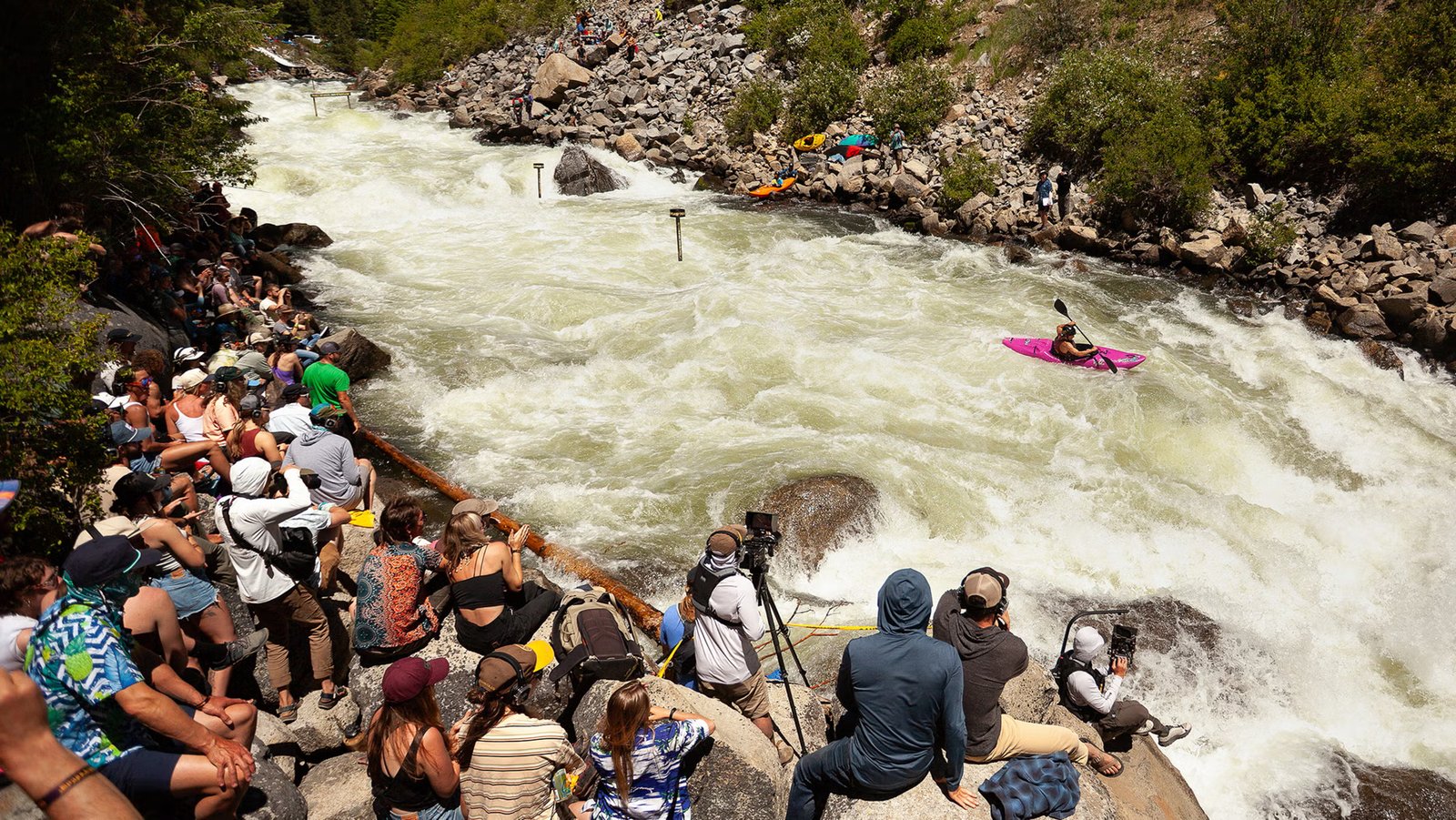
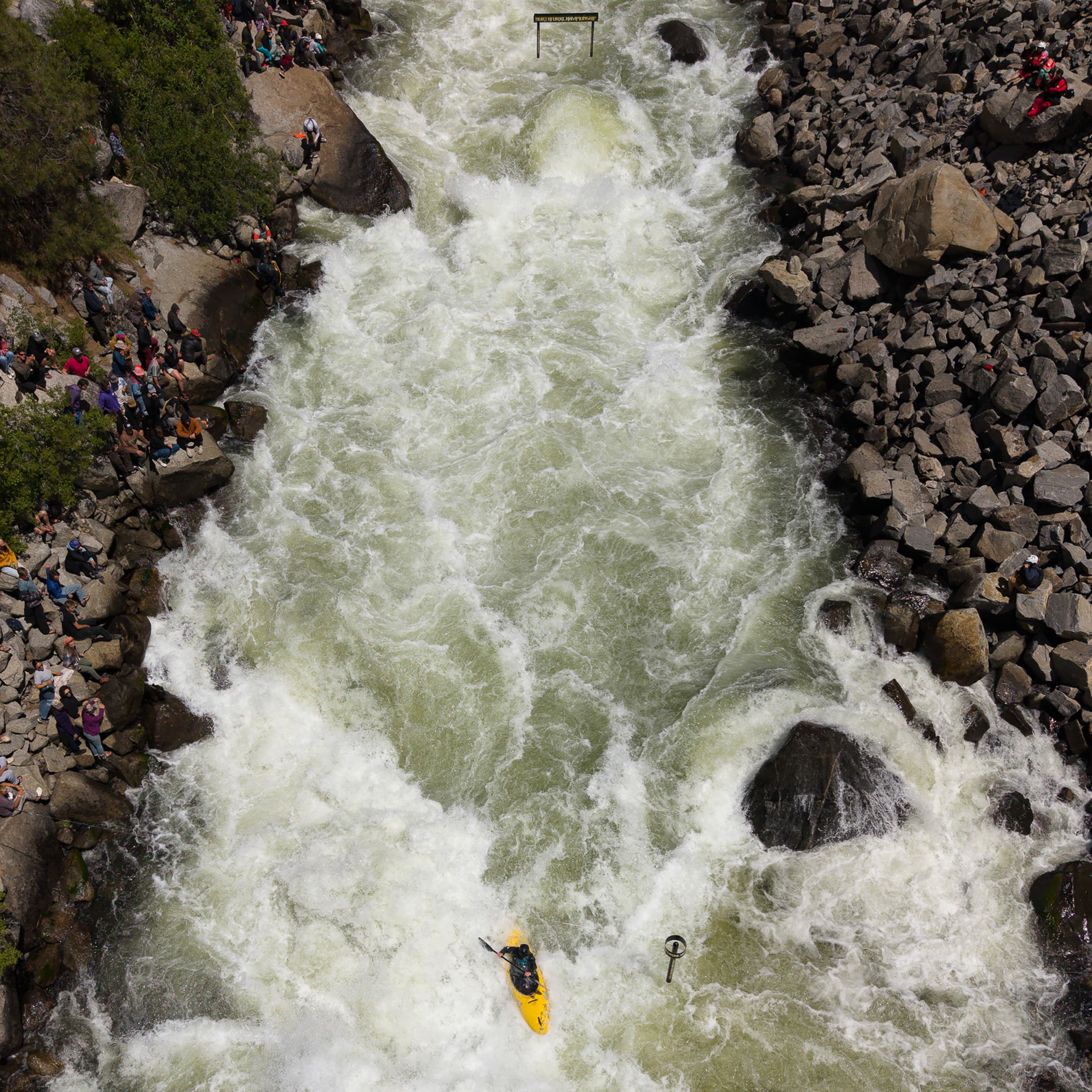
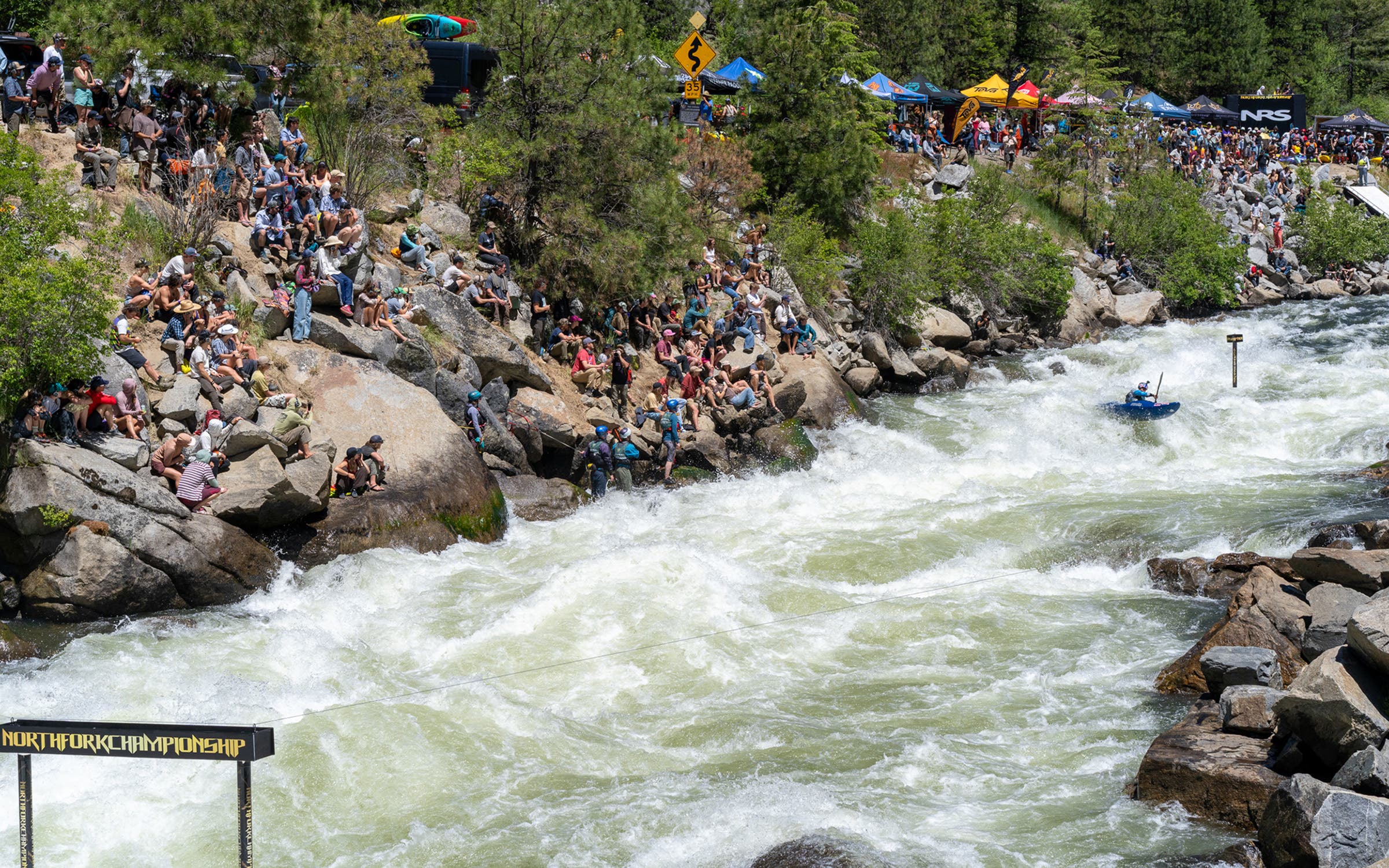
I’m seated alongside hundreds of whitewater fans, shoulder to shoulder, on the edge of a highway as semi-trucks whiz behind me. The roar of their engines is drowned out by the thumping howl of Jacob’s Ladder, a famously rowdy rapid on the North Fork of Idaho’s Payette River, which is just below our feet.
Jacob’s Ladder is less than a mile long, and it features massive crashing waves, discombobulating hydraulics, and metaphorical rooms built from walls of whitewater. It’s a global destination for kayakers, and every year, the very best travel here for the North Fork Championship (NFC), one of the world’s premier whitewater competitions.
Our viewpoint from the highway gives us a bird’s-eye view of the paddlers, but the mid-summer sun is starting to feel unbearable. A cool, refreshing breeze lifts off the river, reminding us of its mountaintop snowmelt origins. Wafting through the crowd are the aromas of campfire, neoprene, and stale beer—nearly everyone here camped the night before, and those scents tend to linger.
Across the river, accessible only by paddling above the rapid, a group of four guys unfolded a plastic table and set up their red camp stove. Shirtless, they painted the letters K, I, W, and I on their backs, presumably for their fellow New Zealand competitor, Zack Mutton. I look to the beginning of the rapid a few hundred feet upstream. Mutton sits at the top of the race’s ramp and takes a deep breath. The spectators hold theirs.
Three. Two. One.
An airhorn buzzer blasts. Within seconds, Mutton slides down the 30-foot-long, hand-built chute in his kayak, paddle in hand, and skyrockets ten feet in the air before landing with a loud whoosh that marks his entrance into the river. He dodges hydraulic features, then maneuvers through gates lining the whitewater course with hard paddle strokes that push athletes toward the most challenging route possible.
Spectators hoot. They holler. They exhale in relief as Mutton makes his way between vertical poles that organizers strung across the river days before. You don’t need to be a kayaker, or even know what a rapid is, to feel the coliseum-like energy vibrating through the crowd.
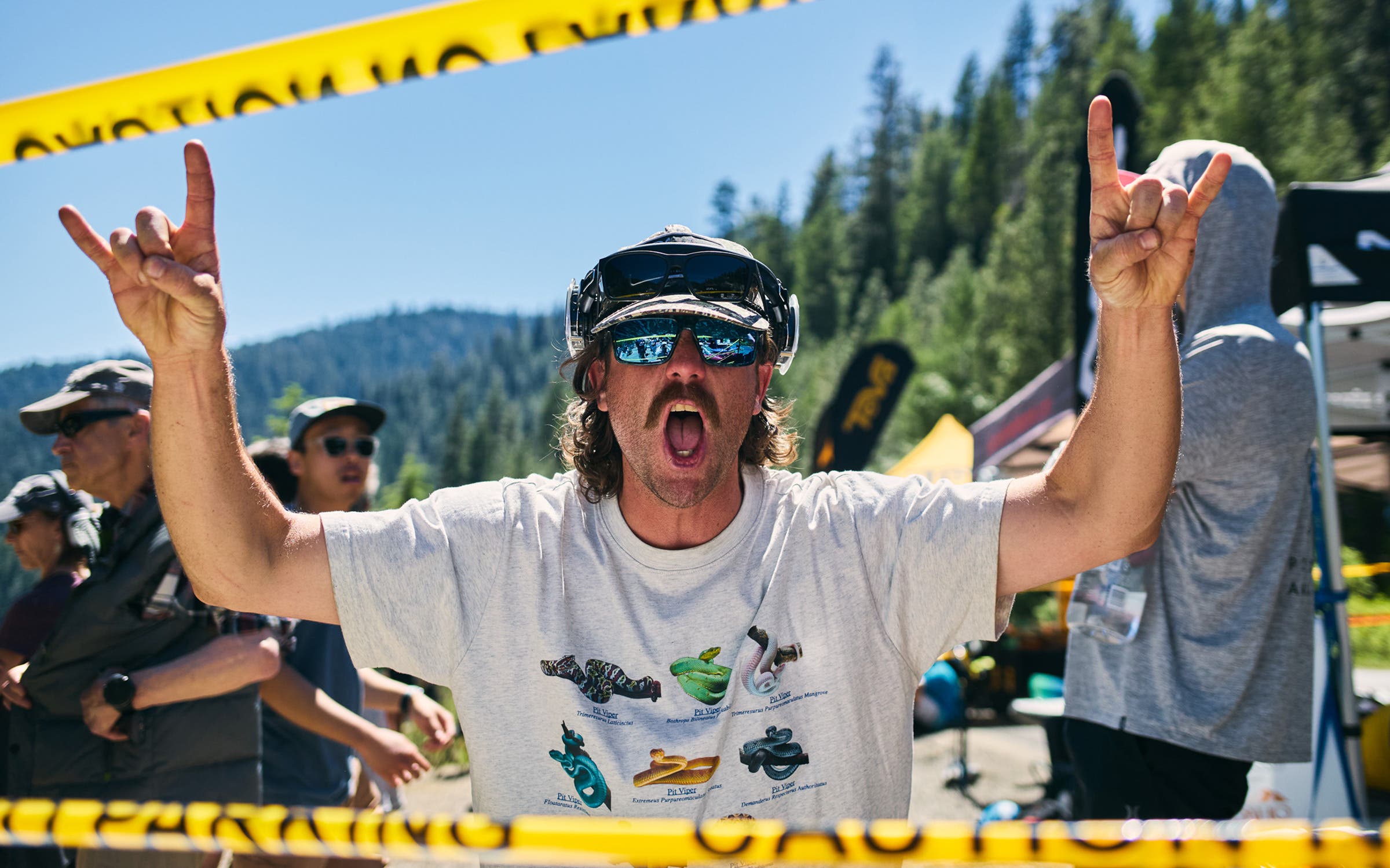
It’s terrifying to watch. Nouria Newman, one of the world’s best kayakers, tells me that it’s even scarier to compete. When she barrels past the roadside audience, Newman gives a hand signal known as the brown claw—it’s the universal mudra symbolizing that a paddler just ran the stoutest part of a rapid, which we call the “meats.” (Lift your right hand, let your wrist go limp, and point all five fingers and your palm toward the ground. Now bounce your forearm up and down a few times. You’re so in.)
The name Jacob’s Ladder reflects this rapid’s lofty place within the world of whitewater kayaking. In the Book of Genesis, a biblical patriarch named Jacob dreams of a ladder rooted on Earth that stretches to Heaven, allowing angels to ascend between the realms. It’s a metaphorical connection that bridges the divine and humanity.
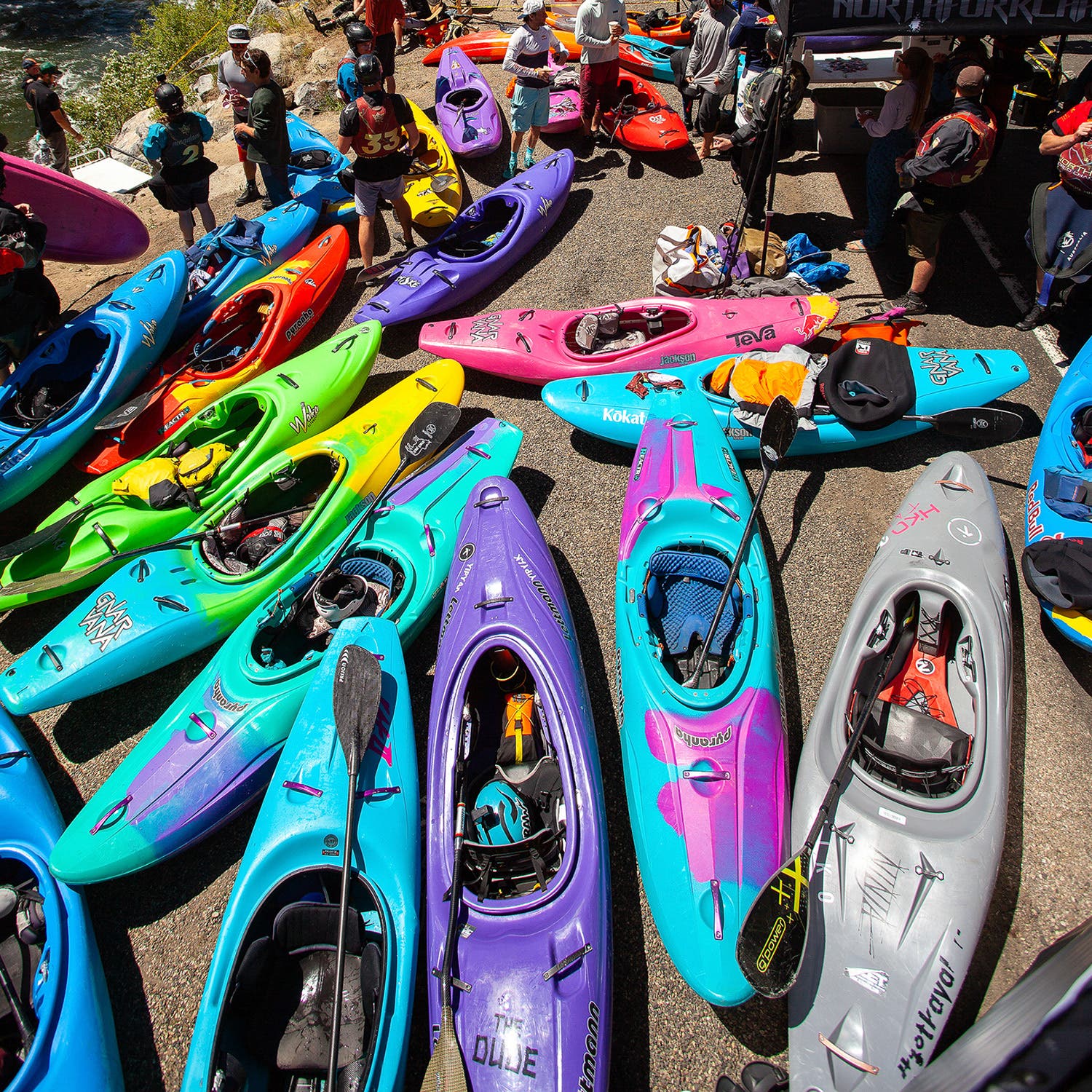
But this isn’t Heaven. Indeed, far from it. This is Banks, Idaho, America’s whitewater mecca. It’s a pilgrimage elite boaters make annually to the NFC, cloaked in ass-less chaps and biodegradable glitter, with boats cam-strapped to the roofs of their vans. In many ways, this death-defying race is more than a whitewater competition. It’s an immersion into a culture with its own language, risks, and community. And the people? Everyone from scrappy whitewater dirtbags and elite sponsored athletes to families, spectators, teens chasing their first big race, and the veterans who helped build the event into what it is today.
I sit down on a boulder along the riverbank and crack the cold beer I’ve been lugging around. Two younger paddlers—clad in spray skirts, helmets, dry tops and life jackets—hustle past me.
“Naw dude, if you paddle faster, it just means you have to poop,” one of them says to his friend.
I laugh to myself as the river’s roar rattles my eardrums. Every so often, a splash sprays up, tickling my face. I can smell the forest—today the tree scents overpower dirtbag d’eau—and my skin is slightly sunburnt. Quaker Boof, the river’s most harrowing rapid, is less than 20 feet in front of me. In kayaking, a boof is a paddling technique for lifting the bow over obstacles, such as a massive boulder jutting out from the center of the river. Quaker Boof is a crux move during the races, and one that can make or break a racer’s course.
Qualifiers have two days of intense paddling. First, they spring through Jacob’s Ladder, then through the highly technical Golf Course rapid below, named for the many holes and moves it takes to clear. During the main event, participants run a slalom through the same section, this time managing seven gates strung across the river.
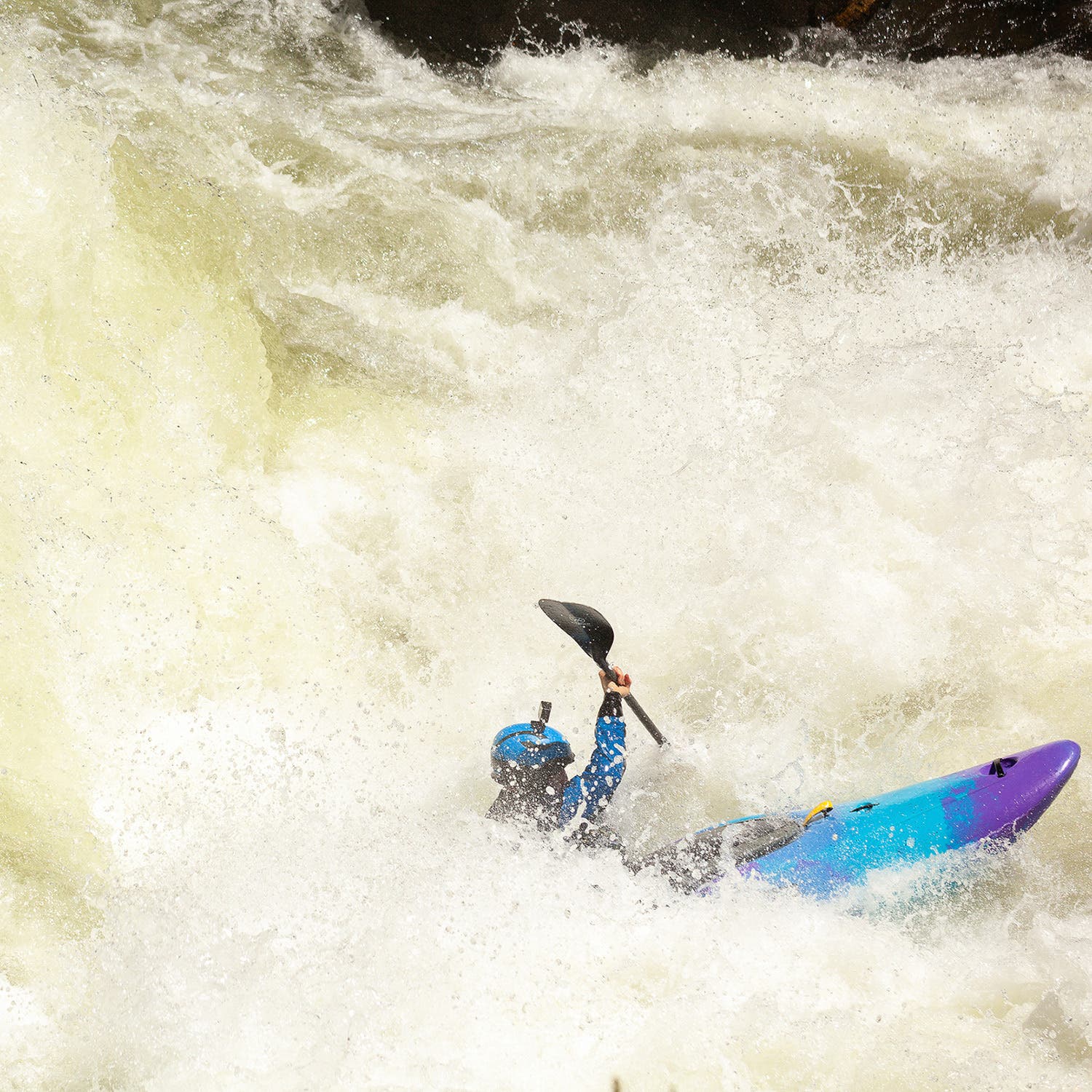
Racers run the course individually, and their descent through the rapid is recorded down to the millisecond. Physical gates line Jacob’s Ladder—touching one adds a five-second penalty, while missing one entirely adds 50 seconds to a paddler’s time. For the best racers, the entire course takes around two minutes to power through. It’s an amazing athletic feat, and anyone with eyeballs can appreciate it.
“The NFC is so challenging and elite because of the relentless, powerful, and explosive features on Jacob’s Ladder, but it’s the ultimate proving ground because it’s the only race where all of the best in extreme kayaking show up to compete for the crown,” James Byrd, NFC founder and organizer, said.
A man in a cowboy hat and heeled boots sitting beside me asks about my notepad and camera. I tell him I’m here as both a spectator and reporter—though apparently not a very good one, because I neglected to write down his name.
In my notes, he’s simply “Cowboy.” He tells me he used to kayak but now runs “a different kind of rodeo,” trading boats for trailers and waves for hay bales. Every year, he opens his property just outside of the North Fork corridor to traveling paddlers, then joins his family at NFC to watch the competition and revisit a piece of his past.
Around here, the competition is only part of the attraction, but the gathering has become a tradition in its own right. He’s a reminder that the people who come to NFC aren’t just elite kayakers; they’re ranchers, families, former competitors, curious locals, and river dirtbags drawn together by the same stretch of water.
It’s the night before the next round of competition, and a group of us sits at camp. My friend, Gatlin, is knitting a hat, needle by needle, weaving and tying yarn unto itself. Leigh, a raft guide working for the summer on the Payette River, tells Gatlin that his rows are too tightly knitted. “You can muscle a paddle stroke; you can’t muscle a stitch,” she says.
Knitting has its own technical language. The practice is methodical and intentional, bringing with it a pattern and understanding that only knitters speak—a lexicon of “cast on,” “bind off,” “knit one,” “purl two,” and “slip, slip, knit.” Similarly, whitewater boaters also have a lingo all their own: “two forward,” “highside left,” “splat the rock,” “plug this hole,” and “boof that pillow.”
A “clean line” means hitting every move near perfectly. A “swim” refers to the moment you left your boat. On the North Fork of the Payette River, the longest continually navigable section of Class V whitewater in the contiguous United States, going for a swim can be deadly.
Rapids are classified by difficulty, with Class V being the hardest and most hazardous, often featuring the most technical terrain. Jacob’s Ladder is a Class V+. Here, paddlers face powerful features that can hold them underwater.
Paddlers describe rapids by the facial expression the water makes as it passes around a rock. A smile will shoot a paddler downriver, while a frown could hold a paddler underwater. Maneuvers like splats, surfs, and cartwheels are both technical skills and, often, tongue-in-cheek innuendos. Each term reflects techniques that can mean the difference between style and survival.
Even the most experienced paddlers scout and approach Jacob’s Ladder with caution. This raises a deep question with me: If the ultimate consequence of a sport is death, what pushes us to do it?
Most boaters have rituals they recite before getting on the river, one of which we call “paying your debts.” If you didn’t drink a beer out of your river shoe—also known as a booty—following your last swim, then you may consider yourself doomed to another out-of-boat experience. If you’re like me, you fill your helmet with water and dump it over your head. Swimming won’t be as jarring if my hair is already wet, I tell myself. While this rite has never stopped me from flipping a raft, the religious repetition of tradition brings me comfort, reminding me of my Catholic upbringing.
Other paddlers will do a little dance, take a nip of whiskey, or brush their teeth at the river put-in. (Clean teeth, clean lines, baby.)
Newman is one such ritualistic kayaker. When Outside profiled her in 2020, Newman described her tradition of splashing her face with the water before entering a rapid. Now 34, the sassy French paddler is a Red Bull Athlete who has sent some of the world’s sickest waterfall lines. She will eventually place second in the women’s division at NFC in 2026. Newman has also paddled alongside death. While on a solo expedition in the Himalayas, she almost died. So I ask her, “Does risking life make you feel more alive?”
“Fear is often seen as an obstacle to overcome, and sometimes it is, but it is also a tool,” Newman tells me. “It’s important to be in touch with your own fear, understand where it comes from, rationalize it, and then either deconstruct or embrace it.”
For Newman and so many kayakers like her, the river is a problem to be solved—a puzzle with poky, dodgy, and dangerous pieces just waiting to suck you down if you’re not careful. Even small errors can have serious, life-threatening consequences. Newman tells me that she’s always scared.
“When I run stout rapids, I really like the problem-solving part of it: having the right strategy and technique to run a hard line. Piecing everything together to make it down a rapid or a river is extremely satisfying,” Newman says. “Beyond the adrenaline, there is a sense of accomplishment. It’s performance in its purest form; you’re not competing but composing with the river. Paddling is finding the flow, literally.”
I relate to this feeling. When I first started running rivers a decade ago, I didn’t know what I didn’t know. A big swim—and the penance of a booty—was a small price to pay for paddling through untouchable wilderness areas. It was all fun, and then with wisdom, it got scary.
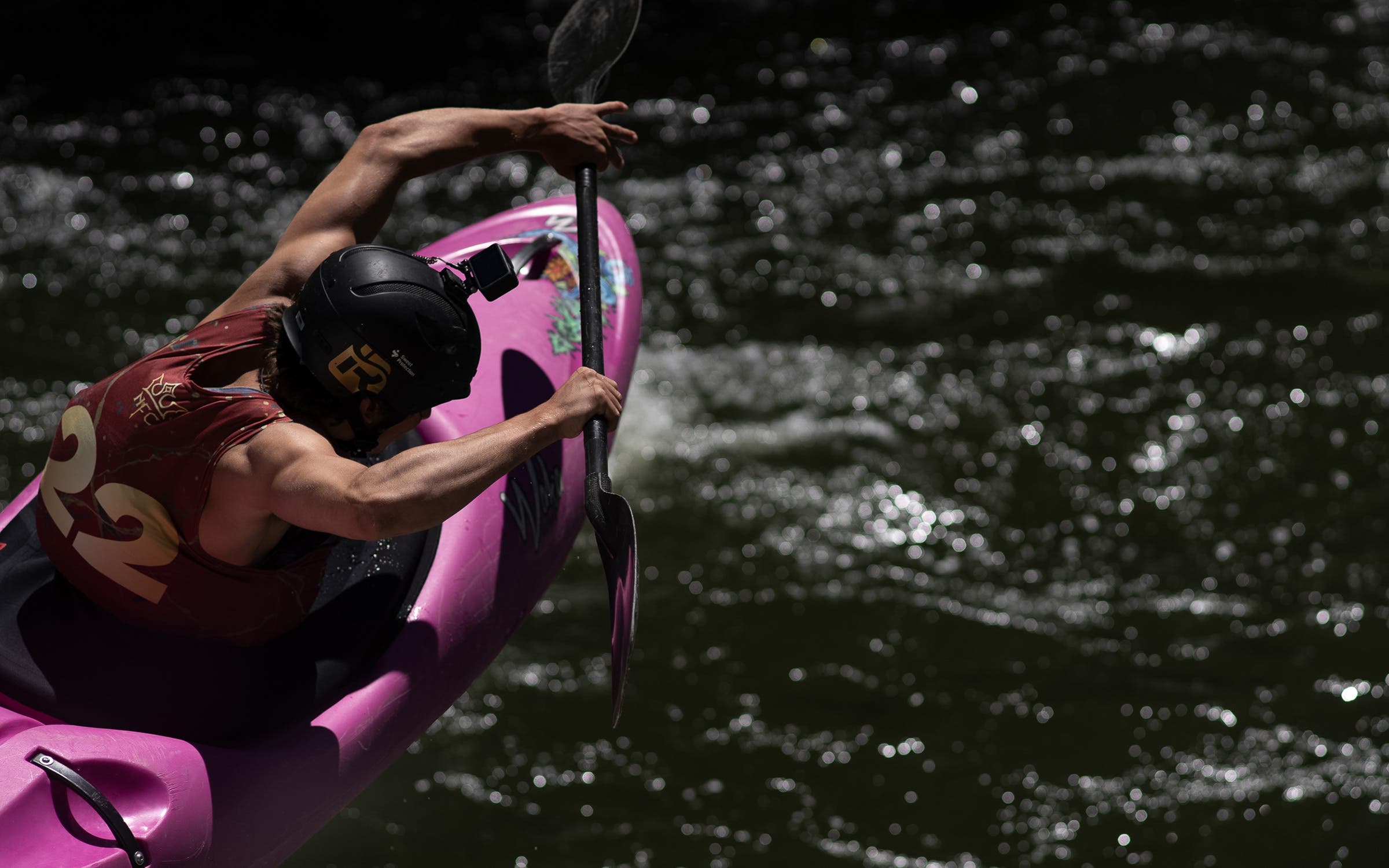
In learning to navigate a river’s currents, we boaters also master moving through the ebbs and flows of life. Nobody knows this better than Tad Dennis. At 42, Dennis is decades older than most kayakers at NFC, but his youthful enthusiasm matches his competitors’. I met Dennis while he packed up his truck the morning after NFC.
People were milling around camp in that lazy way meant to procrastinate the reality of going home. Organizer James Webster, J-Web, hands his friend Dennis a five-foot-long, black-and-white cardboard check marking the paddler’s new reigning era.
“Mentally, I still feel like I’m in my twenties,” Dennis told me later over the phone. “I think with age comes some wisdom.”
Dennis is a professional kayaker and a kayak designer. He was also the undisputed champion of the 2026 NFC, beating out his closest competitor by less than a second. Dennis was literally crowned on stage—wearing a robe—during the awards ceremony. But it’s not whitewater that forced him to reconcile with his immortality. He’s also a brain cancer survivor.
In 2022, he placed sixth in the NFC despite a torn rotator cuff and labrum. After years of persistent headaches misdiagnosed as migraines, a July 2023 CT scan revealed a golf-ball-sized brain tumor pushing against his brainstem and trigeminal nerve. The next month, he underwent brain surgery. Doctors removed the tumor and placed a metal plate behind his left ear.
Dennis woke up with severe rotational double vision due to optic nerve trauma. For months, he walked, holding his wife’s arm, with tape over one eye. Finding out he had a brain tumor made him vividly realize how short life is—and drove him to pursue bucket-list goals immediately.
“You can tell yourself life is short as much as you want, but something like a brain tumor makes you realize how short it actually is. It just makes it feel a lot more real that you may not be around tomorrow,” he told me.
Now, whenever Dennis reaches his breaking point on a river, he returns to the moment he learned about the tumor, and keeps going.
“I try to hold onto that feeling—that life is short and tomorrow isn’t guaranteed. The more I can remember that, the more I can appreciate life and live it to the fullest before it ends,” he says.
Dennis returned to whitewater kayaking three months after his operation. Within a week of intense paddling, his vision fully self-corrected. He returned to compete at NFC in 2026, this time in a kayak that he designed.
For Dennis, the whitewater community is also a support system he’s relied on heavily.
“When you’re going through a tough time, don’t go in there thinking, ‘Oh, I’m tough, I can do this all on my own.’ Ask for help. Don’t isolate yourself,” Dennis said. “I don’t know how to explain to people how much you feel like you really join the kayak community when you’re hanging out with those who have your back in what could be a life-or-death situation. It brings you closer together.”
He plans to use his $5,000 prize money to test various kayak models and design a new boat. He’ll defend his title next year in 2027 and, of course, will keep moving downstream.
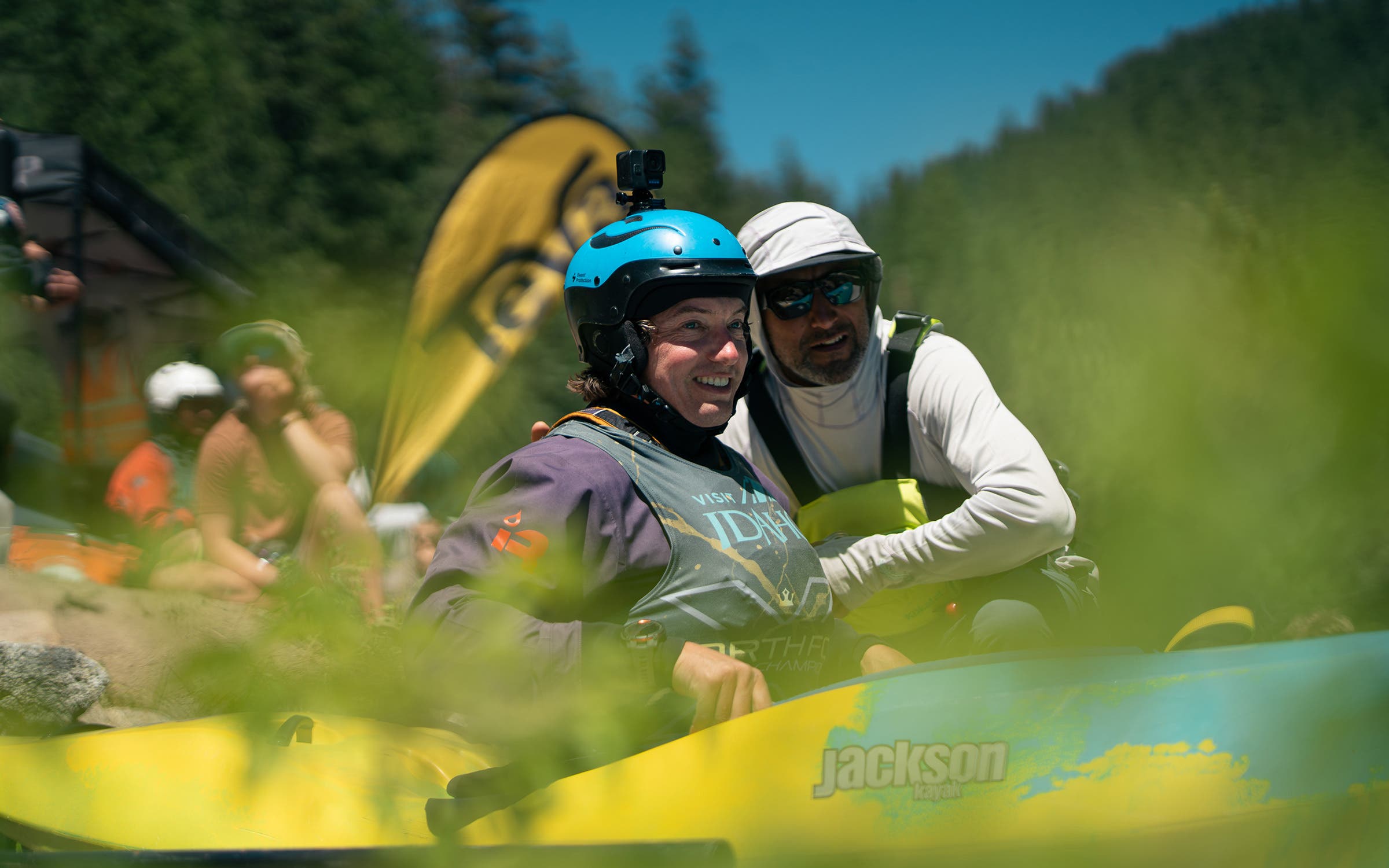
The races have just ended for the day, and I’m back at the athletes’ camp, which doubles as the daily afterparty. While strolling behind a row of port-a-potties, I spy Rob Lesser, a legendary paddler who helped start some of the sport’s biggest annual meetups. We call Lesser the “grandfather of the North Fork,” because of his storied place in the river’s history. I found Lesser after he spoke to the audience about his connection to the Payette River and his decades of advocacy.
Now in his eighties, Lesser was one of the original pioneers paddling the Payette in the late 1970s, and his experience has taken him around the world.
“You spend so much time on the North Fork that you are then able to go off to places like the Stikine River in British Columbia, the Alsek in Alaska, and the Braldu in Pakistan,” Lesser tells me. “It all started right here with the North Fork of the Payette.”
Though he helped spearhead the upper stretches of the North Fork, Lesser missed the first descent of Jacob’s Ladder while recovering from plastic surgery after breaking his nose. Still, he helped name and describe many of the river’s major rapids. As we sit together, we watch grainy documentary footage of his mustachioed kayaking crew in the eighties, cruising the winding Idaho Highway 55, which runs along the North Fork of the Payette, in a beat-up van. Their cutoffs are short enough to make even me blush, and their fiberglass boats are so narrow they have to shimmy into the cockpit like they’re filming a TikTok dance.
Like most boaters, Lesser’s true passion is protecting rivers, their tributaries, and their watersheds. Shortly after his initial runs in 1977, Idaho Power proposed building hydroelectric dams and diversion tunnels along portions of the Payette River. The following year, he helped form the Idaho Whitewater Association to fight the federal proposals. It took nearly a decade, but conservationists successfully fought the project and, from their perspective, saved the river.
“To me, the North Fork of the Payette is the Yosemite of whitewater,” he said.
Like Newman, Lesser tells me that kayaking isn’t purely about an adrenaline rush. Although whitewater has inherent dangers, he rejects the idea that paddlers have a death wish. Success comes down to calculating risk, maintaining control on the edge, and having the discipline to know when to walk around a rapid, he says.
“Running whitewater is puzzle solving. Many times, you are standing on the bank, and you’re looking at ferocious water just downstream, and you’re reading the holes and the hydraulics, challenging your mind to interact with that environment,” he said. “A rapid is an eternal play park.”
Now, in his older age, Lesser comes to the North Fork to meet the next generation of what he calls the “astronomically talented, crème de la crème of paddlers in the world.”
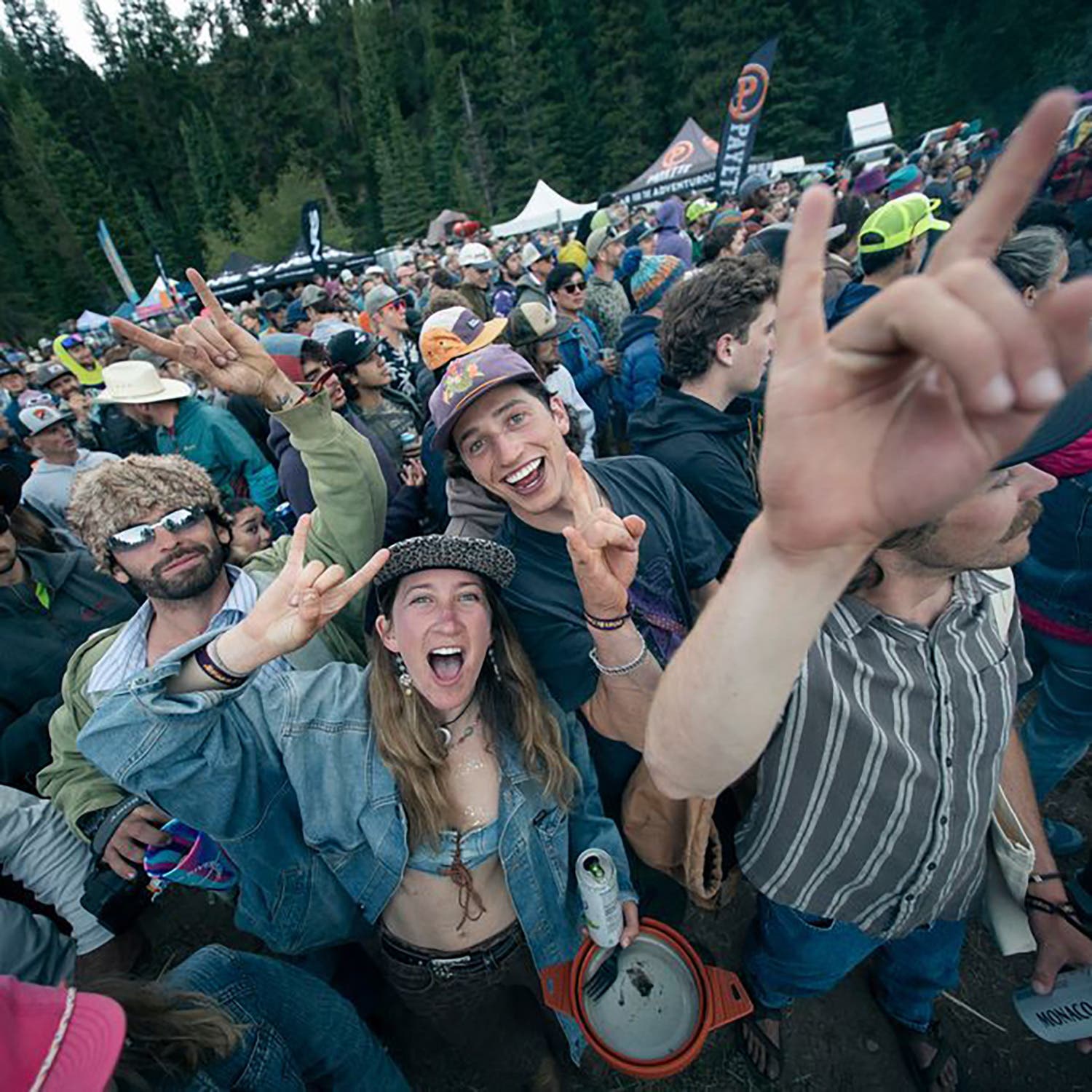
I’m standing alongside Jacob’s Ladder watching the rambunctious crowd. From the judge’s podium, a DJ is dropping beats over race announcements. People meander along the rapid, wearing silent disco headphones, so they can stay updated even when out of earshot. Mustaches, mullets and denim cutoffs have clearly made a comeback in this community—or the trend never left in the first place. The street is lined with every vehicle imaginable, including an SSR Motorsports 50cc miniature off-road dirt bike the organizers use to herd unruly vehicles. Byrd told me he put 300 miles on it at NFC alone.
After the athletes finish their lap through the rapid, they’re shuttled back upstream in the back of a pickup truck, still wearing their helmets and life jackets. Millie Chamberlain, a 26-year-old kayaker from New Zealand, is among them. She tells me that competing in the NFC alongside the world’s best is a “dream come true.” She’s looked up to paddlers like Newman and Dennis since she was a kid.
There are so many people here that are superheroes to me,” Chamberlain said. “NFC is an opportunity to see where kayaking can take you. If you put in the time and paddle hard, you can travel all over the world and do insane things once you’re in this community.”
Chamberlain told me she had a fangirl moment with one of the athletes, but she wouldn’t say which one. She hopes to qualify for the competition soon. Her goal in the rapid today? Don’t get beat down.
Hard-charging youngsters like Chamberlain are quickly coming into the sport. Mateo Kowalczyk, a 19-year-old from nearby Boise, grew up at NFC. He competed for the first time in 2023 and placed “147th-ish” at just 15. This year, he came in 47th. In 2027, he hopes to qualify for the big races, pummeling through house-sized hydraulics, which he likens to a collegiate sport.
“It’s like being a football player in these rapids—you’re charging downstream; you’re getting smashed by waves, and you’re just trying to get through them,” Kowalczyk told me. “It’s like nothing else I’ve ever experienced, flying across the water, soaring across the waves, getting airborne, and also getting to do it with all of my friends from all over the world.”
In March, Kowalczyk’s younger brother Campbell, 17, died while kayaking in Austria. It’s a sobering reminder that the joy this sport brings comes with an immense responsibility and risk.
“Do you ever get scared?” I ask Kowalczyk.
“For sure,” he responds, with a coy smirk that only a teenager can pull off. “This is my home river. I’m super confident in my ability on the rapids, but when it comes to the competition aspect, there’s a lot of nerves and anxiety; it helps you stay quick and stay on top of your line.”
Kowalczyk is also one of those people who ritualize the moment they hit the water.
“I love splashing water on my face and blowing it out, misting it as a swimmer would,” he said, not clocking the irony that being called a “swimmer” refers to separating from your kayak while in the rapid. Still, Kowalczyk echoes Chamberlin’s wide-eyed sentiments. “You end up out here, and you’re paddling against and next to all these people that you’ve looked up to your whole life, and it’s pretty cool to realize that they’re just out here having a good time too.”
Kirra Paulus, 31, lives in Washington, D.C. She’s a doctor in her medical residency, but she’s a kayaker before and after hospital hours. In between treating people, she heads to her local rivers at dawn and dusk to train.
“I paddle flatwater sprints that make you want to puke,” she laughed. Her dedication to the regimen shows, too. Like most of the paddlers here, she’s absolutely yoked.
It’s her second time racing at NFC, and she tells me that the river is higher and much pushier than in previous years. When you’re in it, she adds, the waves are bigger than they look from the road—and they look absolutely humongous from my highway perspective.
“It’s a classic Idaho road scout. You think it looks good, and then you get down there, and you’re totally lost, pulling your boat over big holes, trying not to get flipped by massive lateral waves crashing from the side, or get lost in the maze of the golf course,” she said. “Sometimes, you’re paddling just by braille, you’re underwater, and you just do the best you can.”
Paulus started kayaking during her last year of college at 21, an age she says is older than most of her fellow paddlers. As we chat along the roadside river section, a truck bed filled with kayakers and boats pulls up alongside us—the shuttle of racers just got back, and we have to shuffle aside. We sidestep over musky, damp paddling gear, and Paulus tells me that kayaking is the one thing that puts her directly in the present moment.
“A lot of time in life, we’re looking back or looking forward. We’re just living comfortable lives,” she said. “But with kayaking, you’re living on the edge, and it gives you this adrenaline rush like nothing else. It makes you feel alive, and it’s hard to measure up to that.”
She skips off, telling me she’s not done paddling for the day yet.
It’s the last night of the championship, and the stars are giving way to sunrise. (So, maybe it’s technically the last morning.) We danced all night, powering through fatigue and cold alongside the boaters who pummeled through Jacob’s Ladder. If partying was also a part of the competition, I just made it to the finals.
The race days at NFC are serious business. Outside of the races, NFC hosts a number of community-based events, including panel discussions, film screenings, and vendor exhibits. These are held at the same campground where most athletes sleep (and party), tucked between large pine trees and a roaring bonfire. But when the sun goes down and the booths close, the collective inhibitions of the athletes, organizers, and fans go down too. And when life gets heavy, sometimes the only thing left to do is dance.
It’s like Burning Man crashed headfirst into the Tour de France. I love a good party. I love biodegradable glitter. Dancing until my hips ache to the relentless womp womp of EDM makes me feel alive. Crawling into the bed of my truck at dawn, wedged between my two Australian Shepherds, falling asleep to distant laughter and the first birds greeting the morning, resuscitates me.
Don’t get me wrong. But that’s not what NFC is about, and I’ll stop anyone who says all boaters do is party.
Is partying part of the culture? Absolutely. But that’s because we spend our days flirting with consequences most people never have to imagine. Once you’ve been pinned on a rock, watched a friend get worked in a hole, seen someone disappear into a strainer, or, tragically, lose their life, you understand why celebrating life isn’t an afterthought: It’s a necessity.
The dancing, the music, the absurd outfits, and the glitter aren’t escapism. They represent release and gratitude. River people have a different relationship with risk and, because of that, a special relationship with joy.
That’s when it clicks. Kayaking is, in some ways, like every other outdoor sport. It began with a handful of adventure idealists chasing a new way to explore the world. Whether it’s pointing skis downhill, tying into a rock face, or dropping into whitewater, these pursuits attract the same kind of people. We’re all answering the same call: to find something bigger than ourselves, connect with the natural world, and be surrounded by like-minded weirdos who share the same appetite for adventure.
What stayed with me from NFC wasn’t the party, the dancing, or the beers. It was the quiet moments—sitting in the grass as the old heads told stories from the early days of river running. Oh, and some glitter followed me home, too.
The river is always watching. As they say: Don’t forget to pay your debts.
