

Updated September 23, 2026 03:41PM
Foul weather and deadly avalanches just spoiled the climbing season on one of Nepal’s most popular high peaks not named Mount Everest.
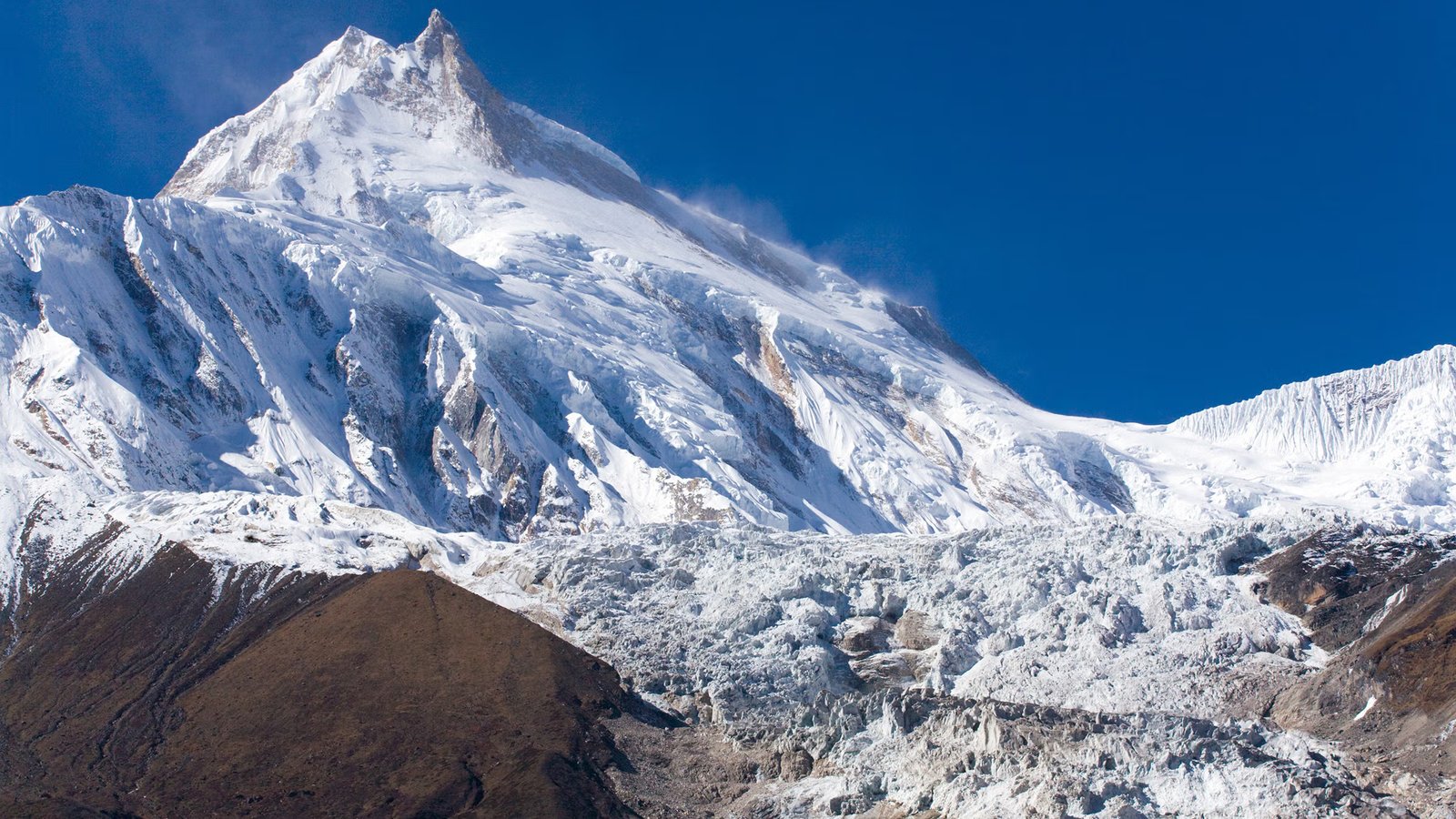
And with heavy snow in the forecast, it’s doubtful that any more climbers will make it to the top of 26,781-foot Manaslu before the season ends in October.
A Stepping Stone to Mount Everest
Manaslu, the world’s eighth-highest peak, has in recent years become a popular destination for Everest hopefuls. The ascent takes in 8,000 vertical feet from Base Camp to the summit, and climbers must endure painfully thin air, ascents on glacier and rock, and time spent in the Death Zone. But the route does not feature the same sheer dropoffs or sections of technical climbing found on more challenging 8,000-meter peaks such as K2 or Annapurna.
Most of Nepal’s largest commercial guiding outfitters offer Manaslu expeditions for the fall climbing season, which runs from late August until early October.
“Manaslu is the most accessible 8000-meter peak in Nepal,” the American guiding company Summit Climb boasts on its website.
Still, the peak is no cakewalk. Base Camp is often battered by rain and sleet. Heavy snow regularly falls in the Himalayas in late summer and early fall, raising the potential for avalanches at higher elevation. In 2012, a massive slide roared down the peak and wiped out Camp III, leaving 11 climbers dead. In 2022, American extreme skier Hilaree Nelson was killed on Manaslu when an avalanche knocked her off a 5,000-foot slope.
“After climbing and skiing on some 40 of the world’s major 6,000-, 7,000-, and 8,000-meter peaks, this is the only mountain I could not recommend to anyone,” mountaineering expert and author Mike Marlot wrote in Outside in 2012. “It is avalanche central.”
Alas, the climbing world seems to have ignored Marlot’s sentiment, and in recent years scores of climbers have flocked to Manaslu, making it the second-most-popular 8000-meter peak in Nepal behind Everest.
For 2026, Nepal’s Department of Tourism sold 493 climbing permits for Manaslu for the fall season, according to the Himalayan Times. For comparison, Nepal issued 494 climbing permits for Mount Everest this spring, the biggest year on record.
Heavy Snow and Deadly Slides
Expeditions began completing their acclimatization rounds on the peak in early September, and a team of rope fixers from the Expedition Operators Association of Nepal began laying fixed lines on the upper flanks of the peak during the second week of September. According to Everest Chronicle, the lines to the summit were completed on Thursday, September 17, three days ahead of the 2025 date.
Rope fixers encountered deep fresh snow and avalanches on the push to the summit. Then, storm clouds descended on the peak, dropping feet of new powder. The new snow raised the avalanche danger as climbers prepared to launch their bids for the summit.
Veteran guide Mingma G posted a video of an avalanche roaring down the flanks of Manaslu on September 16. The massive slide narrowly avoided taking out several tents at Camp III.
“I have done every kind of climbing and never feared anything—but snow avalanches are the one thing that has always scared me,” Mingma G wrote on Instagram. “Yes, you can use some of your skills, but ultimately it all comes down to luck. Yesterday was a lucky day on Manaslu. Fortunately nobody was above Camp III.”
Climbers’ luck ran out several days later. On the night of September 20, an avalanche struck Camp III at 22,000 feet, killing two climbers as they were in their tent. The next day, crews found the bodies of German-Indian climber Dhrubajyoti Guha and guide Phursemba Sherpa, both 47, buried under several feet of snow.
“Six other climbers who decided to retreat from Camp II are safe, but Guha and Sherpa decided to make an early summit attempt and headed for Camp III,” Mohan Lamsal, the managing director of guiding company Makalu Adventure told the Times of India. “We sent four Sherpa climbers to Camp III to look for them. They dug through the snow and found both inside their tent, buried beneath nearly seven feet of snow.”
Makalu Adventure canceled its expedition after the fatalities, according to Everest Chronicle, and the surviving members of the ascent flew to lower elevations the day after the disaster.
The two fatalities raised the 2026 death toll on Manaslu to four: a climber from Singapore died on September 17 during his acclimatization ascent, and a Nepali porter was found dead in his tent in Base Camp earlier in the season.
Guides and Climbers Retreat as a Cyclone Bears Down
The heavy snow continued to batter climbers above Base Camp, and on September 1, climber Pastenji Sherpa from the guiding company Altipro Adventures posted a dramatic video of an avalanche engulfing Camp I at 18,700 feet.
“The mountain showed its true power,” Pastenji Sherpa wrote. “Moments like this remind us that in the high Himalayas, nature is always in control.”
Mother Nature appeared unwilling to cut the Manaslu expeditions a break. With more heavy snowfall predicted for the peak, individual climbers and entire expeditions began heading for lower elevations on September 22.
Veteran climber Simone Moro, who also flies rescue helicopters on Mount Everest and other peaks, abandoned his ascent after reaching Camp III that day. Moro wrote on Instagram that he then descended from Base Camp after he received a meteorological forecast that showed heavy snow headed for the peak from September 24 through the 28.
“At least two meters of fresh snow on any big mountain in Nepal from west to east,” Moro wrote. “The message was clear for those who want to listen, understand, and follow evidence.”
Others followed suit. Mingma G announced that his team was vacating Base Camp on September 23 as well. “Persistent snowfall created dangerous conditions, with risk of avalanches near Base Camp too,” he wrote. 8K Expeditions, another large guiding outfitter, told followers it was “pausing” its Manaslu expedition “until conditions improve.”
Seven Summits Treks, one of the largest outfitters, went further, saying that it was calling off its Manaslu expedition altogether.
With more snowfall predicted to fall on Manaslu in the coming days, the hopes of any climbers reaching the summit before the season closes in early October is slim. Those hoping to reach the top would likely need to dig out the now-buried fixed lines that rope fixers installed more than a week ago. In most years, expeditions wrap up their final summit pushes during the first week of October.
Explorersweb, a mountaineering website, summed up the situation in a headline published on September 22: “Game Over on Manaslu.”
Features editor Frederick Dreier has overseen Outside’s coverage of climbing season on Mount Everest since 2022.
