

Published September 24, 2026 03:31PM
Ingrid Yang, MD, is a board-certified internist who specializes in longevity. She’s also a travel journalist and yoga teacher who journeyed to Vietnam in search of the perfect yoga retreat and said that her trip to Sardinia, Italy, changed her perspective on aging. During a visit to Indonesia, she met firefly conservationist Wayan Wardika and noticed an eerie parallel between declining firefly populations and human longevity. Here’s what she uncovered during her stay.
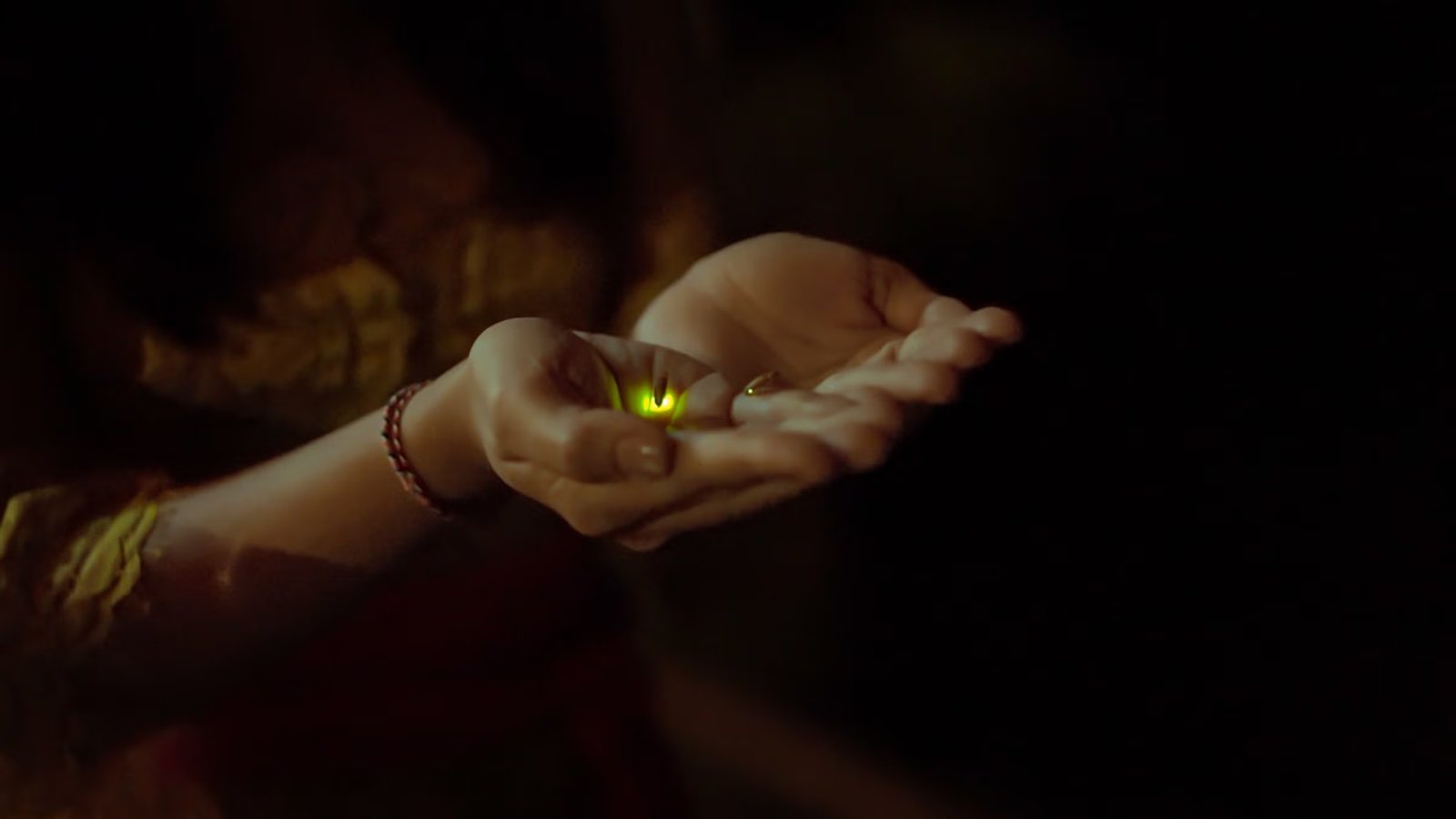
Now that summer has officially come to a close, I’ve been reflecting on one of its highlights: the fireflies. Anyone who has ever chased a firefly remembers their first time. You are young, dusk has just fallen, and a light floats up out of the grass as the whole world narrows around that one flashing point. You cup your hands around it, trying to hold onto its magic, but the light escapes between your fingers. This magical—almost ethereal—hour may surely be the moment many of us first understood that the dark is not empty.
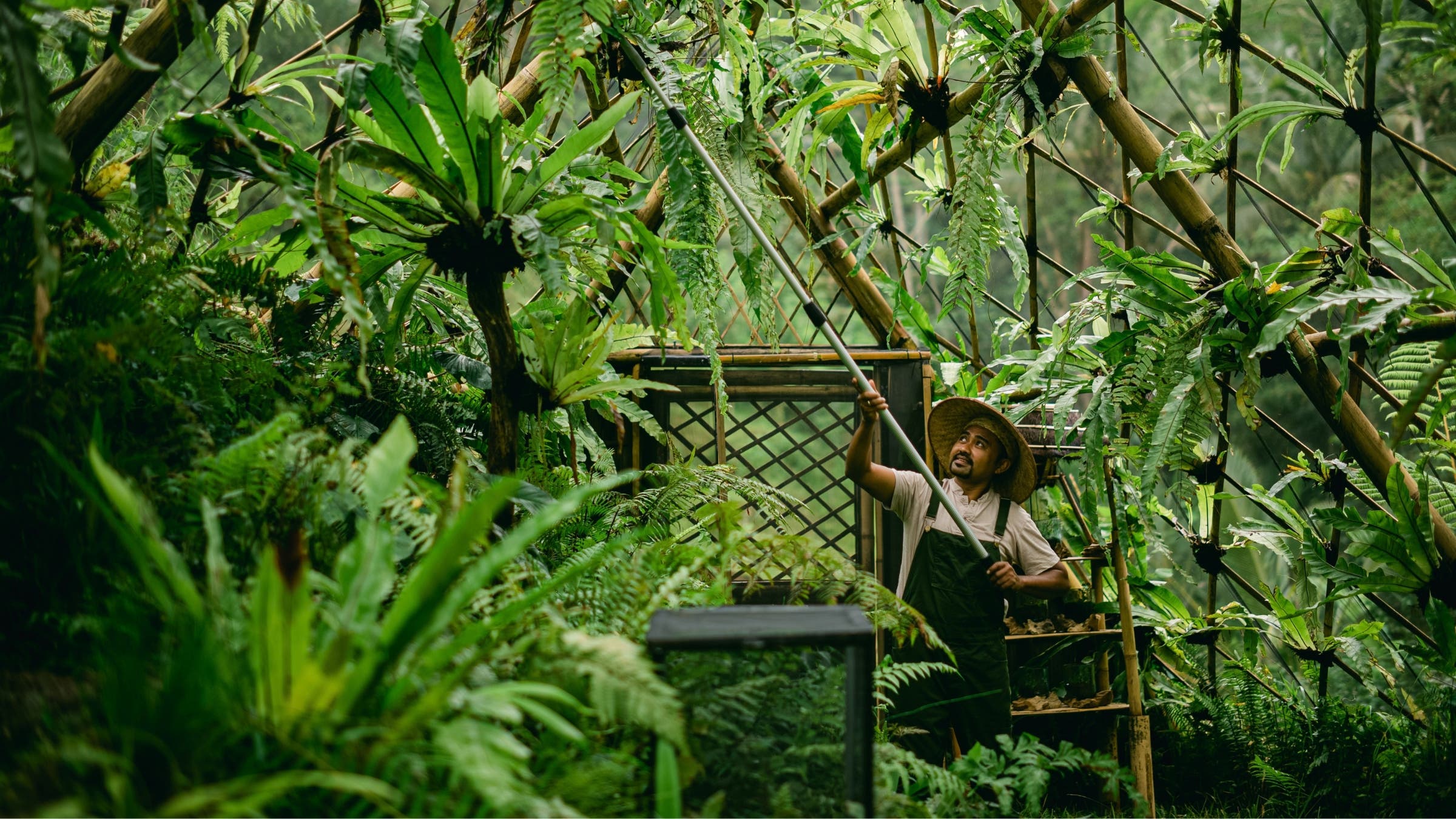
I learned the Balinese word for that hour from Wayan Wardika, a conservationist who founded a firefly lab on his family’s land in Taro Village, located twenty minutes outside Ubud, a town in Indonesia that’s considered Bali’s epicenter of spirituality and art. That word is Sandhya. It refers to the soft junction between day and night, when the light drains from the sky and the paddies—the country’s emblematic rice fields tended to by farmers for generations—reflect the minimal moonlight and start blinking back. He talks about it the way most people talk about their first love.
I was in Bali on a rare trip with no agenda, which is how I ended up standing in a rice paddy at dusk, listening to the sound of crickets waking up, and waiting for the lights.
Wardika grew up in Taro without electricity. He’d walk home from school on a path lit only by firefly light, the rice paddies filling up with water the way a night sky opens to reveal its stars. He left his hometown at the age of 25 for a career in hospitality, working in hotel lobbies and on cruise ships that never went dark. When he came home two decades later, the paddies were still there, but the firefly light that used to move through them was gone.
According to the International Union for Conservation of Nature’s (IUCN) Red List of Threatened Species, one in three firefly species in North America is on the verge of extinction, and 14 percent of species are considered threatened. A number of species in Indonesia, Thailand, and Malaysia are listed as vulnerable.
In an effort to rebuild the firefly populations in his hometown, Wardika spent his savings to build a research lab and hired a small staff of biologists and scientists to uncover the reason behind the eerie disappearance of light. The answer, mostly, was—us.
The magic of a firefly’s glow, it turns out, is a chemical reaction known as bioluminescence. It is as specific as it is fragile. A firefly’s flash is a courtship signal; luciferase, luciferin, and oxygen combine into cold light. It’s deemed cold because, as far as heat-emitting light sources go, firefly flashes don’t produce much warmth. Males take to the air, flashing to attract a mate. Females flash back from their perches, turning chemistry into courtship. It is a conversation that only works in the dark. Put a streetlamp over it and the whole exchange vanishes.
Our human bodies run a version of the same conversation. Specialized cells in the eye, called intrinsically photosensitive retinal ganglion cells, exist mainly to tell the brain whether it’s day or night. They report to the suprachiasmatic nucleus, the body’s master clock, which decides when melatonin is released. Like the firefly’s flash, that signal only works in the dark. Flood the room with light, and the firefly can’t find a mate, and our brain doesn’t signal to us that it’s time to sleep.
Humans built artificial light to extend the day, to feel safer, to keep working and living past the hour our bodies were built to stop. But the body still reads light as instruction, and at 11 o’clock at night under a ceiling light or a screen, it takes the cue at face value. Cortisol stays elevated, melatonin is released later than it should, and insulin sensitivity drops while you lie awake wondering why sleep won’t come.
It happens when you solve one problem without understanding what else is standing in the blast radius, and I keep thinking about it with my own patients. I’m a board-certified internist who specializes in longevity. In other words, I have a personal and professional stake in anything that signals life, or in the case of fireflies, a lack thereof.
A 2024 study published in the journal PNAS tracked light exposure in nearly 89,000 people, finding that those with brighter nights and dimmer days had a higher risk of death over eight years, particularly from cardiometabolic causes like heart disease and diabetes. A companion paper in The Lancet Regional Health Europe linked light at night to a jump in type 2 diabetes risk. The body you are in was built for a planet that went dark at sundown, and it doesn’t care that you’re trying to renegotiate the terms.
Wardika arrived at the same conclusion from the other side of the problem, setting out to save a species of insect, and landing where a sleep researcher would have. He now consults on the lighting at Buahan, a Banyan Tree Escape not far from his village, where every fixture stays under 2,200 Kelvin after sundown, warm and low enough that it does not scramble a firefly’s signal. It was not designed specifically for human sleep; they built it for the fireflies. But it happens to be identical to the prescription I’d write for a patient an hour before bed: keep the lights low, warm, and dim.
I felt Wardika’s transformation of Buahan firsthand. Screen-less and wall-free, the villas run on oil lamps once the sun sets, with no artificial glow reaching the valley. I slept straight through two nights without waking, which had not happened to me in longer than I want to admit. On the second night, I stood outside at Sandhya as the sky surrendered its light to the paddies. The fireflies answered in kind, the valley filling with the pulsating glow that Wardika is working to preserve.
It doesn’t take much to give your own body the same clarity. Catch real daylight in the first hour you are awake; that sets the clock everything else runs on. Let your house dim the way the sky does in the two hours before bed (and keep the screens out of the last one). None of it asks you to live like it’s 1850; it just asks your body to be told the truth about what time it is.
A solid night’s sleep is when the brain clears the metabolic waste it accumulates during the day, and the body resets its blood sugar and blood pressure. And it’s not just about how many hours you get. A 2024 study in the journal Sleep of more than 60,000 people found that people with the most consistent sleep schedules had a 20 to 48 percent lower risk of death than those with the least consistent schedules. In fact, sleep regularity was a stronger predictor of mortality than sleep duration.
Wardika spent four years giving that darkness back to a species that couldn’t ask for it. The rest of us only have to turn off the lights and let the darkness do what it was always meant to do.
Ingrid Yang previously wrote about what famous biohacker Bryan Johnson’s recent diagnosis teaches us about longevity. You can read it here.
Want more Outside health stories? Sign up for the Bodywork newsletter. And for tips on how to train, fuel, and recover better, sign up for the Sweat Science 101 newsletter.
