

Published September 25, 2026 02:46PM
Our Reporting: SKI spoke with three current and aspiring mountain guides to explore what it really takes to enter the profession, from training and certification to the sacrifices involved in pursuing a life in the mountains.
“Almost a quarter of my graduating class is dead,” were the chilling words I remember from a three-day avalanche course with Pete Mason, one of the first Americans to pass both the Union Internationale des Associations de Guides de Montagne (UIAGM) and the École Nationale de Ski et d’Alpinisme (ENSA) certifications.
Collectively, these UIAGM and ENSA are two of the most rigorous and prestigious internationally recognized qualifications for professional mountain guides.
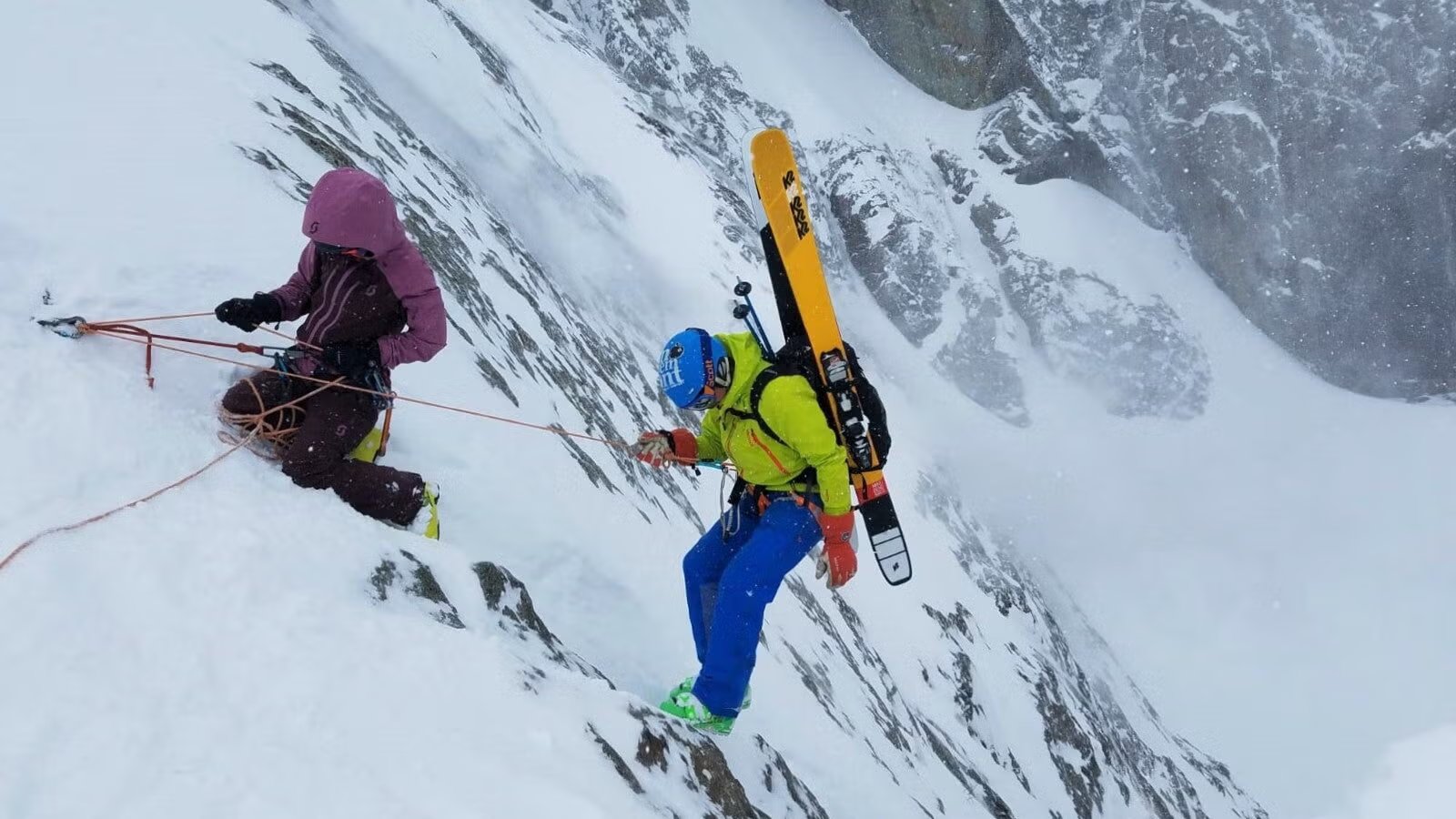
Growing up, I glorified the steezy macho guide. The tanned, sharp-jawed dude rolling into the carpark in a Toyota RAV4, a precariously-rolled cigarette dangling from his lips. That nonchalant, yet somehow inaccessible gaze of someone rappelling into chutes with ease.
I fantasized about guiding through the video-game footage I grew up seeing on Teton Gravity Research, hucking off cliffs and barely outrunning my sluff on 50 degree spines, only to high-five my client with a breathless, “Way to go buddy!”
And to some extent, my teenage dreams weren’t that far-fetched.
In the U.S., the park service’s land regulations have had historically loose certification requirements. After jumping through a few insurance and permit hoops, the bridge between ski bum and mountain professional could easily appear like a matter of changing attire.
Mason’s words made me think otherwise. Not only did I realize my vision was about as delusional as thinking I could perform surgery from watching Grey’s Anatomy, but I was left wondering what it’s really like to be a mountain guide.
So, I sat down with Mason, Seattle-born UIAGM guide Erin Smart, and Filip Rentschler, an aspiring young gun from Sweden, to find out.
What Makes It Worthwhile
Once certified, the perks of guiding are pretty clear—visiting remote locations, endless time in nature, and the gratification of sharing your passion with others.
The path to get there, however, is less straightforward.
Rentschler, a 27-year old freelance carpenter, was born in the south of Sweden, a region known more for crayfish and canoeing than couloirs. He was inspired to become a guide during his first winter in Verbier.
“When you talk to guides, many of them share a past of being these jack of all trades,” Rentschler told Ski. “They worked hard to make the money necessary to support their passion.”
Sometimes, that passion also involves living out of a van, solitary meals, and separation from family and friends. Not to mention early mornings in freezing sleet, 6B-rated climbs, and uncertainty around timing exams.
Contrary to what I thought, those sacrifices aren’t always to ski for a living.
“I want to become a guide to bring people along in the mountains and give them a good experience,” Rentschler said. “I find more joy in that compared to solely pursuing personal goals.”
The Art of Managing People
Despite these sacrifices, many guides are unconsciously treated as powder concierges, paid a few hundred dollars to get clients into novel terrain and untracked snow. A lot of the time, though, an experienced guide has no qualms about canceling a trip.
“We are not kamikaze,” I remember a touring service in Chamonix telling me on a powder day.
Ultimately, the art of managing people comes down to saying no.
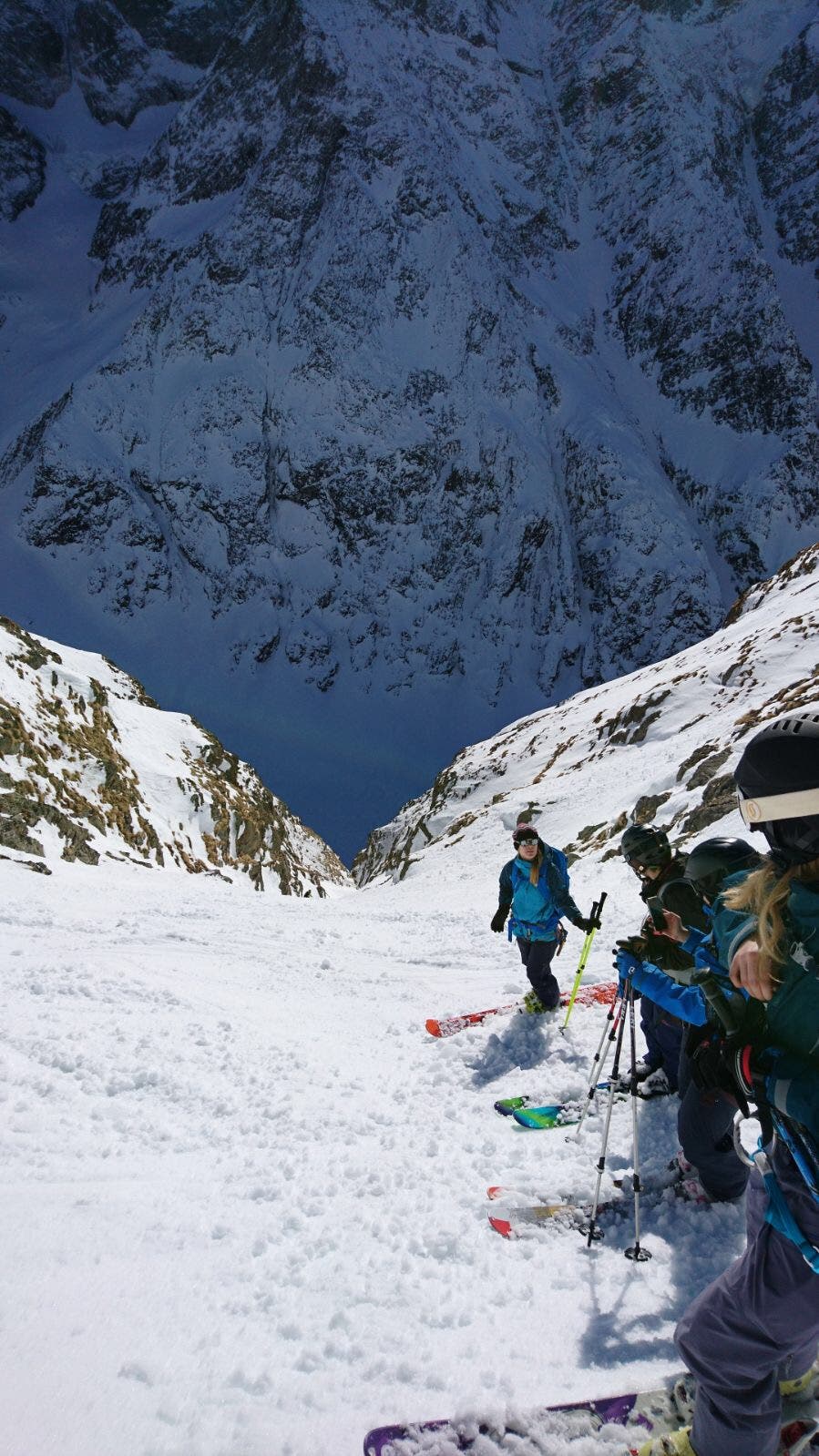
Smart, who grew up in the wild Cascades and now guides in the freeride mecca of La Grave in France, is well-versed in halting overexcitement in its tracks.
“If someone is pretty aggressive and comes with a checklist, ‘Oh, I want to ski and do this and this,’ I tell them I’m busy,” she said.
In a world of Mammut airbags and cutting-edge beacons, guides are seen as a mere safety add-on in terrain that would otherwise seem unapproachable to many freeriders—someone to judge the snow stability, someone to make sure the knots are tight.
But there’s a side to working in the mountains that’s rarely talked about. Stories of wheelchairs or friends’ funerals. Videos that don’t end up in an Instagram reel.
A Game of Numbers
As an industry veteran, Mason knows that even with the utmost scrutiny, a guide, just like anyone in the mountains, ultimately faces a game of numbers. And unlike a boss at the office, the mountains give extremely delayed feedback.
“When people tell me they accept the risk, I don’t know if they have any idea what they are talking about,” he said.
According to Swiss avalanche safety expert Manuel Genswein, ski touring in the “green range” of risk management strategies carries a case fatality rate of roughly 1 in every 100,000 people. But if you’re active for 20 seasons, 50 days a year, that risk rises to 1 in 100.
“From a pure mathematical perspective, there’s gonna be a dark side, and that could be tomorrow,” Mason said.
The Unspoken Truth
Last winter, Smart was confronted with the cruelty of the risks firsthand when a deadly avalanche killed two people near where she was skiing, and she helped in the rescue response. And then in March, her life partner and fellow mountain guide passed away in a tragic accident involving a failed ski anchor.
“Sometimes life can be incredibly unfair,” Smart said. “No one knows why it failed; the rescuers later commented that the anchor looked textbook.”
But is skiing still worthwhile?
“You know, there are just these things that happen that make you question everything that you do in life,” Smart said. “But a life without any risk is not really a life worth living. And that’s one thing I’m grappling with currently.”
Reflecting on her story, I question my own relationship with the mountains, and I can’t help but wonder how many stories of loss remain unspoken in the guiding world.
While I have ultimately decided to remain a recreational, famously jeered weekend skier, another side of me occasionally pines over what could have been.
“One of the things I enjoy most about guiding is the life-long relationships you build with recurring clients,” Smart told me.
One thing I know for sure is that I’ll never see a guide through the same perspective again.
