

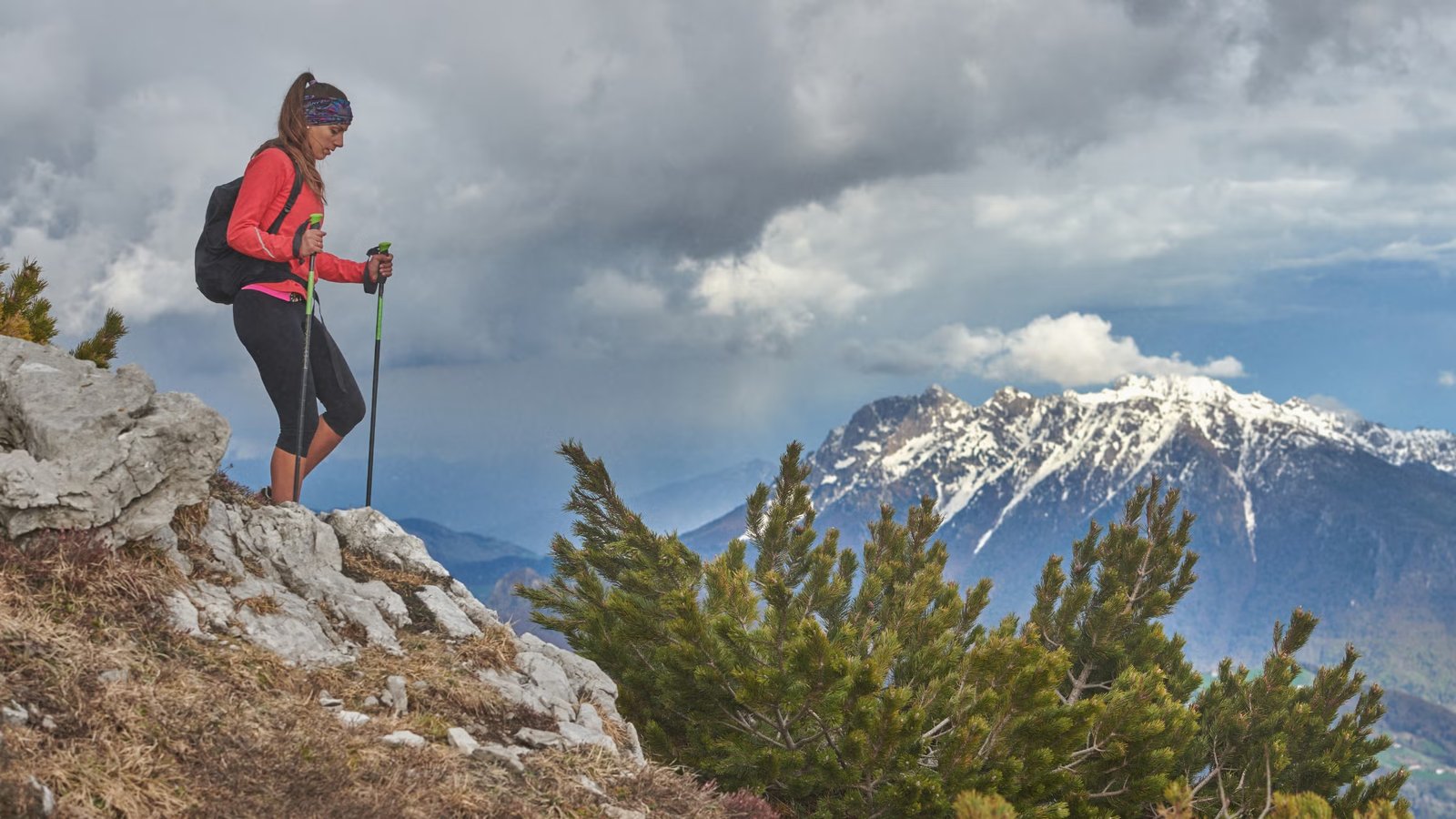
An overly stuffed pack changes how force moves through your feet, which might lead you to cancel your hiking trip or increase the risk of long-term damage. A podiatrist and one of the study’s authors weigh in.
(Photo: Canva)
Published September 27, 2026 03:03AM
Reporting Note: This article is based on a study published in the Journal of Functional Morphology and Kinesiology that measured the plantar pressure of recreational hikers under different backpack weight conditions. Outside interviewed one of the study’s lead researchers, Santi García-Cremades, PhD, for a deeper understanding of the results, and Dr. Gabriel Cooper, DPM, a podiatrist affiliated with the Icahn School of Medicine at Mount Sinai in New York City, to explain the foot injuries associated with heavy packs.
It’s always tempting to cram one or two more things into your pack, especially if you’re going somewhere with unforgiving weather. But experts say the additional weight can put unnecessary strain on the body. So how heavy should your pack be?
Researchers who published a new study in the Journal of Functional Morphology and Kinesiology now say they have figured out how heavy a backpacking/hiking pack should be—no more than ten percent of your body weight. So, if you weigh 180 pounds, your pack should be 18 pounds max.
“Hikers should be mindful that the effects on their feet could be felt immediately, leading them to quit the hike due to the development of a blister or more long-term problems, such as the development of arthritis of one of the many joints in their feet,” Gabriel Cooper, DPM, a podiatrist at Icahn School of Medicine at Mount Sinai in New York City, who was not involved in the study, told Outside.
How Heavy Should Your Hiking Pack Be?
The study highlights the risks of heavy packs—and, in particular, how they can impact feet. Researchers recruited 39 recreational hikers staying at a hostel on the Camino de Santiago, a network of long-distance trails in western Europe. All of the hikers had walked at least 12.5 miles during the previous 24 hours and carried a pack during that time.
The researchers measured participants’ plantar pressure—or the pressure exerted by their feet onto the ground—using a tool called the Podoprint system. The Podoprint is a flat platform that includes sensors to detect foot pressure.
The participants stood and walked on the platform under four conditions: without a backpack; wearing the backpack they were carrying on the trail; wearing a backpack that was loaded with ten percent of their body weight; and wearing a backpack that was loaded with 20 percent of their body weight.
“The key finding is very simple: once backpack load reaches around ten percent of body weight, we begin to detect significant changes in how pressure is transmitted through the foot,” Santi García-Cremades, PhD, told Outside. García-Cremades is a mathematician and associate professor of statistics at Miguel Hernández University in Elche, Spain, and a researcher involved in the study.
“As backpack weight increased, plantar pressure increased progressively, particularly in the heel,” García-Cremades said. “At a 20 percent body-weight load, total static plantar pressure was almost ten percent higher than when carrying no backpack.”
What Happens to Your Feet Over Time When Your Pack Is Too Heavy?
Extra pressure on the feet from wearing a too-heavy pack could cause a number of injuries, from ulcers to plantar fasciitis, Cooper said. The health risks of an overly stuffed backpack can lead to any number of injuries, thereby potentially leading to the hiker quitting their hike and needing to rest for up to six to eight weeks,” he said.
“A patient with diabetes may develop a blister, which can transition into a foot ulcer. This puts their hike in jeopardy but also carries a significant infection risk,” Cooper said. “A patient with a flat arch who is already at risk for plantar fasciitis due to atypical plantar pressure load may have a lower threshold for a flare-up as the backpack weight increases.” If a hiker has osteoporosis (a condition that makes bones weak), a heavy backpack could even cause a stress fracture in the foot, he added.
This study has a few limitations. “This study does not evaluate patients walking inclines, which is often a major biomechanical factor in hiking, and only evaluated patients walking on a flat surface,” Cooper said. Biomechanical factors include all of the internal and external forces that impact the body, or that the body impresses upon a surface, during activities. “Perhaps some of the findings would be influenced if this study evaluated patients walking on increased inclines.” The small sample size could also be a limiting factor, as could the fact that the participants weren’t all wearing the same footwear, he added. Still, the major finding is important—avoid overly heavy packs to limit pressure on joints.
Want more Outside health stories? Sign up for the Bodywork newsletter. And for tips on how to train, fuel, and recover better, sign up for the Sweat Science 101 newsletter.
