Published September 28, 2026 05:18AM
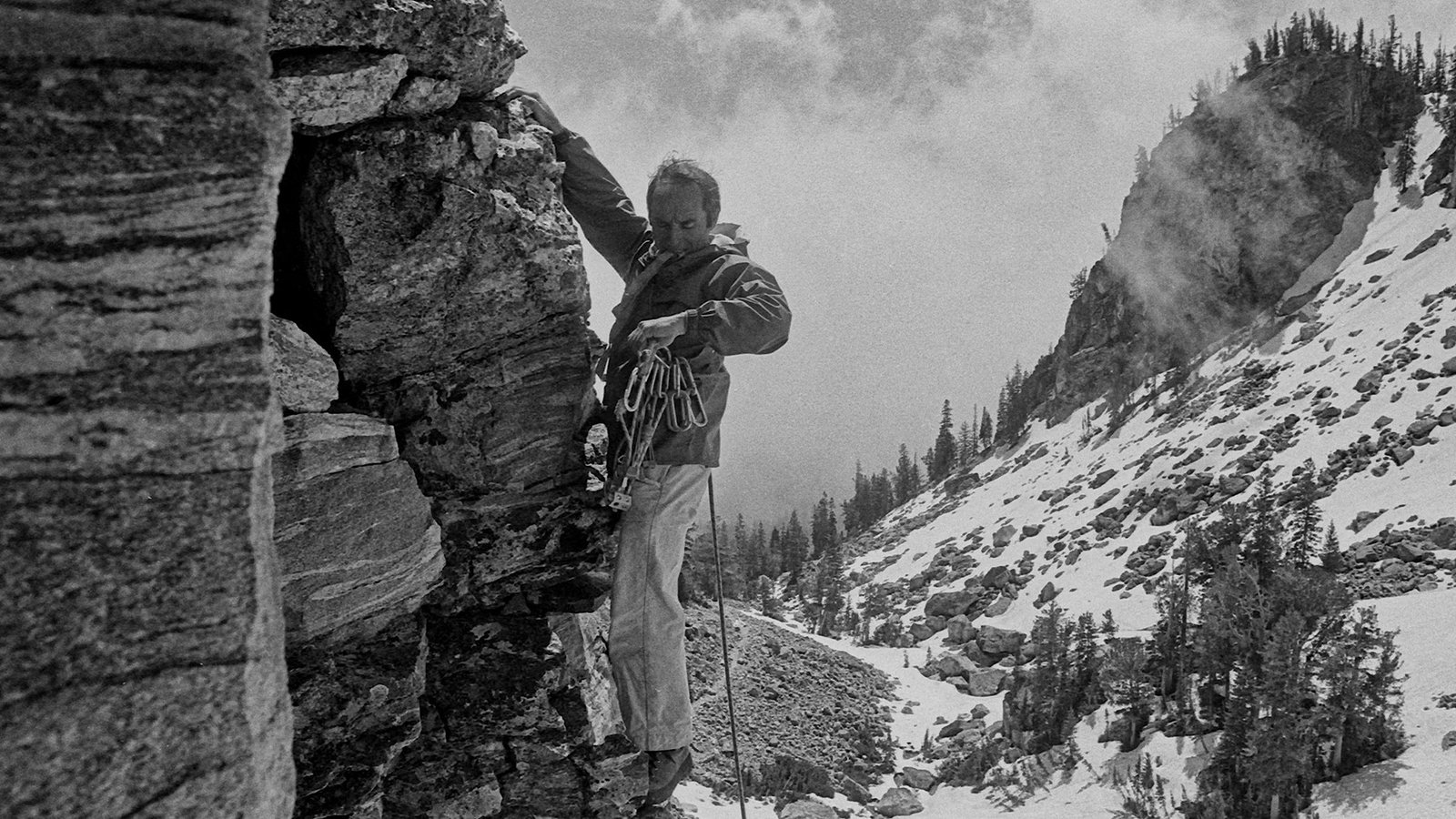
Yvon Chouinard was still a kid when he got into climbing. By the mid-1950s, he was a regular in Yosemite National Park, one of a small crew figuring out how to climb all the major walls, like Half Dome and El Capitan. But Yvon played a unique role in that so-called golden age of Yosemite climbing, both for his climbing achievements and for what he did with the gear.
Back then, climbers secured their ropes to the cliffs by hammering metal pitons into cracks in the rock. But the only pitons commercially available came from Europe and were too soft for the hard granite of Yosemite. One of the local old timers had started making pitons from the hard steel of old Ford Model A axles, so Yvon bought himself a coal-fired forge and an anvil and, between surf sessions in Southern California, started hand-forging the finest pitons ever made. Those pitons quickly raised the bar on what Yosemite climbers could do, enabling cutting-edge first ascents like that of the so-called North America Wall on El Capitan, in 1964, by Yvon Chouinard a team of which Yvon was a member. The global climbing community quickly recognized that ascent as the hardest of any kind ever done at the time.
Even as Yvon was innovating gear, though, he was also rethinking the very rules of the climbing game.
“The thing with pitons,” he said, “is that even if you’re trying to be responsible and take them out— not leave them behind in the rock—they still leave a scar. You can go to the Alps and see that all the climbs there eventually become democratic because they’re all nailed up with pitons that have been left behind. So now people are pulling on all those pins and even leaving behind rope ladders. It just brings the whole experience down. We didn’t want to do that, so we started hammering in pitons and then, as we moved upward, hammering them right back out to carry along with us. We felt great about that until we realized it was destroying the cracks, especially as more people got into climbing. All of a sudden, what was once a thin crack in the rock looked more like a big hole. At that same time, British climbers, who’d always been antipiton, had figured out how to replace them with knotted slings and machine nuts that they’d jam into a crack by hand and then wiggle back out. At some point, they’d started making those nuts for themselves out of aluminum. My friend Royal Robbins came back from England with a couple and I started making them, too. It wasn’t easy convincing climbers to stop hammering in pitons and use aluminum chocks instead. So a friend and I did the Nose with no pitons at all, just chocks. Some other guys did Half Dome the same way just to prove that it worked.”
Soon after, in 1972, Yvon published in his equipment catalog an article by a friend that explained the new “clean climbing.” It may sound arcane, but that combination—Yvon’s gear and example, his friend’s article—birthed a new paradigm for the global sport of climbing, one that endures to this day. All of a sudden, climbing was a game in which every climber was expected to avoid damaging the rock—even if it meant taking on more risk. That, in turn, created an ever- deepening focus on purity of style.
“There is no adventure without risk,” Yvon said. “You get something important from committing to whatever you do. And if you don’t risk your neck, you haven’t made a big enough commitment. We climb for our own pleasure or to become a better person; otherwise it’s just a sport. But climbing is really a passion. And the commitment isn’t random. Every climber I know has had a fucked-up experience with their father or almost-father. Mine was an alcoholic. I was never close to him. It was a traumatic household. I spent a lot of my life just getting away from that. And I was never on the typical career path where you go to college and you learn something, then you go work at that and you know what’s expected of you. I had to find my own way of dealing with life. Climbing, for me and my friends, it saved our lives. It gave us a purpose even though it was a meaningless purpose. Every time we’d go out to do something, we gained confidence in ourselves.”
Climbing, in other words, as defined by Yvon and his peers, became a game in which integrity of intent—the pursuit of genuine adventure—drives every choice. These were the core principles of the climbing game as I learned them in Yosemite in the 1990s. They were still the core principles when I climbed the Shark’s Fin on Mount Meru with Conrad Anker and Renan Ozturk. In fact, we had a whole discussion before we started about what it would mean to do that route in the proper style.
The purest possible approach—known as alpine style—is always to start at the bottom and, with as little gear as possible and by the most direct route, move quickly to the top without ever retracing any steps. But Meru presented an unusual problem: The lower half of that mountain is steep snow-and-ice climbing. The upper half is a massive sheer rock wall that, at least for us, was going to require Yosemite-style big-wall gear and tactics, including lots of heavy hardware and bivouac equipment for spending nights on vertical faces, perhaps even in stormy weather. The old-school Himalayan siege method would’ve meant solving this problem by creating a system of fixed ropes up and down the entire mountain, so that we could ferry supplies to our high points and retreat as needed.
That did not feel acceptable to us. So we settled on a compromise known as capsule-style climbing: starting from the bottom and going to the top, but using an extra rope to haul supplies as we went, sometimes also fixing a small amount of rope above our daily high point so that we could ascend that rope quickly in the morning. Did that amount to perfect style? No, but it was a function of maintaining perfection as an ideal.
Yvon’s innovation in climbing hardware didn’t stop with pitons and chocks. He spent a lot of time on big snowy mountains, too. This is when Yvon made revolutionary improvements to crampons and ice axes and wrote a book, Climbing Ice, which is credited with defining the modern sport of ice climbing. He never settled for the accepted ways of doing things. In some ways, though, the Yvon innovation that I most enjoyed thinking about is a frivolous one.
Starting in the early 1980s, Yvon’s company, Patagonia, encouraged customers to submit photos of themselves using his gear and clothing in extreme situations.
He published the best of these photos as illustrations in the Patagonia catalog. Yvon’s company was literally the first to fill a catalog with great lifestyle images of real people using the products in real situations. Those catalogs, as a result, became like unofficial yearbooks and bulletin boards for the outdoor subculture, eagerly scoured by people like me for images of our peers leading outrageous lives. Yvon didn’t just make key first ascents and reinvent the gear and rules of both rock and ice climbing. He also helped define the more playful aesthetics of what came to be called the “dirtbag” lifestyle—a way of being in which work was a means, not an end—the price you paid for months on the road, climbing or surfing or skiing, doing whatever made you feel most yourself.
Twenty-plus years ago, during that first visit of mine to Yvon’s house in Ventura, I watched a VHS cassette of an old Yvon Chouinard movie called Mountain of Storms about a road trip of more than ten thousand miles that Yvon took in 1968 with four other guys, including Doug Tompkins, the founder of The North Face. Together, they drove a white Ford van from Ventura to southern Patagonia, surfing and skiing along the way, and then they did a major first ascent of Mount Fitz Roy. T o me, at twenty-six, Mountain of Storms was something close to a manifesto. It showed me the life I wanted, lived by people who’d figured out how to live it. Part of me has never quite let go of that.
Over the years, I started understanding that the way Yvon lived wasn’t a lucky accident or a youthful phase. It came from something deeper.
“I’ve been a student of Zen Buddhism for a lot of my life,” Chouinard said, “and it’s taught me that with business as with everything else, if you do everything the right way, profits will come. So you don’t focus on profit. You focus on intent. Climbing is the same way. So is cooking. Simplicity of intent forces creativity, and creativity is where we find pleasure. I did a little film about this eighty- year- old guy in Italy who fishes with a big old bamboo rod and makes his own horsehair lines and ties his own tiny flies by hand. He doesn’t use anything fancy, but you can’t out fish this guy.
“He makes his fishing line from the tail hairs of white mares because the mares piss on their own tails and that weakens the fibers in a way that makes them more flexible and translucent in the water. His fishing rod is bamboo except for the tip, where he uses a particular kind of elm wood gathered only during a certain month of the year when it has the right moisture level to maintain the flexibility he’s looking for. And just by watching the current in a creek, this guy can make his horsehair line either sink or float, so he doesn’t need intermediate sinking lines or dry lines.
“I walked to the river with him one day and he looked down without polarized glasses and said, ‘There’s four fish there.’ I couldn’t see those fish even with polarized lenses. But he said, ‘There’s a brown, a rainbow, a grayling, and a brown.’ And then he caught all four of them. So I asked, ‘How do you do all this?’ And he said, ‘Well, I could try to tell you, but it would take all the joy out of learning. The joy is in learning for yourself.’ And he was right.”
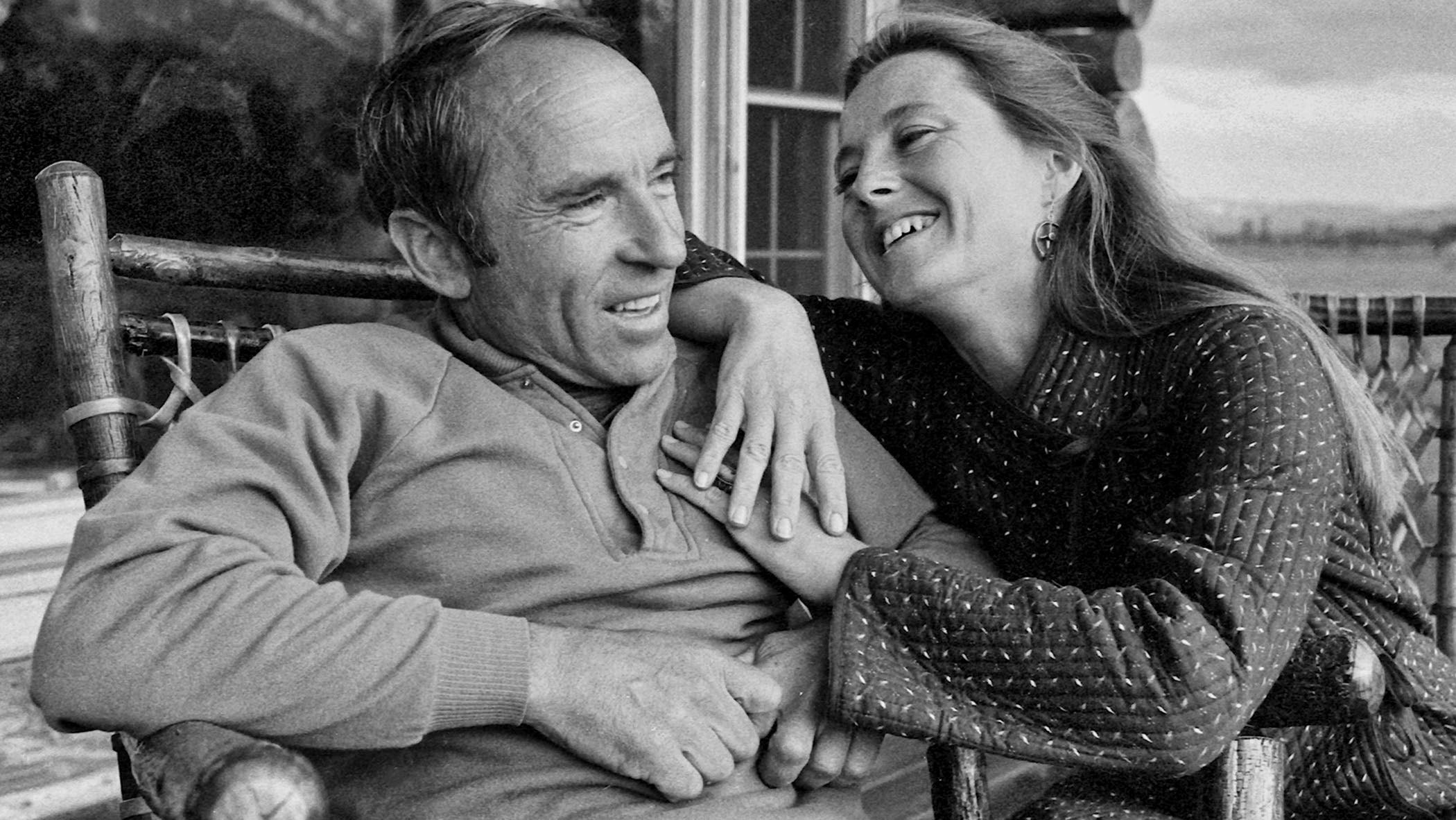
Chouinard eventually took a group of Patagonia employees—members of the design team—to watch that Italian guy make fishing line and flies. The idea was to show them where the bar is. The way I understand this, Chouinard was really saying to his team, This is not just the level of excellence I want you guys to aspire to. This is how you should live your life. This is what mastery looks like. And even though he wasn’t saying to his employees, “All right everybody, get motivated,” he was trusting in their inherent desire to achieve— to reach whatever horizon they could see. And he was taking responsibility for showing them that horizon.
“I’ve always believed that you achieve perfection through simplicity,” Yvon said. “It’s so easy to complicate your life. It’s so much harder to simplify it. That’s why I don’t have a Yvon Chouinard computer. I don’t have a cell phone, either. I don’t have any of that shit ’cause I don’t want it. Just say no. And I’ve applied that principle in all kinds of places. Once, I had the idea to kayak the Gros Ventre River without a paddle. It was pretty serious water. My friend lost his boat, and it ended up all the way down in the Snake River. But I had learned how to roll a kayak upright with just my hands—in case I lost my paddle—and it gave me this wild idea to try the whole river that way. A paddle is a powerful thing. You can see a rock coming and just do one deep stroke to get around it. Without a paddle, you have to look much farther ahead and prepare. The boat becomes like a pair of skis that you have put on edge to turn. I found that I had to sit way down low in the boat and turn by putting the boat on edge with my hands. I had been kayaking all over South America and New Guinea and doing first descents, but that was the day I really learned to kayak.”
“The greatest sushi chef is in Japan,” Yvon said. “His name is Jiro. They made a movie about him called Jiro Dreams of Sushi. When you walk in, he looks to see whether you’re right-or left-handed, because that determines where he is gonna put his sushi. And then he looks to see the size of your mouth. He’ll make it that size. Because if he makes a piece of sushi too big for your mouth, you’ll have to take a bite, which is uncool. You’re supposed to eat the whole piece at once. He buys his own fish. He works his ass off. He’s a fanatic. He only makes classic sushi and from the very best fish he can find. He has the best sushi restaurant in the world and only eight tables.”
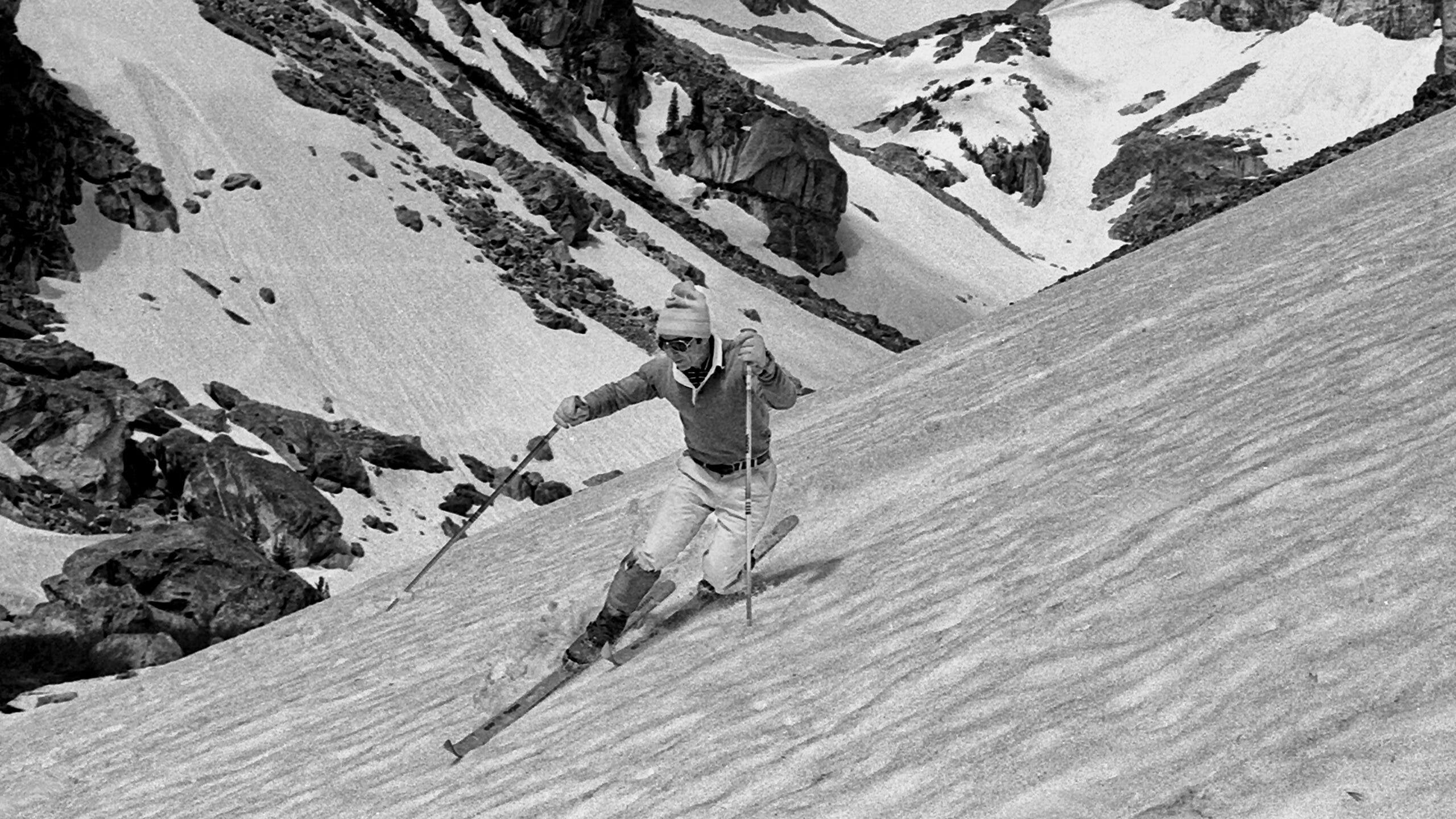
Yvon described the origins of his climbing hardware company in similar terms: He just wanted to make the best pitons, period. “I made them for myself and my friends, but then friends of friends wanted them, so I started selling them for a buck and a half apiece. I could do two an hour. At some point, I decided to make a career out of it, but I never expected to make a profit on the hardware, and I didn’t. I had 80 percent of the US market at one point, and my partner and I were paying ourselves hourly wages. He’d take off for six months to climb while I worked and then he’d come back and I’d take off. But we just weren’t making any money. It was a labor of love.
“Patagonia was different. I started that company because I was married and I had to support the family somehow. And I’d also noticed that it was impossible to get good climbing clothes. The whole outdoor industry barely existed. So we’d all climb in white dress shirts from the Salvation Army. People layered up by putting a cotton sweatshirt on top of a T-shirt. That told me that if I came out with something better to climb in than a secondhand dress shirt, it would sell. And it did.”
Yvon likes to say that juvenile delinquents make the best entrepreneurs because they look at something and say, Well, that sucks. I’m going to do it my way.
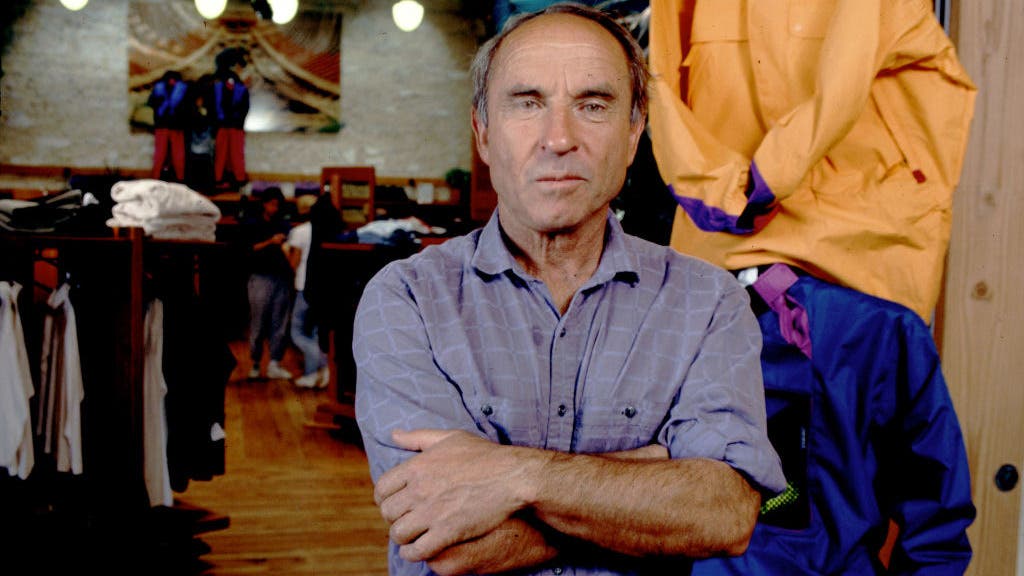
“In fact, right now, we’re trying to get Patagonia back to that initial intention. Every company needs a revolution every ten years and we’re going through a big one right now. Because a while back, I was sitting at my desk and a bunch of people came roaring in and said, ‘Guess what? We just hit a billion dollars in sales!’ And I just went, ‘Fuck.’ I was so bummed out because I knew that running a billion-dollar company was a lot different from running a little climbing hardware company and that we could easily become the bureaucracy, the behemoth, that we didn’t want to be. And in fact, it was turning out that way.
“I had a CEO at the time who was opening up new accounts in general sporting goods stores and department stores. We were making a 20 percent net profit but selling out—just like The North Face did when they hired Kim Kardashian to do a skiwear line. Because they exceeded the size they should be. So we cut way back. We killed all our department store accounts. And that’s about living within our limits. And I mean, what happens when you’re free soloing and you exceed your limits? You die. That’s what we were facing. I want Patagonia to be a company that grows maybe 5 percent a year. Maximum. Just to keep up with inflation and make a decent profit and have a good culture. Keep a good lifestyle. And I don’t see any examples of anyone else who has done that. Name one company that’s purposely restricted its own growth. But that’s what Patagonia is about now. We’ve been in business fifty- four years. So what are the next fifty years going to be about? I have four thousand employees around the world. They’re all dependent on the company’s survival and yet our products are getting knocked off by everybody else. We were the first to come out with down sweaters and now you can buy them at 7- Eleven in Tokyo.
“The second reason is a lot of people in other small businesses look up to us. If we fail at this, they’ll say, well, Patagonia tried that and failed. So we have to lead by example. If you’re in the military, the second lieutenant is out there in front. He’s not in the back telling his men to go forward. The people have to trust you. So I want Patagonia to be viable, but I also want it to be the best. And part of being the best is knowing how big you can be. That’s the real reason I wanted to scale back. If we’re going to make the best jackets in the world, we cannot also make the most jackets.
“I don’t think you can be an excellent company or make excellent products by getting bigger and bigger. You lose control. The average age of an American corporation before it goes belly- up is less than eighteen years. If we decided, at Patagonia, to start making watches and sunglasses, that would be suicide for what we wanna do. There’s a limit to everything. I don’t care what it is. Everybody dies, no exceptions. Every empire collapses, usually after 200 to 250 years.”

In 2022, Yvon gave Patagonia away—the whole company, I mean. He gave it to a nonprofit foundation that he created with one goal: environmental conservation.
“I gave Patagonia away three or four years ago because I didn’t see any other way,” he said. “My kids didn’t want to inherit the company. They have simple lives like I do. I didn’t want to take Patagonia public because we’d end up killing the company’s values. I didn’t want to bring in an Yvon Chouinard investor or a partner, because those relationships always fall apart, just like most marriages. And I didn’t want to sell for the same reason—there was no way to sell and still be sure that the values endured.”
Most people describe big decisions as a tortured process of sleepless nights and agonizing over alternatives. Yvon describes the giveaway of Patagonia the same way he describes his commitment to climbing gear that didn’t scar the rock like the pitons he’d been using—as if there was no decision. There was just a right thing to do, a single remaining move consistent with everything he’d done before. Sixty years of style culminating in one inevitable act. If you’ve been playing your own game the whole time, eventually the only move left is to give the game away.
“But giving it away worked out great,” Yvon told me. “You’ve seen my lifestyle. I don’t need any money. You’ve seen my place in Jackson. I’ve been in that house for fifty years, and half the electrical wiring is burned out.”
Of course, Yvon gave Patagonia away for another reason, too: “Climbing and kayaking and skiing and doing all these different sports, I could just see the deterioration of the nat- ural world, and I felt a responsibility to do something about it. One lesson I’d already learned, all the way back when I was seven years old and driving out from California, came from watching my mother put up preserves in jars to eat on the drive because she knew we couldn’t afford restaurants. We were driving through a Navajo reservation in New Mexico or somewhere on Route 66 and there was a hogan on the side of the road. I remember this Navajo woman living there and my mother getting worried that she didn’t have enough to eat. My mother gave that woman a jar of preserved corn and that really stuck with me as far as philanthropy. It gave me a sense of responsibility to not sit around and complain. If you believe in global warming and you do nothing about it, then you don’t believe in global warming. So I gave Patagonia away to do something about it.”
“It’s so easy to complicate your life. It’s so much harder to simplify it.” That’s also Yvon’s design philosophy—a design is only perfect when there’s nothing left to take away. A sixty- year career brought Yvon to a place where there was nothing left to give away. What was a guy going to do with a three-billion-dollar company? Who needs it? The environment does.
Yvon is in his late eighties now. He fishes most days with a T enkara pole and a couple of flies. Half the wiring in his house is burned out and he doesn’t care. He gave away everything he was supposed to spend his life accumulating. What he’s left with is the life he started out with.
Yvon played his own game. After a lifetime of hard choices, he came out the other side intact, still the person he always chose to be.