

Published September 30, 2026 03:14AM
Nur Abbas calls the room in his studio with 14 3D printers the “print farm.” Slowly, precisely, as they’ve been programmed, the machines hum as they deposit paths of plastic in the shape of a sandal. Some are black; others translucent white with a faint greenish glow-in-the-dark tint because they do, in fact, glow in the dark. Abbas hands me a shoe, still warm from the machine. It weighs next to nothing in my palm (three ounces, to be exact) and flexes as I handle it.
This minimalist camp shoe is the latest innovation from Abbas’s brand Gnuhr, which he started in 2023, applying his fashion-trained eye to the ultralight hiking world. Late this summer, instead of attending Paris Fashion Week, he’ll debut Gnuhr in front of the thru-hiking audience at Pacific Crest Trail Days in Cascade Locks, Oregon—a telling priority shift for someone with serious career credentials at Louis Vuitton, Maison Margiela, and even Yeezy (a story for another time.)
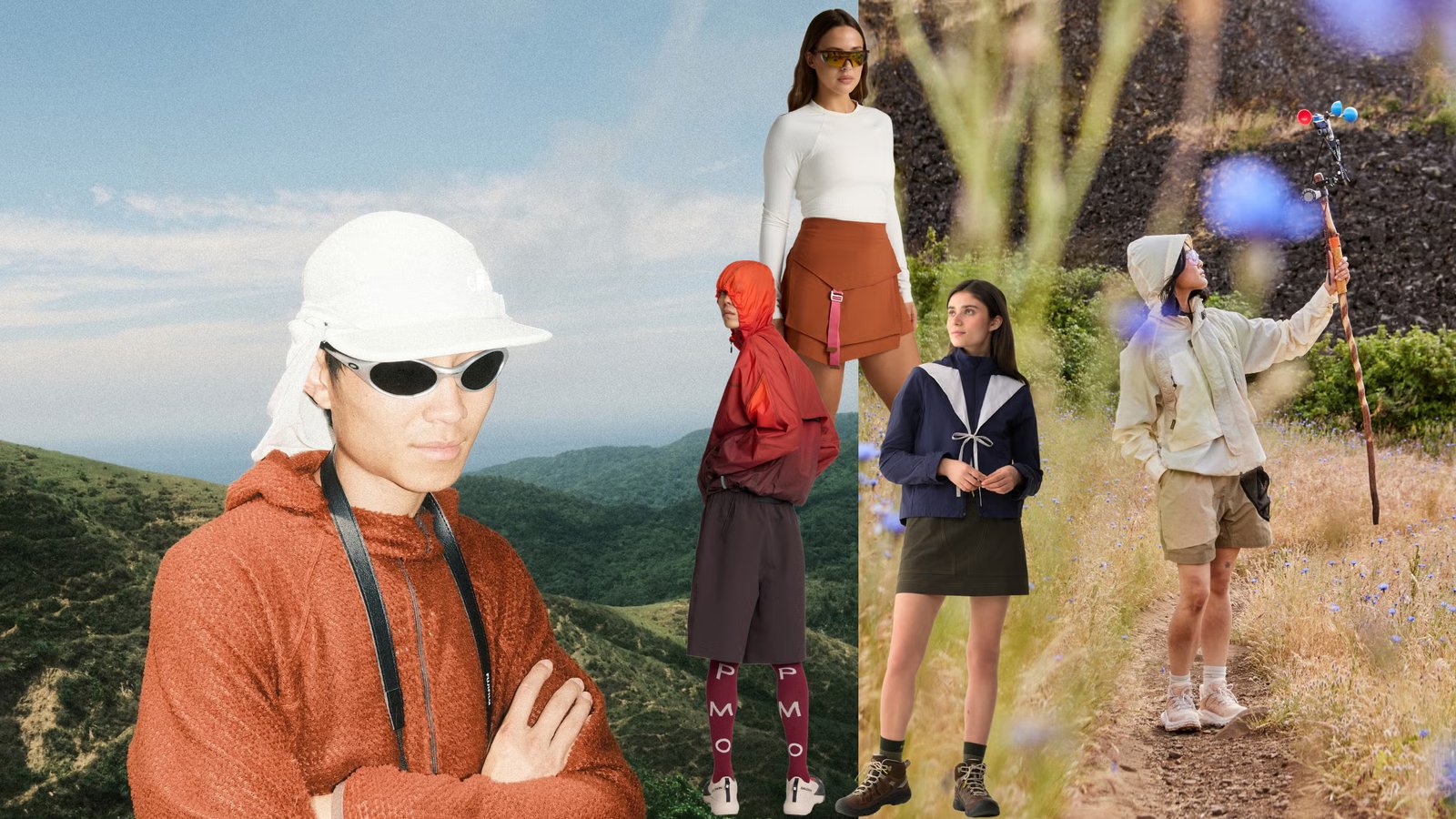
Gnuhr is known (so far) among a small crowd for its abstract designs, from those barely there slingbacks to funky warp-knit garments, and is part of a collective of young brands rewriting hiking’s style codes. The previously established hiker uniform—blocky boots, khaki nylon pants, pilling fleeces, and stiff rain shells, all in a riot of mismatched colors—simply don’t appeal to them.
The classic look derives from the function-first philosophy established in the 1970s and 80s by brands like Patagonia, The North Face, and REI. Rightly so, performance was prioritized over style. Some argue that the previous generation of hikers and backpackers don’t have much of a style at all, looking like they crawled away from a garage sale with whatever they could find.
Aesthetics were of no value to them, as long as they reach the summit or campsite. “It’s like they want to be anti-fashion,” Abbas says, and in doing so, “they’ve created another set of codes. If you want to be part of that community, you have to adhere to those codes.”
Enter newcomers like Abbas, who arrived on the trails with entirely different expectations about how gear should look and feel, shaped in part by the pandemic-era outdoor boom and gorpcore’s blurring of technical apparel and everyday fashion. These newcomers brought influences from fashion, streetwear, industrial design, and other creative disciplines.
They also measure style equally against performance. Whether they’re moving between natural and urban environments, incorporating their other interests with hiking, posing for Instagram, or all of the above, looking good is as much of a requirement as feeling prepared.
Jeanine Pesce, brand strategist and trend forecaster at creative consultancy Range, says this new relationship with the outdoors is about integrating nature as part of everyday life. “We’re no longer looking at a singular outdoor uniform,” she says. “It’s become a collection of archetypes, introducing distinct values, aesthetics, and cultural references to the equation.”
From Gnuhr’s highly considered pieces to Hikerkind’s elegant performance womenswear, to Purple Mountain Observatory drawing from streetwear and global influences and Portal blending contemporary menswear with mountain functionality, these new brands are bridging different worlds. What connects them isn’t a shared aesthetic but a belief that technical apparel can express identity, Pesce says, broadening the definition of who’s a hiker and how they dress.
No need to take off your jewelry stack or wipe off your makeup for a hike. Show off those tattoos. Wear the vintage scarf you found at a flea market as a bandana. Layer your favorite band T-shirt over a merino wool base layer. “I love this post-trend reality where you can basically just pick something and just crash it into all the other stuff you’re into and it’s valid,” says Brandon Herrell, cofounder of Earth\Studies, a brand merging technical workwear with everyday wear.
The shift has been especially meaningful for women, who, as of 2023, make up 51.9 percent of outdoor participants. For decades, outdoor apparel companies offered little room for personal style, often reducing women’s gear to smaller cuts and brighter colors during the “shrink it and pink it” era.
New York–based fashion stylists Chelsea Rizzo and Allison Levy, who founded Hikerkind in 2021, said they felt like they were putting on a costume for hiking. Similarly, Seniq’s Valentina Thompson says, “The worst part about getting outdoors was getting dressed.” By approaching the problem through distinct visual languages—Hikerkind’s earthy palette and Seniq’s high-vis pink—both brands are giving women more freedom to decide how they want to show up outside.
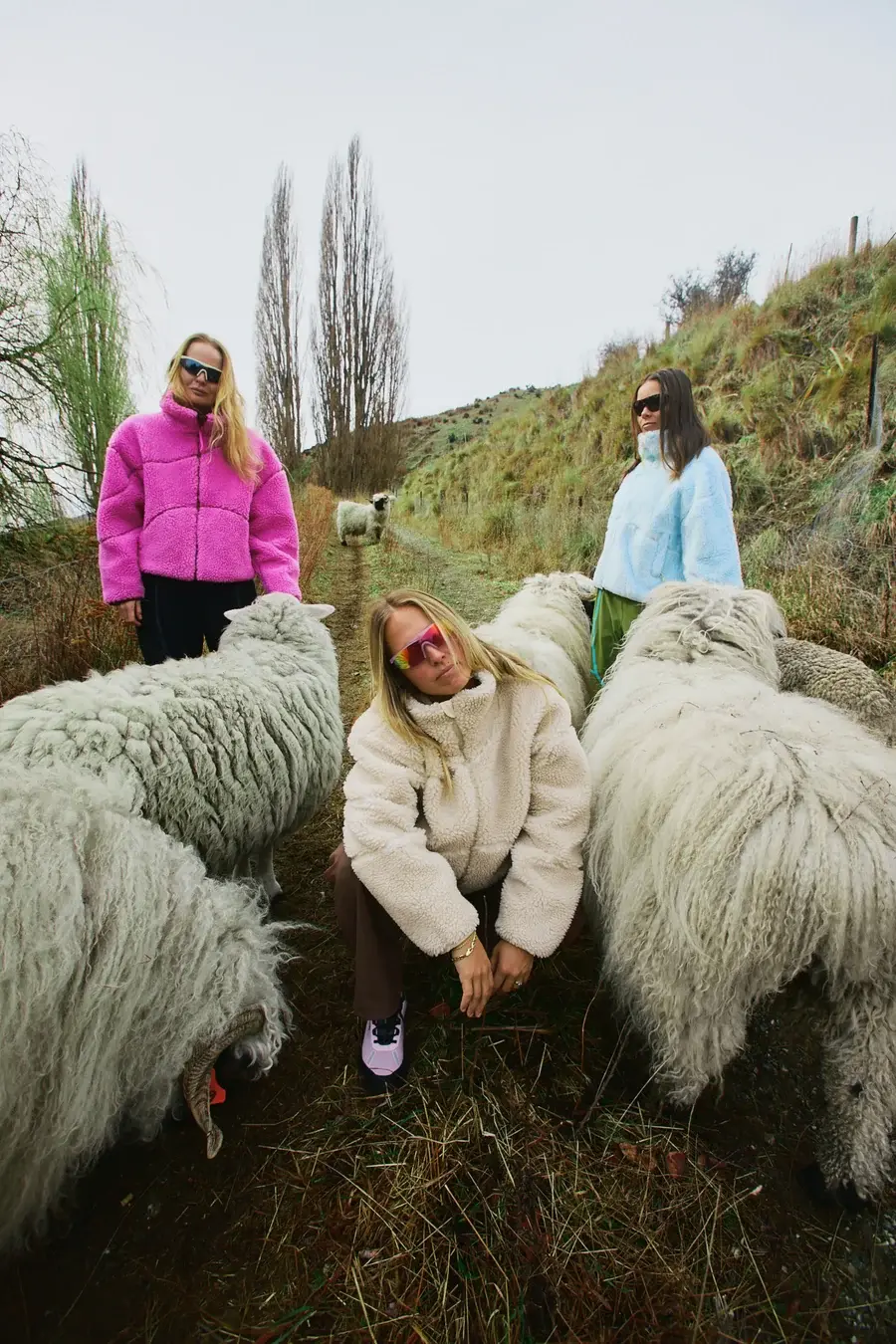
Whereas the outdoorswoman of the past suppressed her femininity to earn credibility in the male-dominated outdoor industry, today’s outdoorswoman no longer has to choose between looking outdoorsy and, God forbid, looking cute—once considered taboo. Hiking is important to her, but it’s only one part of her multifaceted identity. “She’s an artist, she’s a businesswoman,” Thompson says. “She has so many different creative interests and is so layered.”
Of Thompson’s various interests is runway fashion, a space that outdoor brands are now mining for inspiration, and vice versa, as fashion has increasingly borrowed from technical apparel—a feedback loop sharpened by the rise of gorpcore. The crossover extends into running, where the overlap with ultralight is producing some of the most interesting experimentation right now.
Back when Gnuhr’s Abbas was an observer of the outdoors rather than a participant, he kept an eye turned toward hiking gear, looking for ways materials, construction, and forms might translate into his own work in high fashion. His perspective was mostly surface-level—drawn to how things looked and how they were made, without really considering whether they functioned outdoors. (He would later immerse himself in Nike’s trail-focused All Conditions Gear.)
He noticed that certain pieces disrupted the norm. Hyperlite’s white backpacks intrigued him. White fabric, in the dirt? So did a transparent Dyneema rain kilt from Zpacks, proven to shed precipitation on the trail. “If you take it out of that context, it’s like, a guy wearing a transparent skirt is quite radical,” he says. Both examples were avante-garde and experimental in a way that core brands were not. Abbas wanted in: “How can I, instead of just being inspired by that, work in the same process to come up with my own new, weird things that also work?”
There was a time when waterproof coatings and bonded and welded seams represented the frontier of active apparel, reshaping what technical shells could do. Now those standard technologies are being overtaken by innovations like the incredibly lightweight but lofty synthetic fleece insulation Polartec Alpha Direct, the custom warp knit engineered out of a single panel of fabric, or the new ultralight Aluula composite that’s stronger than Dyneema.
Legacy brands are only beginning to incorporate these materials: Mountain Hardwear just launched its own take on a white backpack. Emerging brands, meanwhile, are more flexible in their supply chains, sourcing directly from specialized mills, experimenting with low minimum order quantity production runs, and iterating on materials and construction in real time.
Very few, however, have the design fluency to move seamlessly between fashion and outdoor, translating technical innovation into showroom-ready pieces. Gnuhr sits in the small overlap.
At PCT Days, Abbas will sell 3D-printed camp sandals for $69 to obsessive gram counters. And thousands of miles away, the very same slim silhouette won’t look out of place on the gallery-white shelves of a high-end fashion boutique in Tokyo.
“If you want to buy the gear and just make a cute outfit, go for it, great,” Abbas says. “If you want to use it and just take it on the trail, fine. Ideally you have the chance to do both.”
This article is from the Fall 2026 issue of Outside magazine. To receive the print magazine, become an Outside+ member here.
