

Three children wandered 1.5 miles from their family’s campsite near Buena Vista. A search-and-rescue team, led by K-9 Archie, tracked them down in the Colorado backcountry.
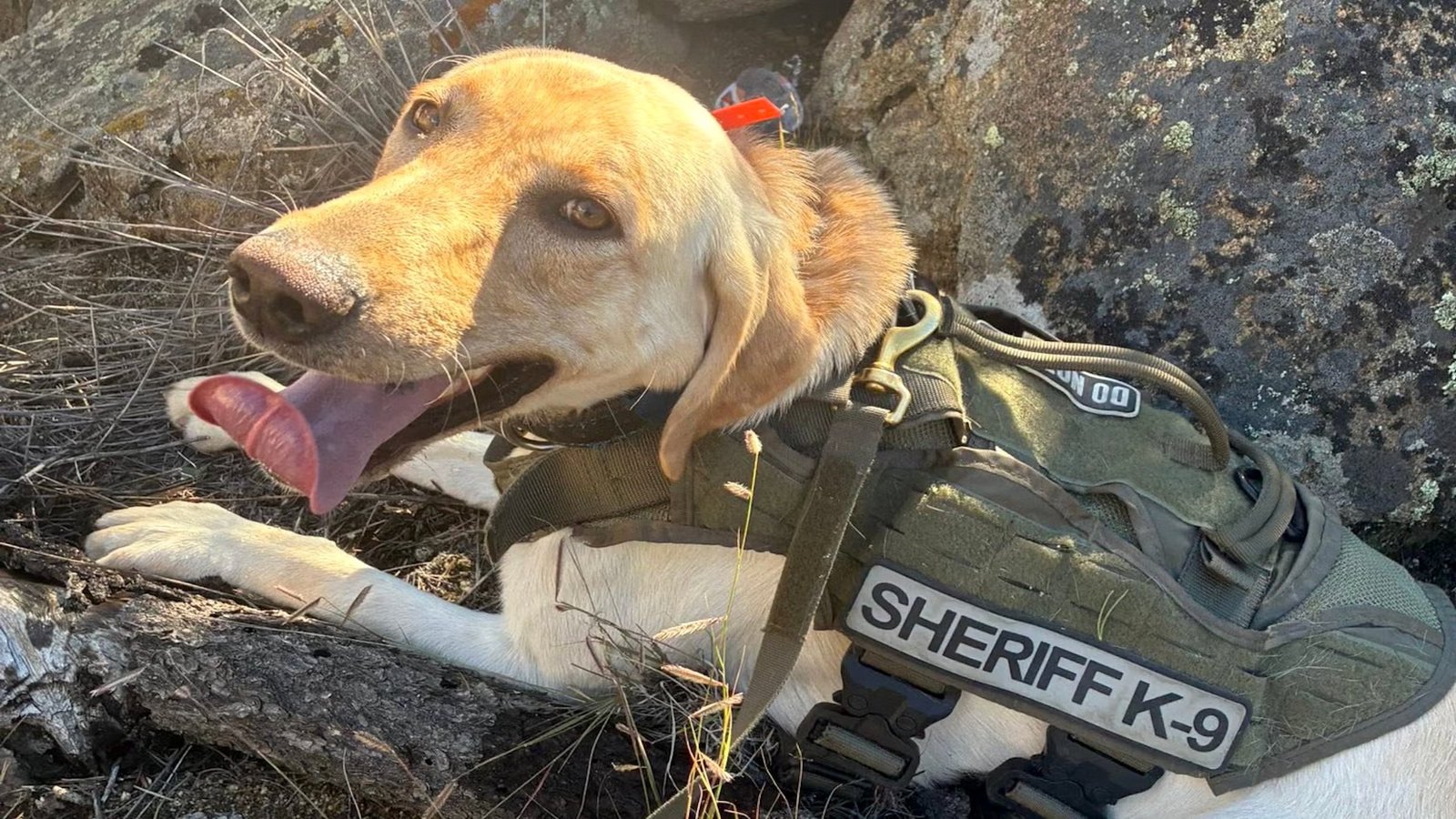
Archie is a two-year-old yellow lab specially trained to find missing people (Photo: Courtesy of CCSO)
Published September 30, 2026 04:21PM
How We Reported This Story: Outside interviewed Deputy Kendra Hoffman of the Chaffee County Sheriff’s Office, who coordinated the response and detailed how a two-year-old yellow Labrador named Archie located the three missing children 1.5 miles from their campsite. Additional search details—including the timeline, search methods, and terrain near the Midland Bike Trail—were corroborated using official statements from the Chaffee County Sheriff’s Office.
When three children disappeared from a campsite near Buena Vista, Colorado, on September 26, rescuers deployed multiple drones, several foot patrol teams, and even a helicopter to search for them. But a four-legged K-9 officer named Archie ultimately found them.
Archie, or “Arch” to his handlers, is a two-year-old yellow Labrador who is specially trained to find missing people by their scent.
Officials told Outside that Arch’s strong nose was needed to find the kids, due to the rugged nature of the Rocky Mountain backcountry where they went missing. The trio included two six-year-olds and a nine-year-old, officials said.
“Kids are smaller. They like to hide in places,” Chaffee County Sheriff’s Office (CCSO) Deputy Kendra Hoffman told Outside. “Just because we have drones and helicopters in the air, if they’re hiding under a rock or a tree, we’re not going to see them through the air. That’s why I was like, ‘let’s get Arch en route.’”
When to Bring in a SAR Dog
The children were camping with a large group near the Midland Bike Trail, a popular multi-use singletrack route on the eastern side of Buena Vista. Around 9 A.M., family members noticed the kids were missing and searched for two hours before calling law enforcement, CCSO wrote in a statement.
Typically, rescuers don’t bring in a search dog if a person has been missing for more than several hours. Hoffman said that as time goes by, other people may have moved through the scene, contaminating scent items by introducing other smells.
But Archie responded to the scene almost immediately.
Handlers gave Archie a stuffed animal belonging to one of the children so he could pick up their scent. Archie led his handler and two deputies downhill to a sandy wash, where they found children’s footprints about 1.5 miles away from their campsite.
“He [took] rescuers pretty much right to them,” Hoffman said. “It was downhill, but I know that my three deputies were definitely very worn out when they got back to the command.”
The kids were found five hours after they had gone missing, in an area approximately 1.5 miles from where they were last seen.
Archie is relatively new to the department, and Hoffman believes this was his first on-duty search.
“I wanted to personally see how he could work,” Hoffman said.
Teach Your Kids to Avoid Getting Lost
Archie’s quick work saved the three children, and their disappearance offers a valuable lesson for families in the backcountry: Stay put. Hoffman says that parents should teach their kids to stop moving when they are lost.
“Hug a tree,” she said.
If kids do spot someone looking for them, she said, they should make themselves known, rather than staying hidden.
“If they see somebody with either a uniform—search and rescue normally wear bright colors— go to them. And if they encounter law enforcement, say to them, ‘I’m missing.’”
Finally, kids should always tell an adult before they wander away from camp.
Those steps can help rescuers find missing children faster, she said. But when they do get lost, after seeing how much Archie helped, she plans to refer calls to the canine team whenever she can.
As for Archie? It seems he may have just been promoted.
“I see us using Archie a lot more now,” she told Outside.
The National Park Service advises kids to avoid becoming lost by knowing the route of their activity, staying with their group, and taking a buddy if they need to leave the group.
Teach children to do the following if they find themselves lost:
- Stay put. Stay where you are and listen up for people calling your name
- Hug a tree. If you do not see a tree around you, your “tree” can be a park bench, lamp post, or a big rock.
- Make yourself big. Wave your arms to help people see you. If you have a whistle, blow it. If you have a flashlight, flash it.
