

Opinions expressed by Entrepreneur contributors are their own.
Key Takeaways
- Dr. Darshan Shah’s own health problems inspired him to rethink how doctors approach preventive healthcare
- He founded Next Health to create a medical experience that people would actually want to return to.
- Will patients visit physical clinics at a time when much of healthcare is moving online?
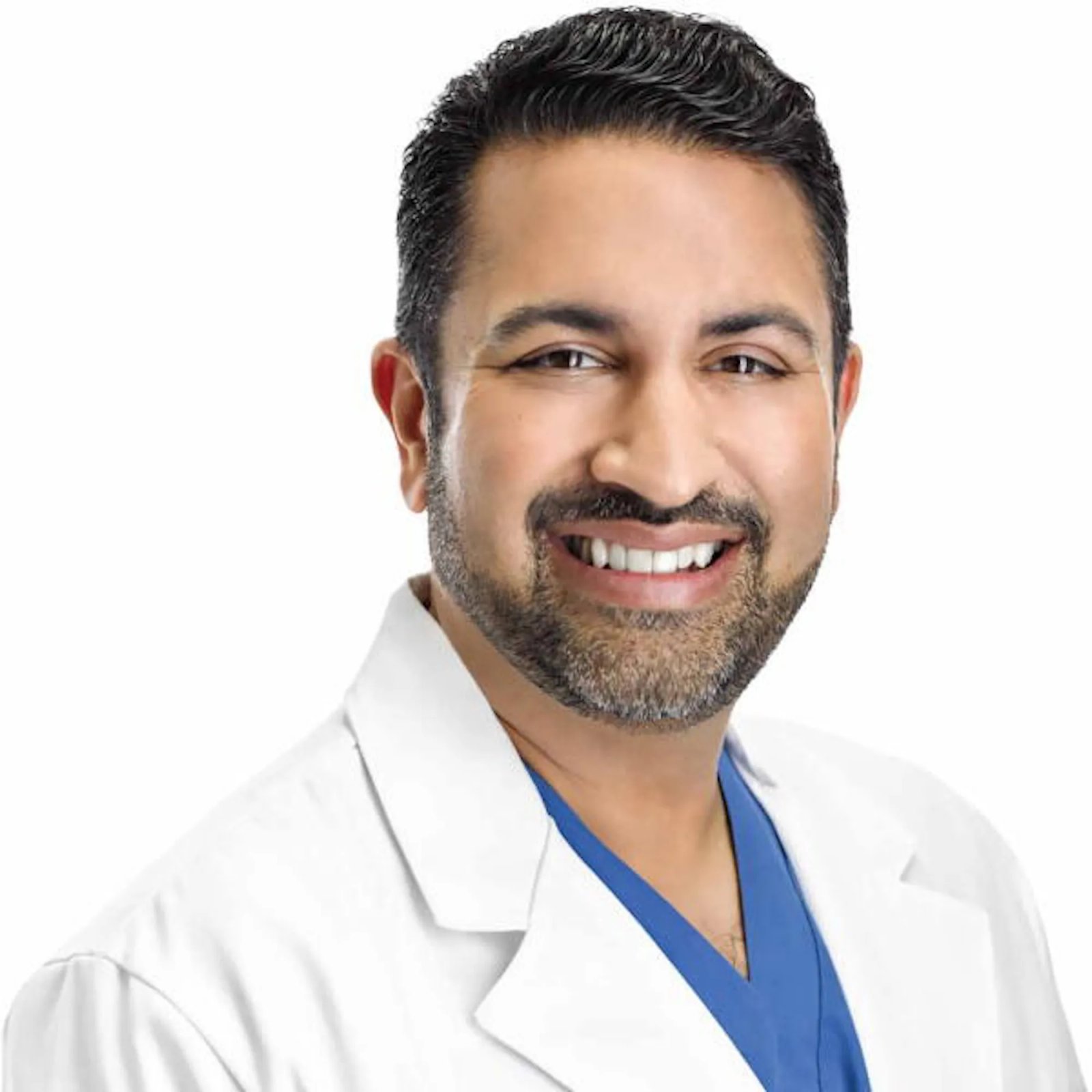
When Dr. Darshan Shah, a board-certified surgeon, set out to create a different kind of medical clinic, he took out a whiteboard and made a list of everything people hate about going to the doctor. Bad parking. Old furniture. A grumpy person at the front desk. Long waits. Old magazines.
Then he set about doing the opposite. “This needs to be a beautiful space that inspires you to want to be there,” Shah says. The result was Next Health, a longevity clinic that Shah says has been described as “the Apple Store of health and wellness.”
Next Health now has more than 25 locations around the world, offering everything from advanced health testing to hormone optimization and IV therapy. But Shah’s path to becoming a longevity entrepreneur started long before wellness clinics became a booming business. On a recent episode of the One Day with Jon Bier podcast, he explained how his own health crisis while working as a surgeon forced him to reconsider what he’d been taught about keeping people healthy, and why he thinks the doctor’s office should be as focused on keeping people healthy as it is on treating them when they’re sick.
The surgeon becomes the patient
Shah was a bit of a child prodigy. He entered a combined medical program at the University of Missouri-Kansas City at 15 and graduated as a physician at 21. He went into surgery, eventually becoming chief resident and pursuing further surgical training at the Mayo Clinic.
But caring for others meant he seldom cared for himself. Shah was spending 12 to 14 hours a day in surgery, sometimes six days a week. “I was at my unhealthiest myself,” he says. “I was diabetic, 50 pounds overweight, hypertensive, on 10 different prescription medications.”
He eventually developed an autoimmune disease and was prescribed methotrexate, an immunosuppressant. He says the medication made him feel worse.
At the same time, Shah was seeing many of the same problems in his patients. Before elective surgery, patients had to be medically cleared by their primary care doctors. Many had high blood pressure, diabetes, obesity, and other conditions that prevented them from being cleared.
“I was witnessing the problem that needed to be solved, and I was also experiencing it myself. I decided that I needed to learn the science of health because all I was getting was the science of disease management,” he says.
That decision led to a deep dive into the burgeoning practice of functional medicine, which focuses on identifying the underlying causes of health problems rather than simply treating their symptoms.
He began applying what he learned to himself and his patients. “I was getting my patients so healthy they even canceled their surgery, so they didn’t need it anymore,” Shah says. “I was like, ‘This is what we need to be doing in medicine.’”
A clinic people actually want to visit
As Shah sees it, one of the biggest problems with traditional healthcare is that people don’t want to be there. For many patients, he says, visiting a doctor evokes feelings of “number one, fear, number two, of annoyance.”
That presented a business problem. He could offer all the health testing and longevity treatments he wanted, but if people dreaded coming through the door, they weren’t likely to come back. “I knew I had all these tools to get people healthy,” he says. “But I was like, people aren’t going to want to do this unless we change the experience.”
Next Health combines medical consultations and testing with services ranging from IV therapy and hormone optimization to red-light therapy and other wellness treatments. “We spend 45 minutes to an hour with our patients every time they come in,” Shah says.
That kind of healthcare comes at a price. Some testing and treatments cost considerably more. Its Executive Physical, for example, is currently listed at $14,500.
Shah acknowledges the criticism that longevity medicine can seem like healthcare for the wealthy, but says, “Next Health has been very mindful in creating programs that almost anyone can afford.” Memberships start at $99 a month, an amount Shah says is low enough to be covered through a health savings account. “Of course, we have concierge-level memberships as well, but we have equal numbers of members across all the different levels,” he says. “As we continue to scale, our goal is to drive down costs and make this affordable longevity care for everyone.”
Why brick and mortar still matters
The concept started with a single West Hollywood location in 2016. By the end of 2024, Next Health had five locations. Then the company began expanding through franchising, with now more than 25 clinics.
That growth has required Shah to double down on something many healthcare companies have tried to move away from: brick and mortar. “People still think we’re crazy to be opening all these four walls,” he says. “Because they’re expensive, there’s employees you have to hire, there’s so much you have to do.”
But Shah believes the physical space is an essential part of the product. “Every corner of your brick-and-mortar location inspires a feeling that you want the person to have,” he says. “It’s not just the location, it’s also the people in the location and what experience they are providing.”
The whiteboard may be long gone, but the idea behind it remains. Patients shouldn’t need so much patience to get healthy.
Key Takeaways
- Dr. Darshan Shah’s own health problems inspired him to rethink how doctors approach preventive healthcare
- He founded Next Health to create a medical experience that people would actually want to return to.
- Will patients visit physical clinics at a time when much of healthcare is moving online?
When Dr. Darshan Shah, a board-certified surgeon, set out to create a different kind of medical clinic, he took out a whiteboard and made a list of everything people hate about going to the doctor. Bad parking. Old furniture. A grumpy person at the front desk. Long waits. Old magazines.
Then he set about doing the opposite. “This needs to be a beautiful space that inspires you to want to be there,” Shah says. The result was Next Health, a longevity clinic that Shah says has been described as “the Apple Store of health and wellness.”
Next Health now has more than 25 locations around the world, offering everything from advanced health testing to hormone optimization and IV therapy. But Shah’s path to becoming a longevity entrepreneur started long before wellness clinics became a booming business. On a recent episode of the One Day with Jon Bier podcast, he explained how his own health crisis while working as a surgeon forced him to reconsider what he’d been taught about keeping people healthy, and why he thinks the doctor’s office should be as focused on keeping people healthy as it is on treating them when they’re sick.
