

Published October 11, 2026 03:40AM
What You Need to Know: A new scientific review on cold-water immersion, published in the Journal of Applied Physiology by researchers Laura Leuci and Luca Carenzo, examines how people die in cold water. It maps out peer-reviewed physiological data to provide actionable survival tactics.
On a sunny day in May, Jeru Bague and Mariz Bello fell off their paddleboard on Browning Lake, near the outdoor mecca of Squamish, British Columbia. The recently married couple both drowned—two more statistics in an unusually bad year during which (so far) 42 people have drowned in British Columbia, a rate that is 50 percent higher than last year.
You might think that the solution is simple, at least in this case: they should have, you know, grabbed the paddleboard. But falling into cold water is more complicated than it seems. It’s not just about hypothermia, which usually doesn’t kick in for half an hour or so. In fact, a substantial proportion of cold-water deaths occur either long before hypothermia hits, as in the case of Bague and Bello; or, more puzzlingly, shortly after the swimmer is rescued. More than half of open-water deaths happen within just three meters (less than ten feet) of safety, and two-thirds of the victims are considered competent swimmers. And most triathlon deaths occur within the first few hundred meters of the swim, long before exhaustion or cold sets in.
Sweat Science 101
Sign up for a ten-part email series from Alex Hutchinson on how to train, fuel, and recover. Each week, Alex covers a new topic, including strength training, supplements, and more!
A new review in the Journal of Applied Physiology, led by Italian researchers Laura Leuci and Luca Carenzo, sums up what scientists know about the underappreciated dangers of cold-water immersion—and, crucially, how to maximize your chances of survival. Scientists divide these dangers into four distinct stages that progress chronologically:
1. The Cold Shock Response
The first thing that happens if you’re suddenly immersed in cold water—we’re talking below about 15 degrees Celsius or 59 degrees Fahrenheit—is that you’ll take a big, involuntary gasp of air. If you’re underwater when this reflex kicks in, that’s a problem and can kickstart the drowning process.
After the big gasp, you’ll typically start hyperventilating for one to three minutes. This can also be a problem, because if you’re in choppy water you may find it difficult to time your rapid breaths between waves. This once again raises your risk of inhaling water.
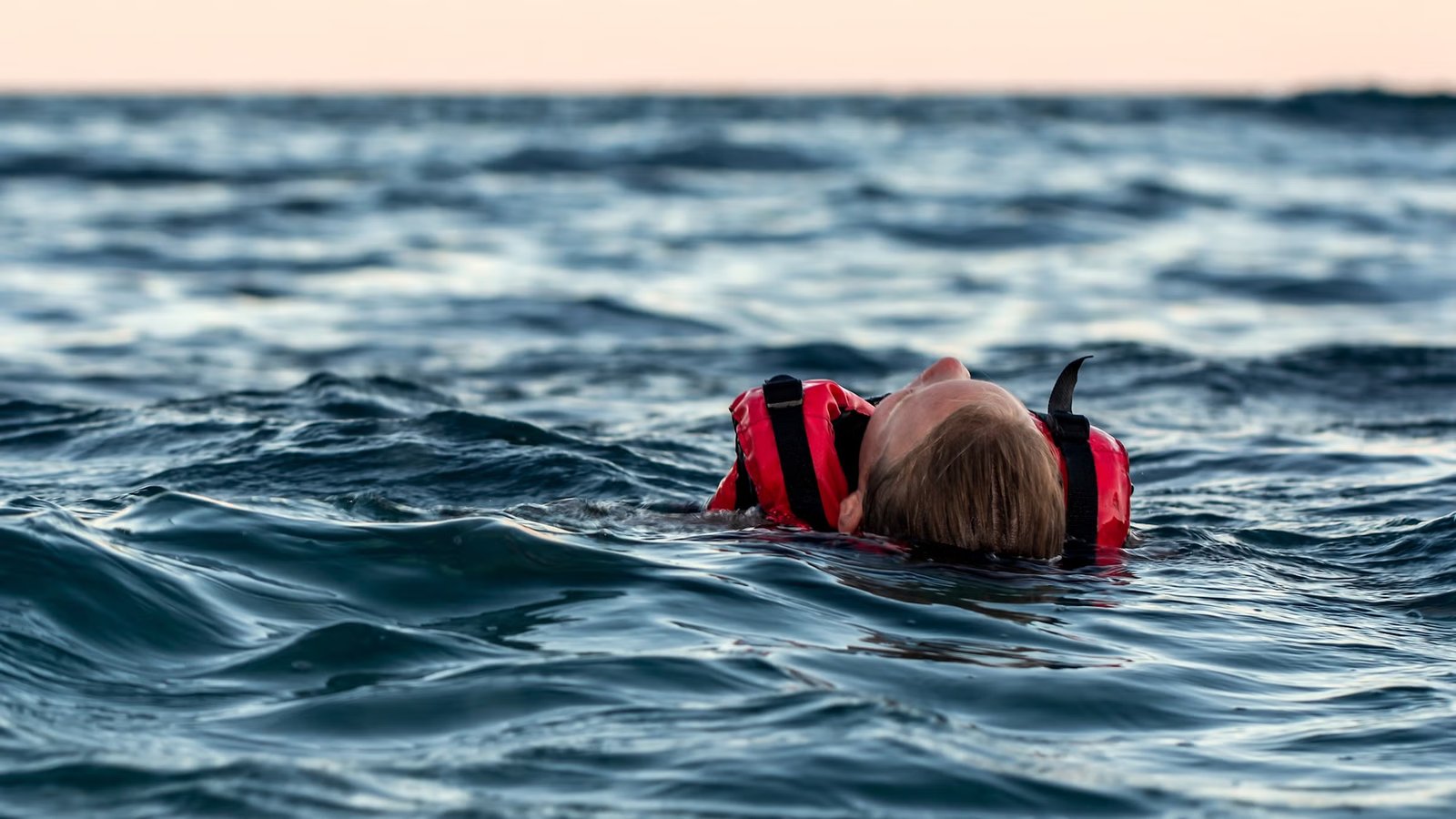
The key countermeasure here is what the Royal National Lifeboat Institution calls “Float to Live,” which basically advises you to float on your back with your face out of the water until the hyperventilation subsides. Modern lifejackets are designed to push you toward the appropriate position automatically, but even if you’re not wearing a lifejacket the same advice applies: by spreading your limbs and leaning back, you should be able to float with your face out of the water.
Even if you do that, there’s another key risk during this initial stage. The cold shock triggers your sympathetic (fight-or-flight) nervous system, which tells your heart to beat in a rapid and ultra-regular rhythm, increasing by 15 to 30 beats per minute within a few seconds. But if your face is submerged, this triggers an ancient mammalian diving reflex which automatically tries to slow your heart to preserve oxygen while you’re underwater.
These conflicting impulses lead to something called “autonomic conflict,” which creates electrical instability in the heart that may lead to dangerous arrhythmias, though likely only if there’s a pre-existing heart condition. These mechanisms are still being debated, because it’s hard (and extremely dangerous) to study them in the lab, but the bottom line is that some cold-water drownings are probably caused by a heart stoppage immediately after immersion rather than the cold itself.
One other countermeasure worth mentioning: habituation. The more you expose yourself to cold water, the weaker your cold shock response gets, with protective effects lasting for months. It’s also weaker if you slip in gradually rather than cannonballing in all at once.
2. Swimming Failure
If you survive the initial shock, then the cold itself will start kicking in over the following 30 minutes, acting from the outside in. As your limbs, muscles, and extremities get colder, they’ll gradually lose function. Your fingers, for example, get markedly clumsier when skin temperature drops below 15 C (59 F), and lose feeling below about 8 C (46 F). This loss of function will sap your ability to swim, or to hang onto the side of an overturned boat, or to haul yourself out of the water—all while your core temperature remains close to normal.
To minimize the risk of swimming failure, you have to make a crucial choice: Should you swim towards safety (e.g. shore or a boat), or stay put? In 12 C (54 F) water, people can typically make it about 1,250 meters (4,100 feet) in a swimsuit or 800 meters (2,625 feet) in clothes before hitting failure. Ideally you should swim on your back, only kicking your legs, while keeping your arms close to your body to minimize heat loss.
If safety is farther away than that, then you need to focus on staying warm. Instead of swimming, assume the Heat Escape Lessening Position (HELP): knees to chest, arms close to the body. Swimming will make you get colder sooner.
3. Hypothermia
Eventually, typically sometime after the first half-hour, your core temperature may drop below 35 C (95 F). Now you’re hypothermic, which means your decision-making and consciousness will be clouded. Somewhere below about 30 C (86 F), you’ll lose consciousness. If you’re floating in the ocean, you’ll probably drown at this point. If you don’t, there’s a good chance your heart will eventually stop.
Leuci and her colleagues note that there are a surprising number of cases where hypothermia victims have been revived long after their heart stopped. In one example, someone survived three hours with a core temperature that reached 13.7 C (56.7 F). This is because they’re so cold that their brains have essentially entered a standby mode that doesn’t require oxygen.
But you can’t count on this effect in cold-water situations. To survive, you need the body to cool down, then the heart stops. In cold water, thanks to the cold shock response, the heart often stops before the body has fully cooled, which is bad news.
4. Circum-Rescue Collapse
This is an odd—and cruel—one. Sometimes people die just as they’re being rescued, or immediately before or after. This happens frequently enough that it’s clearly not just a matter of tragically bad timing. Something about the rescue process triggers the event.
This used to be attributed to a phenomenon called “afterdrop,” which refers to a continued decrease in core temperature even after the victim is being warmed up. It might be, for example, that there’s still lots of cold blood in the peripheries which continues to cool the body as it gets pumped back to the core. This effect seems to be real, but scientists no longer think it’s a major cause of death.
Instead, a key factor may be the loss of hydrostatic pressure—that is, the water pressing in your body when you’re submerged. This pressure forces blood from your extremities into the core. When you’re suddenly pulled out of the water, the blood is free to rush back to the extremities, causing a potentially calamitous drop in blood pressure. The effect is even worse if you’re pulled out vertically, for example in a helicopter winch, which causes blood to pool in your legs. The solution: rescuers are advised to keep victims horizontal during and immediately after getting them out of the water if possible.
There’s one other potential risk, which is the emotional impact of impending rescue. Interestingly, a similar phenomenon has been observed in people who are dug out of avalanches: sometimes they deteriorate immediately after they’re rescued. Evidence here is mostly anecdotal, but Leuci and her colleagues speculate that rescue may trigger a “parasympathetic surge” as relief switches your nervous system from fight-or-flight to rest-and-digest. This can also lead to a sudden and dangerous drop in blood pressure.
To be clear, all of these nuances are secondary to basic water-safety considerations: knowing the environment, preparing appropriately, and—most crucially—wearing a personal flotation device. But if you find yourself taking an unexpected plunge, bear in mind that getting in (cold shock) and getting out (circum-rescue collapse) might be just as risky as the time you spend in the water.
For more Sweat Science, sign up for the email newsletter and check out my new book The Explorer’s Gene: Why We Seek Big Challenges, New Flavors, and the Blank Spots on the Map.
