

Published October 15, 2026 03:00AM
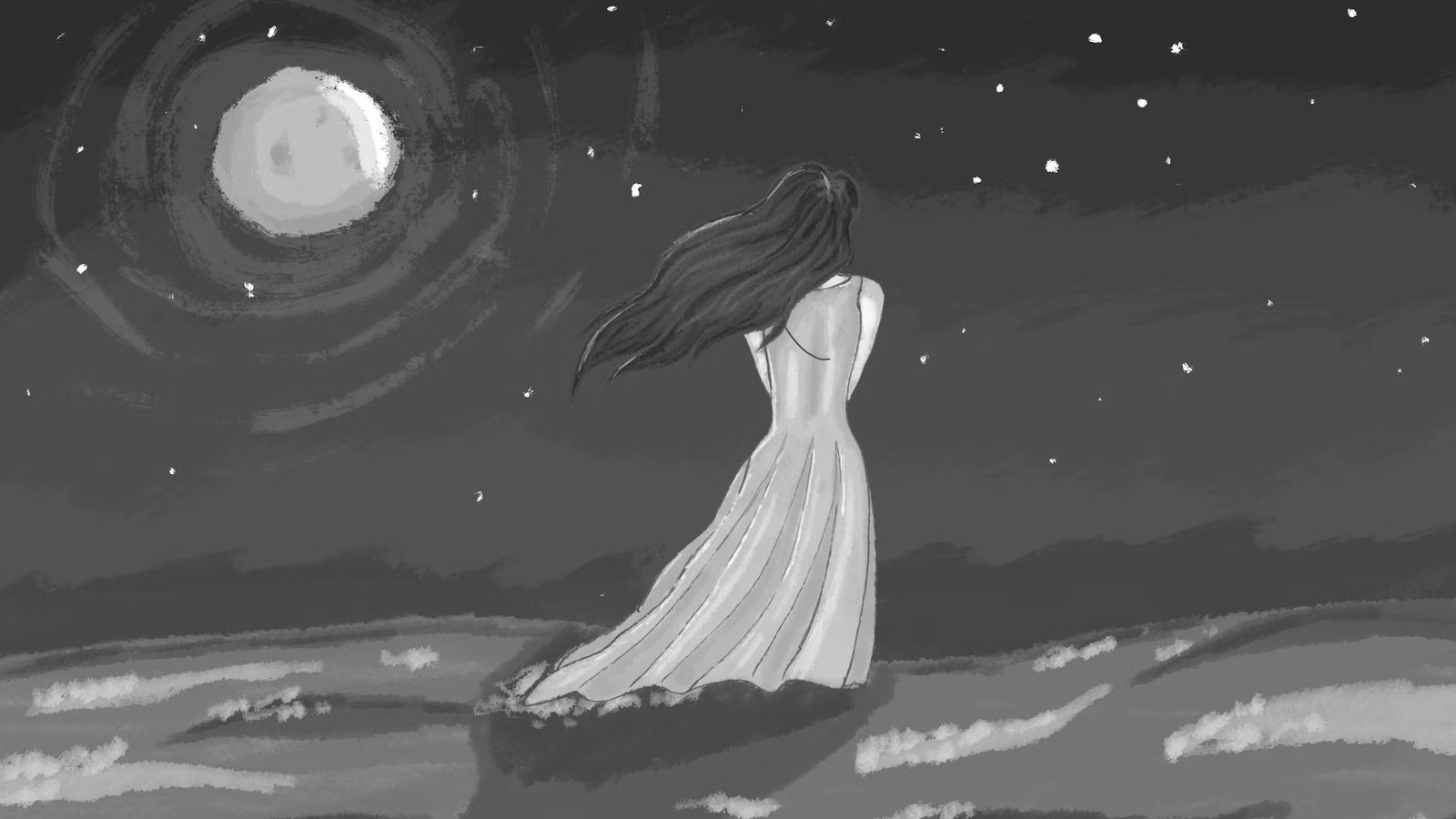
In honor of spooky season, Outside editors are sharing their backcountry encounters while hiking, camping, or otherwise enjoying the outdoors. In the summer of 2026, whitewater rafters on Idaho’s Main Salmon River kept reporting sightings of an unexplained “ghost woman dressed in white.”
Associate editor Madison Dapcevich has spent weeks rowing the so-called River of No Return. She sat down with a fellow river-runner and local historian to find out if this modern mystery is, indeed, a haunting spirit of one of the river’s pioneer women.
On a cold, drizzly day in July 2026, Nate Lewand and his fleet of whitewater rafters passed by Black Canyon, an obsidian-colored gorge on the Main Salmon River in Idaho. As they rounded the bend, they spotted a woman standing on a narrow sandy beach far too small to hold a tent. She wore clean linen clothing, military-style boots, and carried a burled walking stick.
Despite being right at the water’s edge in the rain, the woman was bone dry. She had no gear—no ropes, no backpacks, and no raft.
“She was just standing there,” Lewand told Outside. “We hollered to see if she was okay and slowed down a bit. She didn’t respond, so we yelled some more. She just stuck her hand up as if to wave, but she didn’t.”
No trail runs along this stretch of the canyon, and the surrounding walls are sheer granite cliffs. I know these areas well, having rowed the Salmon River myself. The canyon is a special place with deeply rooted history that you can feel with every passing oar stroke.
“We looked at a topographic map of how she got down there, and there’s no easy route,” Lewand said. “She would have had to rappel or be an amazing climber or floated in without any gear—or she just existed in this place.”
Lewand, 36, an experienced river runner from Park City, Utah, has spent eight years on the water. This was his fourth trip down the Main Salmon, an iconic 80-mile whitewater corridor cutting through Idaho’s Salmon-Challis National Forest.
His group wasn’t the only one to encounter the mystery figure. Between mid-July and early August, multiple river runners took to social media and local forums claiming they saw a “ghost woman dressed in white.”
One group reported hearing haunting wails echoing off the canyon walls at night; others said they saw a figure standing silently, high on a ridge above the rapids. Lewand noted that at least five other groups told him they also saw the woman at several remote locations along the river, including areas called Black Canyon, Lower Corey Bar, and Yellow Pine.
“We were trying to stay positive, so our crew started calling her Mother Nature, hoping for good graces on the rest of the trip,” Lewand said. “People have gone out intentionally looking for her since, but no one seems able to find her again.”
Whether the figure was a disoriented hiker or something paranormal, her appearance gave rise to a new moniker along the riverbanks: the Salmon Siren.
The Folklore of the Lady in White
Tales of ghostly women along waterways are as old as wilderness travel itself.
In Mexico and the American Southwest, stories persist of La Llorona, the weeping woman doomed to wander riverbanks searching for her lost children. In Ireland, the Banshee (bean sí) wails near waterways to warn of impending death. Scotland has the Bean Nigh, a river spirit seen washing the bloodstained clothes of those about to meet their fate.
Across Europe, similar archetypes appear: France’s Dame Blanche, Germany’s Weisse Frau, and the Dutch Witte Wieven, who drift through river mists and ancient ruins.
They are almost always women, clad in white, forever tethered to the places where they suffered immense loss.
It feels fitting that this classic folklore would find a home along the banks of the Main Salmon River—famously nicknamed The River of No Return.
Deep in the River of No Return
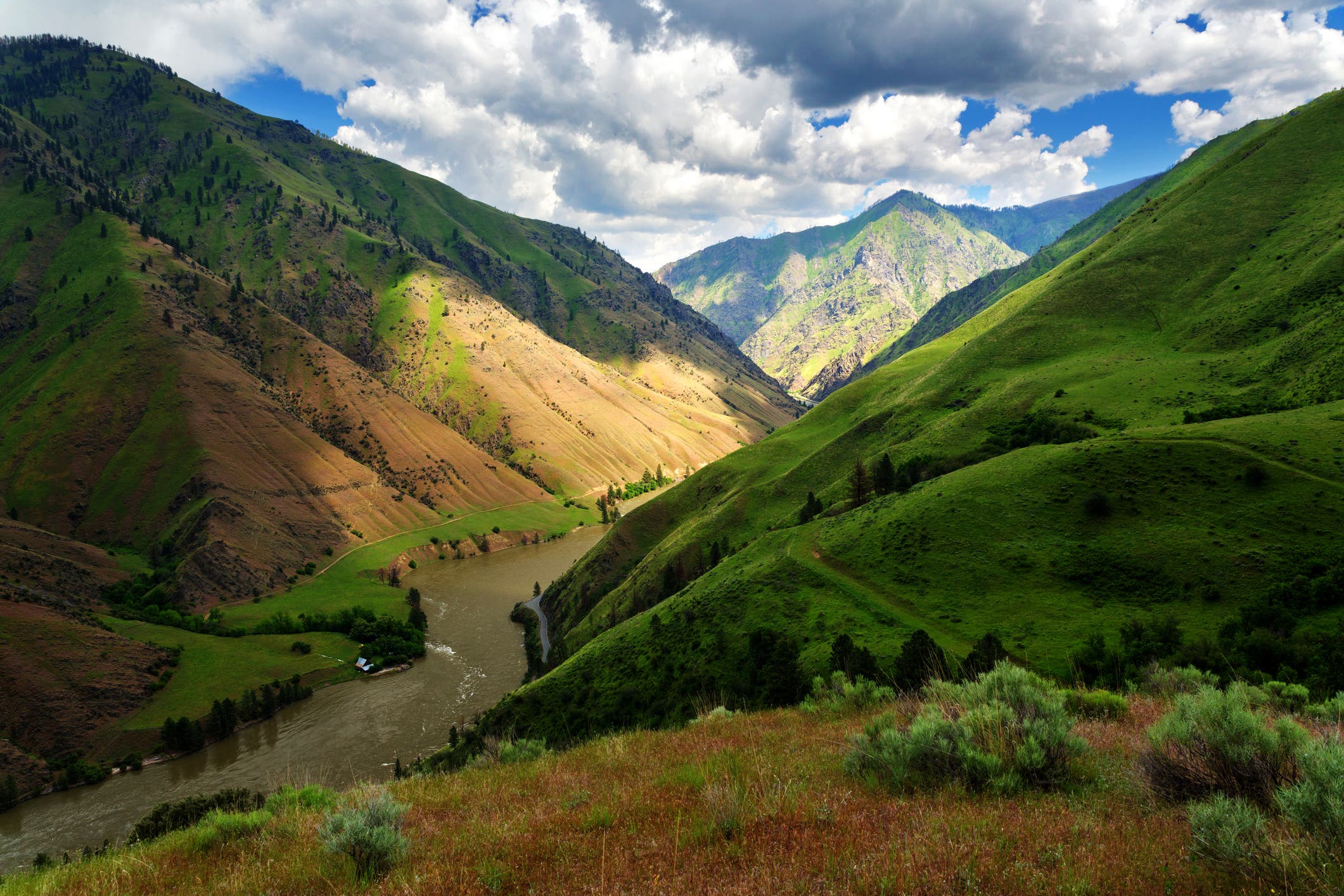
Early explorers, miners, and homesteaders dubbed the Main Fork of the Salmon the “River of No Return.” In the 19th and early 20th centuries, travelers built heavy wooden boats to float supplies down the river’s roaring rapids and deep gorge—which reaches depths greater than the Grand Canyon. The swift currents, intense rapids, and treacherous drops made returning upstream nearly impossible.
The river remains a testament to the Wild West. The Salmon is the longest undammed system in the Lower 48, flowing from the heart of the Frank Church-River of No Return Wilderness—a 2.3-million-acre roadless area and the largest protected wilderness in the continental United States.
That ruggedness still draws river runners like me. There’s no cell service, and hiking in or out is excruciatingly difficult. I’ve rowed the 80-mile stretch three times, facing torrential hail and big waves. Along the south-facing banks of the river is an arid, high-elevation desert. The other, north-facing aspects are lush and green, with hot springs and bubbling brooks. Sweeping white-sand beaches and fruit orchards are scattered throughout the corridor.
“It’s almost like you travel from planet to planet throughout the days of working down the river in the middle of a nowhere canyon in Idaho,” Lewand said.
Salmon River’s Historical Women
I couldn’t help but wonder: Could the sightings be connected to the women who lived, worked, and died along these rugged banks?
Kathy Deinhardt Hill, a historian at the Central Idaho Historical Museum in McCall and author of Spirits of Salmon, analyzed the several tragic tales of women whose lives were intertwined with the river.
Deinhart told me of several pioneering women who lived along the river, from 1853 to 1998. We spoke about the different women’s live, and I asked her who she believed could be the so-called Salmon Siren.
She said she believes the Salmon Siren is the lingering spirit of Rose Cook, a frontierswoman featured in Deinhardt’s book.
Born in Salem, Oregon, in 1862, Rose Cook moved to Elk City, Idaho, after her first husband died and began working as a schoolteacher. There, she met Warren Cook; Deinhardt says she was 40 and he was 27.
Shortly after they married, the couple bought Campbell’s Ferry, a historic river crossing and 85-acre homestead at Mile 148 on the Salmon River. Scottish immigrant and prospector William Campbell founded the ferry in 1898, but disappeared in a winter snowstorm in 1902 and was presumed dead.
“In the spring of 1905, Rose became pregnant,” Deinhardt said. “In October, she fell ill, most likely from a stroke.”
Jim Moore, a man who lived across the river, came to help, along with another couple, Eugene and his wife, Ella Churchill, who served as midwife.
“Even with their help, Rose was unable to deliver the baby,” Deinhardt said. The baby was stillborn, and shortly after, Rose died on October 12, 1905. Two days later, she and the child were buried on the hill above the meadow at Campbells Ferry.
“People from up and down the river, as well as Elk City and Dixie, Idaho, made their way to the river to pay their respects,” Deinhardt said. “Later, Warren never spoke of the matter and eventually left the river. He moved to McCall, remarried, and worked as a forest ranger.”
Deep in the Frank Church–River of No Return Wilderness lies Rose’s grave. Her 1905 tragedy reveals the brutal realities of life on the Salmon River at the turn of the century.
Another woman pioneer of the Salmon River, Emma Zaunmiller, also died in a horse accident at Campbell’s Ferry in 1938.
Homesteading the Salmon: Tracing Ella Prescott’s Journey
Married to Gene Churchill, Ella Prescott worked on a ranch along the Salmon River from the early 1900s until her husband died in a boating accident in 1915, according to Deinhardt
On September 18, Churchill was running a supply boat when it became stuck on a rock near Yellow Pine Bar. When the men tried to dislodge the boat, the current swept Churchill into the river.
“At this point, the current was so swift that it submerged him, and he let loose of the line. About 200 feet below the line, his head appeared for an instant above the water, a whirlpool drew him under again, and he sunk to rise no more,” according to a 1915 article in the Grangeville Globe. His body was found about 25 days later downriver, and he was buried with a wooden headstone that’s no longer there.
One year later, Ella married Clarence Prescott. That same year, she filed a homestead claim on the ranch. Prescott helped Ella with the ranch, but he was in poor health and, according to Deinhardt, died in 1920.
At the time, the federal government granted homestead patents along the Salmon River and its forks to settlers under the Homestead Act of 1862. The government could take years to issue these patents, and Ella stayed at the ranch until she received hers in 1922.
She died the following October at 67, Deinhardt said. Ella is buried at the Churchill Ranch, now the Whitewater Ranch, on Little Mallard Creek, overlooking the river. A large rock was placed on the top of her grave, forever marking her final resting place.
Reho Wolfe’s Salmon River Sanctuary
Born in Oregon, Reho Wolfe moved to Idaho and graduated from Kamiah High School in 1935. A year later, she married musician George Wolfe and moved to Missoula, Montana. When World War II broke out, George refused the draft.
“Instead, he and Reho packed their things along with their young son Norman, age four, and headed to the Salmon River,” Deinhardt said. “In 1944, they settled first at the Crofoot Ranch, up Rattlesnake Creek.
The following year, they moved to the Allison Ranch, now a wilderness retreat, where their first daughter, Carol, was born.
In the spring of 1945, Reho’s father, John Bergman, was too ill to care for himself, so he moved in with the family at the Allison Ranch. George and the couple’s son, Norman, went downriver to transport John’s belongings, and on the way back to the Allison Ranch, Norman fell trying to cross Big Mallard Creek by himself. He was swept into the Salmon River and drowned.
The search for Norman’s body lasted four weeks until he was found in an eddy below Campbell’s Ferry. He was buried next to the trail.
“Reho was never the same,” Deinhardt said. “She was haunted by the loss of her son. The family had six more children, and Reho and George struggled to provide. But Reho could never forgive George, and eventually they divorced.”
According to Deinhardt, Reho felt best on the river and was well known in the community built around it. In 1958, she pulled her seven children from public school and moved them to an abandoned cabin and mining claim at Gaines Bar, according to a Time article published then.
The school district filed truancy charges; the Forest Service said she had no rights to the cabin; she fought and won both cases, according to the Lewiston Tribune. Reho homeschooled her children, gave them music lessons every day, and taught them how to survive on the river. She eventually moved back to Lewiston, Idaho, where she received a teaching degree, and then moved the family to Montana.
“It was the pattern of her life—constantly on the go, taking odd jobs, doing whatever it took,” Deinhardt said. “But almost every summer she took the kids back to the cabin on Gaines Bar.”
In 1998, she set out for one last river trip and died on the night of July 1 at 82, according to the Lewiston Tribune. She is buried at Gaines Bar, with a granite headstone that still marks her grave today.
Reho spent every possible moment in her wilderness home, and Gaines Bar camp is a testament to this. Today, the river camp is home to historic cabins, and in the early-morning fog, you can feel an otherworldly presence
Her son, John Wolfe, wrote Reho’s story in the book Reho Wolf: The End of a Salmon River Era.
The Extraordinary Story of Polly Bemis
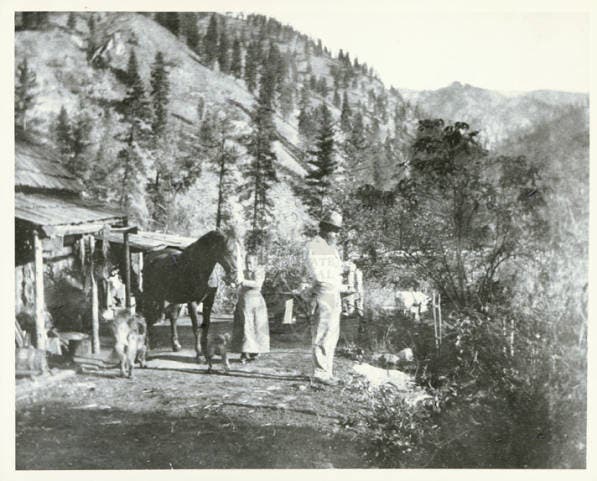
Buried on the river at the Polly Bemis place. She did not die on the river, but lived on the river for many years.
Born near Beijing in 1853, Polly’s father exchanged her for money to buy seed when a famine struck the area in 1869, according to the U.S. Forest Service. Two years later, in 1871, she was sent to San Francisco, later smuggled to Portland, and was eventually sold to a Chinese resident of Warren, Idaho, for $2,500. She arrived in the area by pack train and was given her name there.
As with much of the American West at the time, Idaho had a strong Chinese population to support mining. In Warren, she met Charles Bemis, a wealthy jeweler who owned a saloon. In 1887, the couple’s house burned down, and they lost everything but gold dust and a few coins.
In 1893, the couple bought a mining claim along Salmon River and married the following year. They became river legends, growing fruit in their riverside orchards and selling their produce in town every summer. Lore holds that Charlie once caught a mountain lion and raised it as a pet.
In 1922, their house caught fire once again. Both escaped, but Charlie died shortly after. Polly stayed in the log house for more than a decade, and died in 1933 while recovering from a stroke in Grangeville, Idaho.
Deinhardt said that those who knew Polly best understood she wanted to be buried on the river. So they worked with the state and owners of the Polly Bemis Ranch to have her body exhumed and moved to the river.
In 1987, historians restored the log cabin and turned it into a museum that paddlers can visit today. Today, Polly Bemis Ranch is a 26-acre estate, and even features the river’s only volleyball net.
The Endless Draw of the Wild
Whether the mystery woman seen along the Main Salmon is an illusion created by fog and high canyon walls, an elusive backpacker, or something lingering from the past, the sightings speak to the River of No Return’s transcendent nature.
In a modern world defined by constant connectivity, the Salmon River remains one of the few places where humans are forced to step away from technology and adjust to the rhythms of the natural world, living like early pioneers.
“The river offers something that we don’t have access to anymore in our current everyday lives,” Lewand said. “It’s solitude. Sometimes we forget how to disconnect and just be human with one another, and river trips force us to do that.”
As long as river runners push their boats into the swift currents of the Main Salmon, the canyon will keep its secrets—and those who navigate its waters will keep looking closely at the white-sand beaches, wondering who might be watching from the rocks above.
